AUTONOMIC NERVOUS SYSTEM
By
Dr. K. Ambareesha .,PhD
Department of Physiology Gandhi Medical College& Hospital, TS
CONTENTS
1. ANS INTRODUCTION
2. ORIGINE OUT FLOW AND DISTRIBUTION OF
SYMPATHETIC & PARASYMAPTHETIC NERVES
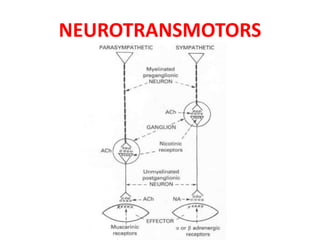
3. NEUROTRANS IN ANS
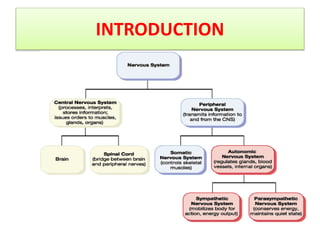
INTRODUCTION
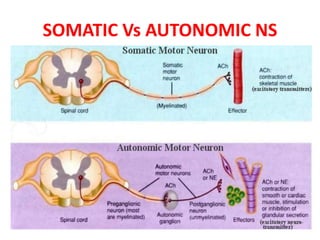
SOMATIC Vs AUTONOMIC NS
NEUROTRANSMOTORS
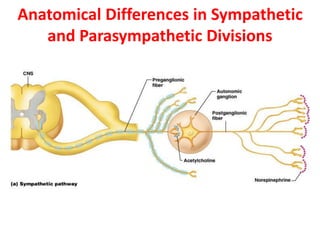
Anatomical Differences in Sympathetic
and Parasympathetic Divisions
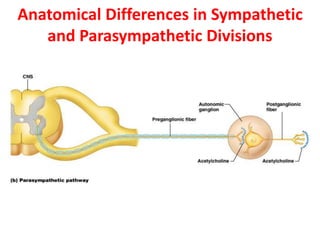
Anatomical Differences in Sympathetic
and Parasympathetic Divisions
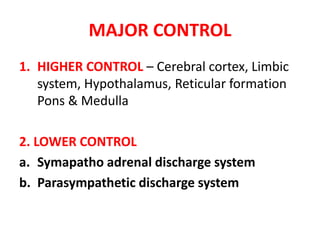
MAJOR CONTROL
1. HIGHER CONTROL – Cerebral cortex, Limbic
system, Hypothalamus, Reticular formation
Pons & Medulla
2. LOWER CONTROL
a. Symapatho adrenal discharge system
b. Parasympathetic discharge system
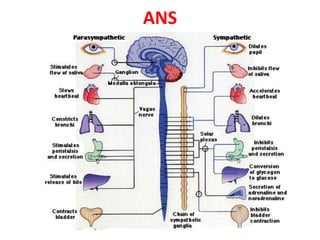
ANS
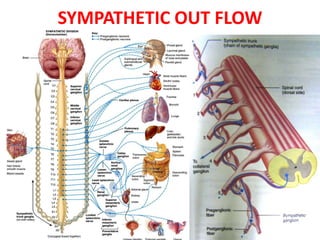
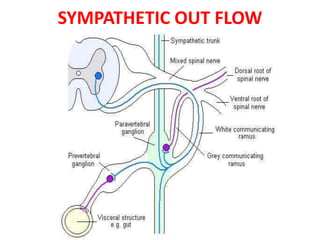
SYMPATHETIC OUT FLOW
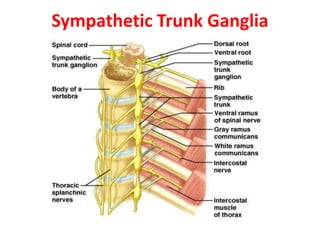
Sympathetic Trunk Ganglia
SYMPATHETIC OUT FLOW
Copyright © 2005 Pearson
Education, Inc., publishing as
Benjamin Cummings
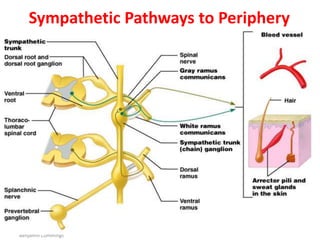
Sympathetic Pathways to Periphery
Figure 15.9
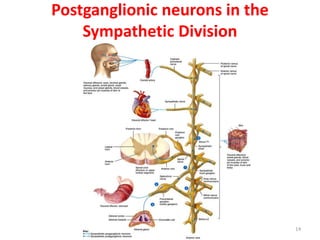
Postganglionic neurons in the
Sympathetic Division
14
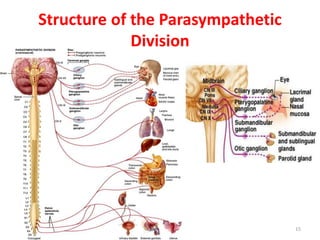
Structure of the Parasympathetic
Division
15
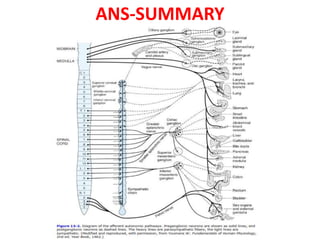
ANS-SUMMARY
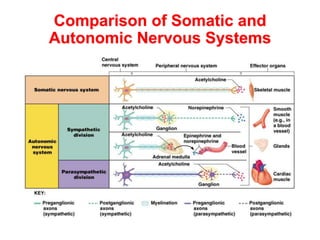
Comparison of Somatic and
Autonomic Nervous Systems
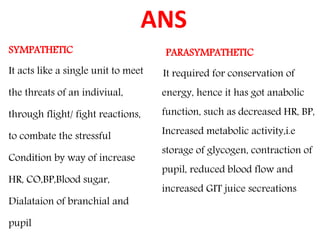
ANS
SYMPATHETIC
It acts like a single unit to meet
the threats of an indiviual,
through flight/ fight reactions,
to combate the stressful
Condition by way of increase
HR, CO,BP,Blood sugar,
Dialataion of branchial and
pupil
PARASYMPATHETIC
It required for conservation of
energy, hence it has got anabolic
function, such as decreased HR, BP,
Increased metabolic activity,i.e
storage of glycogen, contraction of
pupil, reduced blood flow and
increased GIT juice secreations
• UNIVERSITY QUESTIONS:
• Essay:
• Describe the origin and out flow of the
Sympathetic NS, Give examples of stress situation
in which sympathetic activity increases? (10)
• Discuss origin, distribution and functions of
sympathetic and parasympathetic nerves
(2+3+2.5+2.5)
• Short Answer (2)
• Neurotransmitters in ANS
THANK YOU

AUTONOMIC NERVOUS SYSTEM (ANS)