STEPS FOR AUTOMATED
EXTERNAL DEFIBRILLATOR
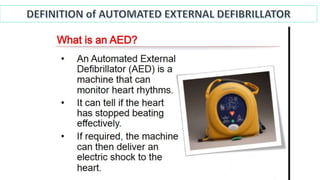
AUTOMATED EXTERNAL
DEFIBRILLATOR
Indications for using an Automated External Defibrillator (AED)
include: *Cardiac Arrest:* AEDs are primarily used in cases
of sudden cardiac arrest when the heart's normal rhythm is
disrupted.
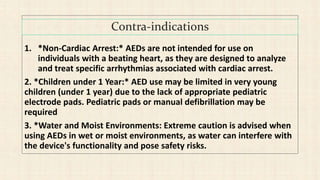
1. *Non-Cardiac Arrest:* AEDs are not intended for use on
individuals with a beating heart, as they are designed to analyze
and treat specific arrhythmias associated with cardiac arrest.
2. *Children under 1 Year:* AED use may be limited in very young
children (under 1 year) due to the lack of appropriate pediatric
electrode pads. Pediatric pads or manual defibrillation may be
required
3. *Water and Moist Environments: Extreme caution is advised when
using AEDs in wet or moist environments, as water can interfere with
the device's functionality and pose safety risks.
Contra-indications
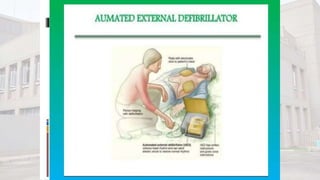
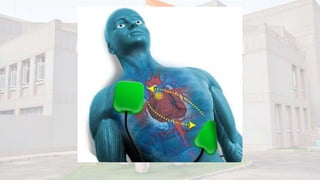
PLACEMENT OF AED
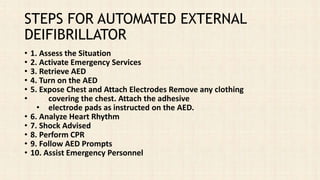
STEPS FOR AUTOMATED EXTERNAL
DEIFIBRILLATOR
• 1. Assess the Situation
• 2. Activate Emergency Services
• 3. Retrieve AED
• 4. Turn on the AED
• 5. Expose Chest and Attach Electrodes Remove any clothing
• covering the chest. Attach the adhesive
• electrode pads as instructed on the AED.
• 6. Analyze Heart Rhythm
• 7. Shock Advised
• 8. Perform CPR
• 9. Follow AED Prompts
• 10. Assist Emergency Personnel
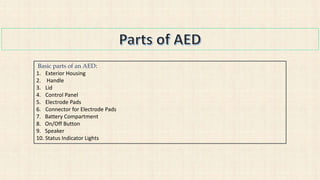
Basic parts of an AED:
1. Exterior Housing
2. Handle
3. Lid
4. Control Panel
5. Electrode Pads
6. Connector for Electrode Pads
7. Battery Compartment
8. On/Off Button
9. Speaker
10. Status Indicator Lights
Automated External Defibrillator: Functions Explained.pptx

Automated External Defibrillator: Functions Explained.pptx

  • 1.
  • 2.
  • 5.
    Indications for usingan Automated External Defibrillator (AED) include: *Cardiac Arrest:* AEDs are primarily used in cases of sudden cardiac arrest when the heart's normal rhythm is disrupted.
  • 6.
    1. *Non-Cardiac Arrest:*AEDs are not intended for use on individuals with a beating heart, as they are designed to analyze and treat specific arrhythmias associated with cardiac arrest. 2. *Children under 1 Year:* AED use may be limited in very young children (under 1 year) due to the lack of appropriate pediatric electrode pads. Pediatric pads or manual defibrillation may be required 3. *Water and Moist Environments: Extreme caution is advised when using AEDs in wet or moist environments, as water can interfere with the device's functionality and pose safety risks. Contra-indications
  • 7.
  • 8.
    STEPS FOR AUTOMATEDEXTERNAL DEIFIBRILLATOR • 1. Assess the Situation • 2. Activate Emergency Services • 3. Retrieve AED • 4. Turn on the AED • 5. Expose Chest and Attach Electrodes Remove any clothing • covering the chest. Attach the adhesive • electrode pads as instructed on the AED. • 6. Analyze Heart Rhythm • 7. Shock Advised • 8. Perform CPR • 9. Follow AED Prompts • 10. Assist Emergency Personnel
  • 9.
    Basic parts ofan AED: 1. Exterior Housing 2. Handle 3. Lid 4. Control Panel 5. Electrode Pads 6. Connector for Electrode Pads 7. Battery Compartment 8. On/Off Button 9. Speaker 10. Status Indicator Lights