Device Provisioning
Service
John Chang
Commercial Software Engineering
Microsoft
2019.09
Why provisioning
is hard today
• Solutions must have per-device
revocable access
• Provisioning is a manual process
• Initial configuration can become
irrelevant between manufacturing
and deployment
• Device supply chains are complex
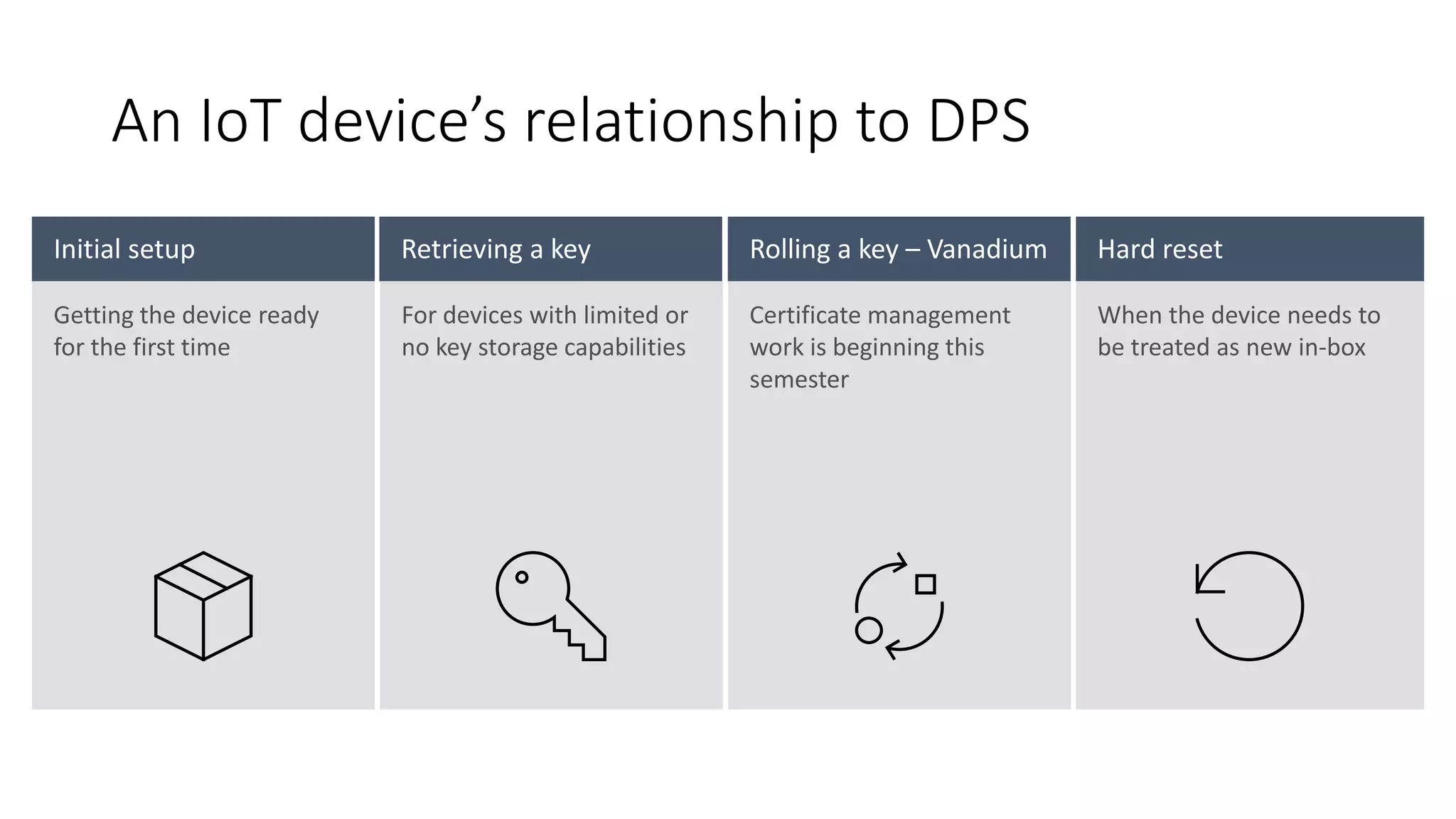
An IoT device’s relationship to DPS
Provisioning
process
• There are two distinct steps with
security flows
• The manufacture step in which the
enrollment information is harvested and
placed in the enrollment list
• The registration step in which the
device phones home to the DPS
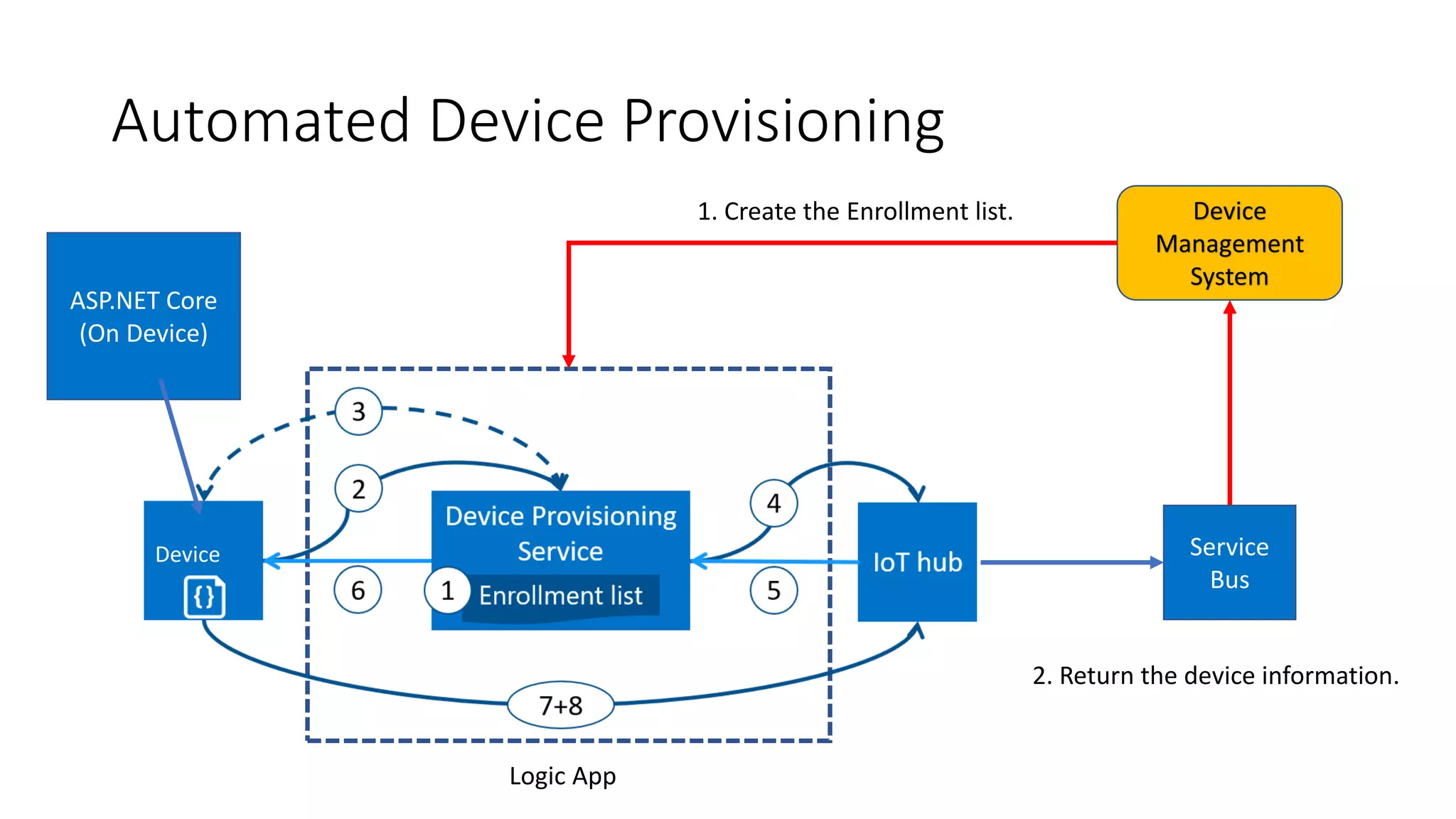
Automated Device Provisioning
Device
Management
System
2. Return the device information.
1. Create the Enrollment list.
Device Service
Bus
Logic App
ASP.NET Core
(On Device)
IoT Hub
IoT Hub
IoT Hub
IoT Hub
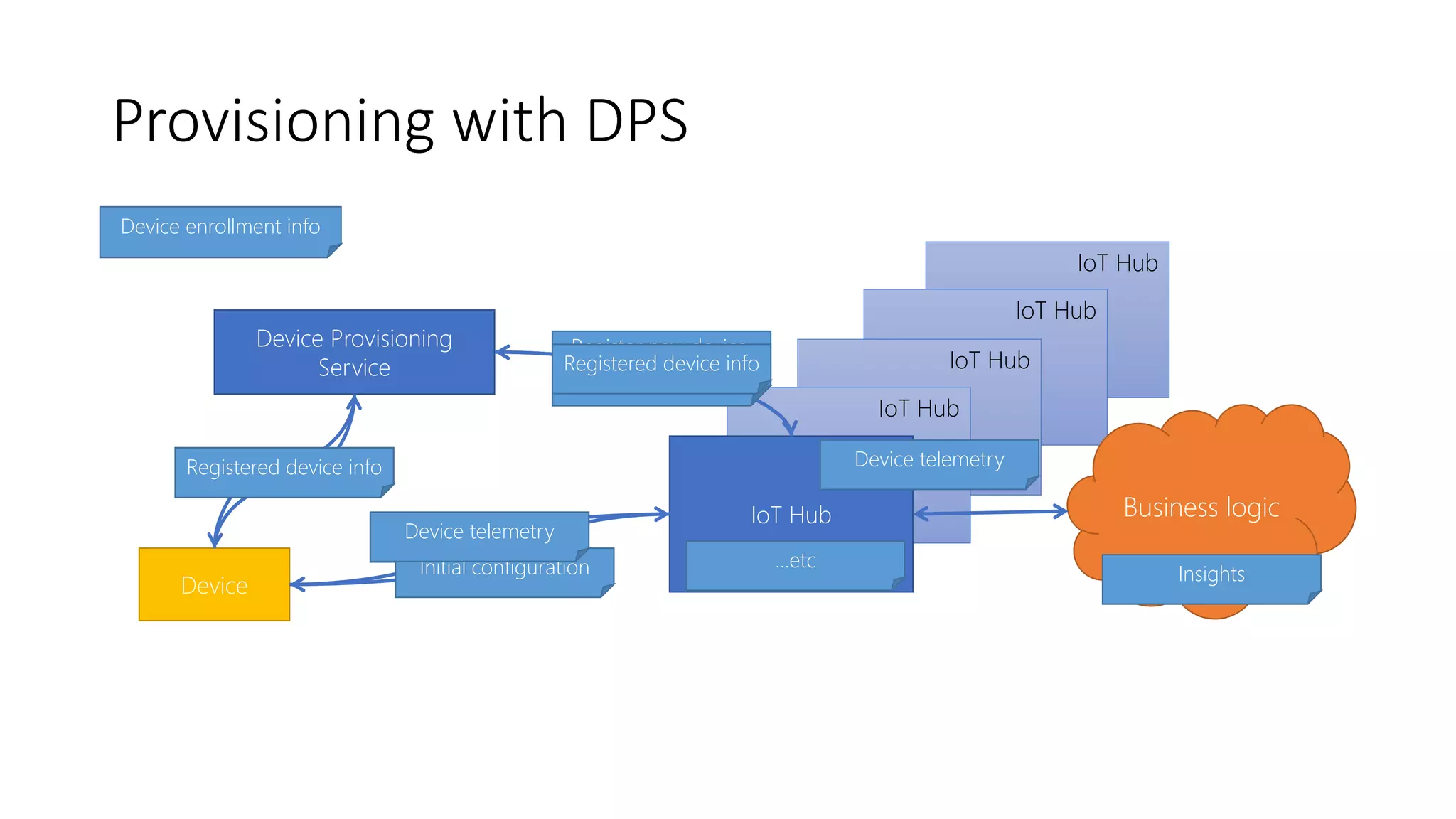
Provisioning with DPS
IoT Hub
Device
Device Provisioning
Service
Business logic
“where’s my home?”Identity attestation
Device enrollment info
Register new device,
populate initial configRegistered device info
Registered device info
Establish connection
Initial configuration
Device telemetry
Insights
Device telemetry
…etc
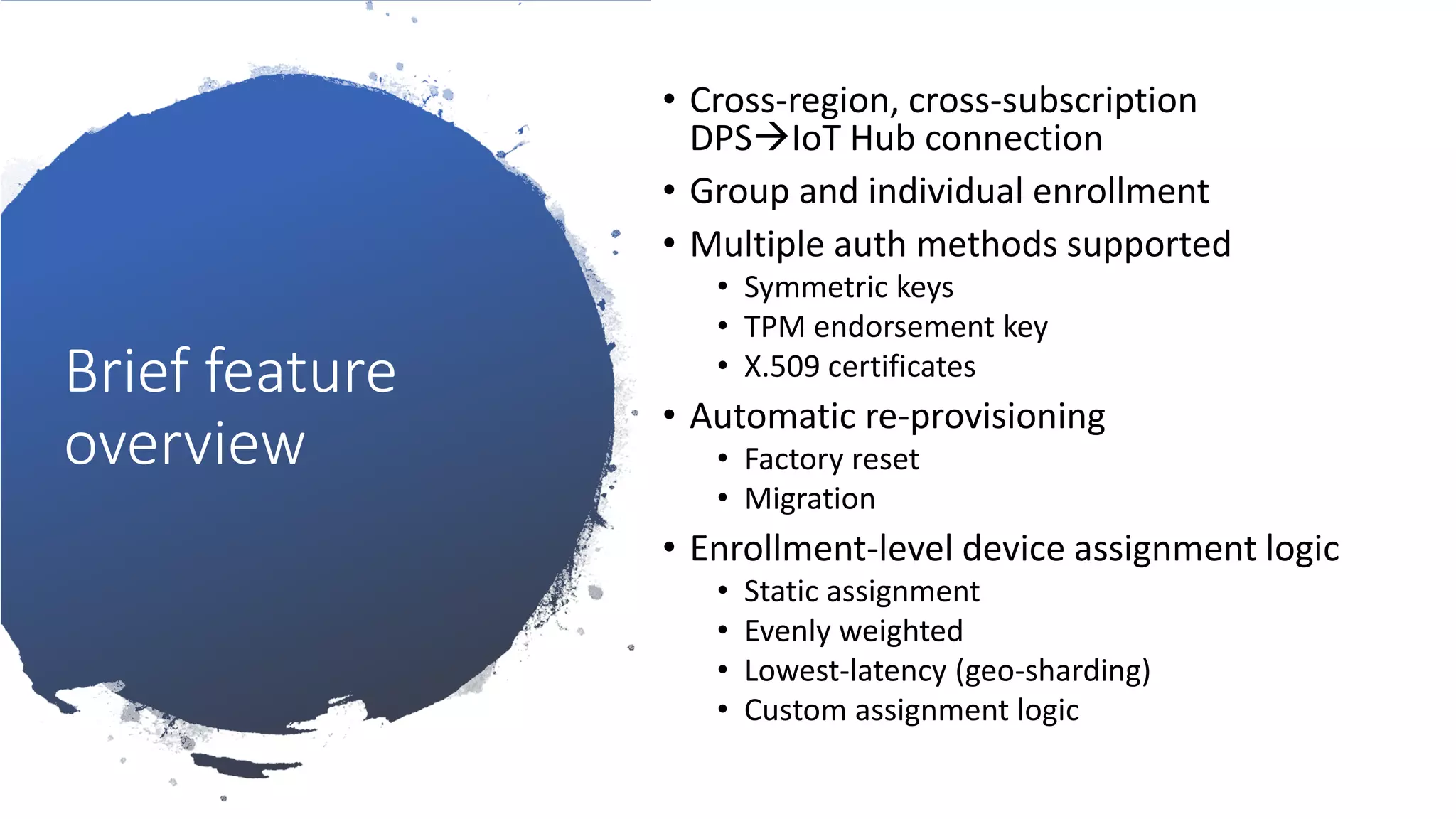
Brief feature
overview
• Cross-region, cross-subscription
DPS→IoT Hub connection
• Group and individual enrollment
• Multiple auth methods supported
• Symmetric keys
• TPM endorsement key
• X.509 certificates
• Automatic re-provisioning
• Factory reset
• Migration
• Enrollment-level device assignment logic
• Static assignment
• Evenly weighted
• Lowest-latency (geo-sharding)
• Custom assignment logic
Provision with
Symmetric key
attestation
• Represents a "Hello world" experience for
developers who are new to device
provisioning, or do not have strict security
requirements.
• Device attestation using a TPM is more
secure and should be used for more
stringent security requirements.
• Legacy devices may not have a certificate, TPM,
or any other security feature that can be used
to securely identify the device.
• Symmetric key attestation can be used to
identify a device based off information like
the MAC address or a serial number.
Demo – Provision Device with
Symmetric key
https://github.com/michael-chi/automate-device-provisioning
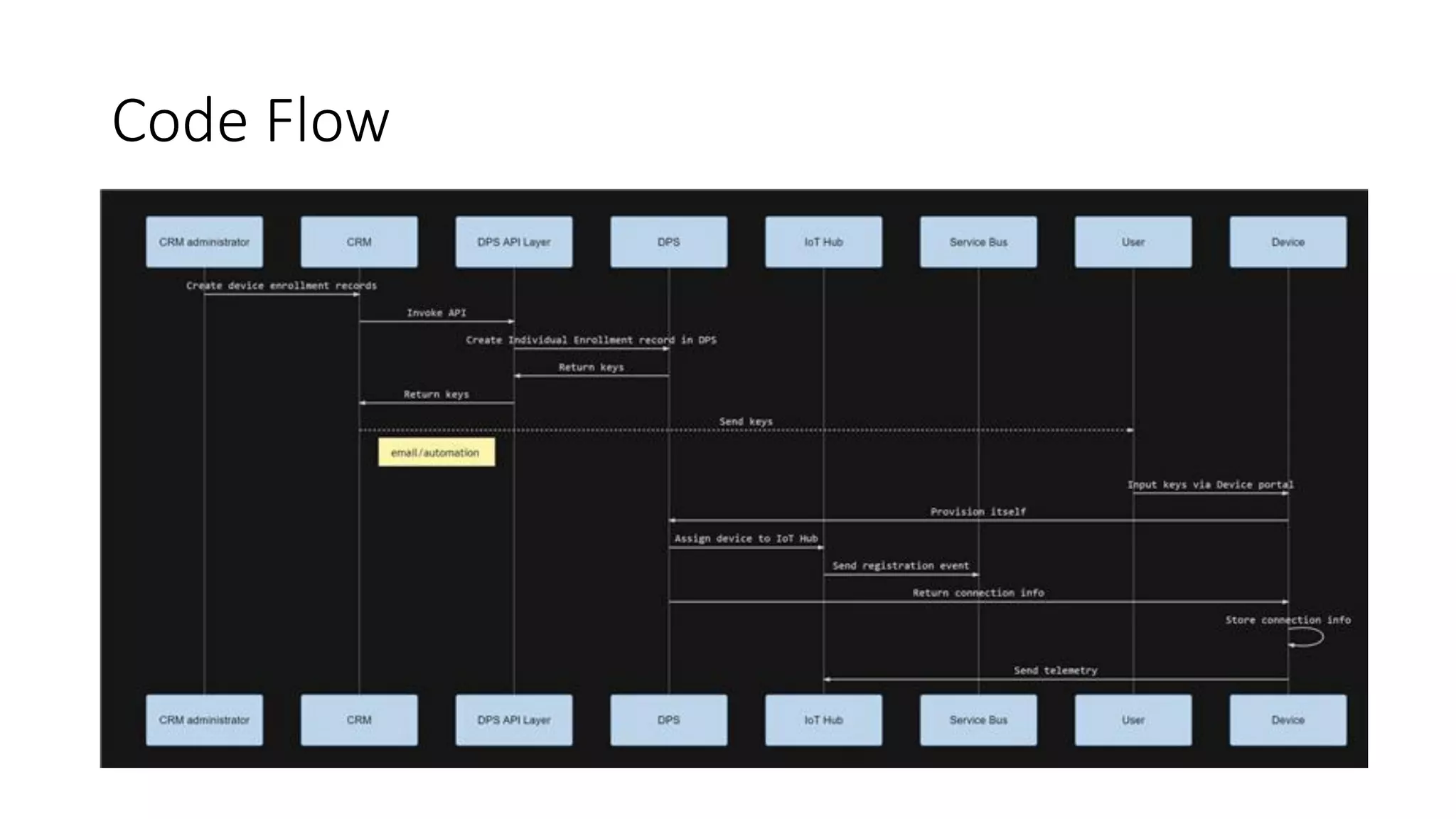
Code Flow
Questions?

Automated Device Provisioning

  • 1.
    Device Provisioning Service John Chang CommercialSoftware Engineering Microsoft 2019.09
  • 2.
    Why provisioning is hardtoday • Solutions must have per-device revocable access • Provisioning is a manual process • Initial configuration can become irrelevant between manufacturing and deployment • Device supply chains are complex
  • 4.
    An IoT device’srelationship to DPS
  • 5.
    Provisioning process • There aretwo distinct steps with security flows • The manufacture step in which the enrollment information is harvested and placed in the enrollment list • The registration step in which the device phones home to the DPS
  • 6.
    Automated Device Provisioning Device Management System 2.Return the device information. 1. Create the Enrollment list. Device Service Bus Logic App ASP.NET Core (On Device)
  • 7.
    IoT Hub IoT Hub IoTHub IoT Hub Provisioning with DPS IoT Hub Device Device Provisioning Service Business logic “where’s my home?”Identity attestation Device enrollment info Register new device, populate initial configRegistered device info Registered device info Establish connection Initial configuration Device telemetry Insights Device telemetry …etc
  • 8.
    Brief feature overview • Cross-region,cross-subscription DPS→IoT Hub connection • Group and individual enrollment • Multiple auth methods supported • Symmetric keys • TPM endorsement key • X.509 certificates • Automatic re-provisioning • Factory reset • Migration • Enrollment-level device assignment logic • Static assignment • Evenly weighted • Lowest-latency (geo-sharding) • Custom assignment logic
  • 9.
    Provision with Symmetric key attestation •Represents a "Hello world" experience for developers who are new to device provisioning, or do not have strict security requirements. • Device attestation using a TPM is more secure and should be used for more stringent security requirements. • Legacy devices may not have a certificate, TPM, or any other security feature that can be used to securely identify the device. • Symmetric key attestation can be used to identify a device based off information like the MAC address or a serial number.
  • 10.
    Demo – ProvisionDevice with Symmetric key https://github.com/michael-chi/automate-device-provisioning
  • 11.
  • 12.