Audience Profiling
PROFILING YOUR AUDIENCE INVOLVES
PROVIDING A TARGET AUDIENCE
PROFILE, BUT ALSO RESEARCH INTO
AUDIENCE BEHAVIOUR TRENDS
Target Audience
Primary Audiences are those who the distribution
companies are desperately trying to target/entice
Secondary Audiences are potential consumers who
may also be attracted to the text.
Behaviour Trends
 To make an magazine successful you have to


-

-

accurately define or classify the audience it is
supposed to target.
Audiences can be classified using 3 methods.
Demographic Profiles
Psychographics
Lifestyle Subsets
Demographic Profiles (1950s)
 Demographic profiles includes

Age (broad age ranges)
Gender (M/F)
Rationality (where you live)
Marital Status (married, single, divorced)
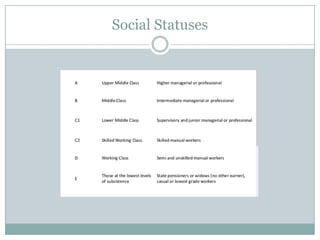
Social Status (a, b, c, c1, d, e, classes)
Social Statuses
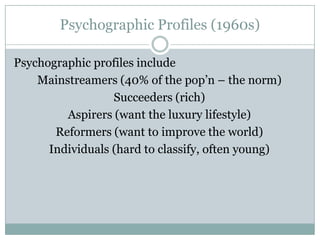
Psychographic Profiles (1960s)
Psychographic profiles include
Mainstreamers (40% of the pop’n – the norm)
Succeeders (rich)
Aspirers (want the luxury lifestyle)
Reformers (want to improve the world)
Individuals (hard to classify, often young)
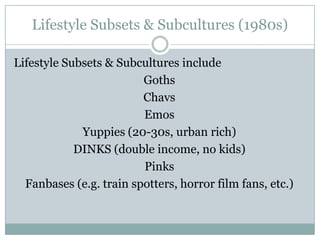
Lifestyle Subsets & Subcultures (1980s)
Lifestyle Subsets & Subcultures include
Goths
Chavs
Emos
Yuppies (20-30s, urban rich)
DINKS (double income, no kids)
Pinks
Fanbases (e.g. train spotters, horror film fans, etc.)

Audience profiling

  • 1.
    Audience Profiling PROFILING YOURAUDIENCE INVOLVES PROVIDING A TARGET AUDIENCE PROFILE, BUT ALSO RESEARCH INTO AUDIENCE BEHAVIOUR TRENDS
  • 2.
    Target Audience Primary Audiencesare those who the distribution companies are desperately trying to target/entice Secondary Audiences are potential consumers who may also be attracted to the text.
  • 3.
    Behaviour Trends  Tomake an magazine successful you have to  - - accurately define or classify the audience it is supposed to target. Audiences can be classified using 3 methods. Demographic Profiles Psychographics Lifestyle Subsets
  • 4.
    Demographic Profiles (1950s) Demographic profiles includes Age (broad age ranges) Gender (M/F) Rationality (where you live) Marital Status (married, single, divorced) Social Status (a, b, c, c1, d, e, classes)
  • 5.
  • 6.
    Psychographic Profiles (1960s) Psychographicprofiles include Mainstreamers (40% of the pop’n – the norm) Succeeders (rich) Aspirers (want the luxury lifestyle) Reformers (want to improve the world) Individuals (hard to classify, often young)
  • 7.
    Lifestyle Subsets &Subcultures (1980s) Lifestyle Subsets & Subcultures include Goths Chavs Emos Yuppies (20-30s, urban rich) DINKS (double income, no kids) Pinks Fanbases (e.g. train spotters, horror film fans, etc.)