An audience are the consumers of a text created by
the producers. Every text has an audience if it is
either something to read, listen or watch.
Sometimes the producers get the audience to
interact with the text or product such as
competitions or quizzes. Producers divide their
audiences into groups to target their audience in
the most effective way.
Audience research is done by profiling the
audience into demographic, psychographic and
behavioural












Demographic: Study of human population. Identifying
people by: Age
Gender Race Religion Class Job
The most common demographics used by the media are
gender, age and class
Class
A: Upper Upper Class: i.e. Royalty/ PM etc
B: Upper Class: MPs, Consultants, Lawyers, Headmasters,
Bank Managers
C1: Upper Middle Class: Teachers, Secretaries, Solicitors,
Architects
C2: Lower Middle Class: Plumbers, Electricians, Mechanics
D: Upper Lower Class: Unskilled workers i.e. Shelf stackers,
road sweepers, rubbish collectors
E: Lower Class: Unemployed, Homeless, Non-income
age and class.






Age
AGE- We usually split into RANGES i.e.
UNDER 16, 16-19, 19-25, 30-45, 45-60, OVER 60
For the youth market, the audience is split into
different groups which are known as “tribes”.
They groups are being stereotyped to who they
appear and dress themselves.
Punks Trendies Goths Emos Rock/
Metallers “Chav”












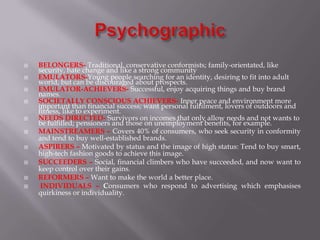
BELONGERS- Traditional, conservative conformists; family-orientated, like
security, hate change and like a strong community
EMULATORS-Young people searching for an identity, desiring to fit into adult
world, but can be discouraged about prospects.
EMULATOR-ACHIEVERS- Successful, enjoy acquiring things and buy brand
names.
SOCIETALLY CONSCIOUS ACHIEVERS- Inner peace and environment more
important than financial success; want personal fulfilment, lovers of outdoors and
fitness, like to experiment.
NEEDS DIRECTED- Survivors on incomes that only allow needs and not wants to
be fulfilled; pensioners and those on unemployment benefits, for example.
MAINSTREAMERS – Covers 40% of consumers, who seek security in conformity
and tend to buy well-established brands.
ASPIRERS – Motivated by status and the image of high status: Tend to buy smart,
high-tech fashion goods to achieve this image.
SUCCEEDERS – Social, financial climbers who have succeeded, and now want to
keep control over their gains.
REFORMERS – Want to make the world a better place.
INDIVIDUALS – Consumers who respond to advertising which emphasises
quirkiness or individuality.






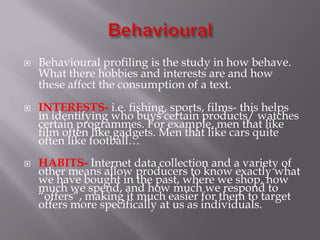
Behavioural profiling is the study in how behave.
What there hobbies and interests are and how
these affect the consumption of a text.
INTERESTS- i.e. fishing, sports, films- this helps
in identifying who buys certain products/ watches
certain programmes. For example, men that like
film often like gadgets. Men that like cars quite
often like football…
HABITS- Internet data collection and a variety of
other means allow producers to know exactly what
we have bought in the past, where we shop, how
much we spend, and how much we respond to
“offers”, making it much easier for them to target
offers more specifically at us as individuals.

Audience research powerpoint

  • 2.
    An audience arethe consumers of a text created by the producers. Every text has an audience if it is either something to read, listen or watch. Sometimes the producers get the audience to interact with the text or product such as competitions or quizzes. Producers divide their audiences into groups to target their audience in the most effective way. Audience research is done by profiling the audience into demographic, psychographic and behavioural
  • 3.
             Demographic: Study ofhuman population. Identifying people by: Age Gender Race Religion Class Job The most common demographics used by the media are gender, age and class Class A: Upper Upper Class: i.e. Royalty/ PM etc B: Upper Class: MPs, Consultants, Lawyers, Headmasters, Bank Managers C1: Upper Middle Class: Teachers, Secretaries, Solicitors, Architects C2: Lower Middle Class: Plumbers, Electricians, Mechanics D: Upper Lower Class: Unskilled workers i.e. Shelf stackers, road sweepers, rubbish collectors E: Lower Class: Unemployed, Homeless, Non-income age and class.
  • 4.
       Age AGE- We usuallysplit into RANGES i.e. UNDER 16, 16-19, 19-25, 30-45, 45-60, OVER 60 For the youth market, the audience is split into different groups which are known as “tribes”. They groups are being stereotyped to who they appear and dress themselves. Punks Trendies Goths Emos Rock/ Metallers “Chav”
  • 5.
              BELONGERS- Traditional, conservativeconformists; family-orientated, like security, hate change and like a strong community EMULATORS-Young people searching for an identity, desiring to fit into adult world, but can be discouraged about prospects. EMULATOR-ACHIEVERS- Successful, enjoy acquiring things and buy brand names. SOCIETALLY CONSCIOUS ACHIEVERS- Inner peace and environment more important than financial success; want personal fulfilment, lovers of outdoors and fitness, like to experiment. NEEDS DIRECTED- Survivors on incomes that only allow needs and not wants to be fulfilled; pensioners and those on unemployment benefits, for example. MAINSTREAMERS – Covers 40% of consumers, who seek security in conformity and tend to buy well-established brands. ASPIRERS – Motivated by status and the image of high status: Tend to buy smart, high-tech fashion goods to achieve this image. SUCCEEDERS – Social, financial climbers who have succeeded, and now want to keep control over their gains. REFORMERS – Want to make the world a better place. INDIVIDUALS – Consumers who respond to advertising which emphasises quirkiness or individuality.
  • 6.
       Behavioural profiling isthe study in how behave. What there hobbies and interests are and how these affect the consumption of a text. INTERESTS- i.e. fishing, sports, films- this helps in identifying who buys certain products/ watches certain programmes. For example, men that like film often like gadgets. Men that like cars quite often like football… HABITS- Internet data collection and a variety of other means allow producers to know exactly what we have bought in the past, where we shop, how much we spend, and how much we respond to “offers”, making it much easier for them to target offers more specifically at us as individuals.