Aim High!
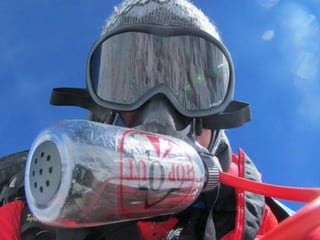
 Atte Miettinen
25 October 2012
Me
•   36 years
•   MBA, London Business School
•   Four start-up’s in it / telecoms
•   Lived abroad for +10 years: USA, Singapore,
    Denmark, United Kingdom, United Arab Emirates
•   Done business in approx. 50 countries
•   Curiosity taken to all seven continents and almost
    100 countries
•   Desire to test my limits: marathons, scuba diving,
    mountaineering
•   22.06.2012: first Finnish Seven Summits
Seven Summits
•   Kilimanjaro, Tanzania
•   Elbrus, Russia
•   Mount Kosciuszko, Australia (Bass List)
•   Carstensz Pyramid, Indonesia (Messner List)
•   Vinson Massif, Antarctica (November 2011)
•   Cerro Aconcagua, Argentina (December 2011)
•   Mount Everest, Nepal (March-May 2012)
•   Denali / Mount McKinley, USA (June 2012)
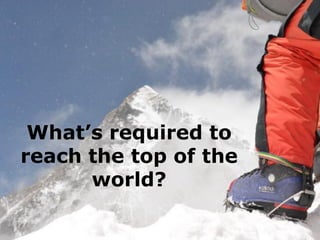
What’s required to
reach the top of the
      world?
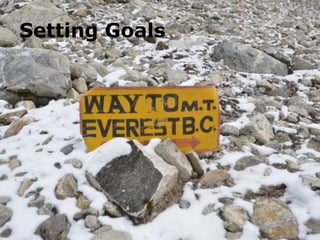
Setting Goals
Setting Goals
• Everyone has their own mountain
• No-one inherits ambition – you have to find it
  inside you!
• Goals need to be challenging but realistic
• Readiness to make sacrifices
• If there’s no passion, a rational person will give up
• Desire vs. obsession
• First step is often the most difficult one
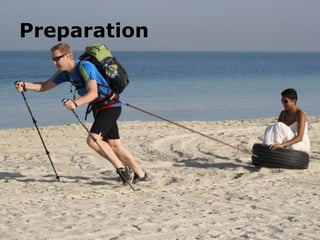
Preparation
Preparation

                 Right skills
                 Right physical and
Recognise the     mental preparation
 key success
   factors!      Right people / team
                 Right tools
                 Right attitude
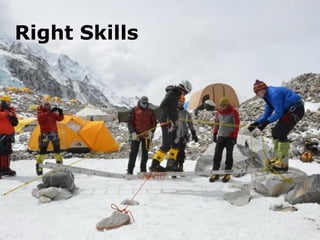
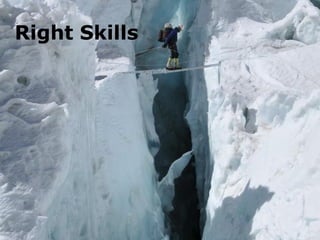
Right Skills
Right Skills
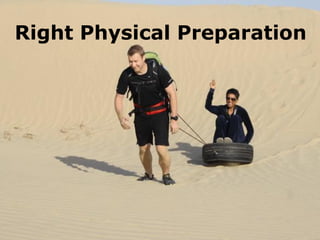
Right Physical Preparation
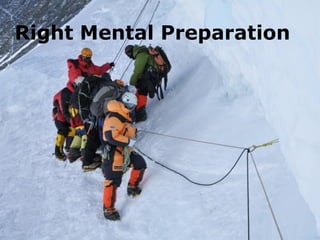
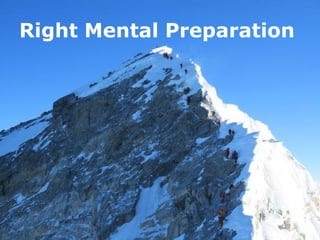
Right Mental Preparation
• Start with the end-goal in mind – no shortcut to
  the top
• Resolve / long-term approach
• Readiness to make sacrifices
• Positive confidence vs. arrogance
• Recognising risk – margins of error are small and
  consequences are often dire
• Scenario planning and ability to adapt when
  needed
Right Mental Preparation
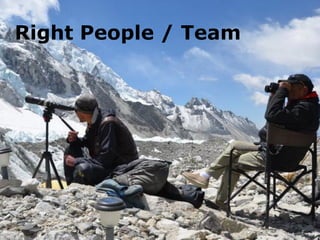
Right People / Team
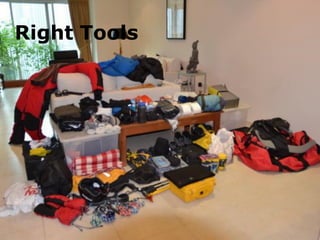
Right Tools
Right Attitude
• Positive thinking – I can do this!
• Team approach – we’ll succeed as a team, by
  supporting each other
• Be ready to learn
• Tolerance for discomfort as well as uncertainty -
  surprises are part of life
• Fear is a healthy feeling, but it should not impact
  decision making!
• High morals / ethics
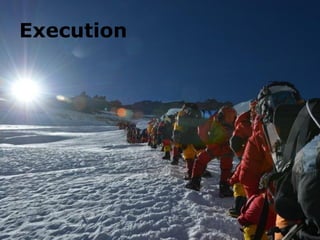
Execution
Execution

                 You
Recognise the
                   Teamwork
 key success       Uncontrollable elements
   factors!
                   Risk management
                   Balance
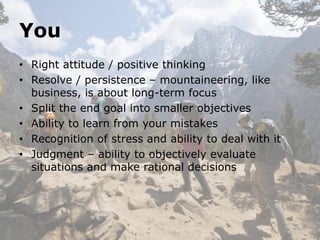
You
• Right attitude / positive thinking
• Resolve / persistence – mountaineering, like
  business, is about long-term focus
• Split the end goal into smaller objectives
• Ability to learn from your mistakes
• Recognition of stress and ability to deal with it
• Judgment – ability to objectively evaluate
  situations and make rational decisions
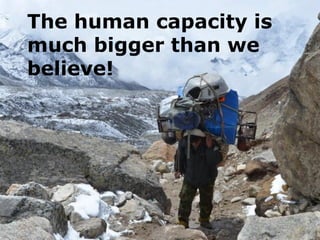
The human capacity is
much bigger than we
believe!
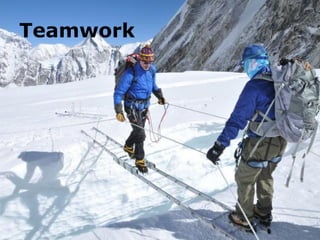
Teamwork
Teamwork
• Everyone’s A-type personalities / naturally
  competitive
• Succeed as a team = succeed as an individual
• Positive attitude / looking after team spirit
• Speak the same language
• Supporting / helping teammates
• Trust / be reliable
• Conscious avoidance of unnecessary conflicts
• How can I help the team to succeed?
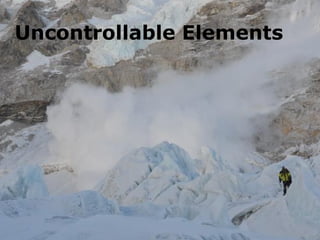
Uncontrollable Elements
• Mountains, just like customers / markets are
  often unpredictable!
• Important that mental preparation has been
  sufficient – on mountains you cannot control
  everything
• Patience / results are only measured at the end
  of the season
• Right timing is critical for success
• A successful expedition always requires a bit of
  luck
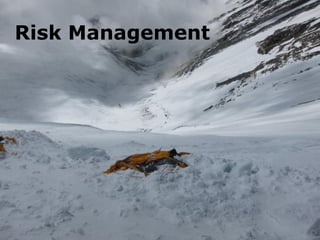
Risk Management
Risk Management
• Starts already during preparation e.g. right people /
  team and right tools
• Positive attitude but critical thinking
• Don’t assume or guess
• Seek to identify potential risks in advance
• Scenario planning
• Fear is a healthy feeling, but should not impact decisions
  making
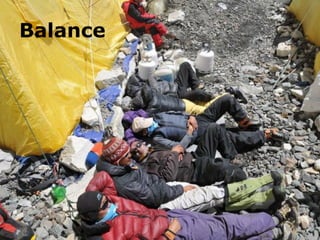
Balance
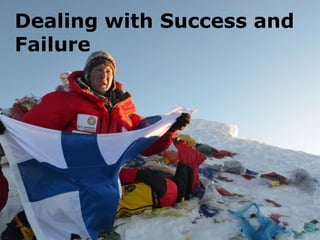
Dealing with Success and
Failure
Dealing with Success and
Failure
• Success on mountains is never guaranteed e.g.
  on everest more than half of climbers return
  home unsuccessful
• However, returning home with all your fingers
  and toes intact is always a sign of a successful
  expedition
• Failures teach you most about yourself and
  others!
• The price of success should not be too high
The price of success should
not be too high – you need
to be ready to say no when
  that’s the right choice!
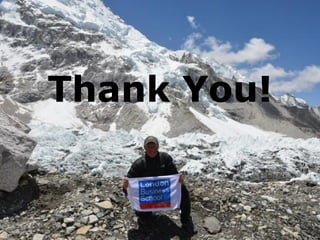
Thank You!
www.sevensummits.fi
www.facebook.com/AtteSevenSummits
www.twitter.com/AtteMiettinen

Aim High! - Atte Miettinen

  • 1.
    Aim High! AtteMiettinen 25 October 2012
  • 3.
    Me • 36 years • MBA, London Business School • Four start-up’s in it / telecoms • Lived abroad for +10 years: USA, Singapore, Denmark, United Kingdom, United Arab Emirates • Done business in approx. 50 countries • Curiosity taken to all seven continents and almost 100 countries • Desire to test my limits: marathons, scuba diving, mountaineering • 22.06.2012: first Finnish Seven Summits
  • 4.
    Seven Summits • Kilimanjaro, Tanzania • Elbrus, Russia • Mount Kosciuszko, Australia (Bass List) • Carstensz Pyramid, Indonesia (Messner List) • Vinson Massif, Antarctica (November 2011) • Cerro Aconcagua, Argentina (December 2011) • Mount Everest, Nepal (March-May 2012) • Denali / Mount McKinley, USA (June 2012)
  • 5.
    What’s required to reachthe top of the world?
  • 6.
  • 7.
    Setting Goals • Everyonehas their own mountain • No-one inherits ambition – you have to find it inside you! • Goals need to be challenging but realistic • Readiness to make sacrifices • If there’s no passion, a rational person will give up • Desire vs. obsession • First step is often the most difficult one
  • 8.
  • 9.
    Preparation  Right skills  Right physical and Recognise the mental preparation key success factors!  Right people / team  Right tools  Right attitude
  • 10.
  • 11.
  • 12.
  • 13.
  • 14.
    Right Mental Preparation •Start with the end-goal in mind – no shortcut to the top • Resolve / long-term approach • Readiness to make sacrifices • Positive confidence vs. arrogance • Recognising risk – margins of error are small and consequences are often dire • Scenario planning and ability to adapt when needed
  • 15.
  • 16.
  • 17.
  • 18.
    Right Attitude • Positivethinking – I can do this! • Team approach – we’ll succeed as a team, by supporting each other • Be ready to learn • Tolerance for discomfort as well as uncertainty - surprises are part of life • Fear is a healthy feeling, but it should not impact decision making! • High morals / ethics
  • 19.
  • 20.
    Execution  You Recognise the  Teamwork key success  Uncontrollable elements factors!  Risk management  Balance
  • 21.
    You • Right attitude/ positive thinking • Resolve / persistence – mountaineering, like business, is about long-term focus • Split the end goal into smaller objectives • Ability to learn from your mistakes • Recognition of stress and ability to deal with it • Judgment – ability to objectively evaluate situations and make rational decisions
  • 22.
    The human capacityis much bigger than we believe!
  • 23.
  • 24.
    Teamwork • Everyone’s A-typepersonalities / naturally competitive • Succeed as a team = succeed as an individual • Positive attitude / looking after team spirit • Speak the same language • Supporting / helping teammates • Trust / be reliable • Conscious avoidance of unnecessary conflicts • How can I help the team to succeed?
  • 25.
  • 26.
    Uncontrollable Elements • Mountains,just like customers / markets are often unpredictable! • Important that mental preparation has been sufficient – on mountains you cannot control everything • Patience / results are only measured at the end of the season • Right timing is critical for success • A successful expedition always requires a bit of luck
  • 27.
  • 28.
    Risk Management • Startsalready during preparation e.g. right people / team and right tools • Positive attitude but critical thinking • Don’t assume or guess • Seek to identify potential risks in advance • Scenario planning • Fear is a healthy feeling, but should not impact decisions making
  • 29.
  • 30.
  • 31.
    Dealing with Successand Failure • Success on mountains is never guaranteed e.g. on everest more than half of climbers return home unsuccessful • However, returning home with all your fingers and toes intact is always a sign of a successful expedition • Failures teach you most about yourself and others! • The price of success should not be too high
  • 32.
    The price ofsuccess should not be too high – you need to be ready to say no when that’s the right choice!
  • 33.
  • 34.