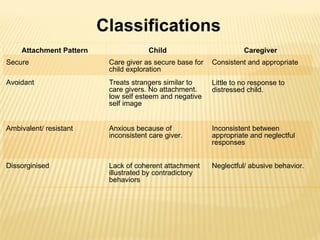
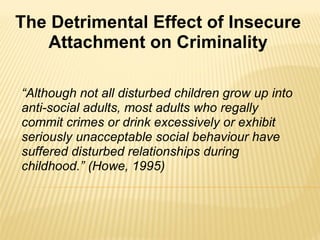
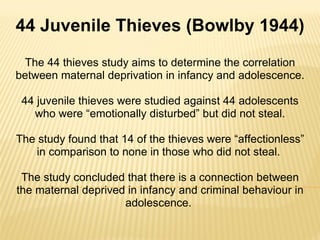
Attachment theory proposes that the way a child bonds with their caregiver influences their development and future behaviors. Insecure attachment, where caregivers are inconsistent or neglectful, is linked to difficulties with relationships, self-esteem, impulse control and criminality later in life. Early intervention programs that support child development and strong parent-child bonds can help reduce the risk of future antisocial behaviors by promoting secure attachment. However, attachment is just one of many factors that influence youth offending, and nature and nurture both play complex roles.



















![Causesofcrime[1]](https://cdn.slidesharecdn.com/ss_thumbnails/causesofcrime1-100128054430-phpapp01-thumbnail.jpg?width=640&height=640&fit=bounds)


