Megan Torrance
Getting It Done:
Leveraging Agile
Techniques for Working
With SMEs, Sponsors, IT,
and the Organization
Megan Torrance
mtorrance@torrancelearning.com
@MMTorrance | @xAPIGnome | @Tlearning
3
Adobe Stock
https://www.cio.com/article/3156998/agile-project-management-a-beginners-guide.html
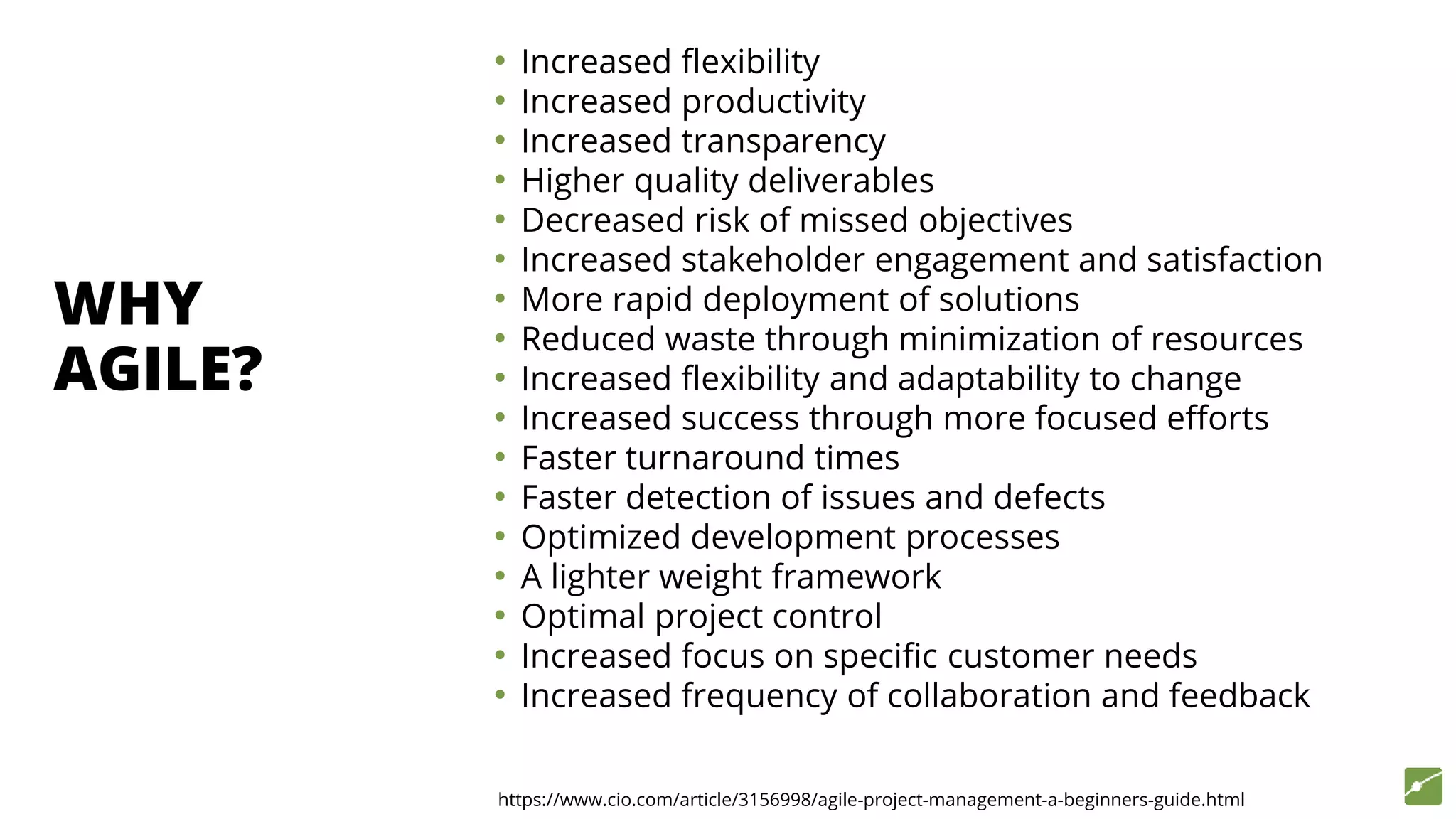
WHY
AGILE?
• Increased flexibility
• Increased productivity
• Increased transparency
• Higher quality deliverables
• Decreased risk of missed objectives
• Increased stakeholder engagement and satisfaction
• More rapid deployment of solutions
• Reduced waste through minimization of resources
• Increased flexibility and adaptability to change
• Increased success through more focused efforts
• Faster turnaround times
• Faster detection of issues and defects
• Optimized development processes
• A lighter weight framework
• Optimal project control
• Increased focus on specific customer needs
• Increased frequency of collaboration and feedback
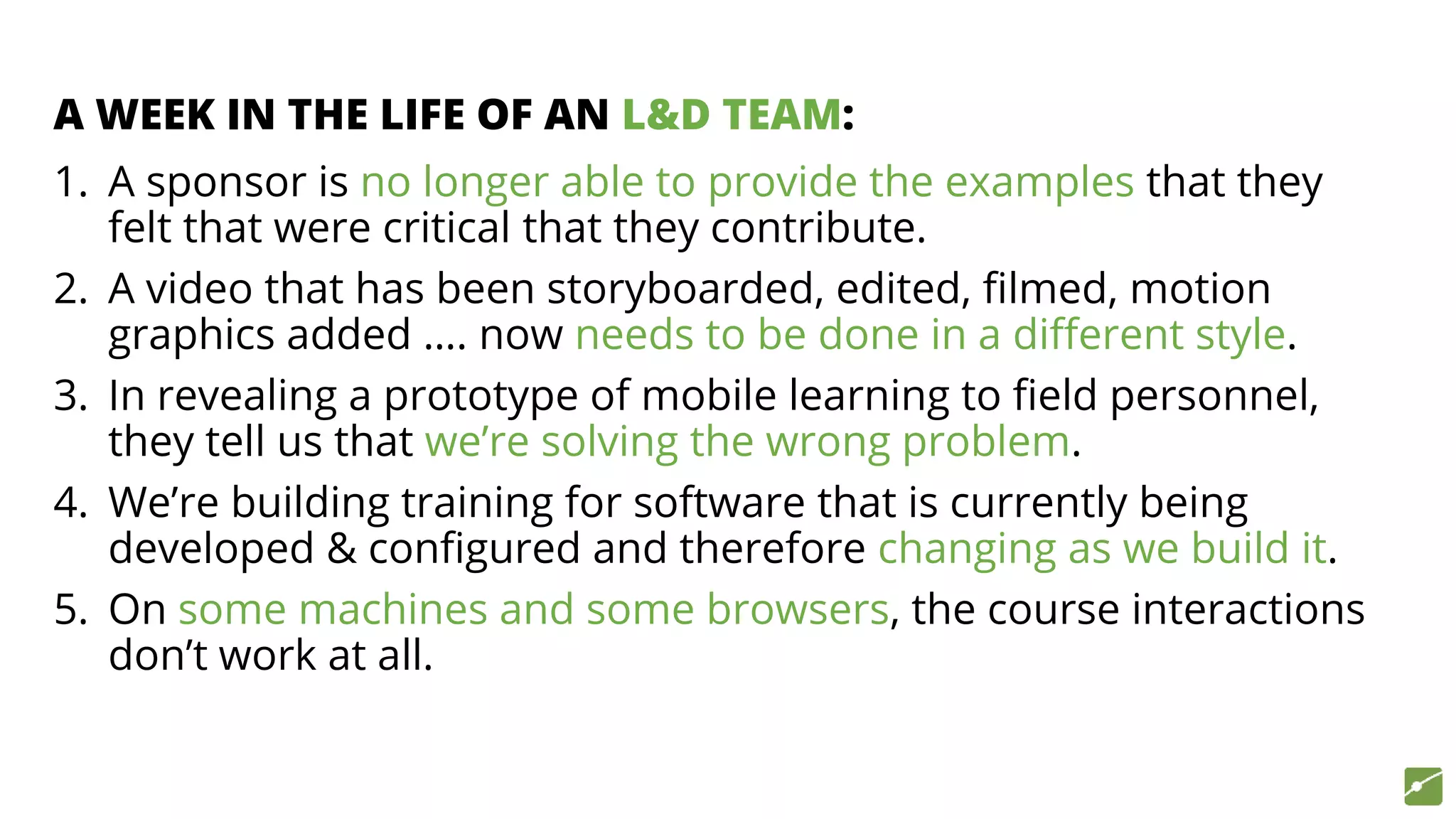
A WEEK IN THE LIFE OF AN L&D TEAM:
1. A sponsor is no longer able to provide the examples that they
felt that were critical that they contribute.
2. A video that has been storyboarded, edited, filmed, motion
graphics added …. now needs to be done in a different style.
3. In revealing a prototype of mobile learning to field personnel,
they tell us that we’re solving the wrong problem.
4. We’re building training for software that is currently being
developed & configured and therefore changing as we build it.
5. On some machines and some browsers, the course interactions
don’t work at all.
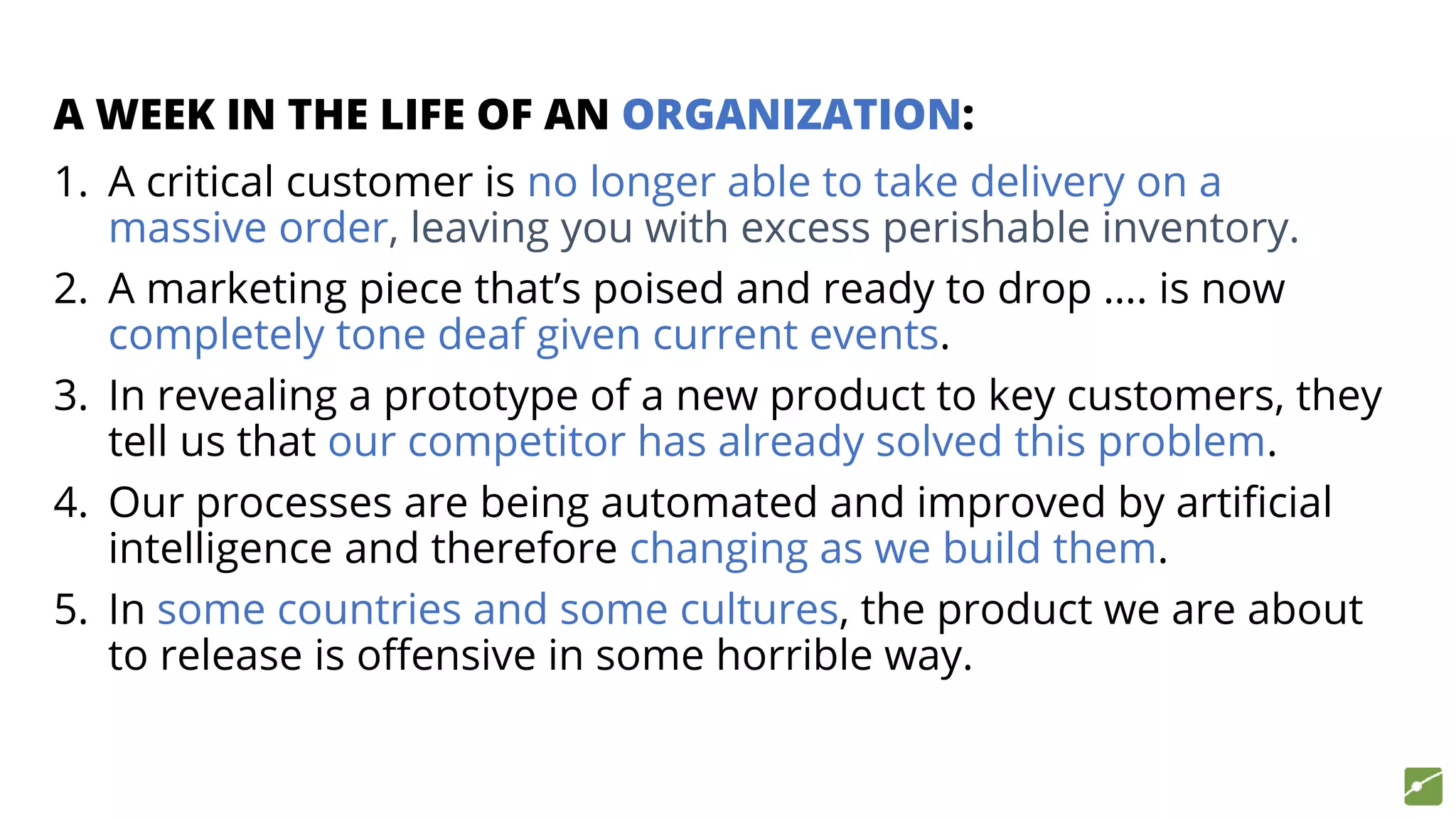
A WEEK IN THE LIFE OF AN ORGANIZATION:
1. A critical customer is no longer able to take delivery on a
massive order, leaving you with excess perishable inventory.
2. A marketing piece that’s poised and ready to drop …. is now
completely tone deaf given current events.
3. In revealing a prototype of a new product to key customers, they
tell us that our competitor has already solved this problem.
4. Our processes are being automated and improved by artificial
intelligence and therefore changing as we build them.
5. In some countries and some cultures, the product we are about
to release is offensive in some horrible way.
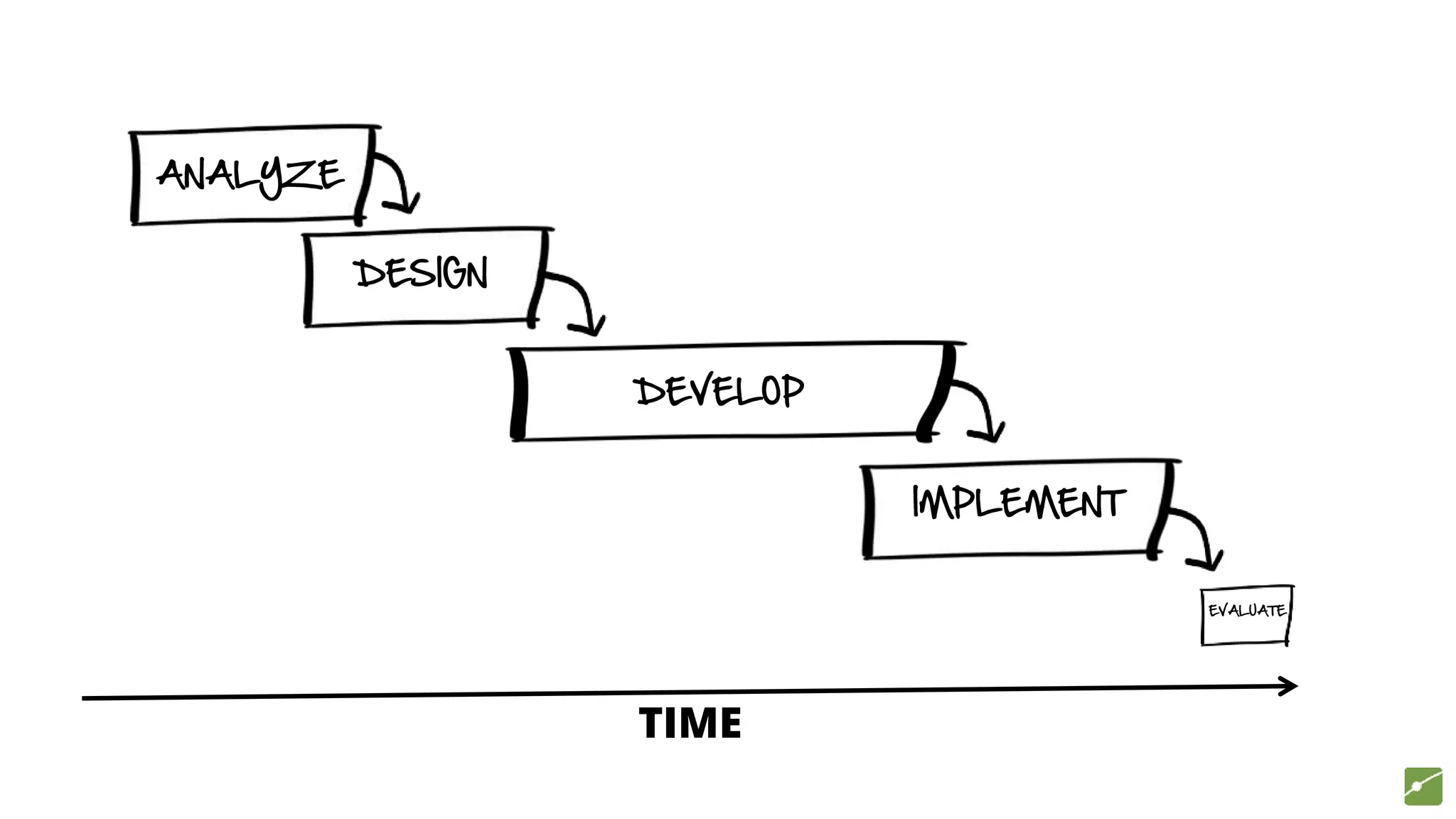
ANALYZE
DESIGN
DEVELOP
IMPLEMENT
EVALUATE
TIME
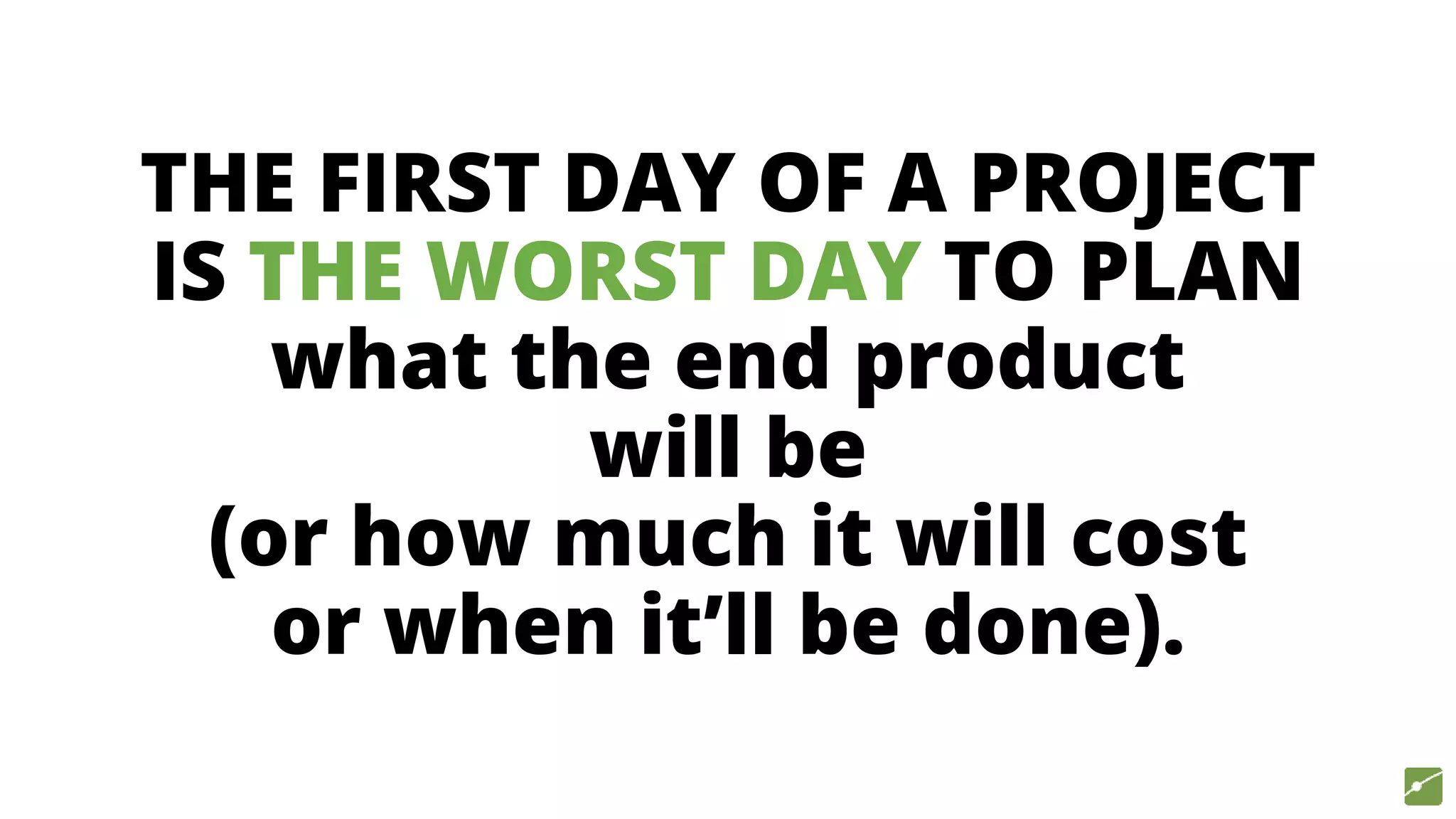
THE FIRST DAY OF A PROJECT
IS THE WORST DAY TO PLAN
what the end product
will be
(or how much it will cost
or when it’ll be done).
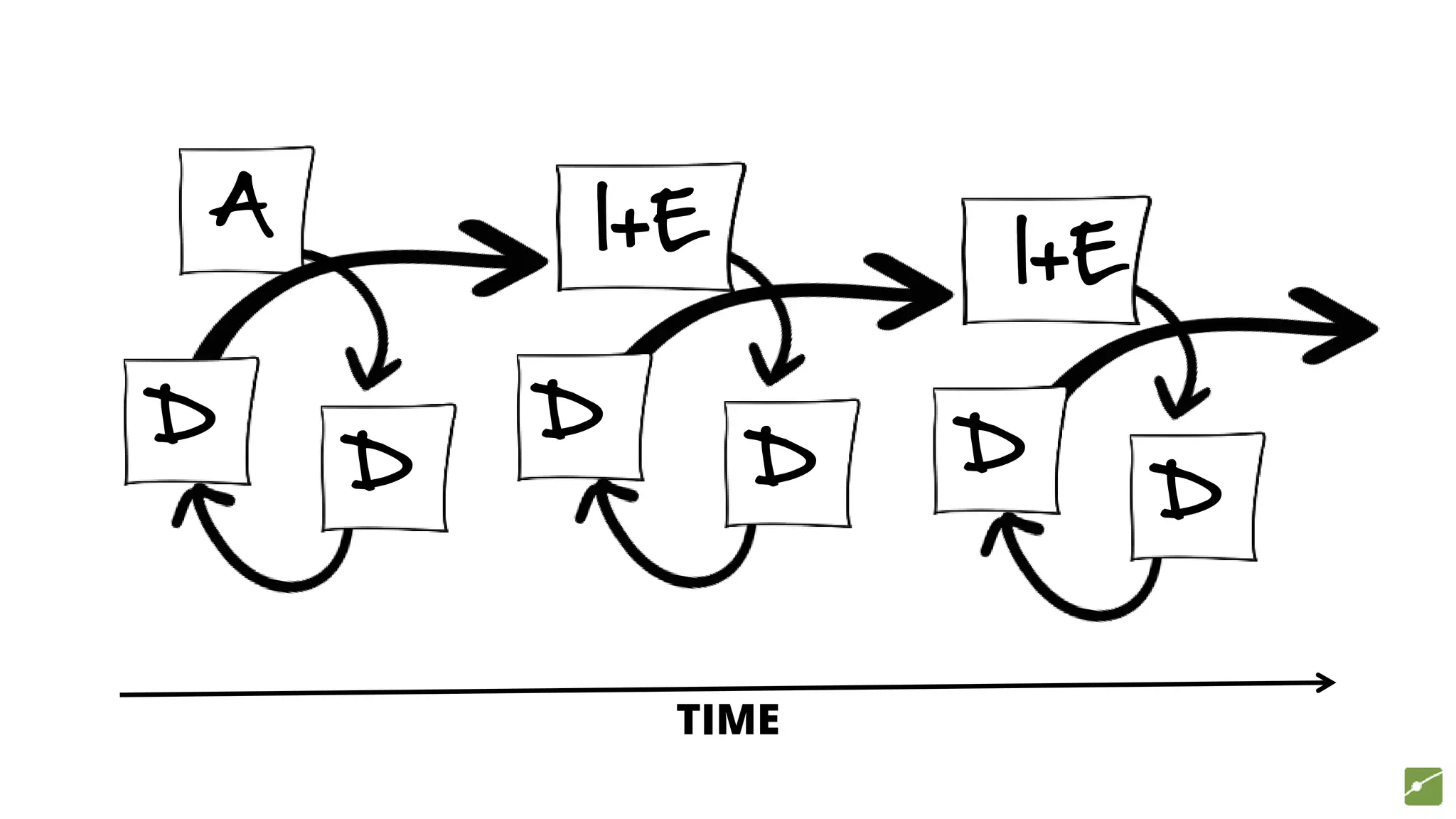
A
D
I+E
D
I+E
D
DD D
TIME
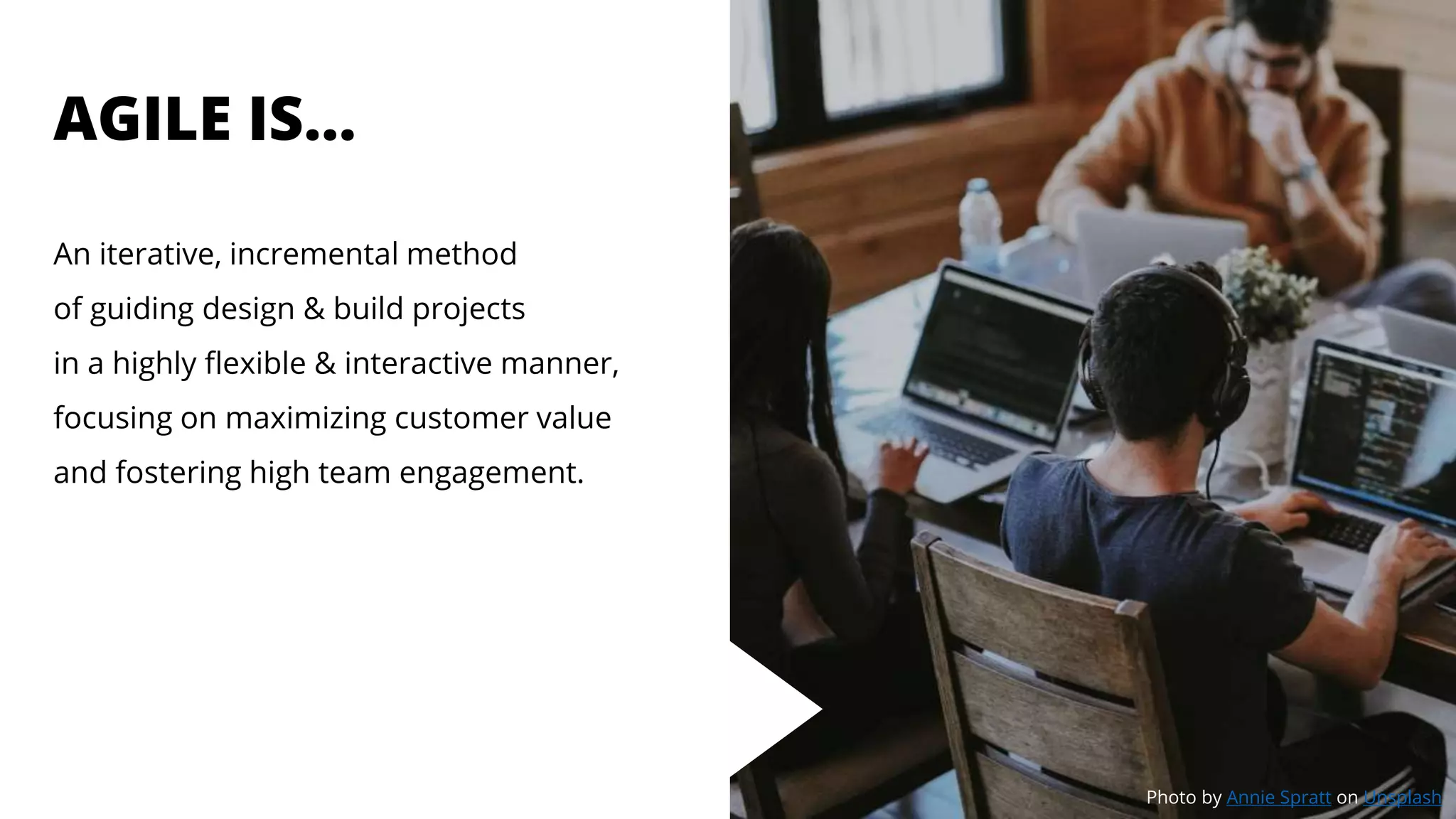
AGILE IS…
An iterative, incremental method
of guiding design & build projects
in a highly flexible & interactive manner,
focusing on maximizing customer value
and fostering high team engagement.
Photo by Annie Spratt on Unsplash
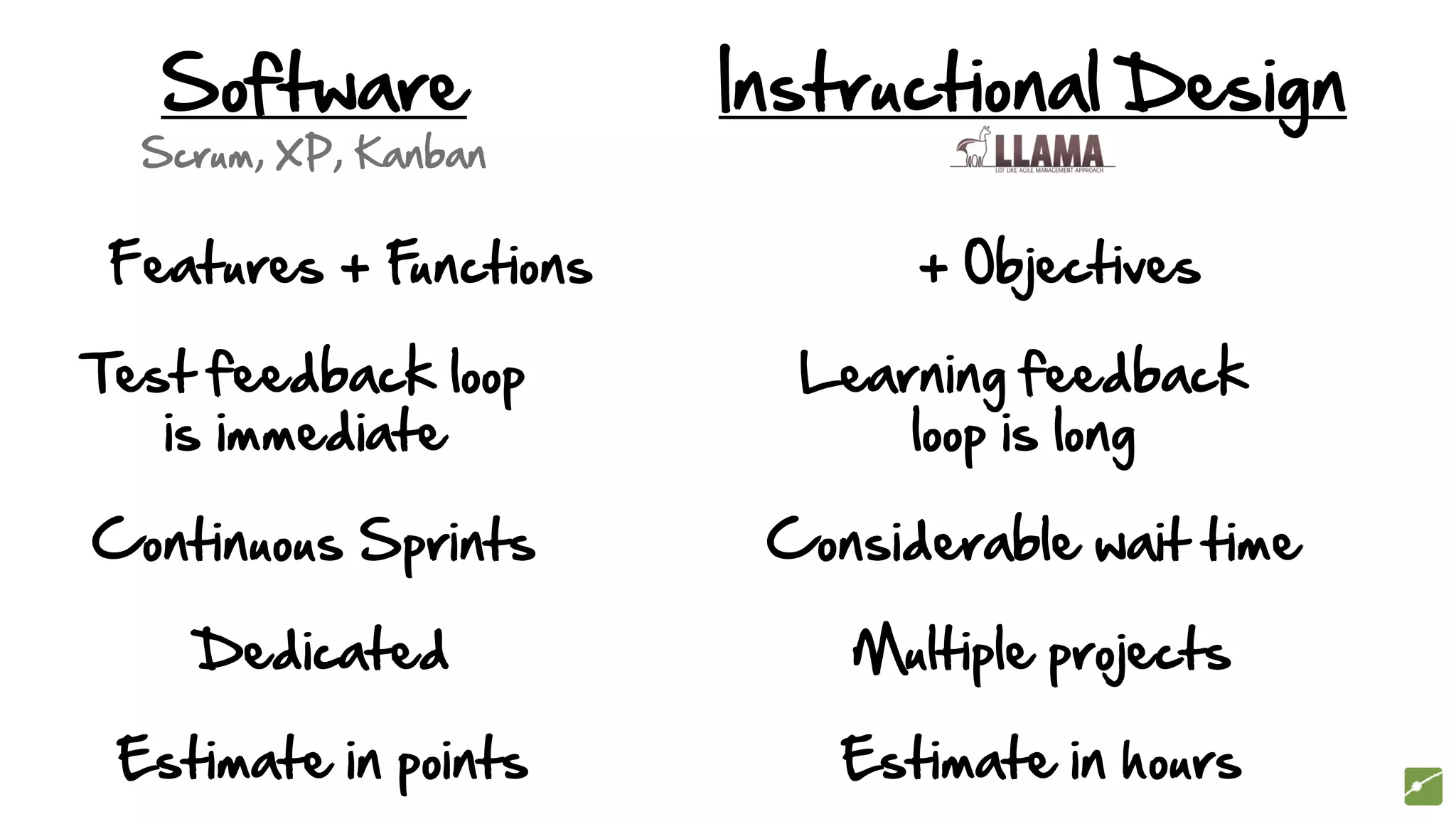
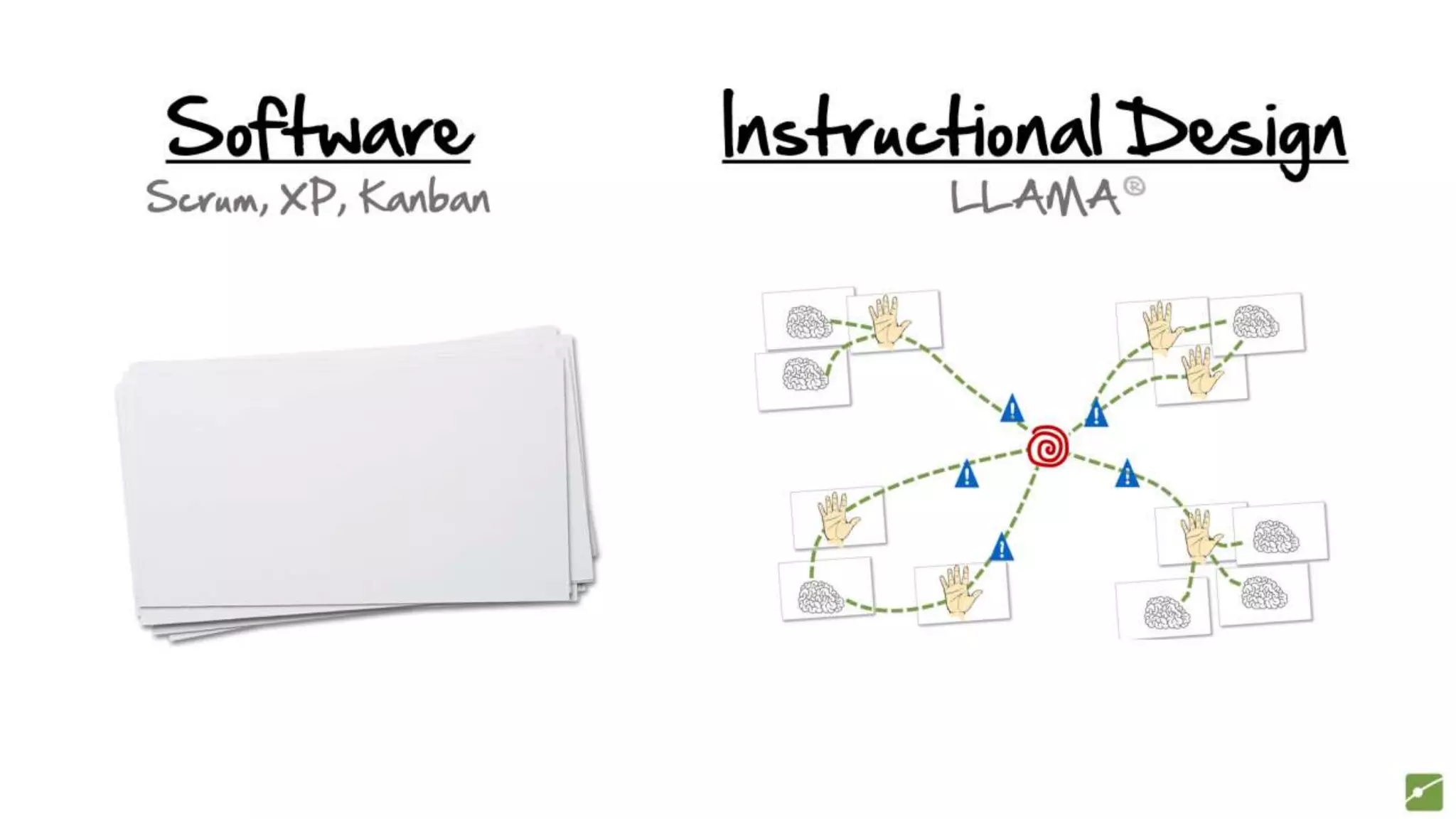
Software Instructional Design
Dedicated Multiple projects
Features + Functions + Objectives
Continuous Sprints Considerable wait time
Scrum, XP, Kanban
Estimate in points Estimate in hours
Test feedback loop
is immediate
Learning feedback
loop is long
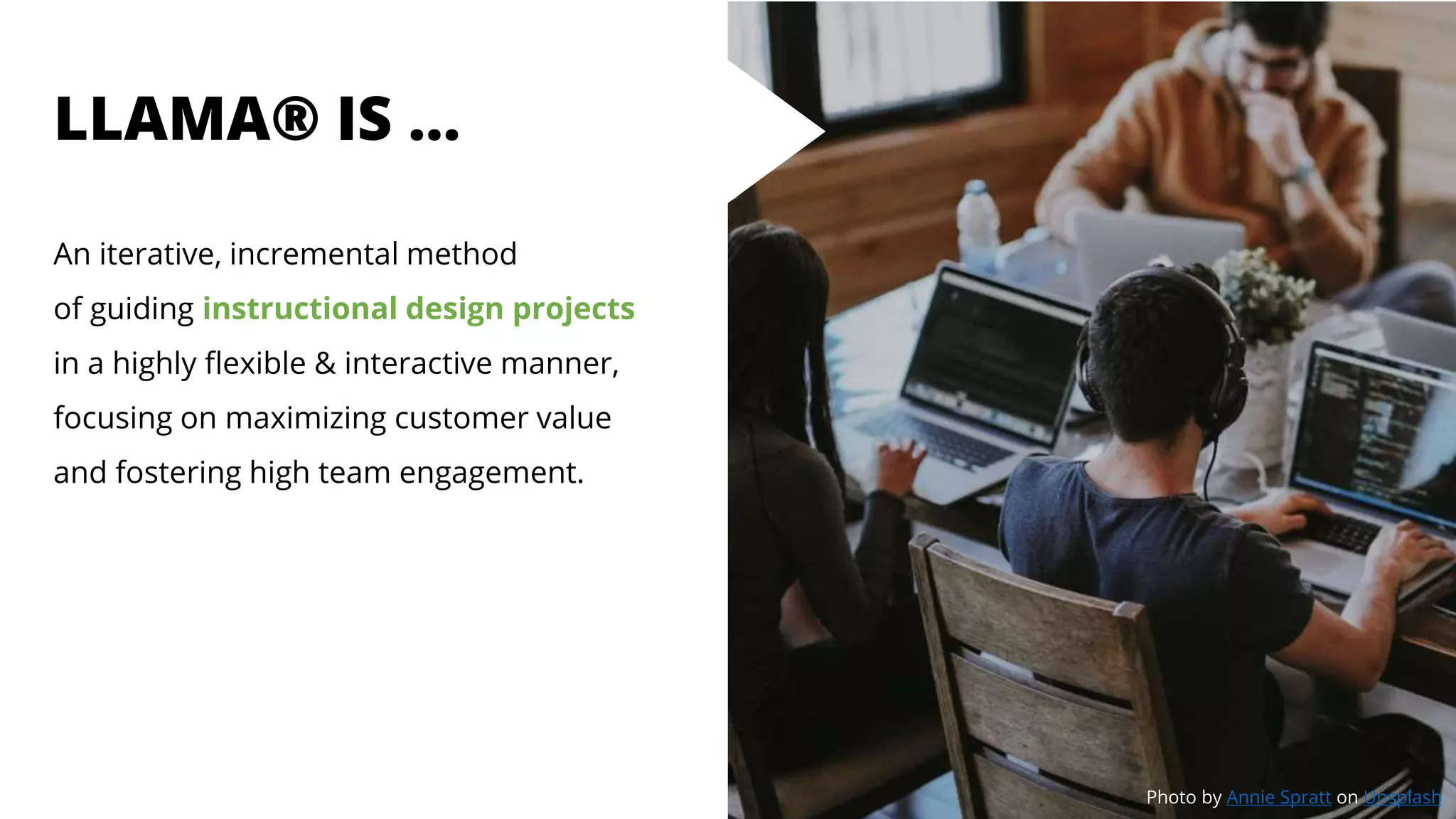
LLAMA® IS …
An iterative, incremental method
of guiding instructional design projects
in a highly flexible & interactive manner,
focusing on maximizing customer value
and fostering high team engagement.
Photo by Annie Spratt on Unsplash
WE ARE UNCOVERING BETTER
WAYS OF
DEVELOPING SOFTWARE
BY DOING IT
AND BY HELPING OTHERS
DO IT...
source: www.agilemanifesto.org
T H E A G I L E M A N I F E S T O
THROUGH THIS WORK
WE HAVE COME TO VALUE:
INDIVIDUALS AND
INTERACTIONS
OVER
PROCESSES AND TOOLS
source: www.agilemanifesto.org
T H E A G I L E M A N I F E S T O
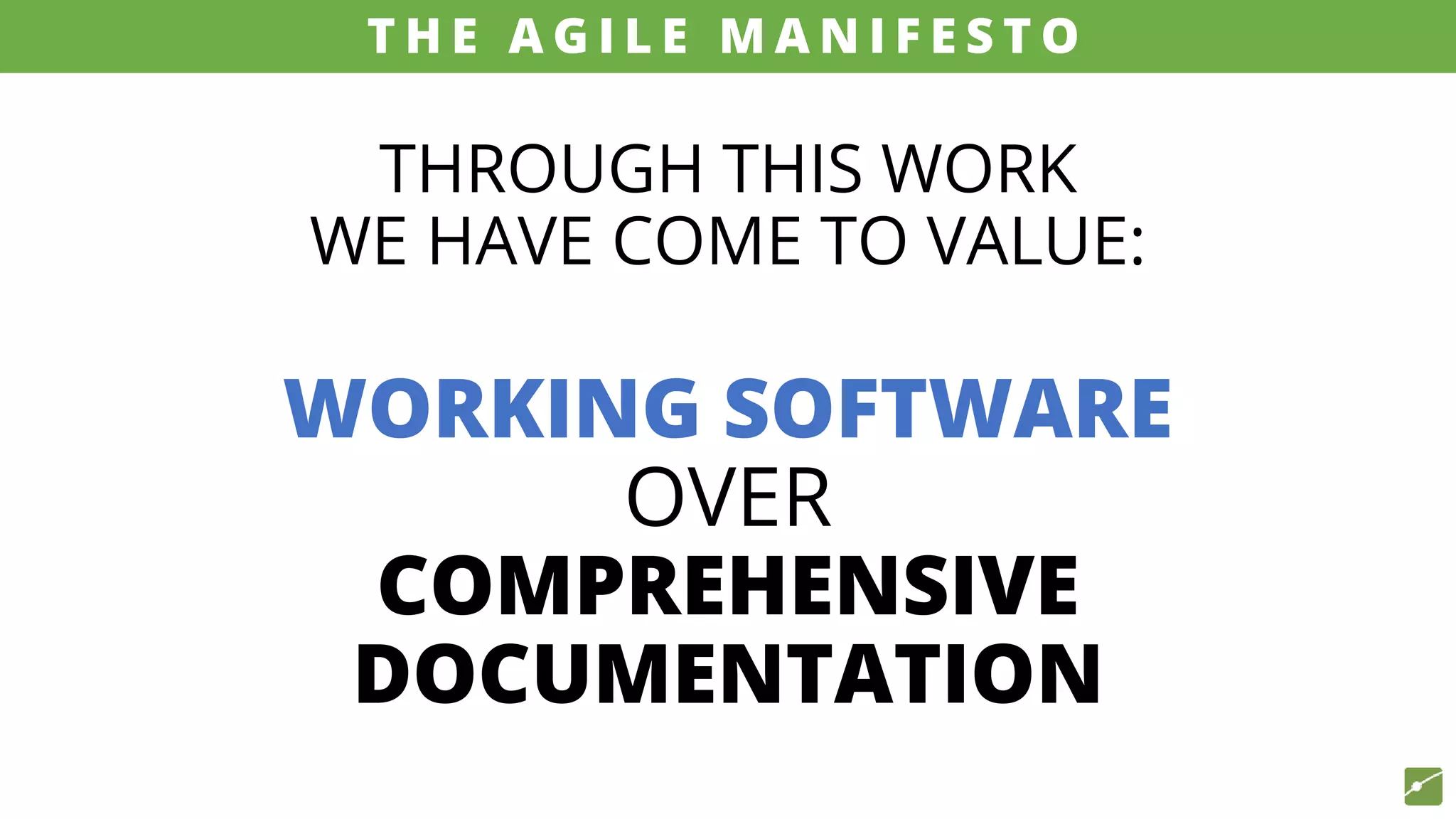
THROUGH THIS WORK
WE HAVE COME TO VALUE:
WORKING SOFTWARE
OVER
COMPREHENSIVE
DOCUMENTATION
source: www.agilemanifesto.org
T H E A G I L E M A N I F E S T O
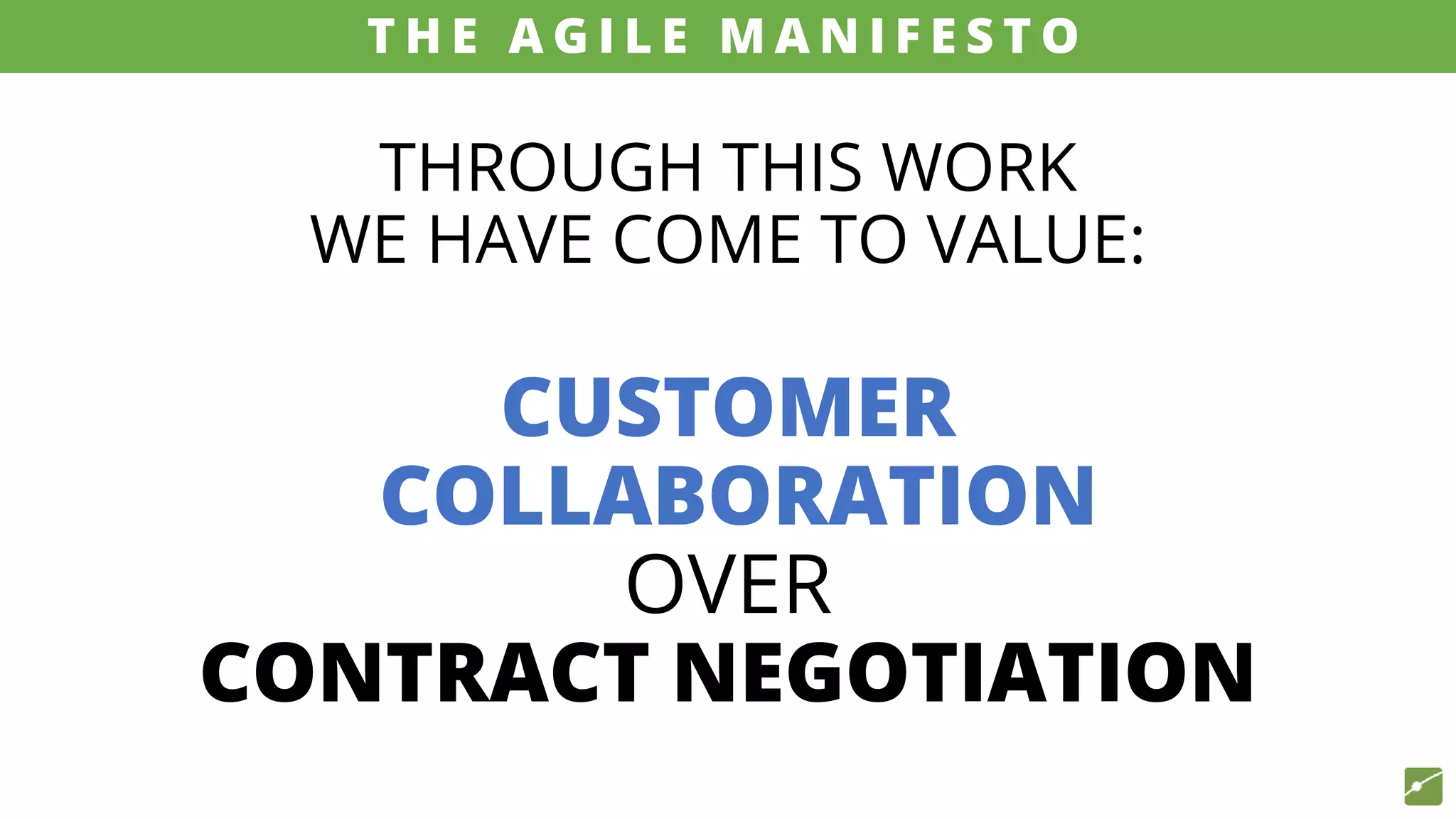
THROUGH THIS WORK
WE HAVE COME TO VALUE:
CUSTOMER
COLLABORATION
OVER
CONTRACT NEGOTIATION
source: www.agilemanifesto.org
T H E A G I L E M A N I F E S T O
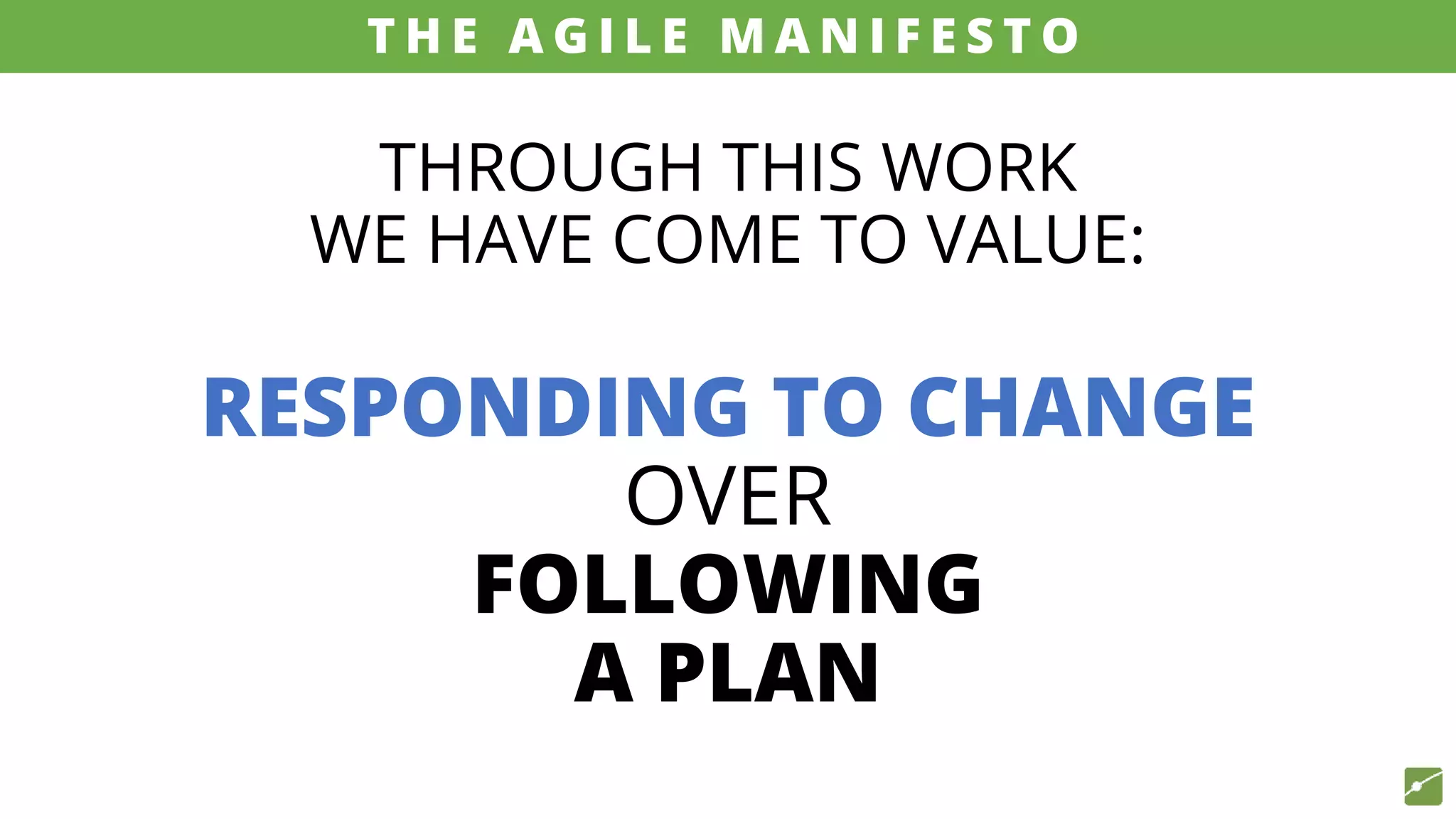
THROUGH THIS WORK
WE HAVE COME TO VALUE:
RESPONDING TO CHANGE
OVER
FOLLOWING
A PLAN
source: www.agilemanifesto.org
T H E A G I L E M A N I F E S T O
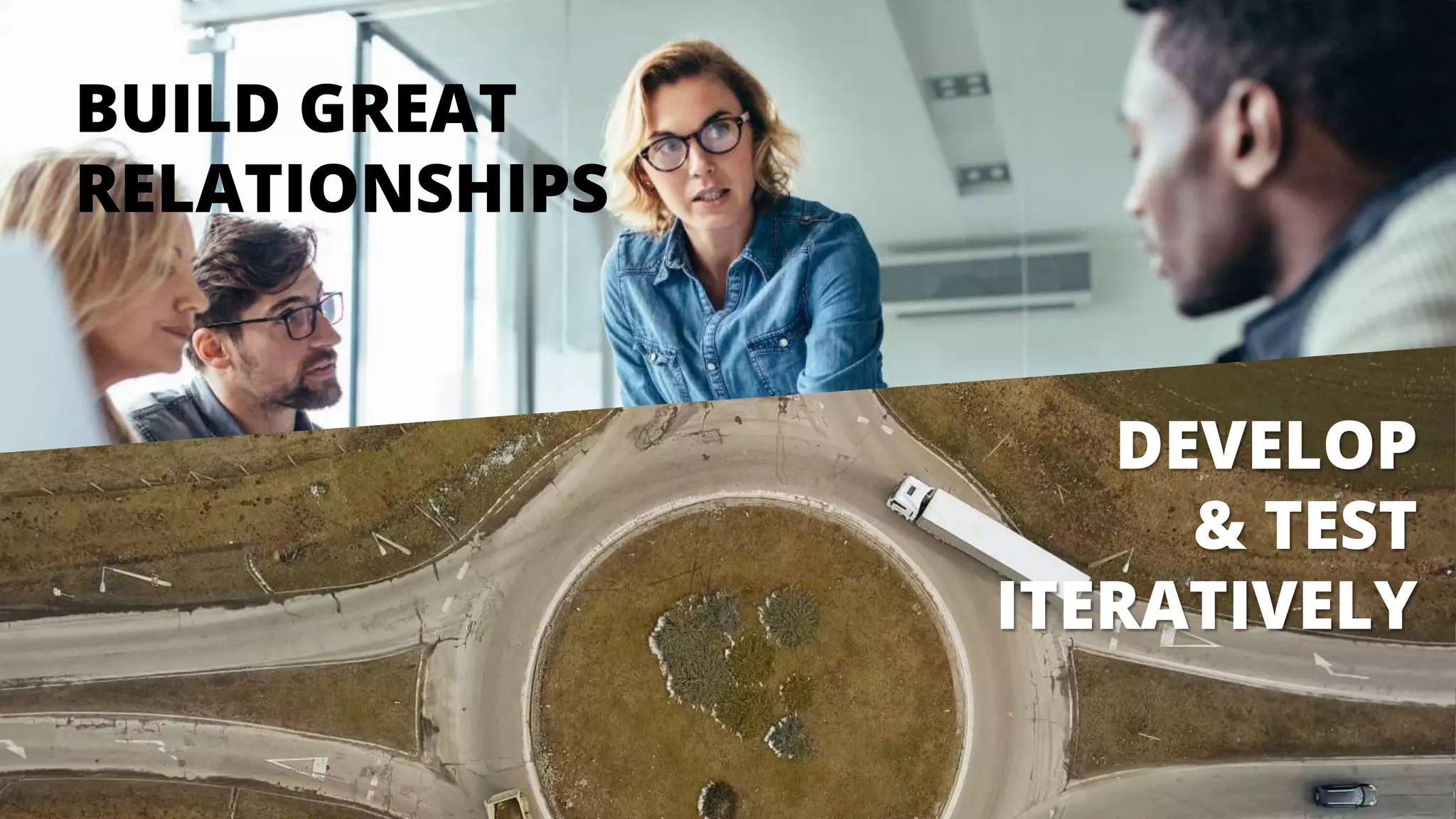
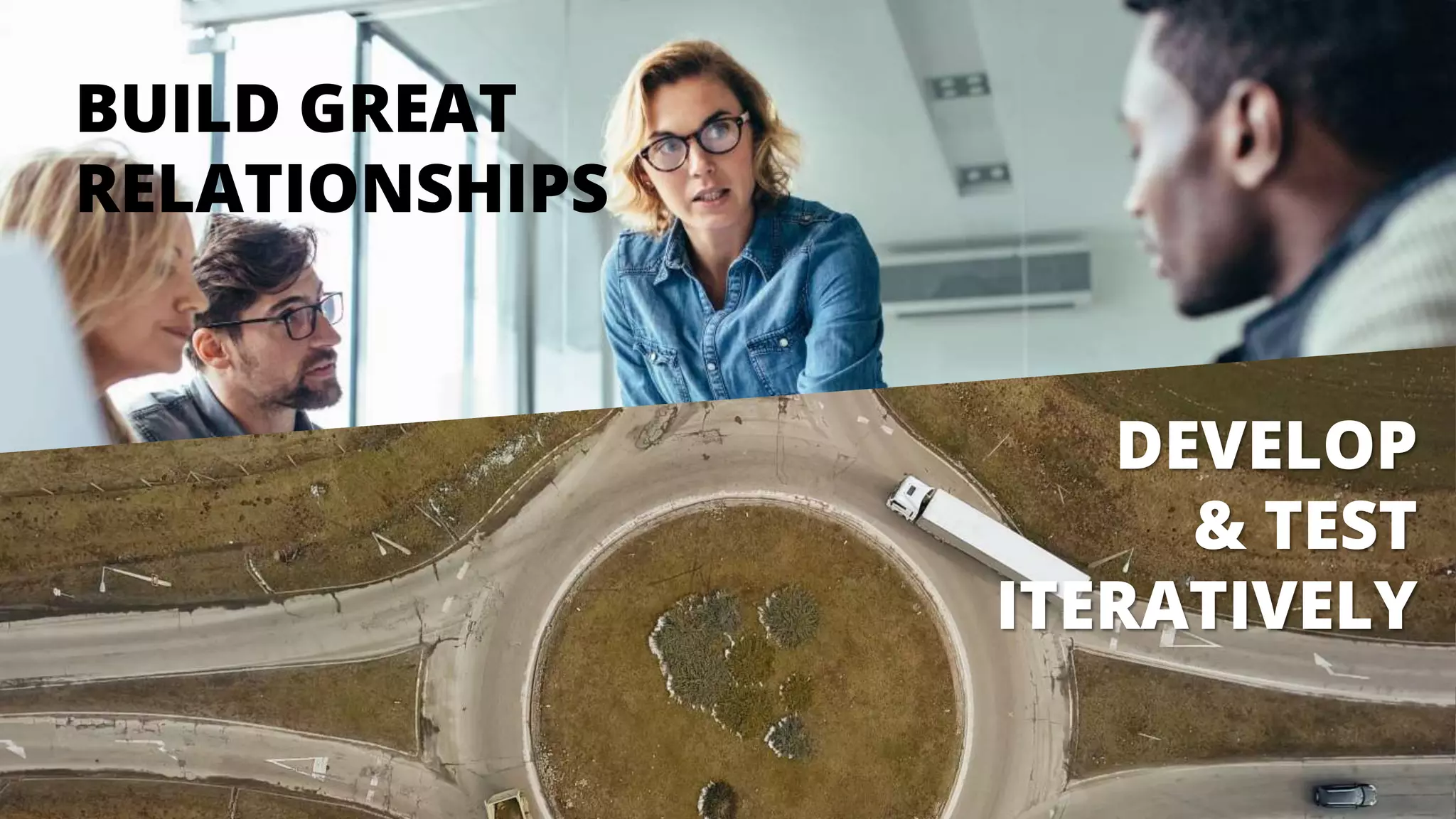
BUILD GREAT
RELATIONSHIPS
DEVELOP
& TEST
ITERATIVELY
“If you don’t know who
the business sponsor is,
STOP WORKING.”
−Lou Russell
Lou Russell, Duchess/Director of Learning of RMA, a Moser
Consulting company, author, speaker, all around cool person.
www.youtube.com/watch?v=CelfujiqqiQ
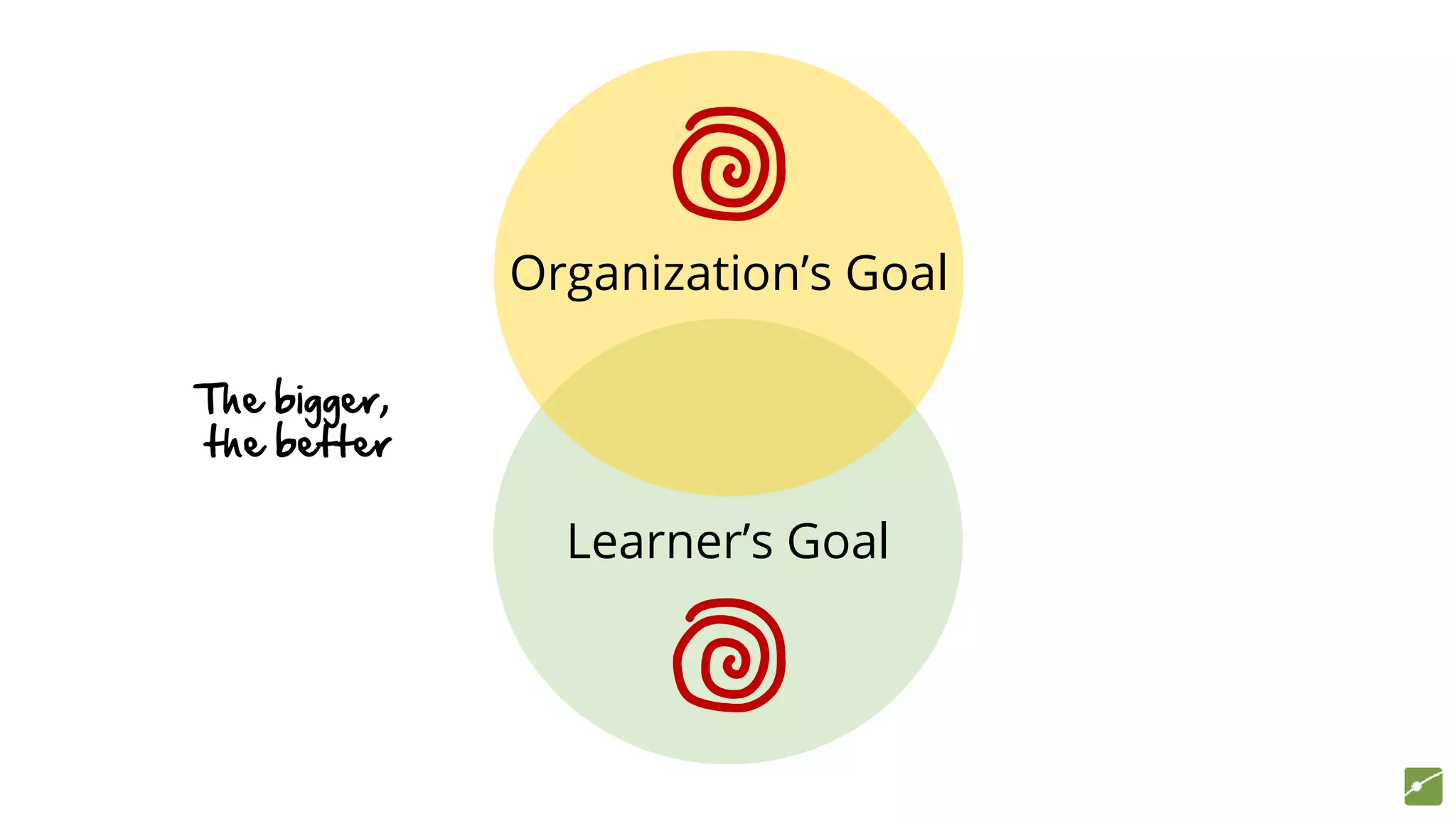
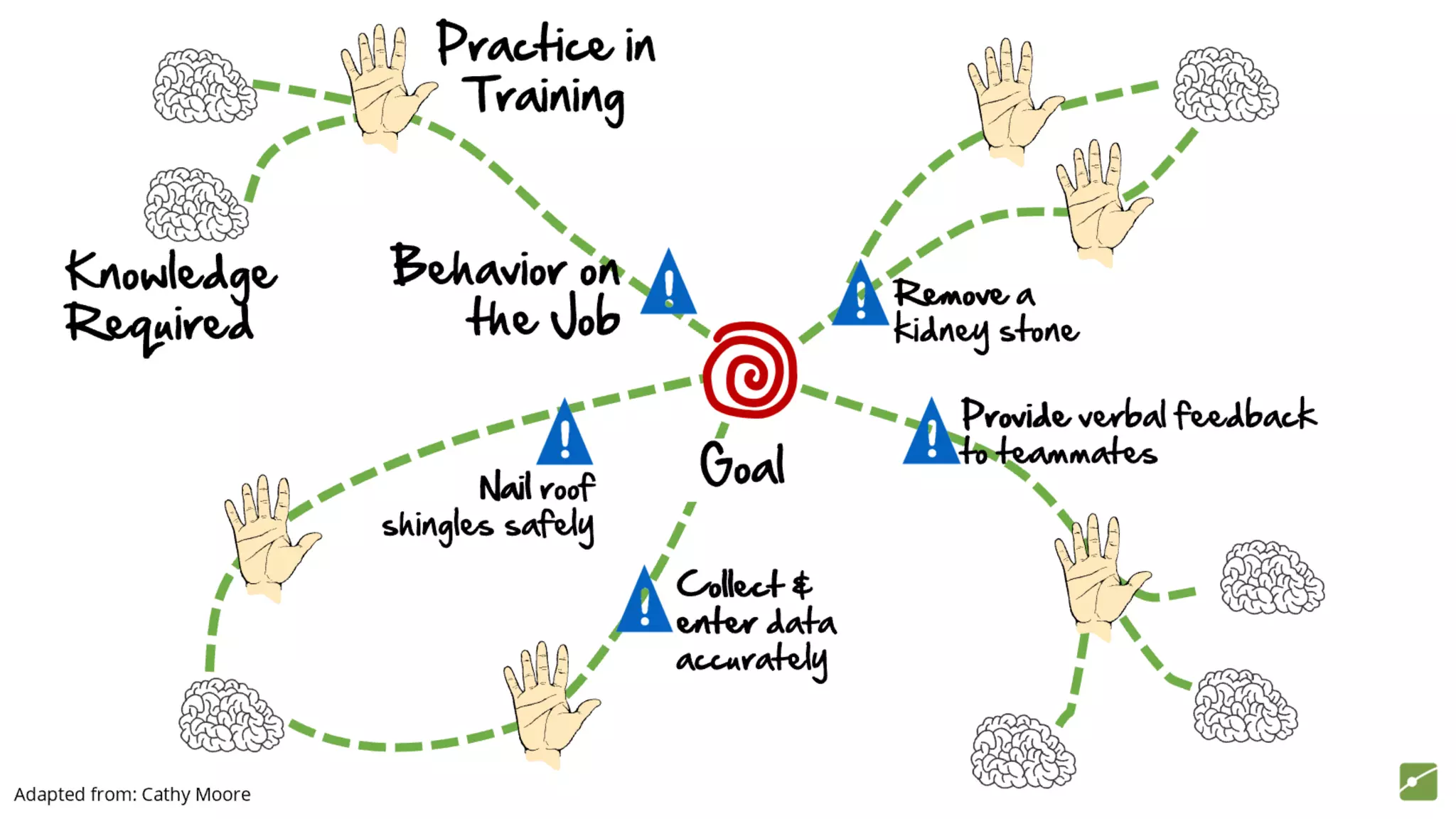
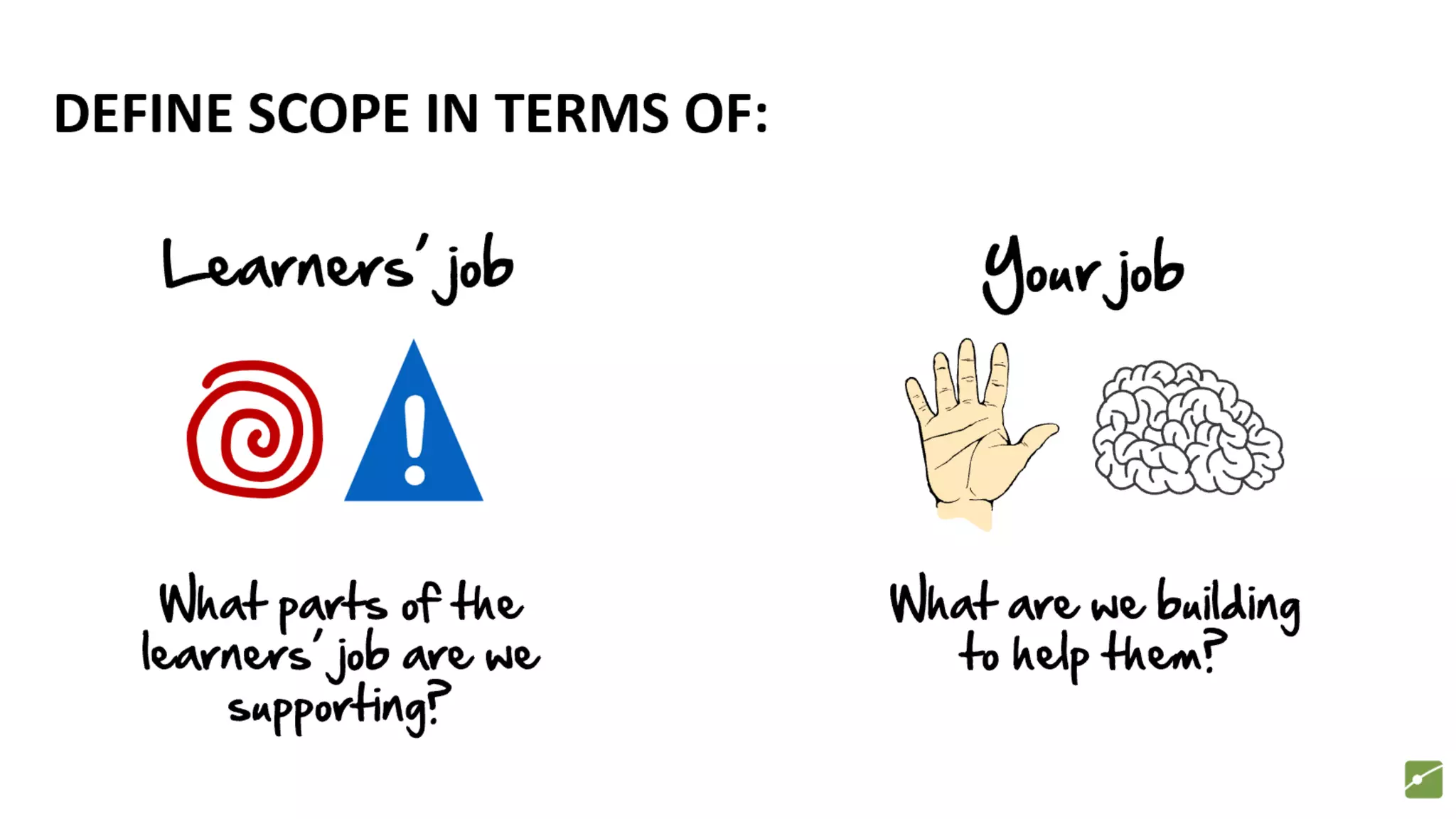
Learner’s Goal
Organization’s Goal
The bigger,
the better
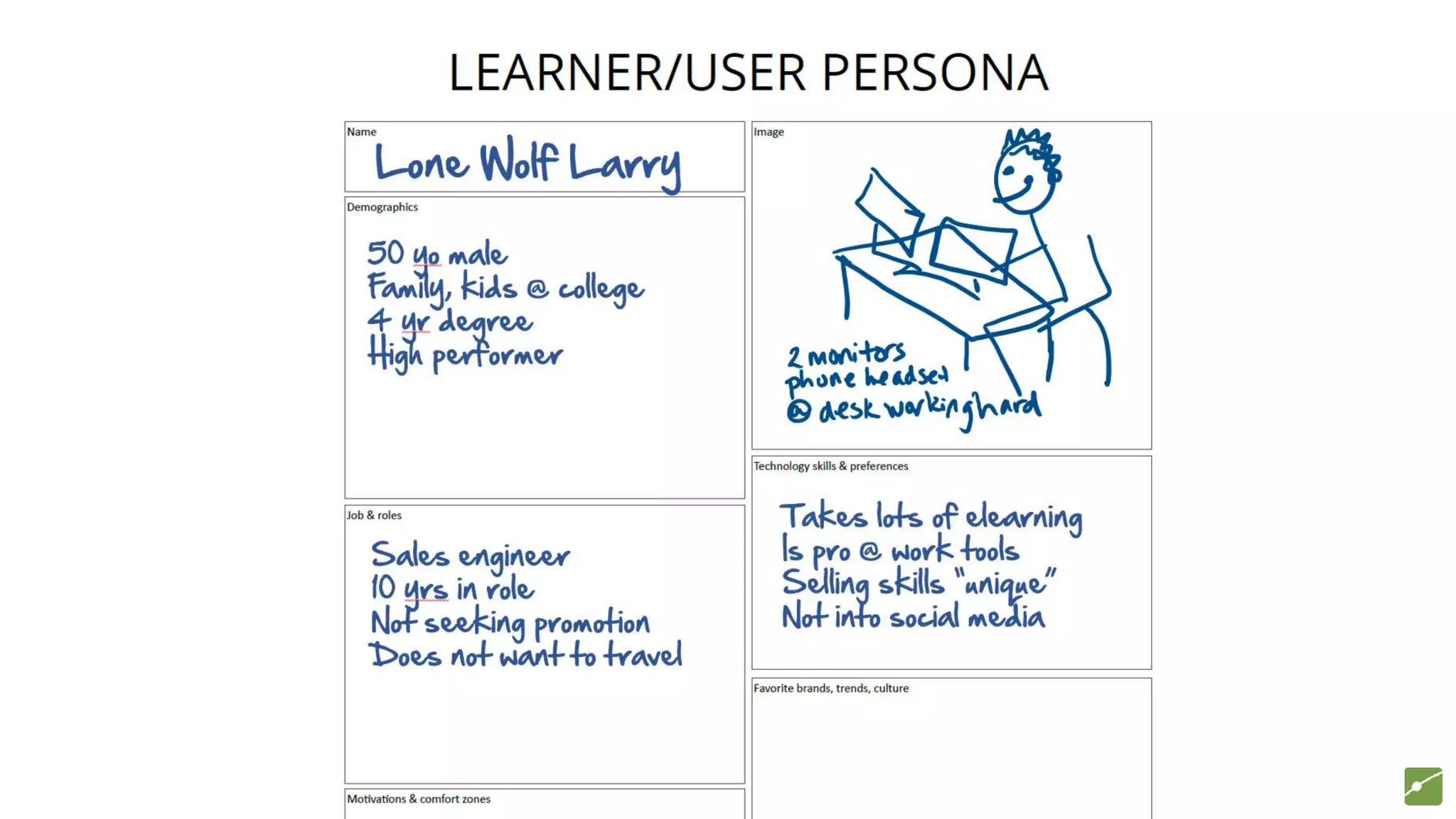
IS THE AVERAGE LEARNER
MEANINGFUL?
24
http://www.elcidweddings.com/wp-content/uploads/2012/08/Real-AdobeStock_211557660
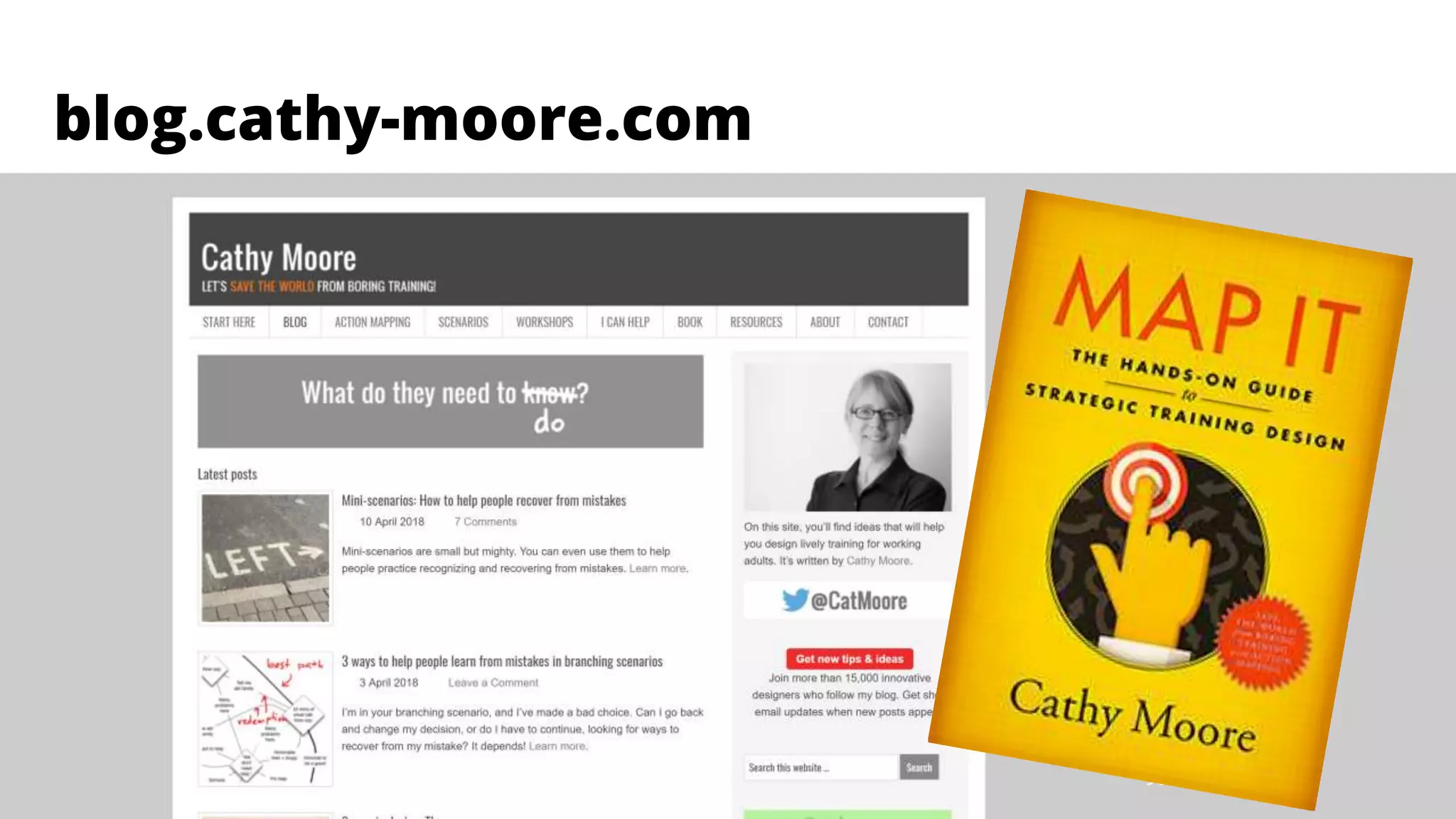
blog.cathy-moore.com
http://blog.cathy-moore.com/
BUILD GREAT
RELATIONSHIPS
DEVELOP
& TEST
ITERATIVELY
Richard Sheridan, CEO Menlo
Innovations. Author Agile Explained and Joy, Inc.
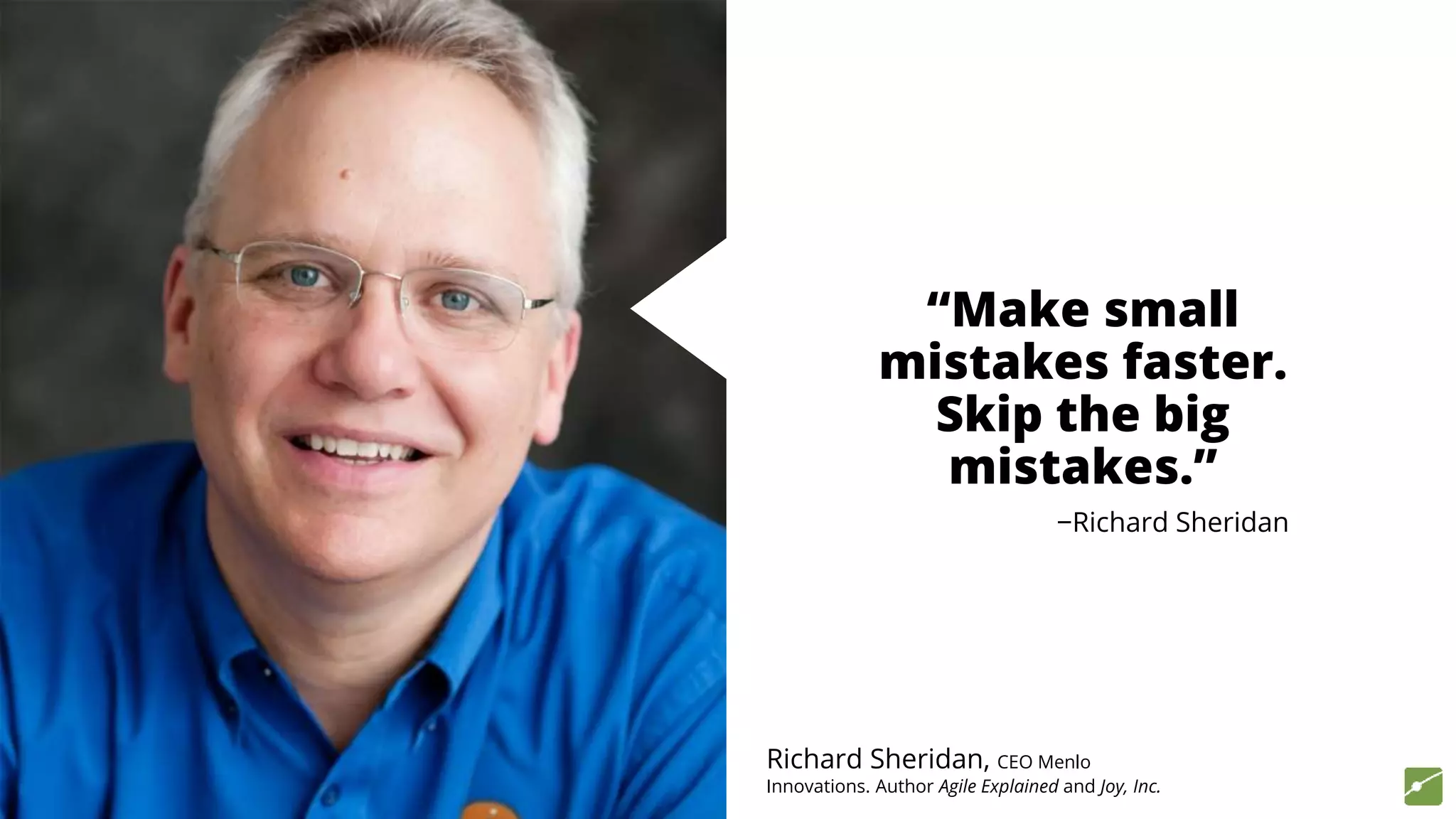
“Make small
mistakes faster.
Skip the big
mistakes.”
−Richard Sheridan
DO THE SIMPLEST
THING THAT COULD
POSSIBLY WORK.
M.V.P.AdobeStock_224501760
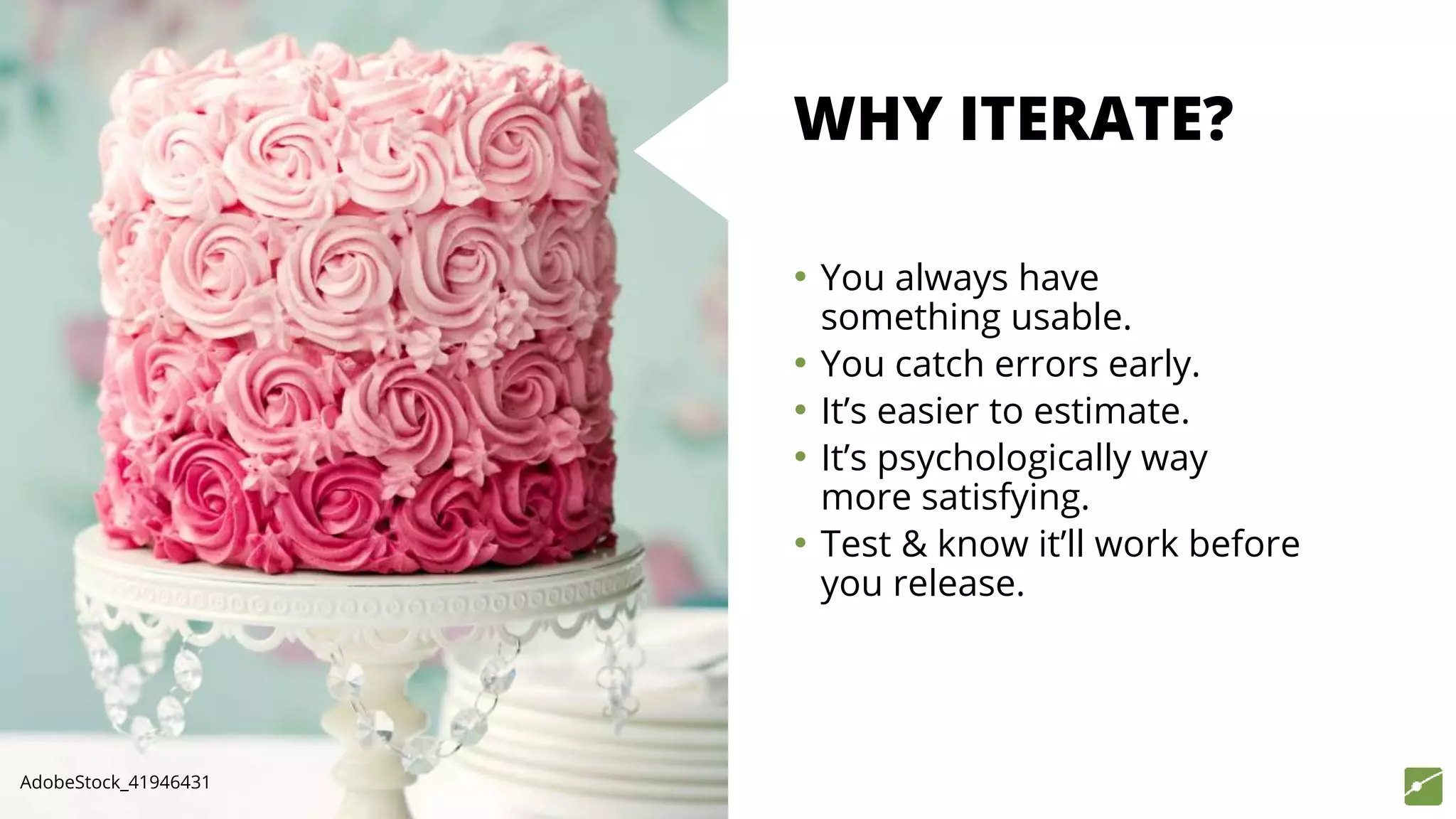
WHY ITERATE?
• You always have
something usable.
• You catch errors early.
• It’s easier to estimate.
• It’s psychologically way
more satisfying.
• Test & know it’ll work before
you release.
AdobeStock_41946431
HOW TO ITERATE?
Alpha > Beta > Final
By Project Phase
By Delivery Medium
By level of finish/functionality
By language
By audience
AdobeStock_335049770
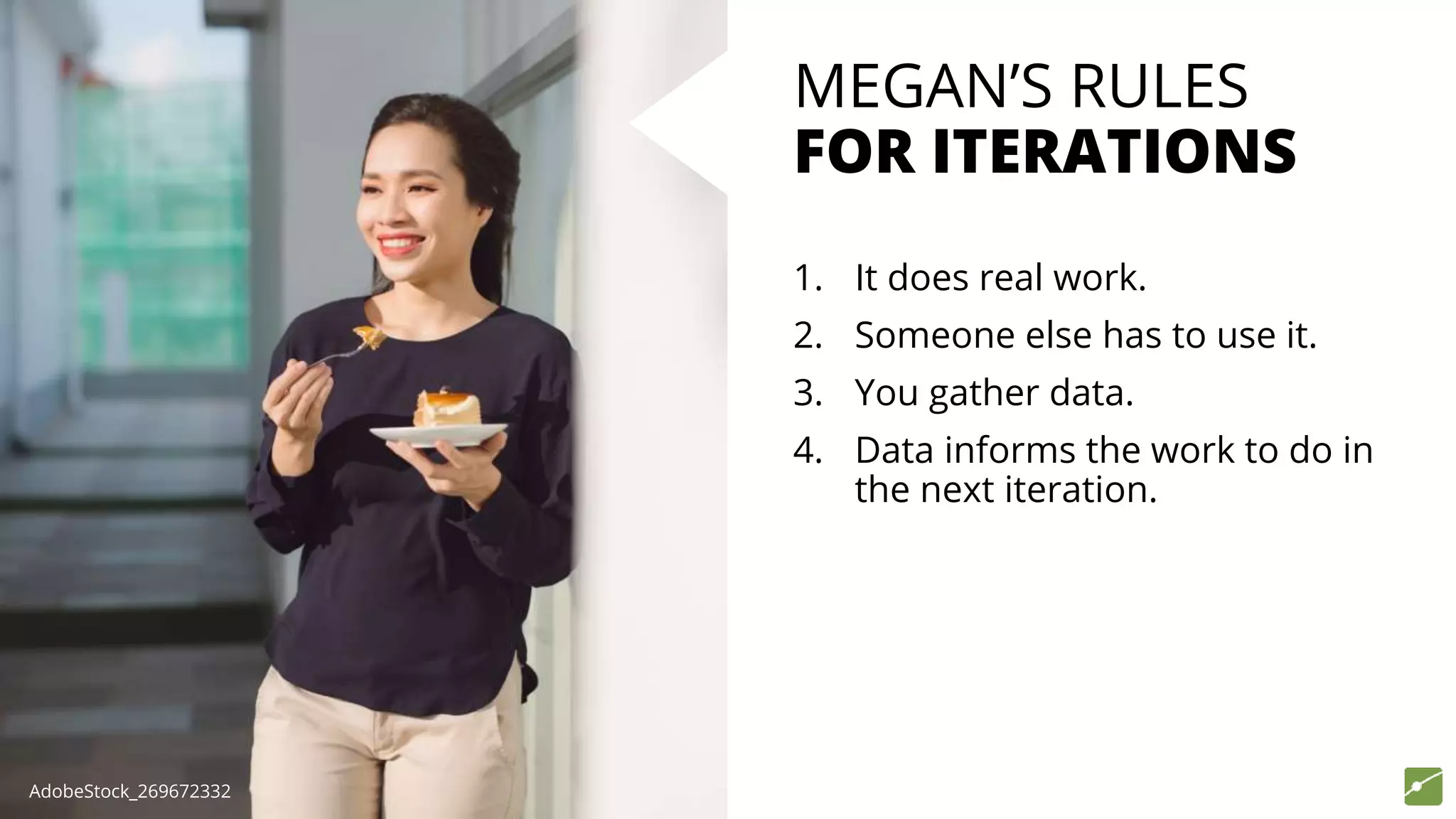
MEGAN’S RULES
FOR ITERATIONS
1. It does real work.
2. Someone else has to use it.
3. You gather data.
4. Data informs the work to do in
the next iteration.
AdobeStock_269672332
Megan Torrance
mtorrance@torrancelearning.com
@MMTorrance | @xAPIGnome | @Tlearning
LET’S CONNECT!

ATD Virtual Conference: Leveraging Agile Methods in L&D

  • 1.
    Megan Torrance Getting ItDone: Leveraging Agile Techniques for Working With SMEs, Sponsors, IT, and the Organization
  • 2.
  • 3.
  • 4.
  • 5.
    https://www.cio.com/article/3156998/agile-project-management-a-beginners-guide.html WHY AGILE? • Increased flexibility •Increased productivity • Increased transparency • Higher quality deliverables • Decreased risk of missed objectives • Increased stakeholder engagement and satisfaction • More rapid deployment of solutions • Reduced waste through minimization of resources • Increased flexibility and adaptability to change • Increased success through more focused efforts • Faster turnaround times • Faster detection of issues and defects • Optimized development processes • A lighter weight framework • Optimal project control • Increased focus on specific customer needs • Increased frequency of collaboration and feedback
  • 6.
    A WEEK INTHE LIFE OF AN L&D TEAM: 1. A sponsor is no longer able to provide the examples that they felt that were critical that they contribute. 2. A video that has been storyboarded, edited, filmed, motion graphics added …. now needs to be done in a different style. 3. In revealing a prototype of mobile learning to field personnel, they tell us that we’re solving the wrong problem. 4. We’re building training for software that is currently being developed & configured and therefore changing as we build it. 5. On some machines and some browsers, the course interactions don’t work at all.
  • 7.
    A WEEK INTHE LIFE OF AN ORGANIZATION: 1. A critical customer is no longer able to take delivery on a massive order, leaving you with excess perishable inventory. 2. A marketing piece that’s poised and ready to drop …. is now completely tone deaf given current events. 3. In revealing a prototype of a new product to key customers, they tell us that our competitor has already solved this problem. 4. Our processes are being automated and improved by artificial intelligence and therefore changing as we build them. 5. In some countries and some cultures, the product we are about to release is offensive in some horrible way.
  • 8.
  • 9.
    THE FIRST DAYOF A PROJECT IS THE WORST DAY TO PLAN what the end product will be (or how much it will cost or when it’ll be done).
  • 10.
  • 11.
    AGILE IS… An iterative,incremental method of guiding design & build projects in a highly flexible & interactive manner, focusing on maximizing customer value and fostering high team engagement. Photo by Annie Spratt on Unsplash
  • 12.
    Software Instructional Design DedicatedMultiple projects Features + Functions + Objectives Continuous Sprints Considerable wait time Scrum, XP, Kanban Estimate in points Estimate in hours Test feedback loop is immediate Learning feedback loop is long
  • 13.
    LLAMA® IS … Aniterative, incremental method of guiding instructional design projects in a highly flexible & interactive manner, focusing on maximizing customer value and fostering high team engagement. Photo by Annie Spratt on Unsplash
  • 14.
    WE ARE UNCOVERINGBETTER WAYS OF DEVELOPING SOFTWARE BY DOING IT AND BY HELPING OTHERS DO IT... source: www.agilemanifesto.org T H E A G I L E M A N I F E S T O
  • 15.
    THROUGH THIS WORK WEHAVE COME TO VALUE: INDIVIDUALS AND INTERACTIONS OVER PROCESSES AND TOOLS source: www.agilemanifesto.org T H E A G I L E M A N I F E S T O
  • 16.
    THROUGH THIS WORK WEHAVE COME TO VALUE: WORKING SOFTWARE OVER COMPREHENSIVE DOCUMENTATION source: www.agilemanifesto.org T H E A G I L E M A N I F E S T O
  • 17.
    THROUGH THIS WORK WEHAVE COME TO VALUE: CUSTOMER COLLABORATION OVER CONTRACT NEGOTIATION source: www.agilemanifesto.org T H E A G I L E M A N I F E S T O
  • 18.
    THROUGH THIS WORK WEHAVE COME TO VALUE: RESPONDING TO CHANGE OVER FOLLOWING A PLAN source: www.agilemanifesto.org T H E A G I L E M A N I F E S T O
  • 20.
  • 21.
    “If you don’tknow who the business sponsor is, STOP WORKING.” −Lou Russell Lou Russell, Duchess/Director of Learning of RMA, a Moser Consulting company, author, speaker, all around cool person. www.youtube.com/watch?v=CelfujiqqiQ
  • 22.
  • 23.
    IS THE AVERAGELEARNER MEANINGFUL?
  • 24.
  • 27.
  • 30.
  • 31.
    Richard Sheridan, CEOMenlo Innovations. Author Agile Explained and Joy, Inc. “Make small mistakes faster. Skip the big mistakes.” −Richard Sheridan
  • 33.
    DO THE SIMPLEST THINGTHAT COULD POSSIBLY WORK. M.V.P.AdobeStock_224501760
  • 34.
    WHY ITERATE? • Youalways have something usable. • You catch errors early. • It’s easier to estimate. • It’s psychologically way more satisfying. • Test & know it’ll work before you release. AdobeStock_41946431
  • 35.
    HOW TO ITERATE? Alpha> Beta > Final By Project Phase By Delivery Medium By level of finish/functionality By language By audience AdobeStock_335049770
  • 36.
    MEGAN’S RULES FOR ITERATIONS 1.It does real work. 2. Someone else has to use it. 3. You gather data. 4. Data informs the work to do in the next iteration. AdobeStock_269672332
  • 37.
    Megan Torrance mtorrance@torrancelearning.com @MMTorrance |@xAPIGnome | @Tlearning LET’S CONNECT!