This document describes an online recruitment system. It discusses problems with current manual recruitment processes like being time-consuming. The objectives of the online system are to create vacancies online, store applicant data, manage interviews and hiring. The system has modules for administrators, job seekers, and companies. It was developed using Java and has features like candidate registration, exam creation, and viewing job details. Future enhancements may address trends like shorter job tenures and need for technology workers.
In this document
Powered by AI
Introduction of an online recruitment system designed to streamline hiring, providing features for jobseekers and recruiters.
Highlights the inefficiencies of current manual recruitment, including time consumption and information loss.
Aims to create a centralized, web-based recruitment system that enables easy creation, storage, and management of job vacancies and applications.
Description of user roles: Admin with full control, Jobseekers managing profiles, and Companies conducting evaluations.
Overview of Java's creation, purpose as a platform-independent language, and its development process.
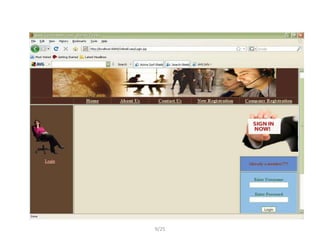
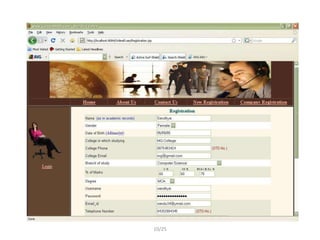
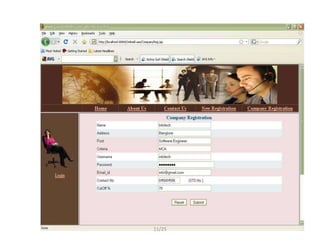
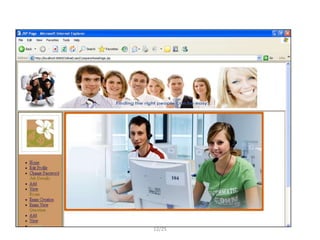
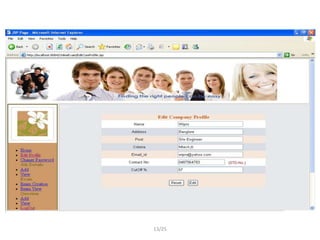
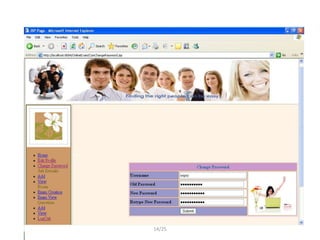
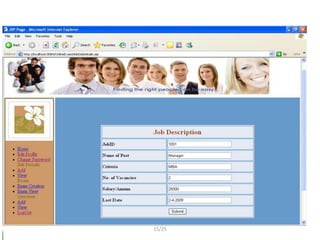
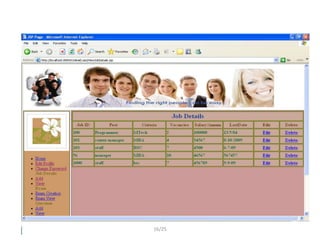
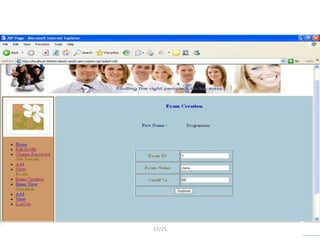
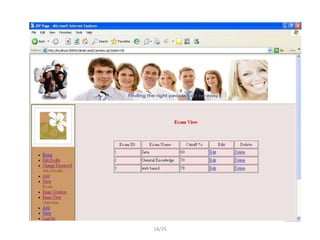
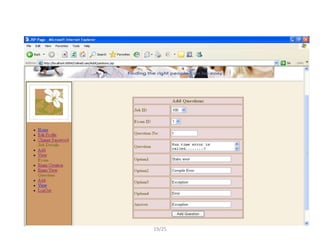
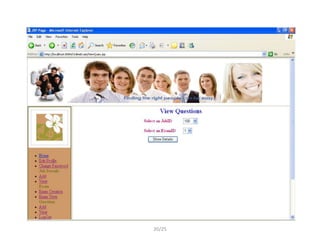
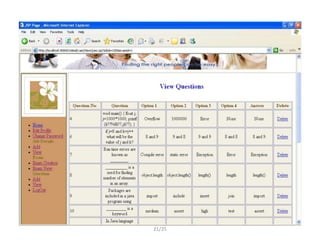
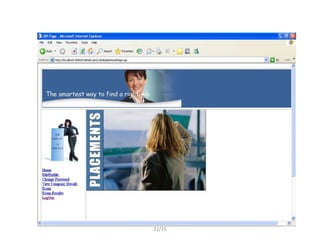
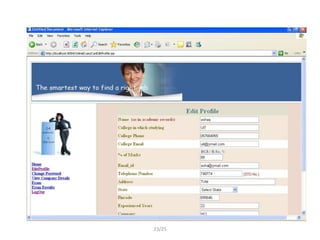
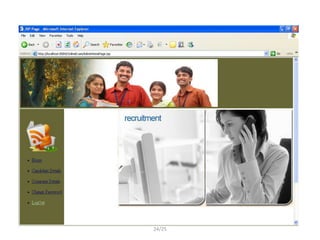
Visuals and descriptions of user interfaces for login, registrations, job details, exam processes, and user homepages.
Identifies macroeconomic trends affecting recruitment and stresses the need for continual software updates to meet evolving business demands.
Closing remarks with an invitation for questions, summarizing the presentation's content.
Contents of Presentation
1. Introduction of the project
2. Problem in Present System
3. Objective
4. Modules in Project
5. Technology used
6. Dataflow Diagram
7. Form Design
8. Future
1/25
3.
Introduction of theproject
1. The Online Recruitment System is developed to enhance the
Recruitment which fully work online.
2. This software will be great relief to the jobseekers they can register
themselves and then attend the exam.
3. This Online Recruitment System enables the users to have the
typical examination facilities and features at their disposal.
4. Online Recruitment System provides online help to the users all
over the world.
5. Such sites also make it possible for recruiters and companies to post
their staffing requirements and view profiles of interested candidates.
2/25
4.
PROBLEMS IN PRESENTSYSTEM
• Presently recruitment is done manually.
• Time consuming.
• Announcement done through newspaper.
• People who are eligible send written application.
• Short-listing is done manually, and are called for interviews.
• After interview short listed candidates are employed which makes it
time consuming procedure.
• A person presently can miss important information that comes via
newspaper or letters.
• It is not Global System. 3/25
5.
Objective
1. This projectis aimed at developing a web-based and central recruitment
process system.
2. Some features of this system will be:-
• Creating vacancies
• Storing application data
• Interview process initiation
• Scheduling interviews
• Storing Interview results
• Hiring of an applicant
3. It is all done online without much time consuming.
4/25
6.
Module in thisproject
1. Administrator
2. Jobseekers
3. Company
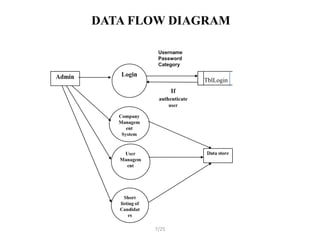
1. Administrator: Administrator has the full authority over the website. He can
view all the registered users and have the power to delete them. He can edit the
web pages and update them. He can view all the company details also.
2. Jobseeker: A jobseeker can register himself. After registration, he/she will be
Director of his/her homepage. Here he/she can update his profile, change password
and see the examination details and all.
3. Company: A company can register itself, conduct online examination, approve
or disapprove candidates attending examination and provides results about the
selected candidates.
5/25
7.
Overview of Java
•Java was conceived by James Gosling, Patrick Naughton, Chris Warth, Ed
Frank, and Mike Sheridan at Sun Microsystems in 1991.
• It took 18 months to develop the first working version.
• This language was initially called "Oak" but was renamed "Java" in 1995.
• The primary motivation was to develop a Platform-Independent Language.
• The trouble with C and C++ was that they were designed to get executed
on a specific target.
• Java uses byte code to remove this deficiency.
6/25
FUTURE ENHANCEMENT
• The three macro economics trends that are seen as fuelling the
growth of this industry are:
1. Shorter employment tenures
2. Shrinking labor pools
3. Need for technology workers
• In wake of the new and related trends.
• It is imperative for frequent upgrades to a company’s software or
web applications to make it easier for clients and employees to
address new business needs. 25/25