Downloaded 11 times

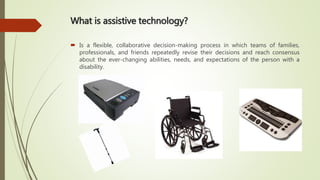
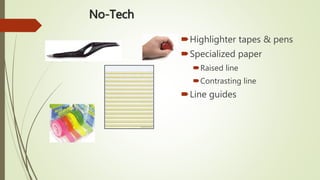
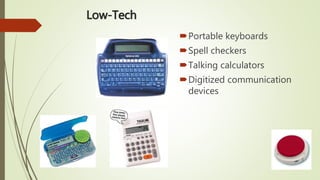
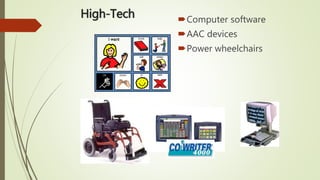

The document discusses assistive technology, defining it as a flexible process where teams collaborate to determine the abilities and needs of individuals with disabilities. Assistive technology should be considered when a disability impacts performance in areas like play, accessing environments, communication, or writing, or at a team's request. Assistive technologies exist in no-tech, low-tech, and high-tech forms, with examples like highlighter tapes, portable keyboards, computer software, and power wheelchairs. Disabilities that may require assistive technology include neurological, congenital, temporary, and sensory causes.


