Xxxx Xxxxxxx
                                                                                   ENG333


                              Writing Assignment Sequence


Description

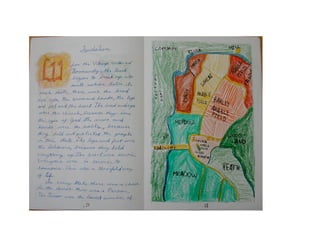
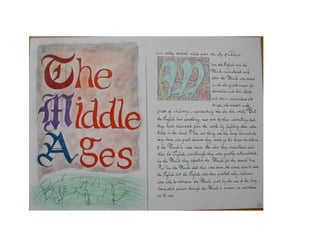
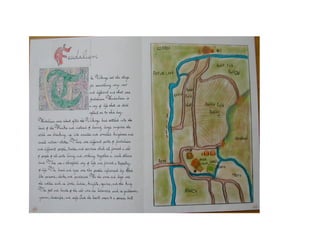
This is a research and writing assignment for a Seventh Grade class. It serves as an

interim project for their History studies focused on the Middle Ages. This is a multi-

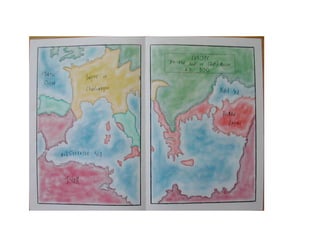
textural assignment requiring “text” composed of written word, detailed map, and

illustration. The students have just completed the first portion of their studies of the

Middle Ages and are asked to research a particular topic relevant to the Middle Ages.

From their research they are to compose a document that reflects what they have

discovered in their research. This document must be handwritten, be composed of

several “texts” including a written content, at least one map, and illustrations to support

the written content. The document should be composed in such a way as to integrate the

illustrations with the text similar to the “illuminated manuscripts” of the Middle Ages.

The combined length of the document will be 5-7 pages.


Rationale

A number of authors have written of the benefits of instructional investment in inquiry,

non-fiction writing and research-based writing that makes use of multiple “texts”. (Wood

Ray, 2004,2006) This encouragement supports the value of comprehensive explorations

of subject content through the use of supplementary materials. (Jester, 2003) The
integration of textural sources through composition of multiple “texts” has further been

reinforced in the literature. (Gee, 2007)

Under CA Standards Content for the Seventh Grade study of History:

7.6 Students analyze the geographic, political, economic, religious, and social structures

of the civilizations of Medieval Europe.

Under CA Standards Content for the Seventh Grade study of Language Arts:

Students write and speak with a command of standard English conventions appropriate to

the grade level.

2.2 Locate information by using a variety of consumer, workplace, and public documents

2.3 Write research reports

2.4 Write persuasive compositions

2.5 Write summaries of reading materials


Objectives

Students Will Be Able To;

   • Locate information by using a variety of documents

   • Write with a command of standard English convention appropriate to their

      Grade level

   • Write persuasive compositions

   • Write summaries of reading materials

   • Write research reports

   • Compose multi-textural document

   • Extend their knowledge base from class work to independent research
Materials

Students Will Need:

   • Access to Library and reference resources

   • Composition Books for the final document

   • Writing pens

   • Colored pencils for illustration


Prerequisites

Students will need to have basic competency as set by CA standards Content for

completion of Sixth Grade. They will have completed the course of studies as outlined in

CA standards through 7.6 and Medieval Europe. This sequence further assumes that the

students have worked before with visual “text” that they have created with written text,

although perhaps not integrated on the same page similar to so called “Illuminated

Manuscripts”.


Timeline

This sequence will require 1 hr per day in class instruction and a minimum of 1 hr per

day out of class attention for the duration of 2 weeks.


Procedure

   1. Introduction and possible topic selection

      Present overview of the scope of the writing project, including expectations, and

      stimulate a discussion of list of possible topic based upon the previous study of
Medieval Europe. These might include Feudalism, Vikings, Guilds etc.

   2. Modeling

     Several examples from previous students are presented for visual interest and

     writing style.

   3. Document organization, outline etc

     A possible outline of an example document is developed with the class.

   4. Library

     Time to peruse the library and choose a topic.

   5. Draft preparation

     Students begin to organize and make first draft of document.

   6. Draft review and revision, peer review

     In class peer review of drafts in various forms of completion, followed by revision.

   7. Final presentation

     Informal individual oral reports to peers regarding their topic and experience.


Inputs

   1. Introduction to research Project

   2. Guided selection of possible topics

   3. Modeling of selections from prior students work

   4. Reviews possible document organization

   5. Facilitates library work

   6. Supports group review and individual revision

   7. Oversees final presentations
Practice

Throughout the initial phases of the project the students will have the opportunity to work

with the skills and knowledge of the above stated objectives as they invest time on task in

both articulation of the subject of their writing and in the actual research through multiple

library resources. This practice will be augmented with group and one-on-one

instructional time. In addition, peer instruction will be a component to their learning.


Independence

The primary opportunities for demonstration of proficiency with knowledge and skills in

the above stated objectives will be realized in the preparation and final creation of their

research document.


Assessments

Assessment will be conducted directly from the CA Standards Content as outlined above.

The rubric will be composed of 4 possible levels of accomplishment for each of the 5

assessed History and Language Arts skills. These will include:

   1. Historical content, specific to the period

   2. Language convention, sentence structure, grammar, punctuation, etc

   3. Response to reading, organization and development

   4. Research, clarity and evidence

   5. Summary, reflect underlying meaning
Conclusions

Having lead such a writing sequence as this with a class of twenty-two pubescent

students, I know that the greatest limitation to the quality of their experience and of their

created documents is lies with the expectations and clarity with which the teacher is able

to convey and support the work. Since this extension of knowledge is dependent upon a

previous course of study that has already stimulated their interest, this specific writing

sequence can be presented in a very simple form supported by the examples from

previous students. The integration of different “texts” challenges some students,

stimulates others, and allows everyone’s strengths to find a place for expression. I did

not have this sequence at the time that I actually worked through this project with a class

so it was helpful to review what I had done and reduce it to the essential. I can more fully

appreciate the benefits preparing such a writing sequence beforehand than I could before.

I also can see that reflection can be a very powerful aspect of writing instruction.


References

Gee, James Paul, What Video Games Have to Teach Us About Learning and Literacy.

Palgrave. Macmillan; Second Edition, (December 26, 2007)

Jester, Judith M. Remaining Seated: Lessons Learned by Writing. Voices from the

Middle 11.2 (December 2003): 13-15.

Wood Ray, Katie. Why Cauley Writes Well: A Close Look at What a Difference Good
Teaching Can Make. Language Arts 82.2 (November 2004): 100-109.

Wood Ray, Katie. Exploring Inquiry as a Teaching Stance in the Writing Workshop.

Language Arts. 83.3 (January 2006): 238-247.
Assignment sequence: Middle Ages

Assignment sequence: Middle Ages

  • 1.
    Xxxx Xxxxxxx ENG333 Writing Assignment Sequence Description This is a research and writing assignment for a Seventh Grade class. It serves as an interim project for their History studies focused on the Middle Ages. This is a multi- textural assignment requiring “text” composed of written word, detailed map, and illustration. The students have just completed the first portion of their studies of the Middle Ages and are asked to research a particular topic relevant to the Middle Ages. From their research they are to compose a document that reflects what they have discovered in their research. This document must be handwritten, be composed of several “texts” including a written content, at least one map, and illustrations to support the written content. The document should be composed in such a way as to integrate the illustrations with the text similar to the “illuminated manuscripts” of the Middle Ages. The combined length of the document will be 5-7 pages. Rationale A number of authors have written of the benefits of instructional investment in inquiry, non-fiction writing and research-based writing that makes use of multiple “texts”. (Wood Ray, 2004,2006) This encouragement supports the value of comprehensive explorations of subject content through the use of supplementary materials. (Jester, 2003) The
  • 2.
    integration of texturalsources through composition of multiple “texts” has further been reinforced in the literature. (Gee, 2007) Under CA Standards Content for the Seventh Grade study of History: 7.6 Students analyze the geographic, political, economic, religious, and social structures of the civilizations of Medieval Europe. Under CA Standards Content for the Seventh Grade study of Language Arts: Students write and speak with a command of standard English conventions appropriate to the grade level. 2.2 Locate information by using a variety of consumer, workplace, and public documents 2.3 Write research reports 2.4 Write persuasive compositions 2.5 Write summaries of reading materials Objectives Students Will Be Able To; • Locate information by using a variety of documents • Write with a command of standard English convention appropriate to their Grade level • Write persuasive compositions • Write summaries of reading materials • Write research reports • Compose multi-textural document • Extend their knowledge base from class work to independent research
  • 3.
    Materials Students Will Need: • Access to Library and reference resources • Composition Books for the final document • Writing pens • Colored pencils for illustration Prerequisites Students will need to have basic competency as set by CA standards Content for completion of Sixth Grade. They will have completed the course of studies as outlined in CA standards through 7.6 and Medieval Europe. This sequence further assumes that the students have worked before with visual “text” that they have created with written text, although perhaps not integrated on the same page similar to so called “Illuminated Manuscripts”. Timeline This sequence will require 1 hr per day in class instruction and a minimum of 1 hr per day out of class attention for the duration of 2 weeks. Procedure 1. Introduction and possible topic selection Present overview of the scope of the writing project, including expectations, and stimulate a discussion of list of possible topic based upon the previous study of
  • 4.
    Medieval Europe. Thesemight include Feudalism, Vikings, Guilds etc. 2. Modeling Several examples from previous students are presented for visual interest and writing style. 3. Document organization, outline etc A possible outline of an example document is developed with the class. 4. Library Time to peruse the library and choose a topic. 5. Draft preparation Students begin to organize and make first draft of document. 6. Draft review and revision, peer review In class peer review of drafts in various forms of completion, followed by revision. 7. Final presentation Informal individual oral reports to peers regarding their topic and experience. Inputs 1. Introduction to research Project 2. Guided selection of possible topics 3. Modeling of selections from prior students work 4. Reviews possible document organization 5. Facilitates library work 6. Supports group review and individual revision 7. Oversees final presentations
  • 5.
    Practice Throughout the initialphases of the project the students will have the opportunity to work with the skills and knowledge of the above stated objectives as they invest time on task in both articulation of the subject of their writing and in the actual research through multiple library resources. This practice will be augmented with group and one-on-one instructional time. In addition, peer instruction will be a component to their learning. Independence The primary opportunities for demonstration of proficiency with knowledge and skills in the above stated objectives will be realized in the preparation and final creation of their research document. Assessments Assessment will be conducted directly from the CA Standards Content as outlined above. The rubric will be composed of 4 possible levels of accomplishment for each of the 5 assessed History and Language Arts skills. These will include: 1. Historical content, specific to the period 2. Language convention, sentence structure, grammar, punctuation, etc 3. Response to reading, organization and development 4. Research, clarity and evidence 5. Summary, reflect underlying meaning
  • 6.
    Conclusions Having lead sucha writing sequence as this with a class of twenty-two pubescent students, I know that the greatest limitation to the quality of their experience and of their created documents is lies with the expectations and clarity with which the teacher is able to convey and support the work. Since this extension of knowledge is dependent upon a previous course of study that has already stimulated their interest, this specific writing sequence can be presented in a very simple form supported by the examples from previous students. The integration of different “texts” challenges some students, stimulates others, and allows everyone’s strengths to find a place for expression. I did not have this sequence at the time that I actually worked through this project with a class so it was helpful to review what I had done and reduce it to the essential. I can more fully appreciate the benefits preparing such a writing sequence beforehand than I could before. I also can see that reflection can be a very powerful aspect of writing instruction. References Gee, James Paul, What Video Games Have to Teach Us About Learning and Literacy. Palgrave. Macmillan; Second Edition, (December 26, 2007) Jester, Judith M. Remaining Seated: Lessons Learned by Writing. Voices from the Middle 11.2 (December 2003): 13-15. Wood Ray, Katie. Why Cauley Writes Well: A Close Look at What a Difference Good Teaching Can Make. Language Arts 82.2 (November 2004): 100-109. Wood Ray, Katie. Exploring Inquiry as a Teaching Stance in the Writing Workshop. Language Arts. 83.3 (January 2006): 238-247.