Assets, Liabilities
and Capital
By Bweendo Jane
Lecturer
Zambia College of Distance
Education
Assets
Assets refer to property owned by a business that can be
converted into cash.
Examples include:
 Premises
 Land and buildings
 Fixtures and fittings
 Motor vehicles
 Furniture
 Cash at bank
 Prepaid expenses etc.
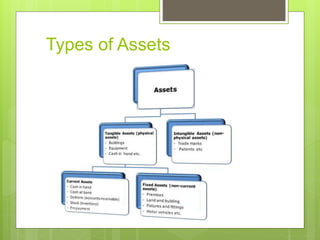
Types of Assets
Tangible and Intangible Assets
 Tangible assets are physical property owned
by the business.
 Intangible assets are assets that cannot be
seen and touched; they are non-physical
assets.
Current Assets
 Current assets are physical property of the
business that can quickly be converted into
cash within a period of less than one year.
Fixed Assets
Physical property of the business kept in the
business for a longer period and cannot be
quickly converted into cash.
Features of fixed assets:
 used in the business to generate revenue
 last for at least more than one year
 Bought specifically for use and not for resale.
Liabilities
Liabilities refer to debts or obligations that arise
in the course of doing business. Examples of
liabilities include:
 Loan (money borrowed)
 Bank overdrafts
 Creditors (accounts payable)
 Mortgage
 Accrued or outstanding expenses
Types of Liabilities
Liabilities can either be short-term or long-term.
Short-term liabilities
These are debts or obligations payable within a
period of less than one year. Examples are:
 Short-term loans
 Bank overdrafts
 Creditors (accounts payable)
 Accrued or outstanding expenses – expenses due
but not yet paid
Long-Term Liabilities
These are debts or obligations payable in a
period of more than one year.
Examples are:
 Long-Term loans
 Mortgages etc.
Capital or Equity
Capital or equity refers to the amount of
resources the business owes its owner. This
includes;
 the amount of money used to start,
 the amount used to expand the business
 the profits not take out of the business.
Capital is often described as the liability of the
business to its owner.
Summary
 Assets refer to the property owned by a
business
 Liabilities are debts or obligations that arise in
the course of doing business.
 Capital the amount of resources the business
owes its owner
End!
Thank you

Assets, liabilities and capital

  • 1.
    Assets, Liabilities and Capital ByBweendo Jane Lecturer Zambia College of Distance Education
  • 2.
    Assets Assets refer toproperty owned by a business that can be converted into cash. Examples include:  Premises  Land and buildings  Fixtures and fittings  Motor vehicles  Furniture  Cash at bank  Prepaid expenses etc.
  • 3.
  • 4.
    Tangible and IntangibleAssets  Tangible assets are physical property owned by the business.  Intangible assets are assets that cannot be seen and touched; they are non-physical assets.
  • 5.
    Current Assets  Currentassets are physical property of the business that can quickly be converted into cash within a period of less than one year.
  • 6.
    Fixed Assets Physical propertyof the business kept in the business for a longer period and cannot be quickly converted into cash. Features of fixed assets:  used in the business to generate revenue  last for at least more than one year  Bought specifically for use and not for resale.
  • 7.
    Liabilities Liabilities refer todebts or obligations that arise in the course of doing business. Examples of liabilities include:  Loan (money borrowed)  Bank overdrafts  Creditors (accounts payable)  Mortgage  Accrued or outstanding expenses
  • 8.
    Types of Liabilities Liabilitiescan either be short-term or long-term. Short-term liabilities These are debts or obligations payable within a period of less than one year. Examples are:  Short-term loans  Bank overdrafts  Creditors (accounts payable)  Accrued or outstanding expenses – expenses due but not yet paid
  • 9.
    Long-Term Liabilities These aredebts or obligations payable in a period of more than one year. Examples are:  Long-Term loans  Mortgages etc.
  • 10.
    Capital or Equity Capitalor equity refers to the amount of resources the business owes its owner. This includes;  the amount of money used to start,  the amount used to expand the business  the profits not take out of the business. Capital is often described as the liability of the business to its owner.
  • 11.
    Summary  Assets referto the property owned by a business  Liabilities are debts or obligations that arise in the course of doing business.  Capital the amount of resources the business owes its owner
  • 12.