ASSESSMENT
ANANYA BISWAS
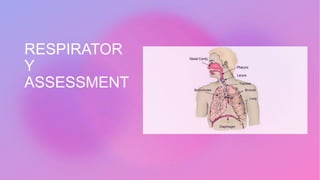
RESPIRATOR
Y
ASSESSMENT
ASSESSMENT
ON
RESPIRATORY SYSTEM
 History
 Physical examination
 Investigation and diagnostic tests
History
 Identification data
 Current health
 Past health history
 Family health history
 Psycho-social history
 Review of system
 Identification data :
Name
Age
Gender
Living situations
 Current health :
o Chest pain -
1. may associated with pulmonary, cardiac, gastrointestinal problem
2. determine location, duration, intensity of chest pain
3. Pleuritic pain – sharp, stabbing pain that occur at one site on chest wall and increase
the chest wall movement and deep breathing.
4. Angina pectoris – an aching, heavy, squeezing sensation with pressure or tightness in
the substernal area and radiate into the neck or arm.
o Dyspnea -
1. difficulty in breathing.
2. shortness of breathing, suffocation, tightness, being breathless
o Cough -
1. note when and how cough begun,
2. how long the cough been present,
3. characteristic – dry, hoarse, congested, wheezy,
4. Sputum – color, consistency, odour, amount
5. hemoptysis - is simply a medical term for coughing up blood.
Causes of hemoptysis include chronic bronchitis, bronchiectasis,
pulmonary embolism, pneumonia, lung cancer, lung abscesses.
o Wheezing-
1. sound produces when air passes through partially obstructed or narrowed
airway.
2. complain of chest tightness or chest discomfort.
o Shortness of breathing -
1. Onset
2. Duration
3. Severity
4. Characteristic
o Other complaints -
1. Sweating
2. Dizziness
3. Limb pain
4. Exercise intolerance
Past medical history
1. data regarding common childhood diseases, congenital history and vaccinations
2. any history of Tuberculosis, Bronchitis, Influenza, Asthma, Pneumonia
 Smoking history
 Alcohol use- frequency and amount
 Allergies history
precipitating and aggravating factors –such as foods, medications, pollens, smoke,
fumes, dust
 Surgical history - history of any surgical procedure
 Medication
Family history
1. history of hereditary disease
2. living with person with infectious disease
Psycho-social history
1. Environment
2. Work environment
3. Occupation
4. Dietary habits
5. Exercise
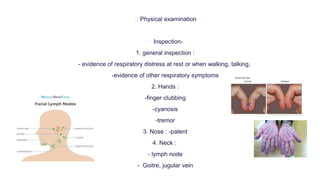
 Physical examination
 Inspection-
1. general inspection :
- evidence of respiratory distress at rest or when walking, talking,
-evidence of other respiratory symptoms
2. Hands :
-finger clubbing
-cyanosis
-tremor
3. Nose : -patent
4. Neck :
- lymph node
- Goitre, jugular vein
Chest
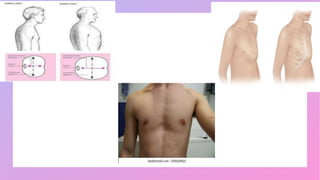
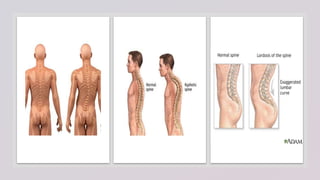
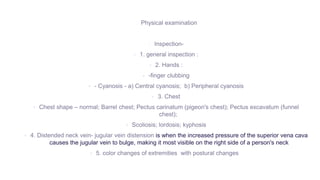
Chest shape – normal; Barrel chest; Pectus carinatum (pigeon's chest); Pectus excavatum (funnel chest);
Scoliosis; lordosis; kyphosis
 Chest movement – paradoxical movement
 Respiration rate, rhythm, pattern, depth.
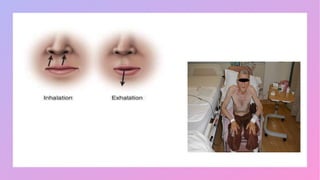
 Pursed lip breathing
 Tripod position - a patient who is seen taking the tripod position on their own is an indication that the
patient may be in respiratory distress.
 Nature of breathing -
Kussmaul's breathing- deep & laboured breathing; associated with the metabolic acidosis
Cheyne-stokes breathing- progressively deeper breathing
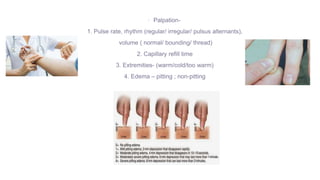
 Palpation -
1. Lymph node
2. Air entry – bilaterally equal / unequal
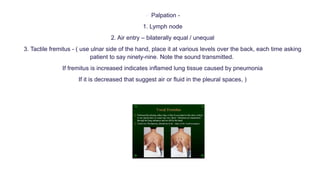
3. Tactile fremitus - ( use ulnar side of the hand, place it at various levels over the back, each time asking
patient to say ninety-nine. Note the sound transmitted.
If fremitus is increased indicates inflamed lung tissue caused by pneumonia
If it is decreased that suggest air or fluid in the pleural spaces, )

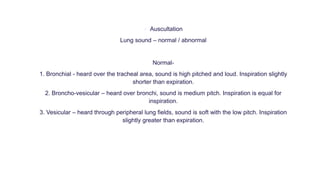
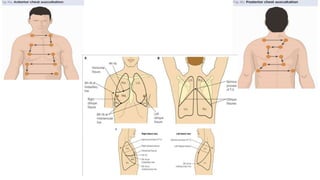
 Auscultation
Lung sound – normal / abnormal
Normal-
1. Bronchial - heard over the tracheal area, sound is high pitched and loud. Inspiration slightly
shorter than expiration.
2. Broncho-vesicular – heard over bronchi, sound is medium pitch. Inspiration is equal for
inspiration.
3. Vesicular – heard through peripheral lung fields, sound is soft with the low pitch. Inspiration
slightly greater than expiration.
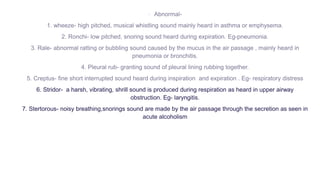

6. Stridor- a harsh, vibrating, shrill sound is produced during respiration as heard in upper airway
obstruction. Eg- laryngitis.
7. Stertorous- noisy breathing,snorings sound are made by the air passage through the secretion as seen in
acute alcoholism
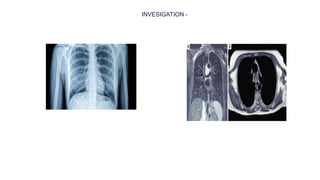
 INVESIGATION -
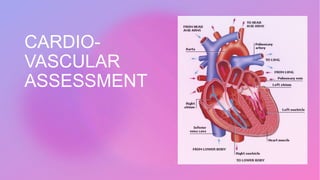
CARDIO-
VASCULAR
ASSESSMENT
ASSESSMENT
ON
CARDIO-VASCULAR SYSTEM
 History
 Physical examination
 Investigation and diagnostic tests
HISTORY COLLECTION
 data
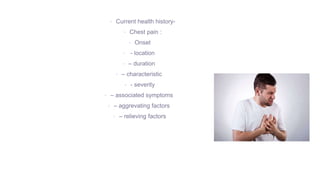
 Current health history
 Past health history
 Family health history
 Psycho-social history










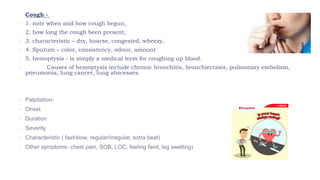
 Cough -
 1. note when and how cough begun,
 2. how long the cough been present,
 3. characteristic – dry, hoarse, congested, wheezy,
 4. Sputum – color, consistency, odour, amount
 5. hemoptysis - is simply a medical term for coughing up blood.
 Causes of hemoptysis include chronic bronchitis, bronchiectasis, pulmonary embolism,
pneumonia, lung cancer, lung abscesses.






 Dyspnea -
 1. difficulty in breathing.
 2. shortness of breathing, suffocation, tightness,
 3. being breathless I middle of night.
 Wheezing-
 1. sound produces when air passes through partially obstructed or
narrowed airway.
 2. complain of chest tightness or chest discomfort.
 Other complaints -
 1. Sweating
 2. Dizziness
 3. Limb pain
 4. Exercise intolerance
 Past medical history
 1. data regarding common childhood diseases, congenital history and vaccinations
 2. any history of Tuberculosis, Bronchitis, Influenza, Asthma, Pneumonia
 Smoking history
 Alcohol use- frequency and amount
 Allergies history
 precipitating and aggravating factors –such as foods, medications, pollens, smoke, fumes,
dust
 Surgical history - history of any surgical procedure
 Medication


















 is when the increased pressure of the superior vena cava
causes the jugular vein to bulge, making it most visible on the right side of a person's neck










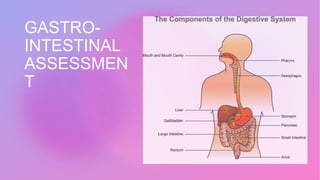
GASTRO-
INTESTINAL
ASSESSMEN
T



HISTORY








Abdominal pain-








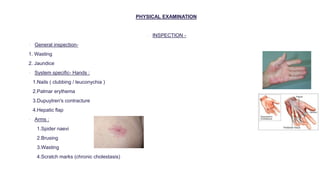
PHYSICAL EXAMINATION
 INSPECTION -
 General inspection-
1. Wasting
2. Jaundice
 System specific- Hands :
1.Nails ( clubbing / leuconychia )
2.Palmar erythema
3.Dupuytren's contracture
4.Hepatic flap
 Arms :
1.Spider naevi
2.Brusing
3.Wasting
4.Scratch marks (chronic cholestasis)




























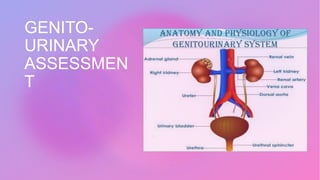
GENITO-
URINARY
ASSESSMEN
T
ASSESSMENT OF GU SYSTEM





















ASSESSMANT (1).pptx

ASSESSMANT (1).pptx

  • 1.
  • 2.
  • 3.
    ASSESSMENT ON RESPIRATORY SYSTEM  History Physical examination  Investigation and diagnostic tests
  • 4.
    History  Identification data Current health  Past health history  Family health history  Psycho-social history  Review of system
  • 5.
     Identification data: Name Age Gender Living situations
  • 6.
     Current health: o Chest pain - 1. may associated with pulmonary, cardiac, gastrointestinal problem 2. determine location, duration, intensity of chest pain 3. Pleuritic pain – sharp, stabbing pain that occur at one site on chest wall and increase the chest wall movement and deep breathing. 4. Angina pectoris – an aching, heavy, squeezing sensation with pressure or tightness in the substernal area and radiate into the neck or arm. o Dyspnea - 1. difficulty in breathing. 2. shortness of breathing, suffocation, tightness, being breathless
  • 7.
    o Cough - 1.note when and how cough begun, 2. how long the cough been present, 3. characteristic – dry, hoarse, congested, wheezy, 4. Sputum – color, consistency, odour, amount 5. hemoptysis - is simply a medical term for coughing up blood. Causes of hemoptysis include chronic bronchitis, bronchiectasis, pulmonary embolism, pneumonia, lung cancer, lung abscesses. o Wheezing- 1. sound produces when air passes through partially obstructed or narrowed airway. 2. complain of chest tightness or chest discomfort.
  • 8.
    o Shortness ofbreathing - 1. Onset 2. Duration 3. Severity 4. Characteristic o Other complaints - 1. Sweating 2. Dizziness 3. Limb pain 4. Exercise intolerance
  • 9.
    Past medical history 1.data regarding common childhood diseases, congenital history and vaccinations 2. any history of Tuberculosis, Bronchitis, Influenza, Asthma, Pneumonia  Smoking history  Alcohol use- frequency and amount  Allergies history precipitating and aggravating factors –such as foods, medications, pollens, smoke, fumes, dust  Surgical history - history of any surgical procedure  Medication
  • 10.
    Family history 1. historyof hereditary disease 2. living with person with infectious disease Psycho-social history 1. Environment 2. Work environment 3. Occupation 4. Dietary habits 5. Exercise
  • 11.
     Physical examination Inspection- 1. general inspection : - evidence of respiratory distress at rest or when walking, talking, -evidence of other respiratory symptoms 2. Hands : -finger clubbing -cyanosis -tremor 3. Nose : -patent 4. Neck : - lymph node - Goitre, jugular vein
  • 12.
    Chest Chest shape –normal; Barrel chest; Pectus carinatum (pigeon's chest); Pectus excavatum (funnel chest); Scoliosis; lordosis; kyphosis  Chest movement – paradoxical movement  Respiration rate, rhythm, pattern, depth.  Pursed lip breathing  Tripod position - a patient who is seen taking the tripod position on their own is an indication that the patient may be in respiratory distress.  Nature of breathing - Kussmaul's breathing- deep & laboured breathing; associated with the metabolic acidosis Cheyne-stokes breathing- progressively deeper breathing
  • 16.
     Palpation - 1.Lymph node 2. Air entry – bilaterally equal / unequal 3. Tactile fremitus - ( use ulnar side of the hand, place it at various levels over the back, each time asking patient to say ninety-nine. Note the sound transmitted. If fremitus is increased indicates inflamed lung tissue caused by pneumonia If it is decreased that suggest air or fluid in the pleural spaces, )
  • 17.
  • 18.
     Auscultation Lung sound– normal / abnormal Normal- 1. Bronchial - heard over the tracheal area, sound is high pitched and loud. Inspiration slightly shorter than expiration. 2. Broncho-vesicular – heard over bronchi, sound is medium pitch. Inspiration is equal for inspiration. 3. Vesicular – heard through peripheral lung fields, sound is soft with the low pitch. Inspiration slightly greater than expiration.
  • 20.
     6. Stridor- aharsh, vibrating, shrill sound is produced during respiration as heard in upper airway obstruction. Eg- laryngitis. 7. Stertorous- noisy breathing,snorings sound are made by the air passage through the secretion as seen in acute alcoholism
  • 21.
  • 22.
  • 23.
    ASSESSMENT ON CARDIO-VASCULAR SYSTEM  History Physical examination  Investigation and diagnostic tests
  • 24.
    HISTORY COLLECTION  data Current health history  Past health history  Family health history  Psycho-social history
  • 25.
  • 26.
     Cough - 1. note when and how cough begun,  2. how long the cough been present,  3. characteristic – dry, hoarse, congested, wheezy,  4. Sputum – color, consistency, odour, amount  5. hemoptysis - is simply a medical term for coughing up blood.  Causes of hemoptysis include chronic bronchitis, bronchiectasis, pulmonary embolism, pneumonia, lung cancer, lung abscesses.      
  • 27.
     Dyspnea - 1. difficulty in breathing.  2. shortness of breathing, suffocation, tightness,  3. being breathless I middle of night.  Wheezing-  1. sound produces when air passes through partially obstructed or narrowed airway.  2. complain of chest tightness or chest discomfort.  Other complaints -  1. Sweating  2. Dizziness  3. Limb pain  4. Exercise intolerance
  • 28.
     Past medicalhistory  1. data regarding common childhood diseases, congenital history and vaccinations  2. any history of Tuberculosis, Bronchitis, Influenza, Asthma, Pneumonia  Smoking history  Alcohol use- frequency and amount  Allergies history  precipitating and aggravating factors –such as foods, medications, pollens, smoke, fumes, dust  Surgical history - history of any surgical procedure  Medication
  • 29.
  • 30.
              is whenthe increased pressure of the superior vena cava causes the jugular vein to bulge, making it most visible on the right side of a person's neck 
  • 31.
  • 32.
  • 33.
  • 34.
  • 35.
  • 36.
  • 37.
  • 41.
  • 42.
    PHYSICAL EXAMINATION  INSPECTION-  General inspection- 1. Wasting 2. Jaundice  System specific- Hands : 1.Nails ( clubbing / leuconychia ) 2.Palmar erythema 3.Dupuytren's contracture 4.Hepatic flap  Arms : 1.Spider naevi 2.Brusing 3.Wasting 4.Scratch marks (chronic cholestasis)
  • 43.
  • 44.
  • 45.
  • 46.
  • 47.
  • 48.
  • 49.
    ASSESSMENT OF GUSYSTEM   
  • 50.
  • 51.
  • 52.
  • 53.