what is iranianarts?
-Iranian art or Persian art has one of the richest art
heritages in world history. Iran or Persia of the old
world excels in many forms of art not only in
architecture and painting but also in weaving, pottery,
metalworking, and calligraphy. The age-old art forms
have been deeply embedded in the consciousness of
the people of Iran; thus, until now in the modern
times, Iranian art forms continue to flourish and
grow.
3.
WHAT ARE THEELEMENTS
ANd principle used in the
arts and crafts of iran?
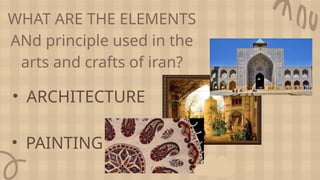
• ARCHITECTURE
• PAINTING
architecture
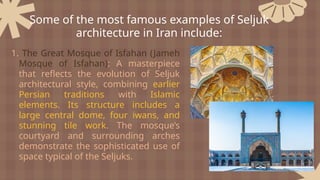
-For a longtime the history of Persia, (pre-islamic and
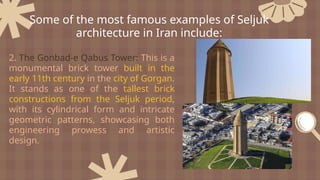
post Islamic), Iranian architecture has topped the
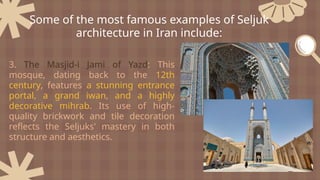
architecture of the acient world.
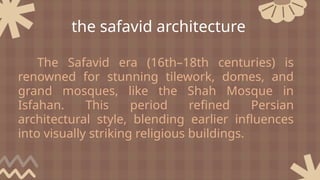
-Iran's architecture is known for its rich history and
distinctive styles that blend both traditional and modern
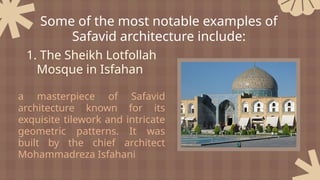
elements. The architecture is characterized by intricate
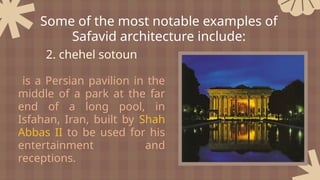
tile work, domed roofs, arches, and courtyards,
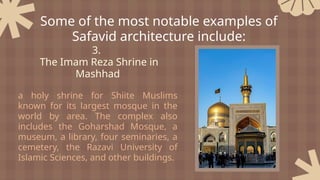
reflecting the cultural and religious significance of the
region. Islamic architecture, with its use of geometric
patterns, calligraphy, and vibrant colors, is a major
influence in Iran.
6.
Pre-Islamic Iranian Architecture
-Pre-IslamicIranian architecture refers to the
architectural styles developed in ancient Iran
before the rise of Islam. It has Combination of
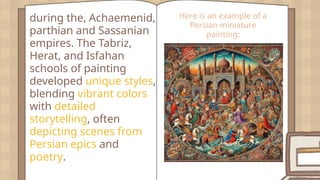
Graeco-Roman, Egyptian, and Babylonian
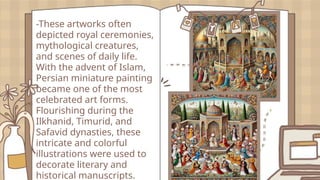
construction.
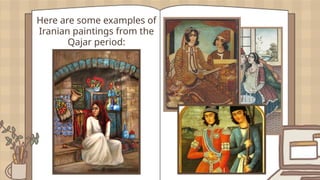
-Pre-Islamic Iranian Architecture is known for its
monumental scale, advanced engineering, and
symbolic designs. Key features include large, open
spaces, intricate brick and stone work, and the use
of domes and arches.
7.
the achaemenid architecture
Achaemenidarchitecture was primarily created under the
direction of Darius I, the third king of the Achaemenid
Empire (550–330 BCE), who reigned from (522-486 BCE).
Achaemenid architecture is known for its monumental
structures that reflected the empire’s power and cultural
diversity. It combines influences from Mesopotamia, Egypt,
and Anatolia, it features massive stone platforms, grand
palaces, hypostyle halls, and intricate reliefs. The style
features expansive halls with tall columns, animal-shaped
capitals, and advanced water management systems,
including irrigation and Persian gardens.
8.
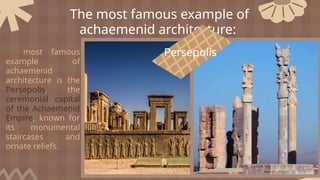
The most famousexample of
achaemenid architecture:
most famous
example of
achaemenid
architecture is the
Persepolis, the
ceremonial capital
of the Achaemenid
Empire, known for
its monumental
staircases and
ornate reliefs.
Persepolis
9.
Parthian architecture (247BCE–224 CE) developed
during the Parthian Empire and is known for blending
traditional Persian elements with influences from
Hellenistic and Greek architecture. Key features of
Parthian architecture include large, vaulted structures
such as domes and iwans (arched halls), which became
prominent in palaces and public buildings.
The Parthian Architecture
10.
Parthian architecture alsoemphasized the use of
mudbrick and stone, and often featured decorative
elements like frescoes and stucco work. The style is
known for its impressive, monumental gateways,
large columned halls, and the use of vast, open
spaces in palace complexes.
The Parthian Architecture
11.
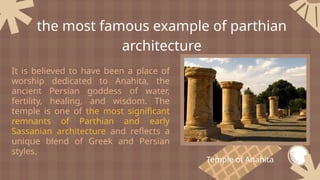
It is believedto have been a place of
worship dedicated to Anahita, the
ancient Persian goddess of water,
fertility, healing, and wisdom. The
temple is one of the most significant
remnants of Parthian and early
Sassanian architecture and reflects a
unique blend of Greek and Persian
styles.
the most famous example of parthian
architecture
Temple of Anahita
12.
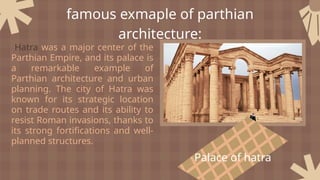
Palace of hatra
Hatrawas a major center of the
Parthian Empire, and its palace is
a remarkable example of
Parthian architecture and urban
planning. The city of Hatra was
known for its strategic location
on trade routes and its ability to
resist Roman invasions, thanks to
its strong fortifications and well-
planned structures.
famous exmaple of parthian
architecture:
13.
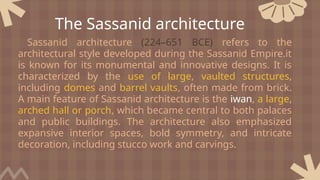
Sassanid architecture (224–651BCE) refers to the
architectural style developed during the Sassanid Empire.it
is known for its monumental and innovative designs. It is
characterized by the use of large, vaulted structures,
including domes and barrel vaults, often made from brick.
A main feature of Sassanid architecture is the iwan, a large,
arched hall or porch, which became central to both palaces
and public buildings. The architecture also emphasized
expansive interior spaces, bold symmetry, and intricate
decoration, including stucco work and carvings.
The Sassanid architecture
14.
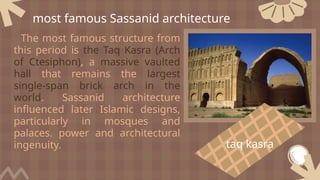
The most famousstructure from
this period is the Taq Kasra (Arch
of Ctesiphon), a massive vaulted
hall that remains the largest
single-span brick arch in the
world. Sassanid architecture
influenced later Islamic designs,
particularly in mosques and
palaces. power and architectural
ingenuity.
most famous Sassanid architecture
taq kasra
15.
Post-Islamic Iranian Architecture
Post-Islamicarchitecture of Iran refers to the
architectural developments that emerged after the
Islamic conquest of Persia in (c.200-50 BCE). This
period saw a transformation in architectural styles
as Islamic art and Persian traditions blended,
resulting in some of the most stunning and
influential designs in the Islamic world.
16.
Seljuk architecture inIran (11th–13th century)
marks a pivotal period in the history of Islamic
architecture, characterized by the fusion of
Persian, Turkic, and Islamic influences. Seljuk
architecture focused on brickwork and the four-
iwan mosque layout. Large, elegant mosques with
curved arches became characteristic of this era.
The seljuk Architecture
17.
1. The GreatMosque of Isfahan (Jameh
Mosque of Isfahan): A masterpiece
that reflects the evolution of Seljuk
architectural style, combining earlier
Persian traditions with Islamic
elements. Its structure includes a
large central dome, four iwans, and
stunning tile work. The mosque’s
courtyard and surrounding arches
demonstrate the sophisticated use of
space typical of the Seljuks.
Some of the most famous examples of Seljuk
architecture in Iran include:
18.
2. The Gonbad-eQabus Tower: This is a
monumental brick tower built in the
early 11th century in the city of Gorgan.
It stands as one of the tallest brick
constructions from the Seljuk period,
with its cylindrical form and intricate
geometric patterns, showcasing both
engineering prowess and artistic
design.
Some of the most famous examples of Seljuk
architecture in Iran include:
19.
3. The Masjid-iJami of Yazd: This
mosque, dating back to the 12th
century, features a stunning entrance
portal, a grand iwan, and a highly
decorative mihrab. Its use of high-
quality brickwork and tile decoration
reflects the Seljuks' mastery in both
structure and aesthetics.
Some of the most famous examples of Seljuk
architecture in Iran include:
20.
The Safavid era(16th–18th centuries) is
renowned for stunning tilework, domes, and
grand mosques, like the Shah Mosque in
Isfahan. This period refined Persian
architectural style, blending earlier influences
into visually striking religious buildings.
the safavid architecture
21.
Safavid architecture, aprominent style in Iran
from the (16th-18th) centuries, is a captivating
blend of Persian and Islamic traditions. It's
characterized by a vibrant use of colors,
intricate tilework, and mesmerizing geometric
patterns. This style adorned mosques, palaces,
and shrines, showcasing a remarkable level of
artistic expression during this period
the safavid architecture
22.
1. The SheikhLotfollah
Mosque in Isfahan
a masterpiece of Safavid
architecture known for its
exquisite tilework and intricate
geometric patterns. It was
built by the chief architect
Mohammadreza Isfahani
Some of the most notable examples of
Safavid architecture include:
23.
2. chehel sotoun
isa Persian pavilion in the
middle of a park at the far
end of a long pool, in
Isfahan, Iran, built by Shah
Abbas II to be used for his
entertainment and
receptions.
Some of the most notable examples of
Safavid architecture include:
24.
3.
The Imam RezaShrine in
Mashhad
a holy shrine for Shiite Muslims
known for its largest mosque in the
world by area. The complex also
includes the Goharshad Mosque, a
museum, a library, four seminaries, a
cemetery, the Razavi University of
Islamic Sciences, and other buildings.
Some of the most notable examples of
Safavid architecture include:
25.
Many years later,in the 1920s, Iranian architecture started
to change under the reign of Reza Shah Pahlavi. This era
marked the beginning of modernization, with Western
architectural styles and techniques influencing local
designs. By the 1940s and 1950s, modernist elements like
minimalism, concrete, and steel were integrated into
buildings, while still keeping traditional Persian features
like arches, domes, and courtyards. Over time, this fusion
led to the creation of iconic structures
the Modern architecture
some examples ofmodern
architecture:
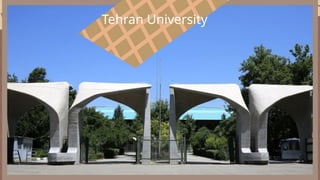
Tehran University
The University of Tehran’s iconic
entrance gate, showcases a fusion of
Persian heritage and modern design.
Designed in 1965 by Iranian architect
Korosh Farzami, the gate features
sweeping concrete curves
symbolizing freedom and intellectual
growth. Its minimalist yet dynamic
form reflects modern construction
techniques while subtly echoing
traditional Iranian motifs, making it a
powerful symbol of academic
progress and innovation in Iran.
some examples ofmodern architecture:
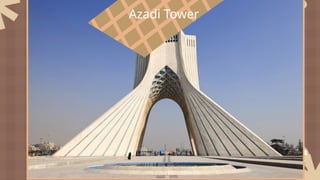
azadi tower
The Azadi Tower in Tehran, Iran, is an iconic monument
built in 1971 to commemorate the 2,500th anniversary
of the Persian Empire. Designed by Hossein Amanat at
just 24 years old, the tower blends Persian and modern
architectural styles, featuring traditional Islamic
geometric patterns and modern design elements.
Standing 45 meters (148 feet) tall and clad in white
marble from Isfahan, it serves as a symbolic gateway
between Tehran's old and new sections. its Originally
named the Shahyad Tower ("King’s Memorial Tower"), it
was renamed the Azadi Tower ("Freedom Tower") after
the 1979 Iranian Revolution, becoming a powerful
symbol of freedom and national pride.
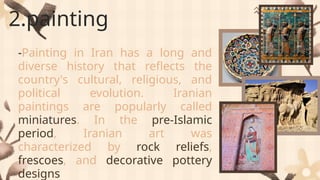
2.painting
-Painting in Iranhas a long and
diverse history that reflects the
country's cultural, religious, and
political evolution. Iranian
paintings are popularly called
miniatures. In the pre-Islamic
period, Iranian art was
characterized by rock reliefs,
frescoes, and decorative pottery
designs
33.
during the, Achaemenid,
parthianand Sassanian
empires. The Tabriz,
Herat, and Isfahan
schools of painting
developed unique styles,
blending vibrant colors
with detailed
storytelling, often
depicting scenes from
Persian epics and
poetry.
Here is an example of a
Persian miniature
painting:
34.
-These artworks often
depictedroyal ceremonies,
mythological creatures,
and scenes of daily life.
With the advent of Islam,
Persian miniature painting
became one of the most
celebrated art forms.
Flourishing during the
Ilkhanid, Timurid, and
Safavid dynasties, these
intricate and colorful
illustrations were used to
decorate literary and
historical manuscripts.
35.
-During the Qajarperiod (1789–1925),
Iranian painting shifted to realistic
portraiture influenced by European art while
preserving Persian decorative elements,
often depicting royalty and court life. In the
modern era, artists blended traditional styles
with contemporary techniques to explore
themes like identity, politics, and spirituality.
36.
Here are someexamples of
Iranian paintings from the
Qajar period:
37.
After the 1979Islamic Revolution, art
became a tool for social and political
expression. Today, Iranian artists
continue to merge historical
influences with modern styles, making
Iranian painting a vibrant and
evolving art form.
3.FOLK ART
Folk artin Iran is a reflection
of the country’s cultural
heritage, showcasing
traditional craftsmanship
passed down through
generations. It involves
various forms of artistic
expression that highlight the
values, beliefs, and daily life
of the Iranian people, often
characterized by intricate
designs and vibrant
patterns.
There are three
famous Iranian
folk art:
-CARPET
WEAVING
-ENGRAVING
-RELIEF ANd
latticework
40.
• Carpet Weaving
-Persiancarpets are renowned
for their intricate designs and
high-quality craftsmanship. Each
region in Iran has its own
distinctive style, with motifs that
reflect cultural, spiritual, and
natural themes. The weaving
process itself is meticulous,
often involving the use of
natural dyes and hand-knotting
techniques, making these
carpets highly valued worldwide.
41.
• Engraving
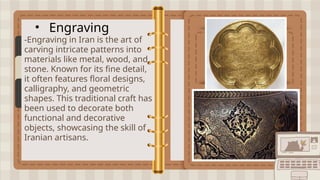
-Engraving inIran is the art of
carving intricate patterns into
materials like metal, wood, and
stone. Known for its fine detail,
it often features floral designs,
calligraphy, and geometric
shapes. This traditional craft has
been used to decorate both
functional and decorative
objects, showcasing the skill of
Iranian artisans.
42.
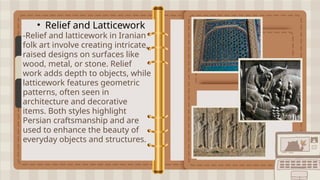
• Relief andLatticework
-Relief and latticework in Iranian
folk art involve creating intricate,
raised designs on surfaces like
wood, metal, or stone. Relief
work adds depth to objects, while
latticework features geometric
patterns, often seen in
architecture and decorative
items. Both styles highlight
Persian craftsmanship and are
used to enhance the beauty of
everyday objects and structures.