Presented by:-
Reema Tariq
Artificial Intelligence
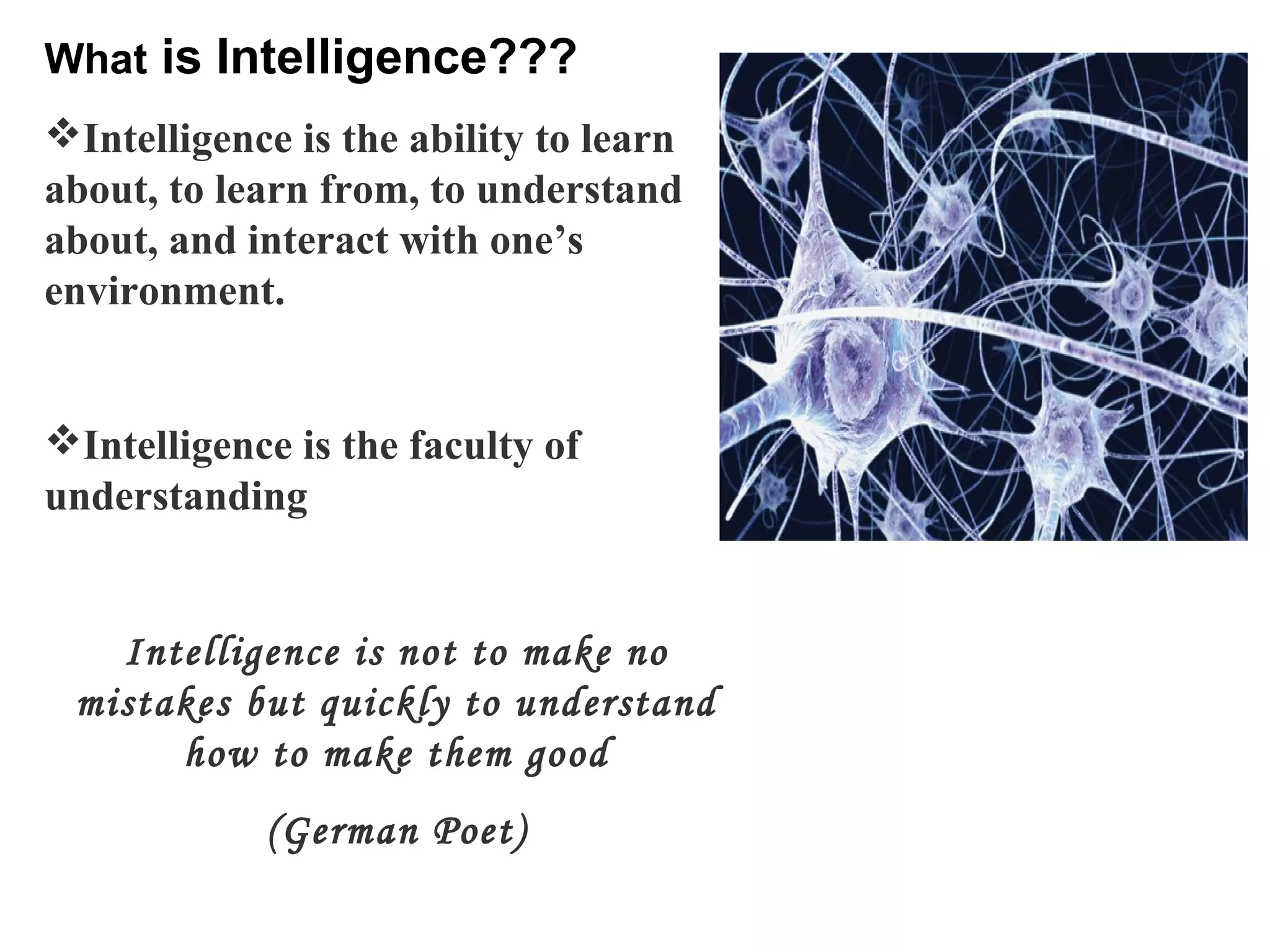
What is Intelligence???
Intelligence is the ability to learn
about, to learn from, to understand
about, and interact with one’s
environment.
Intelligence is the faculty of
understanding
Intelligence is not to make no
mistakes but quickly to understand
how to make them good
(German Poet)
What Is Artificial Intelligence???
 Artificial Intelligence (AI) is
usually defined as the science
of making computers do
things that require
intelligence when done by
humans.
 A.I is the study of ideas that
enable computers to be
intelligent
How Does AI Works??
Artificial intelligence works
with the help of
• Artificial Neurons
(Artificial Neural
Network)
And
• Scientific theorems(If-
Then Statements, Logics)
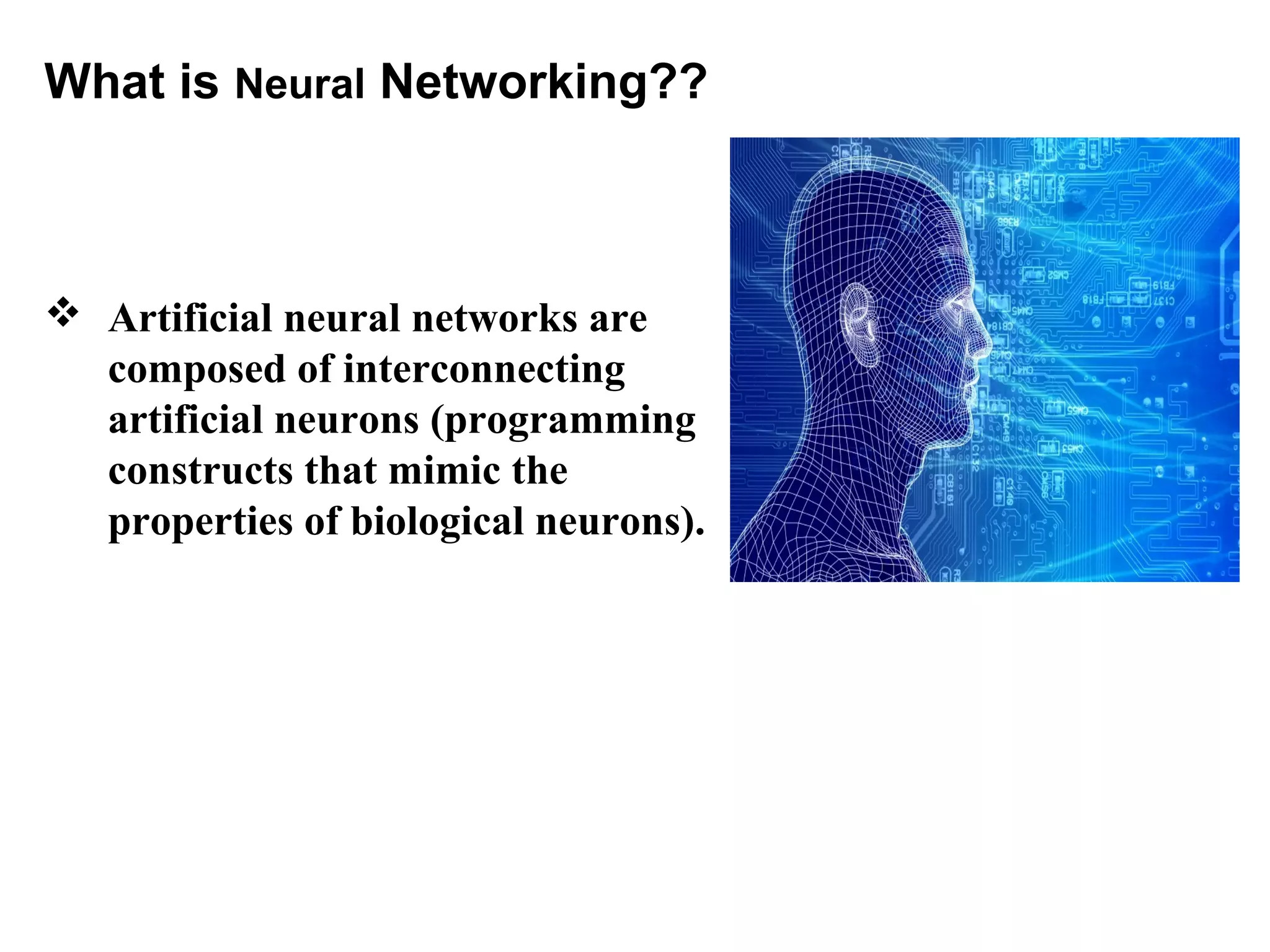
What is Neural Networking??
 Artificial neural networks are
composed of interconnecting
artificial neurons (programming
constructs that mimic the
properties of biological neurons).
Sec 2: ANN 6
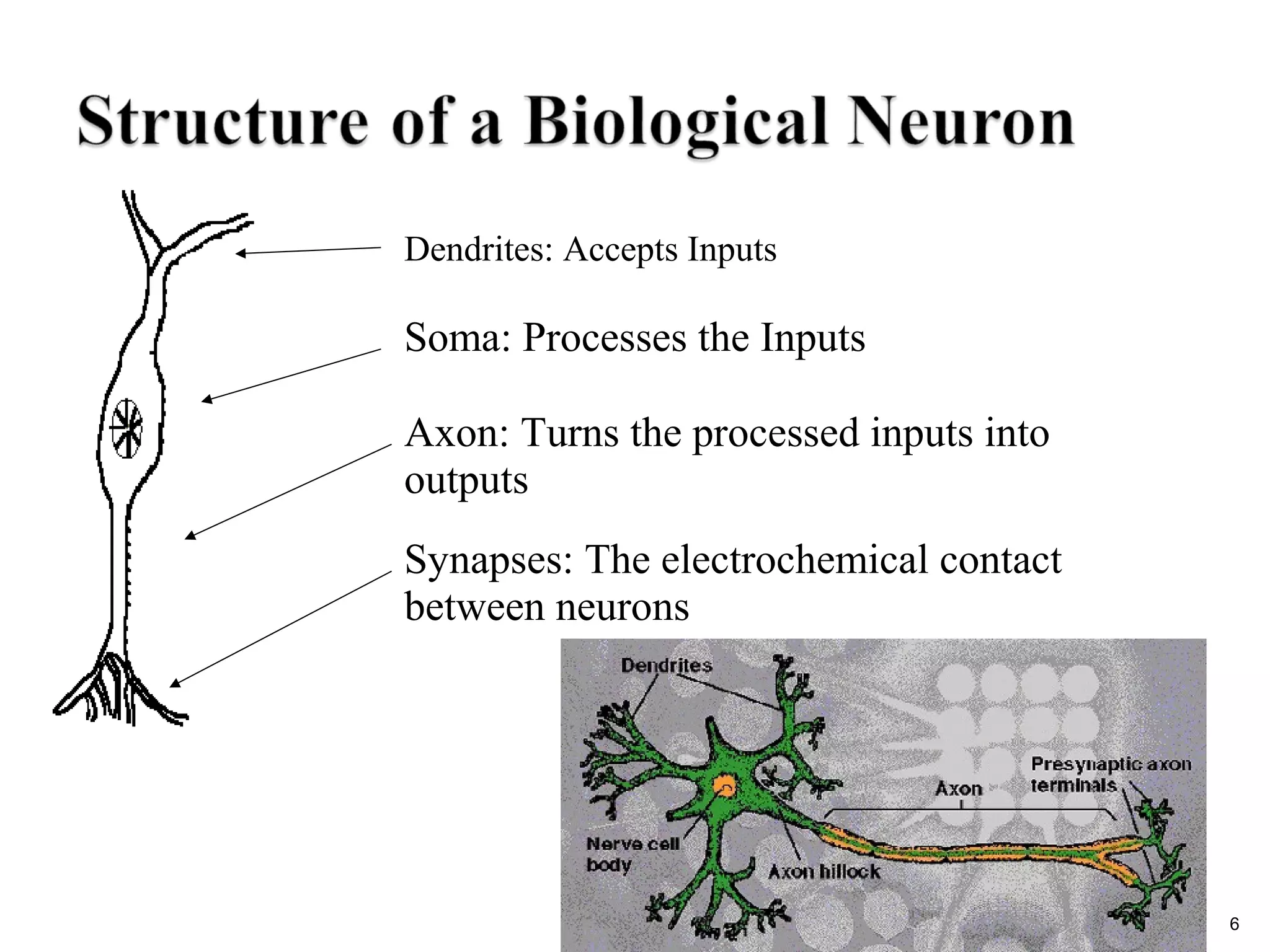
Dendrites: Accepts Inputs
Soma: Processes the Inputs
Axon: Turns the processed inputs into
outputs
Synapses: The electrochemical contact
between neurons
Sec 2: ANN 7
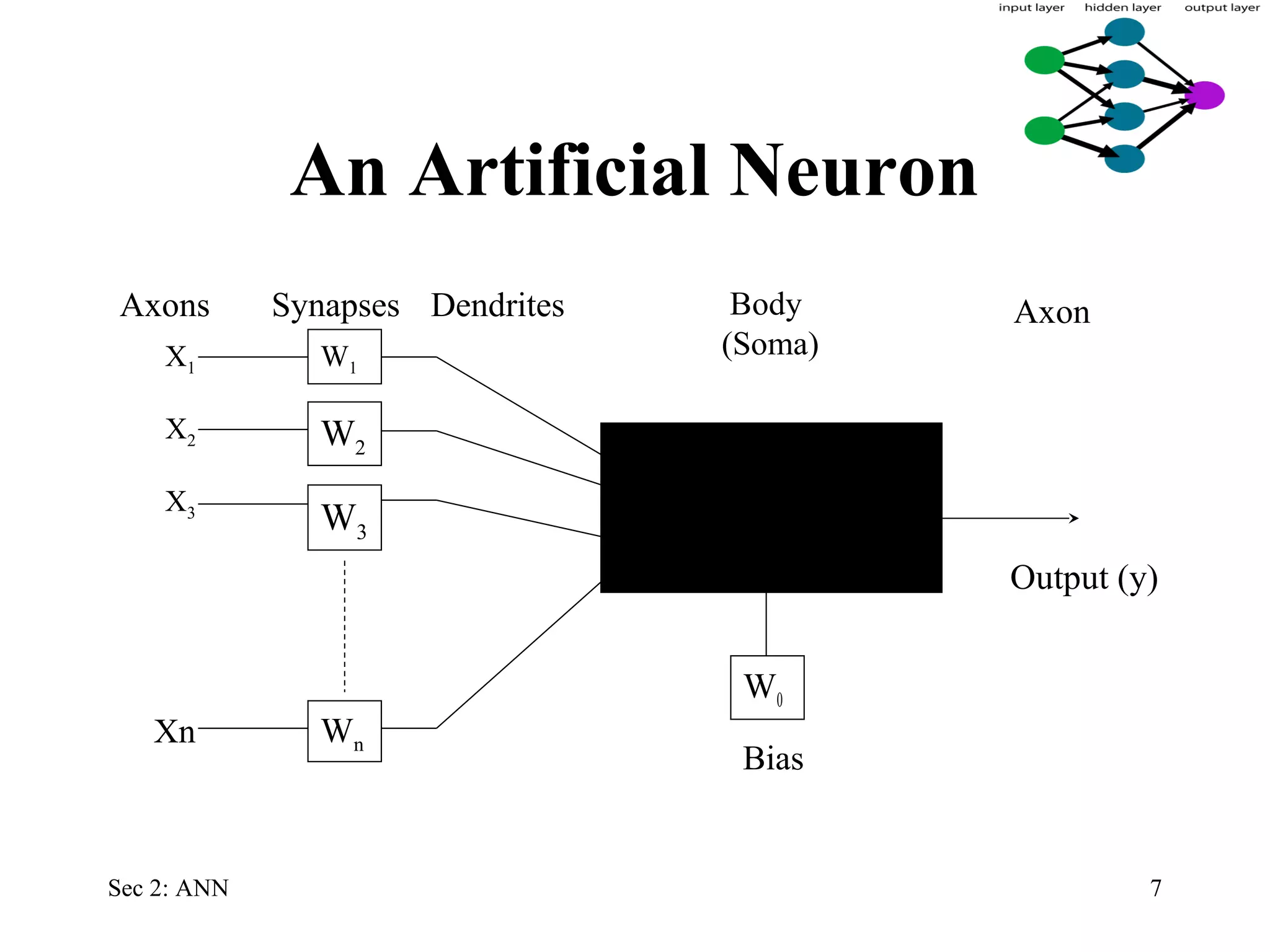
An Artificial Neuron
W1
W2
W3
Wn
∑
W0
f
X1
X2
X3
Xn
Axons Synapses Dendrites Body
(Soma)
Axon
Bias
Output (y)
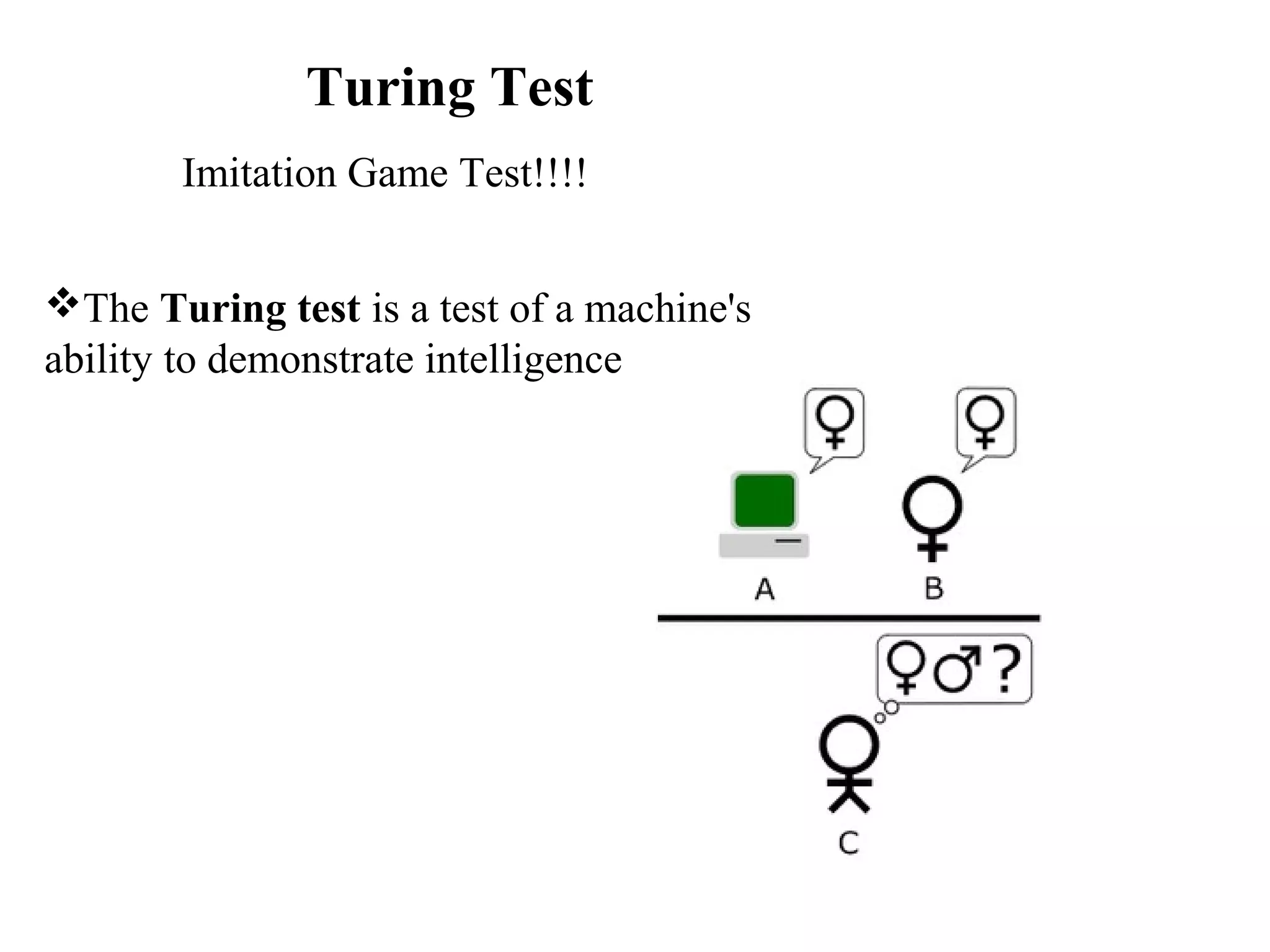
Turing Test
The Turing test is a test of a machine's
ability to demonstrate intelligence
Imitation Game Test!!!!
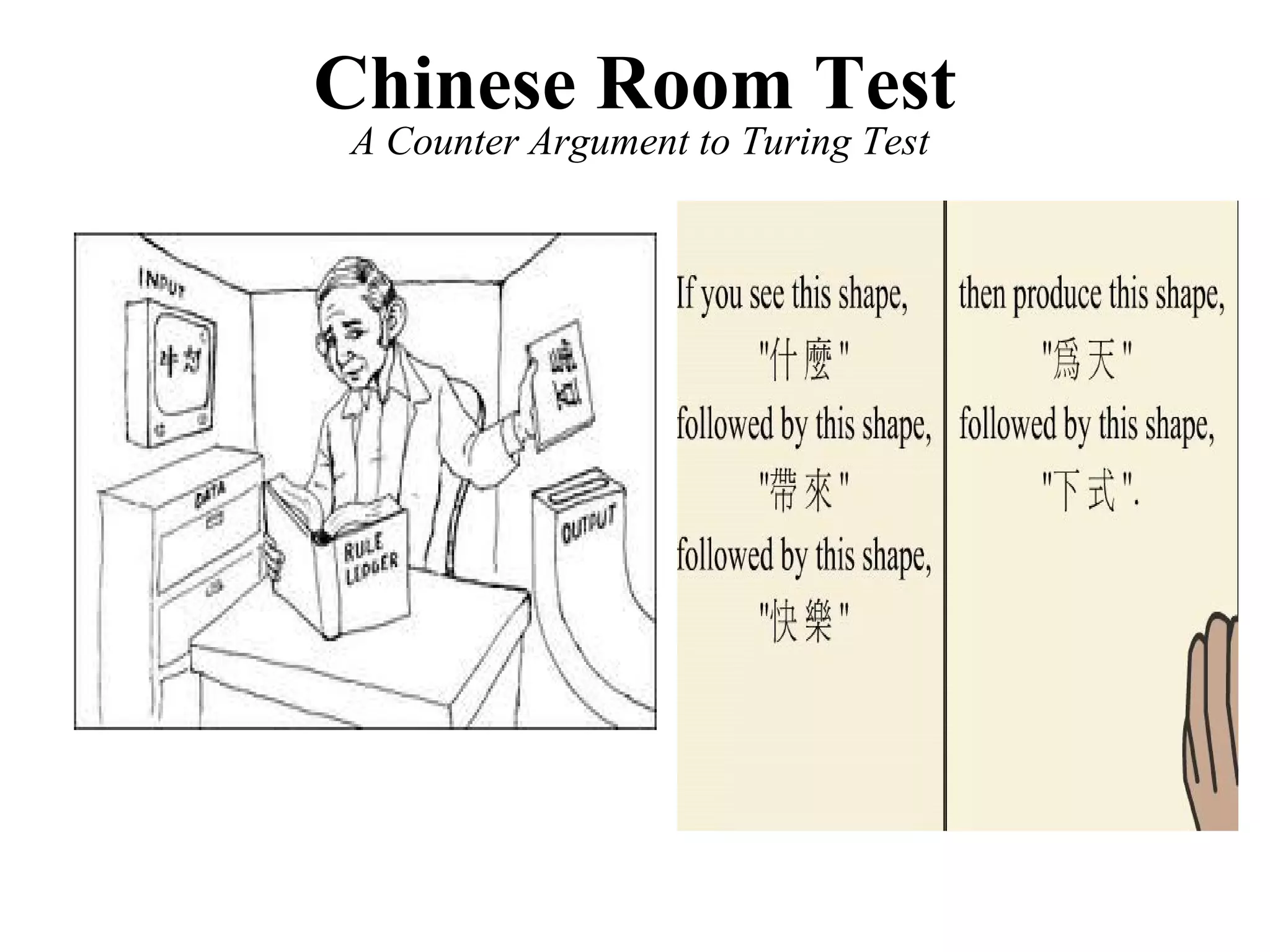
Chinese Room Test
A Counter Argument to Turing Test
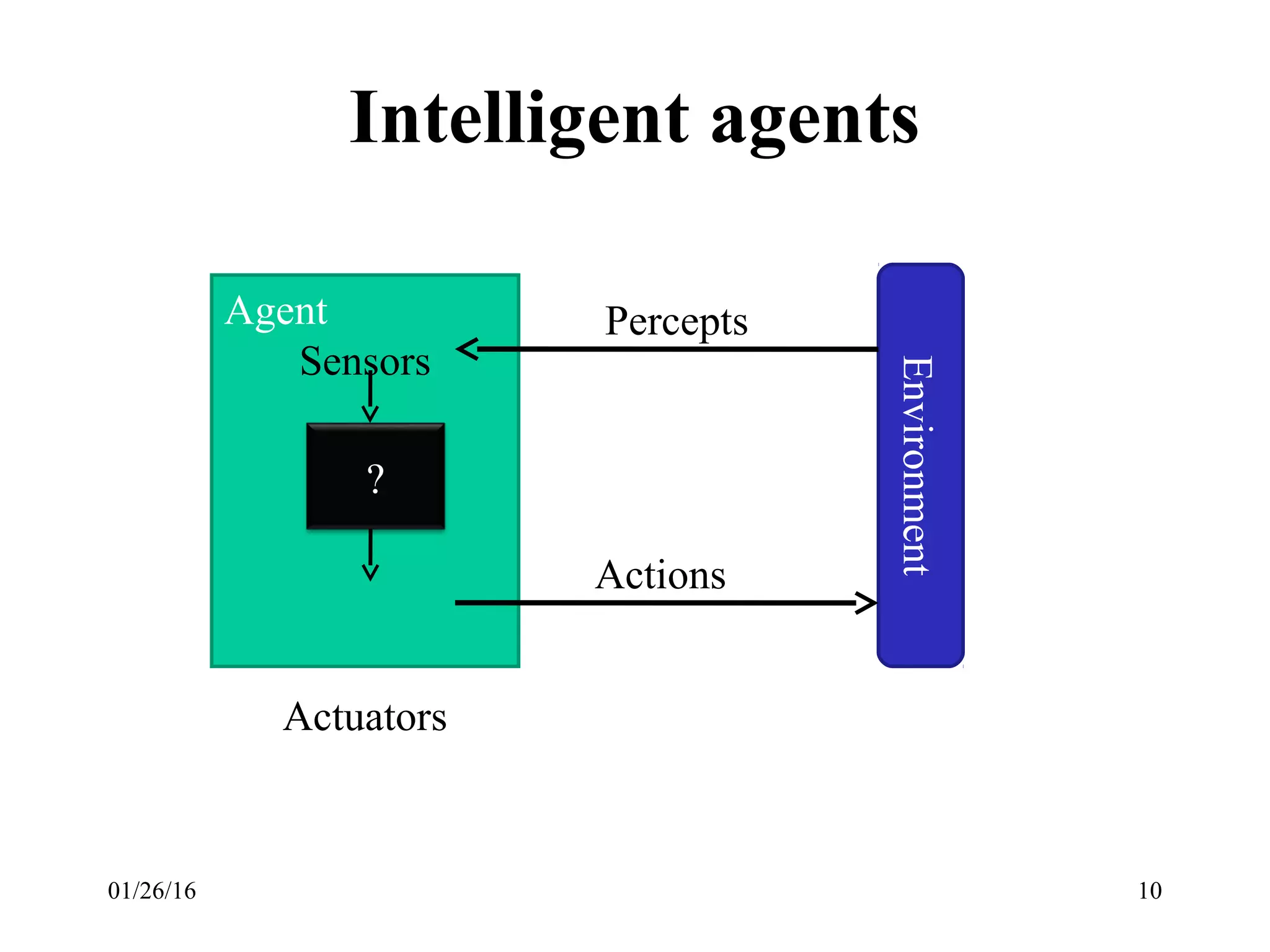
Intelligent agents
01/26/16 10
Actions
Agent
Sensors
Actuators
?
Environment
Percepts
Examples Of Artificial Intelligence
Expert Systems!!
An expert system is a computer program that is designed to
hold the accumulated knowledge of one or more domain
experts
It reasons with knowledge of some specialist subject with a
view to solving problems or giving advice
They are tested by being placed in the same real world
problem solving situation
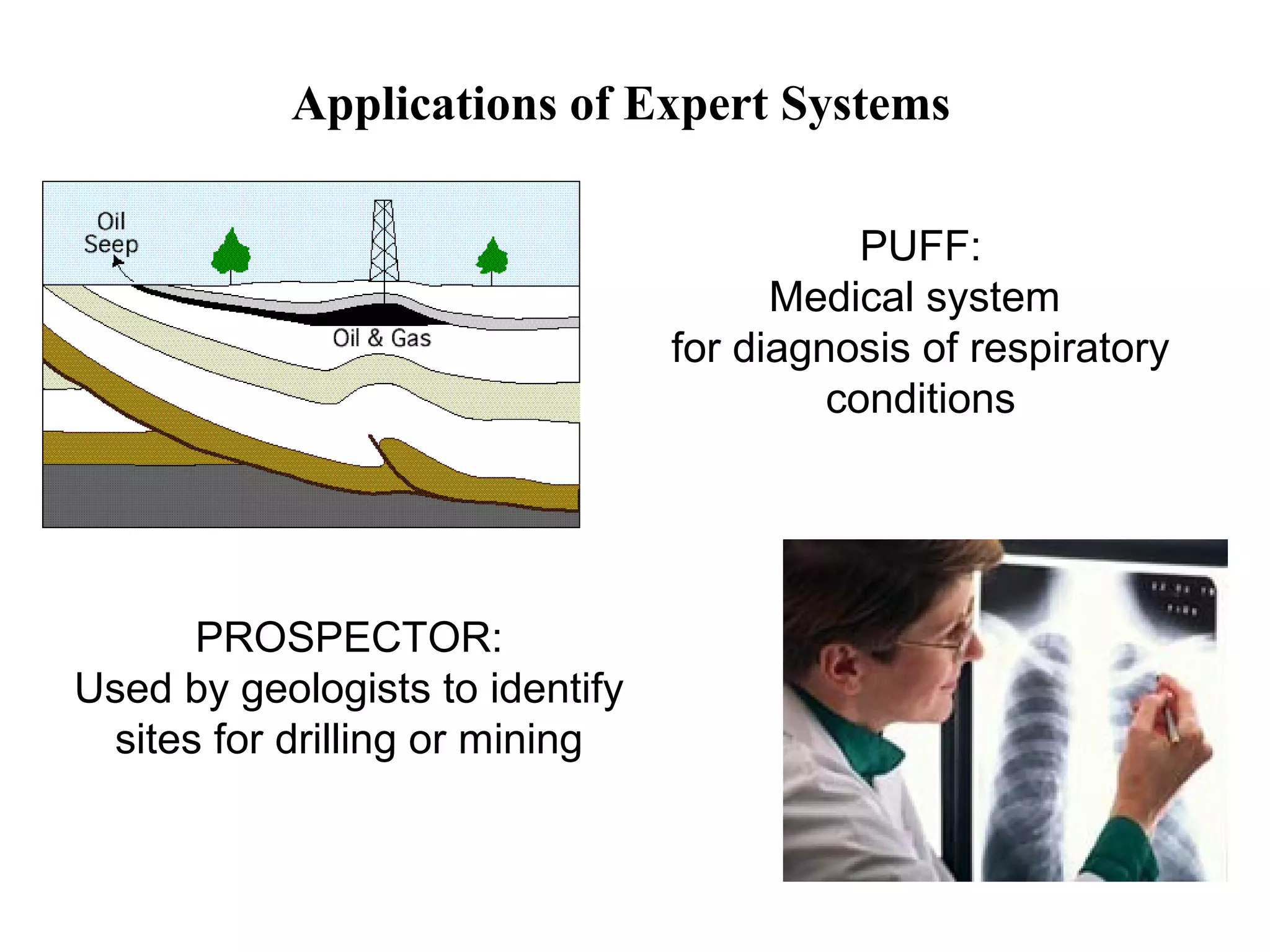
Applications of Expert Systems
PROSPECTOR:
Used by geologists to identify
sites for drilling or mining
PUFF:
Medical system
for diagnosis of respiratory
conditions
Applications of Expert Systems
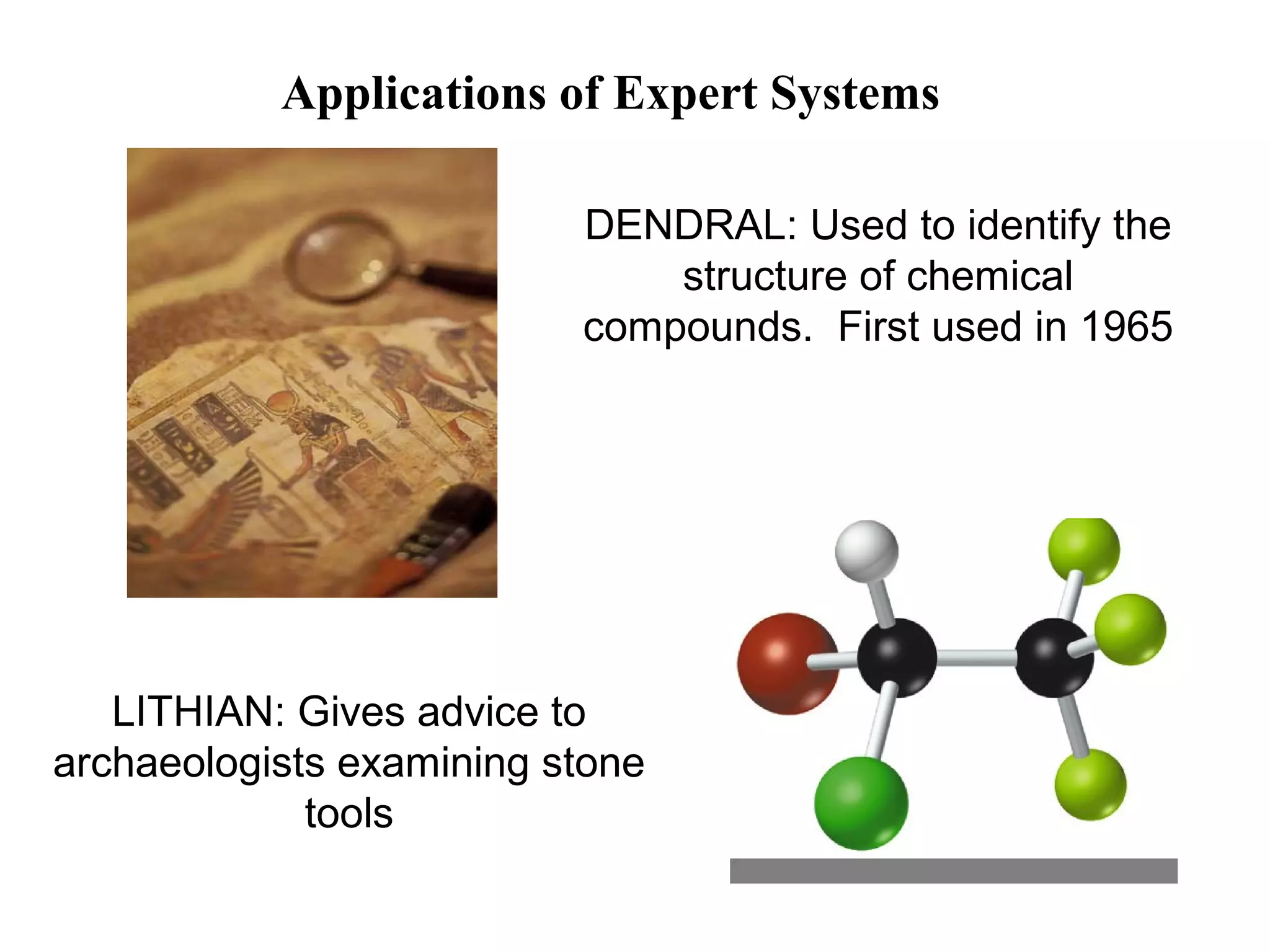
LITHIAN: Gives advice to
archaeologists examining stone
tools
DENDRAL: Used to identify the
structure of chemical
compounds. First used in 1965
Machine Learning!
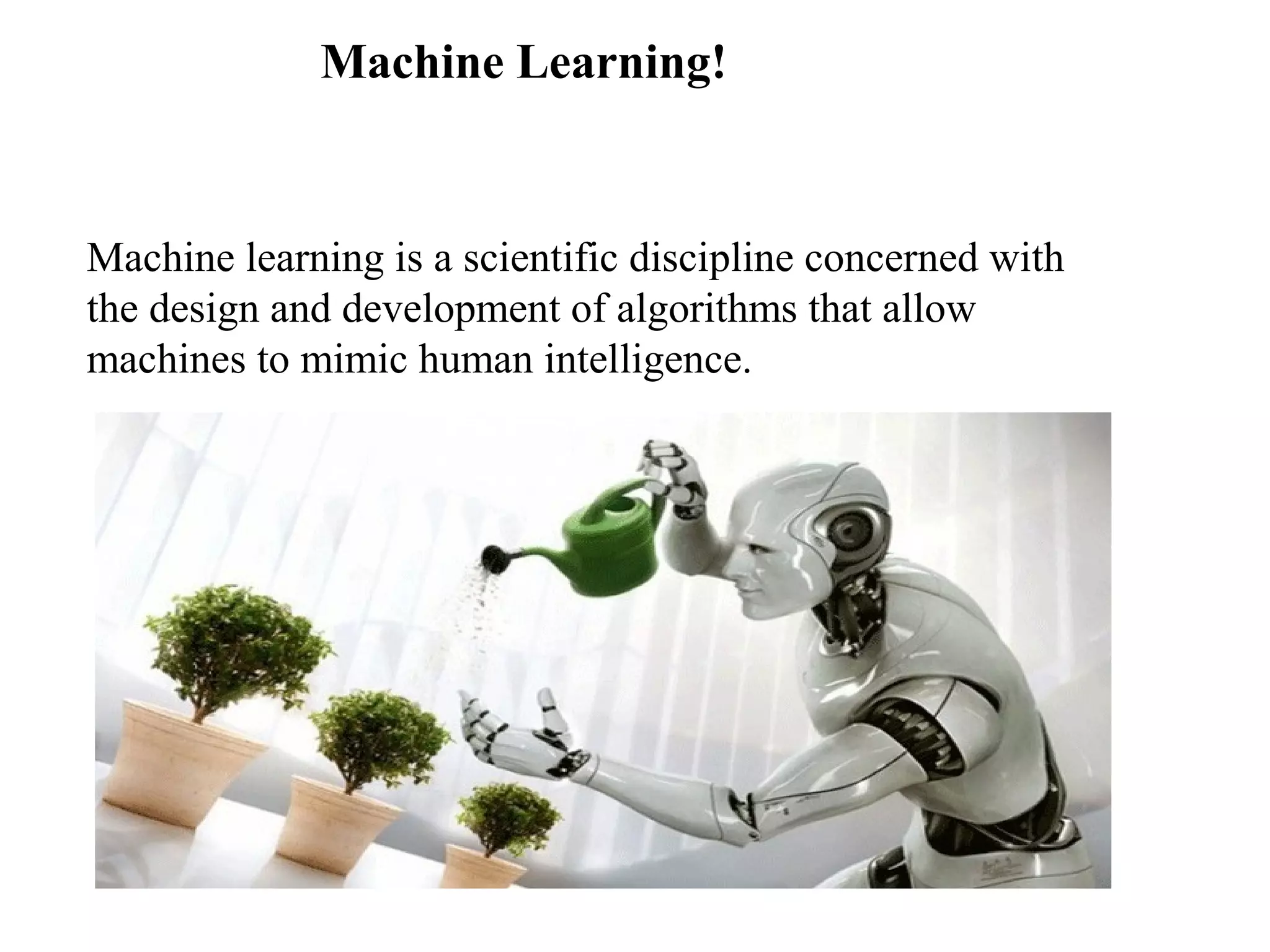
Machine learning is a scientific discipline concerned with
the design and development of algorithms that allow
machines to mimic human intelligence.
There are Three ways that A.I learns
Failure Driven Learning
Learning by being Told
Learning by Exploration
Resemblance To Human Mind....
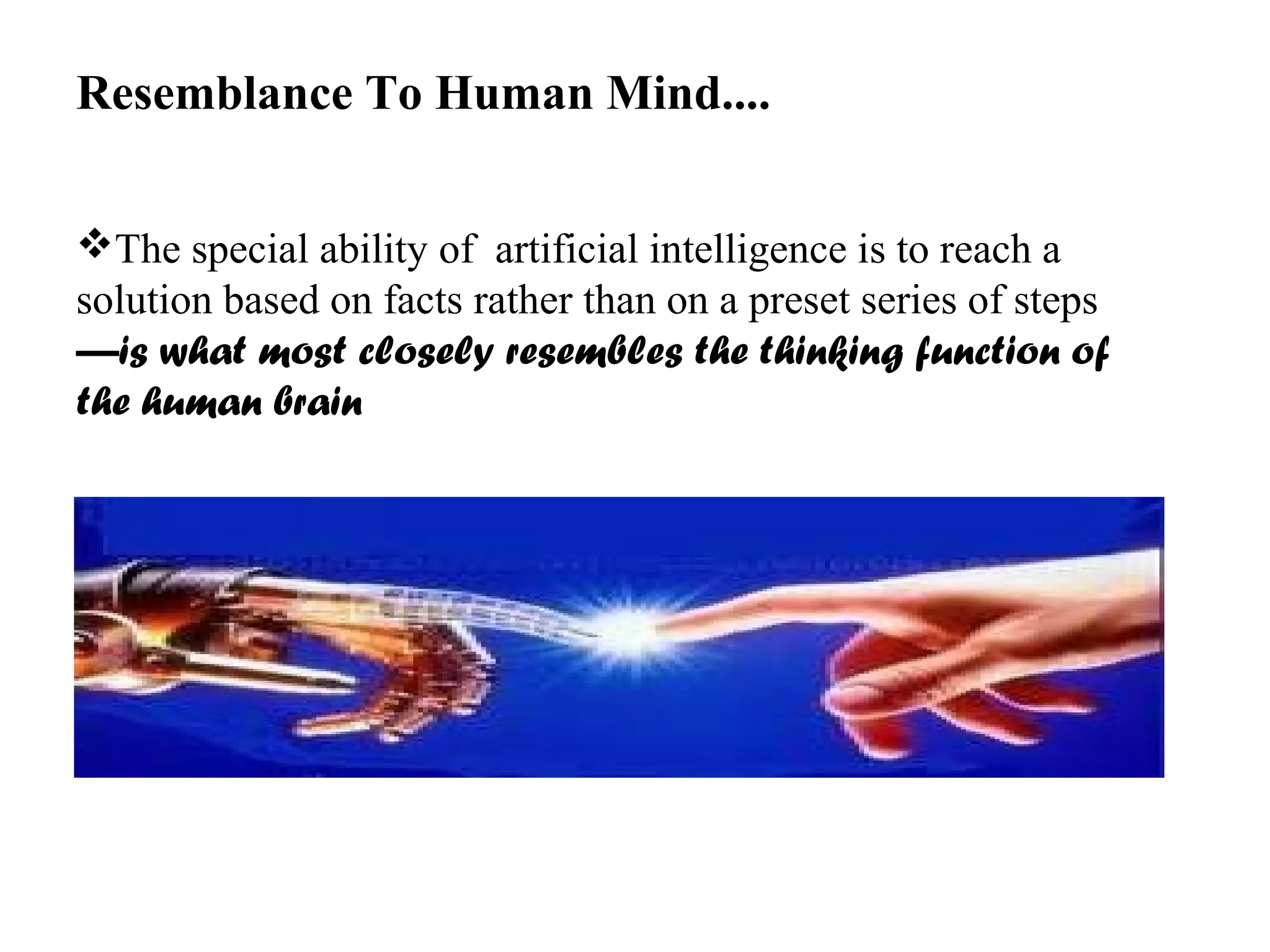
The special ability of artificial intelligence is to reach a
solution based on facts rather than on a preset series of steps
—is what most closely resembles the thinking function of
the human brain
Human Intelligence VS Artificial Intelligence
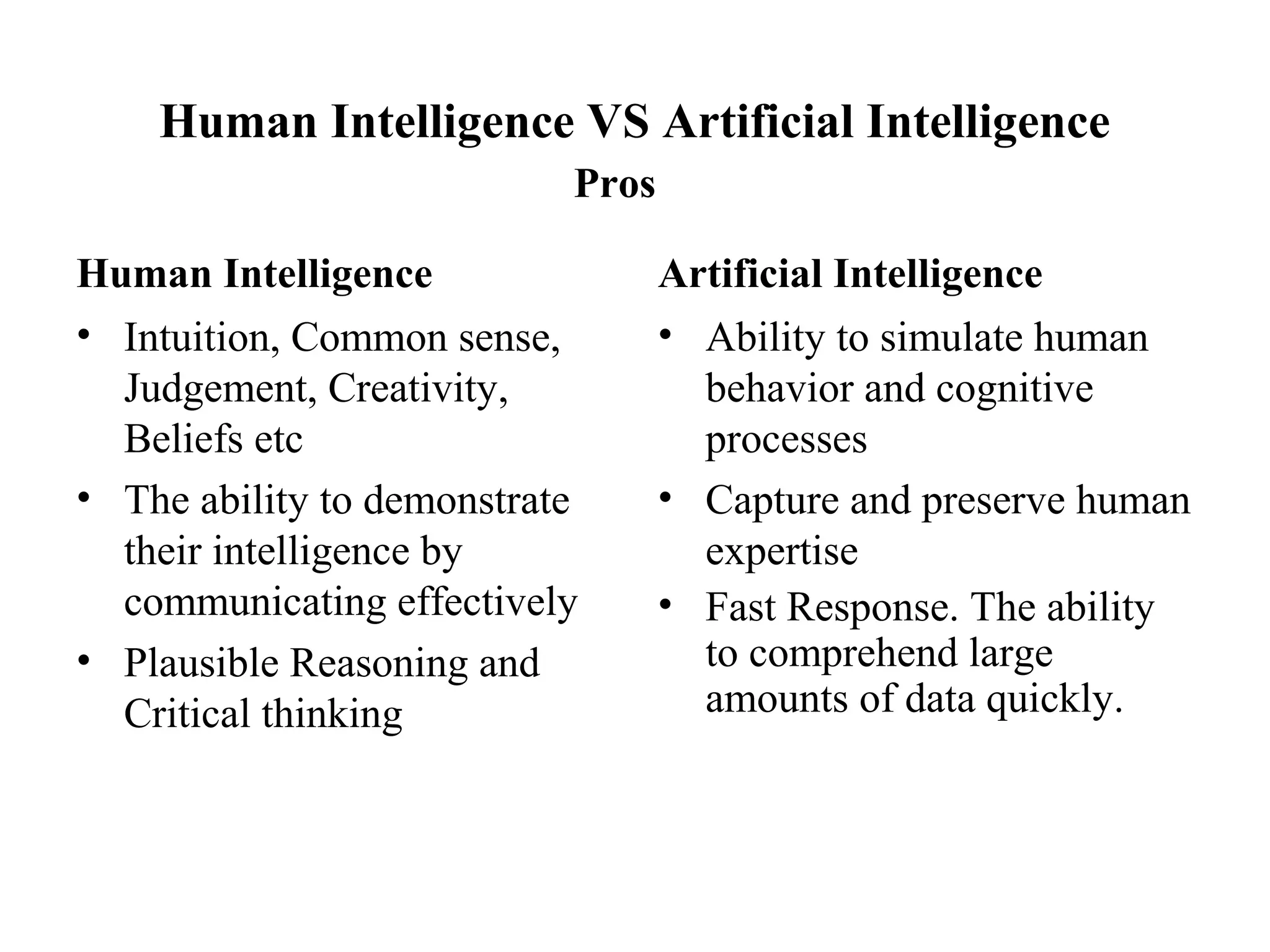
Human Intelligence
• Intuition, Common sense,
Judgement, Creativity,
Beliefs etc
• The ability to demonstrate
their intelligence by
communicating effectively
• Plausible Reasoning and
Critical thinking
Artificial Intelligence
• Ability to simulate human
behavior and cognitive
processes
• Capture and preserve human
expertise
• Fast Response. The ability
to comprehend large
amounts of data quickly.
Pros
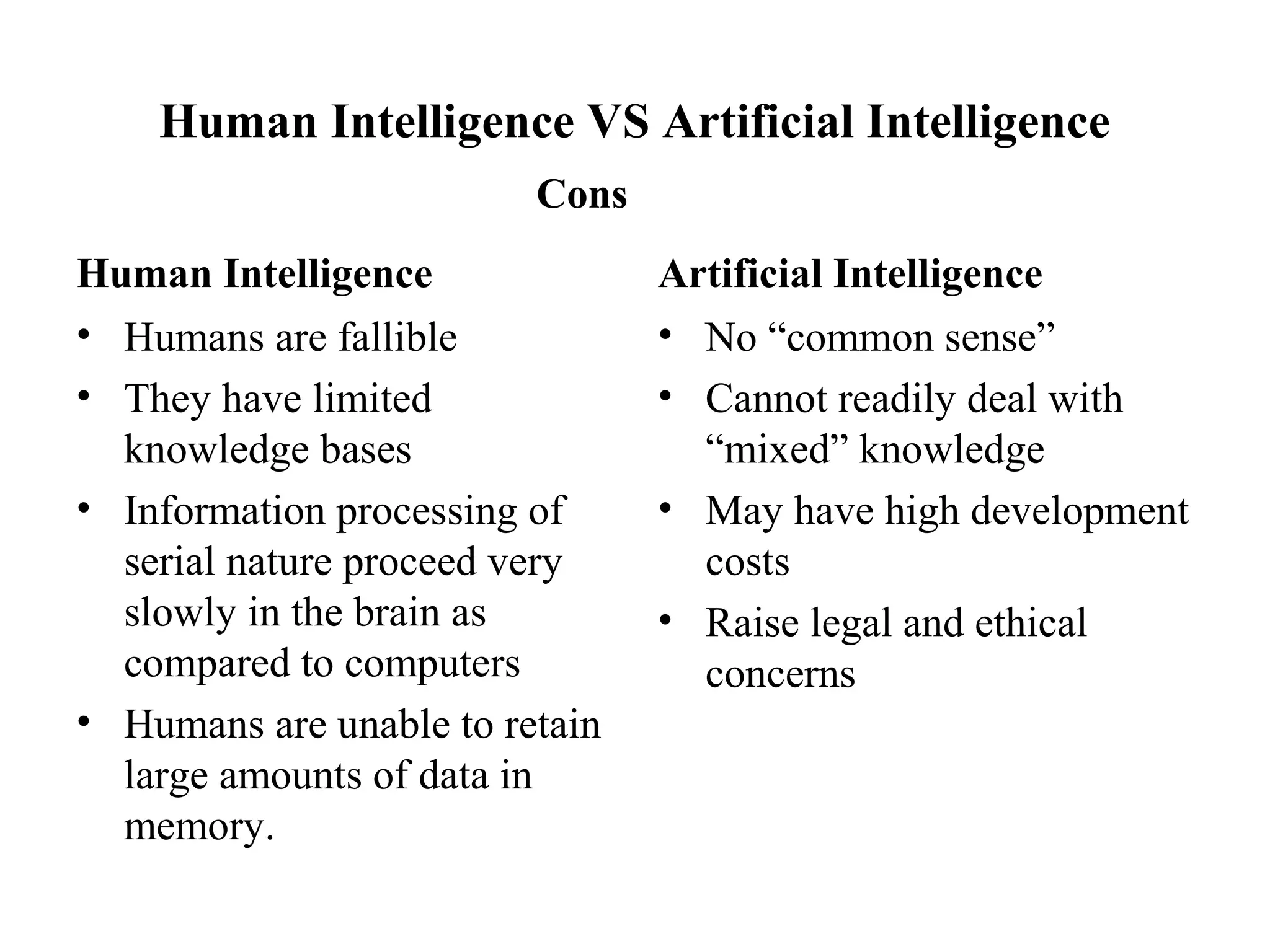
• Humans are fallible
• They have limited
knowledge bases
• Information processing of
serial nature proceed very
slowly in the brain as
compared to computers
• Humans are unable to retain
large amounts of data in
memory.
• No “common sense”
• Cannot readily deal with
“mixed” knowledge
• May have high development
costs
• Raise legal and ethical
concerns
Human Intelligence VS Artificial Intelligence
Human Intelligence Artificial Intelligence
Cons
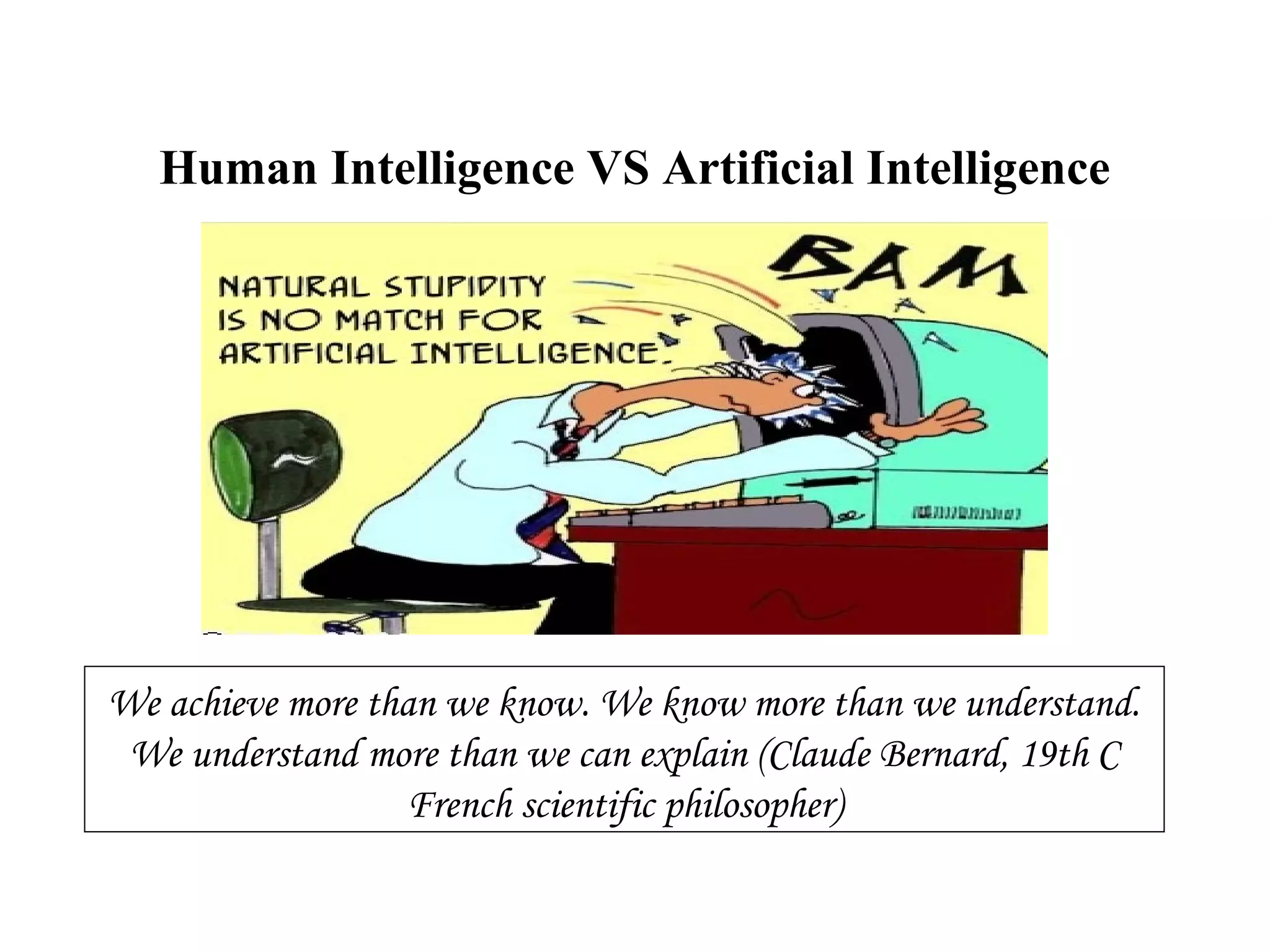
Human Intelligence VS Artificial Intelligence
We achieve more than we know. We know more than we understand.
We understand more than we can explain (Claude Bernard, 19th C
French scientific philosopher)
Artificial Intelligence
• AI software uses the
techniques of search and
pattern matching
• Programmers design AI
software to give the
computer only the problem,
not the steps necessary to
solve it
Conventional Computing
• Conventional computer
software follow a logical
series of steps to reach a
conclusion
• Computer programmers
originally designed software
that accomplished tasks by
completing algorithms
Artificial Intelligence VS Conventional Computing
Psychology And Artificial intelligence
The functionalist approach of AI views the mind as a representational
system and psychology as the study of the various computational
processes whereby mental representations are constructed, organized,
and interpreted.
(Margaret Boden's essays written between 1982 and 1988)
Artificial intelligence & Our society
Why we need AI??
To supplement natural intelligence for e.g we are building
intelligence in an object so that it can do what we want it to do, as for
example-- robots, thus reducing human labour and reducing human
mistakes
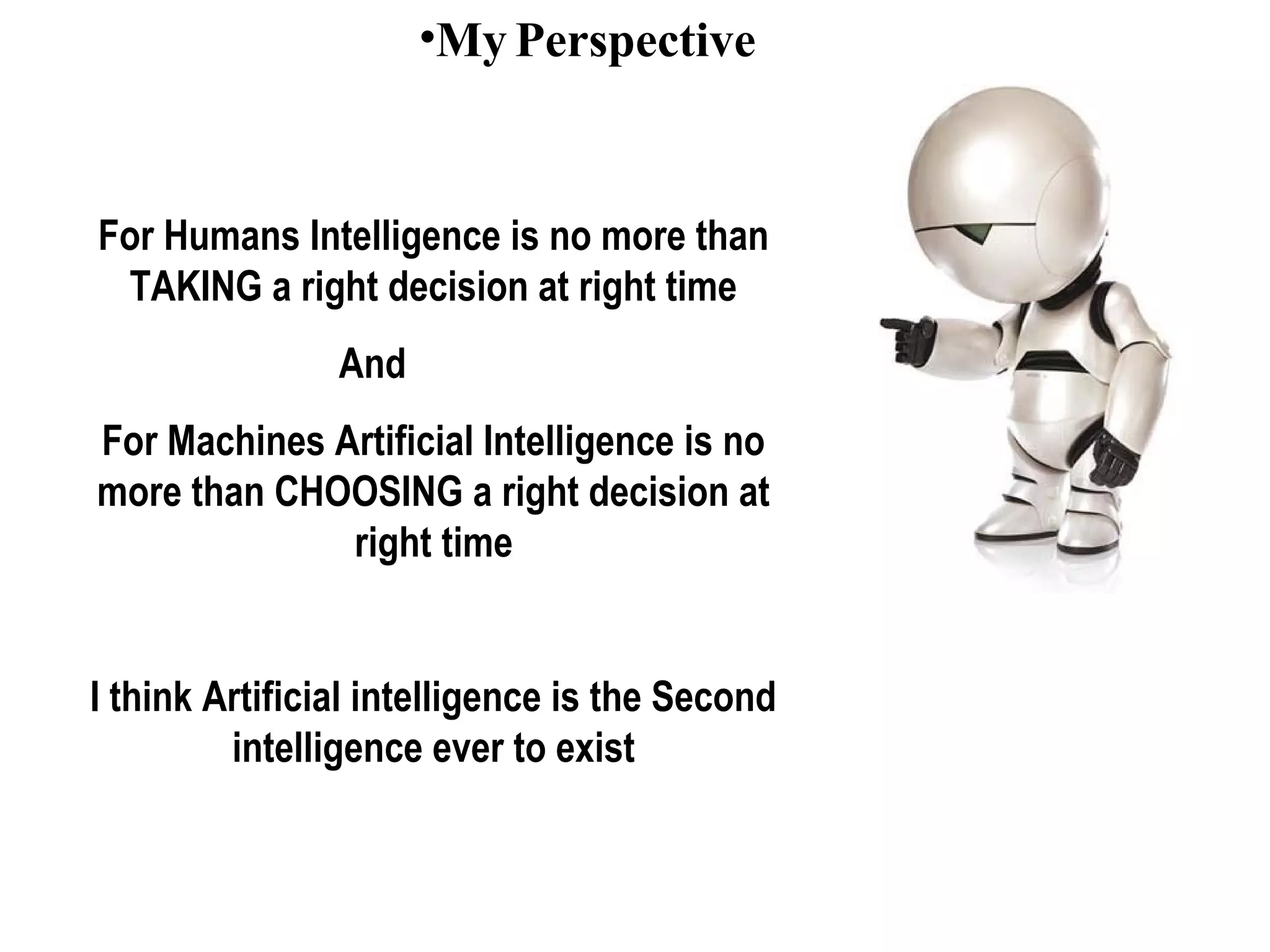
•My Perspective
For Humans Intelligence is no more than
TAKING a right decision at right time
And
For Machines Artificial Intelligence is no
more than CHOOSING a right decision at
right time
I think Artificial intelligence is the Second
intelligence ever to exist
Be Not Afraid Of Falling Be Afraid Of Not Trying
Go Ahead
With Question
Thank You
Artificial Intelligence
Our Attempt To Build Models Of
Ourselves
Mallick Sharique
ID # 9475
KASBIT….

Artificial_Intelligence

  • 1.
  • 2.
    What is Intelligence??? Intelligenceis the ability to learn about, to learn from, to understand about, and interact with one’s environment. Intelligence is the faculty of understanding Intelligence is not to make no mistakes but quickly to understand how to make them good (German Poet)
  • 3.
    What Is ArtificialIntelligence???  Artificial Intelligence (AI) is usually defined as the science of making computers do things that require intelligence when done by humans.  A.I is the study of ideas that enable computers to be intelligent
  • 4.
    How Does AIWorks?? Artificial intelligence works with the help of • Artificial Neurons (Artificial Neural Network) And • Scientific theorems(If- Then Statements, Logics)
  • 5.
    What is NeuralNetworking??  Artificial neural networks are composed of interconnecting artificial neurons (programming constructs that mimic the properties of biological neurons).
  • 6.
    Sec 2: ANN6 Dendrites: Accepts Inputs Soma: Processes the Inputs Axon: Turns the processed inputs into outputs Synapses: The electrochemical contact between neurons
  • 7.
    Sec 2: ANN7 An Artificial Neuron W1 W2 W3 Wn ∑ W0 f X1 X2 X3 Xn Axons Synapses Dendrites Body (Soma) Axon Bias Output (y)
  • 8.
    Turing Test The Turingtest is a test of a machine's ability to demonstrate intelligence Imitation Game Test!!!!
  • 9.
    Chinese Room Test ACounter Argument to Turing Test
  • 10.
  • 11.
    Examples Of ArtificialIntelligence Expert Systems!! An expert system is a computer program that is designed to hold the accumulated knowledge of one or more domain experts It reasons with knowledge of some specialist subject with a view to solving problems or giving advice They are tested by being placed in the same real world problem solving situation
  • 12.
    Applications of ExpertSystems PROSPECTOR: Used by geologists to identify sites for drilling or mining PUFF: Medical system for diagnosis of respiratory conditions
  • 13.
    Applications of ExpertSystems LITHIAN: Gives advice to archaeologists examining stone tools DENDRAL: Used to identify the structure of chemical compounds. First used in 1965
  • 14.
    Machine Learning! Machine learningis a scientific discipline concerned with the design and development of algorithms that allow machines to mimic human intelligence.
  • 15.
    There are Threeways that A.I learns Failure Driven Learning Learning by being Told Learning by Exploration
  • 16.
    Resemblance To HumanMind.... The special ability of artificial intelligence is to reach a solution based on facts rather than on a preset series of steps —is what most closely resembles the thinking function of the human brain
  • 17.
    Human Intelligence VSArtificial Intelligence
  • 18.
    Human Intelligence VSArtificial Intelligence Human Intelligence • Intuition, Common sense, Judgement, Creativity, Beliefs etc • The ability to demonstrate their intelligence by communicating effectively • Plausible Reasoning and Critical thinking Artificial Intelligence • Ability to simulate human behavior and cognitive processes • Capture and preserve human expertise • Fast Response. The ability to comprehend large amounts of data quickly. Pros
  • 19.
    • Humans arefallible • They have limited knowledge bases • Information processing of serial nature proceed very slowly in the brain as compared to computers • Humans are unable to retain large amounts of data in memory. • No “common sense” • Cannot readily deal with “mixed” knowledge • May have high development costs • Raise legal and ethical concerns Human Intelligence VS Artificial Intelligence Human Intelligence Artificial Intelligence Cons
  • 20.
    Human Intelligence VSArtificial Intelligence We achieve more than we know. We know more than we understand. We understand more than we can explain (Claude Bernard, 19th C French scientific philosopher)
  • 21.
    Artificial Intelligence • AIsoftware uses the techniques of search and pattern matching • Programmers design AI software to give the computer only the problem, not the steps necessary to solve it Conventional Computing • Conventional computer software follow a logical series of steps to reach a conclusion • Computer programmers originally designed software that accomplished tasks by completing algorithms Artificial Intelligence VS Conventional Computing
  • 22.
    Psychology And Artificialintelligence The functionalist approach of AI views the mind as a representational system and psychology as the study of the various computational processes whereby mental representations are constructed, organized, and interpreted. (Margaret Boden's essays written between 1982 and 1988)
  • 23.
    Artificial intelligence &Our society Why we need AI?? To supplement natural intelligence for e.g we are building intelligence in an object so that it can do what we want it to do, as for example-- robots, thus reducing human labour and reducing human mistakes
  • 24.
    •My Perspective For HumansIntelligence is no more than TAKING a right decision at right time And For Machines Artificial Intelligence is no more than CHOOSING a right decision at right time I think Artificial intelligence is the Second intelligence ever to exist
  • 25.
    Be Not AfraidOf Falling Be Afraid Of Not Trying Go Ahead With Question
  • 26.
    Thank You Artificial Intelligence OurAttempt To Build Models Of Ourselves Mallick Sharique ID # 9475 KASBIT….

Editor's Notes

  • #10 In this test Searle says to imagine a Man no knowledge of chinese is trapped in a room. He is passed a paper with some chinese writing. He finds a large batch of “Chinese writing” plus “a second batch of Chinese script" and "a set of rules" in English "for correlating the second batch with the first batch. The man follows the instructions and produces a result in chiese language. He himself has no knowledge of the language but gets so good in following instructions that the person standing outside starts to believe that this man is fluent in chinese What Searle describes is a system that produces intelligent, meaningful output, in the absence of true understanding. If you accept this counter-example, then the Turing Test is doomed. The Chinese Room would pass the Turing test, even though it lacks understanding and intelligence.
  • #19 The important aspects of human intelligence seem to following the use of intuition, common sense, judgment, creativity, goal directedness, plausible reasoning, knowledge and beliefs. Meaning of intelligence is not human brain’s information processing ability but the ability of humans to demonstrate their intelligence by communicating effectively.