ARTIFICIAL
INTELLIGENCE
(A.I), DTC
BY ANURAJ BARHOI,
B.COM 4TH SEM DAY SHIFT
CONTENTS
• De
fi
nition
• Early History
• Current status of Al
• Challenges for Al
• Future of Al
• Pros & Cons
• Conclusion
WHAT IS
ARTIFICIAL
INTELLIGENCE?
1) The study of computer systems that
attempt to model and apply the
intelligence of the human mind.
2) A branch of computer science dealing
with the simulation of intelligent
behaviour in computers.
3) The capability of a machine to imitate
intelligent human behaviour.
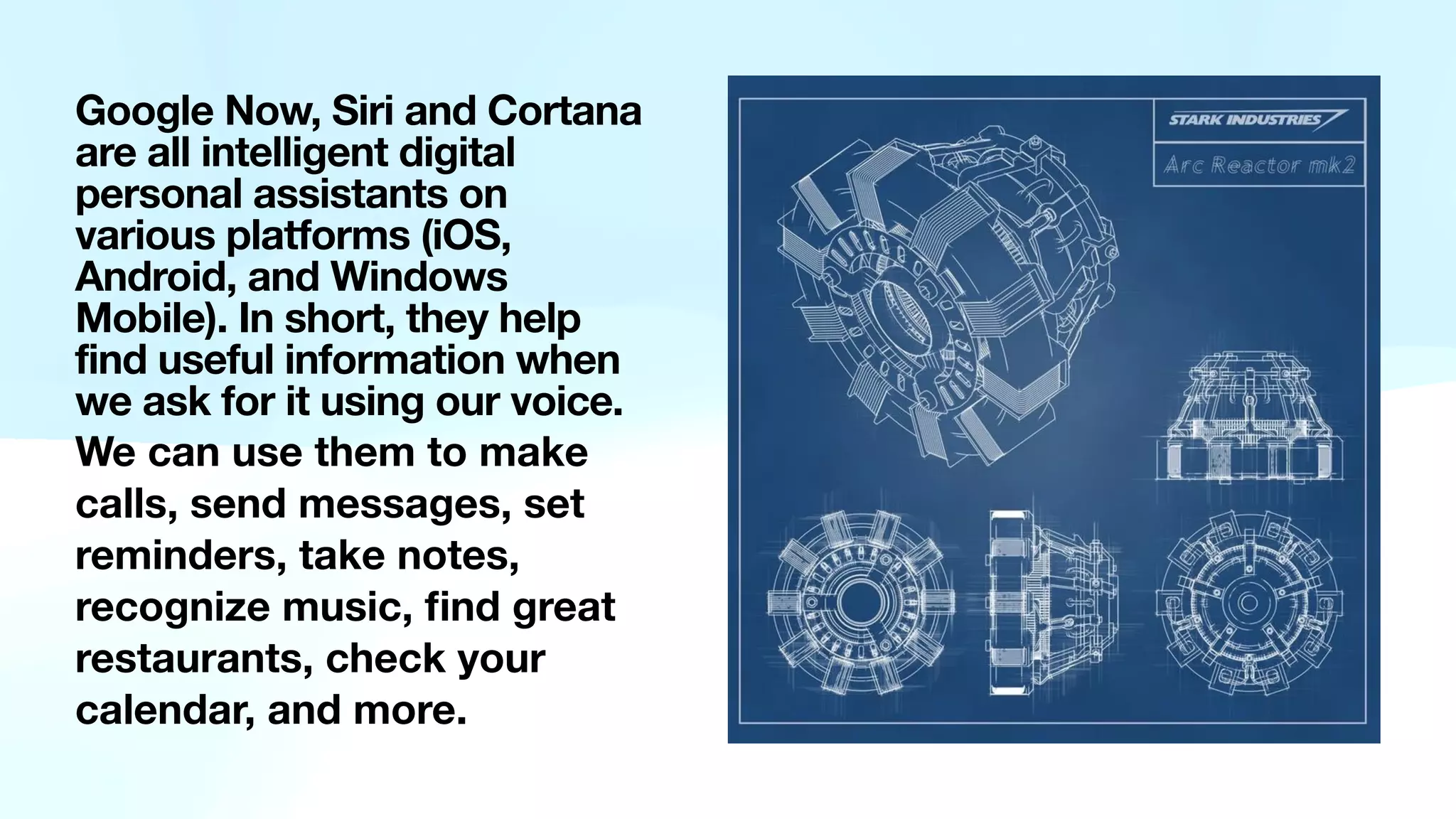
Google Now, Siri and Cortana
are all intelligent digital
personal assistants on
various platforms (iOS,
Android, and Windows
Mobile). In short, they help
find useful information when
we ask for it using our voice.
We can use them to make
calls, send messages, set
reminders, take notes,
recognize music,
fi
nd great
restaurants, check your
calendar, and more.
EARLY HISTORY
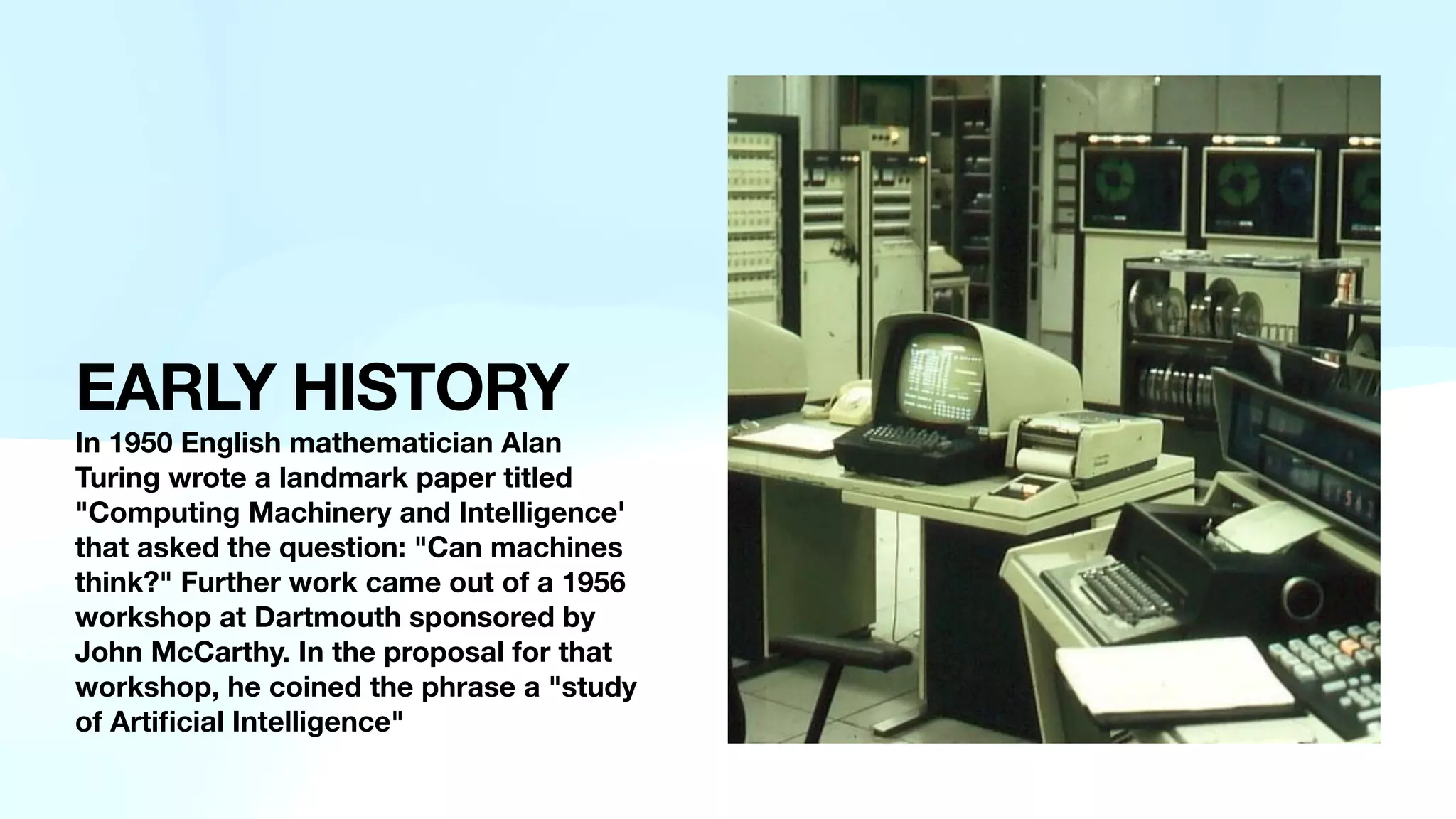
In 1950 English mathematician Alan
Turing wrote a landmark paper titled
"Computing Machinery and Intelligence'
that asked the question: "Can machines
think?" Further work came out of a 1956
workshop at Dartmouth sponsored by
John McCarthy. In the proposal for that
workshop, he coined the phrase a "study
of Arti
fi
cial Intelligence"
RISE OF
ARTIFICIAL
INTELLIGENCE
CURRENT STATUS
OF ARTIFICIAL
INTELLIGENCE
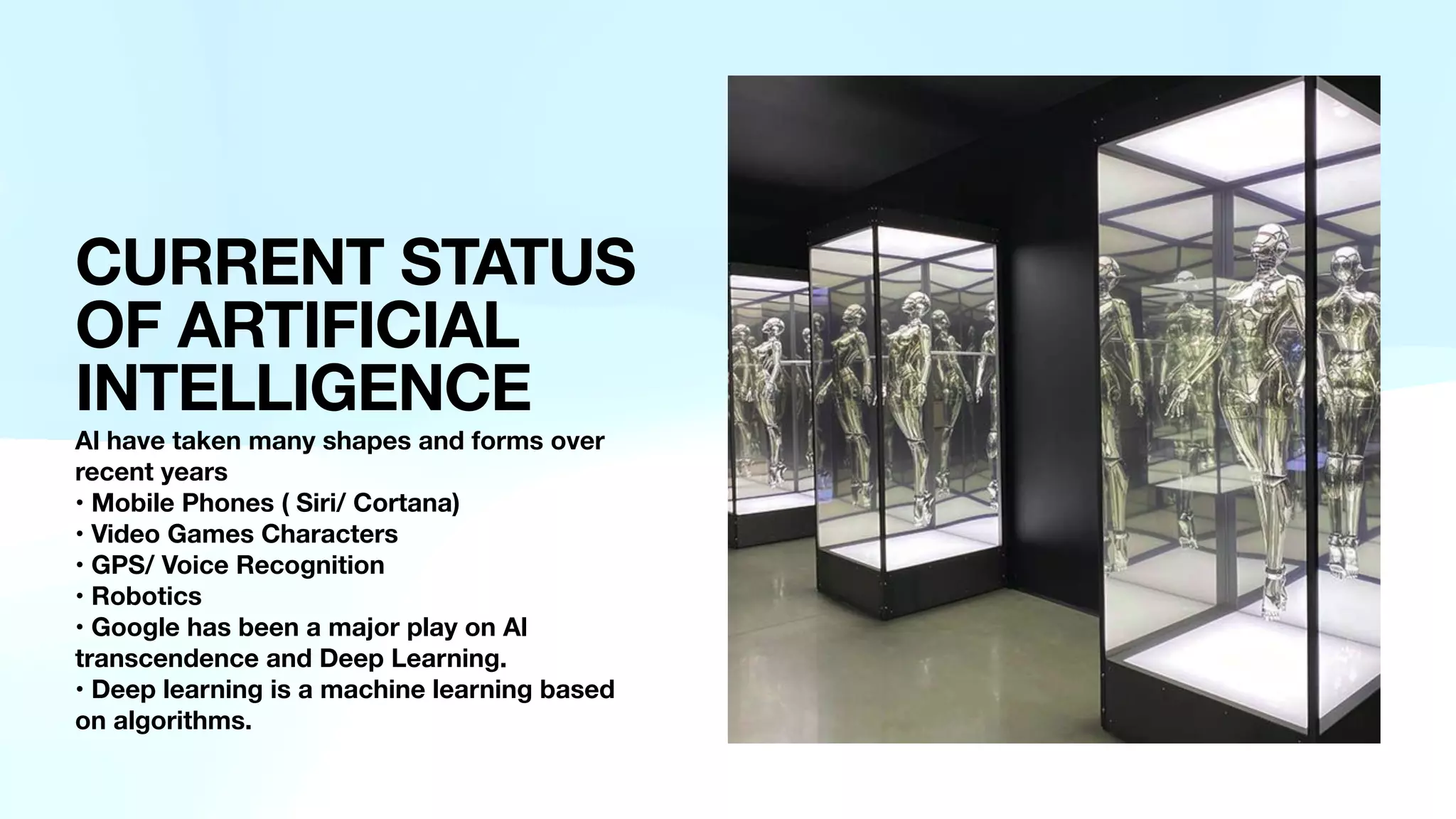
Al have taken many shapes and forms over
recent years
• Mobile Phones ( Siri/ Cortana)
• Video Games Characters
• GPS/ Voice Recognition
• Robotics
• Google has been a major play on Al
transcendence and Deep Learning.
• Deep learning is a machine learning based
on algorithms.
CHALLENGES
• Computing Power
• Tolerance Power
• Intuitive Thinking
• Judging Power
FUTURE OF
ARTIFICIAL
INTELLIGENCE
• Beyond negotiation, Moore says
CMU is betting several other Al areas
are going to be hugely important in
the near future.
• Self Driving Cars.
• Improved Medical Care & Treatment.
• Open up doors to future
explorations, Etc.
PROS AND CONS
PROS:
•Precision and Accuracv
•Space expioration
•Used tor minine process
•Can do laborious tasks
•Fraud detection, manage records
•Lacking the emotional side
•Can do repetitive and time-consuming tasks
•Robotic pets, Robotic radiosurgery.
•Function without stopping, Risk Reducing.
•Diagnosis and Treatment
CONS:
•Cost incurred in the maintenance and repair
•Not able to act any di
ff
erent
•Lack the human touch
•Lack a creative mino
•Lack common sense
•Unemplovment
•Abilities of humans may diminish
•Robots superseding numans
•Humans may became dependent on machines.
•Wrong hands causes destruction
CONCLUSION
• Finally we can say that the Arti
fi
cial Intelligence
(Al) is the intelligence of machines and the
branch of Computer Science that aims to create
it.Al textbooks de
fi
ne the
fi
eld as "The Study and
Design of Intelligent Agents" where an intelligent
agent is a system that perceives it's environment
and takes actions that maximize the chances of
it's success. John McCarthy, who coined the
term in 1955, de
fi
nes it as "The Science and
Engineering of making intelligent Machines"
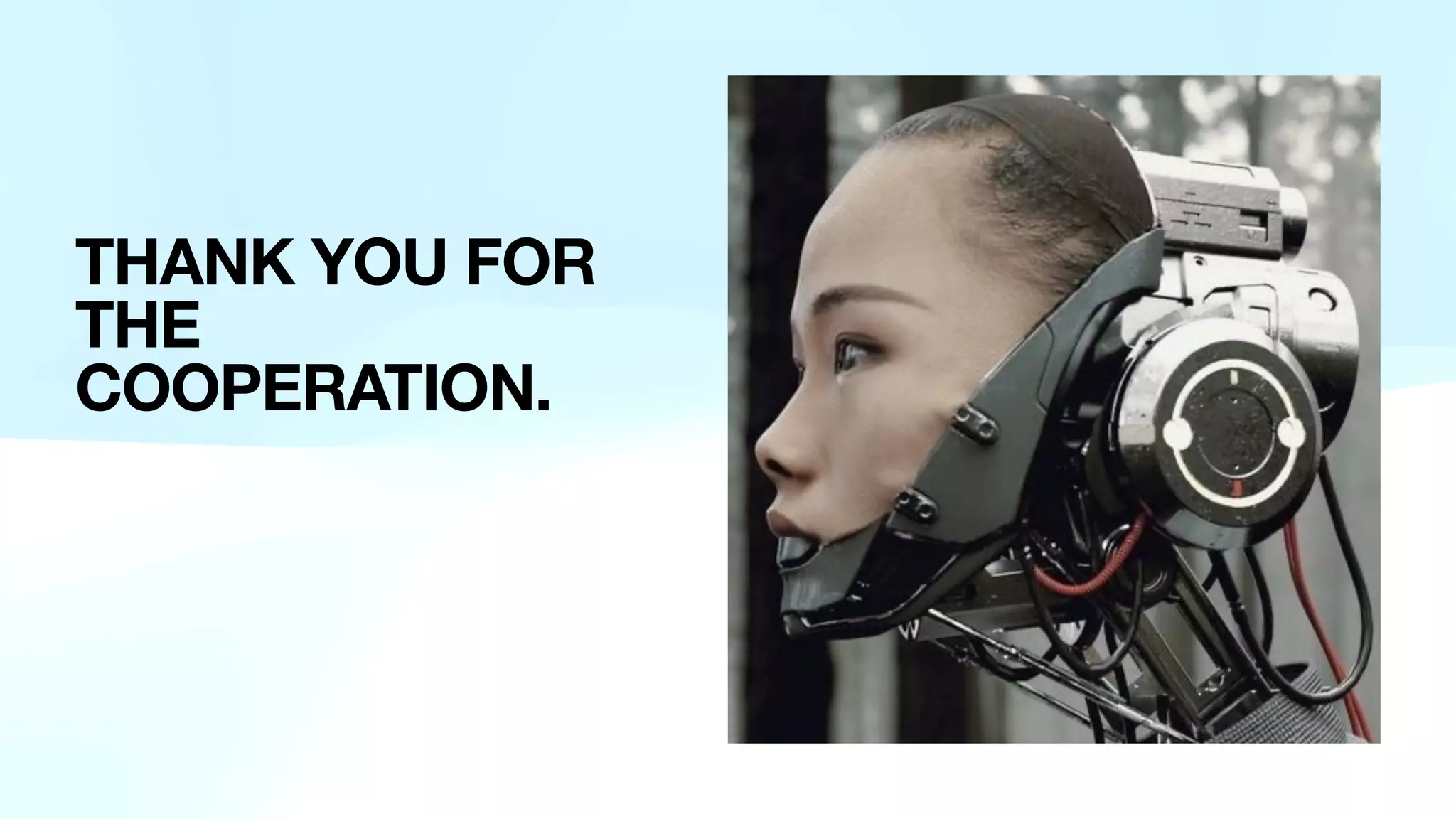
THANK YOU FOR
THE
COOPERATION.

ARTIFICIAL INTELLIGENCE DTC.pdf

  • 1.
    ARTIFICIAL INTELLIGENCE (A.I), DTC BY ANURAJBARHOI, B.COM 4TH SEM DAY SHIFT
  • 2.
    CONTENTS • De fi nition • EarlyHistory • Current status of Al • Challenges for Al • Future of Al • Pros & Cons • Conclusion
  • 3.
    WHAT IS ARTIFICIAL INTELLIGENCE? 1) Thestudy of computer systems that attempt to model and apply the intelligence of the human mind. 2) A branch of computer science dealing with the simulation of intelligent behaviour in computers. 3) The capability of a machine to imitate intelligent human behaviour.
  • 4.
    Google Now, Siriand Cortana are all intelligent digital personal assistants on various platforms (iOS, Android, and Windows Mobile). In short, they help find useful information when we ask for it using our voice. We can use them to make calls, send messages, set reminders, take notes, recognize music, fi nd great restaurants, check your calendar, and more.
  • 5.
    EARLY HISTORY In 1950English mathematician Alan Turing wrote a landmark paper titled "Computing Machinery and Intelligence' that asked the question: "Can machines think?" Further work came out of a 1956 workshop at Dartmouth sponsored by John McCarthy. In the proposal for that workshop, he coined the phrase a "study of Arti fi cial Intelligence"
  • 6.
  • 7.
    CURRENT STATUS OF ARTIFICIAL INTELLIGENCE Alhave taken many shapes and forms over recent years • Mobile Phones ( Siri/ Cortana) • Video Games Characters • GPS/ Voice Recognition • Robotics • Google has been a major play on Al transcendence and Deep Learning. • Deep learning is a machine learning based on algorithms.
  • 8.
    CHALLENGES • Computing Power •Tolerance Power • Intuitive Thinking • Judging Power
  • 9.
    FUTURE OF ARTIFICIAL INTELLIGENCE • Beyondnegotiation, Moore says CMU is betting several other Al areas are going to be hugely important in the near future. • Self Driving Cars. • Improved Medical Care & Treatment. • Open up doors to future explorations, Etc.
  • 10.
    PROS AND CONS PROS: •Precisionand Accuracv •Space expioration •Used tor minine process •Can do laborious tasks •Fraud detection, manage records •Lacking the emotional side •Can do repetitive and time-consuming tasks •Robotic pets, Robotic radiosurgery. •Function without stopping, Risk Reducing. •Diagnosis and Treatment
  • 11.
    CONS: •Cost incurred inthe maintenance and repair •Not able to act any di ff erent •Lack the human touch •Lack a creative mino •Lack common sense •Unemplovment •Abilities of humans may diminish •Robots superseding numans •Humans may became dependent on machines. •Wrong hands causes destruction
  • 12.
    CONCLUSION • Finally wecan say that the Arti fi cial Intelligence (Al) is the intelligence of machines and the branch of Computer Science that aims to create it.Al textbooks de fi ne the fi eld as "The Study and Design of Intelligent Agents" where an intelligent agent is a system that perceives it's environment and takes actions that maximize the chances of it's success. John McCarthy, who coined the term in 1955, de fi nes it as "The Science and Engineering of making intelligent Machines"
  • 13.