
ARTIFICIAL INTELLIGENCE AND EUROPE:
DEVELOPMENTS, RISKS AND
IMPLICATIONS
A focus on the defence sector
Jacopo Scipione
28 April 2020
WHAT IS ARTIFICIAL INTELLIGENCE (AI)?
There is no clear definition on Artificial
Intelligence among experts.
AI should have 3 main characteristics:
• Act intelligently
• Being autonomous in decision-
making
• Adapt itself
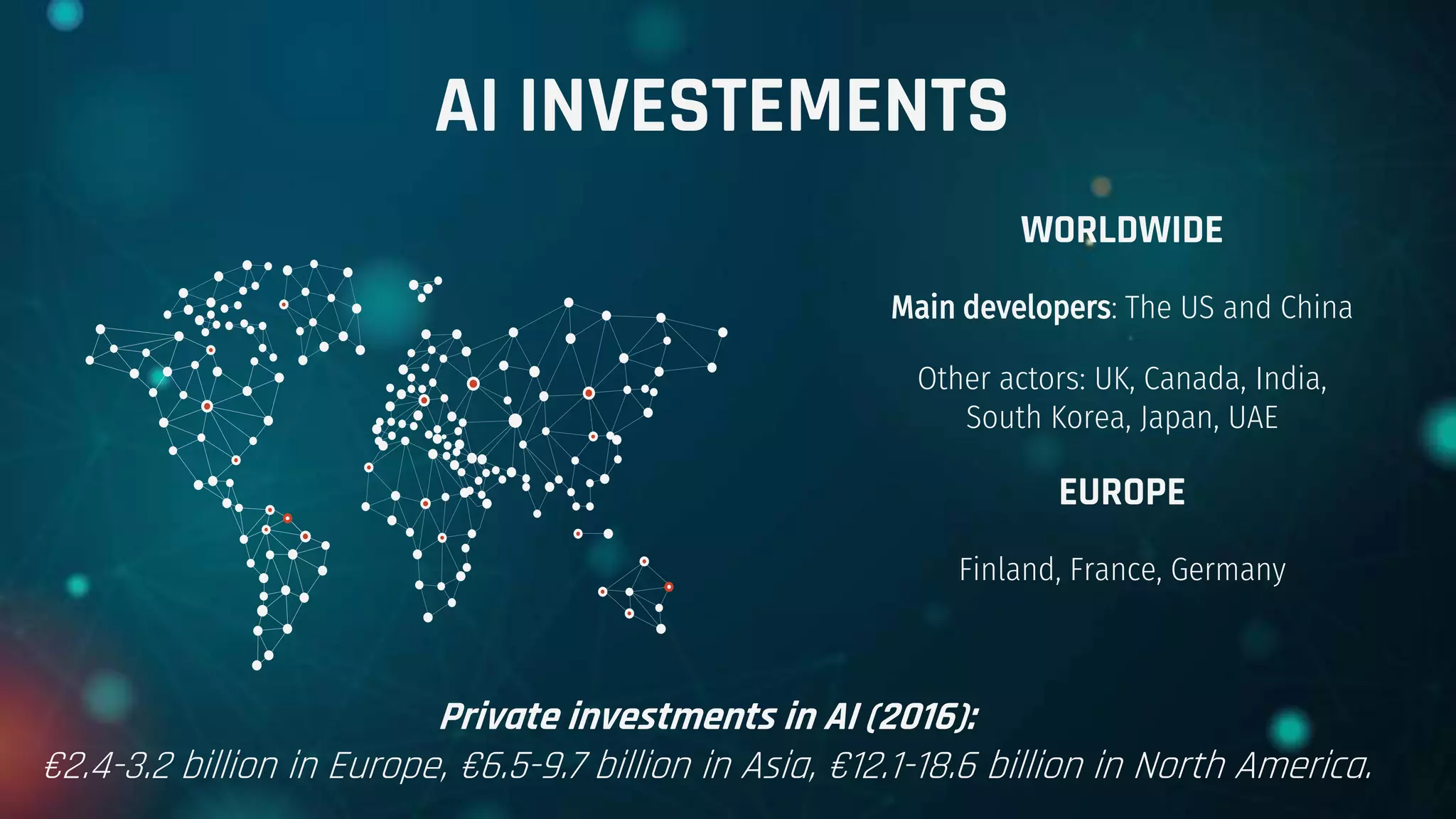
AI INVESTEMENTS
WORLDWIDE
Main developers: The US and China
Other actors: UK, Canada, India,
South Korea, Japan, UAE
EUROPE
Finland, France, Germany
Private investments in AI (2016):
€2.4-3.2 billion in Europe, €6.5-9.7 billion in Asia, €12.1-18.6 billion in North America.
THE
EUROPEAN
APPROACH
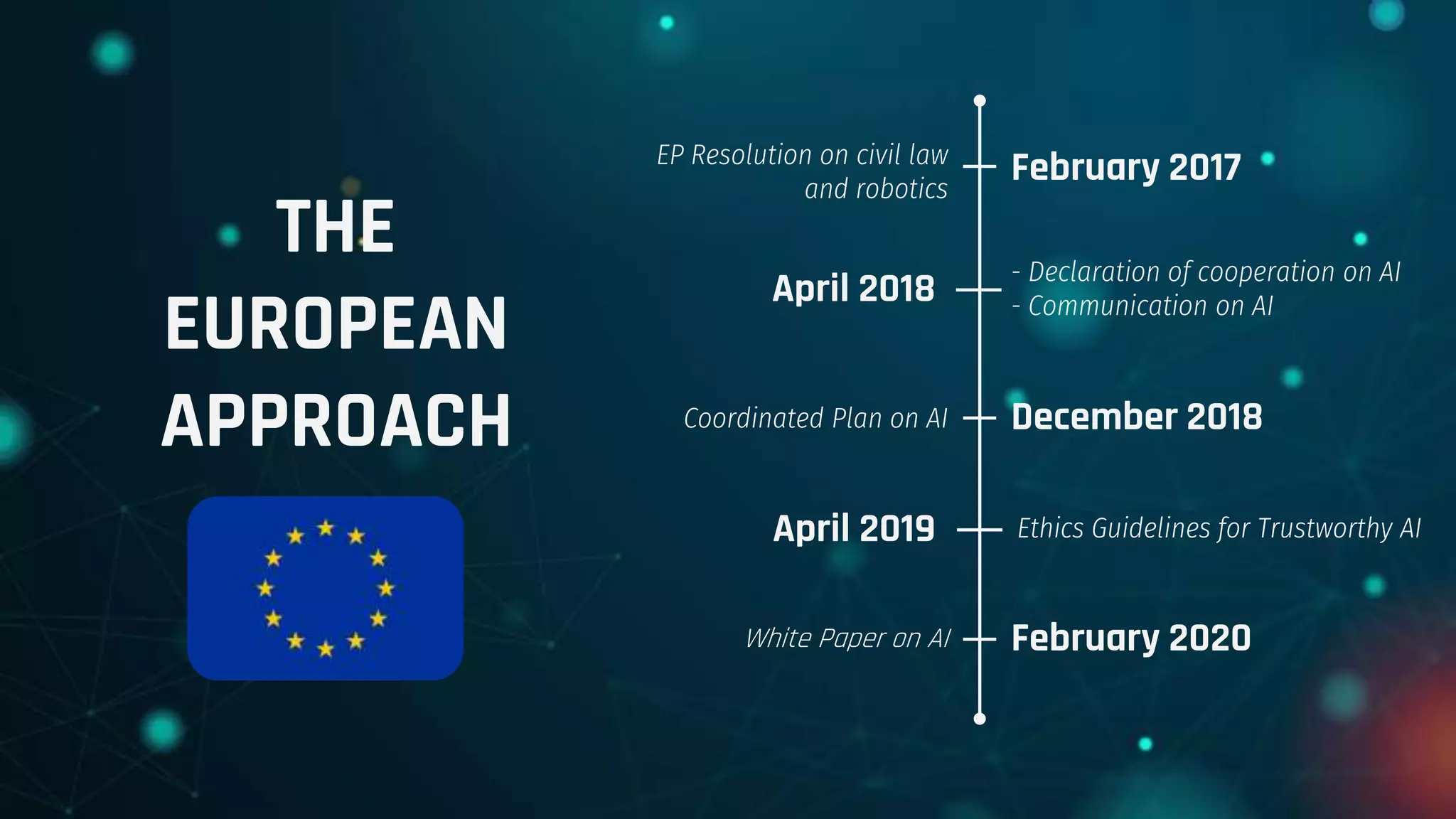
EP Resolution on civil law
and robotics
February 2017
- Declaration of cooperation on AI
- Communication on AI
Coordinated Plan on AI
February 2020
April 2018
December 2018
White Paper on AI
April 2019 Ethics Guidelines for Trustworthy AI
Ethics Guidelines for Trustworthy AI
For the Independent experts,
trustworthy AI should be:
• Lawful, respecting EU law
• Ethical, in line with European
values
• Robust, being safe, secure and
reliable
White Paper on AI
Attract over €20 billion of total
investment in the EU per year in AI
over the next decade through:
• Cooperation with Member States
• Research and Innovation
• Skills
• Small and Medium Enterprises
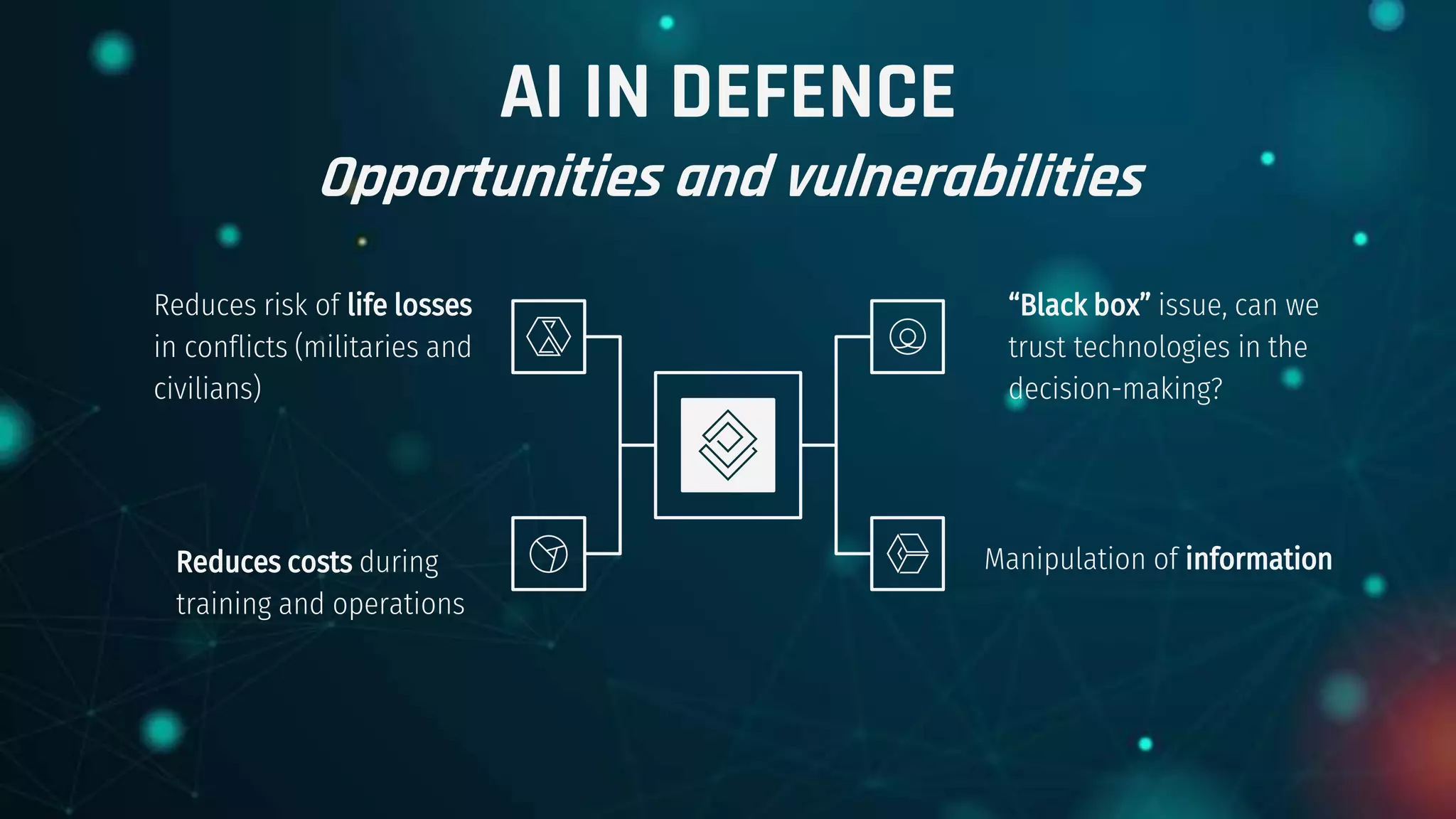
AI IN DEFENCE
Opportunities and vulnerabilities
Reduces risk of life losses
in conflicts (militaries and
civilians)
“Black box” issue, can we
trust technologies in the
decision-making?
Reduces costs during
training and operations
Manipulation of information
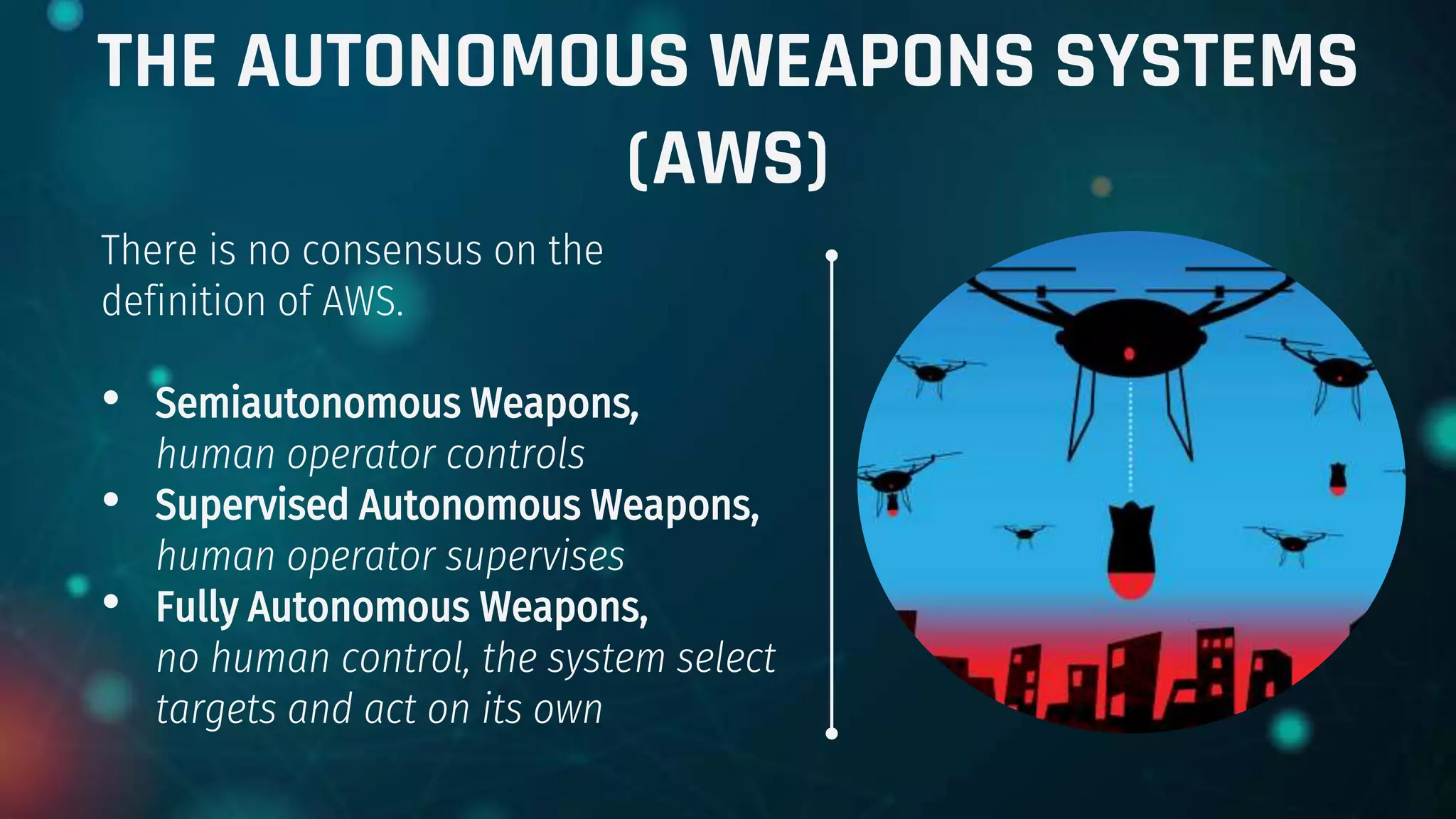
THE AUTONOMOUS WEAPONS SYSTEMS
(AWS)
There is no consensus on the
definition of AWS.
• Semiautonomous Weapons,
human operator controls
• Supervised Autonomous Weapons,
human operator supervises
• Fully Autonomous Weapons,
no human control, the system select
targets and act on its own
EP Resolution on AWS
12 September 2018
• All weapons systems should
comply with International
humanitarian law, and its
principles of distinction,
proportion, and responsibility
• Humans must always control
AWS
• Limitations on AWS should not
affect civilian research on AI
CONCLUSION
Having a strong strategy for AI and other emerging technologies is imperative
to be a global leader in all fields.
Before being a referee, you must enter the stadium.
THANK YOU!
Jacopo Scipione
j.scipione@europeancollege.it

ARTIFICIAL INTELLIGENCE AND EUROPE: DEVELOPMENTS, RISKS AND IMPLICATIONS - A focus on the defence sector

  • 1.
    ARTIFICIAL INTELLIGENCE ANDEUROPE: DEVELOPMENTS, RISKS AND IMPLICATIONS A focus on the defence sector Jacopo Scipione 28 April 2020
  • 2.
    WHAT IS ARTIFICIALINTELLIGENCE (AI)? There is no clear definition on Artificial Intelligence among experts. AI should have 3 main characteristics: • Act intelligently • Being autonomous in decision- making • Adapt itself
  • 3.
    AI INVESTEMENTS WORLDWIDE Main developers:The US and China Other actors: UK, Canada, India, South Korea, Japan, UAE EUROPE Finland, France, Germany Private investments in AI (2016): €2.4-3.2 billion in Europe, €6.5-9.7 billion in Asia, €12.1-18.6 billion in North America.
  • 4.
    THE EUROPEAN APPROACH EP Resolution oncivil law and robotics February 2017 - Declaration of cooperation on AI - Communication on AI Coordinated Plan on AI February 2020 April 2018 December 2018 White Paper on AI April 2019 Ethics Guidelines for Trustworthy AI
  • 5.
    Ethics Guidelines forTrustworthy AI For the Independent experts, trustworthy AI should be: • Lawful, respecting EU law • Ethical, in line with European values • Robust, being safe, secure and reliable White Paper on AI Attract over €20 billion of total investment in the EU per year in AI over the next decade through: • Cooperation with Member States • Research and Innovation • Skills • Small and Medium Enterprises
  • 6.
    AI IN DEFENCE Opportunitiesand vulnerabilities Reduces risk of life losses in conflicts (militaries and civilians) “Black box” issue, can we trust technologies in the decision-making? Reduces costs during training and operations Manipulation of information
  • 7.
    THE AUTONOMOUS WEAPONSSYSTEMS (AWS) There is no consensus on the definition of AWS. • Semiautonomous Weapons, human operator controls • Supervised Autonomous Weapons, human operator supervises • Fully Autonomous Weapons, no human control, the system select targets and act on its own
  • 8.
    EP Resolution onAWS 12 September 2018 • All weapons systems should comply with International humanitarian law, and its principles of distinction, proportion, and responsibility • Humans must always control AWS • Limitations on AWS should not affect civilian research on AI
  • 9.
    CONCLUSION Having a strongstrategy for AI and other emerging technologies is imperative to be a global leader in all fields. Before being a referee, you must enter the stadium.
  • 10.