WHAT IS PHYLUM ARTHROPOD?
Phylum Arthropod is one of the eight
invertebrates (organisms which do not have
back bone) phylums starting from porifera
to echinodermata. The members of the
phylum Arthropoda are commonly known as
the animals with jointed legs. This is the
biggest animal taxon, forming more than
80% of the living organisms.
Arthropods live in almost every habitat
on the earth: Terrestrial which includes:
desert, forest, grassland and tundra and
aquatic which include: freshwater and
marine; some live on top of mountains
while others live at great depths in the
ocean and icy environments.
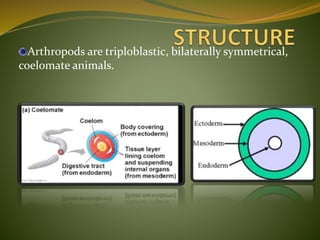
Arthropods are triploblastic, bilaterally symmetrical,
coelomate animals.
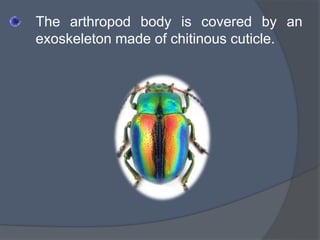
The arthropod body is covered by an
exoskeleton made of chitinous cuticle.
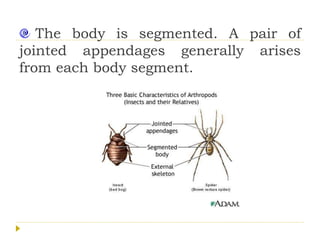
The body is segmented. A pair of
jointed appendages generally arises
from each body segment.
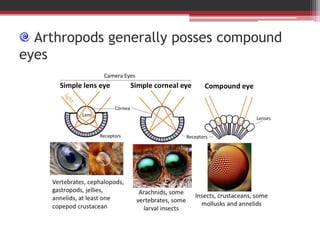
Arthropods generally posses compound
eyes
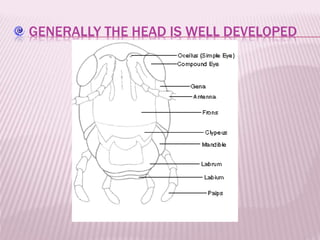
GENERALLY THE HEAD IS WELL DEVELOPED
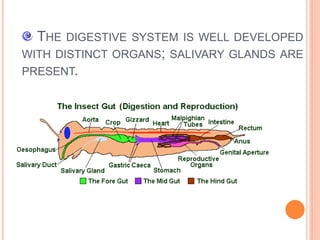
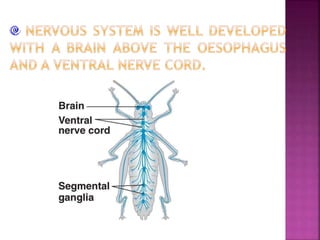
THE DIGESTIVE SYSTEM IS WELL DEVELOPED
WITH DISTINCT ORGANS; SALIVARY GLANDS ARE
PRESENT.
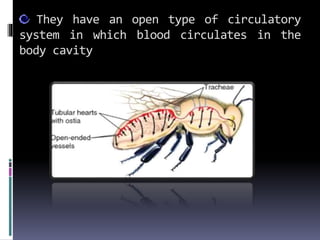
They have an open type of circulatory
system in which blood circulates in the
body cavity
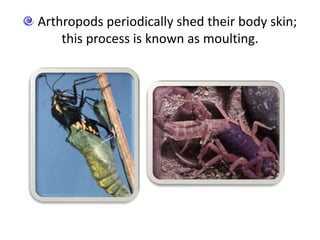
Arthropods periodically shed their body skin;
this process is known as moulting.
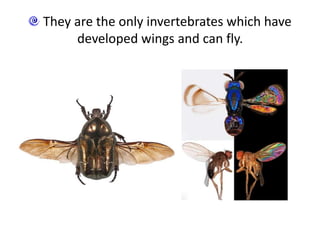
They are the only invertebrates which have
developed wings and can fly.
NUTRITION
Arthropods exhibit a variety of feeding habits. There
are carnivores, herbivores, detritus feeders, filter
feeders, and parasites. Specialized paired
appendages around the mount help in capturing and
handling food. Many carnivorous arthropods capture
prey with poison, which is usually administered with
a special appendage.
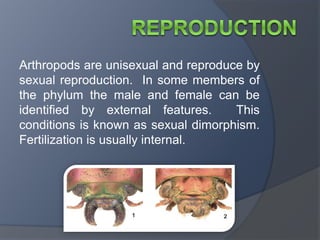
Arthropods are unisexual and reproduce by
sexual reproduction. In some members of
the phylum the male and female can be
identified by external features. This
conditions is known as sexual dimorphism.
Fertilization is usually internal.
Economic Importance
Many arthropods such as shrimps, lobsters
and crabs are used as food throughout the
world.
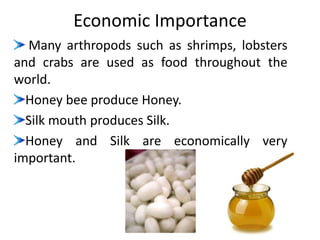
Honey bee produce Honey.
Silk mouth produces Silk.
Honey and Silk are economically very
important.
Dis-advantages
A large number of species of insects and
mites attack food crops and timber.
Locusts destroy large amounts of food crops
every year.
Termites destroy huge buildings, coconut
trees, etc.
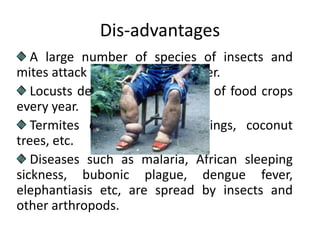
Diseases such as malaria, African sleeping
sickness, bubonic plague, dengue fever,
elephantiasis etc, are spread by insects and
other arthropods.
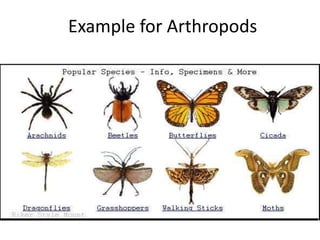
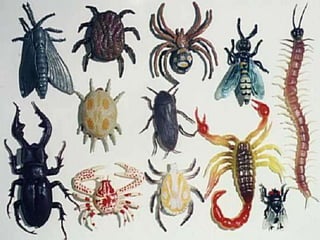
Example for Arthropods
Arthopod
Arthopod

Arthopod

  • 3.
    WHAT IS PHYLUMARTHROPOD? Phylum Arthropod is one of the eight invertebrates (organisms which do not have back bone) phylums starting from porifera to echinodermata. The members of the phylum Arthropoda are commonly known as the animals with jointed legs. This is the biggest animal taxon, forming more than 80% of the living organisms.
  • 4.
    Arthropods live inalmost every habitat on the earth: Terrestrial which includes: desert, forest, grassland and tundra and aquatic which include: freshwater and marine; some live on top of mountains while others live at great depths in the ocean and icy environments.
  • 6.
    Arthropods are triploblastic,bilaterally symmetrical, coelomate animals.
  • 7.
    The arthropod bodyis covered by an exoskeleton made of chitinous cuticle.
  • 8.
    The body issegmented. A pair of jointed appendages generally arises from each body segment.
  • 9.
  • 10.
    GENERALLY THE HEADIS WELL DEVELOPED
  • 11.
    THE DIGESTIVE SYSTEMIS WELL DEVELOPED WITH DISTINCT ORGANS; SALIVARY GLANDS ARE PRESENT.
  • 12.
    They have anopen type of circulatory system in which blood circulates in the body cavity
  • 16.
    Arthropods periodically shedtheir body skin; this process is known as moulting.
  • 17.
    They are theonly invertebrates which have developed wings and can fly.
  • 18.
    NUTRITION Arthropods exhibit avariety of feeding habits. There are carnivores, herbivores, detritus feeders, filter feeders, and parasites. Specialized paired appendages around the mount help in capturing and handling food. Many carnivorous arthropods capture prey with poison, which is usually administered with a special appendage.
  • 19.
    Arthropods are unisexualand reproduce by sexual reproduction. In some members of the phylum the male and female can be identified by external features. This conditions is known as sexual dimorphism. Fertilization is usually internal.
  • 20.
    Economic Importance Many arthropodssuch as shrimps, lobsters and crabs are used as food throughout the world. Honey bee produce Honey. Silk mouth produces Silk. Honey and Silk are economically very important.
  • 21.
    Dis-advantages A large numberof species of insects and mites attack food crops and timber. Locusts destroy large amounts of food crops every year. Termites destroy huge buildings, coconut trees, etc. Diseases such as malaria, African sleeping sickness, bubonic plague, dengue fever, elephantiasis etc, are spread by insects and other arthropods.
  • 22.