David Malakian


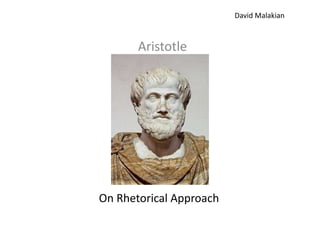
       Aristotle


On Rhetorical Approach
• Aristotle was a philosopher and was a student of Plato
• Aristotle's philosophy of argument is embodied in his
  Rhetorical Approach.
• Aristotle's book THE RHETORIC is generally considered the
  most important single work in the literature of the speech
  discipline.
• The Rhetorical approach may be described as
  a process for discovering all of the available
  means of artistic persuasion on any subject.
Aristotle believed that through the use of the rhetorical process:

• Truth and justice may be guarded against falsehood and
  wrong.
• Debate may be conducted on subjects in the absence of
  absolute truth.
• Both sides of a claim may be presented.
• Proof to establish the probability of a position may be
  developed.
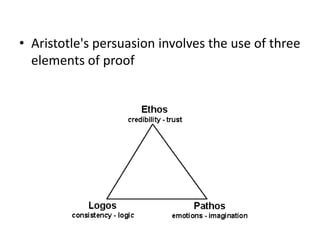
• Aristotle's persuasion involves the use of three
  elements of proof
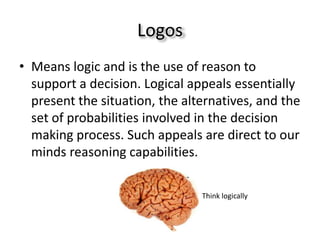
Logos
• Means logic and is the use of reason to
  support a decision. Logical appeals essentially
  present the situation, the alternatives, and the
  set of probabilities involved in the decision
  making process. Such appeals are direct to our
  minds reasoning capabilities.

                                Think logically
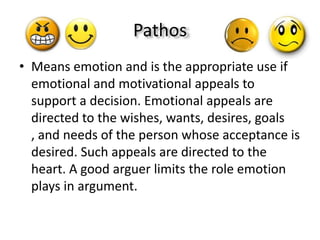
Pathos
• Means emotion and is the appropriate use if
  emotional and motivational appeals to
  support a decision. Emotional appeals are
  directed to the wishes, wants, desires, goals
  , and needs of the person whose acceptance is
  desired. Such appeals are directed to the
  heart. A good arguer limits the role emotion
  plays in argument.
Ethos
• Refers to the use of source credibility to
  support a conclusion. Aristotle perceived
  ethos as a powerful proof supplied by the
  source himself, and through which judgments
  could be made about his character, wisdom,
  and goodwill.
• Aristotle wrote " persuasion is achieved by the
  speakers personal character where the speech
  is so spoken as to make us think him credible.
  We believe good men more fully and more
  readily than others; this is true generally
  whatever the question is, and absolutely true
  where exact certainty is impossible and
  opinions are divided. this kind of
  persuasion, like the others, should be achieved
  by what the speaker says, not by what people
  think of his character before he begins to
  speak."
• Ethos is thus the image of the source held In
  the minds of the audience. Source credibility
  can be developed in two ways.
• Initial Ethos
• Derived ethos
Initial Ethos
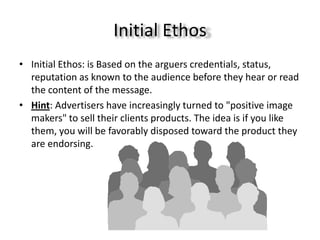
• Initial Ethos: is Based on the arguers credentials, status,
  reputation as known to the audience before they hear or read
  the content of the message.
• Hint: Advertisers have increasingly turned to "positive image
  makers" to sell their clients products. The idea is if you like
  them, you will be favorably disposed toward the product they
  are endorsing.
Derived Ethos
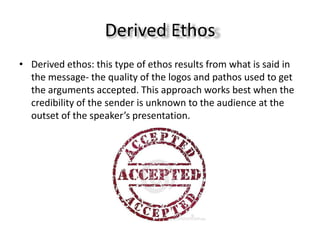
• Derived ethos: this type of ethos results from what is said in
  the message- the quality of the logos and pathos used to get
  the arguments accepted. This approach works best when the
  credibility of the sender is unknown to the audience at the
  outset of the speaker’s presentation.
Conclusion
• Aminimal level of positive ethos is necessary for
  logical and emotional proofs to achieve
  effectiveness. Low credibility sources cannot use high
  levels of emotional appeals effectively, because the
  audience doesn’t believe in the source in the first
  place. Like wise, lacking a certain minima
  ethos, logical proof will be ignored, because the
  source is not perceived as a person who is
  trustworthy.

Aristotle

  • 1.
    David Malakian Aristotle On Rhetorical Approach
  • 2.
    • Aristotle wasa philosopher and was a student of Plato • Aristotle's philosophy of argument is embodied in his Rhetorical Approach. • Aristotle's book THE RHETORIC is generally considered the most important single work in the literature of the speech discipline.
  • 3.
    • The Rhetoricalapproach may be described as a process for discovering all of the available means of artistic persuasion on any subject.
  • 4.
    Aristotle believed thatthrough the use of the rhetorical process: • Truth and justice may be guarded against falsehood and wrong. • Debate may be conducted on subjects in the absence of absolute truth. • Both sides of a claim may be presented. • Proof to establish the probability of a position may be developed.
  • 5.
    • Aristotle's persuasioninvolves the use of three elements of proof
  • 6.
    Logos • Means logicand is the use of reason to support a decision. Logical appeals essentially present the situation, the alternatives, and the set of probabilities involved in the decision making process. Such appeals are direct to our minds reasoning capabilities. Think logically
  • 7.
    Pathos • Means emotionand is the appropriate use if emotional and motivational appeals to support a decision. Emotional appeals are directed to the wishes, wants, desires, goals , and needs of the person whose acceptance is desired. Such appeals are directed to the heart. A good arguer limits the role emotion plays in argument.
  • 8.
    Ethos • Refers tothe use of source credibility to support a conclusion. Aristotle perceived ethos as a powerful proof supplied by the source himself, and through which judgments could be made about his character, wisdom, and goodwill.
  • 9.
    • Aristotle wrote" persuasion is achieved by the speakers personal character where the speech is so spoken as to make us think him credible. We believe good men more fully and more readily than others; this is true generally whatever the question is, and absolutely true where exact certainty is impossible and opinions are divided. this kind of persuasion, like the others, should be achieved by what the speaker says, not by what people think of his character before he begins to speak."
  • 10.
    • Ethos isthus the image of the source held In the minds of the audience. Source credibility can be developed in two ways. • Initial Ethos • Derived ethos
  • 11.
    Initial Ethos • InitialEthos: is Based on the arguers credentials, status, reputation as known to the audience before they hear or read the content of the message. • Hint: Advertisers have increasingly turned to "positive image makers" to sell their clients products. The idea is if you like them, you will be favorably disposed toward the product they are endorsing.
  • 12.
    Derived Ethos • Derivedethos: this type of ethos results from what is said in the message- the quality of the logos and pathos used to get the arguments accepted. This approach works best when the credibility of the sender is unknown to the audience at the outset of the speaker’s presentation.
  • 13.
    Conclusion • Aminimal levelof positive ethos is necessary for logical and emotional proofs to achieve effectiveness. Low credibility sources cannot use high levels of emotional appeals effectively, because the audience doesn’t believe in the source in the first place. Like wise, lacking a certain minima ethos, logical proof will be ignored, because the source is not perceived as a person who is trustworthy.