Downloaded 10 times






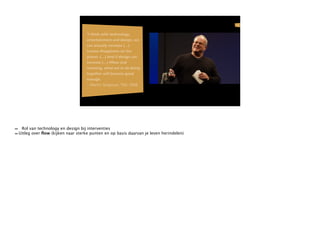
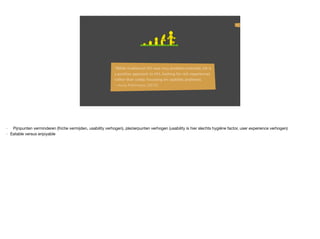
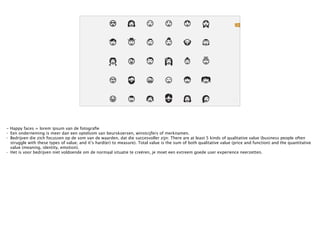


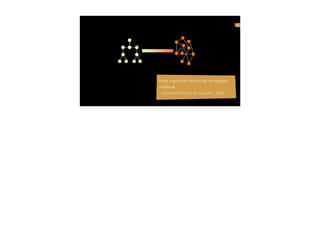
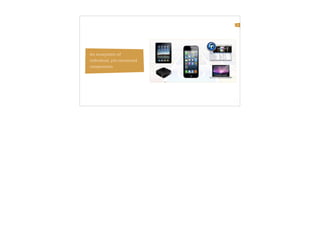
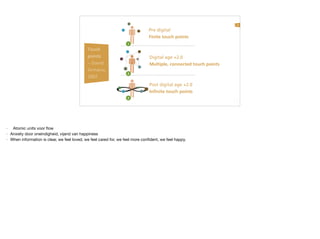








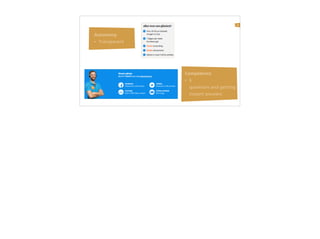










This document discusses how design can be used to architect happiness. It provides examples of how companies and products have incorporated elements like autonomy, competence and relatedness to increase user happiness. These elements, which contribute to happiness according to research, allow people to personalize their experiences, learn new skills, and connect with others. The document argues that as technology connects more touchpoints, design will play an important role in creating dynamic ecosystems that cultivate happiness by satisfying these fundamental human needs and aspirations.


