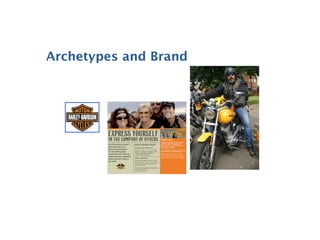
Archetypes and Brand
What is an archetype?

Definition = A model that other things can be patterned on. The perfect example of a type or group.
   For brand purposes, begin by thinking of archetype as a “typecast” or “personality type.”

“The concept of archetypes was borrowed by Jung from classic sources. In Sanskrit, they were called
   ‘subjectively known forms’.
     Carl Jung was the first to call them “archetypes.”

“Archetypal psychology helps us understand the intrinsic meaning of product
   categories and consequently helps marketers create enduring brand identities
   that establish market dominance, evoke and deliver meaning to customers,
   and inspire customer loyalty -- all, potentially, in socially responsible
   ways.” (Carol Pearson and Margaret Mark, The Hero and the Outlaw)
Campbell’s Character Archetypes
                      (in Stories)
Hero -- Main character, sent onto adventure into new world
Anti-hero -- Main character, but with a weakness of character or a personality flaw that prevents his attainment of
    success
Herald -- the hero’s trusted companion
Mentor -- Wise being, filled with power and mystery. Gives hero strength, skills, or knowledge needed to survive his/her
    quest. Patient and caring.
Shadow -- Foe who works in opposition to hero. Often gives insight into the inner turmoil of the hero.
Shape-shifter -- Unreliable character who changes (physically and/or psychologically) through the story. Creates tension
    and suspense in story, by creating confusion or temptation for the hero.
Trickster -- Force of change in the universe. Seems like innocent jester, but actions influence the hero and the entire
    world. Force of change/fate, at work in the world.

               Can you think of examples of these in the media (film, TV, music, advertising)?
6 Sub-types of the Hero
                                    Archetype
                                         (From Carol Pearson following Campbell’s work)

Innocent -- unprepared for their adventure. Fearful of the hero’s call, of the quest. Seeks happiness, where all is right in their world again.
     Ex: Frodo in Lord of the Rings

Orphan -- grows up without stabilizing parental influence
    Ex: Young Harry Potter

Magician -- crafts new world to fulfill their goal
     Ex: Quetzalcoatl, Aztec hero-king

Martyr -- sacrifices life to realize goal of quest. Cannot complete their journey, but their goal is achieved.
     Ex: Jesus of Nazareth

Wanderer -- traveler on journey. Peace after quest achieved.
    Ex: Odysseus

Warrior -- very driven to prove their worth
     Ex: Beowolf, King Arthur, Superman, Wonder Woman
Archetypes in Brand Development
            xample
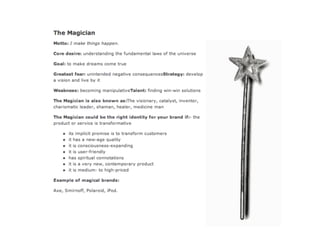
                         Magician
            Transform their world or their feelings
                      Calgon, Disney

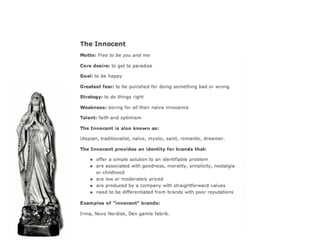
                          Innocent
              Retain or regain faith, innocence
                      Ivory, Coca Cola
                          Archetype
         Brand promise is helping people to …
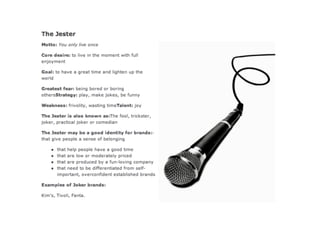
                       Jester
                      Brand Example
               Have a fun, playful time
                        Coors, Pepsi

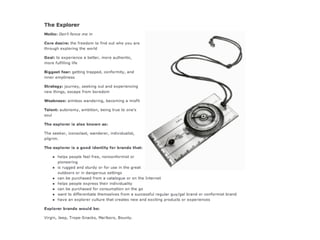
                        Explorer
     Maintain independence, venture forth and discover
                     Southwest, REI

                            Mentor
   Provide skills or knowledge to help people achieve quest
          Oprah, Deepak Chopra, Martha Stewart*

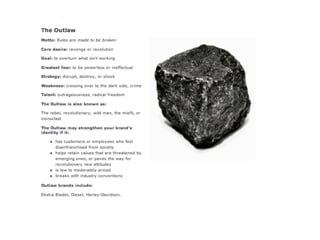
                          Outlaw
                       Break the rules
                   Harley-Davidson, Apple
Archetypes Can Vary Within a
              Category; They Represent Specific
              Brand Personalities, Not the Entire
                          Category
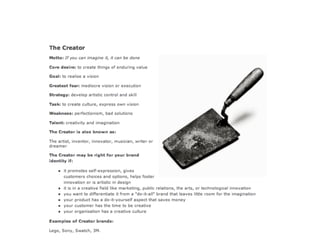
For example, beware thinking all creative organizations represent “The Creator” archetype.
Example: Insurance Companies and their brand slogans
                 Archetype Represented
AllState
You’re in good hands                        Caregiver

Geico
[Gecko, Cavemen]                            Jester

State Farm
Like a good neighbor                         Everyday Hero

Progressive
It’s about you. And it’s about time.         Sage

Nationwide
Nationwide is on your side                   Caregiver

MetLife
[Snoopy]                                     Regular Guy/Gal

Liberty Mutual
Responsibility. What’s your policy?          Mentor
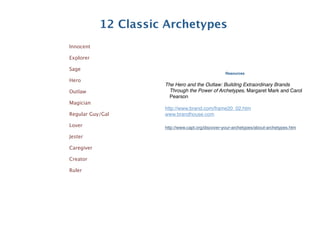
12 Classic Archetypes
Innocent

Explorer

Sage
                                                   Resources
Hero
                      The Hero and the Outlaw: Building Extraordinary Brands
Outlaw                  Through the Power of Archetypes, Margaret Mark and Carol
                        Pearson
Magician
                      http://www.brand.com/frame20_02.htm
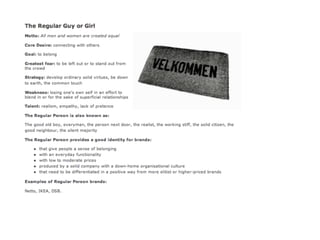
Regular Guy/Gal       www.brandhouse.com

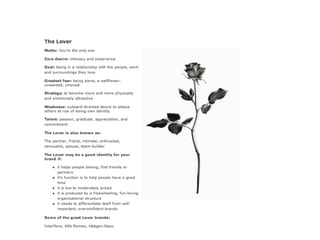
Lover                 http://www.capt.org/discover-your-archetypes/about-archetypes.htm

Jester

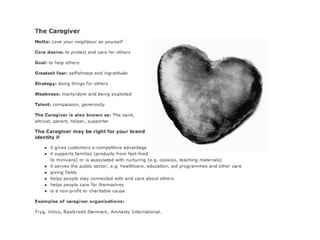
Caregiver

Creator

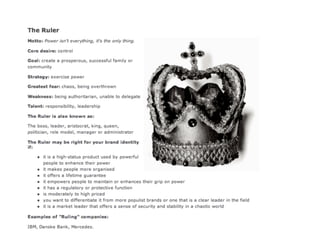
Ruler
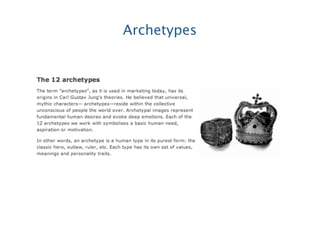
Archetypes
Archetype: Project Information


Although entertainment and creative companies deal with creative content, they do not
    necessarily reflect the “Creator” archetype. These companies, like any companies,
    can be Ruler, Caregiver, Innocent, Explorer, Outlaw, and other archetypes in their
    approach when creating content.

In the “You Are the Hero” project, make sure that your chosen archetype is consistently
    represented throughout your story and the elements used to create your story. For
    example: the name, mission, storyline, etc. should all reflect the characteristics of
    the archetype you are basing your hero’s identity on. For clarity, power, and
    consistency, select only one archetype.
What’s the Archetype
of a specific business?


           ?
      h"p://&nyurl.com/4ryh53

Activity: Find the Archetype for a business

    Brand House Archetype:
    Select a company that you feel has a strong brand

    Review the archetypes in this presentation before visiting the website

    Visit this website:
         http://www.brandhouse.com/Web/EN/Archetypes/Find+your+archetype
         Note ranking (3, 2, 1)
         Discuss the outcome with your group
         Do you believe the outcome was an accurate reflection of the company’s brand archetype? Why or why not? Is
             this archetype consistent with all the company’s branding elements? What archetype makes the most
             sense for this company -- the one that displayed from Brandhouse, or a different one?
         Present the archetype and discuss the outcome and your assessment with the class in Wimba.
Practice work:
                                    Archetypes


For your Week Two Project:
   Select one archetype and utilize it consistently in your story
   Tell what the archetype is. Provide a description of the archetype and its characteristics. Explain how your hero fits the
       archetype.

For Practice Work, investigate archetypes associated with a brand:
   Determine which archetype is most represented by the brand you select. Compare the description of the archetype and
      its characteristics to the brand story. Examine how your brand fits this archetype. Think about the differences
      between the brand and the archetype. How do the differences impact the brand story? Or not?

Archetypes

  • 1.
  • 2.
    What is anarchetype? Definition = A model that other things can be patterned on. The perfect example of a type or group. For brand purposes, begin by thinking of archetype as a “typecast” or “personality type.” “The concept of archetypes was borrowed by Jung from classic sources. In Sanskrit, they were called ‘subjectively known forms’. Carl Jung was the first to call them “archetypes.” “Archetypal psychology helps us understand the intrinsic meaning of product categories and consequently helps marketers create enduring brand identities that establish market dominance, evoke and deliver meaning to customers, and inspire customer loyalty -- all, potentially, in socially responsible ways.” (Carol Pearson and Margaret Mark, The Hero and the Outlaw)
  • 3.
    Campbell’s Character Archetypes (in Stories) Hero -- Main character, sent onto adventure into new world Anti-hero -- Main character, but with a weakness of character or a personality flaw that prevents his attainment of success Herald -- the hero’s trusted companion Mentor -- Wise being, filled with power and mystery. Gives hero strength, skills, or knowledge needed to survive his/her quest. Patient and caring. Shadow -- Foe who works in opposition to hero. Often gives insight into the inner turmoil of the hero. Shape-shifter -- Unreliable character who changes (physically and/or psychologically) through the story. Creates tension and suspense in story, by creating confusion or temptation for the hero. Trickster -- Force of change in the universe. Seems like innocent jester, but actions influence the hero and the entire world. Force of change/fate, at work in the world. Can you think of examples of these in the media (film, TV, music, advertising)?
  • 4.
    6 Sub-types ofthe Hero Archetype (From Carol Pearson following Campbell’s work) Innocent -- unprepared for their adventure. Fearful of the hero’s call, of the quest. Seeks happiness, where all is right in their world again. Ex: Frodo in Lord of the Rings Orphan -- grows up without stabilizing parental influence Ex: Young Harry Potter Magician -- crafts new world to fulfill their goal Ex: Quetzalcoatl, Aztec hero-king Martyr -- sacrifices life to realize goal of quest. Cannot complete their journey, but their goal is achieved. Ex: Jesus of Nazareth Wanderer -- traveler on journey. Peace after quest achieved. Ex: Odysseus Warrior -- very driven to prove their worth Ex: Beowolf, King Arthur, Superman, Wonder Woman
  • 5.
    Archetypes in BrandDevelopment xample Magician Transform their world or their feelings Calgon, Disney Innocent Retain or regain faith, innocence Ivory, Coca Cola Archetype Brand promise is helping people to … Jester Brand Example Have a fun, playful time Coors, Pepsi Explorer Maintain independence, venture forth and discover Southwest, REI Mentor Provide skills or knowledge to help people achieve quest Oprah, Deepak Chopra, Martha Stewart* Outlaw Break the rules Harley-Davidson, Apple
  • 6.
    Archetypes Can VaryWithin a Category; They Represent Specific Brand Personalities, Not the Entire Category For example, beware thinking all creative organizations represent “The Creator” archetype. Example: Insurance Companies and their brand slogans Archetype Represented AllState You’re in good hands Caregiver Geico [Gecko, Cavemen] Jester State Farm Like a good neighbor Everyday Hero Progressive It’s about you. And it’s about time. Sage Nationwide Nationwide is on your side Caregiver MetLife [Snoopy] Regular Guy/Gal Liberty Mutual Responsibility. What’s your policy? Mentor
  • 7.
    12 Classic Archetypes Innocent Explorer Sage Resources Hero The Hero and the Outlaw: Building Extraordinary Brands Outlaw Through the Power of Archetypes, Margaret Mark and Carol Pearson Magician http://www.brand.com/frame20_02.htm Regular Guy/Gal www.brandhouse.com Lover http://www.capt.org/discover-your-archetypes/about-archetypes.htm Jester Caregiver Creator Ruler
  • 8.
  • 20.
    Archetype: Project Information Althoughentertainment and creative companies deal with creative content, they do not necessarily reflect the “Creator” archetype. These companies, like any companies, can be Ruler, Caregiver, Innocent, Explorer, Outlaw, and other archetypes in their approach when creating content. In the “You Are the Hero” project, make sure that your chosen archetype is consistently represented throughout your story and the elements used to create your story. For example: the name, mission, storyline, etc. should all reflect the characteristics of the archetype you are basing your hero’s identity on. For clarity, power, and consistency, select only one archetype.
  • 21.
    What’s the Archetype ofa specific business? ? h"p://&nyurl.com/4ryh53

  • 22.
    Activity: Find theArchetype for a business Brand House Archetype: Select a company that you feel has a strong brand Review the archetypes in this presentation before visiting the website Visit this website: http://www.brandhouse.com/Web/EN/Archetypes/Find+your+archetype Note ranking (3, 2, 1) Discuss the outcome with your group Do you believe the outcome was an accurate reflection of the company’s brand archetype? Why or why not? Is this archetype consistent with all the company’s branding elements? What archetype makes the most sense for this company -- the one that displayed from Brandhouse, or a different one? Present the archetype and discuss the outcome and your assessment with the class in Wimba.
  • 23.
    Practice work: Archetypes For your Week Two Project: Select one archetype and utilize it consistently in your story Tell what the archetype is. Provide a description of the archetype and its characteristics. Explain how your hero fits the archetype. For Practice Work, investigate archetypes associated with a brand: Determine which archetype is most represented by the brand you select. Compare the description of the archetype and its characteristics to the brand story. Examine how your brand fits this archetype. Think about the differences between the brand and the archetype. How do the differences impact the brand story? Or not?