Application of Linear Algebra in
Computer Science and
Engineering
Abdul Motaleb Foysal
Salma Akter
Najah Nur
Introduction
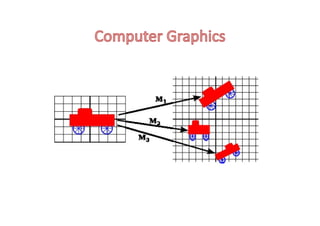
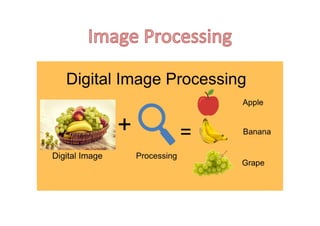
When you take a digital photo with your phone or
transform the image in Photoshop, when you play a
video game or watch a movie with digital effects, when
you do a web search or make a phone call, you are
using technologies that build upon linear algebra.
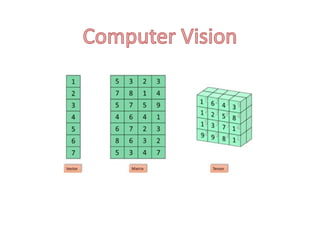
Linear algebra in turn is built on two basic elements,
the matrix and the vector.
• The study of linear algebra first emerged from the
introduction of determinants. Determinants were
considered by Leibniz in 1693, and subsequently, in
1750, Gabriel Cramer used them for giving
solutions of linear systems, now called Cramer's
Rule. Later, Gauss further developed the theory of
solving linear systems by using Gaussian
elimination. The study of matrix algebra first
emerged in England in the mid-1800s. Linear
algebra first appeared in American graduate
textbooks in the 1940s and in undergraduate
textbooks in the 1950s.
• • Linear algebra is vital in multiple areas of
computer science because linear equations
are so easy to solve.
• • It converts large number of problems to
matrix and thus we solve the matrix.
• Linear Algebra, mathematical discipline that
deals with vectors and matrices and, more
generally, with vector spaces and linear
transformations. Unlike other parts of
mathematics that are frequently invigorated
by new ideas and unsolved problems, linear
algebra is very well understood. Its value lies
in its many applications, from mathematical
physics to modern algebra and coding theory.
• There are many application sectors in CSE.
On this slide we will discuss about the first four topic.
Graph: Linear Algebra on Data Science
• Linear Algebra is a branch of mathematics
that is extremely useful in data science.
Linear algebra is the most important math
skill in machine learning. Most machine
learning models can be expressed in
matrix form. A dataset itself is often
represented as a matrix
I consider Linear Algebra as one of the foundational blocks of computer science and
engineering . You cannot build a skyscraper without a strong foundation, can you? Think
of this scenario:
You want to reduce the dimensions of your data using Principal Component Analysis
(PCA). How would you decide how many Principal Components to preserve if you did not
know how it would affect your data? Clearly, you need to know the mechanics of the
algorithm to make this decision.
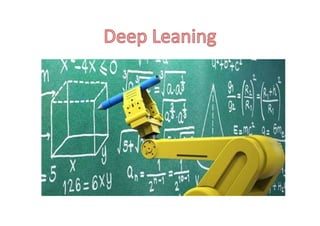
With an understanding of Linear Algebra, you will be able to develop a better intuition for
machine learning and deep learning algorithms and not treat them as black boxes. This
would allow you to choose proper hyperparameters and develop a better model.
You would also be able to code algorithms from scratch and make your own variations to
them as well. Isn’t this why we love data science in the first place? The ability to
experiment and play around with our models? Consider linear algebra as the key to
unlock a whole new world.
l
Application of Linear in Computer Science and Engineering

Application of Linear in Computer Science and Engineering

  • 1.
    Application of LinearAlgebra in Computer Science and Engineering Abdul Motaleb Foysal Salma Akter Najah Nur
  • 2.
    Introduction When you takea digital photo with your phone or transform the image in Photoshop, when you play a video game or watch a movie with digital effects, when you do a web search or make a phone call, you are using technologies that build upon linear algebra. Linear algebra in turn is built on two basic elements, the matrix and the vector.
  • 3.
    • The studyof linear algebra first emerged from the introduction of determinants. Determinants were considered by Leibniz in 1693, and subsequently, in 1750, Gabriel Cramer used them for giving solutions of linear systems, now called Cramer's Rule. Later, Gauss further developed the theory of solving linear systems by using Gaussian elimination. The study of matrix algebra first emerged in England in the mid-1800s. Linear algebra first appeared in American graduate textbooks in the 1940s and in undergraduate textbooks in the 1950s.
  • 4.
    • • Linearalgebra is vital in multiple areas of computer science because linear equations are so easy to solve. • • It converts large number of problems to matrix and thus we solve the matrix.
  • 5.
    • Linear Algebra,mathematical discipline that deals with vectors and matrices and, more generally, with vector spaces and linear transformations. Unlike other parts of mathematics that are frequently invigorated by new ideas and unsolved problems, linear algebra is very well understood. Its value lies in its many applications, from mathematical physics to modern algebra and coding theory.
  • 6.
    • There aremany application sectors in CSE. On this slide we will discuss about the first four topic.
  • 12.
    Graph: Linear Algebraon Data Science • Linear Algebra is a branch of mathematics that is extremely useful in data science. Linear algebra is the most important math skill in machine learning. Most machine learning models can be expressed in matrix form. A dataset itself is often represented as a matrix
  • 14.
    I consider LinearAlgebra as one of the foundational blocks of computer science and engineering . You cannot build a skyscraper without a strong foundation, can you? Think of this scenario: You want to reduce the dimensions of your data using Principal Component Analysis (PCA). How would you decide how many Principal Components to preserve if you did not know how it would affect your data? Clearly, you need to know the mechanics of the algorithm to make this decision. With an understanding of Linear Algebra, you will be able to develop a better intuition for machine learning and deep learning algorithms and not treat them as black boxes. This would allow you to choose proper hyperparameters and develop a better model. You would also be able to code algorithms from scratch and make your own variations to them as well. Isn’t this why we love data science in the first place? The ability to experiment and play around with our models? Consider linear algebra as the key to unlock a whole new world. l