Application Lifecycle Management [email_address] Developer Tools Specialist Microsoft Gulf
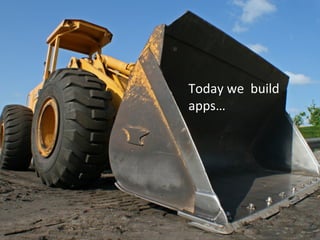
Today we  build apps…
Useful set of tools
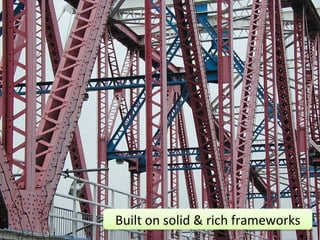
Built on solid & rich frameworks
They pass inspection…
Delighted Customers!
Customers encounter problems…
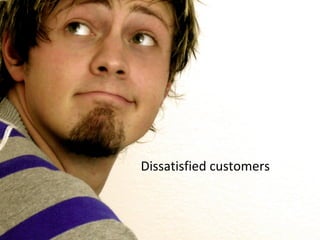
Dissatisfied customers
 
Time spent is money spent…
What can we do?
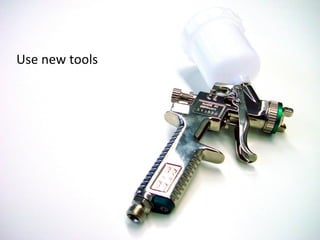
Use new tools
Invest a little time early
Robust
Maintainable
Pocket that dough!
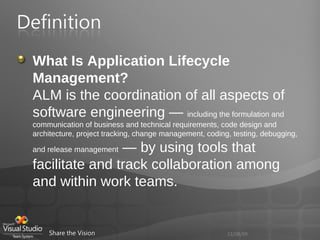
What Is Application Lifecycle Management? ALM is the coordination of all aspects of software engineering —  including the formulation and communication of business and technical requirements, code design and architecture, project tracking, change management, coding, testing, debugging, and release management  — by using tools that facilitate and track collaboration among and within work teams. 06/08/09
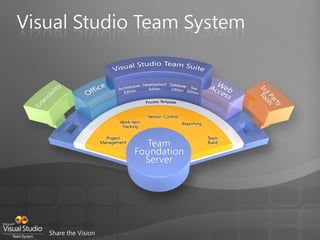
Project management Software maintenance Project progress tracking and reporting Requirements management Development team collaboration System design and development Quality assurance Release management
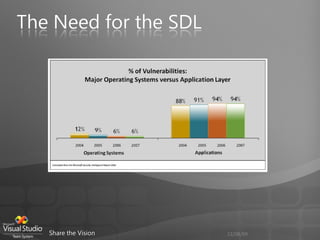
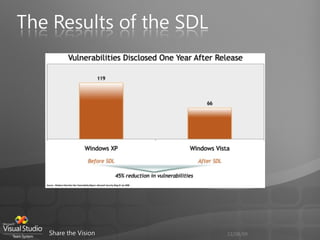
The Business Case for ALM Value-Up Software Development Microsoft’s Security Development Lifecycle Examples & Results Adoption Roadmap 06/08/09
This is going to cost time & money, right? 06/08/09
06/08/09 Q:  What if we could reduce debugging by 25%? A:   We  double  the amount of code we can write
http://www.microsoft.com/technet/itsolutions/msit/deploy/vstfoemit.mspx Microsoft OEM IT Global distributed development: Redmond, Reno, Dublin, Beijing, Hyderabad 2.2M lines of code 40 LOB applications Quarterly releases VSTS as a managed service Development Task Percent savings Automated build 1.7% Source control 14.5% Defect resolution 11.6% Reduction of rework 6.7% Test case regression 21%
06/08/09 http://www.microsoft.com/casestudies/casestudy.aspx?casestudyid=201314
06/08/09 http://download.microsoft.com/download/4/B/B/4BB5DDB2-A7DD-4B24-9B4A-B1F87DCFECF4/Project%20RealizeVSTS_Final_Jan%2009.doc
Increased agility Cultural change on development teams Better business alignment and impact Improved productivity http://www.microsoft.com/technet/itsolutions/msit/deploy/vstfoemit.mspx http://msdn2.microsoft.com/en-us/teamsystem/bb400737.aspx
What is it and Why do we need it? 06/08/09
06/08/09 Plan Task 1 Task 4 Task 3 Task 2 Value-up Work-down Traditionally, we decompose  tasks and measure completion This is the cost accounting tradition Alternatively, we account  for customer value  incrementally delivered This is the Lean Manufacturing  and Theory of Constraints model
Flow is central to value-up thinking and practices Working software and completed documentation are the work products that count Software to the customer is measured regularly Example, Extreme Programming and the flow of “customer value” Working software delivered  to the customer at  regular intervals Customer satisfaction is  measured at regular intervals
06/08/09
06/08/09
06/08/09
06/08/09
ALM can be more than tools, processes & ROI 06/08/09
06/08/09
06/08/09
06/08/09
06/08/09
06/08/09
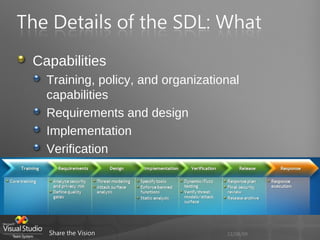
Capabilities Training, policy, and organizational capabilities Requirements and design Implementation Verification Release and response 06/08/09
SDL Optimization Model SDL Pro Network 06/08/09
06/08/09 Security is  Reactive . Customer risk is undefined.  Security is  Proactive . Customer risk is understood. Security is  Integrated . Customer risk is controlled. Security is  Specialized . Customer risk is minimized. Basic Standardized Advanced Dynamic
06/08/09
“ as seen on TV” 06/08/09
27 Team Foundation Servers in production 50 million distinct source files http://blogs.msdn.com/bharry/archive/2009/01/16/microsoft-tfs-adoption-update.aspx 06/08/09
Enough already! Where do I start? 06/08/09
 
 
Assess your organization and its IT functions Identify the main problem areas Prioritize areas for improvement Adopt an incremental approach to phase in new practices on a project-by-project  basis
 
Please fill out your evaluation forms, 06/08/09
Share the Vision
© 2006 Microsoft Corporation. All rights reserved. Microsoft, Windows, Windows Vista and other product names are or may be registered trademarks and/or trademarks in the U.S. and/or other countries. The information herein is for informational purposes only and represents the current view of Microsoft Corporation as of the date of this presentation.  Because Microsoft must respond to changing market conditions, it should not be interpreted to be a commitment on the part of Microsoft, and Microsoft cannot guarantee the accuracy of any information provided after the date of this presentation.  MICROSOFT MAKES NO WARRANTIES, EXPRESS, IMPLIED OR STATUTORY, AS TO THE INFORMATION IN THIS PRESENTATION.

Application Lifecycle Management and Microsoft

  • 1.
  • 2.
    Application Lifecycle Management[email_address] Developer Tools Specialist Microsoft Gulf
  • 3.
    Today we build apps…
  • 4.
  • 5.
    Built on solid& rich frameworks
  • 6.
  • 7.
  • 8.
  • 9.
  • 10.
  • 11.
    Time spent ismoney spent…
  • 12.
  • 13.
  • 14.
    Invest a littletime early
  • 15.
  • 16.
  • 17.
  • 18.
    What Is ApplicationLifecycle Management? ALM is the coordination of all aspects of software engineering — including the formulation and communication of business and technical requirements, code design and architecture, project tracking, change management, coding, testing, debugging, and release management — by using tools that facilitate and track collaboration among and within work teams. 06/08/09
  • 19.
    Project management Softwaremaintenance Project progress tracking and reporting Requirements management Development team collaboration System design and development Quality assurance Release management
  • 20.
    The Business Casefor ALM Value-Up Software Development Microsoft’s Security Development Lifecycle Examples & Results Adoption Roadmap 06/08/09
  • 21.
    This is goingto cost time & money, right? 06/08/09
  • 22.
    06/08/09 Q: What if we could reduce debugging by 25%? A: We double the amount of code we can write
  • 23.
    http://www.microsoft.com/technet/itsolutions/msit/deploy/vstfoemit.mspx Microsoft OEMIT Global distributed development: Redmond, Reno, Dublin, Beijing, Hyderabad 2.2M lines of code 40 LOB applications Quarterly releases VSTS as a managed service Development Task Percent savings Automated build 1.7% Source control 14.5% Defect resolution 11.6% Reduction of rework 6.7% Test case regression 21%
  • 24.
  • 25.
  • 26.
    Increased agility Culturalchange on development teams Better business alignment and impact Improved productivity http://www.microsoft.com/technet/itsolutions/msit/deploy/vstfoemit.mspx http://msdn2.microsoft.com/en-us/teamsystem/bb400737.aspx
  • 27.
    What is itand Why do we need it? 06/08/09
  • 28.
    06/08/09 Plan Task1 Task 4 Task 3 Task 2 Value-up Work-down Traditionally, we decompose tasks and measure completion This is the cost accounting tradition Alternatively, we account for customer value incrementally delivered This is the Lean Manufacturing and Theory of Constraints model
  • 29.
    Flow is centralto value-up thinking and practices Working software and completed documentation are the work products that count Software to the customer is measured regularly Example, Extreme Programming and the flow of “customer value” Working software delivered to the customer at regular intervals Customer satisfaction is measured at regular intervals
  • 30.
  • 31.
  • 32.
  • 33.
  • 34.
    ALM can bemore than tools, processes & ROI 06/08/09
  • 35.
  • 36.
  • 37.
  • 38.
  • 39.
  • 40.
    Capabilities Training, policy,and organizational capabilities Requirements and design Implementation Verification Release and response 06/08/09
  • 41.
    SDL Optimization ModelSDL Pro Network 06/08/09
  • 42.
    06/08/09 Security is Reactive . Customer risk is undefined. Security is Proactive . Customer risk is understood. Security is Integrated . Customer risk is controlled. Security is Specialized . Customer risk is minimized. Basic Standardized Advanced Dynamic
  • 43.
  • 44.
    “ as seenon TV” 06/08/09
  • 45.
    27 Team FoundationServers in production 50 million distinct source files http://blogs.msdn.com/bharry/archive/2009/01/16/microsoft-tfs-adoption-update.aspx 06/08/09
  • 46.
    Enough already! Wheredo I start? 06/08/09
  • 47.
  • 48.
  • 49.
    Assess your organizationand its IT functions Identify the main problem areas Prioritize areas for improvement Adopt an incremental approach to phase in new practices on a project-by-project basis
  • 50.
  • 51.
    Please fill outyour evaluation forms, 06/08/09
  • 52.
  • 53.
    © 2006 MicrosoftCorporation. All rights reserved. Microsoft, Windows, Windows Vista and other product names are or may be registered trademarks and/or trademarks in the U.S. and/or other countries. The information herein is for informational purposes only and represents the current view of Microsoft Corporation as of the date of this presentation. Because Microsoft must respond to changing market conditions, it should not be interpreted to be a commitment on the part of Microsoft, and Microsoft cannot guarantee the accuracy of any information provided after the date of this presentation. MICROSOFT MAKES NO WARRANTIES, EXPRESS, IMPLIED OR STATUTORY, AS TO THE INFORMATION IN THIS PRESENTATION.
  • 54.
    © 2006 MicrosoftCorporation. All rights reserved. Microsoft, Windows, Windows Vista and other product names are or may be registered trademarks and/or trademarks in the U.S. and/or other countries. The information herein is for informational purposes only and represents the current view of Microsoft Corporation as of the date of this presentation. Because Microsoft must respond to changing market conditions, it should not be interpreted to be a commitment on the part of Microsoft, and Microsoft cannot guarantee the accuracy of any information provided after the date of this presentation. MICROSOFT MAKES NO WARRANTIES, EXPRESS, IMPLIED OR STATUTORY, AS TO THE INFORMATION IN THIS PRESENTATION.