Apple Inc.
ABOUT APPLE INC.
 Apple Inc. is an American MNC
headquartered in Cupertino, California.
 It designs, develops, and sells consumer
electronics, computer software and online
services.
 It is considered one of the Big Four
technology companies, along with
Amazon, Google and Facebook.
HISTORY OF APPLE
Apple was founded by Steve Jobs, Steve
Wozniak and Ronald Wayne in April 1976 to
develop and sell Wozniak's Apple1 personal
computer, though Wayne sold his share back
within 12 days.
 It was incorporated as Apple Computer Inc., in
January 1977, and sales of its computers,
including the Apple II grew quickly.
 Within a few years, Jobs and Wozniak had hired a
staff of computer designers and had a production
line.
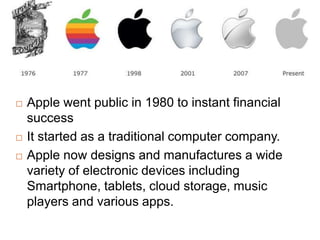
 Apple went public in 1980 to instant financial
success
 It started as a traditional computer company.
 Apple now designs and manufactures a wide
variety of electronic devices including
Smartphone, tablets, cloud storage, music
players and various apps.
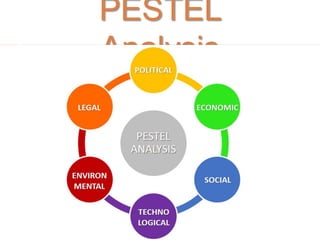
PESTEL
Analysis
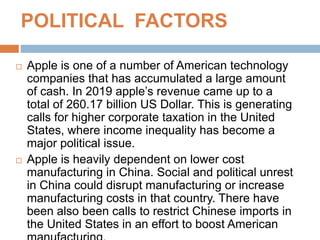
POLITICAL FACTORS
 Apple is one of a number of American technology
companies that has accumulated a large amount
of cash. In 2019 apple’s revenue came up to a
total of 260.17 billion US Dollar. This is generating
calls for higher corporate taxation in the United
States, where income inequality has become a
major political issue.
 Apple is heavily dependent on lower cost
manufacturing in China. Social and political unrest
in China could disrupt manufacturing or increase
manufacturing costs in that country. There have
been also been calls to restrict Chinese imports in
the United States in an effort to boost American
 The cost of finding alternatives to Chinese
manufacturing could be high for Apple. This
could lead to increased prices for Apple
products.
 Apple’s dependence on Chinese
manufacturing and markets makes it
vulnerable to political unrest in that country.
 Apple could become the target of growing
nationalism and anti-Americanism in China,
which could reduce its market share.
 Apple’s close association with China could
become a political issue in countries like the
United States and Japan if China were to be
perceived as a threat.
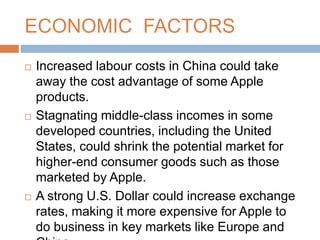
ECONOMIC FACTORS
 Increased labour costs in China could take
away the cost advantage of some Apple
products.
 Stagnating middle-class incomes in some
developed countries, including the United
States, could shrink the potential market for
higher-end consumer goods such as those
marketed by Apple.
 A strong U.S. Dollar could increase exchange
rates, making it more expensive for Apple to
do business in key markets like Europe and
SOCIAL FACTORS
 The biggest growth in consumer spending in
coming decades will be in areas of the world
such as Africa where people are unfamiliar with
Apple products.
 There is a backlash against expensive and
stylish products among some customers in the
United States and Europe.
 Not all people buy Apple products just because
of it’s brand name. Many people think rationally
and don’t buy them as they are overpriced
according to them.
 Ethical concerns about Apple’s manufacturing
in China could limit its products’ appeal among
socially-conscious consumers.
 Apple’s close association with China could
offend some potential customers in other
regions, such as North America and Europe,
particularly if tensions with China rise.
 Apple’s music marketing strategy has created
resentment and led to public criticism from
major recording stars that could tarnish the
brand’s image.
TECHNOLOGICAL FACTORS
 Competitors such as Google and Samsung have
demonstrated a strong ability to duplicate Apple’s
products and services. It took less than a year for
Google to roll out a payment app – Android Pay,
with the same capabilities as Apple Pay. This
means that many of Apple’s signature services
and products are no longer unique.
 The number of new consumer products Apple can
bring out is limited. Many of its new offerings,
such as Apple TV, will have a limited market.
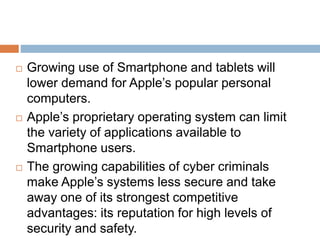
 Growing use of Smartphone and tablets will
lower demand for Apple’s popular personal
computers.
 Apple’s proprietary operating system can limit
the variety of applications available to
Smartphone users.
 The growing capabilities of cyber criminals
make Apple’s systems less secure and take
away one of its strongest competitive
advantages: its reputation for high levels of
security and safety.
LEGAL FACTORS
 Apple has recently entered the highly
regulated financial services sector via Apple
Pay. This could increase the level of regulation
and government oversight it faces.
 By offering financial services, Apple could face
increased levels of litigation.
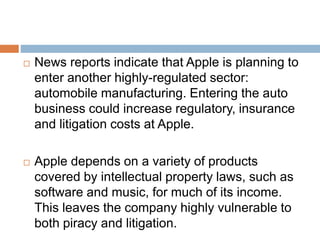
 News reports indicate that Apple is planning to
enter another highly-regulated sector:
automobile manufacturing. Entering the auto
business could increase regulatory, insurance
and litigation costs at Apple.
 Apple depends on a variety of products
covered by intellectual property laws, such as
software and music, for much of its income.
This leaves the company highly vulnerable to
both piracy and litigation.
ENVIRONMENTAL FACTORS
 The biggest environmental issue facing Apple is
the disposal of used or nonworking electronic
devices. The expense of disposing of devices,
particularly those containing lithium batteries,
could be high. Apple could be forced to assume
that expense because of concerns about such
devices in landfills.
 Pollution and other environmental side effects
from manufacturing facilities in China are a
growing concern. This could lead to increased
regulation and higher manufacturing costs at
some point in the future.
 China’s efforts to cut greenhouse gases and
limit fossil fuel use could increase electricity
rates and manufacturing costs for Apple in that
country.
 Climate change created by global warming
could disrupt transoceanic shipping and
Apple’s supply chain.
 Concern about energy use and other side
effects from data centres could lead to
increased regulation and costs.
 Apple is highly vulnerable to increases in
electricity costs because of its dependence on
data centres and other Internet infrastructure.
GROUP MEMBERS
NAMES (In alphabetical
order)
ENROLLMENT NUMBER
FENIL PANDYA IU19818100
HEET MAKADIA IU19818100
HITARTH BAROT IU19818100
JANAM IU19818100
SHREYANSH SINGH IU1981810053

Apple Inc. Pestel Analysis Presentation

  • 1.
  • 2.
    ABOUT APPLE INC. Apple Inc. is an American MNC headquartered in Cupertino, California.  It designs, develops, and sells consumer electronics, computer software and online services.  It is considered one of the Big Four technology companies, along with Amazon, Google and Facebook.
  • 3.
    HISTORY OF APPLE Applewas founded by Steve Jobs, Steve Wozniak and Ronald Wayne in April 1976 to develop and sell Wozniak's Apple1 personal computer, though Wayne sold his share back within 12 days.  It was incorporated as Apple Computer Inc., in January 1977, and sales of its computers, including the Apple II grew quickly.  Within a few years, Jobs and Wozniak had hired a staff of computer designers and had a production line.
  • 4.
     Apple wentpublic in 1980 to instant financial success  It started as a traditional computer company.  Apple now designs and manufactures a wide variety of electronic devices including Smartphone, tablets, cloud storage, music players and various apps.
  • 5.
  • 6.
    POLITICAL FACTORS  Appleis one of a number of American technology companies that has accumulated a large amount of cash. In 2019 apple’s revenue came up to a total of 260.17 billion US Dollar. This is generating calls for higher corporate taxation in the United States, where income inequality has become a major political issue.  Apple is heavily dependent on lower cost manufacturing in China. Social and political unrest in China could disrupt manufacturing or increase manufacturing costs in that country. There have been also been calls to restrict Chinese imports in the United States in an effort to boost American
  • 7.
     The costof finding alternatives to Chinese manufacturing could be high for Apple. This could lead to increased prices for Apple products.  Apple’s dependence on Chinese manufacturing and markets makes it vulnerable to political unrest in that country.  Apple could become the target of growing nationalism and anti-Americanism in China, which could reduce its market share.
  • 8.
     Apple’s closeassociation with China could become a political issue in countries like the United States and Japan if China were to be perceived as a threat.
  • 9.
    ECONOMIC FACTORS  Increasedlabour costs in China could take away the cost advantage of some Apple products.  Stagnating middle-class incomes in some developed countries, including the United States, could shrink the potential market for higher-end consumer goods such as those marketed by Apple.  A strong U.S. Dollar could increase exchange rates, making it more expensive for Apple to do business in key markets like Europe and
  • 10.
    SOCIAL FACTORS  Thebiggest growth in consumer spending in coming decades will be in areas of the world such as Africa where people are unfamiliar with Apple products.  There is a backlash against expensive and stylish products among some customers in the United States and Europe.  Not all people buy Apple products just because of it’s brand name. Many people think rationally and don’t buy them as they are overpriced according to them.
  • 11.
     Ethical concernsabout Apple’s manufacturing in China could limit its products’ appeal among socially-conscious consumers.  Apple’s close association with China could offend some potential customers in other regions, such as North America and Europe, particularly if tensions with China rise.  Apple’s music marketing strategy has created resentment and led to public criticism from major recording stars that could tarnish the brand’s image.
  • 12.
    TECHNOLOGICAL FACTORS  Competitorssuch as Google and Samsung have demonstrated a strong ability to duplicate Apple’s products and services. It took less than a year for Google to roll out a payment app – Android Pay, with the same capabilities as Apple Pay. This means that many of Apple’s signature services and products are no longer unique.  The number of new consumer products Apple can bring out is limited. Many of its new offerings, such as Apple TV, will have a limited market.
  • 13.
     Growing useof Smartphone and tablets will lower demand for Apple’s popular personal computers.  Apple’s proprietary operating system can limit the variety of applications available to Smartphone users.  The growing capabilities of cyber criminals make Apple’s systems less secure and take away one of its strongest competitive advantages: its reputation for high levels of security and safety.
  • 14.
    LEGAL FACTORS  Applehas recently entered the highly regulated financial services sector via Apple Pay. This could increase the level of regulation and government oversight it faces.  By offering financial services, Apple could face increased levels of litigation.
  • 15.
     News reportsindicate that Apple is planning to enter another highly-regulated sector: automobile manufacturing. Entering the auto business could increase regulatory, insurance and litigation costs at Apple.  Apple depends on a variety of products covered by intellectual property laws, such as software and music, for much of its income. This leaves the company highly vulnerable to both piracy and litigation.
  • 16.
    ENVIRONMENTAL FACTORS  Thebiggest environmental issue facing Apple is the disposal of used or nonworking electronic devices. The expense of disposing of devices, particularly those containing lithium batteries, could be high. Apple could be forced to assume that expense because of concerns about such devices in landfills.  Pollution and other environmental side effects from manufacturing facilities in China are a growing concern. This could lead to increased regulation and higher manufacturing costs at some point in the future.
  • 17.
     China’s effortsto cut greenhouse gases and limit fossil fuel use could increase electricity rates and manufacturing costs for Apple in that country.  Climate change created by global warming could disrupt transoceanic shipping and Apple’s supply chain.
  • 18.
     Concern aboutenergy use and other side effects from data centres could lead to increased regulation and costs.  Apple is highly vulnerable to increases in electricity costs because of its dependence on data centres and other Internet infrastructure.
  • 19.
    GROUP MEMBERS NAMES (Inalphabetical order) ENROLLMENT NUMBER FENIL PANDYA IU19818100 HEET MAKADIA IU19818100 HITARTH BAROT IU19818100 JANAM IU19818100 SHREYANSH SINGH IU1981810053