Elements of Performance
Management
In the Public Sector Organization
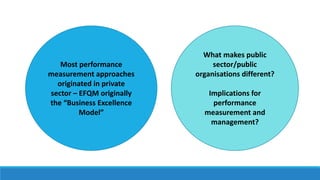
Most performance
measurement approaches
originated in private
sector – EFQM originally
the “Business Excellence
Model”
What makes public
sector/public
organisations different?
Implications for
performance
measurement and
management?
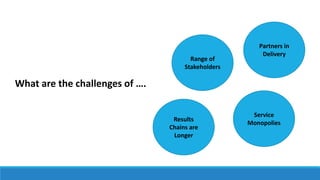
Range of
Stakeholders
Results
Chains are
Longer
Partners in
Delivery
Service
Monopolies
What are the challenges of ….
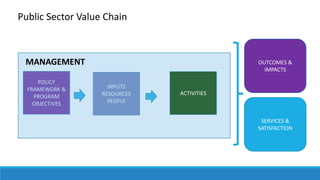
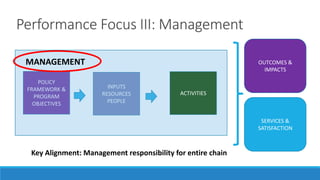
OUTCOMES &
IMPACTS
SERVICES &
SATISFACTION
POLICY
FRAMEWORK &
PROGRAM
OBJECTIVES
INPUTS
RESOURCES
PEOPLE
MANAGEMENT
ACTIVITIES
Public Sector Value Chain
Performance Focus I: Strategy
POLICY FRAMEWORK &
PROGRAM OBJECTIVES
INPUTS
RESOURCES
PEOPLE
OUTCOMES &
IMPACTS
Key Alignment: Policy, inputs [resources and people] to outcomes
Performance Focus II: Expenditures
INPUTS
RESOURCES ACTIVITIES
Key Alignment: Inputs [finances], activities, outputs
OUTCOMES &
IMPACTS
SERVICES &
SATISFACTION
POLICY
FRAMEWORK &
PROGRAM
OBJECTIVES
INPUTS
RESOURCES
PEOPLE
MANAGEMENT
ACTIVITIES
Performance Focus III: Management
Key Alignment: Management responsibility for entire chain
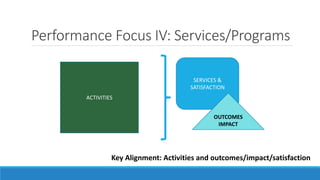
Performance Focus IV: Services/Programs
ACTIVITIES
SERVICES &
SATISFACTION
Key Alignment: Activities and outcomes/impact/satisfaction
OUTCOMES
IMPACT
Challenge: Align all Four into a
Performance Management System
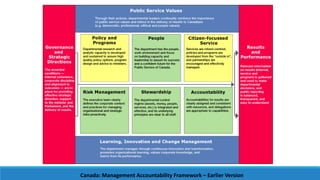
Canada: Management Accountability Framework – Earlier Version
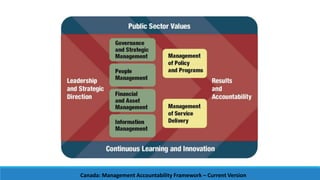
Canada: Management Accountability Framework – Current Version
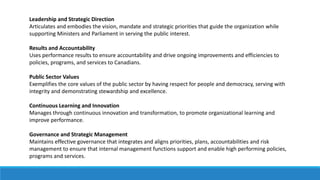
Leadership and Strategic Direction
Articulates and embodies the vision, mandate and strategic priorities that guide the organization while
supporting Ministers and Parliament in serving the public interest.
Results and Accountability
Uses performance results to ensure accountability and drive ongoing improvements and efficiencies to
policies, programs, and services to Canadians.
Public Sector Values
Exemplifies the core values of the public sector by having respect for people and democracy, serving with
integrity and demonstrating stewardship and excellence.
Continuous Learning and Innovation
Manages through continuous innovation and transformation, to promote organizational learning and
improve performance.
Governance and Strategic Management
Maintains effective governance that integrates and aligns priorities, plans, accountabilities and risk
management to ensure that internal management functions support and enable high performing policies,
programs and services.
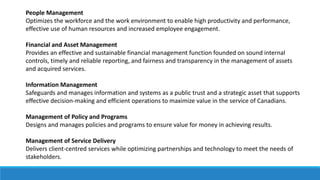
People Management
Optimizes the workforce and the work environment to enable high productivity and performance,
effective use of human resources and increased employee engagement.
Financial and Asset Management
Provides an effective and sustainable financial management function founded on sound internal
controls, timely and reliable reporting, and fairness and transparency in the management of assets
and acquired services.
Information Management
Safeguards and manages information and systems as a public trust and a strategic asset that supports
effective decision-making and efficient operations to maximize value in the service of Canadians.
Management of Policy and Programs
Designs and manages policies and programs to ensure value for money in achieving results.
Management of Service Delivery
Delivers client-centred services while optimizing partnerships and technology to meet the needs of
stakeholders.
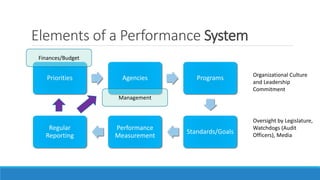
Elements of a Performance System
Priorities Agencies Programs
Standards/Goals
Performance
Measurement
Regular
Reporting
Organizational Culture
and Leadership
Commitment
Oversight by Legislature,
Watchdogs (Audit
Officers), Media
Finances/Budget
Management
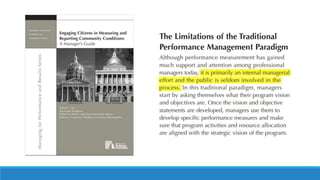
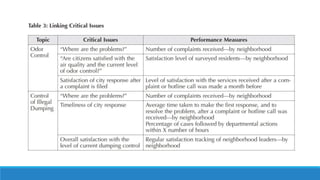
Citizens and Stakeholders in Performance Measures
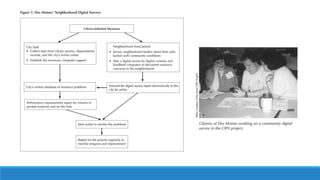
Case Study: Des Moines, Iowa
http://metroboston.datacommon.org/
Thank You!
Prof. Leslie A. Pal
School of Public Policy and Administration
Carleton University
Ottawa, Canada
leslie.pal@carleton.ca

APO Lecture: PM Elements

  • 1.
    Elements of Performance Management Inthe Public Sector Organization
  • 2.
    Most performance measurement approaches originatedin private sector – EFQM originally the “Business Excellence Model” What makes public sector/public organisations different? Implications for performance measurement and management?
  • 3.
    Range of Stakeholders Results Chains are Longer Partnersin Delivery Service Monopolies What are the challenges of ….
  • 4.
    OUTCOMES & IMPACTS SERVICES & SATISFACTION POLICY FRAMEWORK& PROGRAM OBJECTIVES INPUTS RESOURCES PEOPLE MANAGEMENT ACTIVITIES Public Sector Value Chain
  • 5.
    Performance Focus I:Strategy POLICY FRAMEWORK & PROGRAM OBJECTIVES INPUTS RESOURCES PEOPLE OUTCOMES & IMPACTS Key Alignment: Policy, inputs [resources and people] to outcomes
  • 6.
    Performance Focus II:Expenditures INPUTS RESOURCES ACTIVITIES Key Alignment: Inputs [finances], activities, outputs
  • 7.
    OUTCOMES & IMPACTS SERVICES & SATISFACTION POLICY FRAMEWORK& PROGRAM OBJECTIVES INPUTS RESOURCES PEOPLE MANAGEMENT ACTIVITIES Performance Focus III: Management Key Alignment: Management responsibility for entire chain
  • 8.
    Performance Focus IV:Services/Programs ACTIVITIES SERVICES & SATISFACTION Key Alignment: Activities and outcomes/impact/satisfaction OUTCOMES IMPACT
  • 9.
    Challenge: Align allFour into a Performance Management System
  • 10.
    Canada: Management AccountabilityFramework – Earlier Version
  • 11.
    Canada: Management AccountabilityFramework – Current Version
  • 12.
    Leadership and StrategicDirection Articulates and embodies the vision, mandate and strategic priorities that guide the organization while supporting Ministers and Parliament in serving the public interest. Results and Accountability Uses performance results to ensure accountability and drive ongoing improvements and efficiencies to policies, programs, and services to Canadians. Public Sector Values Exemplifies the core values of the public sector by having respect for people and democracy, serving with integrity and demonstrating stewardship and excellence. Continuous Learning and Innovation Manages through continuous innovation and transformation, to promote organizational learning and improve performance. Governance and Strategic Management Maintains effective governance that integrates and aligns priorities, plans, accountabilities and risk management to ensure that internal management functions support and enable high performing policies, programs and services.
  • 13.
    People Management Optimizes theworkforce and the work environment to enable high productivity and performance, effective use of human resources and increased employee engagement. Financial and Asset Management Provides an effective and sustainable financial management function founded on sound internal controls, timely and reliable reporting, and fairness and transparency in the management of assets and acquired services. Information Management Safeguards and manages information and systems as a public trust and a strategic asset that supports effective decision-making and efficient operations to maximize value in the service of Canadians. Management of Policy and Programs Designs and manages policies and programs to ensure value for money in achieving results. Management of Service Delivery Delivers client-centred services while optimizing partnerships and technology to meet the needs of stakeholders.
  • 14.
    Elements of aPerformance System Priorities Agencies Programs Standards/Goals Performance Measurement Regular Reporting Organizational Culture and Leadership Commitment Oversight by Legislature, Watchdogs (Audit Officers), Media Finances/Budget Management
  • 15.
    Citizens and Stakeholdersin Performance Measures
  • 17.
    Case Study: DesMoines, Iowa
  • 20.
  • 21.
    Thank You! Prof. LeslieA. Pal School of Public Policy and Administration Carleton University Ottawa, Canada leslie.pal@carleton.ca