


https://www.linkedin.com/company/hackrfi
@hackrfi
API Security Risk
Management
with Bug Bounties
5.6.2019
ladybug@hackr.fiLea Viljanen
APIS, BUSINESS AND
RISKS
© Hackrfi Oy 2018 - Julkinen5.6.2019 3
Getting the business value
• To get the business benefits,
you need to expose your APIs
o…to internal parties
o…to external partners
o…to the general public
• Exposure brings risks!
© Hackrfi Oy 2018 - Julkinen5.6.2019 4
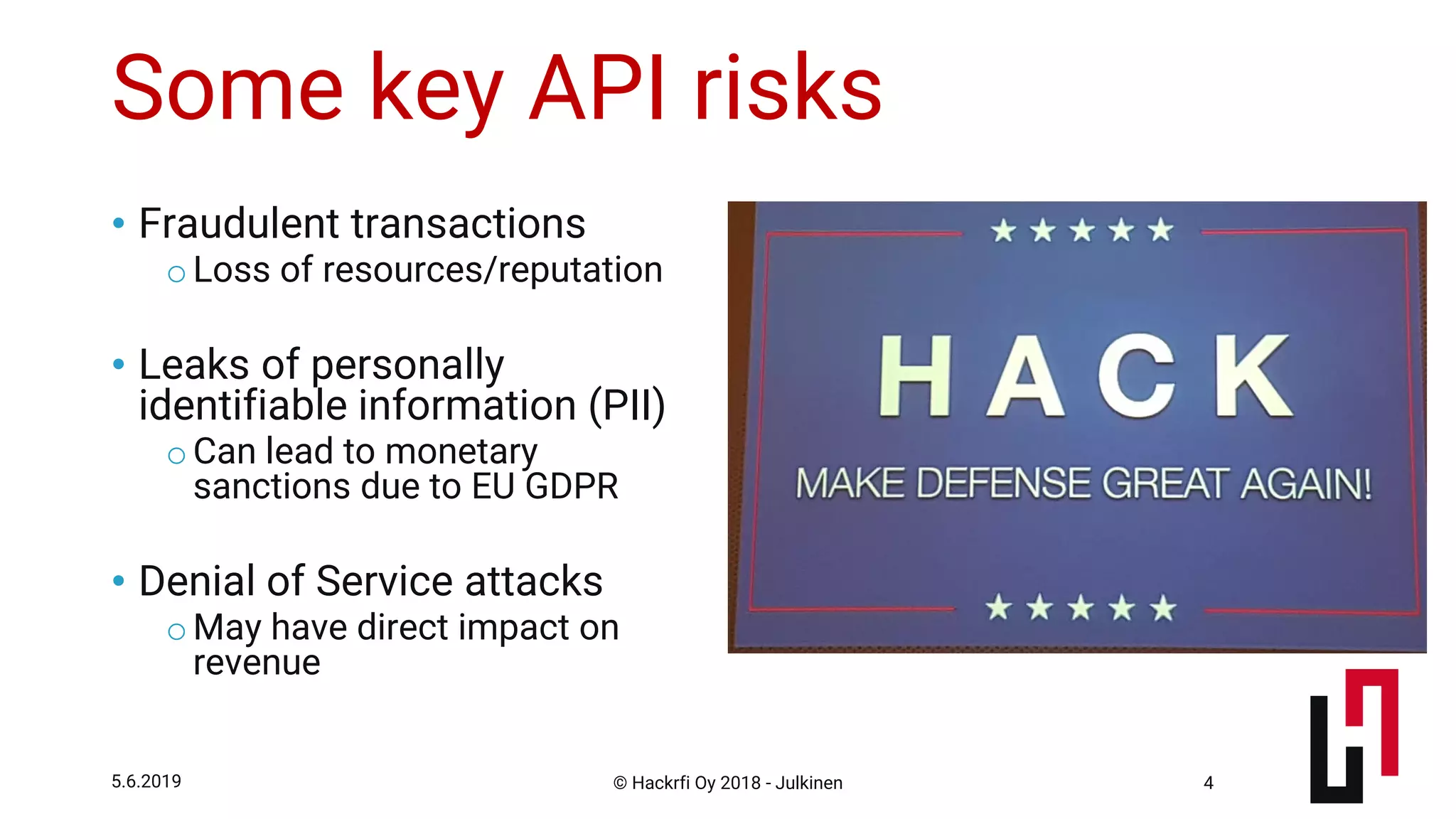
Some key API risks
• Fraudulent transactions
oLoss of resources/reputation
• Leaks of personally
identifiable information (PII)
oCan lead to monetary
sanctions due to EU GDPR
• Denial of Service attacks
oMay have direct impact on
revenue
© Hackrfi Oy 2018 - Julkinen5.6.2019 5
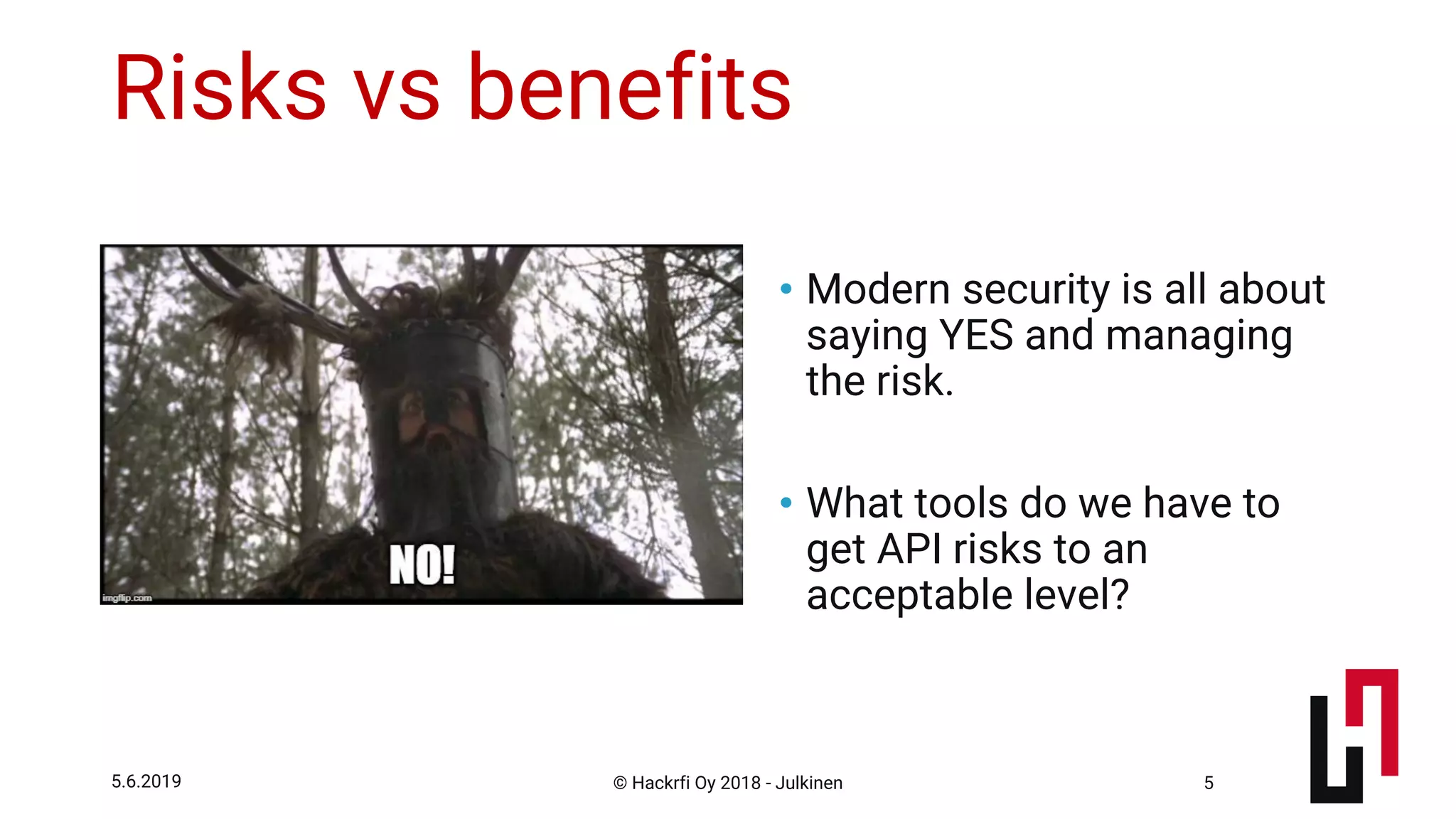
Risks vs benefits
• Modern security is all about
saying YES and managing
the risk.
• What tools do we have to
get API risks to an
acceptable level?
SOLUTIONS
5.6.2019
© Hackrfi Oy 2018 – Julkinen
© Hackrfi Oy 2018 - Julkinen5.6.2019 7
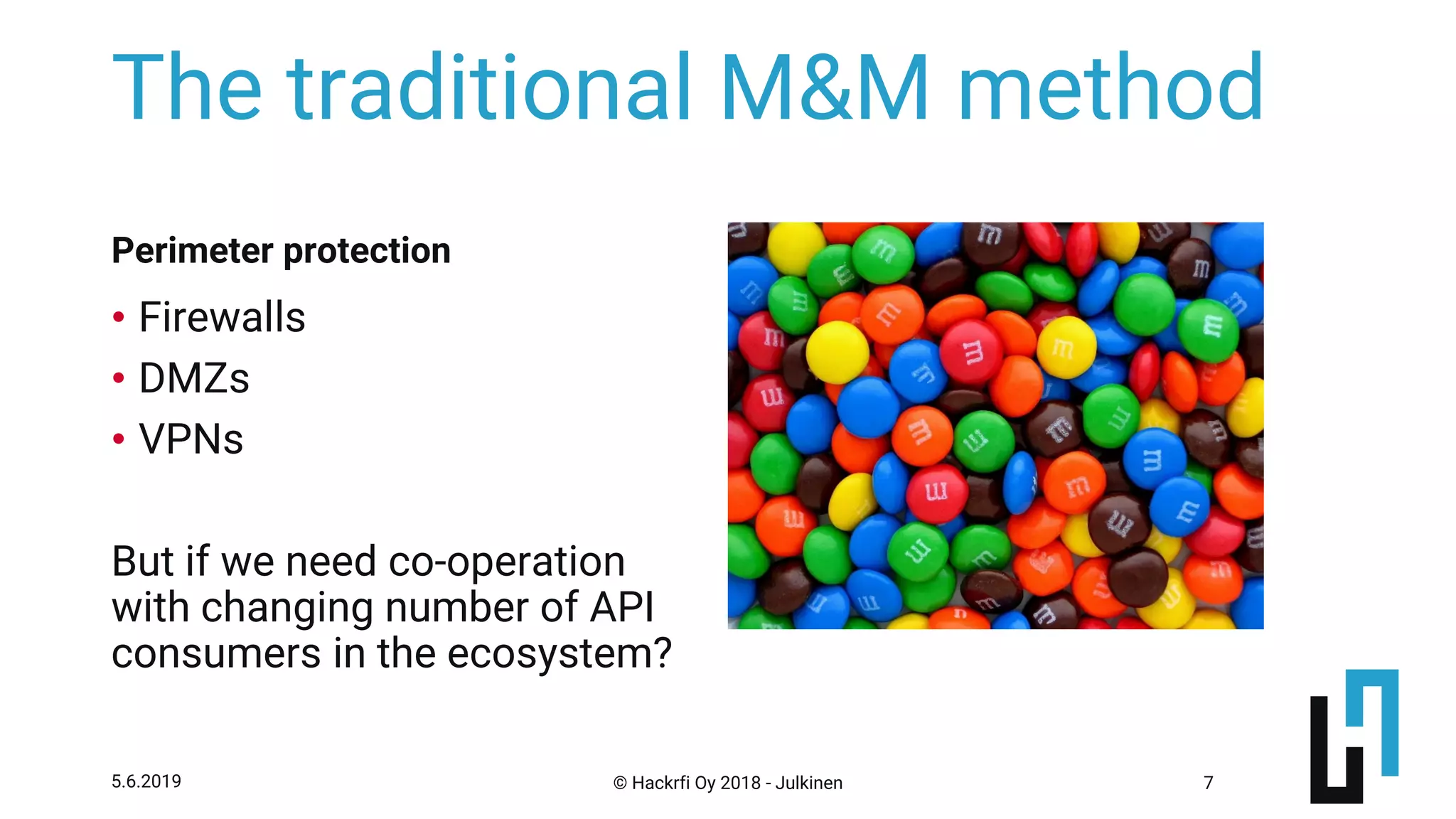
The traditional M&M method
• Firewalls
• DMZs
• VPNs
But if we need co-operation
with changing number of API
consumers in the ecosystem?
Perimeter protection
© Hackrfi Oy 2018 - Julkinen5.6.2019 8
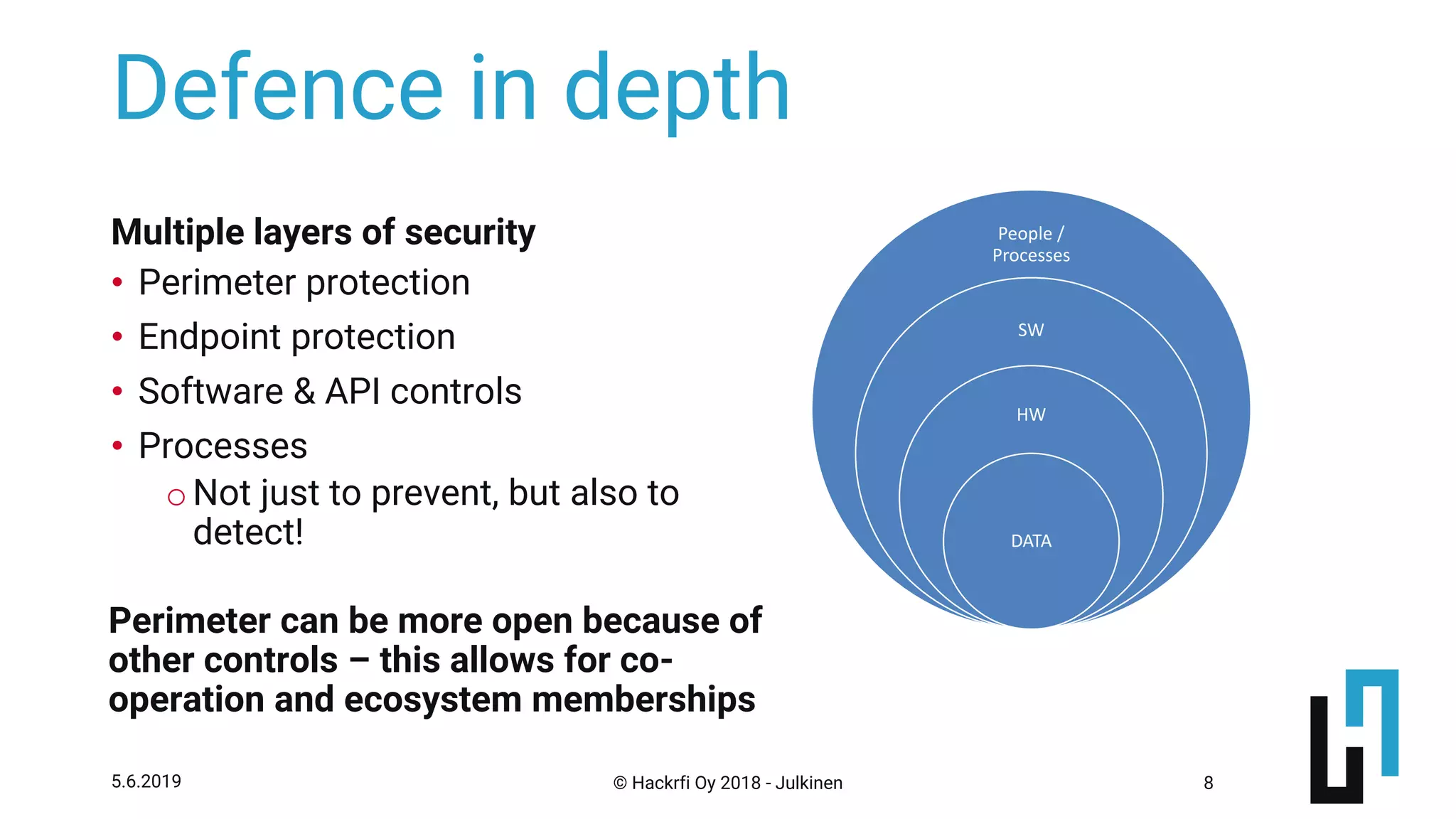
Defence in depth
• Perimeter protection
• Endpoint protection
• Software & API controls
• Processes
o Not just to prevent, but also to
detect!
People /
Processes
SW
HW
DATA
Multiple layers of security
Perimeter can be more open because of
other controls – this allows for co-
operation and ecosystem memberships
© Hackrfi Oy 2018 - Julkinen5.6.2019 9
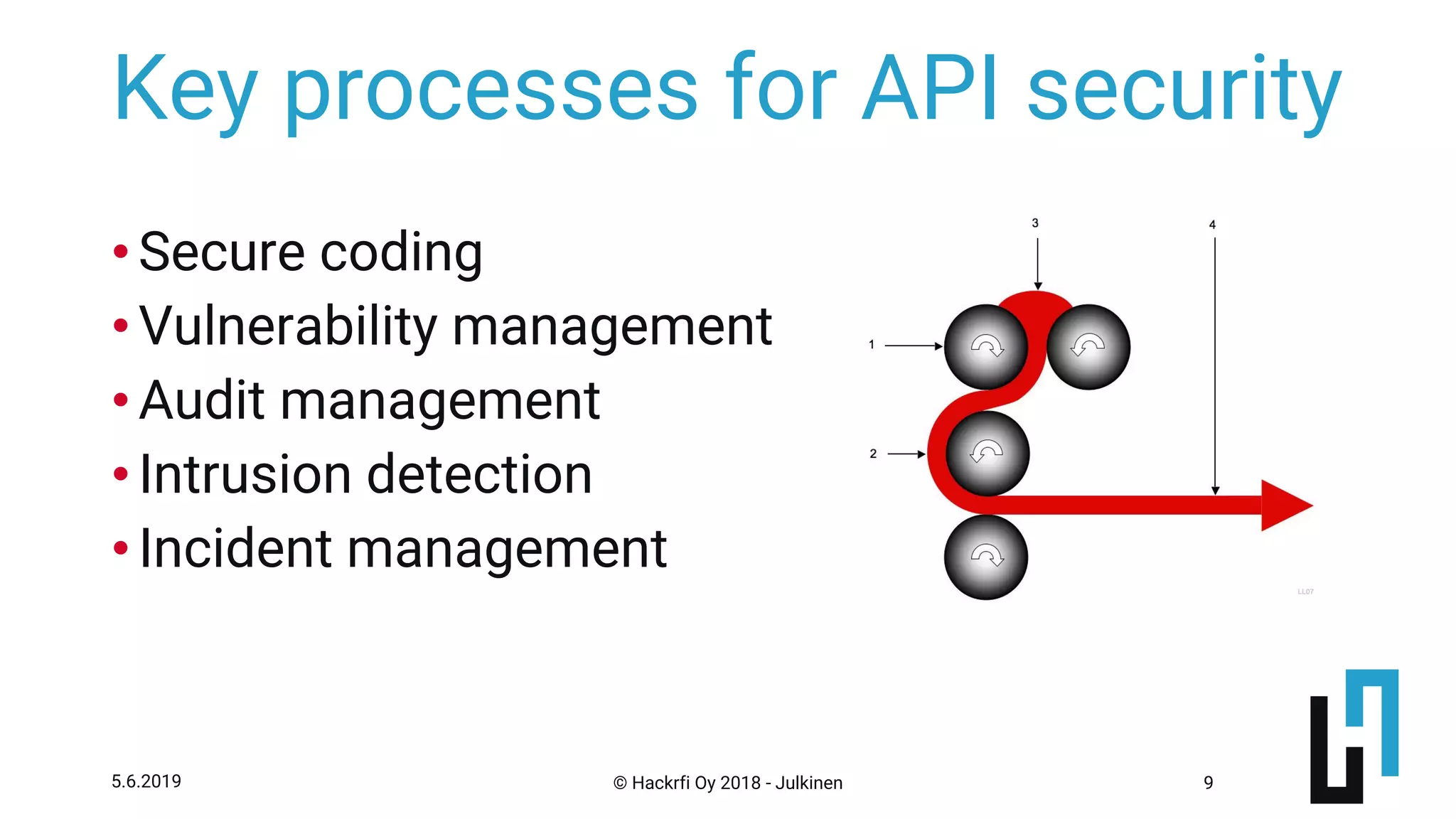
Key processes for API security
•Secure coding
•Vulnerability management
•Audit management
•Intrusion detection
•Incident management
Tämä kuva, tekijä Tuntematon tekijä,
käyttöoikeus: CC BY-SA
AGILE VULNERABILITY
DISCOVERY
© Hackrfi Oy 2018 - Julkinen5.6.2019 11
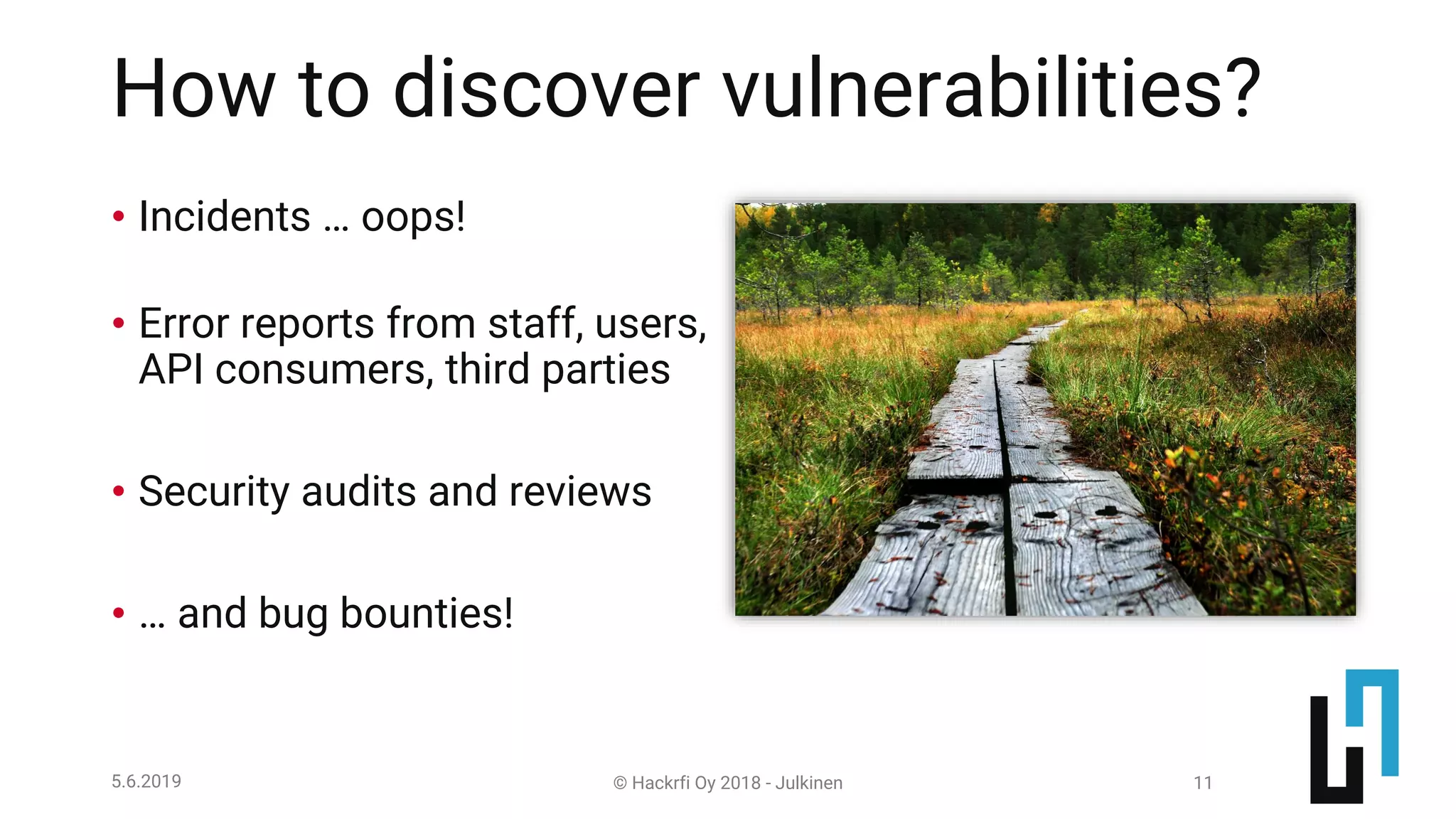
How to discover vulnerabilities?
• Incidents … oops!
• Error reports from staff, users,
API consumers, third parties
• Security audits and reviews
• … and bug bounties!
© Hackrfi Oy 2018 - Julkinen5.6.2019 12
Bug bounty program – what?
• An organisation pays security
researchers (i.e. hackers) if they
report a vulnerability in a
responsible manner.
• Target can be from the whole
infrastructure to a platform to a
single app and its API
• Payment sum can vary, typically
from thousands to hundreds
© Hackrfi Oy 2018 - Julkinen5.6.2019 13
Key benefits
• A bug bounty encourages
hackers to report issues
before the criminals take
advantage
• Cost effective – only real
vulnerabilities get bounties
• Public programs increase
third party trust to your
services
• Much more agile than
traditional audits
© Hackrfi Oy 2018 - Julkinen5.6.2019 14
Audits vs bug bounties
• Is limited by time (work days)
• Is limited by money (pre-
approved budget)
• Is limited by expertise of the
couple of people doing the
testing
• Gives results at one point in
time
• Hackers don’t count hours
• Hackers are paid only if they
find results
• Community hackers have
variable expertise.
• Can be run continuously
Traditional audits Bug bounty
© Hackrfi Oy 2018 - Julkinen5.6.2019 15
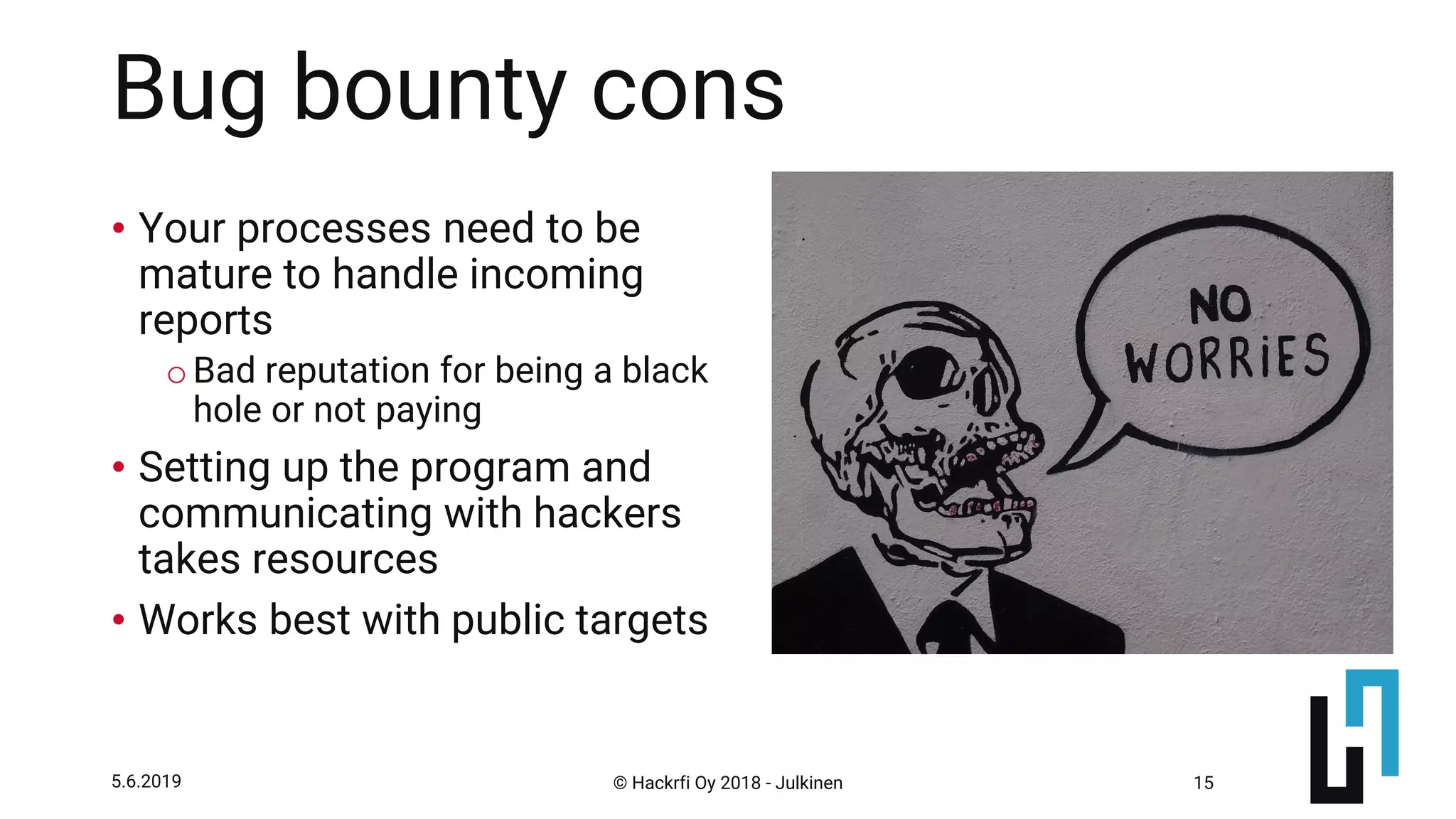
Bug bounty cons
• Your processes need to be
mature to handle incoming
reports
oBad reputation for being a black
hole or not paying
• Setting up the program and
communicating with hackers
takes resources
• Works best with public targets
© Hackrfi Oy 2018 - Julkinen5.6.2019 16
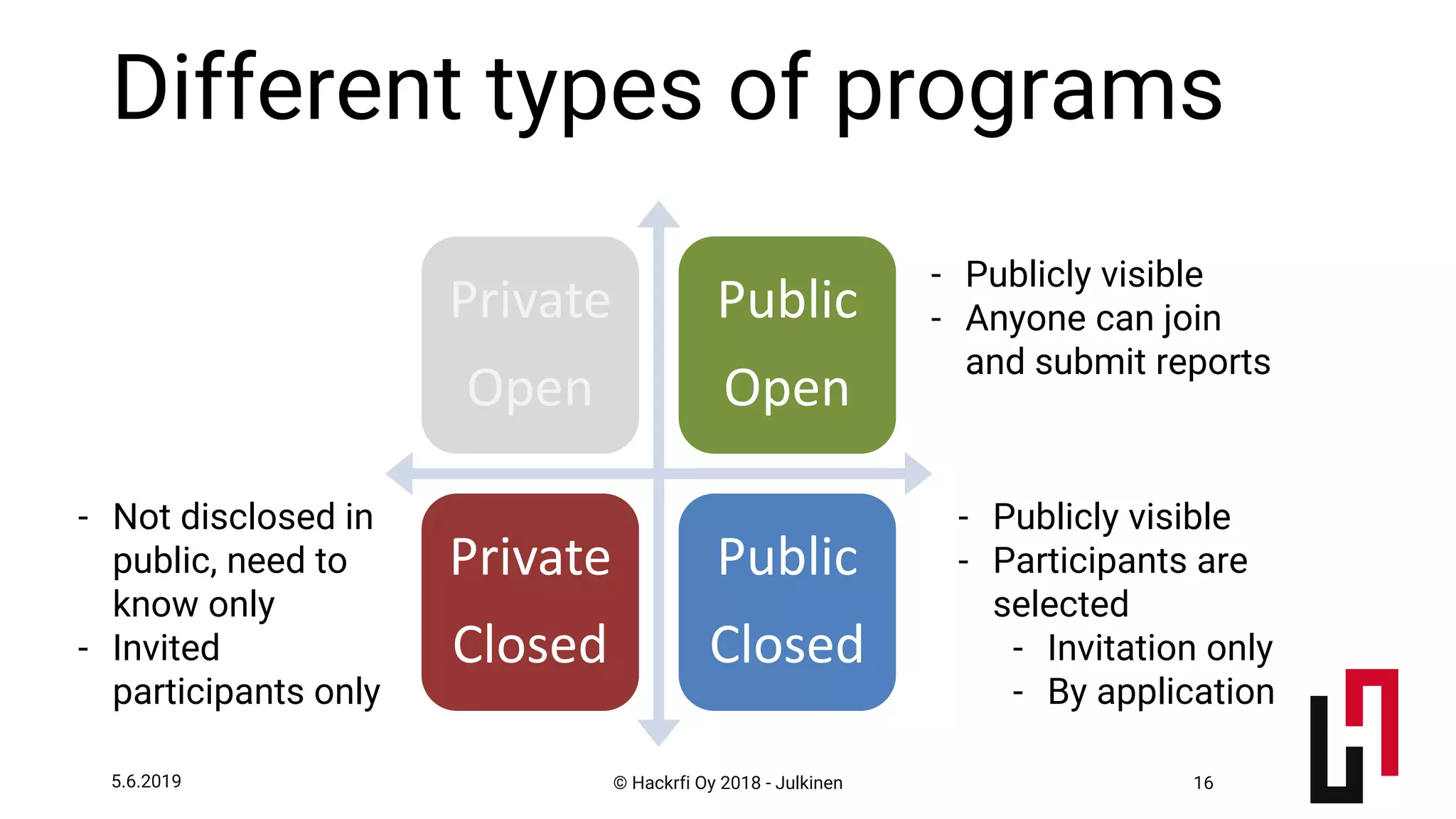
Different types of programs
Private
Open
Public
Open
Private
Closed
Public
Closed
- Not disclosed in
public, need to
know only
- Invited
participants only
- Publicly visible
- Anyone can join
and submit reports
- Publicly visible
- Participants are
selected
- Invitation only
- By application
© Hackrfi Oy 2018 - Julkinen5.6.2019 17
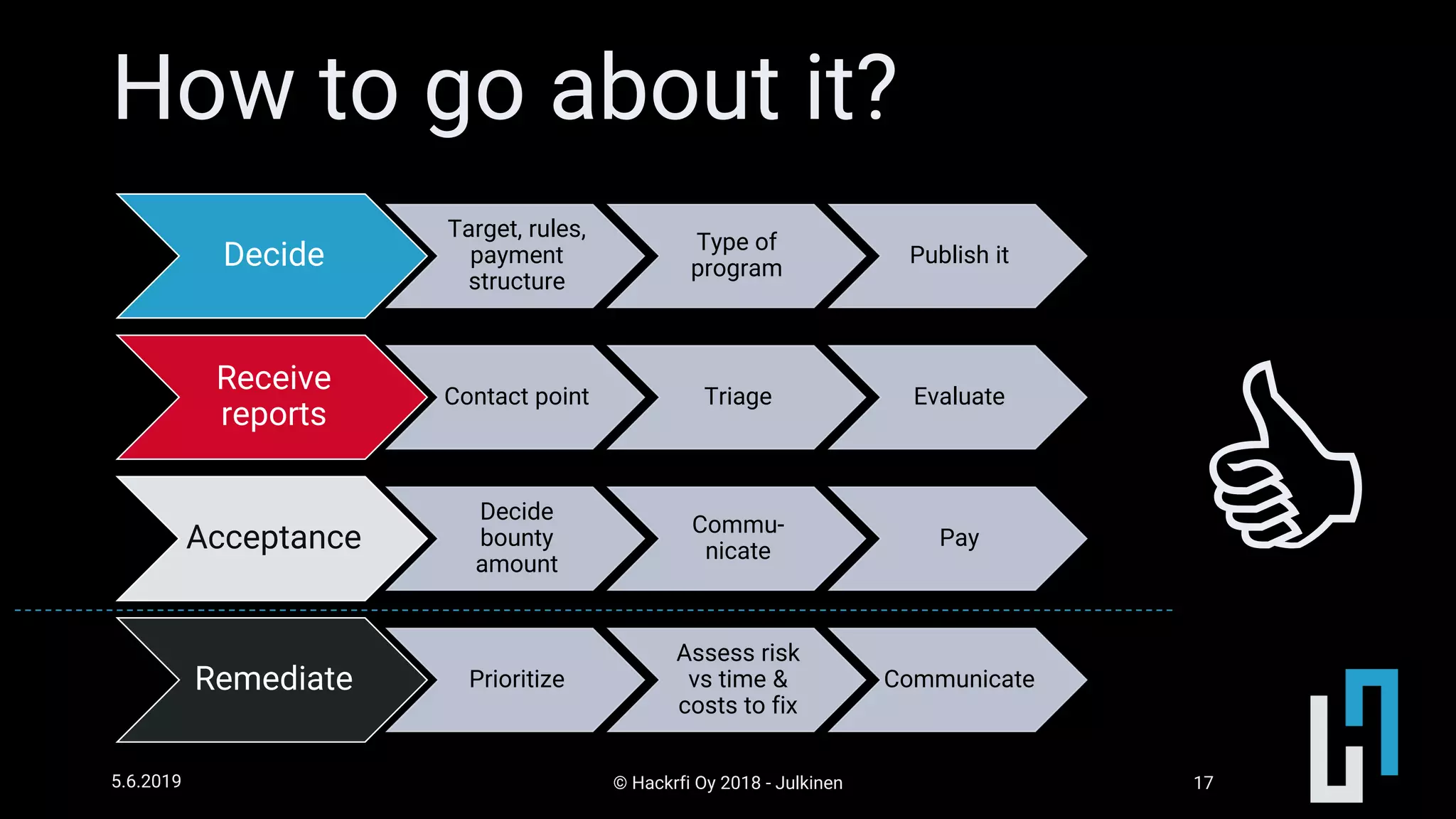
How to go about it?
Decide
Target, rules,
payment
structure
Type of
program
Publish it
Receive
reports
Contact point Triage Evaluate
Acceptance
Decide
bounty
amount
Commu-
nicate
Pay
Remediate Prioritize
Assess risk
vs time &
costs to fix
Communicate

THANK YOU!
https://www.linkedin.com/company/hackrfiladybug@hackr.fi @leaviljanen

APIdays Helsinki 2019 - API Security Risk Management with Bug Bounties with Lea Viljanen, Hackrfi

  • 1.
  • 2.
  • 3.
    © Hackrfi Oy2018 - Julkinen5.6.2019 3 Getting the business value • To get the business benefits, you need to expose your APIs o…to internal parties o…to external partners o…to the general public • Exposure brings risks!
  • 4.
    © Hackrfi Oy2018 - Julkinen5.6.2019 4 Some key API risks • Fraudulent transactions oLoss of resources/reputation • Leaks of personally identifiable information (PII) oCan lead to monetary sanctions due to EU GDPR • Denial of Service attacks oMay have direct impact on revenue
  • 5.
    © Hackrfi Oy2018 - Julkinen5.6.2019 5 Risks vs benefits • Modern security is all about saying YES and managing the risk. • What tools do we have to get API risks to an acceptable level?
  • 6.
  • 7.
    © Hackrfi Oy2018 - Julkinen5.6.2019 7 The traditional M&M method • Firewalls • DMZs • VPNs But if we need co-operation with changing number of API consumers in the ecosystem? Perimeter protection
  • 8.
    © Hackrfi Oy2018 - Julkinen5.6.2019 8 Defence in depth • Perimeter protection • Endpoint protection • Software & API controls • Processes o Not just to prevent, but also to detect! People / Processes SW HW DATA Multiple layers of security Perimeter can be more open because of other controls – this allows for co- operation and ecosystem memberships
  • 9.
    © Hackrfi Oy2018 - Julkinen5.6.2019 9 Key processes for API security •Secure coding •Vulnerability management •Audit management •Intrusion detection •Incident management Tämä kuva, tekijä Tuntematon tekijä, käyttöoikeus: CC BY-SA
  • 10.
  • 11.
    © Hackrfi Oy2018 - Julkinen5.6.2019 11 How to discover vulnerabilities? • Incidents … oops! • Error reports from staff, users, API consumers, third parties • Security audits and reviews • … and bug bounties!
  • 12.
    © Hackrfi Oy2018 - Julkinen5.6.2019 12 Bug bounty program – what? • An organisation pays security researchers (i.e. hackers) if they report a vulnerability in a responsible manner. • Target can be from the whole infrastructure to a platform to a single app and its API • Payment sum can vary, typically from thousands to hundreds
  • 13.
    © Hackrfi Oy2018 - Julkinen5.6.2019 13 Key benefits • A bug bounty encourages hackers to report issues before the criminals take advantage • Cost effective – only real vulnerabilities get bounties • Public programs increase third party trust to your services • Much more agile than traditional audits
  • 14.
    © Hackrfi Oy2018 - Julkinen5.6.2019 14 Audits vs bug bounties • Is limited by time (work days) • Is limited by money (pre- approved budget) • Is limited by expertise of the couple of people doing the testing • Gives results at one point in time • Hackers don’t count hours • Hackers are paid only if they find results • Community hackers have variable expertise. • Can be run continuously Traditional audits Bug bounty
  • 15.
    © Hackrfi Oy2018 - Julkinen5.6.2019 15 Bug bounty cons • Your processes need to be mature to handle incoming reports oBad reputation for being a black hole or not paying • Setting up the program and communicating with hackers takes resources • Works best with public targets
  • 16.
    © Hackrfi Oy2018 - Julkinen5.6.2019 16 Different types of programs Private Open Public Open Private Closed Public Closed - Not disclosed in public, need to know only - Invited participants only - Publicly visible - Anyone can join and submit reports - Publicly visible - Participants are selected - Invitation only - By application
  • 17.
    © Hackrfi Oy2018 - Julkinen5.6.2019 17 How to go about it? Decide Target, rules, payment structure Type of program Publish it Receive reports Contact point Triage Evaluate Acceptance Decide bounty amount Commu- nicate Pay Remediate Prioritize Assess risk vs time & costs to fix Communicate 
  • 18.