A practical guide to
API Management for GraphQL
June 30, 2020
Hello!
Bhathiya Jayasekara
Senior Technical Lead, WSO2
bhathiya@wso2.com
● Introduction to GraphQL
● REST vs GraphQL
● Exposing GraphQL services as Managed APIs
⦿ Authentication
⦿ Authorization
⦿ Rate-Limiting
⦿ Analytics
● API Management for GraphQL demo
What’s covered?
3
What’s GraphQL?
● A query language for your APIs.
● Gives what you request, nothing more and nothing less.
● Ability to make API calls more efficient, flexible, and developer-friendly.
● GraphQL specification is an SDL (Schema Definition Language).
● Created by Facebook in 2012 and released for open-source in 2015.
● Served over HTTP via a single endpoint.
● Specification - https://spec.graphql.org/June2018/
● Reference Implementation - https://github.com/graphql/graphql-js
● Implementations in many languages - https://graphql.org/code/
GraphQL
5
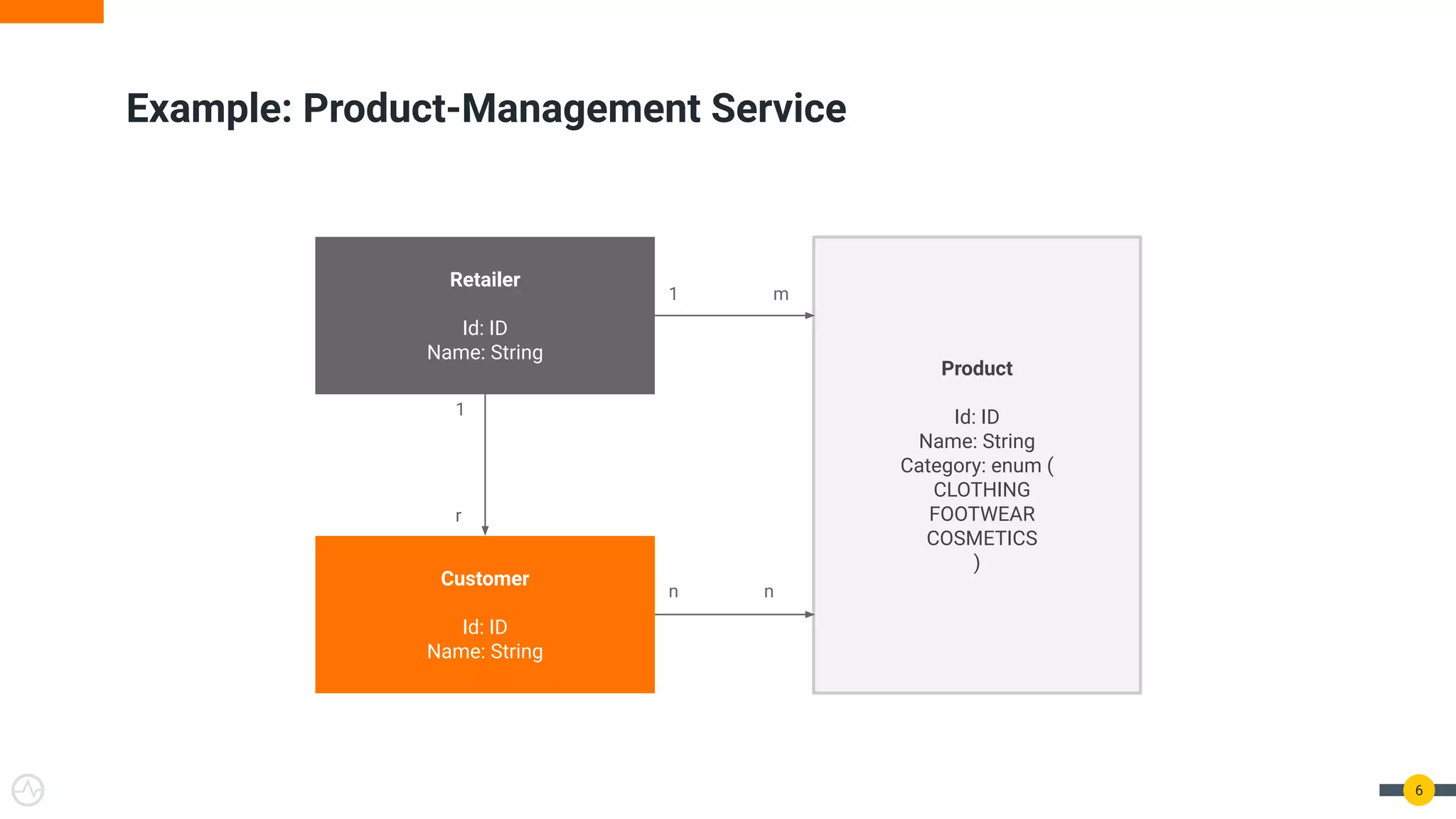
Example: Product-Management Service
6
Retailer
Id: ID
Name: String
Customer
Id: ID
Name: String
Product
Id: ID
Name: String
Category: enum (
CLOTHING
FOOTWEAR
COSMETICS
)
1
r
1 m
n n
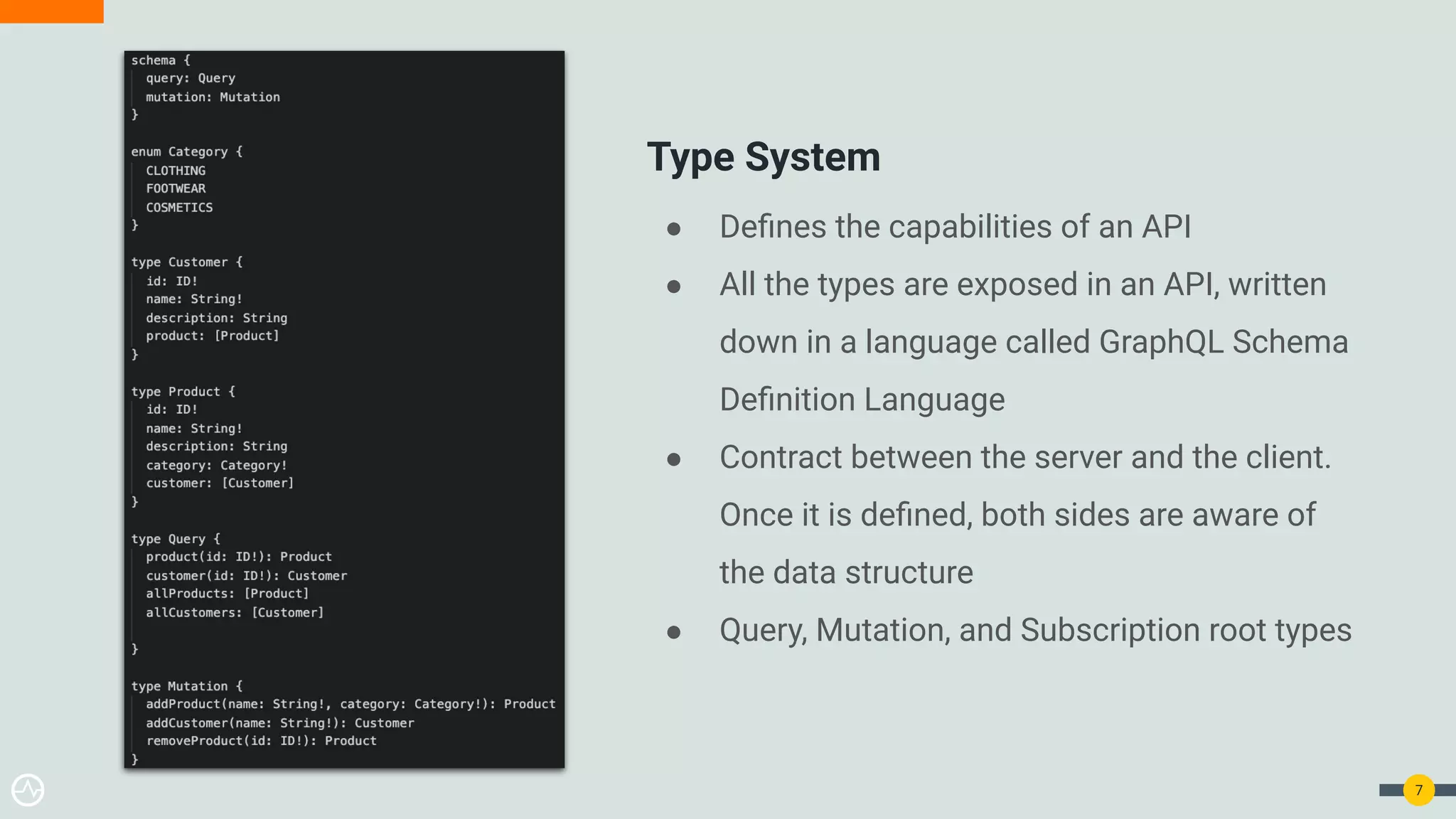
● Defines the capabilities of an API
● All the types are exposed in an API, written
down in a language called GraphQL Schema
Definition Language
● Contract between the server and the client.
Once it is defined, both sides are aware of
the data structure
● Query, Mutation, and Subscription root types
7
Type System
8
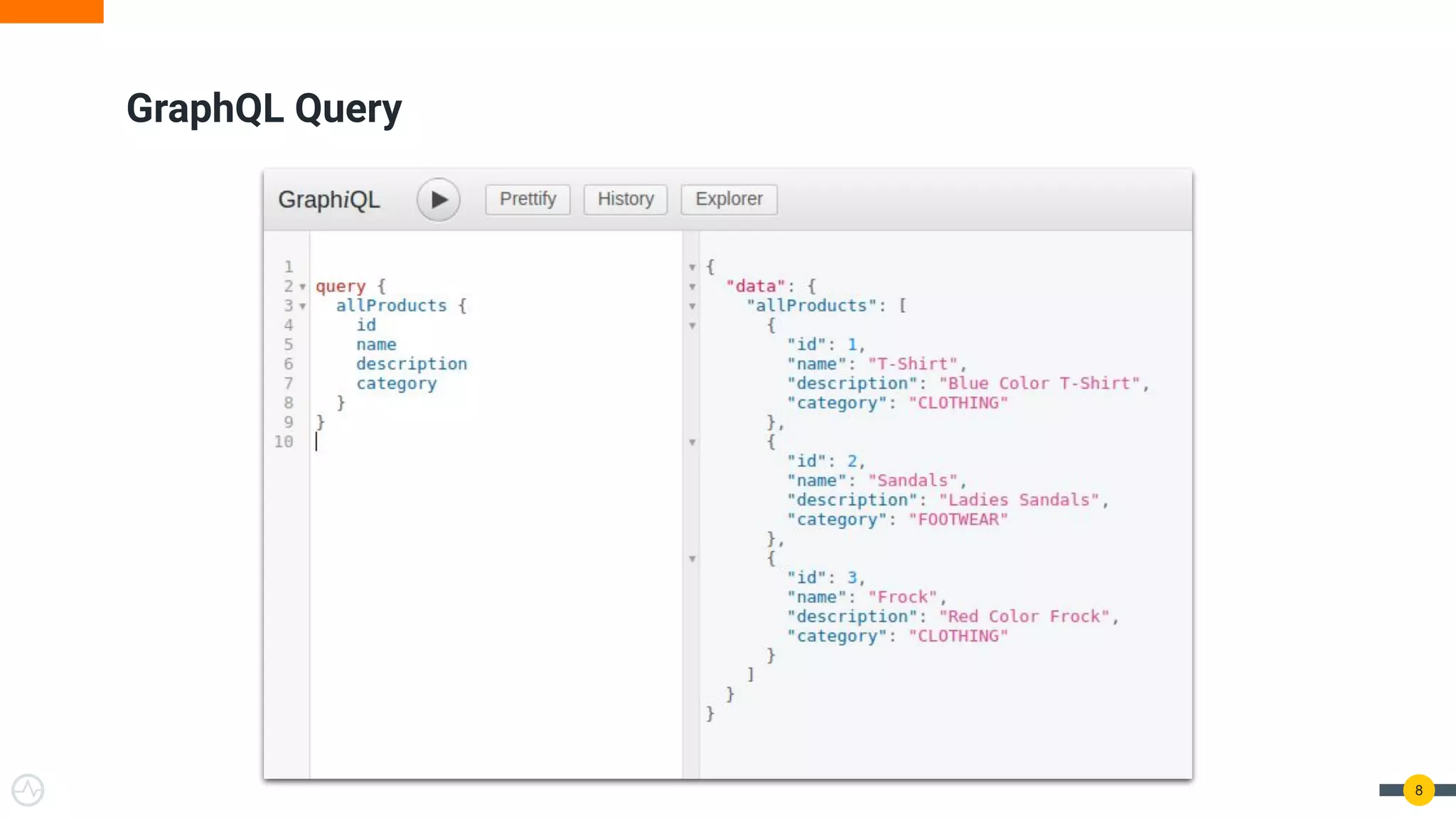
GraphQL Query
9
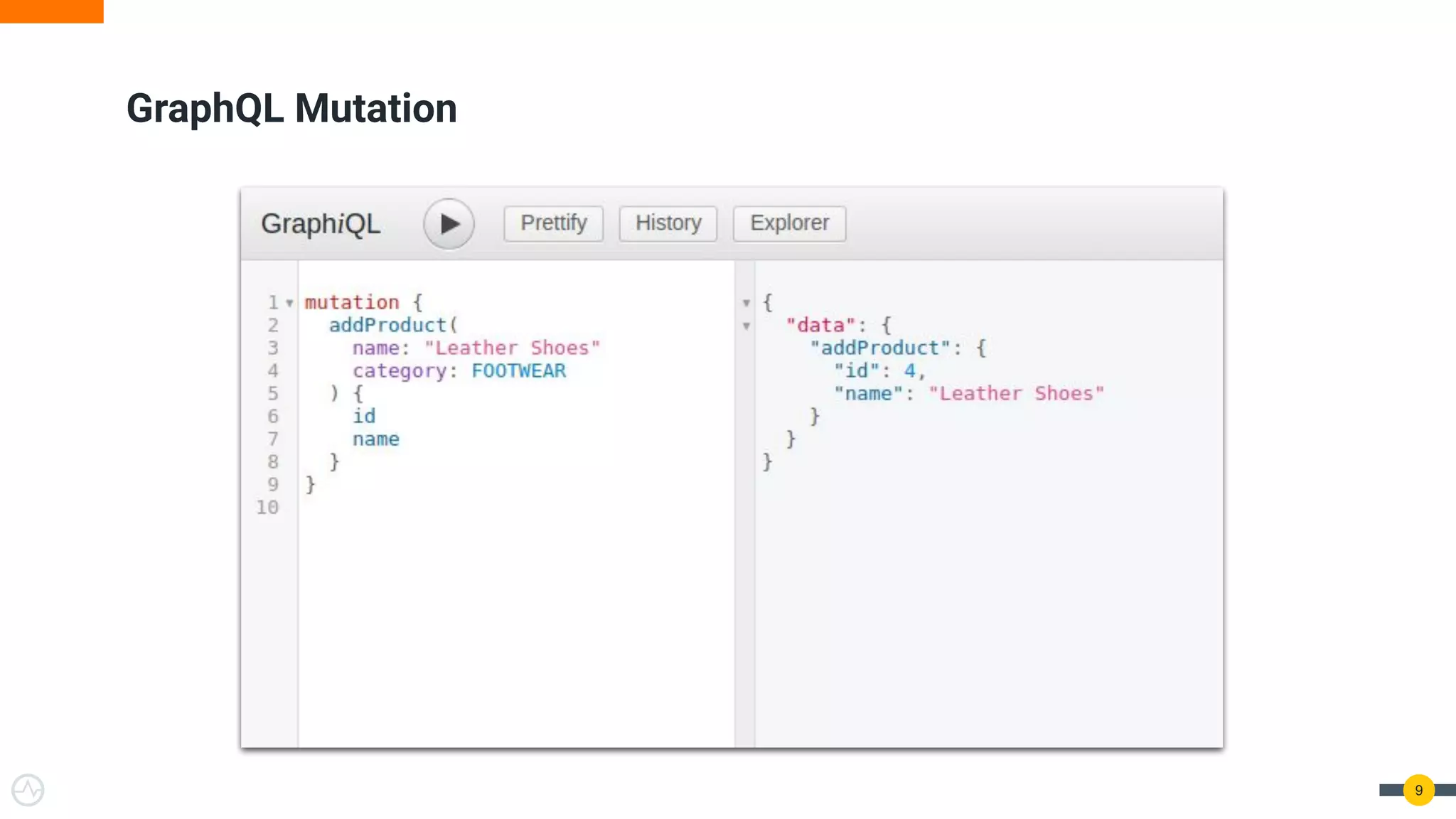
GraphQL Mutation
10
GraphQL Subscription
● GraphQL subscriptions allow you to be notified in real-time of changes to your
data.
● Usually implemented with WebSockets or similar technologies.
● Eg: In the Product-Management service, a retailer will be notified whenever a
new Customer node is created.
REST vs GraphQL
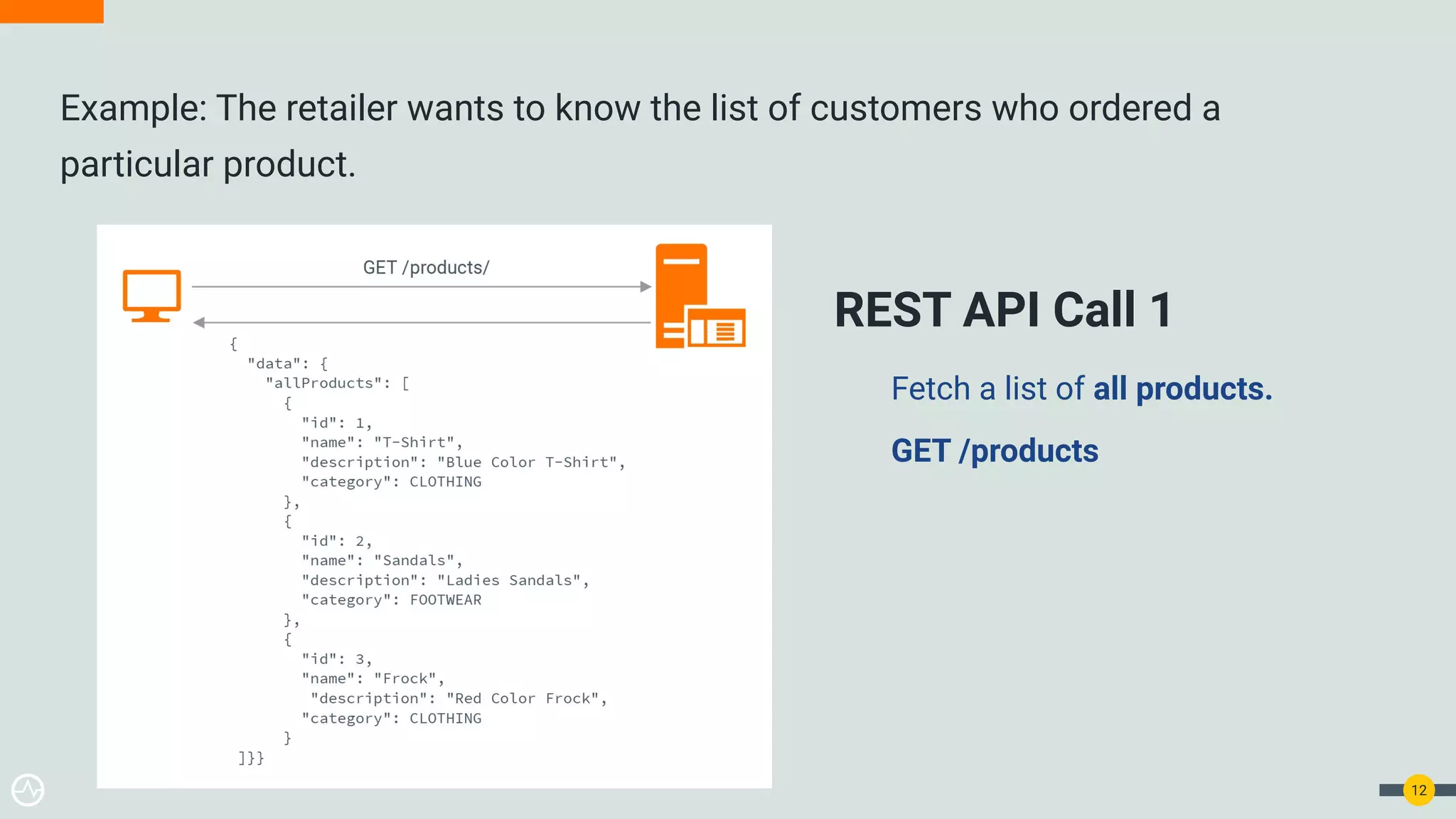
REST API Call 1
Fetch a list of all products.
GET /products
12
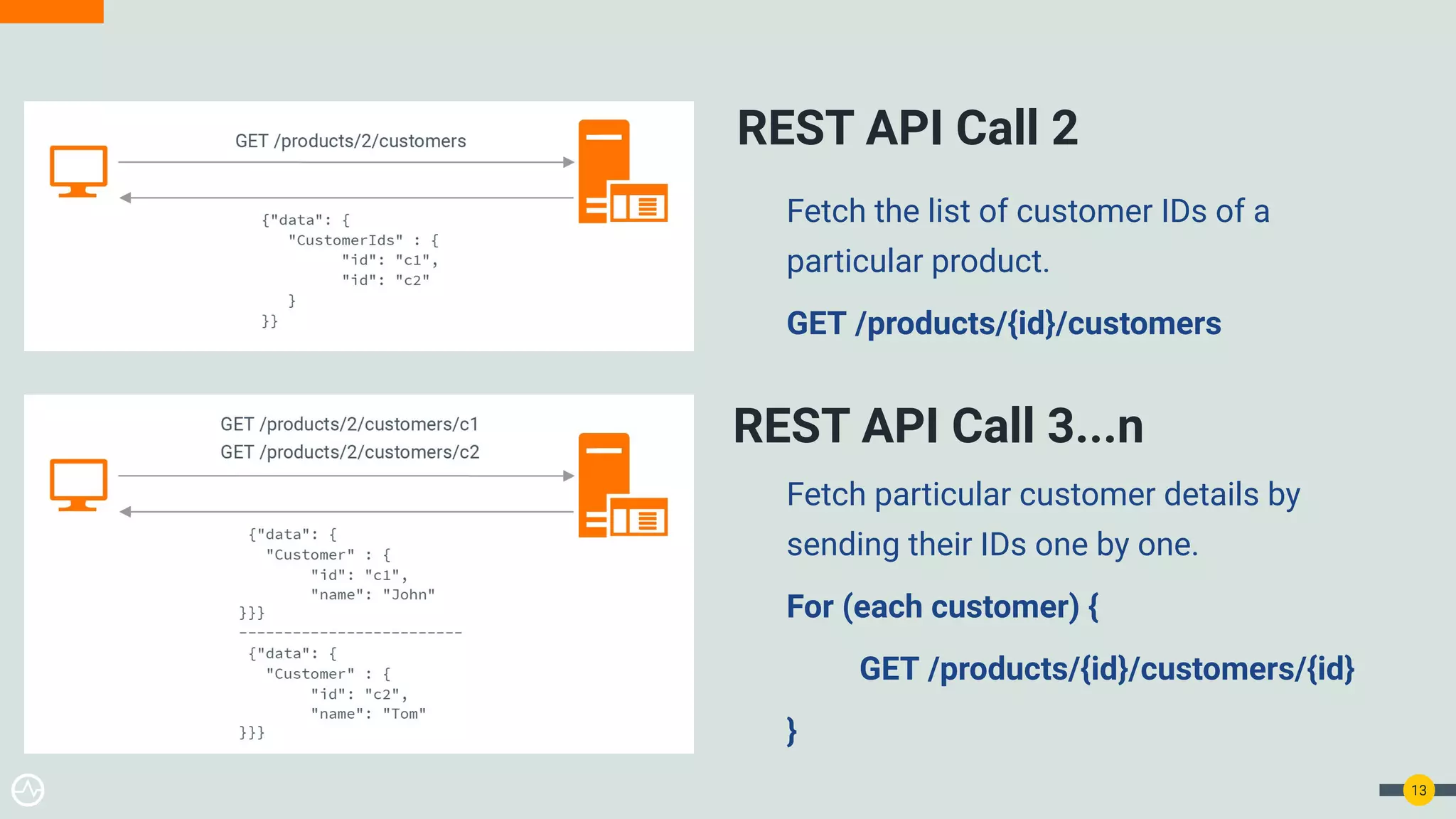
Example: The retailer wants to know the list of customers who ordered a
particular product.
REST API Call 2
Fetch the list of customer IDs of a
particular product.
GET /products/{id}/customers
13
REST API Call 3...n
Fetch particular customer details by
sending their IDs one by one.
For (each customer) {
GET /products/{id}/customers/{id}
}
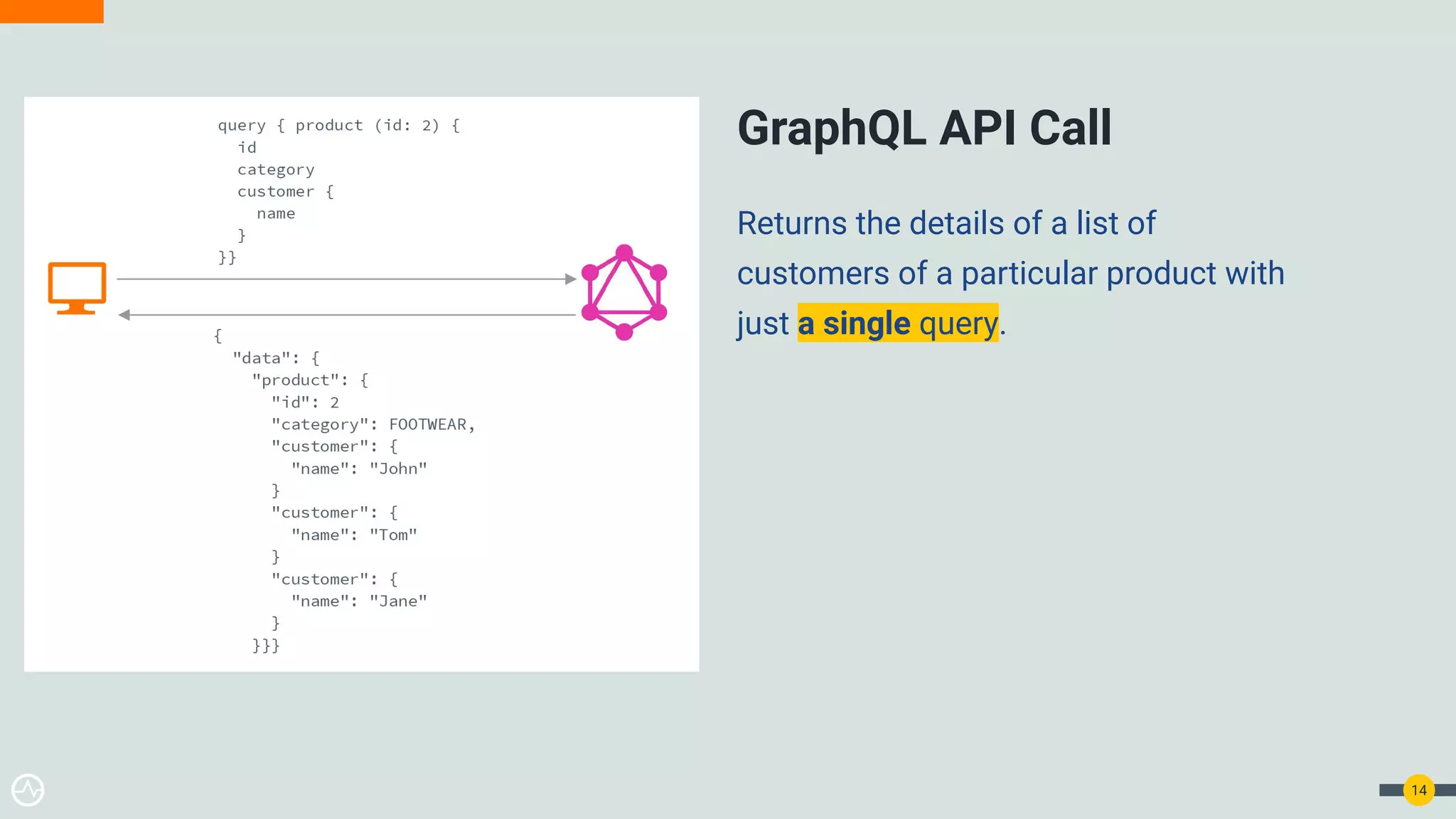
GraphQL API Call
Returns the details of a list of
customers of a particular product with
just a single query.
14
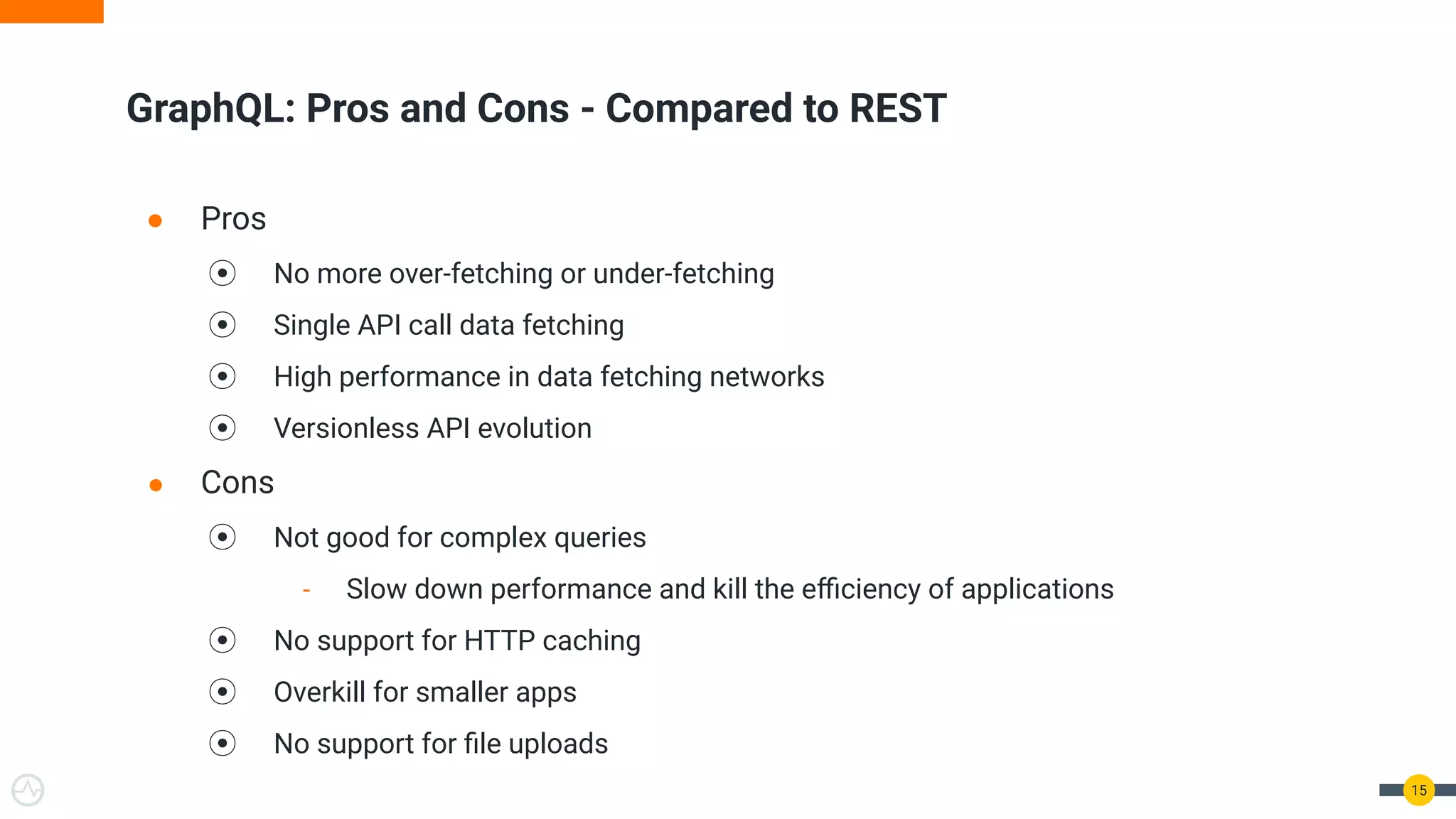
● Pros
⦿ No more over-fetching or under-fetching
⦿ Single API call data fetching
⦿ High performance in data fetching networks
⦿ Versionless API evolution
● Cons
⦿ Not good for complex queries
- Slow down performance and kill the efficiency of applications
⦿ No support for HTTP caching
⦿ Overkill for smaller apps
⦿ No support for file uploads
GraphQL: Pros and Cons - Compared to REST
15
API Management for GraphQL
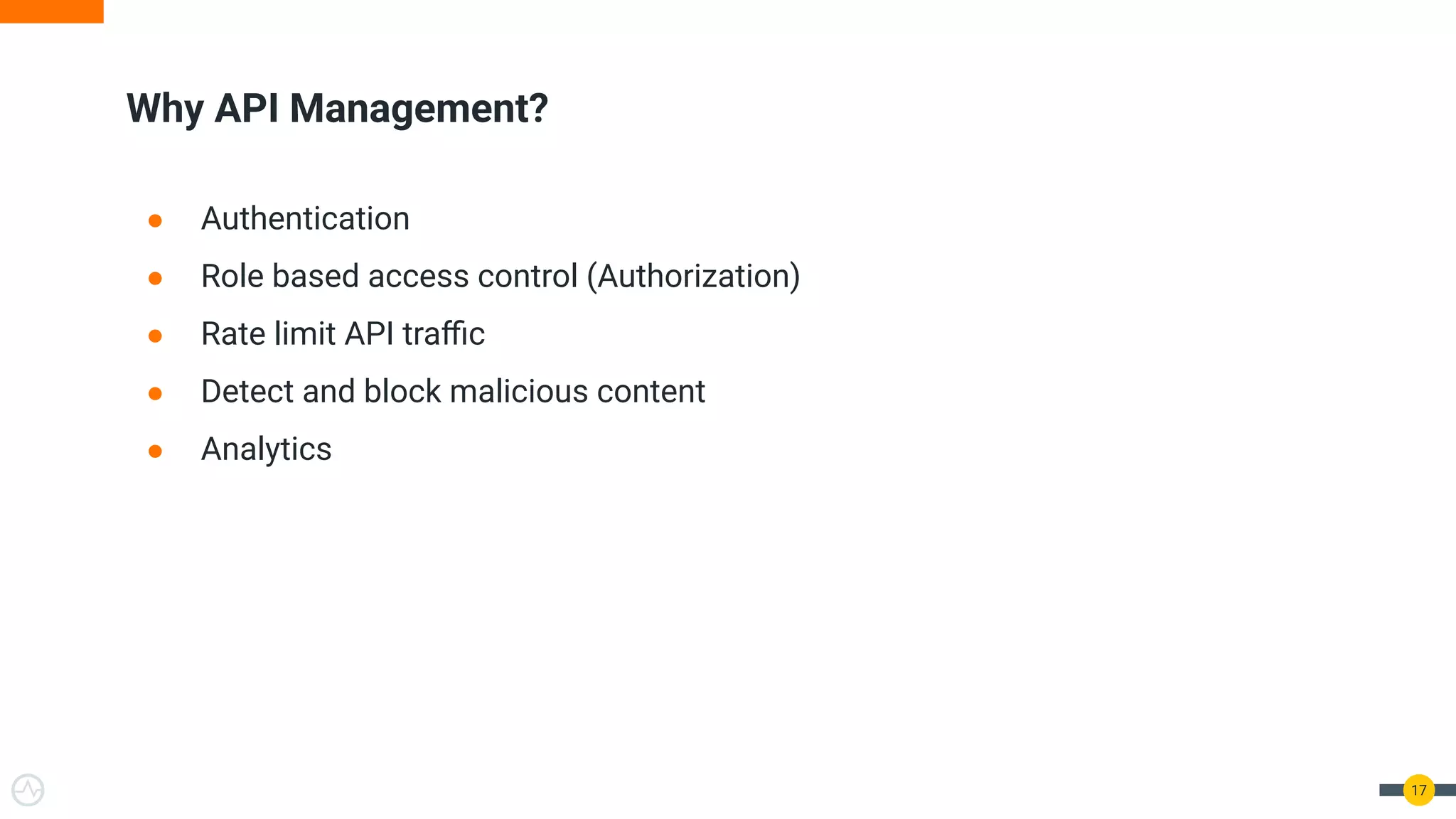
● Authentication
● Role based access control (Authorization)
● Rate limit API traffic
● Detect and block malicious content
● Analytics
Why API Management?
17
Authentication
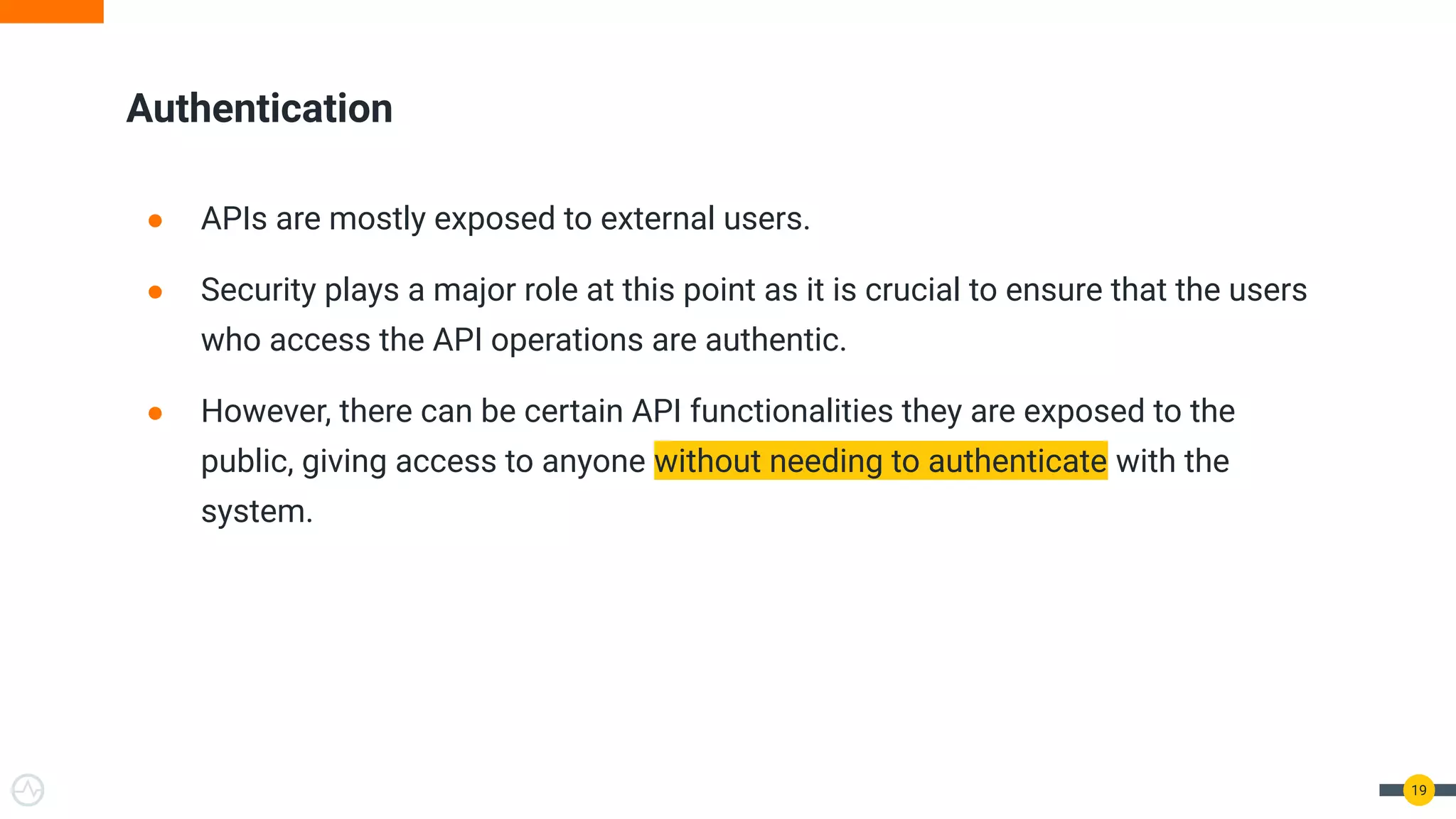
● APIs are mostly exposed to external users.
● Security plays a major role at this point as it is crucial to ensure that the users
who access the API operations are authentic.
● However, there can be certain API functionalities they are exposed to the
public, giving access to anyone without needing to authenticate with the
system.
Authentication
19
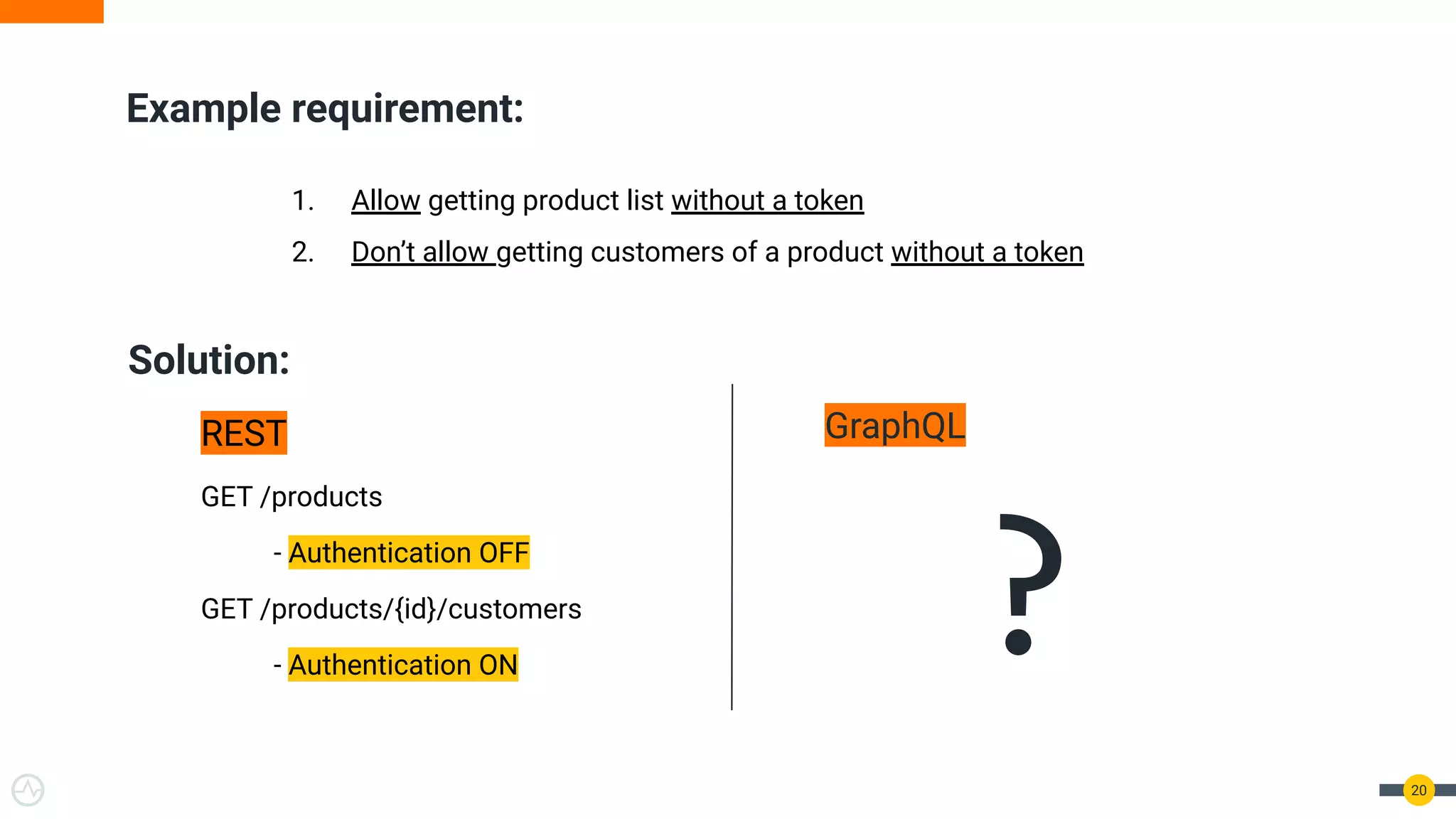
Solution:
REST
GET /products
- Authentication OFF
GET /products/{id}/customers
- Authentication ON
GraphQL
?
20
Example requirement:
1. Allow getting product list without a token
2. Don’t allow getting customers of a product without a token
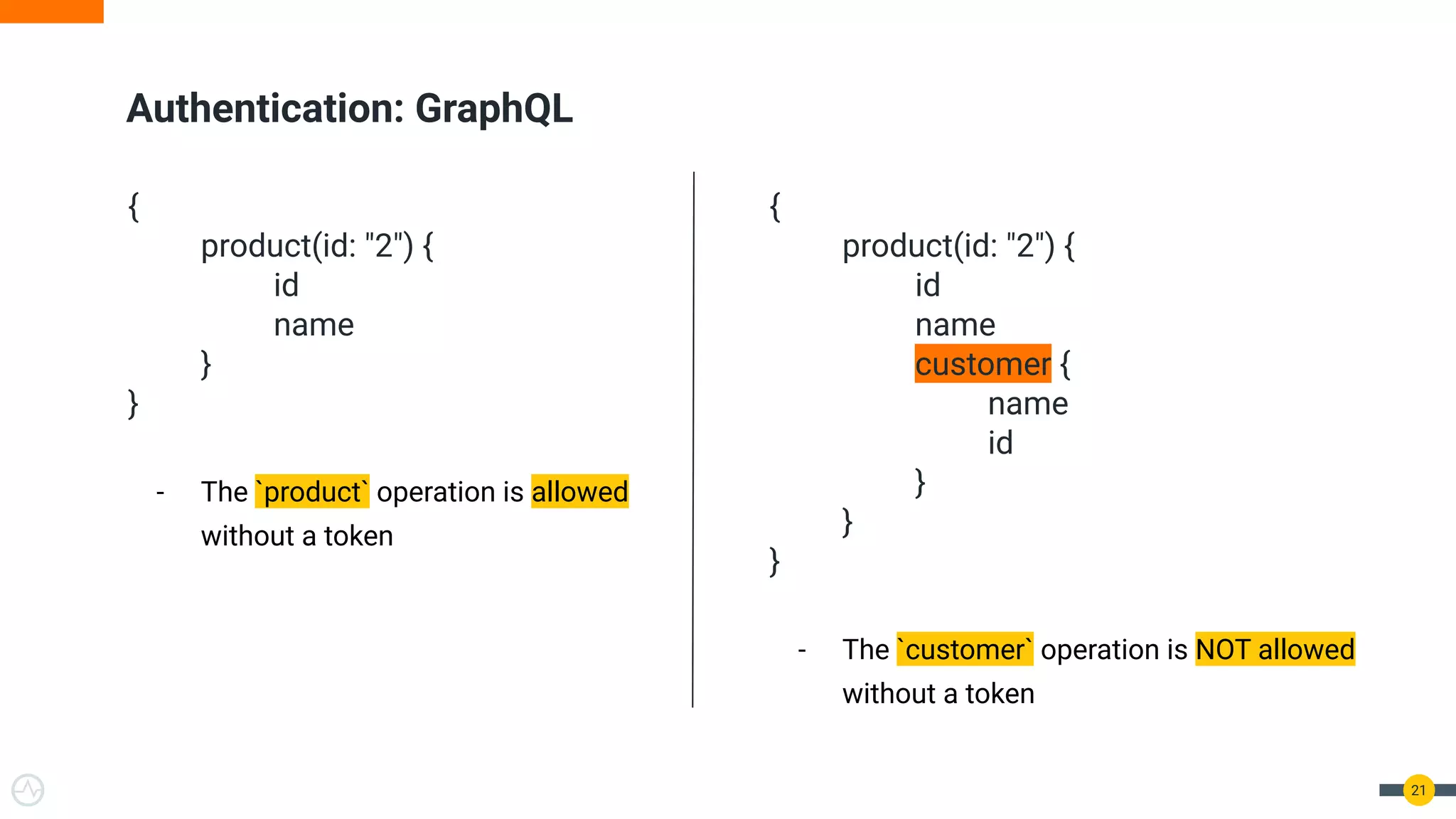
{
product(id: "2") {
id
name
}
}
- The `product` operation is allowed
without a token
Authentication: GraphQL
21
{
product(id: "2") {
id
name
customer {
name
id
}
}
}
- The `customer` operation is NOT allowed
without a token
Authorization
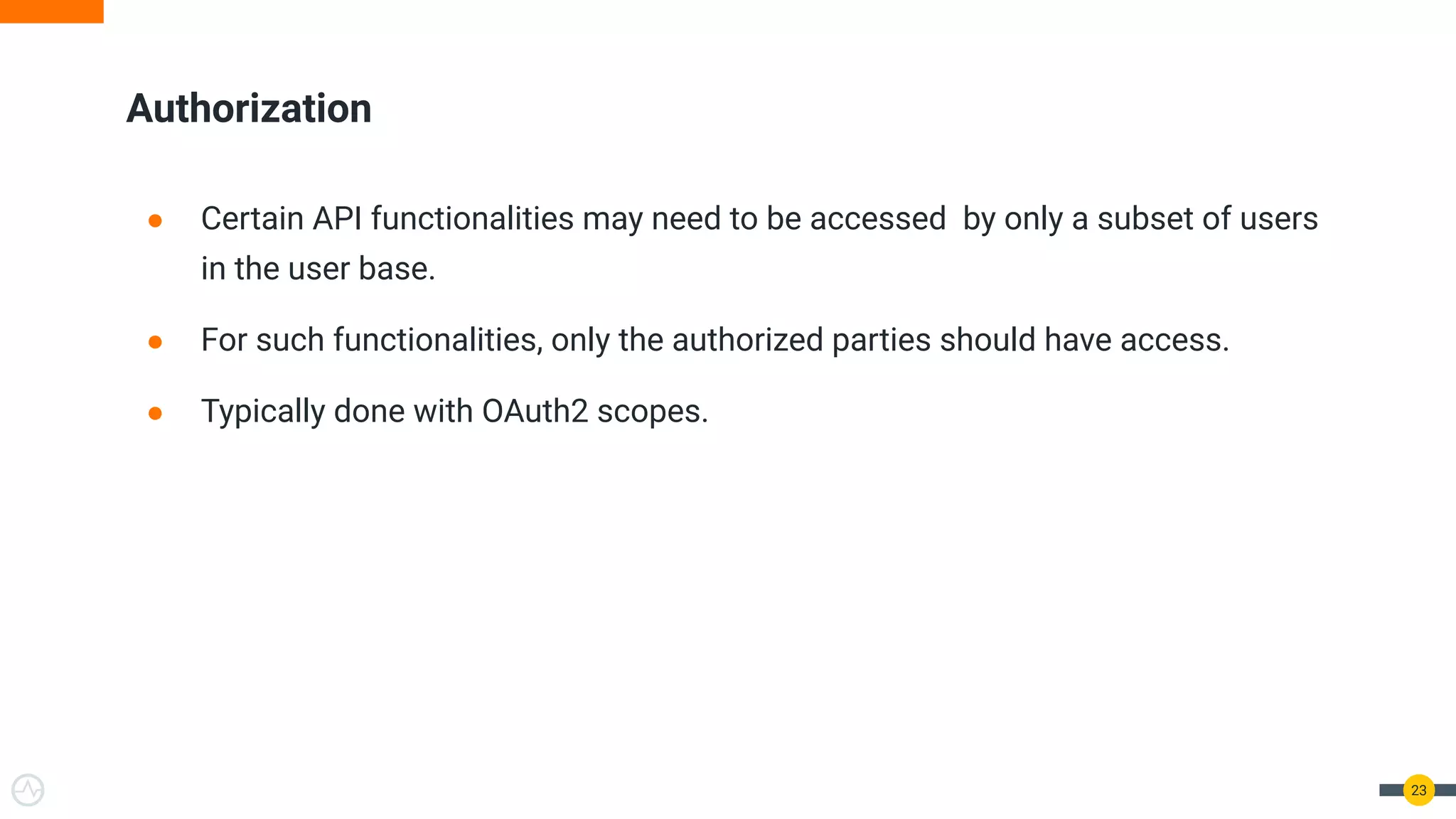
● Certain API functionalities may need to be accessed by only a subset of users
in the user base.
● For such functionalities, only the authorized parties should have access.
● Typically done with OAuth2 scopes.
Authorization
23
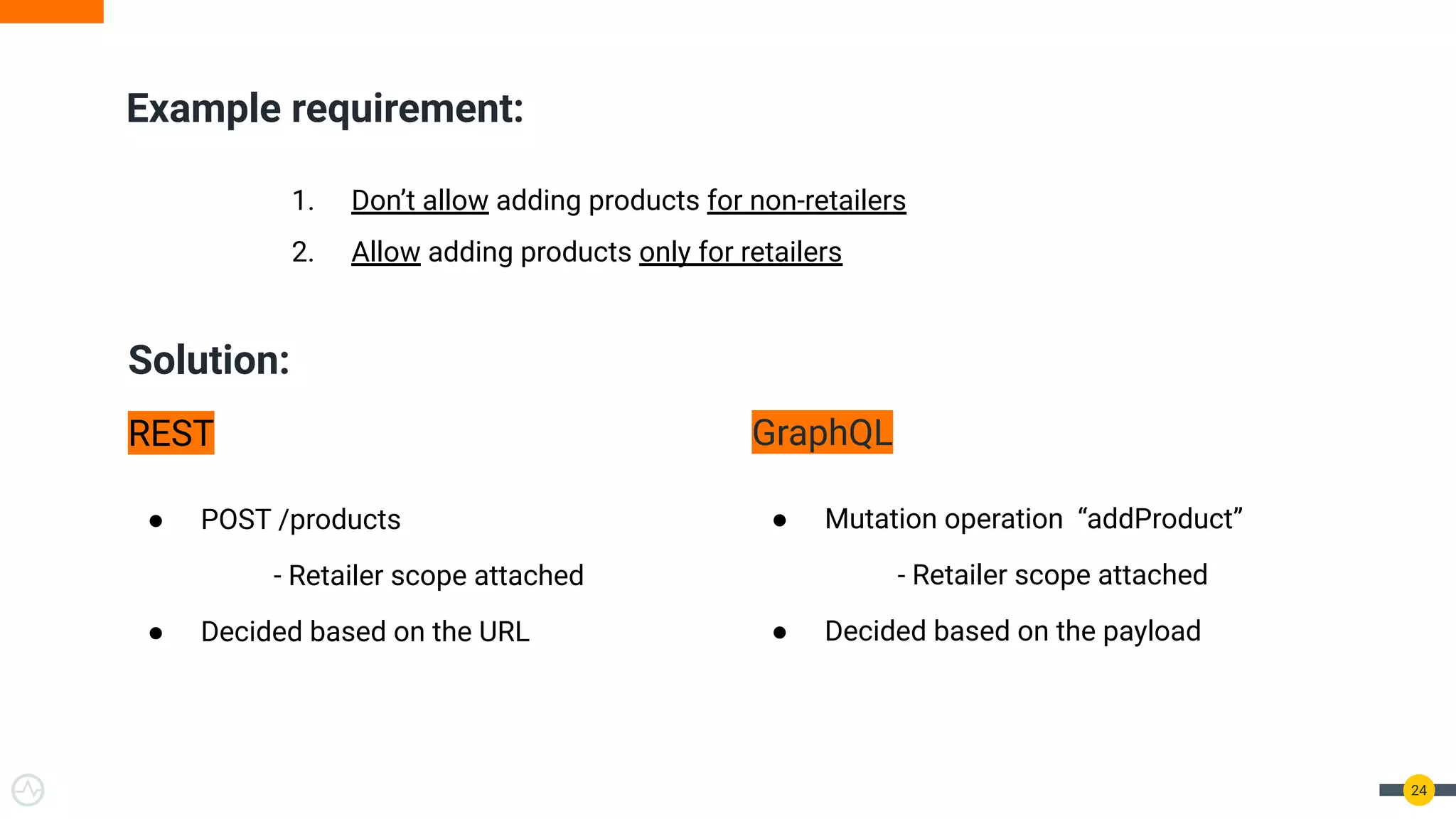
Solution:
REST
● POST /products
- Retailer scope attached
● Decided based on the URL
GraphQL
● Mutation operation “addProduct”
- Retailer scope attached
● Decided based on the payload
24
Example requirement:
1. Don’t allow adding products for non-retailers
2. Allow adding products only for retailers
Rate limiting
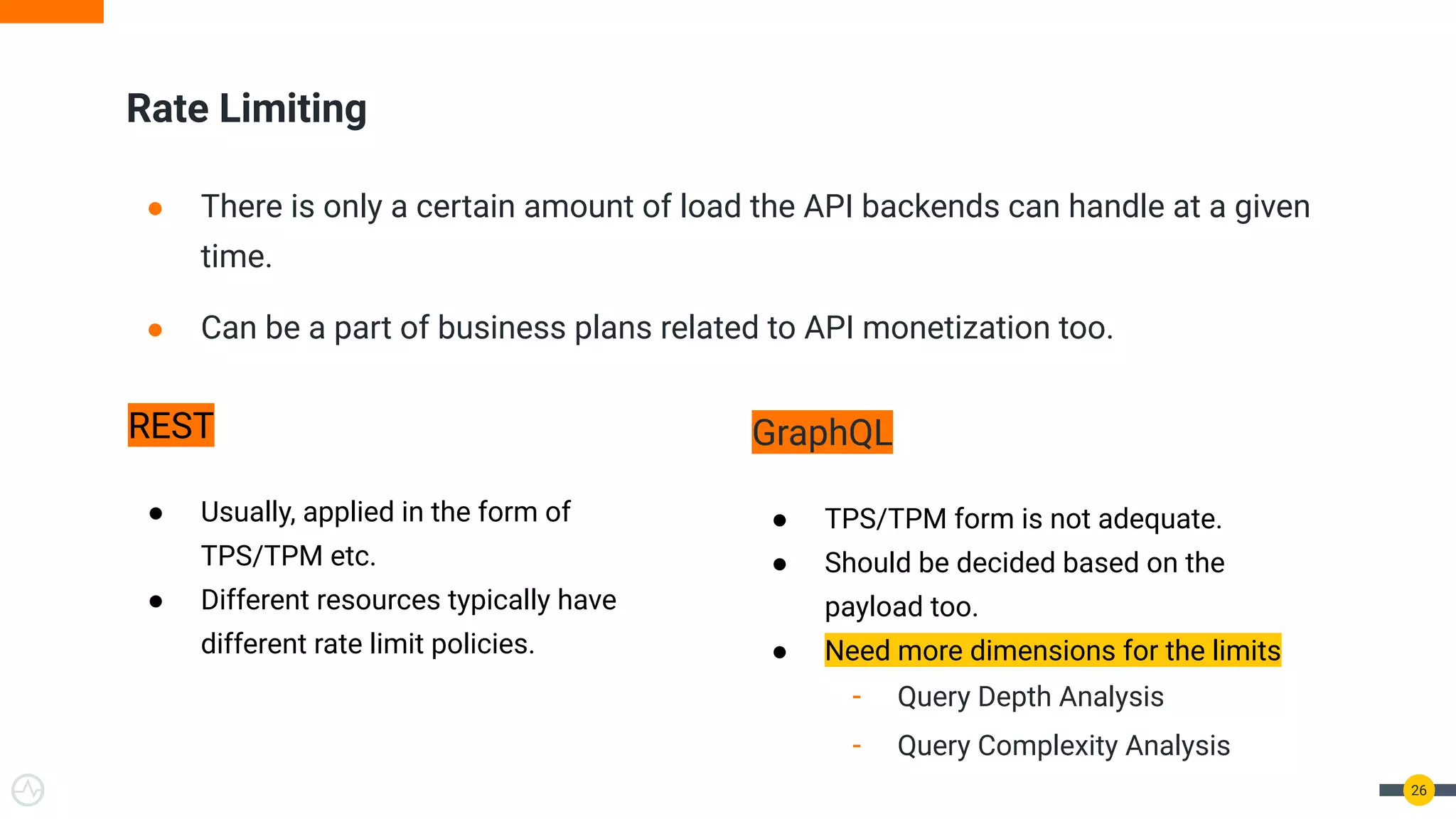
● There is only a certain amount of load the API backends can handle at a given
time.
● Can be a part of business plans related to API monetization too.
Rate Limiting
26
REST
● Usually, applied in the form of
TPS/TPM etc.
● Different resources typically have
different rate limit policies.
GraphQL
● TPS/TPM form is not adequate.
● Should be decided based on the
payload too.
● Need more dimensions for the limits
- Query Depth Analysis
- Query Complexity Analysis
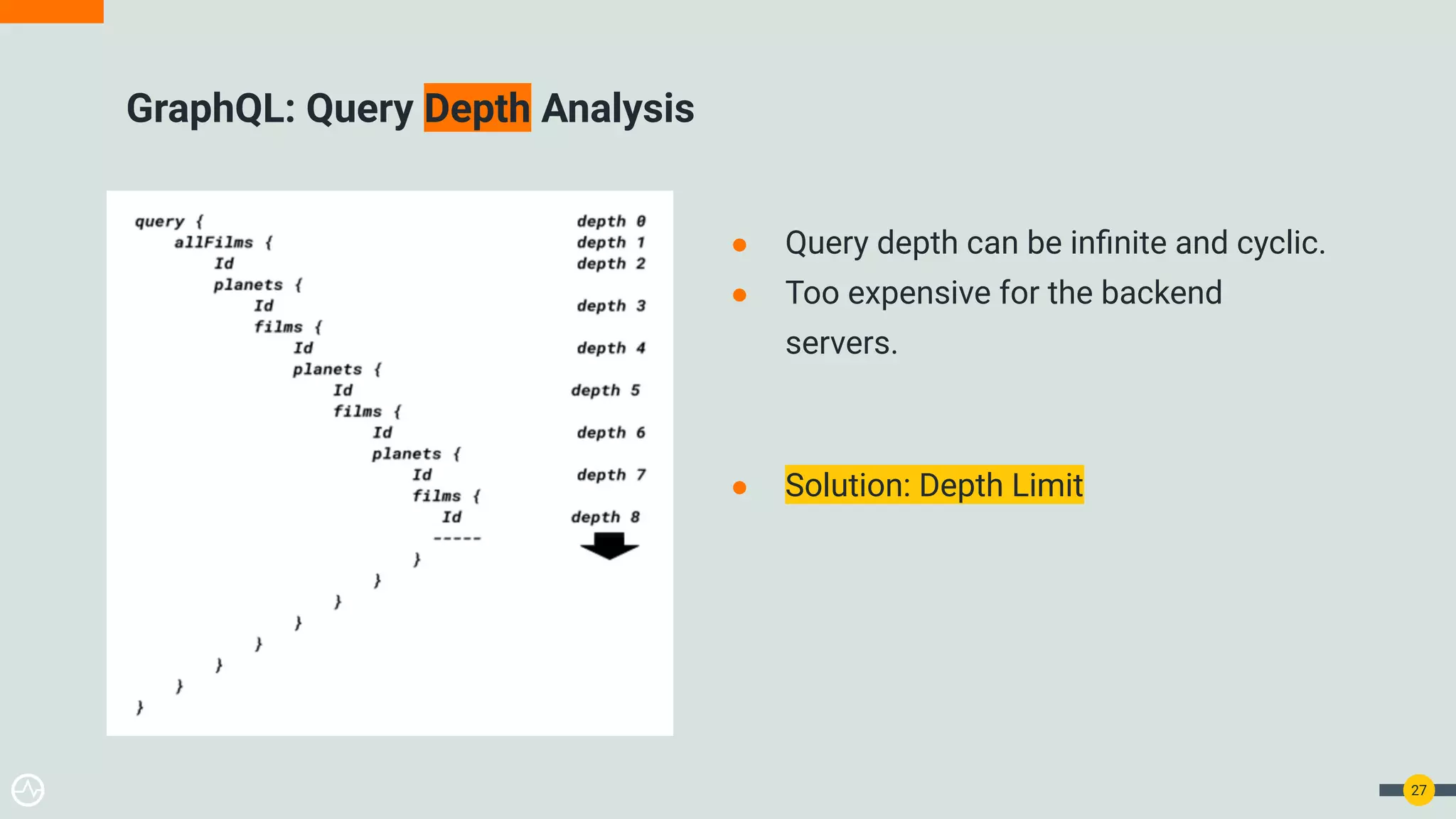
● Query depth can be infinite and cyclic.
● Too expensive for the backend
servers.
● Solution: Depth Limit
GraphQL: Query Depth Analysis
27
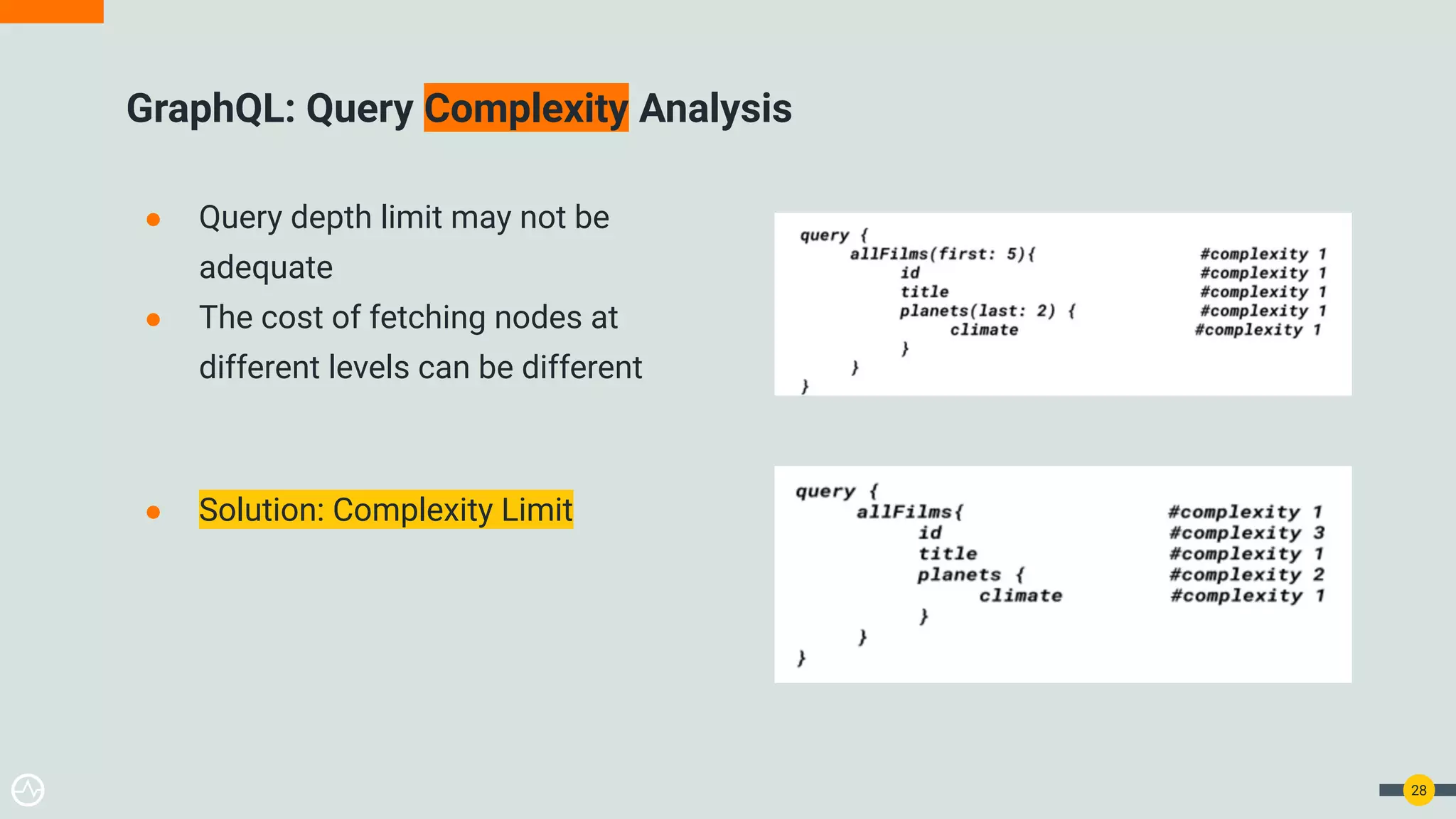
● Query depth limit may not be
adequate
● The cost of fetching nodes at
different levels can be different
● Solution: Complexity Limit
GraphQL: Query Complexity Analysis
28
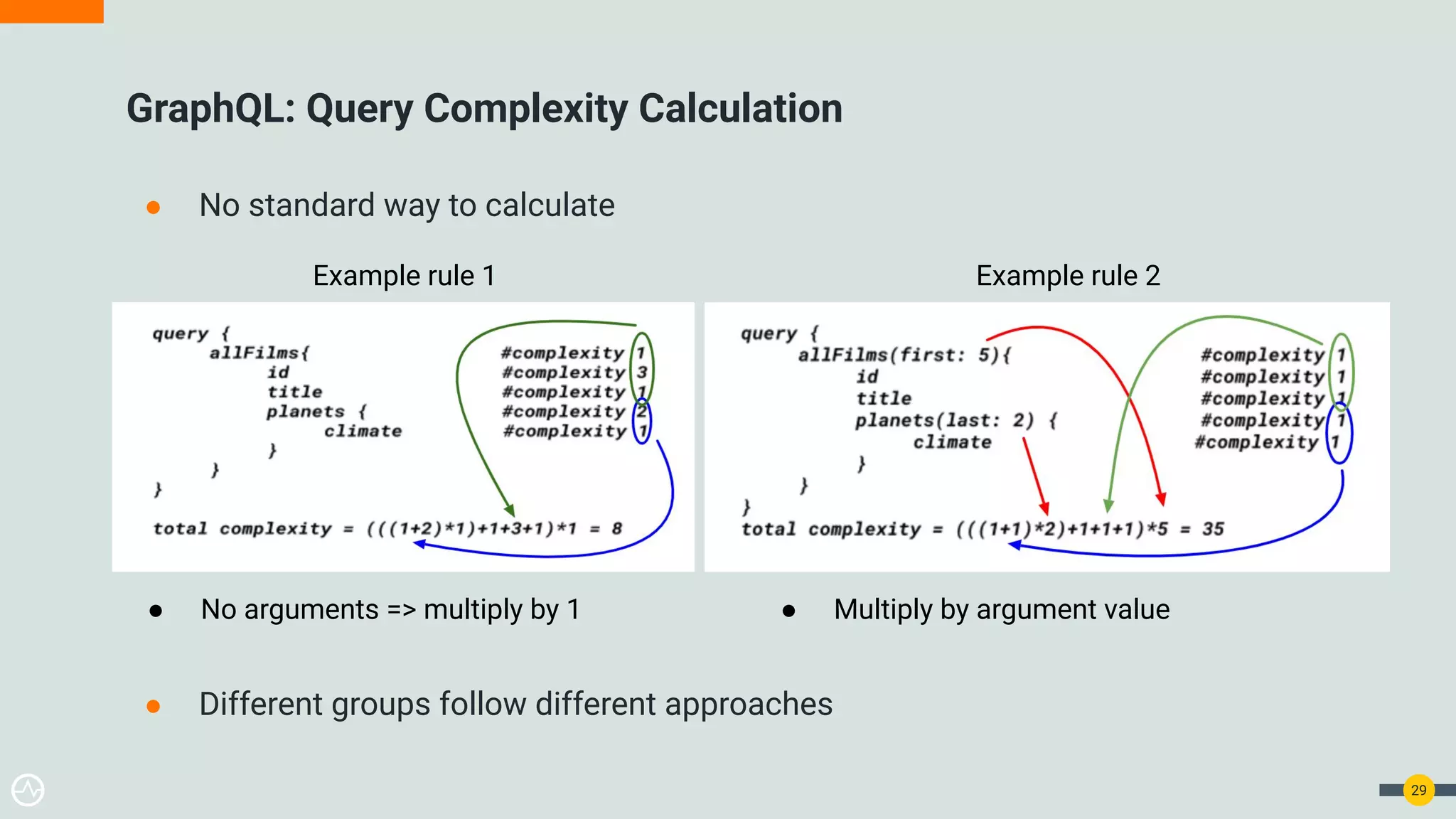
● No standard way to calculate
● Different groups follow different approaches
GraphQL: Query Complexity Calculation
29
Example rule 1
● No arguments => multiply by 1
Example rule 2
● Multiply by argument value
Analytics
● Helps you understand how your APIs are being used.
● Business analytics and operational analytics
● REST APIs Analytics at resource level
● GraphQL Analytics at operation level
Analytics
31
Demo
Question Time!
33
wso2.com
Thanks!

API Management for GraphQL

  • 1.
    A practical guideto API Management for GraphQL June 30, 2020
  • 2.
    Hello! Bhathiya Jayasekara Senior TechnicalLead, WSO2 bhathiya@wso2.com
  • 3.
    ● Introduction toGraphQL ● REST vs GraphQL ● Exposing GraphQL services as Managed APIs ⦿ Authentication ⦿ Authorization ⦿ Rate-Limiting ⦿ Analytics ● API Management for GraphQL demo What’s covered? 3
  • 4.
  • 5.
    ● A querylanguage for your APIs. ● Gives what you request, nothing more and nothing less. ● Ability to make API calls more efficient, flexible, and developer-friendly. ● GraphQL specification is an SDL (Schema Definition Language). ● Created by Facebook in 2012 and released for open-source in 2015. ● Served over HTTP via a single endpoint. ● Specification - https://spec.graphql.org/June2018/ ● Reference Implementation - https://github.com/graphql/graphql-js ● Implementations in many languages - https://graphql.org/code/ GraphQL 5
  • 6.
    Example: Product-Management Service 6 Retailer Id:ID Name: String Customer Id: ID Name: String Product Id: ID Name: String Category: enum ( CLOTHING FOOTWEAR COSMETICS ) 1 r 1 m n n
  • 7.
    ● Defines thecapabilities of an API ● All the types are exposed in an API, written down in a language called GraphQL Schema Definition Language ● Contract between the server and the client. Once it is defined, both sides are aware of the data structure ● Query, Mutation, and Subscription root types 7 Type System
  • 8.
  • 9.
  • 10.
    10 GraphQL Subscription ● GraphQLsubscriptions allow you to be notified in real-time of changes to your data. ● Usually implemented with WebSockets or similar technologies. ● Eg: In the Product-Management service, a retailer will be notified whenever a new Customer node is created.
  • 11.
  • 12.
    REST API Call1 Fetch a list of all products. GET /products 12 Example: The retailer wants to know the list of customers who ordered a particular product.
  • 13.
    REST API Call2 Fetch the list of customer IDs of a particular product. GET /products/{id}/customers 13 REST API Call 3...n Fetch particular customer details by sending their IDs one by one. For (each customer) { GET /products/{id}/customers/{id} }
  • 14.
    GraphQL API Call Returnsthe details of a list of customers of a particular product with just a single query. 14
  • 15.
    ● Pros ⦿ Nomore over-fetching or under-fetching ⦿ Single API call data fetching ⦿ High performance in data fetching networks ⦿ Versionless API evolution ● Cons ⦿ Not good for complex queries - Slow down performance and kill the efficiency of applications ⦿ No support for HTTP caching ⦿ Overkill for smaller apps ⦿ No support for file uploads GraphQL: Pros and Cons - Compared to REST 15
  • 16.
  • 17.
    ● Authentication ● Rolebased access control (Authorization) ● Rate limit API traffic ● Detect and block malicious content ● Analytics Why API Management? 17
  • 18.
  • 19.
    ● APIs aremostly exposed to external users. ● Security plays a major role at this point as it is crucial to ensure that the users who access the API operations are authentic. ● However, there can be certain API functionalities they are exposed to the public, giving access to anyone without needing to authenticate with the system. Authentication 19
  • 20.
    Solution: REST GET /products - AuthenticationOFF GET /products/{id}/customers - Authentication ON GraphQL ? 20 Example requirement: 1. Allow getting product list without a token 2. Don’t allow getting customers of a product without a token
  • 21.
    { product(id: "2") { id name } } -The `product` operation is allowed without a token Authentication: GraphQL 21 { product(id: "2") { id name customer { name id } } } - The `customer` operation is NOT allowed without a token
  • 22.
  • 23.
    ● Certain APIfunctionalities may need to be accessed by only a subset of users in the user base. ● For such functionalities, only the authorized parties should have access. ● Typically done with OAuth2 scopes. Authorization 23
  • 24.
    Solution: REST ● POST /products -Retailer scope attached ● Decided based on the URL GraphQL ● Mutation operation “addProduct” - Retailer scope attached ● Decided based on the payload 24 Example requirement: 1. Don’t allow adding products for non-retailers 2. Allow adding products only for retailers
  • 25.
  • 26.
    ● There isonly a certain amount of load the API backends can handle at a given time. ● Can be a part of business plans related to API monetization too. Rate Limiting 26 REST ● Usually, applied in the form of TPS/TPM etc. ● Different resources typically have different rate limit policies. GraphQL ● TPS/TPM form is not adequate. ● Should be decided based on the payload too. ● Need more dimensions for the limits - Query Depth Analysis - Query Complexity Analysis
  • 27.
    ● Query depthcan be infinite and cyclic. ● Too expensive for the backend servers. ● Solution: Depth Limit GraphQL: Query Depth Analysis 27
  • 28.
    ● Query depthlimit may not be adequate ● The cost of fetching nodes at different levels can be different ● Solution: Complexity Limit GraphQL: Query Complexity Analysis 28
  • 29.
    ● No standardway to calculate ● Different groups follow different approaches GraphQL: Query Complexity Calculation 29 Example rule 1 ● No arguments => multiply by 1 Example rule 2 ● Multiply by argument value
  • 30.
  • 31.
    ● Helps youunderstand how your APIs are being used. ● Business analytics and operational analytics ● REST APIs Analytics at resource level ● GraphQL Analytics at operation level Analytics 31
  • 32.
  • 33.
  • 34.