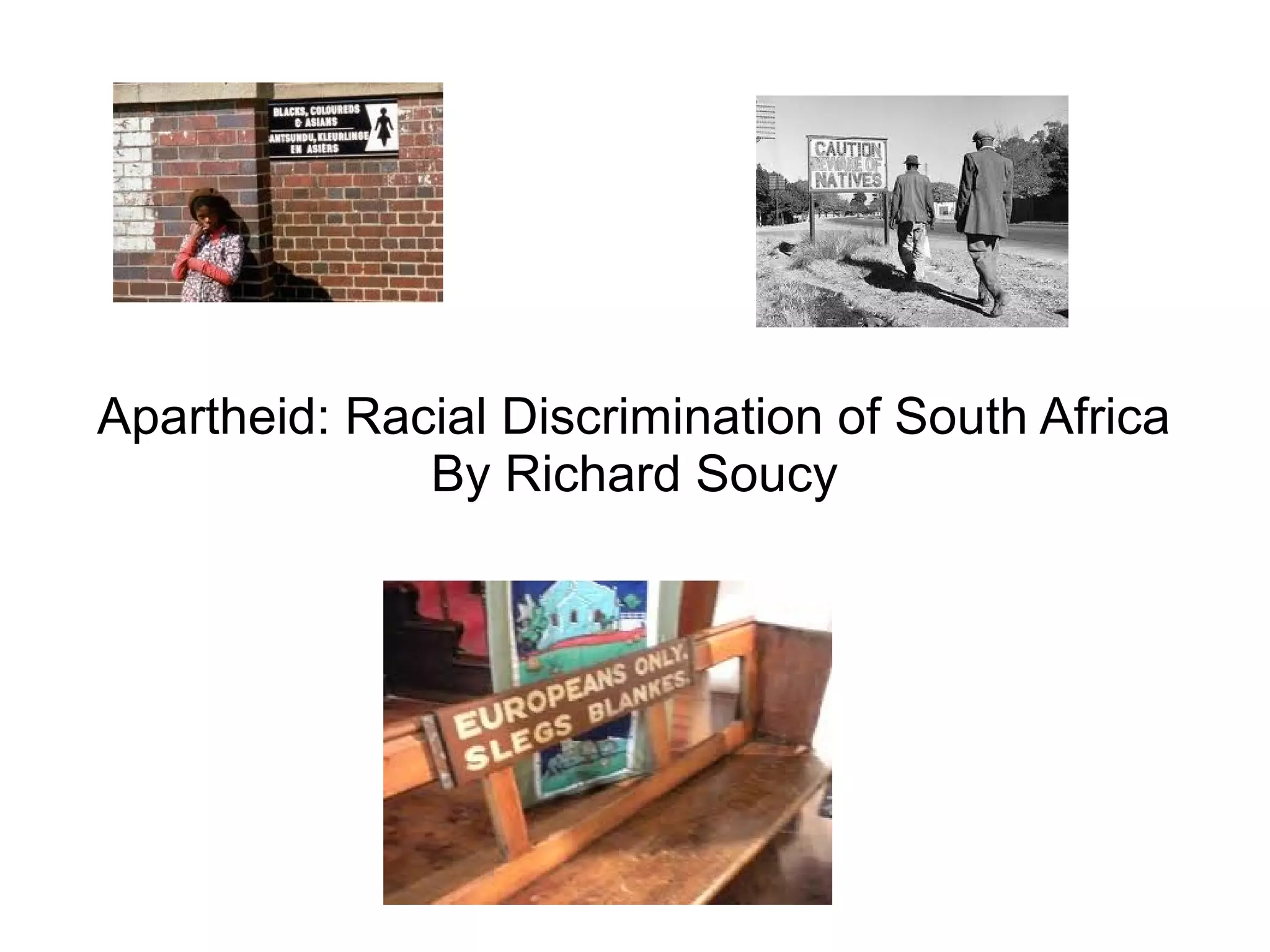
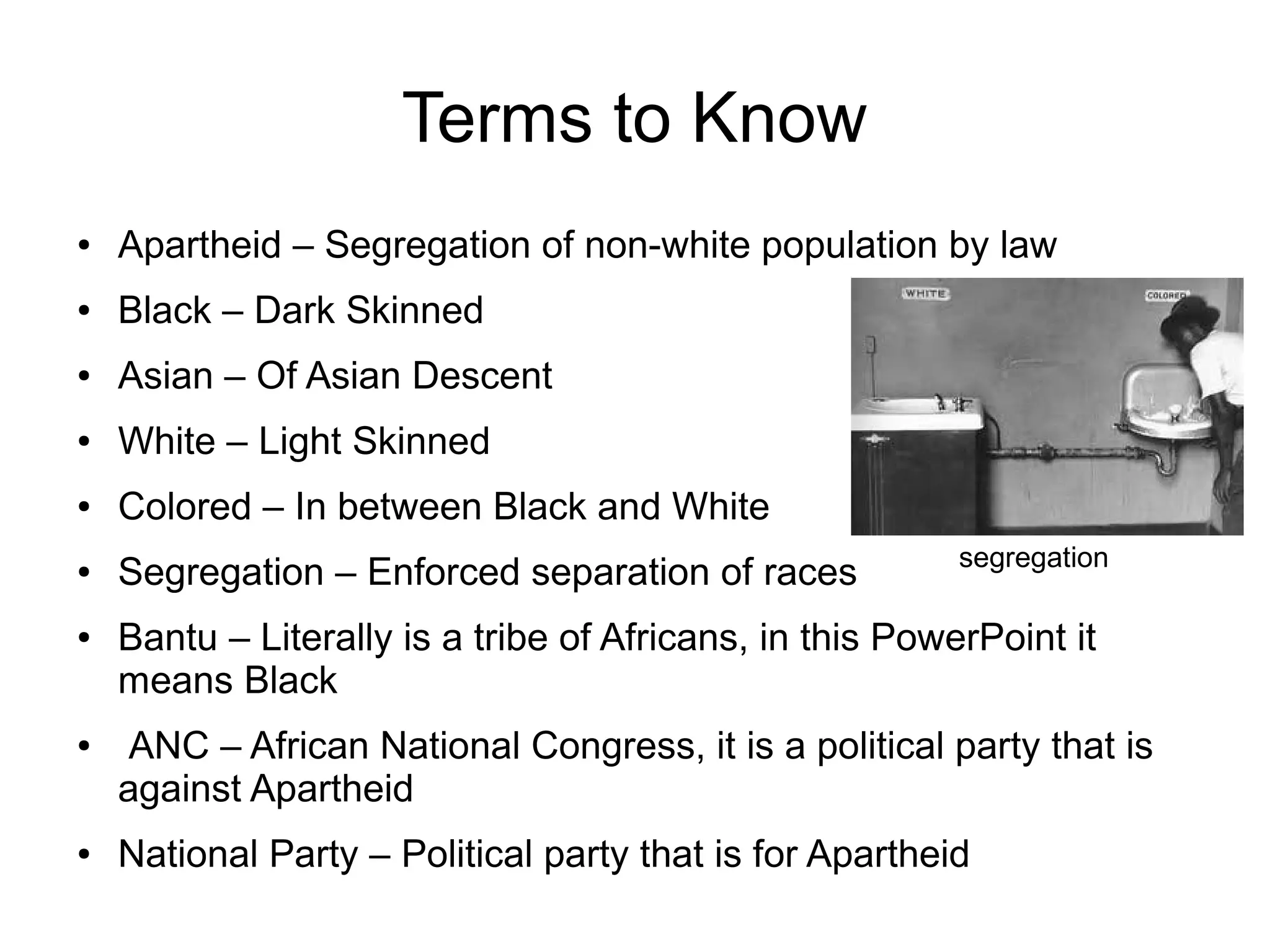
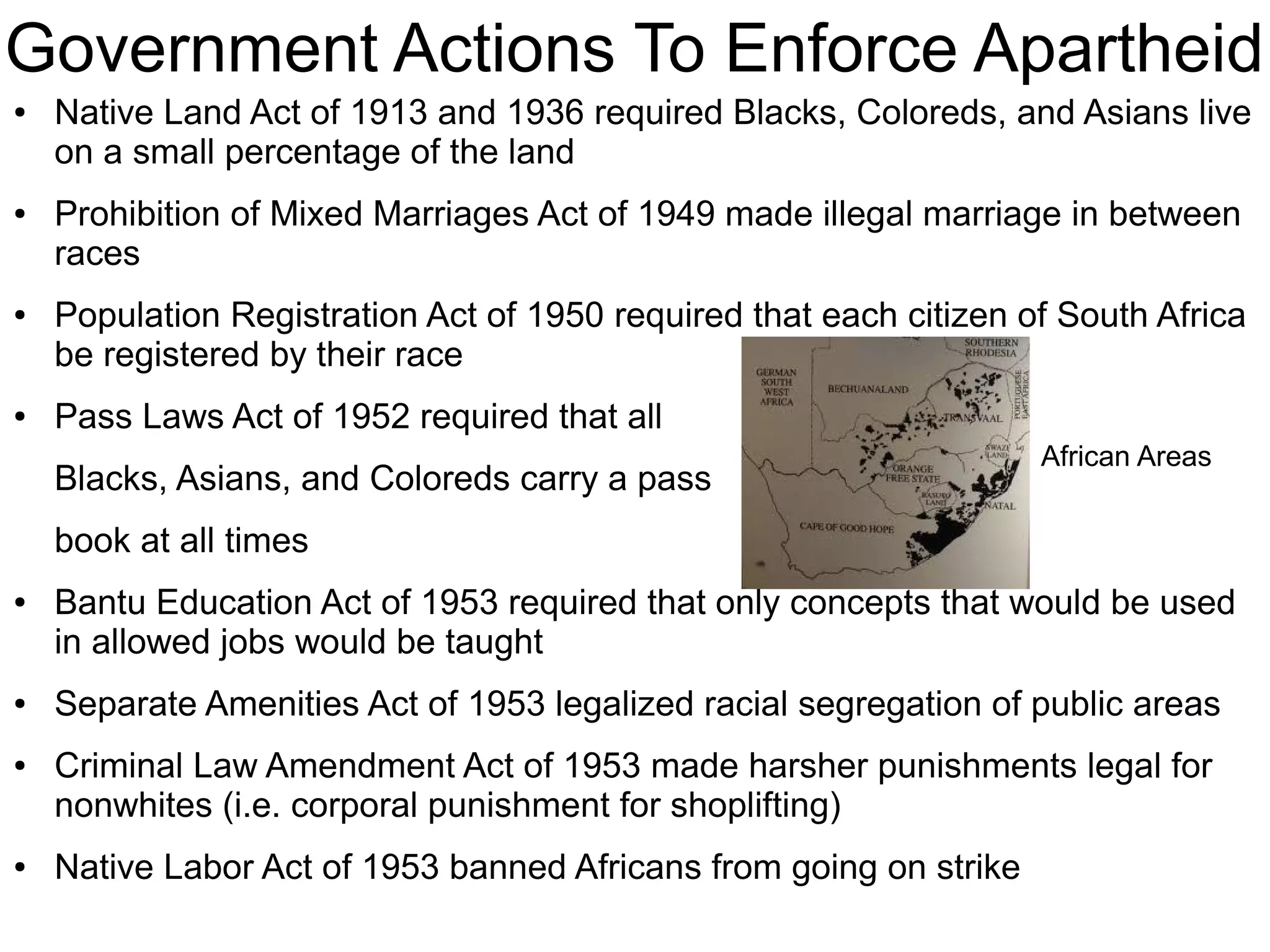
Apartheid: Racial Discrimination of South Africa
              By Richard Soucy
Terms to Know
●   Apartheid – Segregation of non-white population by law
●   Black – Dark Skinned
●   Asian – Of Asian Descent
●   White – Light Skinned
●   Colored – In between Black and White
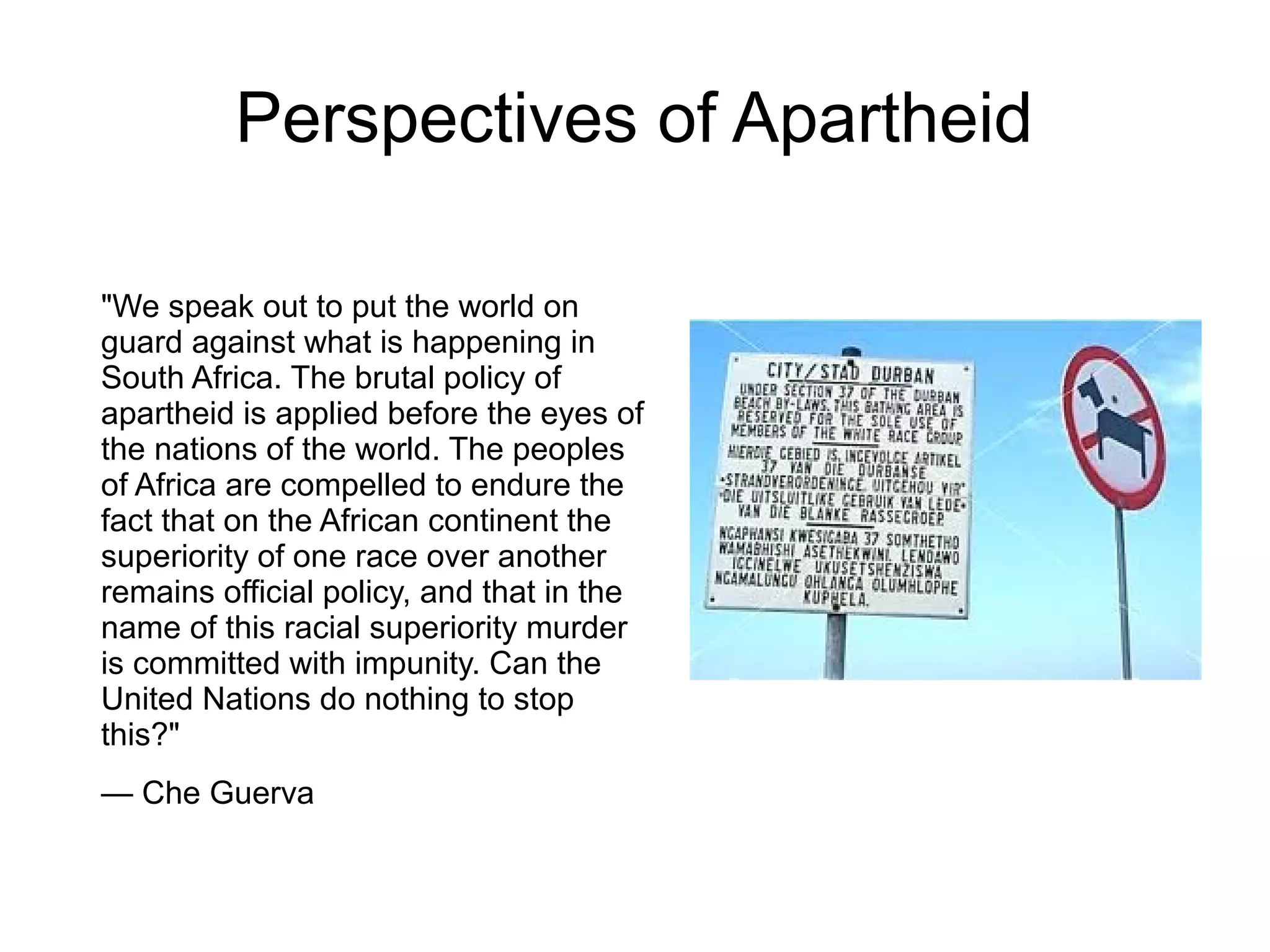
                                                          segregation
●   Segregation – Enforced separation of races
●   Bantu – Literally is a tribe of Africans, in this PowerPoint it
    means Black
●    ANC – African National Congress, it is a political party that is
    against Apartheid
●   National Party – Political party that is for Apartheid
Government Actions To Enforce Apartheid
●   Native Land Act of 1913 and 1936 required Blacks, Coloreds, and Asians live
    on a small percentage of the land
●   Prohibition of Mixed Marriages Act of 1949 made illegal marriage in between
    races
●   Population Registration Act of 1950 required that each citizen of South Africa
    be registered by their race
●   Pass Laws Act of 1952 required that all
                                                                    African Areas
    Blacks, Asians, and Coloreds carry a pass
    book at all times
●   Bantu Education Act of 1953 required that only concepts that would be used
    in allowed jobs would be taught
●   Separate Amenities Act of 1953 legalized racial segregation of public areas
●   Criminal Law Amendment Act of 1953 made harsher punishments legal for
    nonwhites (i.e. corporal punishment for shoplifting)
●   Native Labor Act of 1953 banned Africans from going on strike
Perspectives of Apartheid

"We speak out to put the world on
guard against what is happening in
South Africa. The brutal policy of
apartheid is applied before the eyes of
the nations of the world. The peoples
of Africa are compelled to endure the
fact that on the African continent the
superiority of one race over another
remains official policy, and that in the
name of this racial superiority murder
is committed with impunity. Can the
United Nations do nothing to stop
this?"
— Che Guerva
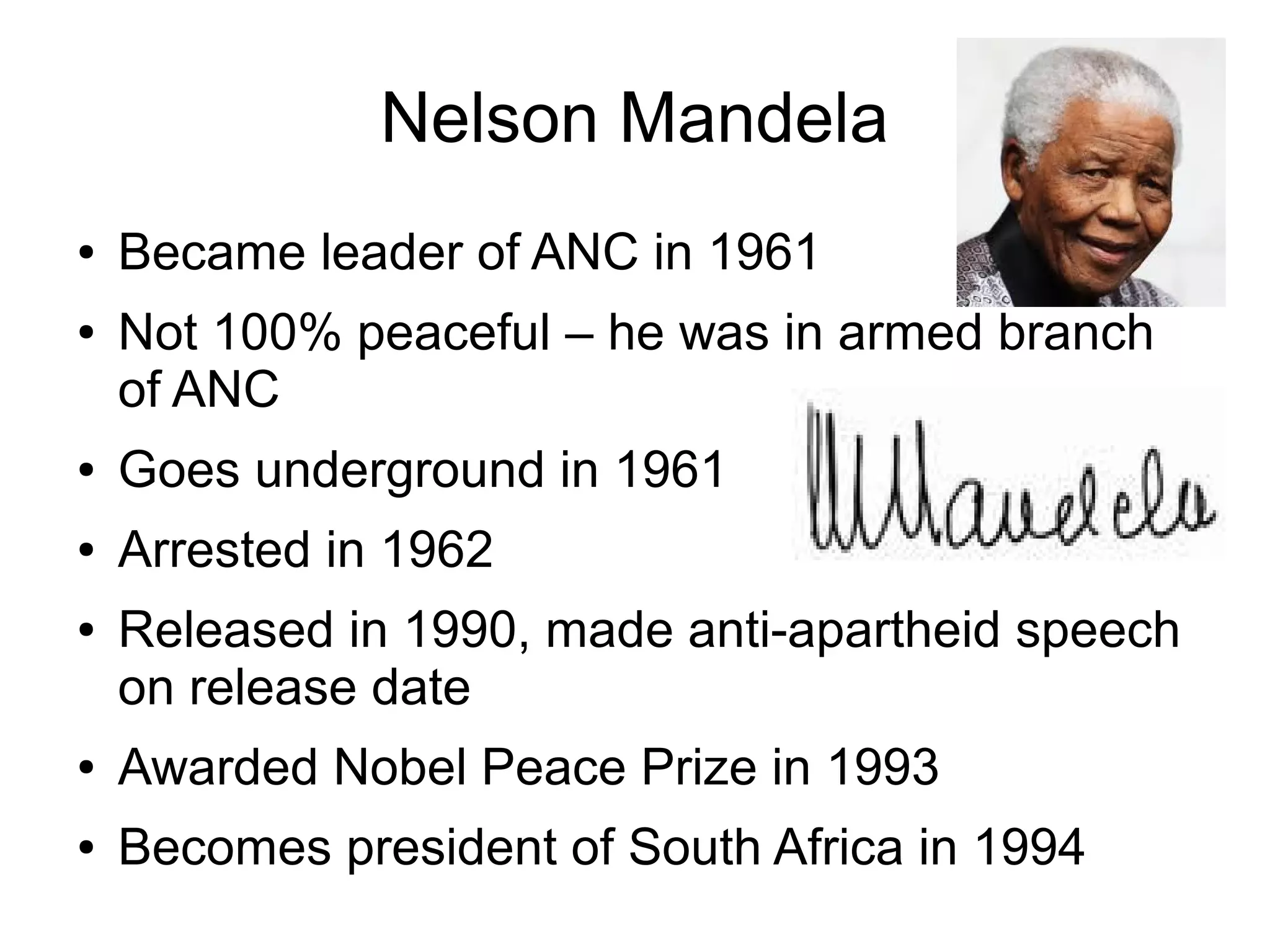
Nelson Mandela
●   Became leader of ANC in 1961
●   Not 100% peaceful – he was in armed branch
    of ANC
●   Goes underground in 1961
●   Arrested in 1962
●   Released in 1990, made anti-apartheid speech
    on release date
●   Awarded Nobel Peace Prize in 1993
●   Becomes president of South Africa in 1994
Soweto
●   Took place on June 16 1976 in Soweto, South Africa
●   Students were protesting because of Afrikaans being the
    taught language in schools
●   20,000 students were protesting, and a number of 176 to 700 were
    killed
●   Police barricaded intended route, so they just went another way
●   Signs said slogans such as, “Down with Afrikaans”, “Viva Azania”
    and, “If we must do Afrikaans, Vorster must do Zulu”
●   Police released dogs on kids, who stoned the dogs, which caused
    police to shoot purposely at children
●   Bottle stores and beer halls were targeted by mob as well as whites
●   Lots of controversy on this topic in South Africa at the time – a major
    turning point
Changes After Apartheid
●   No more:
    –   Segregation (wore off
        slowly)
    –   Curfew
    –   Passes
●   Blacks, Coloreds, and Asians could be
    represented in government
●   More money for non-whites
●   More jobs for non-whites

Apartheid

  • 1.
    Apartheid: Racial Discriminationof South Africa By Richard Soucy
  • 2.
    Terms to Know ● Apartheid – Segregation of non-white population by law ● Black – Dark Skinned ● Asian – Of Asian Descent ● White – Light Skinned ● Colored – In between Black and White segregation ● Segregation – Enforced separation of races ● Bantu – Literally is a tribe of Africans, in this PowerPoint it means Black ● ANC – African National Congress, it is a political party that is against Apartheid ● National Party – Political party that is for Apartheid
  • 3.
    Government Actions ToEnforce Apartheid ● Native Land Act of 1913 and 1936 required Blacks, Coloreds, and Asians live on a small percentage of the land ● Prohibition of Mixed Marriages Act of 1949 made illegal marriage in between races ● Population Registration Act of 1950 required that each citizen of South Africa be registered by their race ● Pass Laws Act of 1952 required that all African Areas Blacks, Asians, and Coloreds carry a pass book at all times ● Bantu Education Act of 1953 required that only concepts that would be used in allowed jobs would be taught ● Separate Amenities Act of 1953 legalized racial segregation of public areas ● Criminal Law Amendment Act of 1953 made harsher punishments legal for nonwhites (i.e. corporal punishment for shoplifting) ● Native Labor Act of 1953 banned Africans from going on strike
  • 4.
    Perspectives of Apartheid "Wespeak out to put the world on guard against what is happening in South Africa. The brutal policy of apartheid is applied before the eyes of the nations of the world. The peoples of Africa are compelled to endure the fact that on the African continent the superiority of one race over another remains official policy, and that in the name of this racial superiority murder is committed with impunity. Can the United Nations do nothing to stop this?" — Che Guerva
  • 5.
    Nelson Mandela ● Became leader of ANC in 1961 ● Not 100% peaceful – he was in armed branch of ANC ● Goes underground in 1961 ● Arrested in 1962 ● Released in 1990, made anti-apartheid speech on release date ● Awarded Nobel Peace Prize in 1993 ● Becomes president of South Africa in 1994
  • 6.
    Soweto ● Took place on June 16 1976 in Soweto, South Africa ● Students were protesting because of Afrikaans being the taught language in schools ● 20,000 students were protesting, and a number of 176 to 700 were killed ● Police barricaded intended route, so they just went another way ● Signs said slogans such as, “Down with Afrikaans”, “Viva Azania” and, “If we must do Afrikaans, Vorster must do Zulu” ● Police released dogs on kids, who stoned the dogs, which caused police to shoot purposely at children ● Bottle stores and beer halls were targeted by mob as well as whites ● Lots of controversy on this topic in South Africa at the time – a major turning point
  • 7.
    Changes After Apartheid ● No more: – Segregation (wore off slowly) – Curfew – Passes ● Blacks, Coloreds, and Asians could be represented in government ● More money for non-whites ● More jobs for non-whites