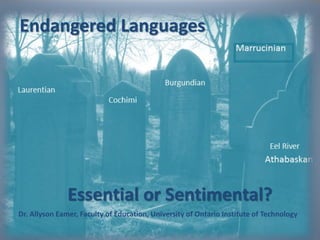
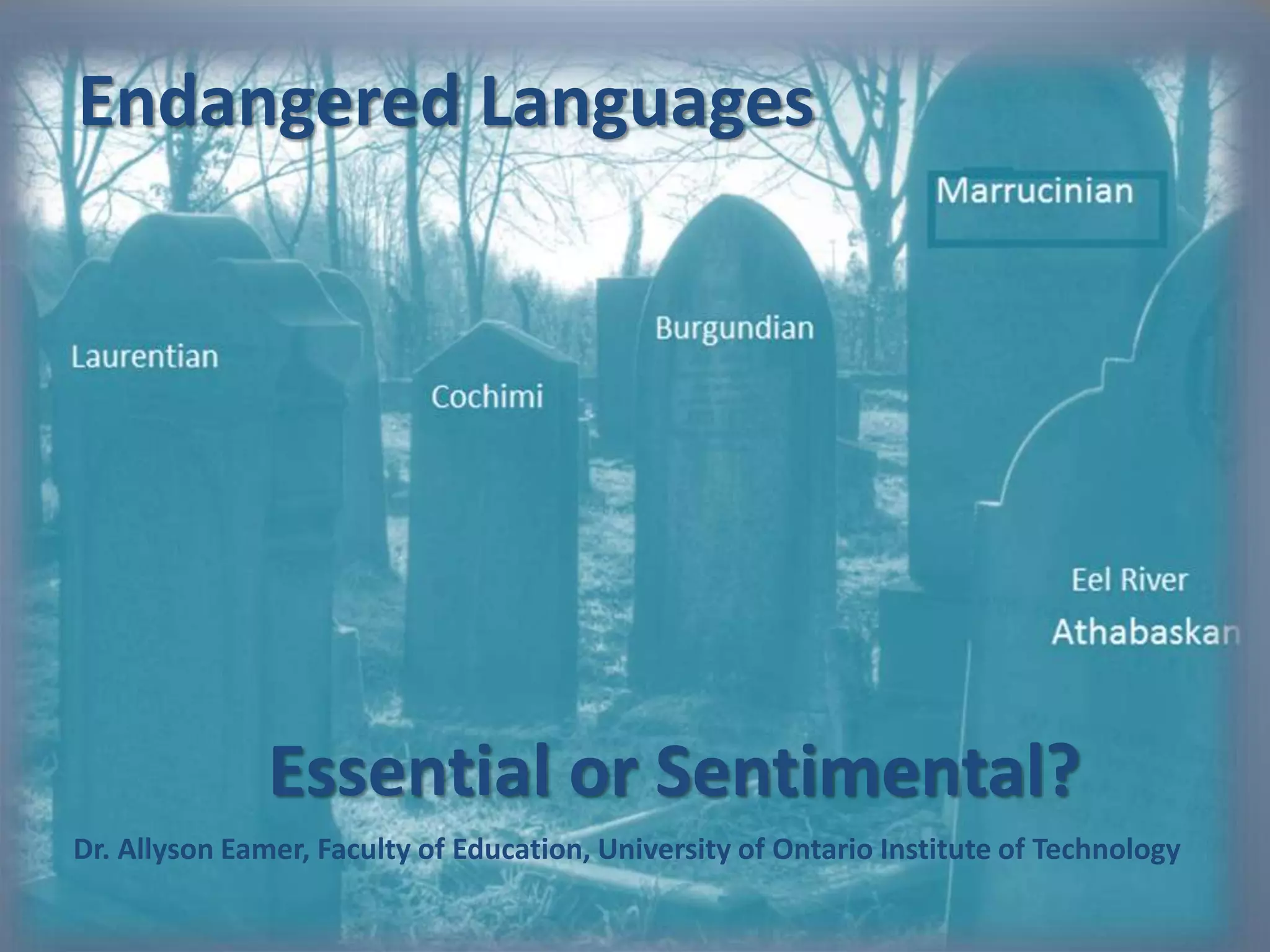
Endangered Languages
Essential or Sentimental?
Dr. Allyson Eamer, Faculty of Education, University of Ontario Institute of Technology
Dr. Allyson Eamer
Faculty of Education,
University of Ontario
Institute of Technology
I have this sense, rightly or wrongly, the language is locked back there
in my brain. It’s not really forgotten; it’s just sleeping. The language is
there, locked with other memories of childhood. Loss happened so
gradually, like an old pair of underwear slipping down. The elastic
goes and goes you’re not really conscious of it. Just a loosening of the
bond.
Kouritzin (2006)
Songs from a Taboo Tongue
Language Shift and Loss
How does language shift / language loss happen?
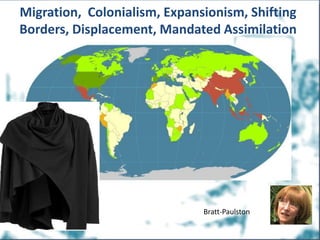
Migration, Colonialism, Expansionism, Shifting
Borders, Displacement, Mandated Assimilation
Bratt-Paulston
Language as a power struggle
A language is a dialect with an army and a navy.”
Yiddish linguist Max Weinreich
The army and the navy are metaphors for the 21st century reality of the
power wielded when education, governance, and health care are conducted
in a dominant language.
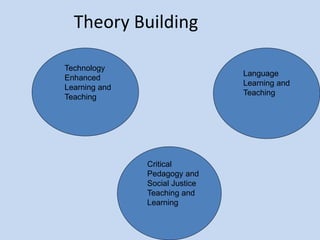
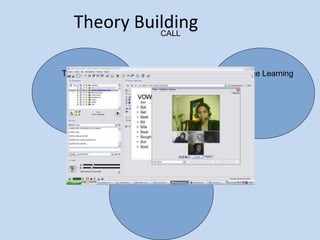
Theory Building
Technology
Enhanced
Learning and
Teaching
Language
Learning and
Teaching
Critical
Pedagogy and
Social Justice
Teaching and
Learning
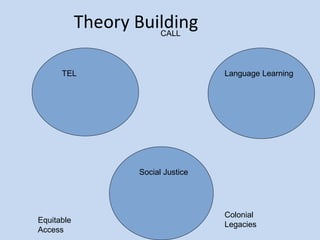
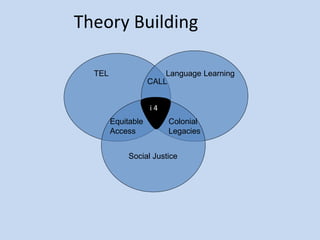
Theory Building
TEL Language Learning
Social Justice
CALL
Colonial
Legacies
Equitable
Access
Theory Building
TEL Language Learning
Social Justice
CALL
Theory Building
TEL Language Learning
Social Justice
CALL
Colonial
Legacies
Equitable
Access
i 4
i4
Where all three discourses overlap
Using technology …
to teach a language …
to level a playing field
i 4
Language Revitalization
• Rescuing a language from near extinction due
to colonialism, expansionism, assimilationist
policy, migration (in diasporic communities)
and more recently… globalization
2005 United Nations World summit on the Information Society
…promote the inclusion of all peoples in the
Information Society through the
development and use of local and/or
indigenous languages in ICTs. We will
continue our efforts to protect and promote
cultural diversity, as well as cultural
identities, within the Information Society.
UNESCO’s 1996 Universal Declaration of Linguistic Rights:
Article 3 (1)
This Declaration considers the following to be inalienable personal rights which
may be exercised in any situation: the right to be recognized as a member of a
language community; the right to the use of one’s own language both in private
and in public; the right to the use of one’s own name; the right to interrelate and
associate with other members of one’s language community of origin; [and] the
right to maintain and develop one’s own culture;
Article 7 (1&2)
All languages are the expression of a collective identity and of a distinct way of
perceiving and describing reality and must therefore be able to enjoy the
conditions required for their development in all functions. All languages are
collectively constituted and are made available within a community for individual
use as tools of cohesion, identification, communication and creative expression.
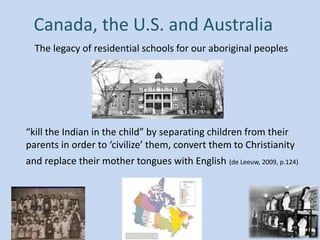
Canada, the U.S. and Australia
The legacy of residential schools for our aboriginal peoples
“kill the Indian in the child” by separating children from their
parents in order to ‘civilize’ them, convert them to Christianity
and replace their mother tongues with English (de Leeuw, 2009, p.124)
Fishman (1994)
… [N]o one can be a
full-fledged, native - or
even “native-like”-
member of the
culture and participate
in these acts, events,
occasions, and cultural
processes without
mastering the specific
language in which they
are implemented and
lacking which they
would not exist.
Skutnabb-Kangas (2002)
The loss of a language
is the loss of a corpus
of cultural knowledge
because language is
“the DNA of culture” .
Osborn (2006)
As the study of natural
sciences is vital to those
who would live in and
seek to understand our
natural world, so the
study of languages is
indispensable for those
who live in our social
worlds. The former may
be oriented toward
technicist control, the
latter toward under-
standing and promoting
social justice.
This Declaration considers the following to be inalienable
personal rights which may be exercised in any situation:
the right to be recognized as a member of a language
community; the right to the use of one’s own language
both in private and in public; the right to the use of one’s
own name; the right to interrelate and associate with
other members of one’s language community of origin;
[and] the right to maintain and develop one’s own
culture…
UNESCO 1996 Article 3(1)
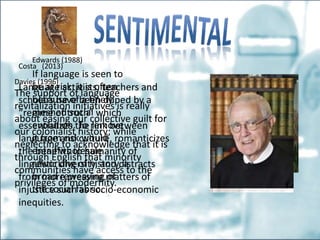
Edwards (1988)
If language is seen to
be at risk, it is often
because of a finely
meshed social
evolution. To remove
it from risk would
entail wholesale
reworking of history, a
broad reweaving of
the social fabric.
Costa (2013)
Language activists, teachers and
scholars have been duped by a
“regime of truth” which
essentializes the link between
language and culture, romanticizes
the benefits to humanity of
linguistic diversity, and distracts
from more pressing matters of
injustice such as socio-economic
inequities.
Davies (1996)
The support of language
revitalization initiatives is really
about easing our collective guilt for
our colonialist history; while
neglecting to acknowledge that it is
through English that minority
communities have access to the
privileges of modernity.
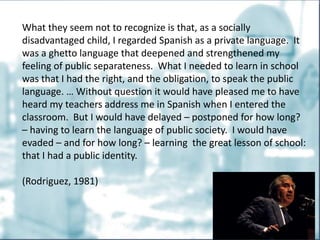
What they seem not to recognize is that, as a socially
disadvantaged child, I regarded Spanish as a private language. It
was a ghetto language that deepened and strengthened my
feeling of public separateness. What I needed to learn in school
was that I had the right, and the obligation, to speak the public
language. … Without question it would have pleased me to have
heard my teachers address me in Spanish when I entered the
classroom. But I would have delayed – postponed for how long?
– having to learn the language of public society. I would have
evaded – and for how long? – learning the great lesson of school:
that I had a public identity.
(Rodriguez, 1981)
So what’s new on the linguistic
landscape?
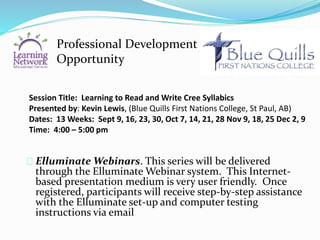
Session Title: Learning to Read and Write Cree Syllabics
Presented by: Kevin Lewis, (Blue Quills First Nations College, St Paul, AB)
Dates: 13 Weeks: Sept 9, 16, 23, 30, Oct 7, 14, 21, 28 Nov 9, 18, 25 Dec 2, 9
Time: 4:00 – 5:00 pm
Elluminate Webinars. This series will be delivered
through the Elluminate Webinar system. This Internet-
based presentation medium is very user friendly. Once
registered, participants will receive step-by-step assistance
with the Elluminate set-up and computer testing
instructions via email.
Professional Development
Opportunity
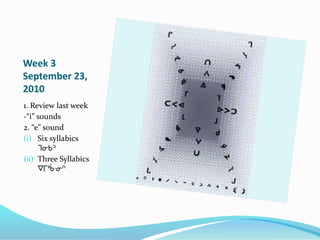
Week 3
September 23,
2010
1. Review last week
-“i” sounds
2. “e” sound
(i) Six syllabics
ᒣᓂᑲᐣ
(ii) Three Syllabics
ᐁᒥᐦᑳᐧᓂᐢ
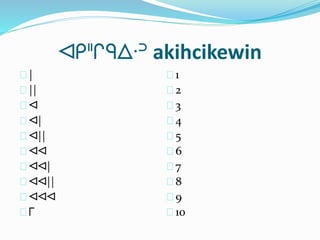
ᐊᑭᐦᒋᑫᐃᐧᐣ akihcikewin
|
||
ᐊ
ᐊ|
ᐊ||
ᐊᐊ
ᐊᐊ|
ᐊᐊ||
ᐊᐊᐊ
ᒥ
1
2
3
4
5
6
7
8
9
10
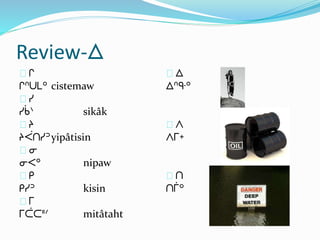
Review-ᐃ
ᒋ
ᒋᐢᑌᒪᐤ cistemaw
ᓯ
ᓯᑳᐠ sikâk
ᔨ
ᔨᐹᑎᓯᐣyipâtisin
ᓂ
ᓂᐸᐤ nipaw
ᑭ
ᑭᓯᐣ kisin
ᒥ
ᒥᑖᑕᐦᐟ mitâtaht
ᐃ
ᐃᐢᑫᐧᐤ
ᐱ
ᐱᒥᕀ
ᑎ
ᑎᒦᐤ
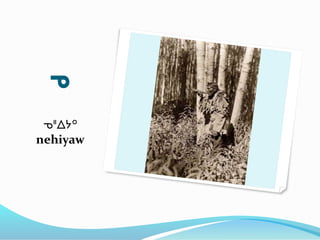
ᓀ
ᓀᐦᐃᔭᐤ
nehiyaw
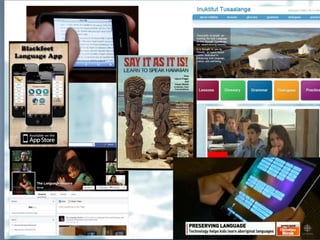
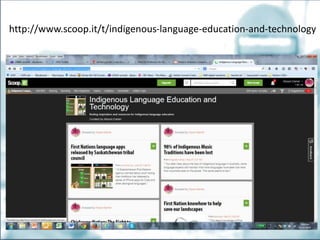
http://www.scoop.it/t/indigenous-language-education-and-technology
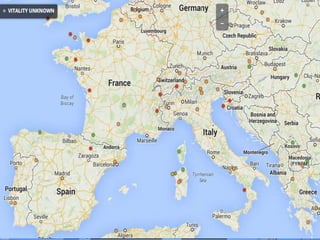
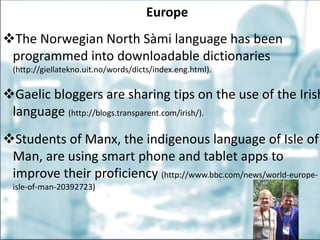
Europe
The Norwegian North Sàmi language has been
programmed into downloadable dictionaries
(http://giellatekno.uit.no/words/dicts/index.eng.html).
Gaelic bloggers are sharing tips on the use of the Irish
language (http://blogs.transparent.com/irish/).
Students of Manx, the indigenous language of Isle of
Man, are using smart phone and tablet apps to
improve their proficiency (http://www.bbc.com/news/world-europe-
isle-of-man-20392723)
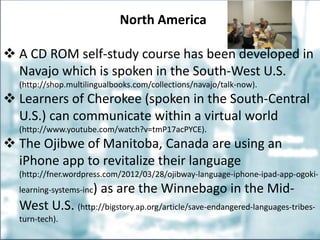
North America
 A CD ROM self-study course has been developed in
Navajo which is spoken in the South-West U.S.
(http://shop.multilingualbooks.com/collections/navajo/talk-now).
 Learners of Cherokee (spoken in the South-Central
U.S.) can communicate within a virtual world
(http://www.youtube.com/watch?v=tmP17acPYCE).
 The Ojibwe of Manitoba, Canada are using an
iPhone app to revitalize their language
(http://fner.wordpress.com/2012/03/28/ojibway-language-iphone-ipad-app-ogoki-
learning-systems-inc) as are the Winnebago in the Mid-
West U.S. (http://bigstory.ap.org/article/save-endangered-languages-tribes-
turn-tech).
Africa
Orthographies and databases are being developed
for oral languages in Kenya (Wamalwa and Ouloch 2013).
Ancient stories are being recorded in the
indigenous languages of Mali
(http://www.youtube.com/watch?v=GHB-yMoDhYo).
An online language learning company (busuu.com) is
offering a course in the whistle language of the
Canary Islands (http://www.youtube.com/watch?v =jkGwzFYj6dE).
Central and South America
 Ground breaking language documentation of
the Kĩsêdjê language is being done in Brazil
(http://web.mit.edu/newsoffice/2013/student-profile-rafael-nonato-0722.html).
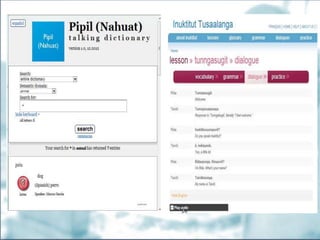
 A talking dictionary of the Pipil language of El
Salvador has been developed
(http://talkingdictionary.swarthmore.edu/pipil/).
 Recordings of personal narratives of the Aché
people in Paraguay are being made
(http://dobes.mpi.nl/projects/ache/project/).
Asia
 Digital storytelling software now includes some
of the minority languages of China
(http://www.chinasmack.com/2013/stories/phonemica-americans-mapping-
and-preserving-chinese-dialects.html).
 Folklore recordings and an online dictionary
have been completed for the Ainu language of
Japan (http://scholarspace.manoa.hawaii.edu/bitstream/handle/
10125/5110/5110.pdf?sequence=2).
 Lessons in the Tajik language of Uzbekistan are
now available on YouTube
(http://www.youtube.com/watch?v=iWlSuuGM
Mbc)
Arctic
 Asynchronous online lessons are available in
Inuktitut, one of the languages of the Arctic
(www.tusaalanga.ca/lesson/lessons).
Middle East
 Online storytelling in Chaldean, spoken in Iraq, can
help speakers achieve fluency
(http://elalliance.org/projects/languages-of-the-middle-east/neo-aramaic/).
Pacific
 Indigenous sign language from Central Australia
can now be learned via online videos
(http://iltyemiltyem.com/sign/).
 An online dictionary has been created for the Rapa
Nui language of Easter Island (Makihara, 2004)
 Digital storytelling in Pacific Island languages are
available through http://italklibrary.com/
Thank you for your interest.
Now over to you for
questions…
Dr. Allyson Eamer
Faculty of Education
UOIT
Ontario, Canada

Antwerp call2014 eamer

  • 1.
    Endangered Languages Essential orSentimental? Dr. Allyson Eamer, Faculty of Education, University of Ontario Institute of Technology
  • 2.
    Dr. Allyson Eamer Facultyof Education, University of Ontario Institute of Technology
  • 3.
    I have thissense, rightly or wrongly, the language is locked back there in my brain. It’s not really forgotten; it’s just sleeping. The language is there, locked with other memories of childhood. Loss happened so gradually, like an old pair of underwear slipping down. The elastic goes and goes you’re not really conscious of it. Just a loosening of the bond. Kouritzin (2006) Songs from a Taboo Tongue Language Shift and Loss How does language shift / language loss happen?
  • 4.
    Migration, Colonialism, Expansionism,Shifting Borders, Displacement, Mandated Assimilation Bratt-Paulston
  • 5.
    Language as apower struggle A language is a dialect with an army and a navy.” Yiddish linguist Max Weinreich The army and the navy are metaphors for the 21st century reality of the power wielded when education, governance, and health care are conducted in a dominant language.
  • 6.
    Theory Building Technology Enhanced Learning and Teaching Language Learningand Teaching Critical Pedagogy and Social Justice Teaching and Learning
  • 7.
    Theory Building TEL LanguageLearning Social Justice CALL Colonial Legacies Equitable Access
  • 8.
    Theory Building TEL LanguageLearning Social Justice CALL
  • 9.
    Theory Building TEL LanguageLearning Social Justice CALL Colonial Legacies Equitable Access i 4
  • 10.
    i4 Where all threediscourses overlap Using technology … to teach a language … to level a playing field i 4
  • 11.
    Language Revitalization • Rescuinga language from near extinction due to colonialism, expansionism, assimilationist policy, migration (in diasporic communities) and more recently… globalization
  • 13.
    2005 United NationsWorld summit on the Information Society …promote the inclusion of all peoples in the Information Society through the development and use of local and/or indigenous languages in ICTs. We will continue our efforts to protect and promote cultural diversity, as well as cultural identities, within the Information Society.
  • 14.
    UNESCO’s 1996 UniversalDeclaration of Linguistic Rights: Article 3 (1) This Declaration considers the following to be inalienable personal rights which may be exercised in any situation: the right to be recognized as a member of a language community; the right to the use of one’s own language both in private and in public; the right to the use of one’s own name; the right to interrelate and associate with other members of one’s language community of origin; [and] the right to maintain and develop one’s own culture; Article 7 (1&2) All languages are the expression of a collective identity and of a distinct way of perceiving and describing reality and must therefore be able to enjoy the conditions required for their development in all functions. All languages are collectively constituted and are made available within a community for individual use as tools of cohesion, identification, communication and creative expression.
  • 15.
    Canada, the U.S.and Australia The legacy of residential schools for our aboriginal peoples “kill the Indian in the child” by separating children from their parents in order to ‘civilize’ them, convert them to Christianity and replace their mother tongues with English (de Leeuw, 2009, p.124)
  • 17.
    Fishman (1994) … [N]oone can be a full-fledged, native - or even “native-like”- member of the culture and participate in these acts, events, occasions, and cultural processes without mastering the specific language in which they are implemented and lacking which they would not exist. Skutnabb-Kangas (2002) The loss of a language is the loss of a corpus of cultural knowledge because language is “the DNA of culture” . Osborn (2006) As the study of natural sciences is vital to those who would live in and seek to understand our natural world, so the study of languages is indispensable for those who live in our social worlds. The former may be oriented toward technicist control, the latter toward under- standing and promoting social justice.
  • 18.
    This Declaration considersthe following to be inalienable personal rights which may be exercised in any situation: the right to be recognized as a member of a language community; the right to the use of one’s own language both in private and in public; the right to the use of one’s own name; the right to interrelate and associate with other members of one’s language community of origin; [and] the right to maintain and develop one’s own culture… UNESCO 1996 Article 3(1)
  • 19.
    Edwards (1988) If languageis seen to be at risk, it is often because of a finely meshed social evolution. To remove it from risk would entail wholesale reworking of history, a broad reweaving of the social fabric. Costa (2013) Language activists, teachers and scholars have been duped by a “regime of truth” which essentializes the link between language and culture, romanticizes the benefits to humanity of linguistic diversity, and distracts from more pressing matters of injustice such as socio-economic inequities. Davies (1996) The support of language revitalization initiatives is really about easing our collective guilt for our colonialist history; while neglecting to acknowledge that it is through English that minority communities have access to the privileges of modernity.
  • 20.
    What they seemnot to recognize is that, as a socially disadvantaged child, I regarded Spanish as a private language. It was a ghetto language that deepened and strengthened my feeling of public separateness. What I needed to learn in school was that I had the right, and the obligation, to speak the public language. … Without question it would have pleased me to have heard my teachers address me in Spanish when I entered the classroom. But I would have delayed – postponed for how long? – having to learn the language of public society. I would have evaded – and for how long? – learning the great lesson of school: that I had a public identity. (Rodriguez, 1981)
  • 21.
    So what’s newon the linguistic landscape?
  • 26.
    Session Title: Learningto Read and Write Cree Syllabics Presented by: Kevin Lewis, (Blue Quills First Nations College, St Paul, AB) Dates: 13 Weeks: Sept 9, 16, 23, 30, Oct 7, 14, 21, 28 Nov 9, 18, 25 Dec 2, 9 Time: 4:00 – 5:00 pm Elluminate Webinars. This series will be delivered through the Elluminate Webinar system. This Internet- based presentation medium is very user friendly. Once registered, participants will receive step-by-step assistance with the Elluminate set-up and computer testing instructions via email. Professional Development Opportunity
  • 27.
    Week 3 September 23, 2010 1.Review last week -“i” sounds 2. “e” sound (i) Six syllabics ᒣᓂᑲᐣ (ii) Three Syllabics ᐁᒥᐦᑳᐧᓂᐢ
  • 28.
  • 29.
    Review-ᐃ ᒋ ᒋᐢᑌᒪᐤ cistemaw ᓯ ᓯᑳᐠ sikâk ᔨ ᔨᐹᑎᓯᐣyipâtisin ᓂ ᓂᐸᐤnipaw ᑭ ᑭᓯᐣ kisin ᒥ ᒥᑖᑕᐦᐟ mitâtaht ᐃ ᐃᐢᑫᐧᐤ ᐱ ᐱᒥᕀ ᑎ ᑎᒦᐤ
  • 30.
  • 31.
  • 33.
    Europe The Norwegian NorthSàmi language has been programmed into downloadable dictionaries (http://giellatekno.uit.no/words/dicts/index.eng.html). Gaelic bloggers are sharing tips on the use of the Irish language (http://blogs.transparent.com/irish/). Students of Manx, the indigenous language of Isle of Man, are using smart phone and tablet apps to improve their proficiency (http://www.bbc.com/news/world-europe- isle-of-man-20392723)
  • 34.
    North America  ACD ROM self-study course has been developed in Navajo which is spoken in the South-West U.S. (http://shop.multilingualbooks.com/collections/navajo/talk-now).  Learners of Cherokee (spoken in the South-Central U.S.) can communicate within a virtual world (http://www.youtube.com/watch?v=tmP17acPYCE).  The Ojibwe of Manitoba, Canada are using an iPhone app to revitalize their language (http://fner.wordpress.com/2012/03/28/ojibway-language-iphone-ipad-app-ogoki- learning-systems-inc) as are the Winnebago in the Mid- West U.S. (http://bigstory.ap.org/article/save-endangered-languages-tribes- turn-tech).
  • 35.
    Africa Orthographies and databasesare being developed for oral languages in Kenya (Wamalwa and Ouloch 2013). Ancient stories are being recorded in the indigenous languages of Mali (http://www.youtube.com/watch?v=GHB-yMoDhYo). An online language learning company (busuu.com) is offering a course in the whistle language of the Canary Islands (http://www.youtube.com/watch?v =jkGwzFYj6dE).
  • 36.
    Central and SouthAmerica  Ground breaking language documentation of the Kĩsêdjê language is being done in Brazil (http://web.mit.edu/newsoffice/2013/student-profile-rafael-nonato-0722.html).  A talking dictionary of the Pipil language of El Salvador has been developed (http://talkingdictionary.swarthmore.edu/pipil/).  Recordings of personal narratives of the Aché people in Paraguay are being made (http://dobes.mpi.nl/projects/ache/project/).
  • 37.
    Asia  Digital storytellingsoftware now includes some of the minority languages of China (http://www.chinasmack.com/2013/stories/phonemica-americans-mapping- and-preserving-chinese-dialects.html).  Folklore recordings and an online dictionary have been completed for the Ainu language of Japan (http://scholarspace.manoa.hawaii.edu/bitstream/handle/ 10125/5110/5110.pdf?sequence=2).  Lessons in the Tajik language of Uzbekistan are now available on YouTube (http://www.youtube.com/watch?v=iWlSuuGM Mbc)
  • 38.
    Arctic  Asynchronous onlinelessons are available in Inuktitut, one of the languages of the Arctic (www.tusaalanga.ca/lesson/lessons). Middle East  Online storytelling in Chaldean, spoken in Iraq, can help speakers achieve fluency (http://elalliance.org/projects/languages-of-the-middle-east/neo-aramaic/).
  • 39.
    Pacific  Indigenous signlanguage from Central Australia can now be learned via online videos (http://iltyemiltyem.com/sign/).  An online dictionary has been created for the Rapa Nui language of Easter Island (Makihara, 2004)  Digital storytelling in Pacific Island languages are available through http://italklibrary.com/
  • 41.
    Thank you foryour interest. Now over to you for questions… Dr. Allyson Eamer Faculty of Education UOIT Ontario, Canada