ANTITUSSIVES
P. Harshitha Reddy
ANTITUSSIVES
Antitussives suppress the cough reflex, especially useful in dry, non-
productive coughs. They are classified based on whether they act centrally
or peripherally.
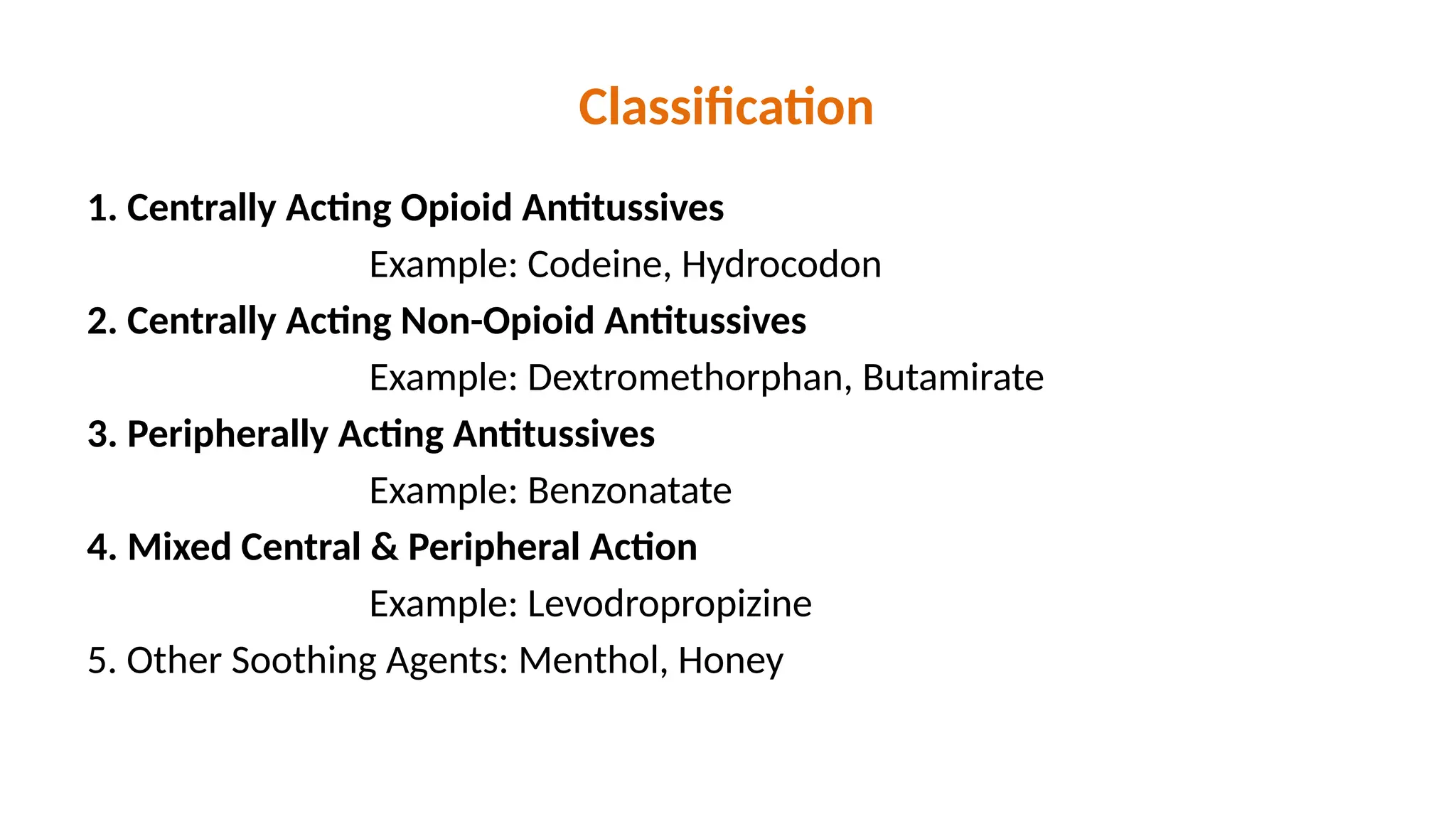
Classification
1. Centrally Acting Opioid Antitussives
Example: Codeine, Hydrocodon
2. Centrally Acting Non-Opioid Antitussives
Example: Dextromethorphan, Butamirate
3. Peripherally Acting Antitussives
Example: Benzonatate
4. Mixed Central & Peripheral Action
Example: Levodropropizine
5. Other Soothing Agents: Menthol, Honey

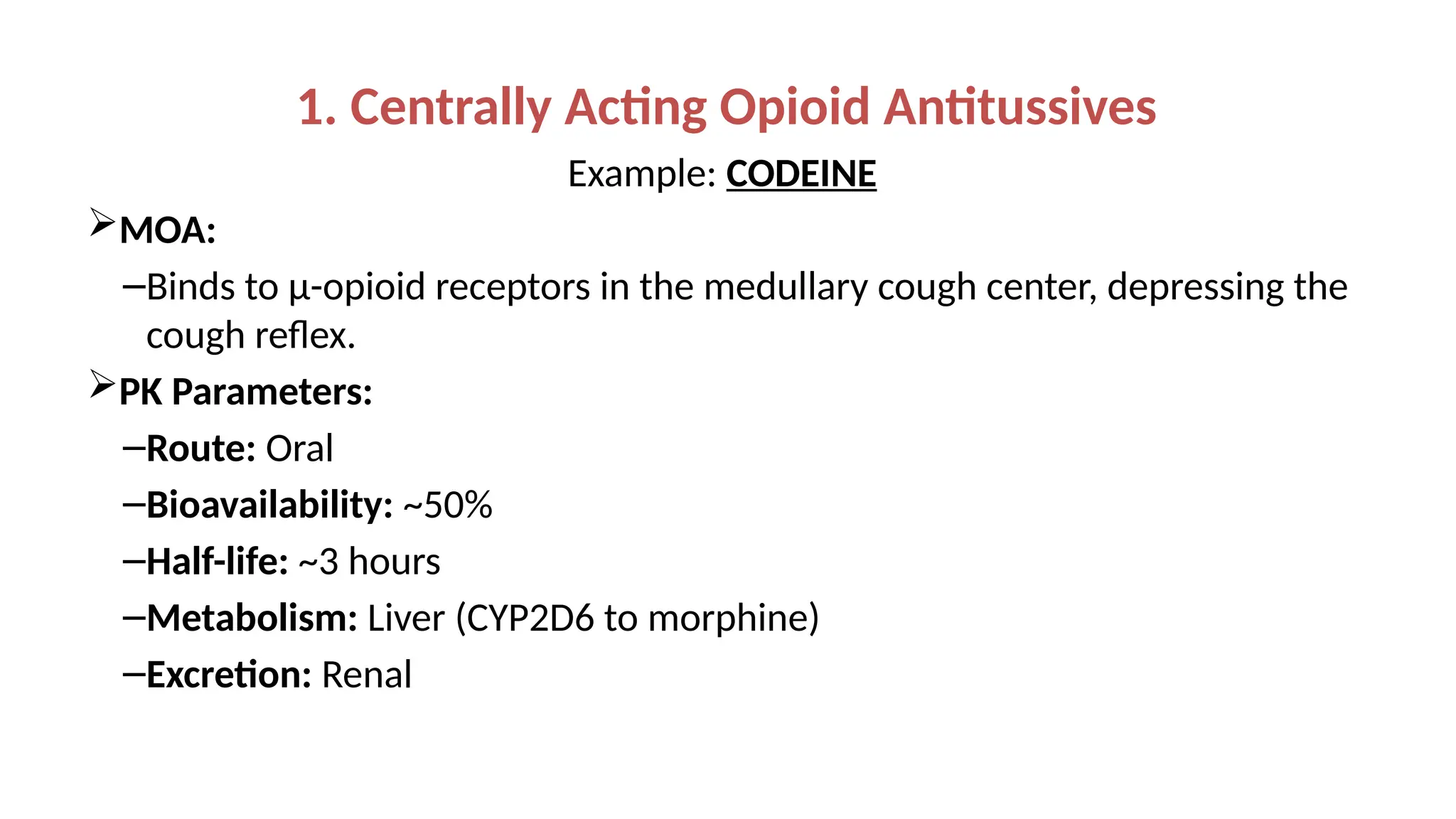
1. Centrally Acting Opioid Antitussives
Example: CODEINE
MOA:
–Binds to μ-opioid receptors in the medullary cough center, depressing the
cough reflex.
PK Parameters:
–Route: Oral
–Bioavailability: ~50%
–Half-life: ~3 hours
–Metabolism: Liver (CYP2D6 to morphine)
–Excretion: Renal
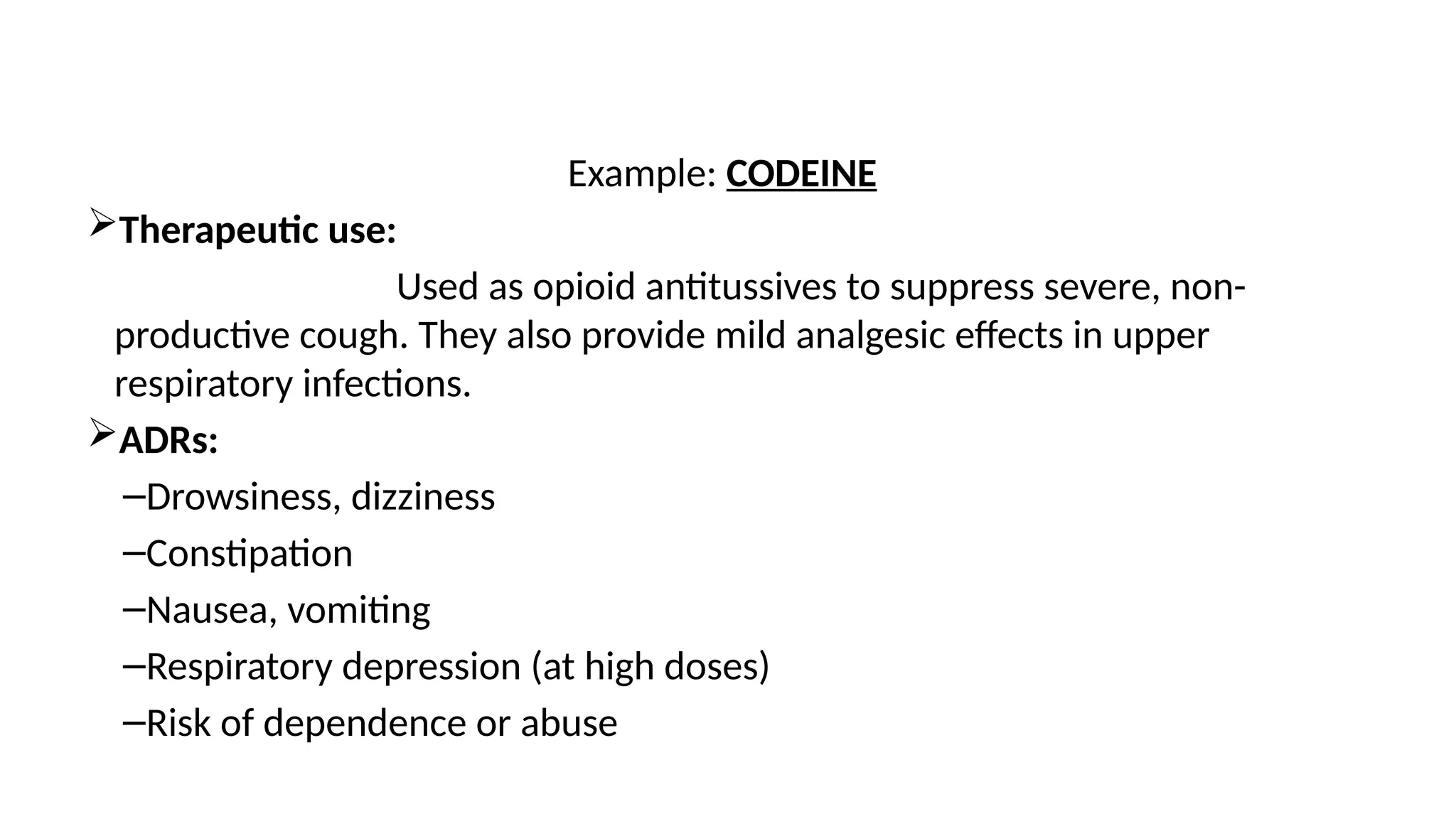
Example: CODEINE
Therapeutic use:
Used as opioid antitussives to suppress severe, non-
productive cough. They also provide mild analgesic effects in upper
respiratory infections.
ADRs:
–Drowsiness, dizziness
–Constipation
–Nausea, vomiting
–Respiratory depression (at high doses)
–Risk of dependence or abuse
Example: HYDDROCODON
• Similar to codeine but more potent.
• Same ADRs, with a higher potential for addiction.
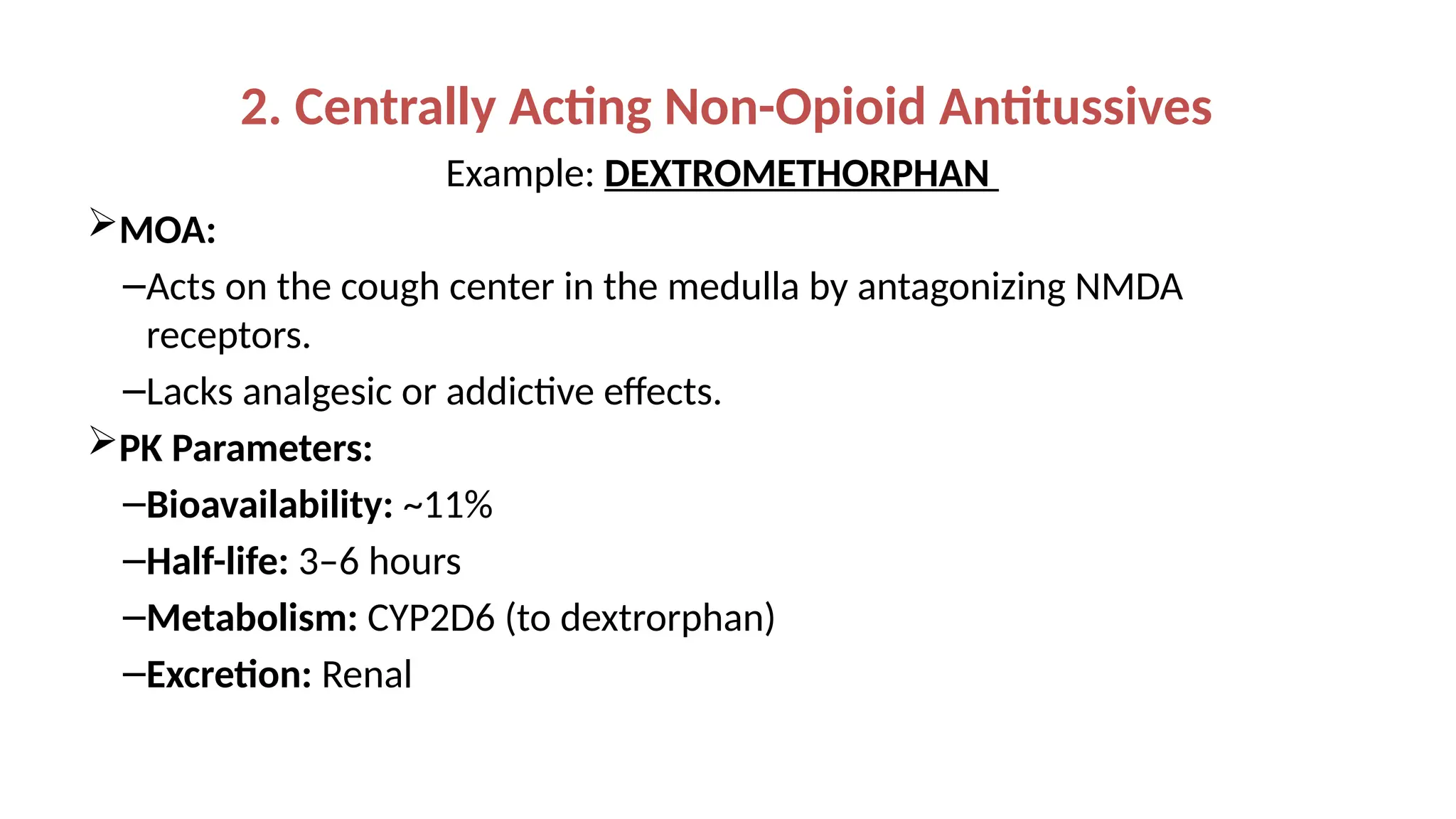
2. Centrally Acting Non-Opioid Antitussives
Example: DEXTROMETHORPHAN
MOA:
–Acts on the cough center in the medulla by antagonizing NMDA
receptors.
–Lacks analgesic or addictive effects.
PK Parameters:
–Bioavailability: ~11%
–Half-life: 3–6 hours
–Metabolism: CYP2D6 (to dextrorphan)
–Excretion: Renal
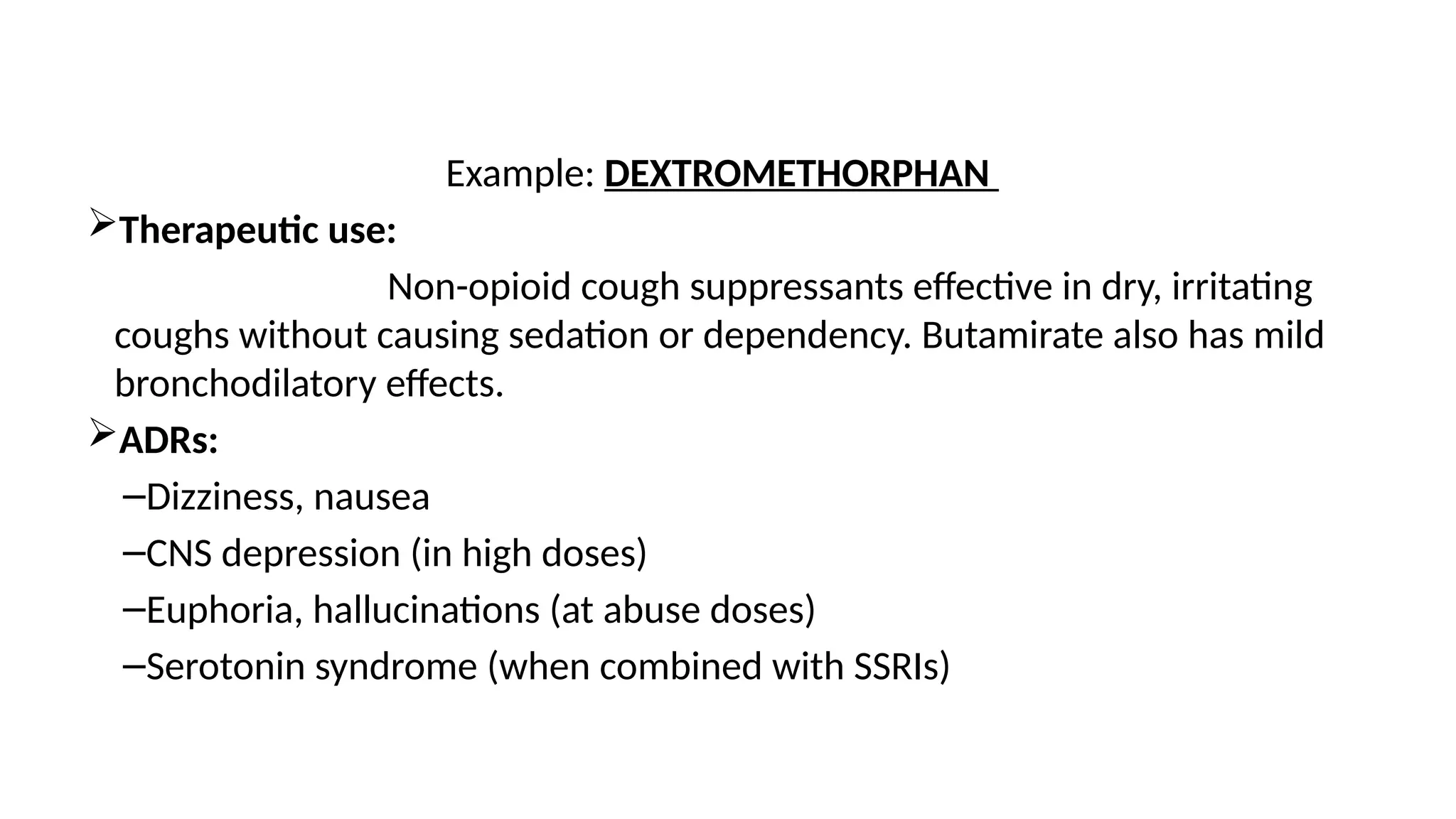
Example: DEXTROMETHORPHAN
Therapeutic use:
Non-opioid cough suppressants effective in dry, irritating
coughs without causing sedation or dependency. Butamirate also has mild
bronchodilatory effects.
ADRs:
–Dizziness, nausea
–CNS depression (in high doses)
–Euphoria, hallucinations (at abuse doses)
–Serotonin syndrome (when combined with SSRIs)
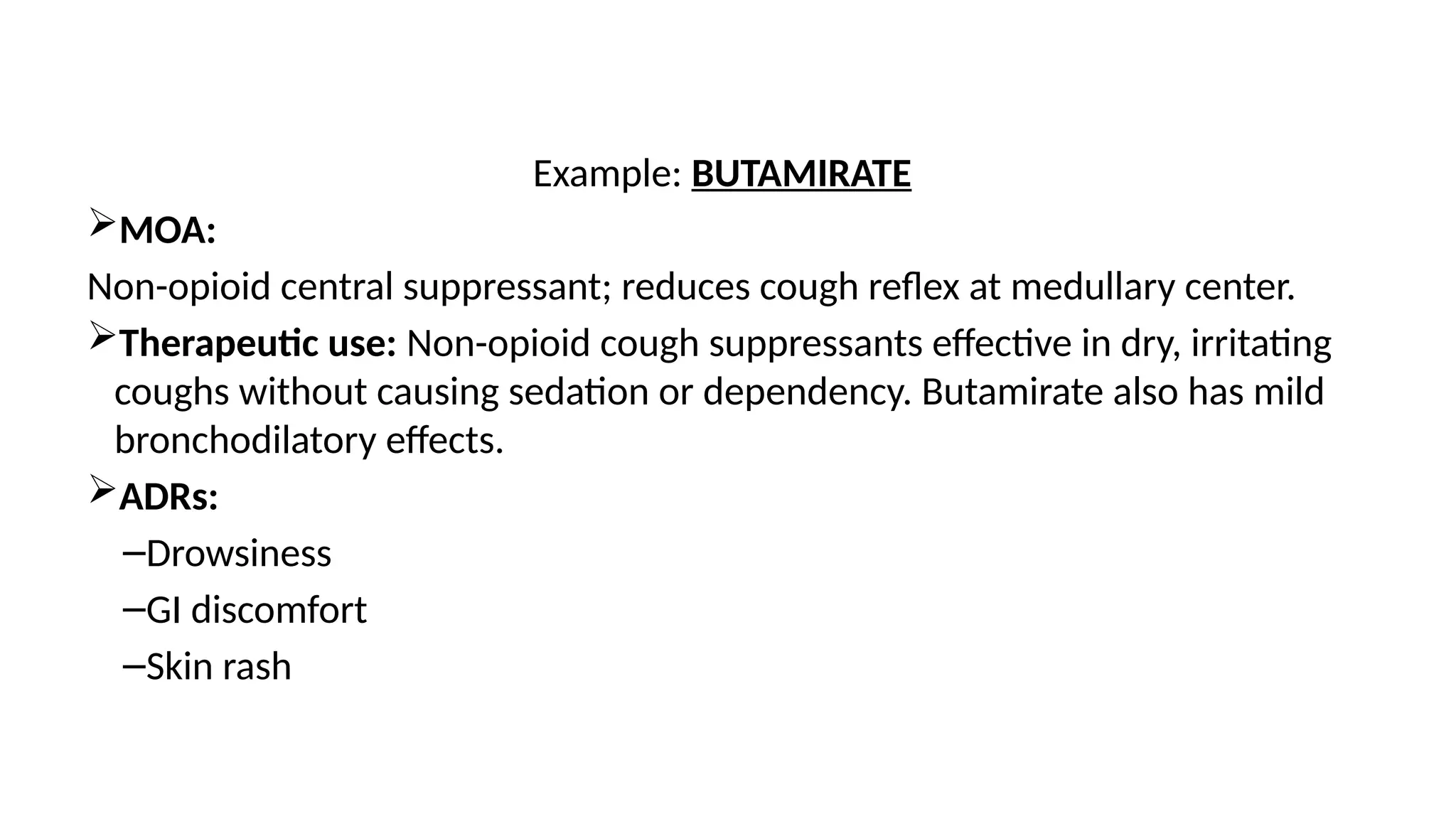
Example: BUTAMIRATE
MOA:
Non-opioid central suppressant; reduces cough reflex at medullary center.
Therapeutic use: Non-opioid cough suppressants effective in dry, irritating
coughs without causing sedation or dependency. Butamirate also has mild
bronchodilatory effects.
ADRs:
–Drowsiness
–GI discomfort
–Skin rash
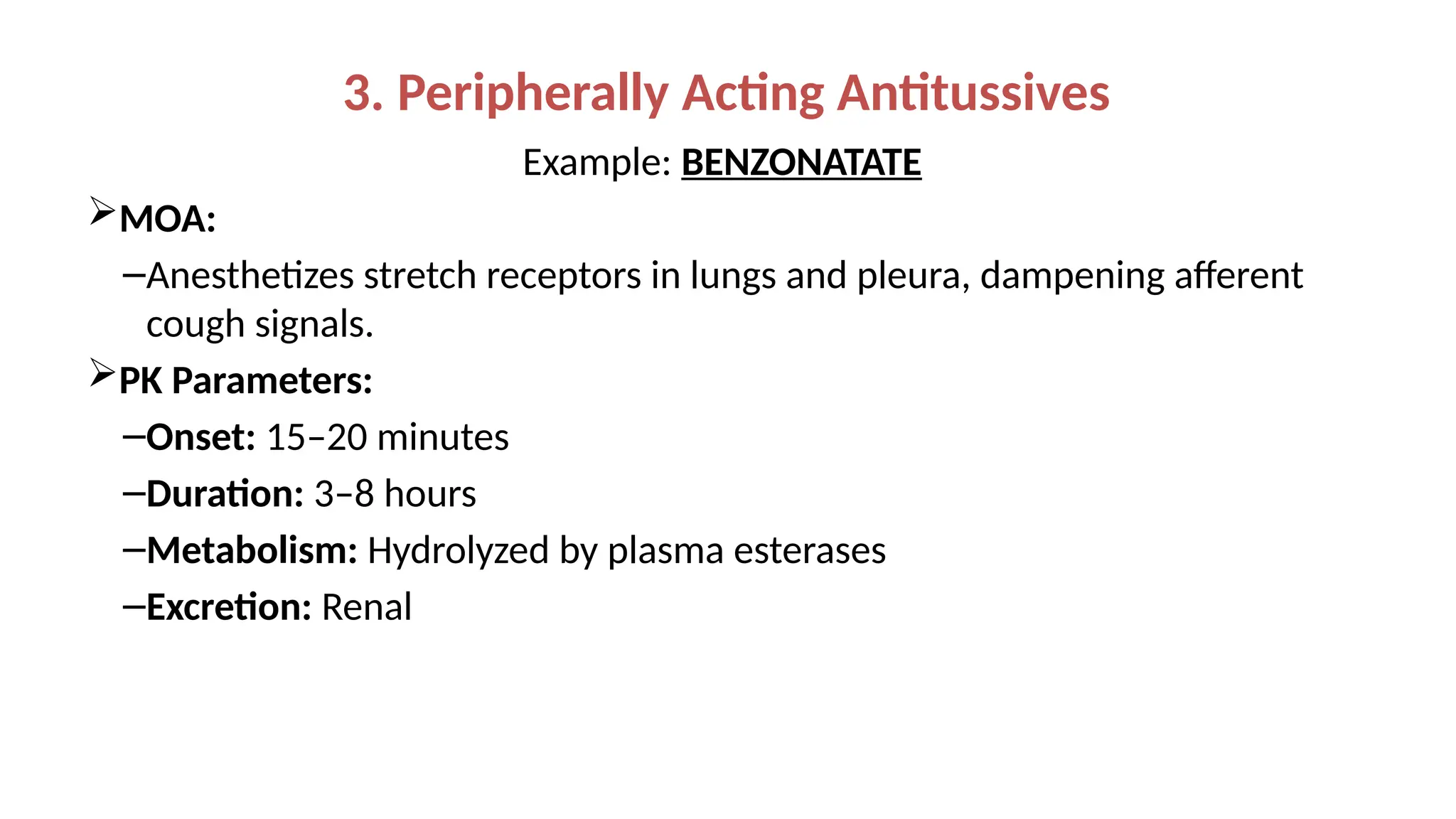
3. Peripherally Acting Antitussives
Example: BENZONATATE
MOA:
–Anesthetizes stretch receptors in lungs and pleura, dampening afferent
cough signals.
PK Parameters:
–Onset: 15–20 minutes
–Duration: 3–8 hours
–Metabolism: Hydrolyzed by plasma esterases
–Excretion: Renal
Example: BENZONATATE
Therapeutic use:
Benzonatate numbs the throat and lungs, reducing the
cough reflex. Menthol and honey soothe irritated throat mucosa and
provide symptomatic relief in mild cough.
ADRs:
–Numbness of throat/mouth (if chewed)
–Dizziness, sedation
–GI upset
–Rare: seizures or cardiac arrest (if overdosed)
4. Mixed Central & Peripheral Action
Example: LEVODROPROPIZINE
MOA:
–Acts on peripheral sensory nerves (C-fibers) and reduces cough
sensitivity.
PK Parameters:
–Bioavailability: ~75%
–Half-life: ~2–4 hours
–Excretion: Renal (unchanged)
Example: LEVODROPROPIZINE
Therapeutic use:
A peripherally acting antitussive that reduces cough reflex
sensitivity without CNS depression. Often used in dry, non-productive
coughs, especially in pediatrics.
ADRs:
–Drowsiness
–GI upset
–Palpitations (rare)
Other Soothing agents
Soothing Agents: Menthol, Honey
MOA:
– Exerts local anesthetic and soothing effect on the throat.
Therapeutic use: Menthol and honey soothe irritated throat mucosa and
provide symptomatic relief in mild cough.
ADRs:
Minimal; well tolerated

Antitussives, Classification, MOA, Pk parameters, Therapeutic uses and ADRs

  • 1.
  • 2.
    ANTITUSSIVES Antitussives suppress thecough reflex, especially useful in dry, non- productive coughs. They are classified based on whether they act centrally or peripherally.
  • 3.
    Classification 1. Centrally ActingOpioid Antitussives Example: Codeine, Hydrocodon 2. Centrally Acting Non-Opioid Antitussives Example: Dextromethorphan, Butamirate 3. Peripherally Acting Antitussives Example: Benzonatate 4. Mixed Central & Peripheral Action Example: Levodropropizine 5. Other Soothing Agents: Menthol, Honey
  • 4.
    1. Centrally ActingOpioid Antitussives Example: CODEINE MOA: –Binds to μ-opioid receptors in the medullary cough center, depressing the cough reflex. PK Parameters: –Route: Oral –Bioavailability: ~50% –Half-life: ~3 hours –Metabolism: Liver (CYP2D6 to morphine) –Excretion: Renal
  • 5.
    Example: CODEINE Therapeutic use: Usedas opioid antitussives to suppress severe, non- productive cough. They also provide mild analgesic effects in upper respiratory infections. ADRs: –Drowsiness, dizziness –Constipation –Nausea, vomiting –Respiratory depression (at high doses) –Risk of dependence or abuse
  • 6.
    Example: HYDDROCODON • Similarto codeine but more potent. • Same ADRs, with a higher potential for addiction.
  • 7.
    2. Centrally ActingNon-Opioid Antitussives Example: DEXTROMETHORPHAN MOA: –Acts on the cough center in the medulla by antagonizing NMDA receptors. –Lacks analgesic or addictive effects. PK Parameters: –Bioavailability: ~11% –Half-life: 3–6 hours –Metabolism: CYP2D6 (to dextrorphan) –Excretion: Renal
  • 8.
    Example: DEXTROMETHORPHAN Therapeutic use: Non-opioidcough suppressants effective in dry, irritating coughs without causing sedation or dependency. Butamirate also has mild bronchodilatory effects. ADRs: –Dizziness, nausea –CNS depression (in high doses) –Euphoria, hallucinations (at abuse doses) –Serotonin syndrome (when combined with SSRIs)
  • 9.
    Example: BUTAMIRATE MOA: Non-opioid centralsuppressant; reduces cough reflex at medullary center. Therapeutic use: Non-opioid cough suppressants effective in dry, irritating coughs without causing sedation or dependency. Butamirate also has mild bronchodilatory effects. ADRs: –Drowsiness –GI discomfort –Skin rash
  • 10.
    3. Peripherally ActingAntitussives Example: BENZONATATE MOA: –Anesthetizes stretch receptors in lungs and pleura, dampening afferent cough signals. PK Parameters: –Onset: 15–20 minutes –Duration: 3–8 hours –Metabolism: Hydrolyzed by plasma esterases –Excretion: Renal
  • 11.
    Example: BENZONATATE Therapeutic use: Benzonatatenumbs the throat and lungs, reducing the cough reflex. Menthol and honey soothe irritated throat mucosa and provide symptomatic relief in mild cough. ADRs: –Numbness of throat/mouth (if chewed) –Dizziness, sedation –GI upset –Rare: seizures or cardiac arrest (if overdosed)
  • 12.
    4. Mixed Central& Peripheral Action Example: LEVODROPROPIZINE MOA: –Acts on peripheral sensory nerves (C-fibers) and reduces cough sensitivity. PK Parameters: –Bioavailability: ~75% –Half-life: ~2–4 hours –Excretion: Renal (unchanged)
  • 13.
    Example: LEVODROPROPIZINE Therapeutic use: Aperipherally acting antitussive that reduces cough reflex sensitivity without CNS depression. Often used in dry, non-productive coughs, especially in pediatrics. ADRs: –Drowsiness –GI upset –Palpitations (rare)
  • 14.
    Other Soothing agents SoothingAgents: Menthol, Honey MOA: – Exerts local anesthetic and soothing effect on the throat. Therapeutic use: Menthol and honey soothe irritated throat mucosa and provide symptomatic relief in mild cough. ADRs: Minimal; well tolerated