EXPECTORANTS
P. Harshitha Reddy
EXPECTORANTS
Expectorants are drugs that enhance the expulsion of mucus from
the airways by increasing the volume or hydration of respiratory secretions.
They are mainly used in productive (wet) coughs where sputum clearance
is needed.
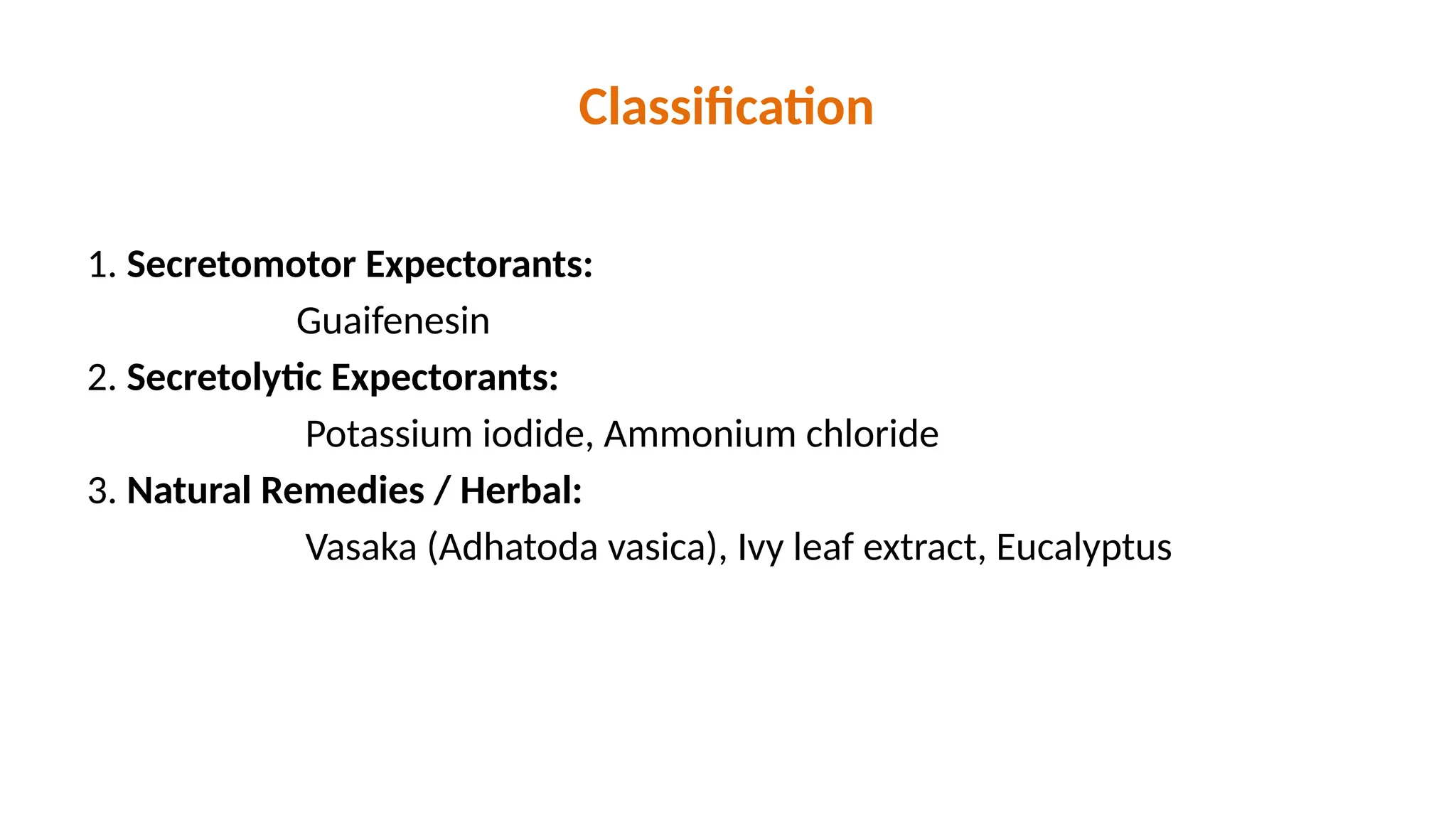
Classification
1. Secretomotor Expectorants:
Guaifenesin
2. Secretolytic Expectorants:
Potassium iodide, Ammonium chloride
3. Natural Remedies / Herbal:
Vasaka (Adhatoda vasica), Ivy leaf extract, Eucalyptus

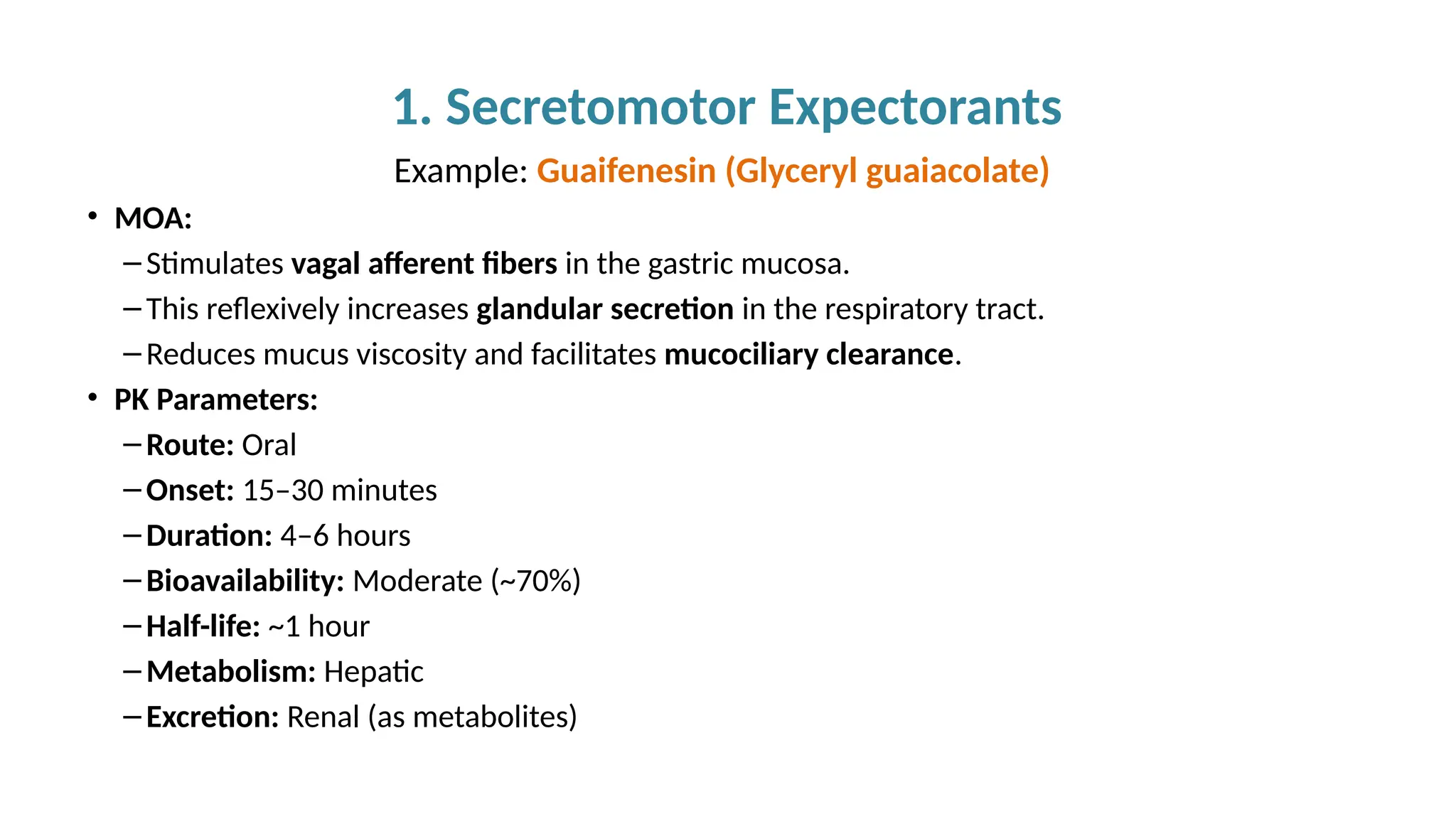
1. Secretomotor Expectorants
Example: Guaifenesin (Glyceryl guaiacolate)
• MOA:
– Stimulates vagal afferent fibers in the gastric mucosa.
– This reflexively increases glandular secretion in the respiratory tract.
– Reduces mucus viscosity and facilitates mucociliary clearance.
• PK Parameters:
– Route: Oral
– Onset: 15–30 minutes
– Duration: 4–6 hours
– Bioavailability: Moderate (~70%)
– Half-life: ~1 hour
– Metabolism: Hepatic
– Excretion: Renal (as metabolites)
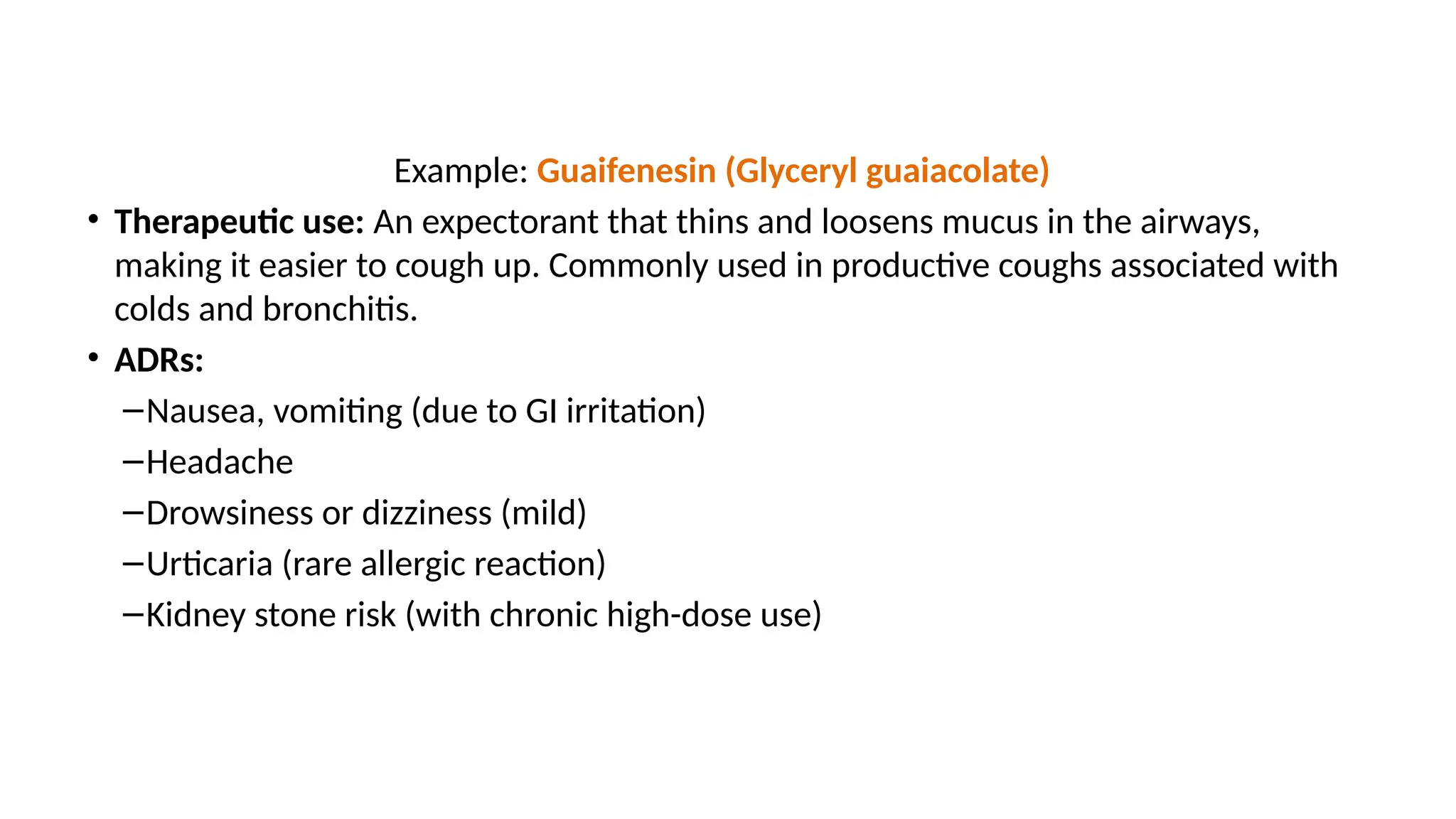
Example: Guaifenesin (Glyceryl guaiacolate)
• Therapeutic use: An expectorant that thins and loosens mucus in the airways,
making it easier to cough up. Commonly used in productive coughs associated with
colds and bronchitis.
• ADRs:
–Nausea, vomiting (due to GI irritation)
–Headache
–Drowsiness or dizziness (mild)
–Urticaria (rare allergic reaction)
–Kidney stone risk (with chronic high-dose use)
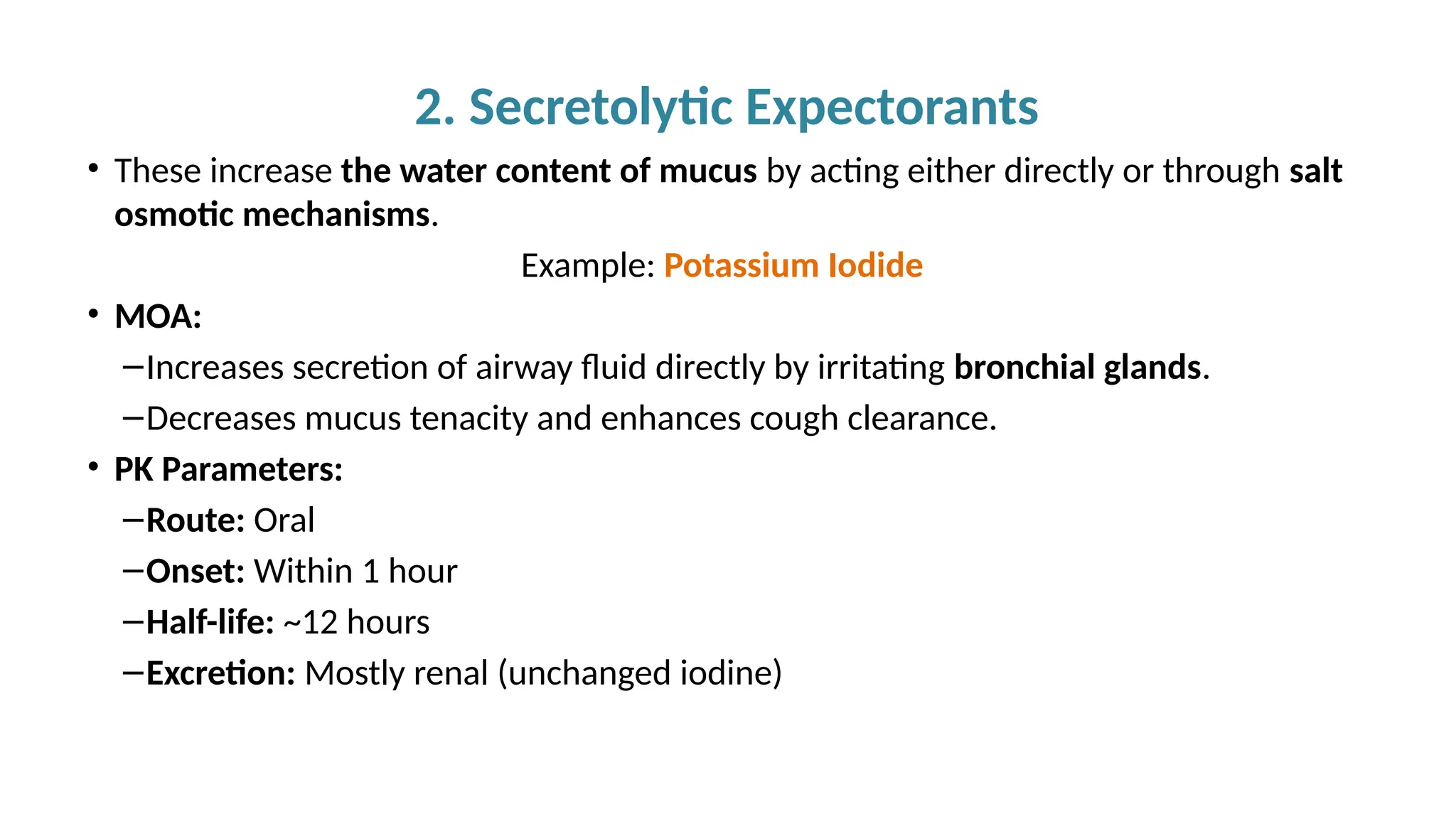
2. Secretolytic Expectorants
• These increase the water content of mucus by acting either directly or through salt
osmotic mechanisms.
Example: Potassium Iodide
• MOA:
–Increases secretion of airway fluid directly by irritating bronchial glands.
–Decreases mucus tenacity and enhances cough clearance.
• PK Parameters:
–Route: Oral
–Onset: Within 1 hour
–Half-life: ~12 hours
–Excretion: Mostly renal (unchanged iodine)
Example: Potassium Iodide
• Therapeutic use: Expectorants that increase respiratory tract secretions to promote
mucus clearance. Often used in chronic bronchitis and asthma-related coughs.
• ADRs:
–Metallic taste
–Acneiform skin eruptions
–Hypothyroidism or goiter (long-term use)
–GI upset
–Iodism (iodine poisoning): sore gums, salivation, rash
Example: Ammonium Chloride
• MOA:
–Mild irritant effect on the gastric mucosa → reflex stimulation of respiratory tract
secretions.
• PK Parameters:
–Route: Oral (syrup)
–Onset: Within 30–60 min
–Metabolism: Liver (converted to urea and HCl)
–Excretion: Urine
Example: Ammonium Chloride
• Therapeutic use: Expectorants that increase respiratory tract secretions to promote
mucus clearance. Often used in chronic bronchitis and asthma-related coughs.
• ADRs:
–GI irritation
–Metabolic acidosis (at high doses)
–Drowsiness
3. Herbal/Natural Expectorants
• These are often found in ayurvedic or OTC formulations and support mucolytic and
bronchodilatory effects.
Example: Vasaka (Adhatoda vasica)
• MOA:
–Active alkaloid vasicine enhances mucus clearance and shows bronchodilation
and mild anti-inflammatory effects.
• Therapeutic use: A herbal expectorant and bronchodilator that helps relieve
productive cough and bronchial congestion. Contains vasicine, which stimulates
bronchial secretions.
• ADRs:
–Generally well tolerated
–Nausea or allergic rash (rare)
Example: Ivy Leaf Extract
• MOA:
–Contains saponins that increase surfactant secretion and reduce mucus viscosity.
• Therapeutic use: Acts as a natural expectorant and bronchodilator, helping to
relieve mucus buildup in bronchitis. Also soothes the respiratory tract.
• ADRs:
–GI upset
–Allergic reaction in sensitive individuals
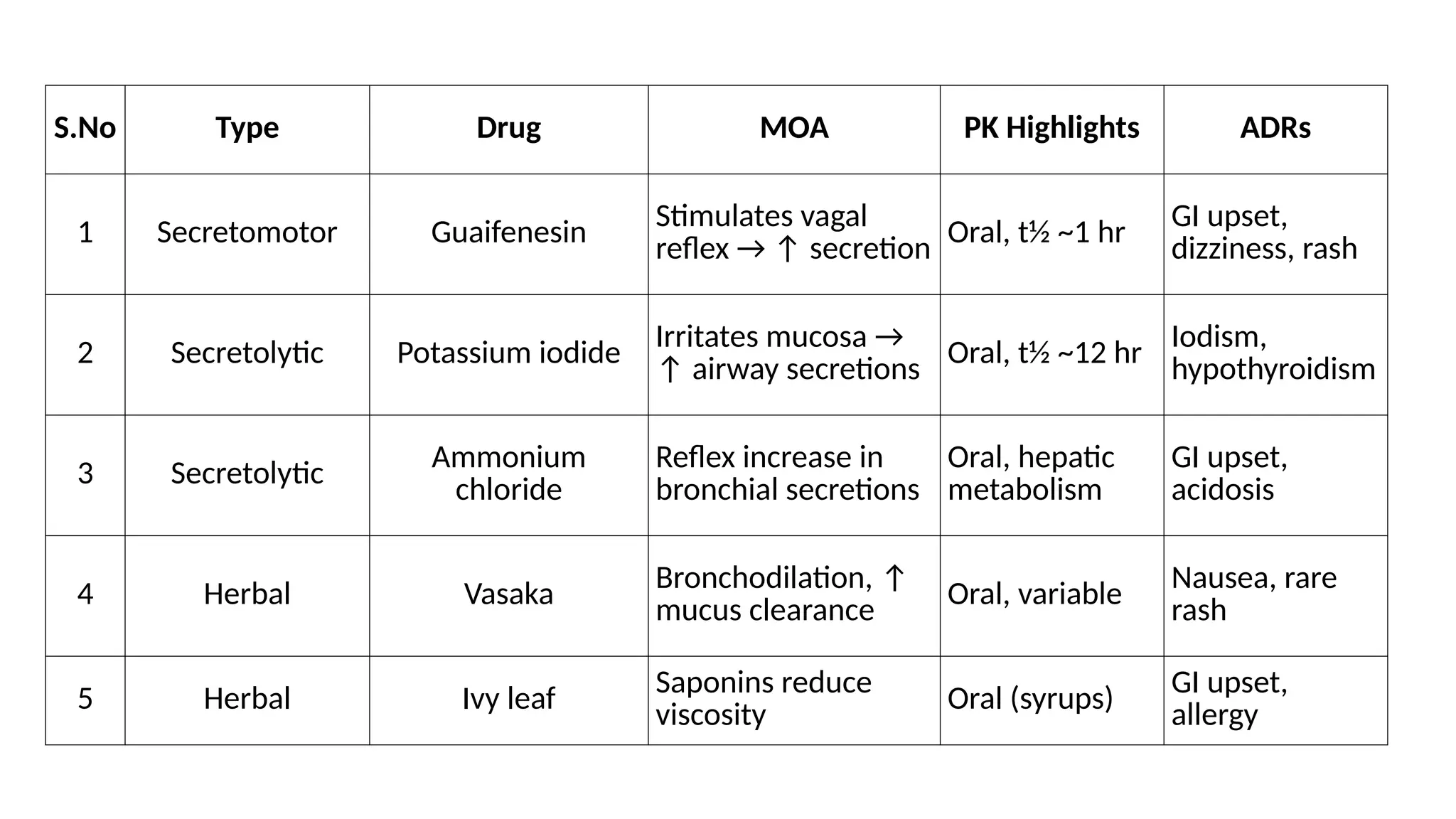
S.No Type Drug MOA PK Highlights ADRs
1 Secretomotor Guaifenesin
Stimulates vagal
reflex → ↑ secretion
Oral, t½ ~1 hr
GI upset,
dizziness, rash
2 Secretolytic Potassium iodide Irritates mucosa →
↑ airway secretions
Oral, t½ ~12 hr Iodism,
hypothyroidism
3 Secretolytic Ammonium
chloride
Reflex increase in
bronchial secretions
Oral, hepatic
metabolism
GI upset,
acidosis
4 Herbal Vasaka Bronchodilation, ↑
mucus clearance Oral, variable Nausea, rare
rash
5 Herbal Ivy leaf Saponins reduce
viscosity
Oral (syrups) GI upset,
allergy
Thank You

Expectorants / Classification / MOA / Pk parameters / Therapeutic uses / ADRs

  • 1.
  • 2.
    EXPECTORANTS Expectorants are drugsthat enhance the expulsion of mucus from the airways by increasing the volume or hydration of respiratory secretions. They are mainly used in productive (wet) coughs where sputum clearance is needed.
  • 3.
    Classification 1. Secretomotor Expectorants: Guaifenesin 2.Secretolytic Expectorants: Potassium iodide, Ammonium chloride 3. Natural Remedies / Herbal: Vasaka (Adhatoda vasica), Ivy leaf extract, Eucalyptus
  • 4.
    1. Secretomotor Expectorants Example:Guaifenesin (Glyceryl guaiacolate) • MOA: – Stimulates vagal afferent fibers in the gastric mucosa. – This reflexively increases glandular secretion in the respiratory tract. – Reduces mucus viscosity and facilitates mucociliary clearance. • PK Parameters: – Route: Oral – Onset: 15–30 minutes – Duration: 4–6 hours – Bioavailability: Moderate (~70%) – Half-life: ~1 hour – Metabolism: Hepatic – Excretion: Renal (as metabolites)
  • 5.
    Example: Guaifenesin (Glycerylguaiacolate) • Therapeutic use: An expectorant that thins and loosens mucus in the airways, making it easier to cough up. Commonly used in productive coughs associated with colds and bronchitis. • ADRs: –Nausea, vomiting (due to GI irritation) –Headache –Drowsiness or dizziness (mild) –Urticaria (rare allergic reaction) –Kidney stone risk (with chronic high-dose use)
  • 6.
    2. Secretolytic Expectorants •These increase the water content of mucus by acting either directly or through salt osmotic mechanisms. Example: Potassium Iodide • MOA: –Increases secretion of airway fluid directly by irritating bronchial glands. –Decreases mucus tenacity and enhances cough clearance. • PK Parameters: –Route: Oral –Onset: Within 1 hour –Half-life: ~12 hours –Excretion: Mostly renal (unchanged iodine)
  • 7.
    Example: Potassium Iodide •Therapeutic use: Expectorants that increase respiratory tract secretions to promote mucus clearance. Often used in chronic bronchitis and asthma-related coughs. • ADRs: –Metallic taste –Acneiform skin eruptions –Hypothyroidism or goiter (long-term use) –GI upset –Iodism (iodine poisoning): sore gums, salivation, rash
  • 8.
    Example: Ammonium Chloride •MOA: –Mild irritant effect on the gastric mucosa → reflex stimulation of respiratory tract secretions. • PK Parameters: –Route: Oral (syrup) –Onset: Within 30–60 min –Metabolism: Liver (converted to urea and HCl) –Excretion: Urine
  • 9.
    Example: Ammonium Chloride •Therapeutic use: Expectorants that increase respiratory tract secretions to promote mucus clearance. Often used in chronic bronchitis and asthma-related coughs. • ADRs: –GI irritation –Metabolic acidosis (at high doses) –Drowsiness
  • 10.
    3. Herbal/Natural Expectorants •These are often found in ayurvedic or OTC formulations and support mucolytic and bronchodilatory effects. Example: Vasaka (Adhatoda vasica) • MOA: –Active alkaloid vasicine enhances mucus clearance and shows bronchodilation and mild anti-inflammatory effects. • Therapeutic use: A herbal expectorant and bronchodilator that helps relieve productive cough and bronchial congestion. Contains vasicine, which stimulates bronchial secretions. • ADRs: –Generally well tolerated –Nausea or allergic rash (rare)
  • 11.
    Example: Ivy LeafExtract • MOA: –Contains saponins that increase surfactant secretion and reduce mucus viscosity. • Therapeutic use: Acts as a natural expectorant and bronchodilator, helping to relieve mucus buildup in bronchitis. Also soothes the respiratory tract. • ADRs: –GI upset –Allergic reaction in sensitive individuals
  • 12.
    S.No Type DrugMOA PK Highlights ADRs 1 Secretomotor Guaifenesin Stimulates vagal reflex → ↑ secretion Oral, t½ ~1 hr GI upset, dizziness, rash 2 Secretolytic Potassium iodide Irritates mucosa → ↑ airway secretions Oral, t½ ~12 hr Iodism, hypothyroidism 3 Secretolytic Ammonium chloride Reflex increase in bronchial secretions Oral, hepatic metabolism GI upset, acidosis 4 Herbal Vasaka Bronchodilation, ↑ mucus clearance Oral, variable Nausea, rare rash 5 Herbal Ivy leaf Saponins reduce viscosity Oral (syrups) GI upset, allergy
  • 13.