LIPID DERIVED AUTOCOIDS
Lipid-derived autacoids are a group of endogenous bioactive lipid molecules derived primarily from
arachidonic acid and other polyunsaturated fatty acids. These molecules act locally and transiently to modulate
inflammation, pain, fever, platelet aggregation, and other physiological processes. The main classes include
prostaglandins, thromboxanes, leukotrienes, and platelet-activating factor (PAF).
Classification
Class Examples Mechanism of Action
(MOA)
Pharmacokinetics
(PK)
Adverse Drug
Reactions (ADRs)
Prostaglandins
(PGs)
PGE1
(Alprostadil),
PGE2, PGF2α,
PGI2
(Epoprostenol)
Act on specific GPCRs
(EP, FP, IP receptors) to
regulate vasodilation,
smooth muscle tone,
gastric protection,
inflammation
Short half-life
(seconds to minutes);
metabolized in lungs,
liver; not orally active
Hypotension,
flushing, headache,
uterine cramping
(PGF2α), diarrhea
Thromboxanes
(TXs)
TXA2 (not used
therapeutically),
inhibitors: Aspirin
TXA2 causes
vasoconstriction and
platelet aggregation via
TP receptor; Aspirin
irreversibly inhibits
COX-1 → ↓ TXA2
Rapid metabolism in
liver; TXA2 half-life
~30 seconds; Aspirin
is rapidly absorbed
Bleeding, GI
irritation,
hypersensitivity
Leukotrienes
(LTs)
LTC4, LTD4,
LTE4; Drugs:
Montelukast,
Zafirlukast
Bind to CysLT1 receptor
→ bronchoconstriction, ↑
vascular permeability;
antagonists block this
effect
Montelukast: Oral,
peak plasma in 3-4 h,
t½ ~4-7 h; Zafirlukast
t½ ~10 h
Headache, GI
upset,
neuropsychiatric
effects (rare)
Lipoxins (anti-
inflammatory)
Lipoxin A4
(endogenous
only, no drugs
yet)
Act via ALX/FPR2
receptor to resolve
inflammation
Endogenous, rapidly
degraded
None (no drug
form)
Platelet-
Activating
Factor (PAF)
Not therapeutic;
antagonists
(experimental)
Binds to PAF receptor
(GPCR) → platelet
aggregation,
inflammation
Very short half-life Hypotension,
bronchospasm
(experimental)
 Enzymes involved: COX-1, COX-2 (for prostaglandins & thromboxanes), 5-LOX (for leukotrienes), PLA2
(initial step releasing arachidonic acid).
 Clinical Use:
 Prostaglandins: Alprostadil (ED, ductus arteriosus patency), Misoprostol (ulcer prevention, abortion),
Latanoprost (glaucoma).
 Leukotriene antagonists: Asthma maintenance therapy.
 Thromboxane inhibitors: Cardiovascular prevention (e.g., aspirin).
 Metabolism: Most are metabolized quickly (minutes) and are not suitable for oral use (except stable analogs
like montelukast).
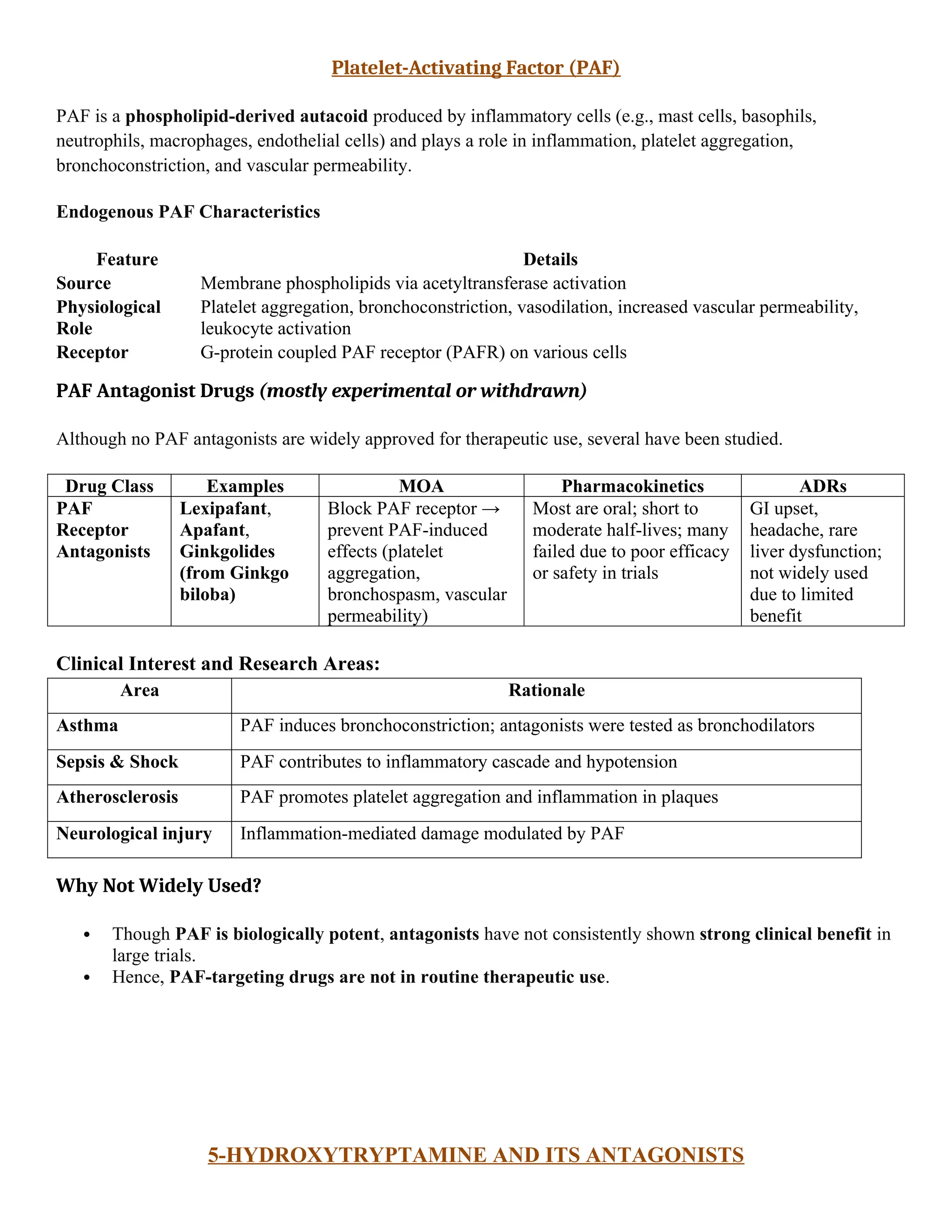
Platelet-Activating Factor (PAF)
PAF is a phospholipid-derived autacoid produced by inflammatory cells (e.g., mast cells, basophils,
neutrophils, macrophages, endothelial cells) and plays a role in inflammation, platelet aggregation,
bronchoconstriction, and vascular permeability.
Endogenous PAF Characteristics
Feature Details
Source Membrane phospholipids via acetyltransferase activation
Physiological
Role
Platelet aggregation, bronchoconstriction, vasodilation, increased vascular permeability,
leukocyte activation
Receptor G-protein coupled PAF receptor (PAFR) on various cells
PAF Antagonist Drugs (mostly experimental or withdrawn)
Although no PAF antagonists are widely approved for therapeutic use, several have been studied.
Drug Class Examples MOA Pharmacokinetics ADRs
PAF
Receptor
Antagonists
Lexipafant,
Apafant,
Ginkgolides
(from Ginkgo
biloba)
Block PAF receptor →
prevent PAF-induced
effects (platelet
aggregation,
bronchospasm, vascular
permeability)
Most are oral; short to
moderate half-lives; many
failed due to poor efficacy
or safety in trials
GI upset,
headache, rare
liver dysfunction;
not widely used
due to limited
benefit
Clinical Interest and Research Areas:
Area Rationale
Asthma PAF induces bronchoconstriction; antagonists were tested as bronchodilators
Sepsis & Shock PAF contributes to inflammatory cascade and hypotension
Atherosclerosis PAF promotes platelet aggregation and inflammation in plaques
Neurological injury Inflammation-mediated damage modulated by PAF
Why Not Widely Used?
 Though PAF is biologically potent, antagonists have not consistently shown strong clinical benefit in
large trials.
 Hence, PAF-targeting drugs are not in routine therapeutic use.
5-HYDROXYTRYPTAMINE AND ITS ANTAGONISTS
5-Hydroxytryptamine (5-HT), also known as serotonin, is a biogenic amine that acts as a neurotransmitter and
autacoid. It has multiple receptor subtypes (5-HT1 to 5-HT7), and both agonists and antagonists of these
receptors are used as therapeutic drugs in various conditions.
Class Receptor
Target
Examples Mechanism of
Action (MOA)
Pharmacokinetics
(PK)
Adverse Drug
Reactions (ADRs)
5-HT1
Agonists
5-
HT1B/1D
Sumatriptan,
Rizatriptan
(Triptans)
Vasoconstrict
cranial blood
vessels, inhibit
trigeminal
neurotransmission
(anti-migraine)
Oral, SC, nasal
forms; t½:
Sumatriptan ~2h,
Rizatriptan ~2-3h
Chest tightness,
dizziness,
contraindicated in
CAD
5-HT1A
Partial
Agonists
5-HT1A Buspirone Anxiolytic: partial
agonist at 5-HT1A
→ ↓ serotonergic
activity in limbic
system
Oral; onset ~1–2
weeks; t½ ~2-3h
Dizziness, nausea,
headache, no
sedation/addiction
5-HT2A/2C
Antagonists
5-
HT2A/2C
Cyproheptadine,
Ketanserin,
atypical
antipsychotics
(e.g., Clozapine)
Inhibit
vasoconstriction
and serotonin-
mediated smooth
muscle contraction;
antiserotonergic
and antihistaminic
Oral; t½ of
Cyproheptadine
~8h
Sedation, weight
gain, hypotension
5-HT3
Antagonists
5-HT3
(ion
channel)
Ondansetron,
Granisetron,
Palonosetron
Block serotonin on
vagal afferents in
GI tract & CTZ →
antiemetic (chemo,
post-op)
Ondansetron t½
~3-6h,
Palonosetron ~40h
(long-acting)
Constipation,
headache, QT
prolongation
5-HT4
Agonists
5-HT4 Cisapride
(withdrawn),
Prucalopride,
Tegaserod
Enhance GI
motility by
stimulating enteric
neurons
Prucalopride: oral,
t½ ~24h
Diarrhea,
abdominal cramps,
cardiovascular
risks (cisapride)
Non-
specific 5-
HT
Modulators
Multiple LSD (agonist),
Methysergide
(antagonist)
LSD:
hallucinogenic (5-
HT2A agonism);
Methysergide:
migraine
prophylaxis
(withdrawn)
Variable Hallucinations
(LSD),
retroperitoneal
fibrosis
(methysergide)
 5-HT synthesis: From tryptophan → 5-hydroxytryptophan → serotonin.
 Distribution: ~90% in GI tract, rest in platelets and CNS.
 Receptor types:
 5-HT1: Mostly inhibitory (↓ cAMP)
 5-HT2: Excitatory (↑ IP3/DAG)
 5-HT3: Ligand-gated ion channel (unique among serotonin receptors)
 5-HT4-7: G-protein coupled, varied actions
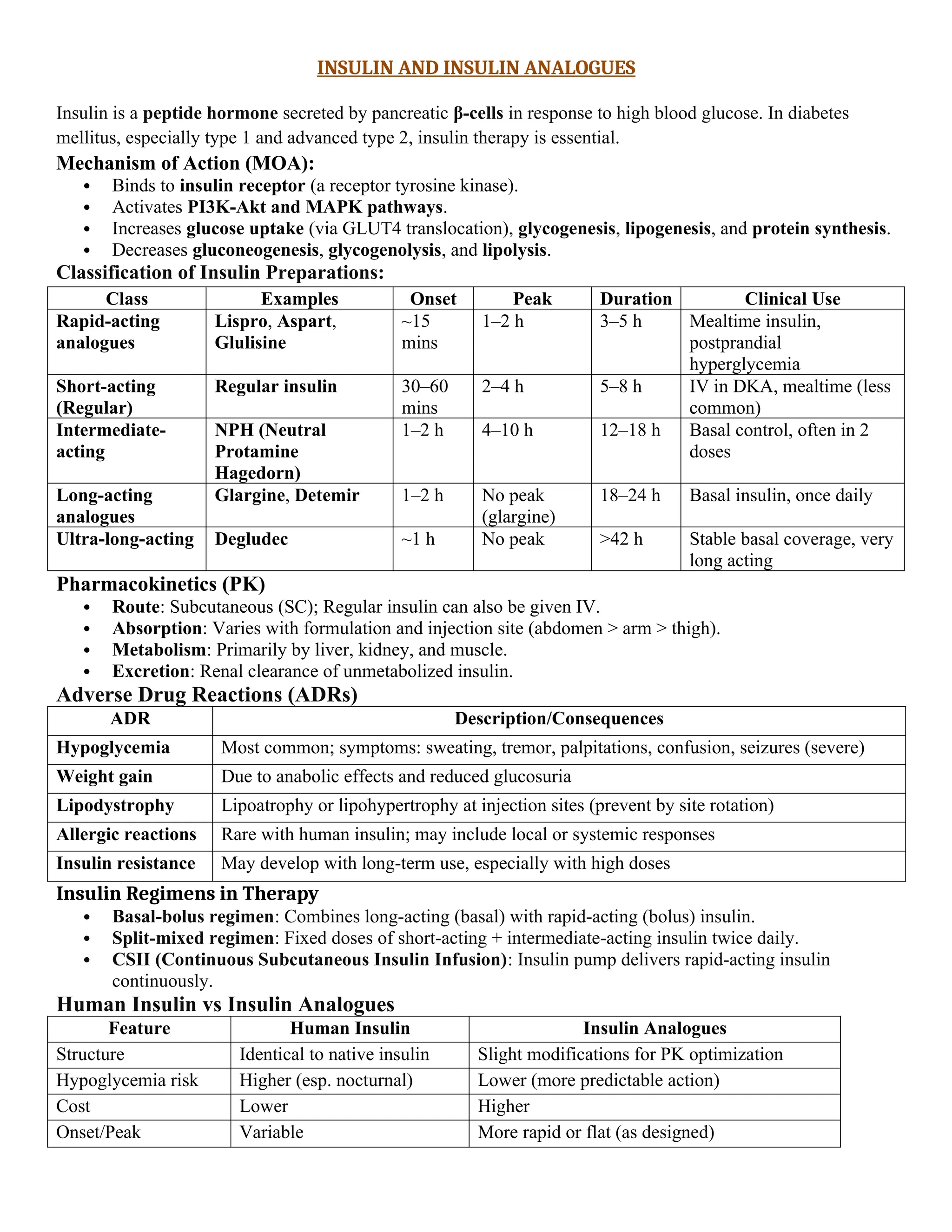
INSULIN AND INSULIN ANALOGUES
Insulin is a peptide hormone secreted by pancreatic β-cells in response to high blood glucose. In diabetes
mellitus, especially type 1 and advanced type 2, insulin therapy is essential.
Mechanism of Action (MOA):
 Binds to insulin receptor (a receptor tyrosine kinase).
 Activates PI3K-Akt and MAPK pathways.
 Increases glucose uptake (via GLUT4 translocation), glycogenesis, lipogenesis, and protein synthesis.
 Decreases gluconeogenesis, glycogenolysis, and lipolysis.
Classification of Insulin Preparations:
Class Examples Onset Peak Duration Clinical Use
Rapid-acting
analogues
Lispro, Aspart,
Glulisine
~15
mins
1–2 h 3–5 h Mealtime insulin,
postprandial
hyperglycemia
Short-acting
(Regular)
Regular insulin 30–60
mins
2–4 h 5–8 h IV in DKA, mealtime (less
common)
Intermediate-
acting
NPH (Neutral
Protamine
Hagedorn)
1–2 h 4–10 h 12–18 h Basal control, often in 2
doses
Long-acting
analogues
Glargine, Detemir 1–2 h No peak
(glargine)
18–24 h Basal insulin, once daily
Ultra-long-acting Degludec ~1 h No peak >42 h Stable basal coverage, very
long acting
Pharmacokinetics (PK)
 Route: Subcutaneous (SC); Regular insulin can also be given IV.
 Absorption: Varies with formulation and injection site (abdomen > arm > thigh).
 Metabolism: Primarily by liver, kidney, and muscle.
 Excretion: Renal clearance of unmetabolized insulin.
Adverse Drug Reactions (ADRs)
ADR Description/Consequences
Hypoglycemia Most common; symptoms: sweating, tremor, palpitations, confusion, seizures (severe)
Weight gain Due to anabolic effects and reduced glucosuria
Lipodystrophy Lipoatrophy or lipohypertrophy at injection sites (prevent by site rotation)
Allergic reactions Rare with human insulin; may include local or systemic responses
Insulin resistance May develop with long-term use, especially with high doses
Insulin Regimens in Therapy
 Basal-bolus regimen: Combines long-acting (basal) with rapid-acting (bolus) insulin.
 Split-mixed regimen: Fixed doses of short-acting + intermediate-acting insulin twice daily.
 CSII (Continuous Subcutaneous Insulin Infusion): Insulin pump delivers rapid-acting insulin
continuously.
Human Insulin vs Insulin Analogues
Feature Human Insulin Insulin Analogues
Structure Identical to native insulin Slight modifications for PK optimization
Hypoglycemia risk Higher (esp. nocturnal) Lower (more predictable action)
Cost Lower Higher
Onset/Peak Variable More rapid or flat (as designed)
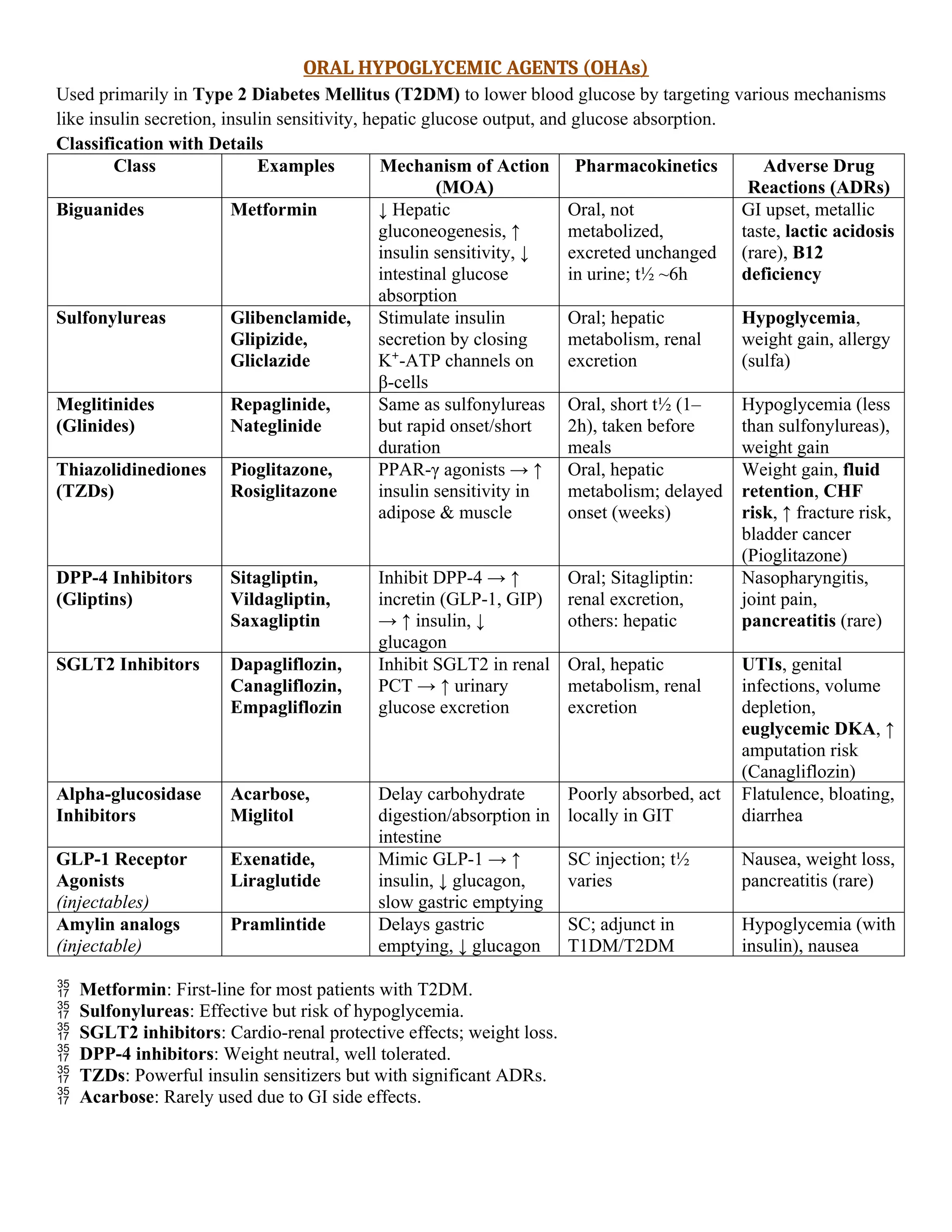
ORAL HYPOGLYCEMIC AGENTS (OHAs)
Used primarily in Type 2 Diabetes Mellitus (T2DM) to lower blood glucose by targeting various mechanisms
like insulin secretion, insulin sensitivity, hepatic glucose output, and glucose absorption.
Classification with Details
Class Examples Mechanism of Action
(MOA)
Pharmacokinetics Adverse Drug
Reactions (ADRs)
Biguanides Metformin ↓ Hepatic
gluconeogenesis, ↑
insulin sensitivity, ↓
intestinal glucose
absorption
Oral, not
metabolized,
excreted unchanged
in urine; t½ ~6h
GI upset, metallic
taste, lactic acidosis
(rare), B12
deficiency
Sulfonylureas Glibenclamide,
Glipizide,
Gliclazide
Stimulate insulin
secretion by closing
K -ATP channels on
⁺
β-cells
Oral; hepatic
metabolism, renal
excretion
Hypoglycemia,
weight gain, allergy
(sulfa)
Meglitinides
(Glinides)
Repaglinide,
Nateglinide
Same as sulfonylureas
but rapid onset/short
duration
Oral, short t½ (1–
2h), taken before
meals
Hypoglycemia (less
than sulfonylureas),
weight gain
Thiazolidinediones
(TZDs)
Pioglitazone,
Rosiglitazone
PPAR-γ agonists → ↑
insulin sensitivity in
adipose & muscle
Oral, hepatic
metabolism; delayed
onset (weeks)
Weight gain, fluid
retention, CHF
risk, ↑ fracture risk,
bladder cancer
(Pioglitazone)
DPP-4 Inhibitors
(Gliptins)
Sitagliptin,
Vildagliptin,
Saxagliptin
Inhibit DPP-4 → ↑
incretin (GLP-1, GIP)
→ ↑ insulin, ↓
glucagon
Oral; Sitagliptin:
renal excretion,
others: hepatic
Nasopharyngitis,
joint pain,
pancreatitis (rare)
SGLT2 Inhibitors Dapagliflozin,
Canagliflozin,
Empagliflozin
Inhibit SGLT2 in renal
PCT → ↑ urinary
glucose excretion
Oral, hepatic
metabolism, renal
excretion
UTIs, genital
infections, volume
depletion,
euglycemic DKA, ↑
amputation risk
(Canagliflozin)
Alpha-glucosidase
Inhibitors
Acarbose,
Miglitol
Delay carbohydrate
digestion/absorption in
intestine
Poorly absorbed, act
locally in GIT
Flatulence, bloating,
diarrhea
GLP-1 Receptor
Agonists
(injectables)
Exenatide,
Liraglutide
Mimic GLP-1 → ↑
insulin, ↓ glucagon,
slow gastric emptying
SC injection; t½
varies
Nausea, weight loss,
pancreatitis (rare)
Amylin analogs
(injectable)
Pramlintide Delays gastric
emptying, ↓ glucagon
SC; adjunct in
T1DM/T2DM
Hypoglycemia (with
insulin), nausea
 Metformin: First-line for most patients with T2DM.
 Sulfonylureas: Effective but risk of hypoglycemia.
 SGLT2 inhibitors: Cardio-renal protective effects; weight loss.
 DPP-4 inhibitors: Weight neutral, well tolerated.
 TZDs: Powerful insulin sensitizers but with significant ADRs.
 Acarbose: Rarely used due to GI side effects.
ANALGESICS AND ANTI INFLAMMATORY AGENTS
Classification
A. Non-opioid Analgesics / NSAIDs (Non-Steroidal Anti-Inflammatory Drugs)
Subclass Examples
Non-selective COX inhibitors Aspirin, Ibuprofen, Diclofenac, Indomethacin, Naproxen
Preferential COX-2 inhibitors Nimesulide, Meloxicam
Selective COX-2 inhibitors Celecoxib, Etoricoxib
Para-aminophenol derivative Paracetamol (Acetaminophen)
Pyrazolone derivative Metamizole (Dipyrone)
B. Opioid Analgesics
Subclass Examples
Strong opioids Morphine, Fentanyl, Methadone, Oxycodone
Moderate opioids Codeine, Tramadol
Mixed agonist-antagonist Buprenorphine, Pentazocine
Antagonists Naloxone, Naltrexone
C. Adjuvant Analgesics
Used especially in neuropathic pain:
 Antidepressants (Amitriptyline, Duloxetine)
 Anticonvulsants (Gabapentin, Pregabalin)
 Muscle relaxants (Tizanidine, Baclofen)
2. MECHANISM OF ACTION
A. NSAIDs
 Inhibit cyclooxygenase (COX) → ↓ prostaglandin synthesis
o COX-1: GI mucosa, platelets, kidneys
o COX-2: Induced during inflammation
B. Paracetamol
 Weak COX inhibitor (mostly in CNS) → analgesic & antipyretic, not anti-inflammatory
C. Opioids
 Bind to μ, κ, δ receptors in CNS → inhibit pain pathways via hyperpolarization (↑ K efflux, ↓ Ca²
⁺ ⁺
influx)
ADRs
Drug Class Absorption Metabolism Elimination
NSAIDs Good oral absorption Hepatic (CYP450) Renal
Paracetamol Rapid oral absorption Hepatic (glucuronidation) Renal
Opioids Good oral; many also IV/IM Hepatic (morphine: glucuronidation) Renal, some biliary
B. Paracetamol
 Safe in therapeutic doses
 Overdose → hepatotoxicity (via toxic metabolite NAPQI)
C. Opioids
System ADRs
CNS Sedation, euphoria, respiratory depression
GI Constipation, nausea
System ADRs
CVS Hypotension
Other Dependence, tolerance, miosis, pruritus
CLINICAL USES
Condition Preferred Agents
Mild pain / fever Paracetamol
Inflammatory pain NSAIDs (e.g., Ibuprofen, Naproxen)
Osteoarthritis Paracetamol, NSAIDs, COX-2 inhibitors
Rheumatoid arthritis NSAIDs + DMARDs
Post-op / severe pain Opioids (Morphine, Fentanyl)
Neuropathic pain Tricyclics, Gabapentin, Duloxetine
 NSAIDs = Antipyretic + Analgesic + Anti-inflammatory
 Paracetamol = Antipyretic + Analgesic only
 Opioids = Potent analgesics, risk of addiction
Avoid NSAIDs in
 ulcer, renal disease, pregnancy (3rd trimester)

Lipid derived Autocoids / 5-Hydroxytryptamine & its antagonists / Insulin and insulin analogues / Oral Hypoglycemic Agents / Analgesics and anti inflammatory agents /

  • 1.
    LIPID DERIVED AUTOCOIDS Lipid-derivedautacoids are a group of endogenous bioactive lipid molecules derived primarily from arachidonic acid and other polyunsaturated fatty acids. These molecules act locally and transiently to modulate inflammation, pain, fever, platelet aggregation, and other physiological processes. The main classes include prostaglandins, thromboxanes, leukotrienes, and platelet-activating factor (PAF). Classification Class Examples Mechanism of Action (MOA) Pharmacokinetics (PK) Adverse Drug Reactions (ADRs) Prostaglandins (PGs) PGE1 (Alprostadil), PGE2, PGF2α, PGI2 (Epoprostenol) Act on specific GPCRs (EP, FP, IP receptors) to regulate vasodilation, smooth muscle tone, gastric protection, inflammation Short half-life (seconds to minutes); metabolized in lungs, liver; not orally active Hypotension, flushing, headache, uterine cramping (PGF2α), diarrhea Thromboxanes (TXs) TXA2 (not used therapeutically), inhibitors: Aspirin TXA2 causes vasoconstriction and platelet aggregation via TP receptor; Aspirin irreversibly inhibits COX-1 → ↓ TXA2 Rapid metabolism in liver; TXA2 half-life ~30 seconds; Aspirin is rapidly absorbed Bleeding, GI irritation, hypersensitivity Leukotrienes (LTs) LTC4, LTD4, LTE4; Drugs: Montelukast, Zafirlukast Bind to CysLT1 receptor → bronchoconstriction, ↑ vascular permeability; antagonists block this effect Montelukast: Oral, peak plasma in 3-4 h, t½ ~4-7 h; Zafirlukast t½ ~10 h Headache, GI upset, neuropsychiatric effects (rare) Lipoxins (anti- inflammatory) Lipoxin A4 (endogenous only, no drugs yet) Act via ALX/FPR2 receptor to resolve inflammation Endogenous, rapidly degraded None (no drug form) Platelet- Activating Factor (PAF) Not therapeutic; antagonists (experimental) Binds to PAF receptor (GPCR) → platelet aggregation, inflammation Very short half-life Hypotension, bronchospasm (experimental)  Enzymes involved: COX-1, COX-2 (for prostaglandins & thromboxanes), 5-LOX (for leukotrienes), PLA2 (initial step releasing arachidonic acid).  Clinical Use:  Prostaglandins: Alprostadil (ED, ductus arteriosus patency), Misoprostol (ulcer prevention, abortion), Latanoprost (glaucoma).  Leukotriene antagonists: Asthma maintenance therapy.  Thromboxane inhibitors: Cardiovascular prevention (e.g., aspirin).  Metabolism: Most are metabolized quickly (minutes) and are not suitable for oral use (except stable analogs like montelukast).
  • 2.
    Platelet-Activating Factor (PAF) PAFis a phospholipid-derived autacoid produced by inflammatory cells (e.g., mast cells, basophils, neutrophils, macrophages, endothelial cells) and plays a role in inflammation, platelet aggregation, bronchoconstriction, and vascular permeability. Endogenous PAF Characteristics Feature Details Source Membrane phospholipids via acetyltransferase activation Physiological Role Platelet aggregation, bronchoconstriction, vasodilation, increased vascular permeability, leukocyte activation Receptor G-protein coupled PAF receptor (PAFR) on various cells PAF Antagonist Drugs (mostly experimental or withdrawn) Although no PAF antagonists are widely approved for therapeutic use, several have been studied. Drug Class Examples MOA Pharmacokinetics ADRs PAF Receptor Antagonists Lexipafant, Apafant, Ginkgolides (from Ginkgo biloba) Block PAF receptor → prevent PAF-induced effects (platelet aggregation, bronchospasm, vascular permeability) Most are oral; short to moderate half-lives; many failed due to poor efficacy or safety in trials GI upset, headache, rare liver dysfunction; not widely used due to limited benefit Clinical Interest and Research Areas: Area Rationale Asthma PAF induces bronchoconstriction; antagonists were tested as bronchodilators Sepsis & Shock PAF contributes to inflammatory cascade and hypotension Atherosclerosis PAF promotes platelet aggregation and inflammation in plaques Neurological injury Inflammation-mediated damage modulated by PAF Why Not Widely Used?  Though PAF is biologically potent, antagonists have not consistently shown strong clinical benefit in large trials.  Hence, PAF-targeting drugs are not in routine therapeutic use. 5-HYDROXYTRYPTAMINE AND ITS ANTAGONISTS
  • 3.
    5-Hydroxytryptamine (5-HT), alsoknown as serotonin, is a biogenic amine that acts as a neurotransmitter and autacoid. It has multiple receptor subtypes (5-HT1 to 5-HT7), and both agonists and antagonists of these receptors are used as therapeutic drugs in various conditions. Class Receptor Target Examples Mechanism of Action (MOA) Pharmacokinetics (PK) Adverse Drug Reactions (ADRs) 5-HT1 Agonists 5- HT1B/1D Sumatriptan, Rizatriptan (Triptans) Vasoconstrict cranial blood vessels, inhibit trigeminal neurotransmission (anti-migraine) Oral, SC, nasal forms; t½: Sumatriptan ~2h, Rizatriptan ~2-3h Chest tightness, dizziness, contraindicated in CAD 5-HT1A Partial Agonists 5-HT1A Buspirone Anxiolytic: partial agonist at 5-HT1A → ↓ serotonergic activity in limbic system Oral; onset ~1–2 weeks; t½ ~2-3h Dizziness, nausea, headache, no sedation/addiction 5-HT2A/2C Antagonists 5- HT2A/2C Cyproheptadine, Ketanserin, atypical antipsychotics (e.g., Clozapine) Inhibit vasoconstriction and serotonin- mediated smooth muscle contraction; antiserotonergic and antihistaminic Oral; t½ of Cyproheptadine ~8h Sedation, weight gain, hypotension 5-HT3 Antagonists 5-HT3 (ion channel) Ondansetron, Granisetron, Palonosetron Block serotonin on vagal afferents in GI tract & CTZ → antiemetic (chemo, post-op) Ondansetron t½ ~3-6h, Palonosetron ~40h (long-acting) Constipation, headache, QT prolongation 5-HT4 Agonists 5-HT4 Cisapride (withdrawn), Prucalopride, Tegaserod Enhance GI motility by stimulating enteric neurons Prucalopride: oral, t½ ~24h Diarrhea, abdominal cramps, cardiovascular risks (cisapride) Non- specific 5- HT Modulators Multiple LSD (agonist), Methysergide (antagonist) LSD: hallucinogenic (5- HT2A agonism); Methysergide: migraine prophylaxis (withdrawn) Variable Hallucinations (LSD), retroperitoneal fibrosis (methysergide)  5-HT synthesis: From tryptophan → 5-hydroxytryptophan → serotonin.  Distribution: ~90% in GI tract, rest in platelets and CNS.  Receptor types:  5-HT1: Mostly inhibitory (↓ cAMP)  5-HT2: Excitatory (↑ IP3/DAG)  5-HT3: Ligand-gated ion channel (unique among serotonin receptors)  5-HT4-7: G-protein coupled, varied actions
  • 4.
    INSULIN AND INSULINANALOGUES Insulin is a peptide hormone secreted by pancreatic β-cells in response to high blood glucose. In diabetes mellitus, especially type 1 and advanced type 2, insulin therapy is essential. Mechanism of Action (MOA):  Binds to insulin receptor (a receptor tyrosine kinase).  Activates PI3K-Akt and MAPK pathways.  Increases glucose uptake (via GLUT4 translocation), glycogenesis, lipogenesis, and protein synthesis.  Decreases gluconeogenesis, glycogenolysis, and lipolysis. Classification of Insulin Preparations: Class Examples Onset Peak Duration Clinical Use Rapid-acting analogues Lispro, Aspart, Glulisine ~15 mins 1–2 h 3–5 h Mealtime insulin, postprandial hyperglycemia Short-acting (Regular) Regular insulin 30–60 mins 2–4 h 5–8 h IV in DKA, mealtime (less common) Intermediate- acting NPH (Neutral Protamine Hagedorn) 1–2 h 4–10 h 12–18 h Basal control, often in 2 doses Long-acting analogues Glargine, Detemir 1–2 h No peak (glargine) 18–24 h Basal insulin, once daily Ultra-long-acting Degludec ~1 h No peak >42 h Stable basal coverage, very long acting Pharmacokinetics (PK)  Route: Subcutaneous (SC); Regular insulin can also be given IV.  Absorption: Varies with formulation and injection site (abdomen > arm > thigh).  Metabolism: Primarily by liver, kidney, and muscle.  Excretion: Renal clearance of unmetabolized insulin. Adverse Drug Reactions (ADRs) ADR Description/Consequences Hypoglycemia Most common; symptoms: sweating, tremor, palpitations, confusion, seizures (severe) Weight gain Due to anabolic effects and reduced glucosuria Lipodystrophy Lipoatrophy or lipohypertrophy at injection sites (prevent by site rotation) Allergic reactions Rare with human insulin; may include local or systemic responses Insulin resistance May develop with long-term use, especially with high doses Insulin Regimens in Therapy  Basal-bolus regimen: Combines long-acting (basal) with rapid-acting (bolus) insulin.  Split-mixed regimen: Fixed doses of short-acting + intermediate-acting insulin twice daily.  CSII (Continuous Subcutaneous Insulin Infusion): Insulin pump delivers rapid-acting insulin continuously. Human Insulin vs Insulin Analogues Feature Human Insulin Insulin Analogues Structure Identical to native insulin Slight modifications for PK optimization Hypoglycemia risk Higher (esp. nocturnal) Lower (more predictable action) Cost Lower Higher Onset/Peak Variable More rapid or flat (as designed)
  • 5.
    ORAL HYPOGLYCEMIC AGENTS(OHAs) Used primarily in Type 2 Diabetes Mellitus (T2DM) to lower blood glucose by targeting various mechanisms like insulin secretion, insulin sensitivity, hepatic glucose output, and glucose absorption. Classification with Details Class Examples Mechanism of Action (MOA) Pharmacokinetics Adverse Drug Reactions (ADRs) Biguanides Metformin ↓ Hepatic gluconeogenesis, ↑ insulin sensitivity, ↓ intestinal glucose absorption Oral, not metabolized, excreted unchanged in urine; t½ ~6h GI upset, metallic taste, lactic acidosis (rare), B12 deficiency Sulfonylureas Glibenclamide, Glipizide, Gliclazide Stimulate insulin secretion by closing K -ATP channels on ⁺ β-cells Oral; hepatic metabolism, renal excretion Hypoglycemia, weight gain, allergy (sulfa) Meglitinides (Glinides) Repaglinide, Nateglinide Same as sulfonylureas but rapid onset/short duration Oral, short t½ (1– 2h), taken before meals Hypoglycemia (less than sulfonylureas), weight gain Thiazolidinediones (TZDs) Pioglitazone, Rosiglitazone PPAR-γ agonists → ↑ insulin sensitivity in adipose & muscle Oral, hepatic metabolism; delayed onset (weeks) Weight gain, fluid retention, CHF risk, ↑ fracture risk, bladder cancer (Pioglitazone) DPP-4 Inhibitors (Gliptins) Sitagliptin, Vildagliptin, Saxagliptin Inhibit DPP-4 → ↑ incretin (GLP-1, GIP) → ↑ insulin, ↓ glucagon Oral; Sitagliptin: renal excretion, others: hepatic Nasopharyngitis, joint pain, pancreatitis (rare) SGLT2 Inhibitors Dapagliflozin, Canagliflozin, Empagliflozin Inhibit SGLT2 in renal PCT → ↑ urinary glucose excretion Oral, hepatic metabolism, renal excretion UTIs, genital infections, volume depletion, euglycemic DKA, ↑ amputation risk (Canagliflozin) Alpha-glucosidase Inhibitors Acarbose, Miglitol Delay carbohydrate digestion/absorption in intestine Poorly absorbed, act locally in GIT Flatulence, bloating, diarrhea GLP-1 Receptor Agonists (injectables) Exenatide, Liraglutide Mimic GLP-1 → ↑ insulin, ↓ glucagon, slow gastric emptying SC injection; t½ varies Nausea, weight loss, pancreatitis (rare) Amylin analogs (injectable) Pramlintide Delays gastric emptying, ↓ glucagon SC; adjunct in T1DM/T2DM Hypoglycemia (with insulin), nausea  Metformin: First-line for most patients with T2DM.  Sulfonylureas: Effective but risk of hypoglycemia.  SGLT2 inhibitors: Cardio-renal protective effects; weight loss.  DPP-4 inhibitors: Weight neutral, well tolerated.  TZDs: Powerful insulin sensitizers but with significant ADRs.  Acarbose: Rarely used due to GI side effects.
  • 6.
    ANALGESICS AND ANTIINFLAMMATORY AGENTS Classification A. Non-opioid Analgesics / NSAIDs (Non-Steroidal Anti-Inflammatory Drugs) Subclass Examples Non-selective COX inhibitors Aspirin, Ibuprofen, Diclofenac, Indomethacin, Naproxen Preferential COX-2 inhibitors Nimesulide, Meloxicam Selective COX-2 inhibitors Celecoxib, Etoricoxib Para-aminophenol derivative Paracetamol (Acetaminophen) Pyrazolone derivative Metamizole (Dipyrone) B. Opioid Analgesics Subclass Examples Strong opioids Morphine, Fentanyl, Methadone, Oxycodone Moderate opioids Codeine, Tramadol Mixed agonist-antagonist Buprenorphine, Pentazocine Antagonists Naloxone, Naltrexone C. Adjuvant Analgesics Used especially in neuropathic pain:  Antidepressants (Amitriptyline, Duloxetine)  Anticonvulsants (Gabapentin, Pregabalin)  Muscle relaxants (Tizanidine, Baclofen) 2. MECHANISM OF ACTION A. NSAIDs  Inhibit cyclooxygenase (COX) → ↓ prostaglandin synthesis o COX-1: GI mucosa, platelets, kidneys o COX-2: Induced during inflammation B. Paracetamol  Weak COX inhibitor (mostly in CNS) → analgesic & antipyretic, not anti-inflammatory C. Opioids  Bind to μ, κ, δ receptors in CNS → inhibit pain pathways via hyperpolarization (↑ K efflux, ↓ Ca² ⁺ ⁺ influx) ADRs Drug Class Absorption Metabolism Elimination NSAIDs Good oral absorption Hepatic (CYP450) Renal Paracetamol Rapid oral absorption Hepatic (glucuronidation) Renal Opioids Good oral; many also IV/IM Hepatic (morphine: glucuronidation) Renal, some biliary B. Paracetamol  Safe in therapeutic doses  Overdose → hepatotoxicity (via toxic metabolite NAPQI) C. Opioids System ADRs CNS Sedation, euphoria, respiratory depression GI Constipation, nausea
  • 7.
    System ADRs CVS Hypotension OtherDependence, tolerance, miosis, pruritus CLINICAL USES Condition Preferred Agents Mild pain / fever Paracetamol Inflammatory pain NSAIDs (e.g., Ibuprofen, Naproxen) Osteoarthritis Paracetamol, NSAIDs, COX-2 inhibitors Rheumatoid arthritis NSAIDs + DMARDs Post-op / severe pain Opioids (Morphine, Fentanyl) Neuropathic pain Tricyclics, Gabapentin, Duloxetine  NSAIDs = Antipyretic + Analgesic + Anti-inflammatory  Paracetamol = Antipyretic + Analgesic only  Opioids = Potent analgesics, risk of addiction Avoid NSAIDs in  ulcer, renal disease, pregnancy (3rd trimester)