SHANN REEXCHEL N. ANGCO × CAROLINE RESERVA
A. Methotrexate,
pemetrexed, and pralatrexate
B. 6-Mercaptopurine
C. Fludarabine
D. Cladribine
E. 5-Fluorouracil
F. Capecitabine
G. Cytarabine
H. Azacitidine
I. Gemcitabine
Antimetabolites are structurally
related to normal compounds that exist
within the cell. They generally interfere with
the availability of normal purine or
pyrimidine nucleotide precursors, either by
inhibiting their synthesis or by competing
with them in DNA or RNA synthesis. Their
maximal cytotoxic effects are in S-phase
and are, therefore, cell cycle specific.
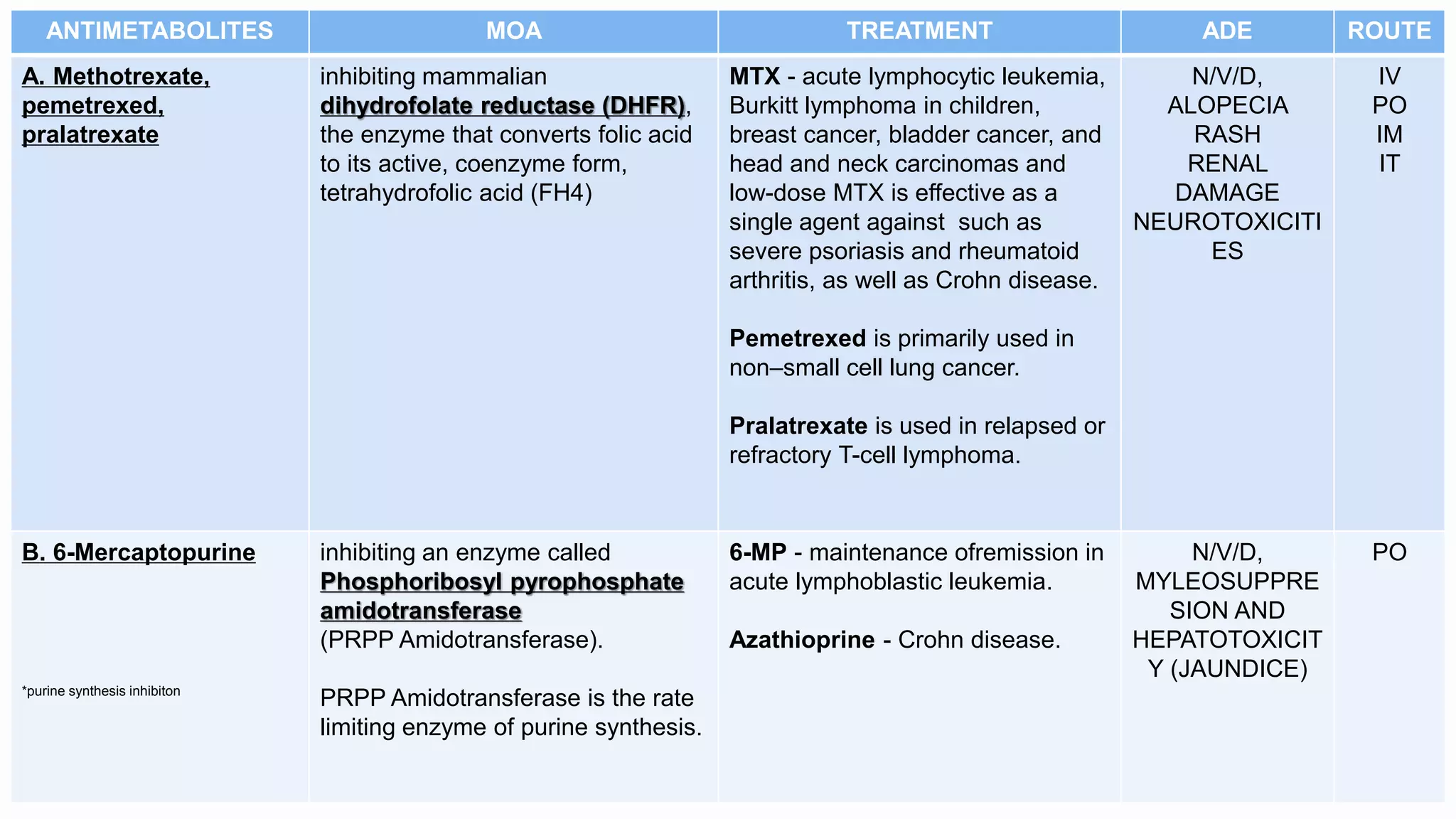
ANTIMETABOLITES MOA TREATMENT ADE ROUTE
A. Methotrexate,
pemetrexed,
pralatrexate
inhibiting mammalian
dihydrofolate reductase (DHFR),
the enzyme that converts folic acid
to its active, coenzyme form,
tetrahydrofolic acid (FH4)
MTX - acute lymphocytic leukemia,
Burkitt lymphoma in children,
breast cancer, bladder cancer, and
head and neck carcinomas and
low-dose MTX is effective as a
single agent against such as
severe psoriasis and rheumatoid
arthritis, as well as Crohn disease.
Pemetrexed is primarily used in
non–small cell lung cancer.
Pralatrexate is used in relapsed or
refractory T-cell lymphoma.
N/V/D,
ALOPECIA
RASH
RENAL
DAMAGE
NEUROTOXICITI
ES
IV
PO
IM
IT
B. 6-Mercaptopurine
*purine synthesis inhibiton
inhibiting an enzyme called
Phosphoribosyl pyrophosphate
amidotransferase
(PRPP Amidotransferase).
PRPP Amidotransferase is the rate
limiting enzyme of purine synthesis.
6-MP - maintenance ofremission in
acute lymphoblastic leukemia.
Azathioprine - Crohn disease.
N/V/D,
MYLEOSUPPRE
SION AND
HEPATOTOXICIT
Y (JAUNDICE)
PO
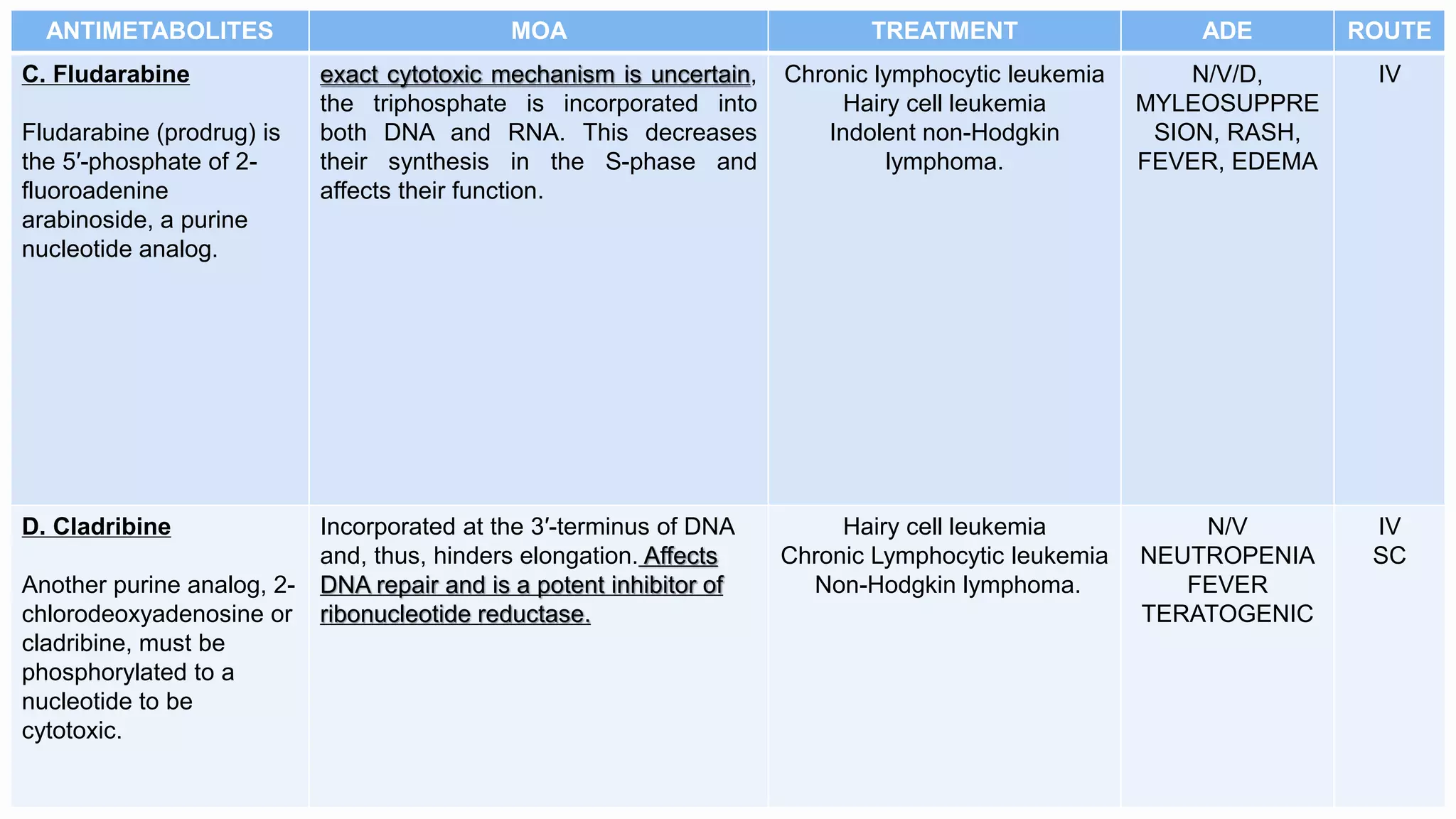
ANTIMETABOLITES MOA TREATMENT ADE ROUTE
C. Fludarabine
Fludarabine (prodrug) is
the 5′-phosphate of 2-
fluoroadenine
arabinoside, a purine
nucleotide analog.
exact cytotoxic mechanism is uncertain,
the triphosphate is incorporated into
both DNA and RNA. This decreases
their synthesis in the S-phase and
affects their function.
Chronic lymphocytic leukemia
Hairy cell leukemia
Indolent non-Hodgkin
lymphoma.
N/V/D,
MYLEOSUPPRE
SION, RASH,
FEVER, EDEMA
IV
D. Cladribine
Another purine analog, 2-
chlorodeoxyadenosine or
cladribine, must be
phosphorylated to a
nucleotide to be
cytotoxic.
Incorporated at the 3′-terminus of DNA
and, thus, hinders elongation. Affects
DNA repair and is a potent inhibitor of
ribonucleotide reductase.
Hairy cell leukemia
Chronic Lymphocytic leukemia
Non-Hodgkin lymphoma.
N/V
NEUTROPENIA
FEVER
TERATOGENIC
IV
SC
ANTIMETABOLITES MOA TREATMENT ADE ROUTE
E. 5-Fluorouracil
a pyrimidine analog, has
a stable fluorine atom in
place of a hydrogen atom
at position 5 of the uracil
ring.
5-FU itself is converted to the corresponding
deoxynucleotide (5-fluorodeoxyuridine
monophosphate [5-FdUMP] which competes
with deoxyuridine monophosphate for
thymidylate synthase, thus inhibiting its action.
DNA synthesis decreases due to lack of
thymidine, leading to imbalanced cell growth
and “thymidine-less death” of rapidly dividing
cells.
slowly growing solid
tumors
(for example,
colorectal,breast, ovarian,
pancreatic, and gastric
carcinomas).
When applied topically, 5-
FU is also effective for the
treatment of superficial
basal cell carcinomas.
DIARRHEA
ALOPECIA
HAND FOOT
SYNDROME
IV
F. Capecitabine Capecitabine is metabolised to 5-FU which in
turn is a thymidylate synthase inhibitor, hence
inhibiting the synthesis of thymidine
monophosphate (ThMP), the active form of
thymidine which is required for the de novo
synthesis of DNA.
Thus, the cytotoxic activity of capecitabine is
the same as that of 5-FU and is tumor specific.
Olorectal
Metastatic breast cancer
DIARRHEA
CHEST PAIN
HAND FOOT
SYNDROME
PO
ANTIMETABOLITES MOA TREATMENT ADE ROUTE
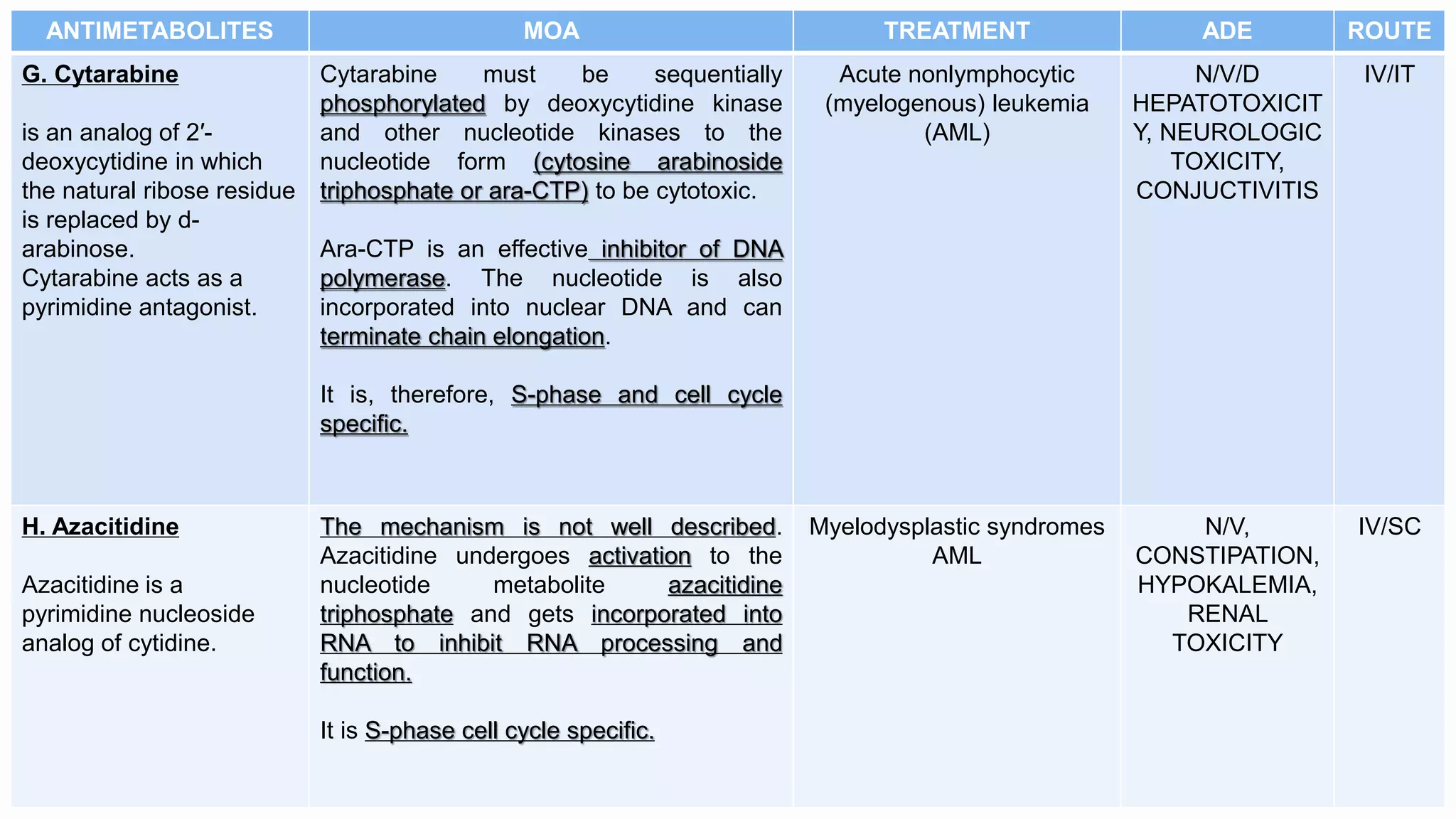
G. Cytarabine
is an analog of 2′-
deoxycytidine in which
the natural ribose residue
is replaced by d-
arabinose.
Cytarabine acts as a
pyrimidine antagonist.
Cytarabine must be sequentially
phosphorylated by deoxycytidine kinase
and other nucleotide kinases to the
nucleotide form (cytosine arabinoside
triphosphate or ara-CTP) to be cytotoxic.
Ara-CTP is an effective inhibitor of DNA
polymerase. The nucleotide is also
incorporated into nuclear DNA and can
terminate chain elongation.
It is, therefore, S-phase and cell cycle
specific.
Acute nonlymphocytic
(myelogenous) leukemia
(AML)
N/V/D
HEPATOTOXICIT
Y, NEUROLOGIC
TOXICITY,
CONJUCTIVITIS
IV/IT
H. Azacitidine
Azacitidine is a
pyrimidine nucleoside
analog of cytidine.
The mechanism is not well described.
Azacitidine undergoes activation to the
nucleotide metabolite azacitidine
triphosphate and gets incorporated into
RNA to inhibit RNA processing and
function.
It is S-phase cell cycle specific.
Myelodysplastic syndromes
AML
N/V,
CONSTIPATION,
HYPOKALEMIA,
RENAL
TOXICITY
IV/SC
ANTIMETABOLITES MOA TREATMENT ADE ROUTE
I. Gemcitabine
emcitabine is an
analog of the
nucleoside
deoxycytidine.
Gemcitabine is a substrate for
deoxycytidine kinase, which
phosphorylates the drug to
2′,2′-difluorodeoxycytidine
triphosphate which then Inhibits
DNA synthesis.
pancreatic cancer and non–
small cell lung cancer
N/V,
CONSTIPATIO
N,
HYPOKALEMI
A, RENAL
TOXICITY
IV/SC
A. Anthracyclines:
Doxorubicin, daunorubicin,
idarubicin,epirubicin, and
mitoxantrone
B. Bleomycin
The antitumor antibiotics owe their
cytotoxic action primarily to their
interactions with DNA, leading to disruption
of DNA function. In addition to
intercalation, their abilities to inhibit
topoisomerases (I and II) and produce free
radicals also play a major role in their
cytotoxic effect. They are cell cycle
nonspecific with bleomycin as an
ANTIBIOTICS MOA TREATMENT ADE ROUTE
A. Anthracyclines:
Doxorubicin,
daunorubicin,
idarubicin,
epirubicin, and
mitoxantrone
Doxorubicin and
daunorubicin re
anthracycline antibiotics.
Doxorubicin is the
hydroxylated analog of
daunorubicin.
Idarubicin the 4-
demethoxy analog of
daunorubicin, epirubicin ,
and mitoxantrone are
also available. .
For example, doxorubicin-derived
free radicals can induce
membrane lipid peroxidation,
DNA strand scission, and direct
oxidation of purine or pyrimidine
bases, thiols, and amines.
(Breakage of DNA strand)
Doxorubicin - sarcomas and a
variety of carcinomas, including
breast and lung, acute lymphocytic
leukemia and lymphomas.
Daunorubicin and idarubicin -
acute leukemias, and
mitoxantrone - prostate cancer.
N/V/D,
MYELOSUPPRE
SSION, RED
COLORATION
OF URINE,
CARDIAC
TOXICITY,
MUCOSITIS.
STRONG
VESICANT.
IV-BEC
THEY
ARE
INACT.
BUY
THE
GIT
ANTIBIOTICS MOA TREATMENT ADE ROUTE
B. Bleomycin
Bleomycin is a
mixture of different
copper-chelating,
glycopeptides that, like
the anthracycline
antibiotics, cause
scission of DNA by an
oxidative process.
Bleomycin is cell
cycle specific and
causes cells to
accumulate in the G2
phase.
A DNA–bleomycin–Fe2+
complex appears to undergo
oxidation to bleomycin–Fe3+.
The liberated electrons react
with oxygen to form superoxide
or hydroxyl radicals, which, in
turn, attack the phosphodiester
bonds of DNA, resulting in
strand breakage and
chromosomal aberrations.
testicular cancers and Hodgkin
lymphoma.
PULMONARY
FIBROSIS,
ALOPECIA,
SKIN
REACTIONS,
HYPERPIGME
NTATION OF
HAND,
CHILLS AND
ANAYPHYLAC
TIC
IV/SC/I
M
A. Cyclophosphamide
and ifosfamide
B. Nitrosoureas
C. Dacarbazine
D. Temozolomide
E. Other alkylating agents
Mechlorethamine,
Melphalan, Chlorambucil
Alkylating agents exert their cytotoxic effects
by covalently binding to nucleophilic groups on
various cell constituents. Alkylation of DNA is
probably the crucial cytotoxic reaction that is lethal to
the tumor cells.
Alkylating agents do not discriminate between
cycling and resting cells, even though they are most
toxic for rapidly dividing cells. They are used in
combination with other agents to treat a wide variety
of lymphatic and solid cancers.
ANTIBIOTICS MOA TREATMENT ADE ROUTE
A. Cyclophosphamide
and ifosfamide
These drugs are very
closely related mustard
agents that share most of
the same primary
mechanisms and
toxicities.
These agents have a
broad clinical spectrum.
neoplastic diseases,such as non-
Hodgkin lymphoma, sarcoma, and
breast cancer.
N/V/D,
ALOPECIA,
AMENORRHEA,
HEMORRHAGIC
CYSTITIS,
MYELOSUPPRE
SSION
IIV/PO -
IV
ANTIBIOTICS MOA TREATMENT ADE ROUT
E
B. Nitrosoureas
Carmustine and lomustine
are closely related
nitrosoureas. Because of
their ability to penetrate the
CNS.
The nitrosoureas exert cytotoxic effects
by an alkylation that inhibits replication
and, eventually, RNA and protein
synthesis.
Although they alkylate DNA in resting
cells, cytotoxicity is expressed primarily
on cells that are actively dividing.
Therefore, nondividing cells can
escape death if DNA repair occurs.
brain tumors N/V,
INFERTILITY,
IMPOTENCE,
PULMONARY
TOXICITY
IV -
PO
ANTIBIOTICS MOA TREATMENT ADE ROUTE
C. Dacarbazine
Carmustine and
lomustine are closely
related nitrosoureas.
Because of their ability to
penetrate the CNS, the
nitrosoureas are primarily
employed in the
treatment of brain
tumors.
Dacarbazine undergo biotransformation to an
active metabolite, methyltriazenoimidazole
carboxamide (MTIC) forming methylcarbonium
ions that can attack the nucleophilic groups in
the DNA molecul and its metabolite methylate
DNA on the O6 position of guanine.
melanoma and
Hodgkin lymphoma.
N/V,
MYELOSUPPRE
SSION, FLU-
LIKE
SYNDROME,
PHOTOSENSITI
VITY
IV
D. Temozolomide oth must undergo biotransformation to an active
metabolite, MTIC, which probably is
responsible for the methylation of DNA on the 6
position of guanine. Unlike dacarbazine,
temozolomide does not require the CYP450
system for metabolic transformation, and it
undergoes chemical transformation at normal
physiological pH.
Temozolomide also has the property of
inhibiting the repair enzyme, O6-guanine-DNA
alkyltransferase.
glioblastomas and
anaplastic
astrocytomas and
metastatic melanoma
N/V,
MYELOSUPPRE
SSION,
HEADACHE,
FATIGUE,
PHOTOSENSITI
VITY
PO
ANTIBIOTICS MOA TREATMENT ADE ROUTE
E. Other alkylating agents
Mechlorethamine - developed as a vesicant (nitrogen
mustard) during World War I.
Its ability to cause lymphocytopenia led to its use in
lymphatic cancers.
Melphalan - a phenylalanine derivative of nitrogen
mustard.
careful monitoring the platelet and white blood cell
counts.
multiple myeloma. N/V/D
HYPERSENSITI
VITY
IV
PO
ANTIBIOTICS MOA TREATMENT ADE ROUTE
E. Other alkylating agents
Chlorambucil - is another bifunctional alkylating
agent.
Both melphalan and chlorambucil have moderate
hematologic toxicities and upset the GI tract.
chronic lymphocytic
leukemia
SKIN RASH
SEIZURES
PO
Busulfan - In aged patients, busulfan can cause
pulmonary fibrosis (“busulfan lung”).
Like other alkylating agents, all of these agents
are leukemogenic.
chronic granulocytic
leukemia
N/V/D
HEPATOTOXIC
ITY
SKIN RASH
PULMONARY
FIBROSIS
IV
• A. Vincristine
and vinblastine
• B. Paclitaxel and
docetaxel
The mitotic spindle is part of a larger, intracellular
skeleton (cytoskeleton) that is essential for the
movements of structures occurring in the cytoplasm of all
eukaryotic cells. The mitotic spindle consists of chromatin
plus a system of microtubules composed of the protein
tubulin. The mitotic spindle is essential for the equal
partitioning of DNA into the two daughter cells that are
formed when a eukaryotic cell divides.
Sever plant-derived substances used as
anticancer drugs disrupt this process by affecting the
equilibrium between the polymerized and depolymerized
forms of the microtubules, thereby causing cytotoxicity.
A. Vincristine and vinblastine
Vincristine (VX) and vinblastine (VBL) are structurally
related compounds derived from the periwinkle plant, Vinca rosea.
They are, therefore, referred to as the Vinca alkaloids.
VX is used in the treatment of acute lymphoblastic leukemia in
children, Wilms tumor, Ewing soft tissue sarcoma, and Hodgkin
and non-Hodgkin lymphomas, as well as some other rapidly
proliferating neoplasms.
VBL (VBL + Bleomycin + Cisplatin ) - metastatic testicular
carcinoma.
TX: of systemic Hodgkin and non-Hodgkin lymphomas. non–small
cell lung cancer, either as a single agent or with cisplatin.
A. Vincristine and vinblastine
MOA: VX, VRB, and VBL are all cell cycle specific and phase
specific, because they block mitosis in metaphase (M-phase).
Their binding to the microtubular protein, tubulin, blocks the
ability of tubulin to polymerize to form microtubules.The resulting
dysfunctional spindle apparatus, frozen in metaphase, prevents
chromosomal segregation and cell proliferation
B. Paclitaxel and docetaxel
Paclitaxel [PAK-li-tax-el] was the first member of the taxane family
to be used in cancer chemotherapy. A semisynthetic paclitaxel is
now available through chemical modification of a precursor found in
the needles of Pacific yew species. An albumin-bound form is also
available. Substitution of a side chain has resulted in docetaxel,
which is the more potent of the two drugs.
PACLITAXEL - advanced ovarian cancer and metastatic
breast cancer
DOCETAXEL - prostate, breast, GI, and non–small cell lung
cancers.
B. Paclitaxel and docetaxel
MOA: Both drugs are active in the G2/M-phase of the cell cycle,
but unlike the Vinca alkaloids, they promote polymerization and
stabilization of the polymer rather than disassembly, leading to the
accumulation of microtubules. The overly stable microtubules
formed are nonfunctional, and chromosome desegregation does
not occur. This results in death of the cell.

Anticancer drugs Pharmacology

  • 1.
    SHANN REEXCHEL N.ANGCO × CAROLINE RESERVA
  • 2.
    A. Methotrexate, pemetrexed, andpralatrexate B. 6-Mercaptopurine C. Fludarabine D. Cladribine E. 5-Fluorouracil F. Capecitabine G. Cytarabine H. Azacitidine I. Gemcitabine Antimetabolites are structurally related to normal compounds that exist within the cell. They generally interfere with the availability of normal purine or pyrimidine nucleotide precursors, either by inhibiting their synthesis or by competing with them in DNA or RNA synthesis. Their maximal cytotoxic effects are in S-phase and are, therefore, cell cycle specific.
  • 3.
    ANTIMETABOLITES MOA TREATMENTADE ROUTE A. Methotrexate, pemetrexed, pralatrexate inhibiting mammalian dihydrofolate reductase (DHFR), the enzyme that converts folic acid to its active, coenzyme form, tetrahydrofolic acid (FH4) MTX - acute lymphocytic leukemia, Burkitt lymphoma in children, breast cancer, bladder cancer, and head and neck carcinomas and low-dose MTX is effective as a single agent against such as severe psoriasis and rheumatoid arthritis, as well as Crohn disease. Pemetrexed is primarily used in non–small cell lung cancer. Pralatrexate is used in relapsed or refractory T-cell lymphoma. N/V/D, ALOPECIA RASH RENAL DAMAGE NEUROTOXICITI ES IV PO IM IT B. 6-Mercaptopurine *purine synthesis inhibiton inhibiting an enzyme called Phosphoribosyl pyrophosphate amidotransferase (PRPP Amidotransferase). PRPP Amidotransferase is the rate limiting enzyme of purine synthesis. 6-MP - maintenance ofremission in acute lymphoblastic leukemia. Azathioprine - Crohn disease. N/V/D, MYLEOSUPPRE SION AND HEPATOTOXICIT Y (JAUNDICE) PO
  • 4.
    ANTIMETABOLITES MOA TREATMENTADE ROUTE C. Fludarabine Fludarabine (prodrug) is the 5′-phosphate of 2- fluoroadenine arabinoside, a purine nucleotide analog. exact cytotoxic mechanism is uncertain, the triphosphate is incorporated into both DNA and RNA. This decreases their synthesis in the S-phase and affects their function. Chronic lymphocytic leukemia Hairy cell leukemia Indolent non-Hodgkin lymphoma. N/V/D, MYLEOSUPPRE SION, RASH, FEVER, EDEMA IV D. Cladribine Another purine analog, 2- chlorodeoxyadenosine or cladribine, must be phosphorylated to a nucleotide to be cytotoxic. Incorporated at the 3′-terminus of DNA and, thus, hinders elongation. Affects DNA repair and is a potent inhibitor of ribonucleotide reductase. Hairy cell leukemia Chronic Lymphocytic leukemia Non-Hodgkin lymphoma. N/V NEUTROPENIA FEVER TERATOGENIC IV SC
  • 5.
    ANTIMETABOLITES MOA TREATMENTADE ROUTE E. 5-Fluorouracil a pyrimidine analog, has a stable fluorine atom in place of a hydrogen atom at position 5 of the uracil ring. 5-FU itself is converted to the corresponding deoxynucleotide (5-fluorodeoxyuridine monophosphate [5-FdUMP] which competes with deoxyuridine monophosphate for thymidylate synthase, thus inhibiting its action. DNA synthesis decreases due to lack of thymidine, leading to imbalanced cell growth and “thymidine-less death” of rapidly dividing cells. slowly growing solid tumors (for example, colorectal,breast, ovarian, pancreatic, and gastric carcinomas). When applied topically, 5- FU is also effective for the treatment of superficial basal cell carcinomas. DIARRHEA ALOPECIA HAND FOOT SYNDROME IV F. Capecitabine Capecitabine is metabolised to 5-FU which in turn is a thymidylate synthase inhibitor, hence inhibiting the synthesis of thymidine monophosphate (ThMP), the active form of thymidine which is required for the de novo synthesis of DNA. Thus, the cytotoxic activity of capecitabine is the same as that of 5-FU and is tumor specific. Olorectal Metastatic breast cancer DIARRHEA CHEST PAIN HAND FOOT SYNDROME PO
  • 6.
    ANTIMETABOLITES MOA TREATMENTADE ROUTE G. Cytarabine is an analog of 2′- deoxycytidine in which the natural ribose residue is replaced by d- arabinose. Cytarabine acts as a pyrimidine antagonist. Cytarabine must be sequentially phosphorylated by deoxycytidine kinase and other nucleotide kinases to the nucleotide form (cytosine arabinoside triphosphate or ara-CTP) to be cytotoxic. Ara-CTP is an effective inhibitor of DNA polymerase. The nucleotide is also incorporated into nuclear DNA and can terminate chain elongation. It is, therefore, S-phase and cell cycle specific. Acute nonlymphocytic (myelogenous) leukemia (AML) N/V/D HEPATOTOXICIT Y, NEUROLOGIC TOXICITY, CONJUCTIVITIS IV/IT H. Azacitidine Azacitidine is a pyrimidine nucleoside analog of cytidine. The mechanism is not well described. Azacitidine undergoes activation to the nucleotide metabolite azacitidine triphosphate and gets incorporated into RNA to inhibit RNA processing and function. It is S-phase cell cycle specific. Myelodysplastic syndromes AML N/V, CONSTIPATION, HYPOKALEMIA, RENAL TOXICITY IV/SC
  • 7.
    ANTIMETABOLITES MOA TREATMENTADE ROUTE I. Gemcitabine emcitabine is an analog of the nucleoside deoxycytidine. Gemcitabine is a substrate for deoxycytidine kinase, which phosphorylates the drug to 2′,2′-difluorodeoxycytidine triphosphate which then Inhibits DNA synthesis. pancreatic cancer and non– small cell lung cancer N/V, CONSTIPATIO N, HYPOKALEMI A, RENAL TOXICITY IV/SC
  • 8.
    A. Anthracyclines: Doxorubicin, daunorubicin, idarubicin,epirubicin,and mitoxantrone B. Bleomycin The antitumor antibiotics owe their cytotoxic action primarily to their interactions with DNA, leading to disruption of DNA function. In addition to intercalation, their abilities to inhibit topoisomerases (I and II) and produce free radicals also play a major role in their cytotoxic effect. They are cell cycle nonspecific with bleomycin as an
  • 9.
    ANTIBIOTICS MOA TREATMENTADE ROUTE A. Anthracyclines: Doxorubicin, daunorubicin, idarubicin, epirubicin, and mitoxantrone Doxorubicin and daunorubicin re anthracycline antibiotics. Doxorubicin is the hydroxylated analog of daunorubicin. Idarubicin the 4- demethoxy analog of daunorubicin, epirubicin , and mitoxantrone are also available. . For example, doxorubicin-derived free radicals can induce membrane lipid peroxidation, DNA strand scission, and direct oxidation of purine or pyrimidine bases, thiols, and amines. (Breakage of DNA strand) Doxorubicin - sarcomas and a variety of carcinomas, including breast and lung, acute lymphocytic leukemia and lymphomas. Daunorubicin and idarubicin - acute leukemias, and mitoxantrone - prostate cancer. N/V/D, MYELOSUPPRE SSION, RED COLORATION OF URINE, CARDIAC TOXICITY, MUCOSITIS. STRONG VESICANT. IV-BEC THEY ARE INACT. BUY THE GIT
  • 10.
    ANTIBIOTICS MOA TREATMENTADE ROUTE B. Bleomycin Bleomycin is a mixture of different copper-chelating, glycopeptides that, like the anthracycline antibiotics, cause scission of DNA by an oxidative process. Bleomycin is cell cycle specific and causes cells to accumulate in the G2 phase. A DNA–bleomycin–Fe2+ complex appears to undergo oxidation to bleomycin–Fe3+. The liberated electrons react with oxygen to form superoxide or hydroxyl radicals, which, in turn, attack the phosphodiester bonds of DNA, resulting in strand breakage and chromosomal aberrations. testicular cancers and Hodgkin lymphoma. PULMONARY FIBROSIS, ALOPECIA, SKIN REACTIONS, HYPERPIGME NTATION OF HAND, CHILLS AND ANAYPHYLAC TIC IV/SC/I M
  • 11.
    A. Cyclophosphamide and ifosfamide B.Nitrosoureas C. Dacarbazine D. Temozolomide E. Other alkylating agents Mechlorethamine, Melphalan, Chlorambucil Alkylating agents exert their cytotoxic effects by covalently binding to nucleophilic groups on various cell constituents. Alkylation of DNA is probably the crucial cytotoxic reaction that is lethal to the tumor cells. Alkylating agents do not discriminate between cycling and resting cells, even though they are most toxic for rapidly dividing cells. They are used in combination with other agents to treat a wide variety of lymphatic and solid cancers.
  • 12.
    ANTIBIOTICS MOA TREATMENTADE ROUTE A. Cyclophosphamide and ifosfamide These drugs are very closely related mustard agents that share most of the same primary mechanisms and toxicities. These agents have a broad clinical spectrum. neoplastic diseases,such as non- Hodgkin lymphoma, sarcoma, and breast cancer. N/V/D, ALOPECIA, AMENORRHEA, HEMORRHAGIC CYSTITIS, MYELOSUPPRE SSION IIV/PO - IV
  • 13.
    ANTIBIOTICS MOA TREATMENTADE ROUT E B. Nitrosoureas Carmustine and lomustine are closely related nitrosoureas. Because of their ability to penetrate the CNS. The nitrosoureas exert cytotoxic effects by an alkylation that inhibits replication and, eventually, RNA and protein synthesis. Although they alkylate DNA in resting cells, cytotoxicity is expressed primarily on cells that are actively dividing. Therefore, nondividing cells can escape death if DNA repair occurs. brain tumors N/V, INFERTILITY, IMPOTENCE, PULMONARY TOXICITY IV - PO
  • 14.
    ANTIBIOTICS MOA TREATMENTADE ROUTE C. Dacarbazine Carmustine and lomustine are closely related nitrosoureas. Because of their ability to penetrate the CNS, the nitrosoureas are primarily employed in the treatment of brain tumors. Dacarbazine undergo biotransformation to an active metabolite, methyltriazenoimidazole carboxamide (MTIC) forming methylcarbonium ions that can attack the nucleophilic groups in the DNA molecul and its metabolite methylate DNA on the O6 position of guanine. melanoma and Hodgkin lymphoma. N/V, MYELOSUPPRE SSION, FLU- LIKE SYNDROME, PHOTOSENSITI VITY IV D. Temozolomide oth must undergo biotransformation to an active metabolite, MTIC, which probably is responsible for the methylation of DNA on the 6 position of guanine. Unlike dacarbazine, temozolomide does not require the CYP450 system for metabolic transformation, and it undergoes chemical transformation at normal physiological pH. Temozolomide also has the property of inhibiting the repair enzyme, O6-guanine-DNA alkyltransferase. glioblastomas and anaplastic astrocytomas and metastatic melanoma N/V, MYELOSUPPRE SSION, HEADACHE, FATIGUE, PHOTOSENSITI VITY PO
  • 15.
    ANTIBIOTICS MOA TREATMENTADE ROUTE E. Other alkylating agents Mechlorethamine - developed as a vesicant (nitrogen mustard) during World War I. Its ability to cause lymphocytopenia led to its use in lymphatic cancers. Melphalan - a phenylalanine derivative of nitrogen mustard. careful monitoring the platelet and white blood cell counts. multiple myeloma. N/V/D HYPERSENSITI VITY IV PO
  • 16.
    ANTIBIOTICS MOA TREATMENTADE ROUTE E. Other alkylating agents Chlorambucil - is another bifunctional alkylating agent. Both melphalan and chlorambucil have moderate hematologic toxicities and upset the GI tract. chronic lymphocytic leukemia SKIN RASH SEIZURES PO Busulfan - In aged patients, busulfan can cause pulmonary fibrosis (“busulfan lung”). Like other alkylating agents, all of these agents are leukemogenic. chronic granulocytic leukemia N/V/D HEPATOTOXIC ITY SKIN RASH PULMONARY FIBROSIS IV
  • 17.
    • A. Vincristine andvinblastine • B. Paclitaxel and docetaxel The mitotic spindle is part of a larger, intracellular skeleton (cytoskeleton) that is essential for the movements of structures occurring in the cytoplasm of all eukaryotic cells. The mitotic spindle consists of chromatin plus a system of microtubules composed of the protein tubulin. The mitotic spindle is essential for the equal partitioning of DNA into the two daughter cells that are formed when a eukaryotic cell divides. Sever plant-derived substances used as anticancer drugs disrupt this process by affecting the equilibrium between the polymerized and depolymerized forms of the microtubules, thereby causing cytotoxicity.
  • 18.
    A. Vincristine andvinblastine Vincristine (VX) and vinblastine (VBL) are structurally related compounds derived from the periwinkle plant, Vinca rosea. They are, therefore, referred to as the Vinca alkaloids. VX is used in the treatment of acute lymphoblastic leukemia in children, Wilms tumor, Ewing soft tissue sarcoma, and Hodgkin and non-Hodgkin lymphomas, as well as some other rapidly proliferating neoplasms. VBL (VBL + Bleomycin + Cisplatin ) - metastatic testicular carcinoma. TX: of systemic Hodgkin and non-Hodgkin lymphomas. non–small cell lung cancer, either as a single agent or with cisplatin.
  • 19.
    A. Vincristine andvinblastine MOA: VX, VRB, and VBL are all cell cycle specific and phase specific, because they block mitosis in metaphase (M-phase). Their binding to the microtubular protein, tubulin, blocks the ability of tubulin to polymerize to form microtubules.The resulting dysfunctional spindle apparatus, frozen in metaphase, prevents chromosomal segregation and cell proliferation
  • 20.
    B. Paclitaxel anddocetaxel Paclitaxel [PAK-li-tax-el] was the first member of the taxane family to be used in cancer chemotherapy. A semisynthetic paclitaxel is now available through chemical modification of a precursor found in the needles of Pacific yew species. An albumin-bound form is also available. Substitution of a side chain has resulted in docetaxel, which is the more potent of the two drugs. PACLITAXEL - advanced ovarian cancer and metastatic breast cancer DOCETAXEL - prostate, breast, GI, and non–small cell lung cancers.
  • 21.
    B. Paclitaxel anddocetaxel MOA: Both drugs are active in the G2/M-phase of the cell cycle, but unlike the Vinca alkaloids, they promote polymerization and stabilization of the polymer rather than disassembly, leading to the accumulation of microtubules. The overly stable microtubules formed are nonfunctional, and chromosome desegregation does not occur. This results in death of the cell.