APPLICATIONS OF ANTHROPOMETRY
Presented By
GEO MICHAEL
ROLL NO:02
IE & M
VJCET
mail me at: geothomasseril@gmail.com
CONTENTS

Scope Of The Seminar
 Introduction
 Types Of Anthropometric Data
 Uses Of Anthropometric Data
 Applications
 Anthropometric Variables
 Advantages
 Conclusion
 Reference

SCOPE OF THE SEMINAR



To Gain Idea About Anthropometry



To Know Its Use



To Know About Its Application
INTRODUCTION



The word ‘anthropometry’ means




Measurement of the human body.

It is derived from the Greek words ‘anthropos’
(man) and ‘metron’ (measure).
TYPES OF ANTHROPOMETRIC DATA

1.

Structural Anthropometric Data

2.

Functional Anthropometric Data
1.STRUCTURAL ANTHROPOMETRIC DATA



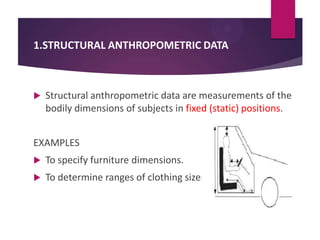
Structural anthropometric data are measurements of the
bodily dimensions of subjects in fixed (static) positions.

EXAMPLES


To specify furniture dimensions.



To determine ranges of clothing sizes.
2.FUNCTIONAL ANTHROPOMETRIC DATA



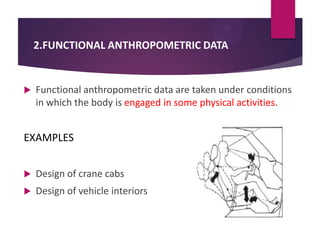
Functional anthropometric data are taken under conditions
in which the body is engaged in some physical activities.

EXAMPLES


Design of crane cabs



Design of vehicle interiors
USES OF ANTHROPOMETRIC DATA



To fit the task to the person.



To avoid physical mismatches between dimensions of
equipment and products and the corresponding user.



To design for variability in people and not for the average.
APLLYING ANTHROPOMETRIC DATA

1.

Select anthropometric measures that relate to defined
design dimensions.

2.

Pick out the unwanted data.

3.

Combine all selected design values in a careful
drawing, computer model to check their compatibility.

4.

Determine whether one design will fit all users. If
not, several sizes or adjustment must be provided to fit all
users.
APPLICATION OF ANTHROPOMETRY IN DESIGN



Some of the applications of anthropometric data are

1.

Determine the body dimensions.

2.

Determine what principle is to be applied.

3.

Defining equipment and facilities.

4.

Space requirements.
1.BODY DIMENSIONS

Minimum dimensions


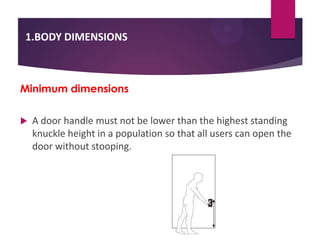
A door handle must not be lower than the highest standing
knuckle height in a population so that all users can open the
door without stooping.
MINIMUM DIMENSIONS CONT…..



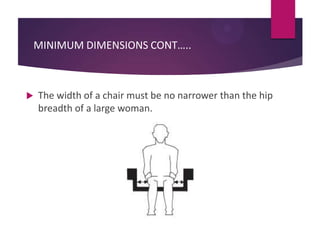
The width of a chair must be no narrower than the hip
breadth of a large woman.
MINIMUM DIMENSIONS CONT…..



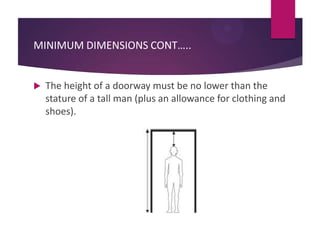
The height of a doorway must be no lower than the
stature of a tall man (plus an allowance for clothing and
shoes).
MAXIMUM DIMENSIONS



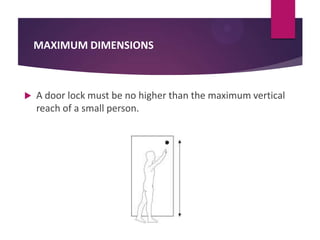
A door lock must be no higher than the maximum vertical
reach of a small person.
MAXIMUM DIMENSIONS CONT…



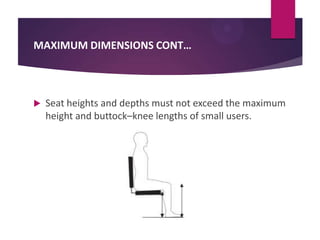
Seat heights and depths must not exceed the maximum
height and buttock–knee lengths of small users.
2.PRINCIPLES IN ANTHROPOMETRIC DATA



There are three principles for applying anthropometric data
to specific design problems;

1.

Design For Extreme Individuals

2.

Design For Adjustable Range

3.

Design For The Average
3.EQUIPMENT AND FACILITIES



Criteria of judgment of design features of physical
equipment and facilities:
 Comfort
 work performance
 safety, physical effects



Equipment's are of three kinds:
 Spaces into which men fit
 Tools or controls which men use
 Protective clothing and devices
4.SPACES



One of the applications of anthropometric data is the design of
work spaces, including the work-space envelopes.



The limits of the work-space envelope for seated personnel
are determined by functional arm reach, which is influenced by
 presence of any restraints
 apparel worn
 angle of back
ANTHROPOMETRIC VARIABLES



Standing eye height:



Standing shoulder height:



Standing elbow height:



Standing knuckle height:



Standing fingertip height:



Sitting height:



Sitting elbow height:



Popliteal height:
ANTHROPOMETRIC VARIABLES CONT…



Knee height and thigh depth:



Shoulder width: Hip breadth:



Abdominal/chest depth:



Vertical reach (sitting and standing):



Reach:
ADVANTAGES OF ANTHROPOMETRIC DATA



Increase accuracy



Reduce Fatigue



Better comfort



Reduce chance of injuries



Time management
CONCLUSION



Anthropometry plays a major role in increasing
productivity of the organization.



Based on the population we have to design the
workspace and equipment's.



According to the level of comfort ability the quality of
the product will get raise.
REFERENCE



Bridger R.S(2008).Introduction To Ergonomics, 3rd
Edition.



http://en.wikipedia.org/wiki/Anthropometry



http://personal.cityu.edu.hk/~meachan/Online%20Anth
ropometry/Chapter1/Ch1-7.htm
THANK YOU

anthropometry uses and applications

  • 1.
    APPLICATIONS OF ANTHROPOMETRY PresentedBy GEO MICHAEL ROLL NO:02 IE & M VJCET mail me at: geothomasseril@gmail.com
  • 2.
    CONTENTS Scope Of TheSeminar  Introduction  Types Of Anthropometric Data  Uses Of Anthropometric Data  Applications  Anthropometric Variables  Advantages  Conclusion  Reference 
  • 3.
    SCOPE OF THESEMINAR  To Gain Idea About Anthropometry  To Know Its Use  To Know About Its Application
  • 4.
    INTRODUCTION  The word ‘anthropometry’means   Measurement of the human body. It is derived from the Greek words ‘anthropos’ (man) and ‘metron’ (measure).
  • 5.
    TYPES OF ANTHROPOMETRICDATA 1. Structural Anthropometric Data 2. Functional Anthropometric Data
  • 6.
    1.STRUCTURAL ANTHROPOMETRIC DATA  Structuralanthropometric data are measurements of the bodily dimensions of subjects in fixed (static) positions. EXAMPLES  To specify furniture dimensions.  To determine ranges of clothing sizes.
  • 7.
    2.FUNCTIONAL ANTHROPOMETRIC DATA  Functionalanthropometric data are taken under conditions in which the body is engaged in some physical activities. EXAMPLES  Design of crane cabs  Design of vehicle interiors
  • 8.
    USES OF ANTHROPOMETRICDATA  To fit the task to the person.  To avoid physical mismatches between dimensions of equipment and products and the corresponding user.  To design for variability in people and not for the average.
  • 9.
    APLLYING ANTHROPOMETRIC DATA 1. Selectanthropometric measures that relate to defined design dimensions. 2. Pick out the unwanted data. 3. Combine all selected design values in a careful drawing, computer model to check their compatibility. 4. Determine whether one design will fit all users. If not, several sizes or adjustment must be provided to fit all users.
  • 10.
    APPLICATION OF ANTHROPOMETRYIN DESIGN  Some of the applications of anthropometric data are 1. Determine the body dimensions. 2. Determine what principle is to be applied. 3. Defining equipment and facilities. 4. Space requirements.
  • 11.
    1.BODY DIMENSIONS Minimum dimensions  Adoor handle must not be lower than the highest standing knuckle height in a population so that all users can open the door without stooping.
  • 12.
    MINIMUM DIMENSIONS CONT…..  Thewidth of a chair must be no narrower than the hip breadth of a large woman.
  • 13.
    MINIMUM DIMENSIONS CONT…..  Theheight of a doorway must be no lower than the stature of a tall man (plus an allowance for clothing and shoes).
  • 14.
    MAXIMUM DIMENSIONS  A doorlock must be no higher than the maximum vertical reach of a small person.
  • 15.
    MAXIMUM DIMENSIONS CONT…  Seatheights and depths must not exceed the maximum height and buttock–knee lengths of small users.
  • 16.
    2.PRINCIPLES IN ANTHROPOMETRICDATA  There are three principles for applying anthropometric data to specific design problems; 1. Design For Extreme Individuals 2. Design For Adjustable Range 3. Design For The Average
  • 17.
    3.EQUIPMENT AND FACILITIES  Criteriaof judgment of design features of physical equipment and facilities:  Comfort  work performance  safety, physical effects  Equipment's are of three kinds:  Spaces into which men fit  Tools or controls which men use  Protective clothing and devices
  • 18.
    4.SPACES  One of theapplications of anthropometric data is the design of work spaces, including the work-space envelopes.  The limits of the work-space envelope for seated personnel are determined by functional arm reach, which is influenced by  presence of any restraints  apparel worn  angle of back
  • 19.
    ANTHROPOMETRIC VARIABLES  Standing eyeheight:  Standing shoulder height:  Standing elbow height:  Standing knuckle height:  Standing fingertip height:  Sitting height:  Sitting elbow height:  Popliteal height:
  • 20.
    ANTHROPOMETRIC VARIABLES CONT…  Kneeheight and thigh depth:  Shoulder width: Hip breadth:  Abdominal/chest depth:  Vertical reach (sitting and standing):  Reach:
  • 21.
    ADVANTAGES OF ANTHROPOMETRICDATA  Increase accuracy  Reduce Fatigue  Better comfort  Reduce chance of injuries  Time management
  • 22.
    CONCLUSION  Anthropometry plays amajor role in increasing productivity of the organization.  Based on the population we have to design the workspace and equipment's.  According to the level of comfort ability the quality of the product will get raise.
  • 23.
    REFERENCE  Bridger R.S(2008).Introduction ToErgonomics, 3rd Edition.  http://en.wikipedia.org/wiki/Anthropometry  http://personal.cityu.edu.hk/~meachan/Online%20Anth ropometry/Chapter1/Ch1-7.htm
  • 24.