Kinesiology and Biomechanics
TOPIC
1. EXPLAIN ANGULAR KINEMATICS.
2. EXERCISE FOR THE FOLLOWING ARE
-> TRANSVERSE ABDOMINIS
-> PERIFORMIS
-> PECTIRUS
-> RECTUS ABDOMINIS
ANGULAR KINEMATICS
Angular kinematics is the study of rotational motion in the absence
of forces.
kinematics is routinely used to describe the trajectory of almost any
physical system moving linearly
the equations of angular kinematics are relevant to most rotating
physical systems.
Angular distance and displacement
When a rotating body moves from one position to another, the
angular distance through which it moves is equal to the angular
path's length.
The angular displacement that a rotating body experience is
similar to the angle between the body's initial and final
position.
For example -> If a dancer dancing around a pole does one full
rotation, his or her angular rotation will be 360o . On the other
hand, he or she makes half a rotation; the displacement will be
180o
Angular speed, velocity and acceleration
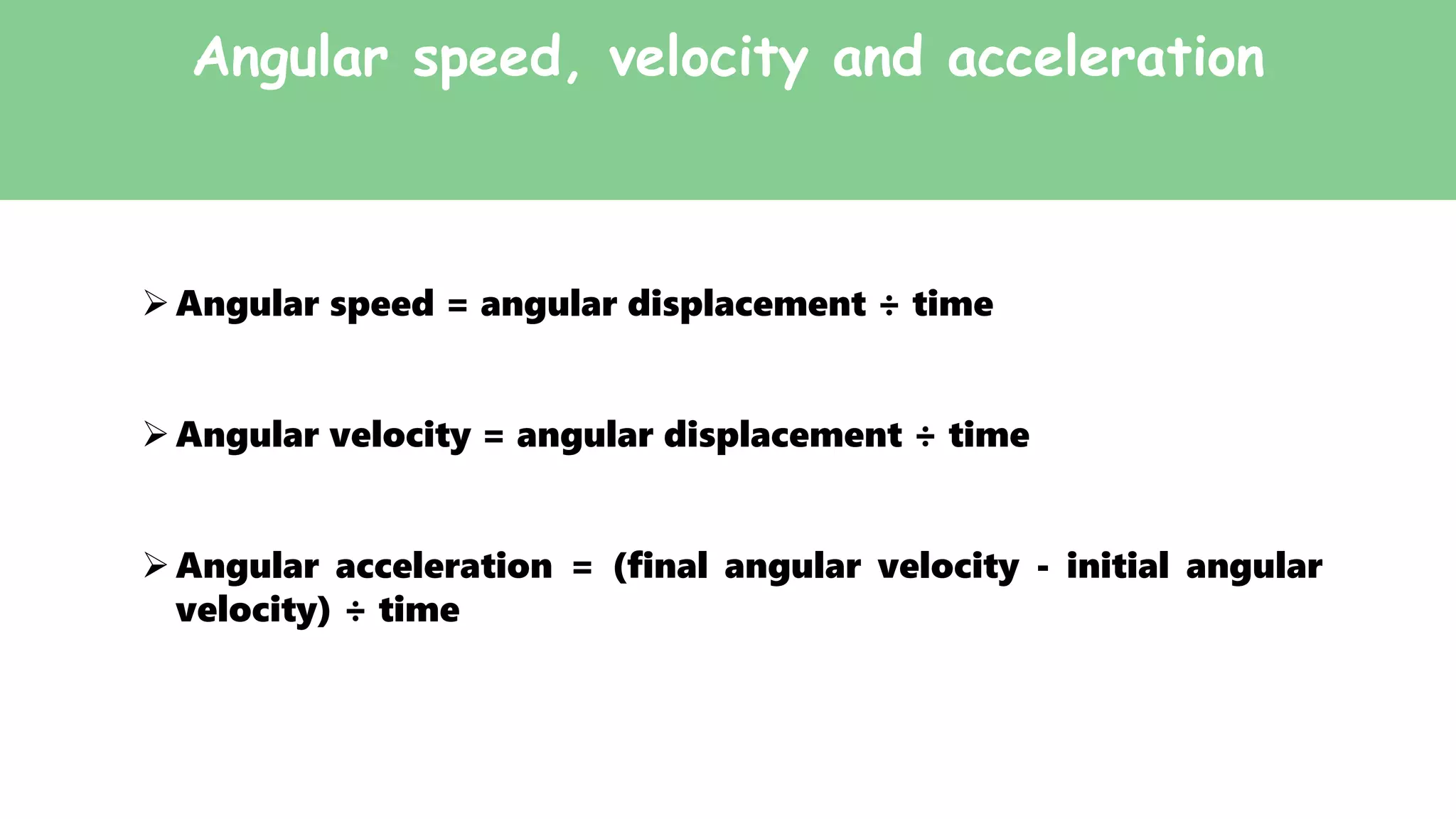
Angular speed = angular displacement ÷ time
Angular velocity = angular displacement ÷ time
Angular acceleration = (final angular velocity - initial angular
velocity) ÷ time
Angular Momentum
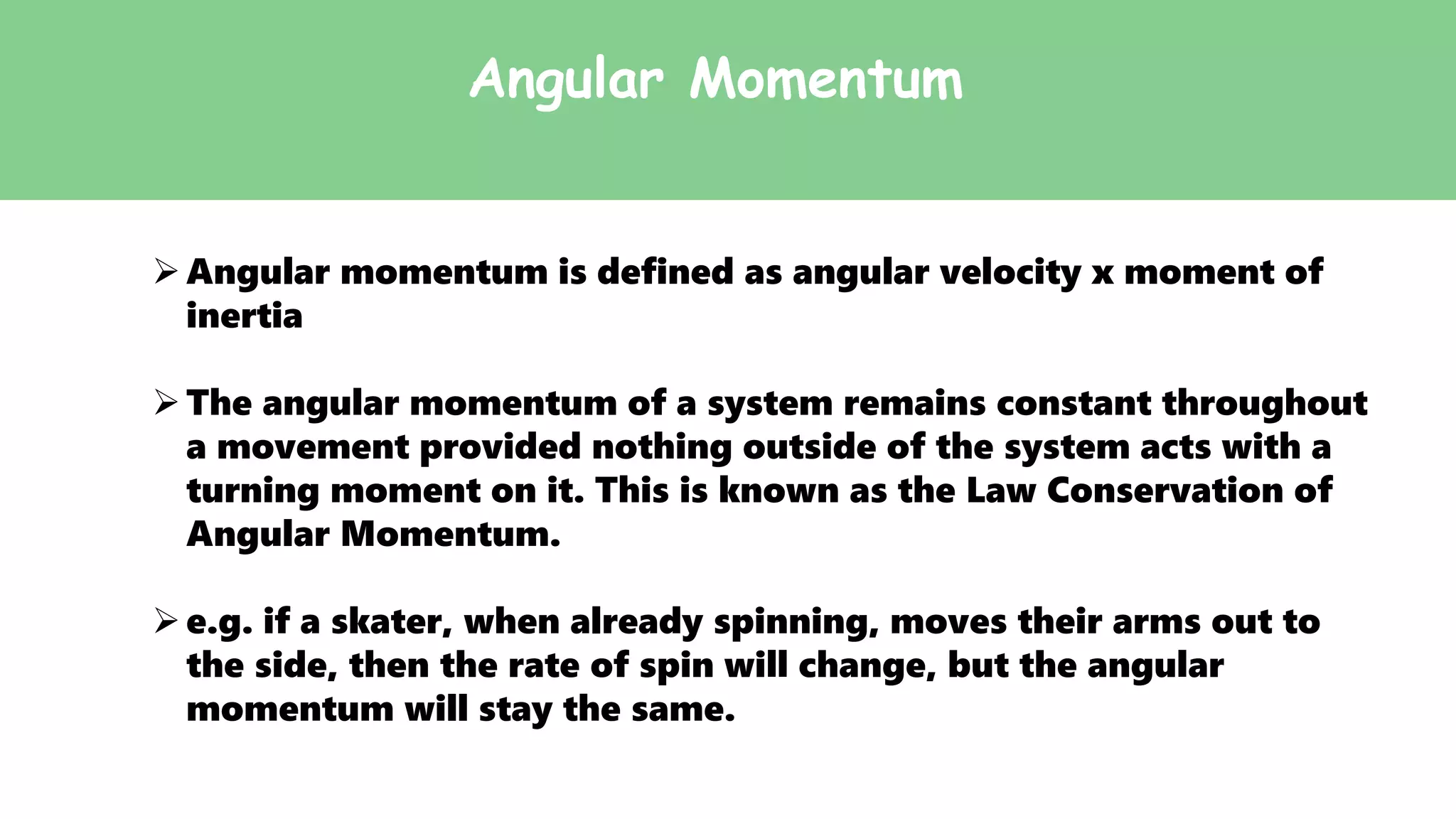
Angular momentum is defined as angular velocity x moment of
inertia
The angular momentum of a system remains constant throughout
a movement provided nothing outside of the system acts with a
turning moment on it. This is known as the Law Conservation of
Angular Momentum.
e.g. if a skater, when already spinning, moves their arms out to
the side, then the rate of spin will change, but the angular
momentum will stay the same.
IMPORTANCE OF ANGULAR KINEMATICS
Understanding angular motion is particularly
important for the student of human movement,
because most volitional human movement
involves rotation of one or more body segments
around the joints at which they articulate.
EXERCISE FOR THE FOLLOWING MUSCLES.
 -> TRANSVERSE ABDOMINIS
 -> PERIFORMIS
 -> PECTINEUS
 -> RECTUS ABDOMINIS
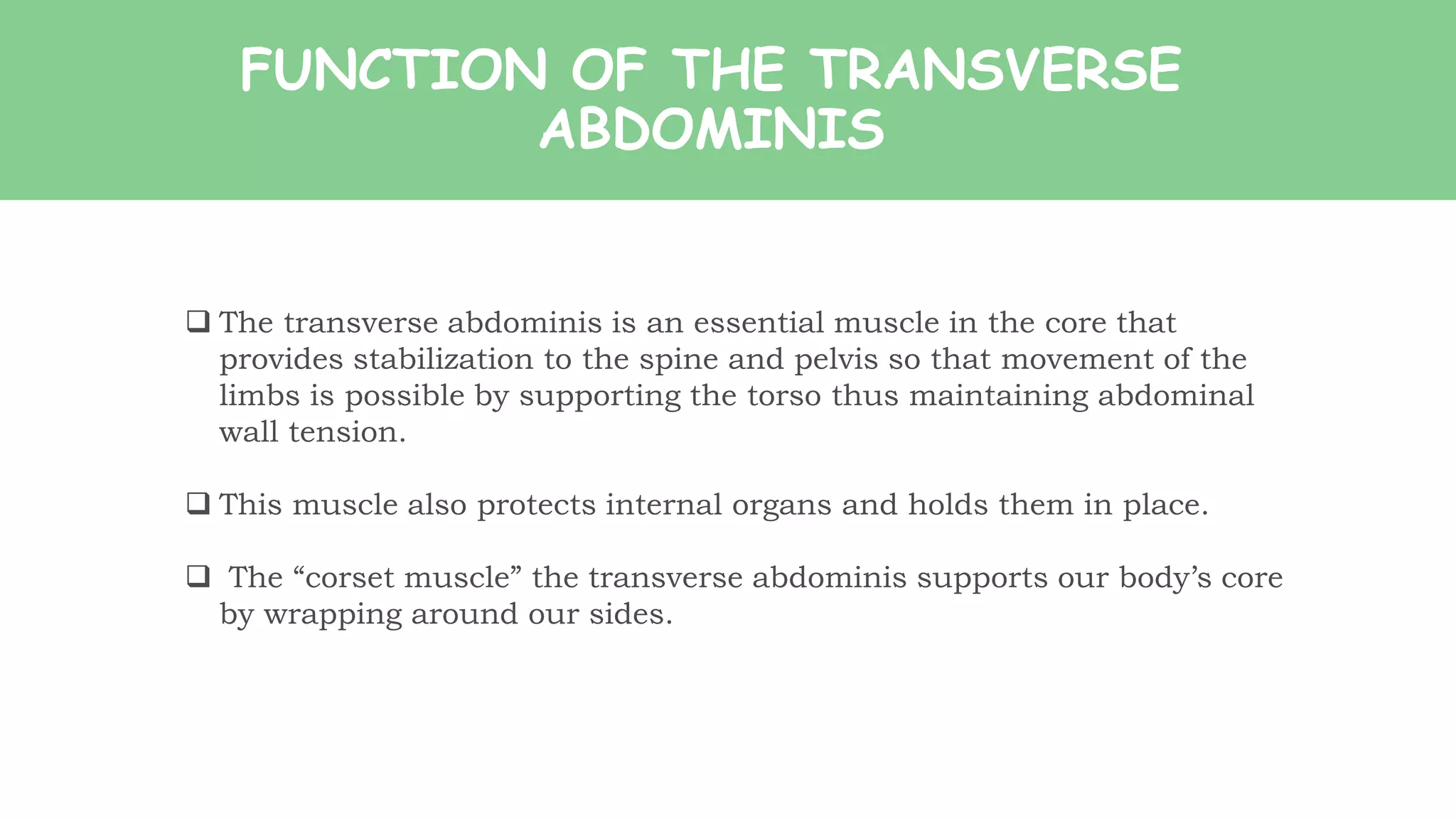
TRANSVERSE ABDOMINIS
 The transverse abdominis is a lesser-known muscle found in the front side
abdominal wall under the internal oblique muscle.
 This muscle is referred to as the transverse abdominal muscle, transversus
abdominis muscle, transversalis muscle and abbreviated as the TVA.
 Transverse abdominis muscle gets its name from the direction of its muscle fibers,
as they are laid out in a horizontal fashion in the abdominal region.
 These flat muscles have more than one origin, arising from the front two-thirds of
the iliac crest and lateral third of the inguinal ligament and iliac fascia,
thoracolumbar fascia and finally the inner surface of the lower six costal cartilage of
the lower six ribs.
TRANSVERSE ABDOMINIS
FUNCTION OF THE TRANSVERSE
ABDOMINIS
 The transverse abdominis is an essential muscle in the core that
provides stabilization to the spine and pelvis so that movement of the
limbs is possible by supporting the torso thus maintaining abdominal
wall tension.
 This muscle also protects internal organs and holds them in place.
 The “corset muscle” the transverse abdominis supports our body’s core
by wrapping around our sides.
EXERCISE FOR TRANSVERSE ABDOMINIS
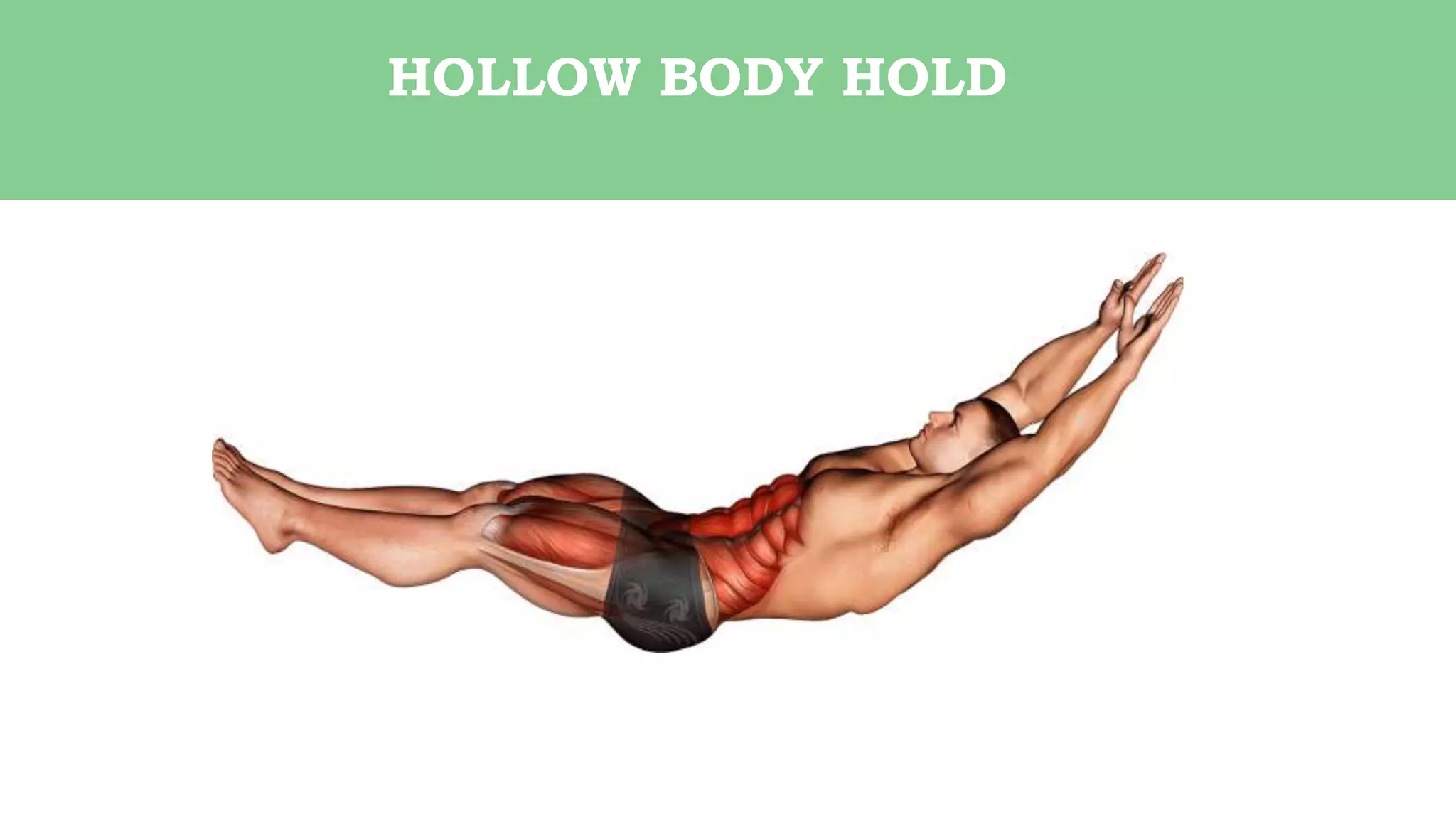
 HOLLOW BODY HOLD
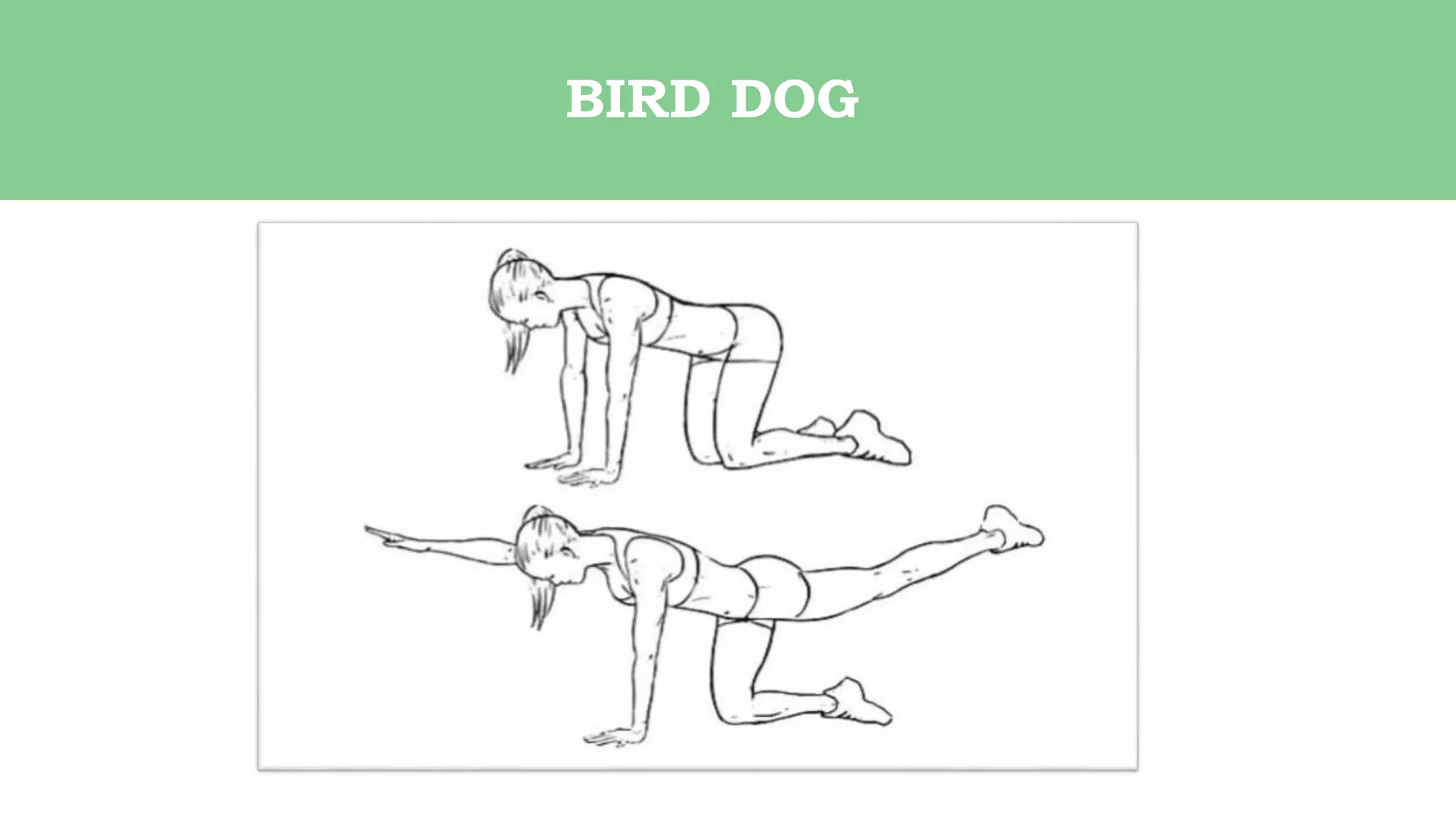
 BIRD DOG
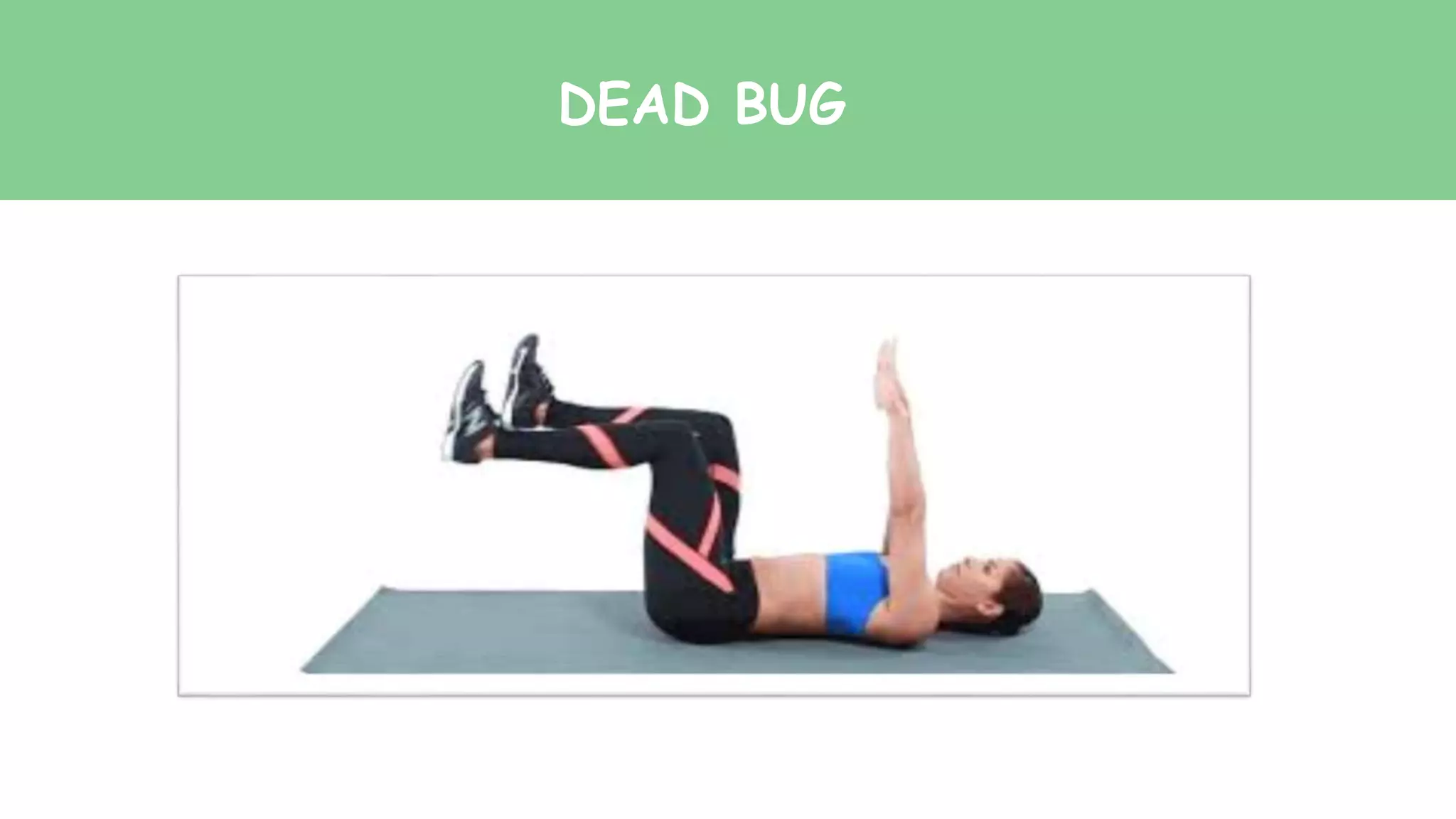
 DEAD BUG
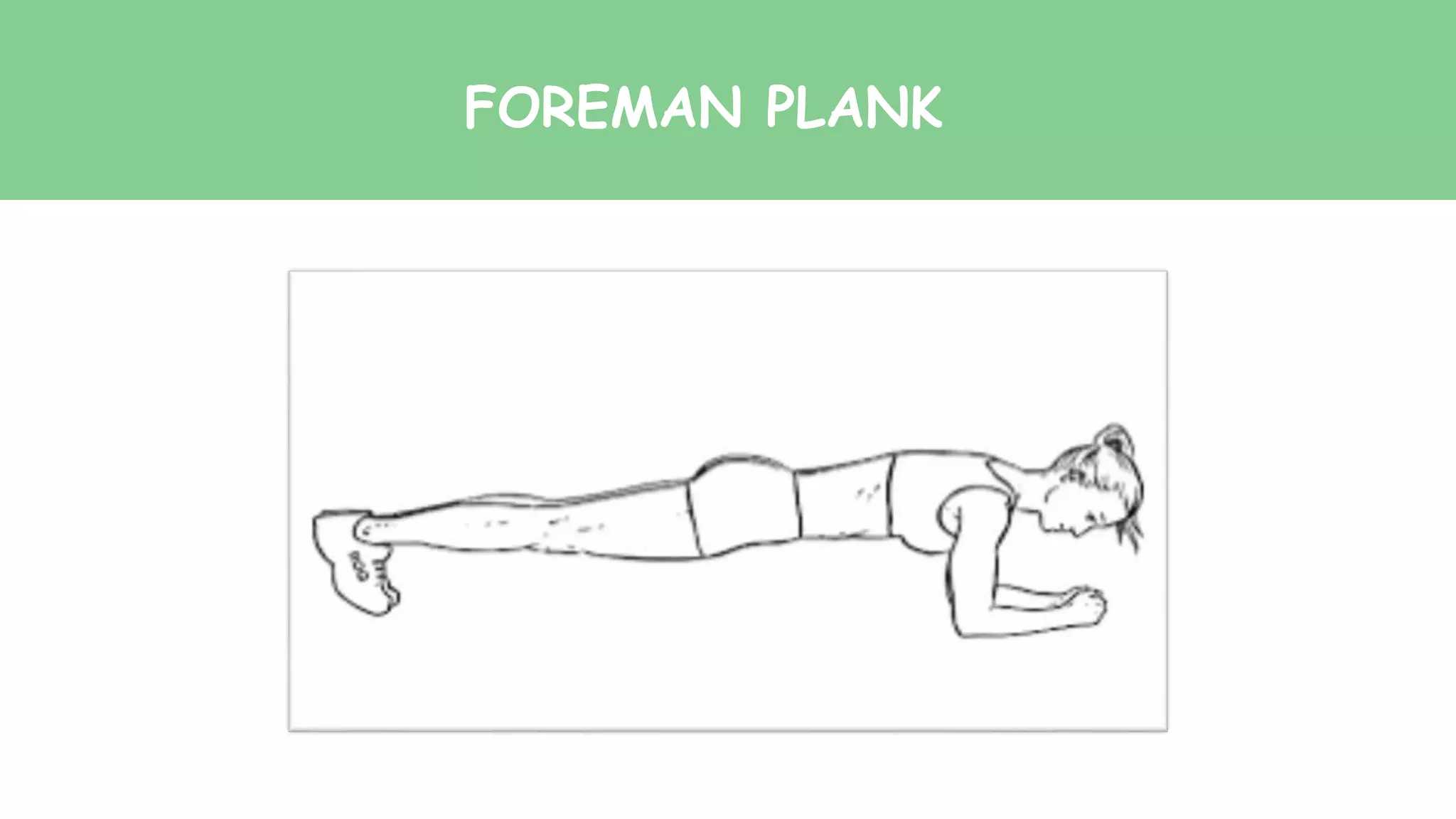
 FOREMAN PLANK
HOLLOW BODY HOLD
BIRD DOG
DEAD BUG
FOREMAN PLANK
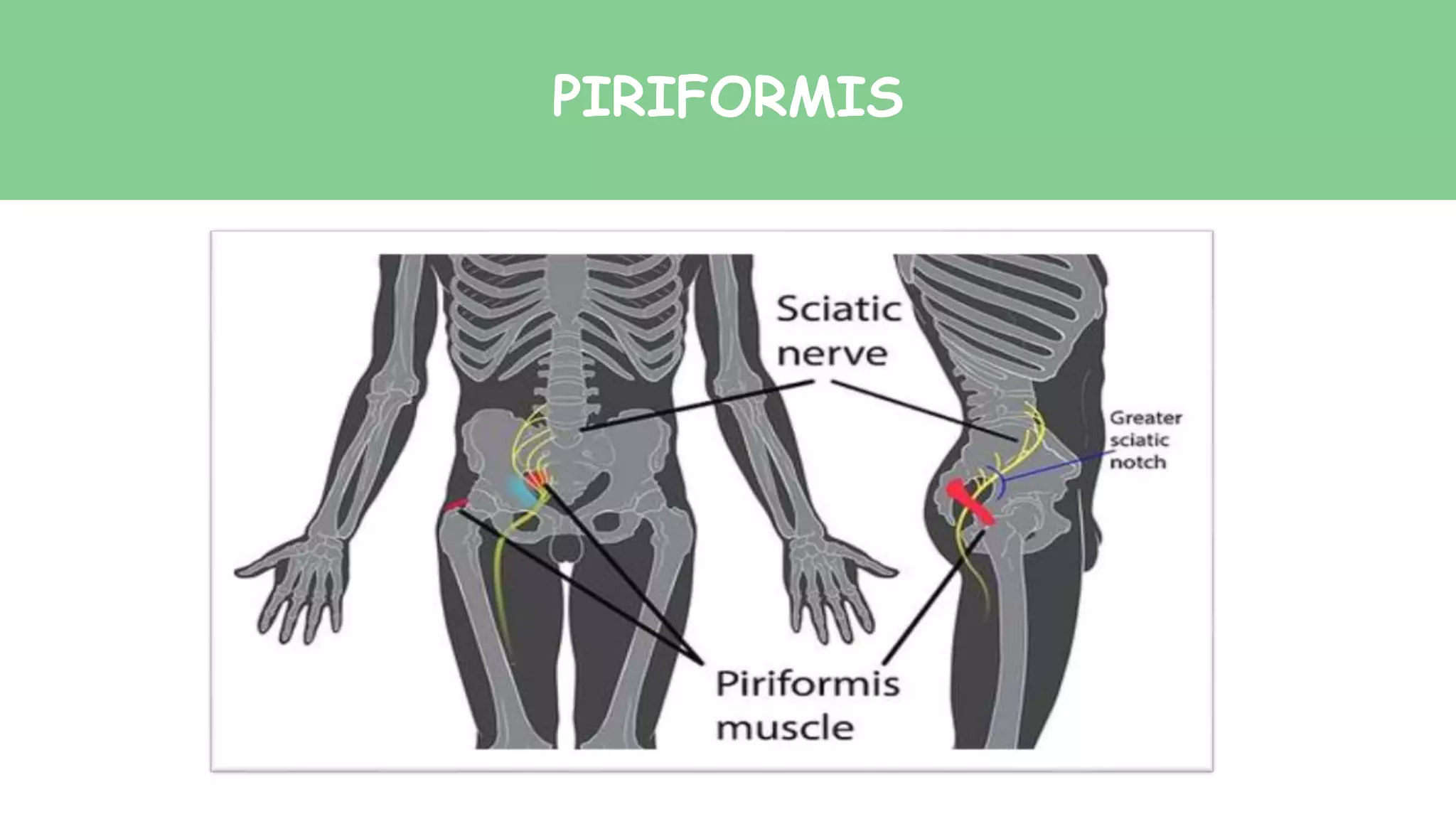
PIRIFORMIS
 The piriformis muscle is located in the gluteal region underneath the gluteus maximus.
This flat pyramidal shaped muscle is one of the six muscles of the lateral rotator group.
The name piriformis is derived from Latin, meaning “pear shaped”.
 The piriformis muscle starts from the front part of the sacrum (part of the lower spine).
It is attached to the second third and fourth sacral vertebra and from there it’s
connected to the upper surface of the thigh bones.
 The piriformis is responsible for laterally rotating the femur during hip extension.
 while sitting, lift one leg and cross it over the other so that your outside ankle is resting
against the knee of the other leg.
PIRIFORMIS
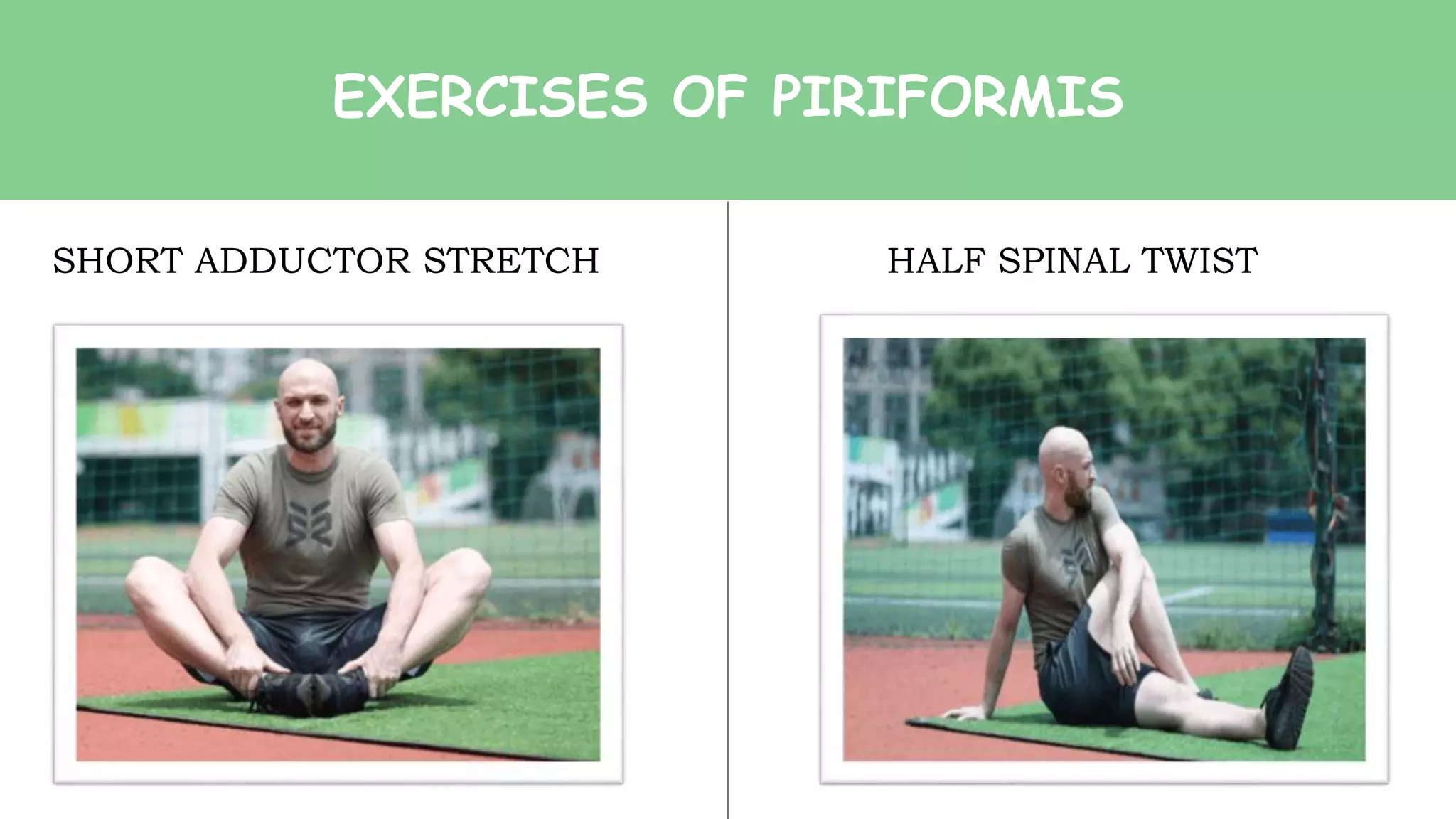
EXERCISES OF PIRIFORMIS
SHORT ADDUCTOR STRETCH HALF SPINAL TWIST
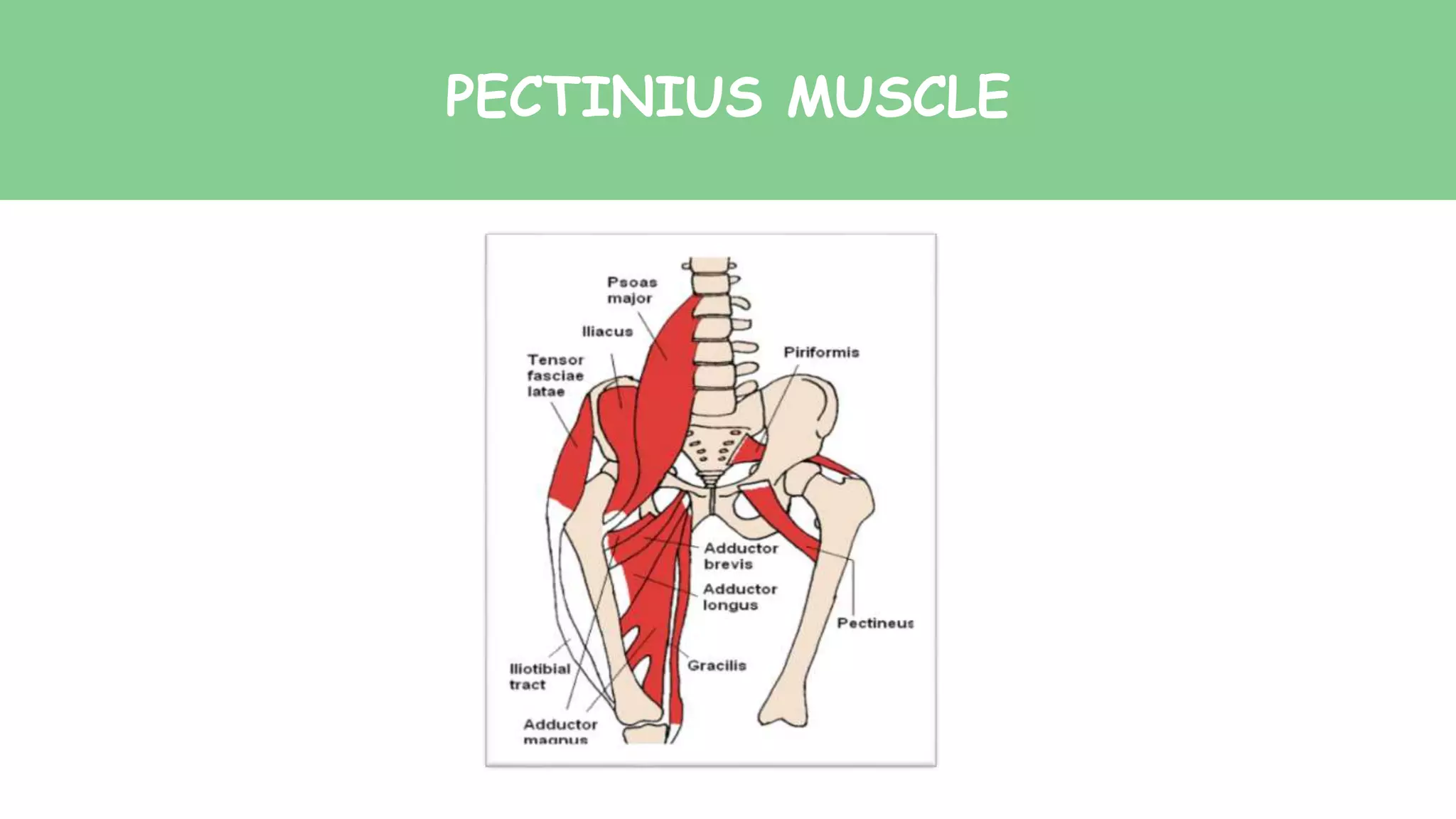
PECTINEUS
Pectineus is a flat muscle found in the
superomedial part of the anterior thigh. Fascial
compartments of the thigh muscles are specific
in that each of them is innervated by a particular
nerve. Due to having dual innervation, pectineus is
one of a few muscles classified into two
compartments at the same time; anterior and
medial. The others being adductor
longus and adductor magnus.
PECTINIUS MUSCLE
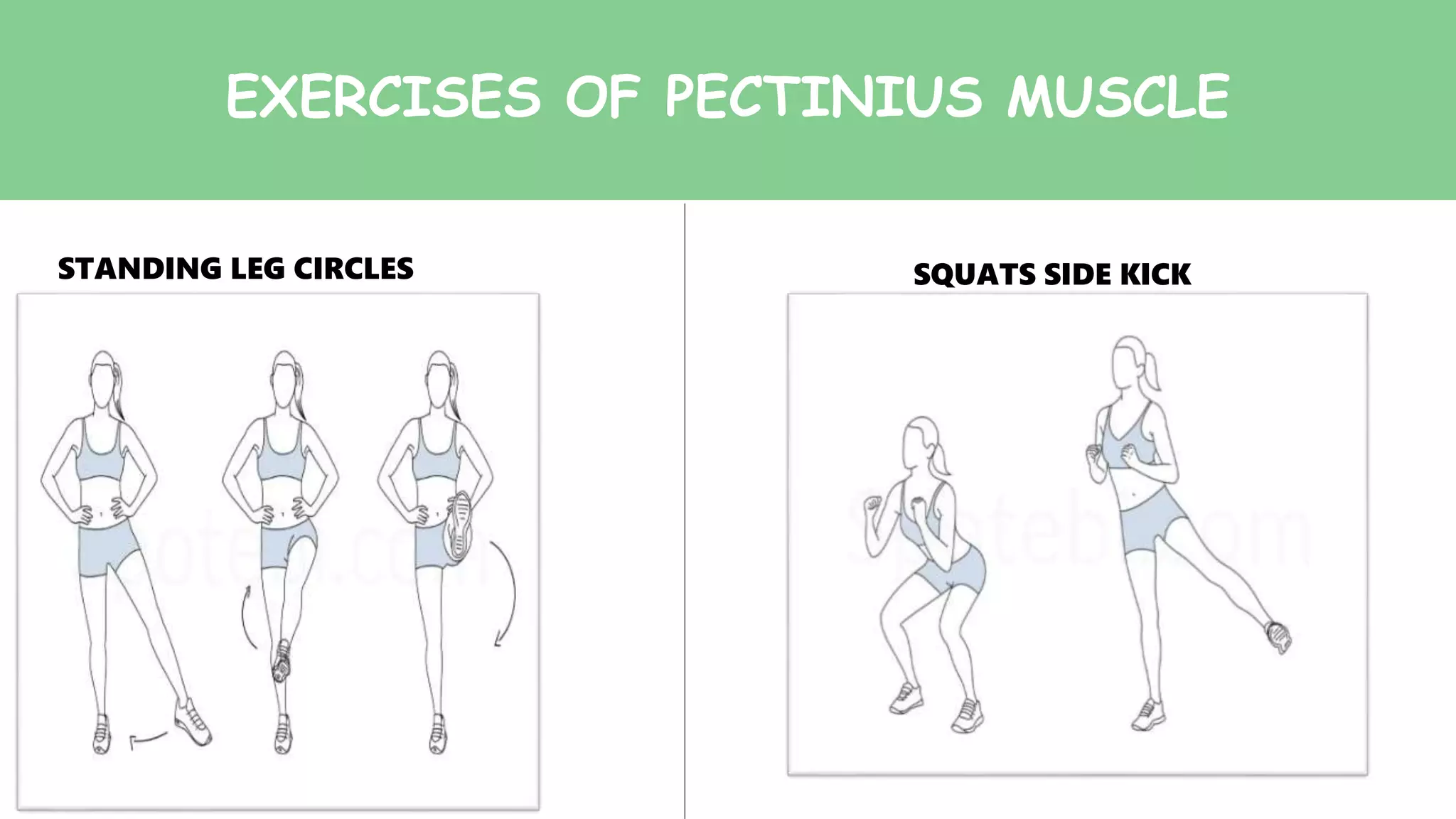
EXERCISES OF PECTINIUS MUSCLE
STANDING LEG CIRCLES SQUATS SIDE KICK
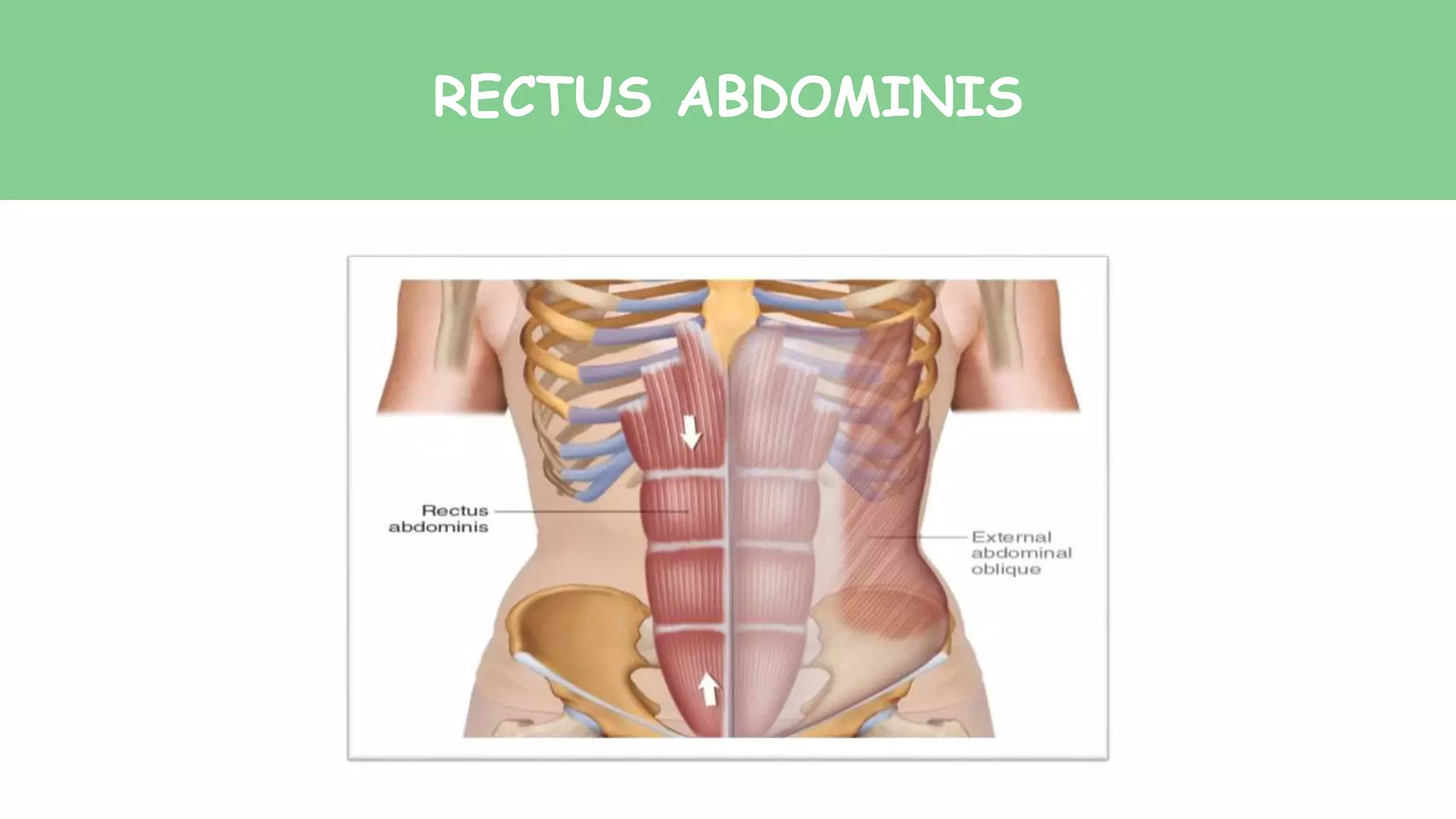
RECTUS ABDOMINIS
 The rectus abdominis is a long muscle that extends from the bottom of your
sternum to the bottom of your pelvis.
 It is actually a paired muscle that is divided into two halves (left and right) by a
band of connective tissue called the linear alba.
 As a whole, the rectus abdominis is your "six-pack" (or 2, 4, 8, or even 10 pack
depending on your ab structure - everyone is different). The primary job of this
muscle is to hold your internal organs in place and move the body between the
ribcage and pelvis. When performing any flexion or anti-flexion of the core,
your rectus abdominis will be activated.
RECTUS ABDOMINIS
EXERCISES OF RECTUS ABDOMINIS
SIT - UPS CRUNCHES
Angular kinematics

Angular kinematics

  • 1.
  • 2.
    TOPIC 1. EXPLAIN ANGULARKINEMATICS. 2. EXERCISE FOR THE FOLLOWING ARE -> TRANSVERSE ABDOMINIS -> PERIFORMIS -> PECTIRUS -> RECTUS ABDOMINIS
  • 3.
    ANGULAR KINEMATICS Angular kinematicsis the study of rotational motion in the absence of forces. kinematics is routinely used to describe the trajectory of almost any physical system moving linearly the equations of angular kinematics are relevant to most rotating physical systems.
  • 4.
    Angular distance anddisplacement When a rotating body moves from one position to another, the angular distance through which it moves is equal to the angular path's length. The angular displacement that a rotating body experience is similar to the angle between the body's initial and final position. For example -> If a dancer dancing around a pole does one full rotation, his or her angular rotation will be 360o . On the other hand, he or she makes half a rotation; the displacement will be 180o
  • 5.
    Angular speed, velocityand acceleration Angular speed = angular displacement ÷ time Angular velocity = angular displacement ÷ time Angular acceleration = (final angular velocity - initial angular velocity) ÷ time
  • 6.
    Angular Momentum Angular momentumis defined as angular velocity x moment of inertia The angular momentum of a system remains constant throughout a movement provided nothing outside of the system acts with a turning moment on it. This is known as the Law Conservation of Angular Momentum. e.g. if a skater, when already spinning, moves their arms out to the side, then the rate of spin will change, but the angular momentum will stay the same.
  • 7.
    IMPORTANCE OF ANGULARKINEMATICS Understanding angular motion is particularly important for the student of human movement, because most volitional human movement involves rotation of one or more body segments around the joints at which they articulate.
  • 8.
    EXERCISE FOR THEFOLLOWING MUSCLES.  -> TRANSVERSE ABDOMINIS  -> PERIFORMIS  -> PECTINEUS  -> RECTUS ABDOMINIS
  • 9.
    TRANSVERSE ABDOMINIS  Thetransverse abdominis is a lesser-known muscle found in the front side abdominal wall under the internal oblique muscle.  This muscle is referred to as the transverse abdominal muscle, transversus abdominis muscle, transversalis muscle and abbreviated as the TVA.  Transverse abdominis muscle gets its name from the direction of its muscle fibers, as they are laid out in a horizontal fashion in the abdominal region.  These flat muscles have more than one origin, arising from the front two-thirds of the iliac crest and lateral third of the inguinal ligament and iliac fascia, thoracolumbar fascia and finally the inner surface of the lower six costal cartilage of the lower six ribs.
  • 10.
  • 11.
    FUNCTION OF THETRANSVERSE ABDOMINIS  The transverse abdominis is an essential muscle in the core that provides stabilization to the spine and pelvis so that movement of the limbs is possible by supporting the torso thus maintaining abdominal wall tension.  This muscle also protects internal organs and holds them in place.  The “corset muscle” the transverse abdominis supports our body’s core by wrapping around our sides.
  • 12.
    EXERCISE FOR TRANSVERSEABDOMINIS  HOLLOW BODY HOLD  BIRD DOG  DEAD BUG  FOREMAN PLANK
  • 13.
  • 14.
  • 15.
  • 16.
  • 17.
    PIRIFORMIS  The piriformismuscle is located in the gluteal region underneath the gluteus maximus. This flat pyramidal shaped muscle is one of the six muscles of the lateral rotator group. The name piriformis is derived from Latin, meaning “pear shaped”.  The piriformis muscle starts from the front part of the sacrum (part of the lower spine). It is attached to the second third and fourth sacral vertebra and from there it’s connected to the upper surface of the thigh bones.  The piriformis is responsible for laterally rotating the femur during hip extension.  while sitting, lift one leg and cross it over the other so that your outside ankle is resting against the knee of the other leg.
  • 18.
  • 19.
    EXERCISES OF PIRIFORMIS SHORTADDUCTOR STRETCH HALF SPINAL TWIST
  • 20.
    PECTINEUS Pectineus is aflat muscle found in the superomedial part of the anterior thigh. Fascial compartments of the thigh muscles are specific in that each of them is innervated by a particular nerve. Due to having dual innervation, pectineus is one of a few muscles classified into two compartments at the same time; anterior and medial. The others being adductor longus and adductor magnus.
  • 21.
  • 22.
    EXERCISES OF PECTINIUSMUSCLE STANDING LEG CIRCLES SQUATS SIDE KICK
  • 23.
    RECTUS ABDOMINIS  Therectus abdominis is a long muscle that extends from the bottom of your sternum to the bottom of your pelvis.  It is actually a paired muscle that is divided into two halves (left and right) by a band of connective tissue called the linear alba.  As a whole, the rectus abdominis is your "six-pack" (or 2, 4, 8, or even 10 pack depending on your ab structure - everyone is different). The primary job of this muscle is to hold your internal organs in place and move the body between the ribcage and pelvis. When performing any flexion or anti-flexion of the core, your rectus abdominis will be activated.
  • 24.
  • 25.
    EXERCISES OF RECTUSABDOMINIS SIT - UPS CRUNCHES