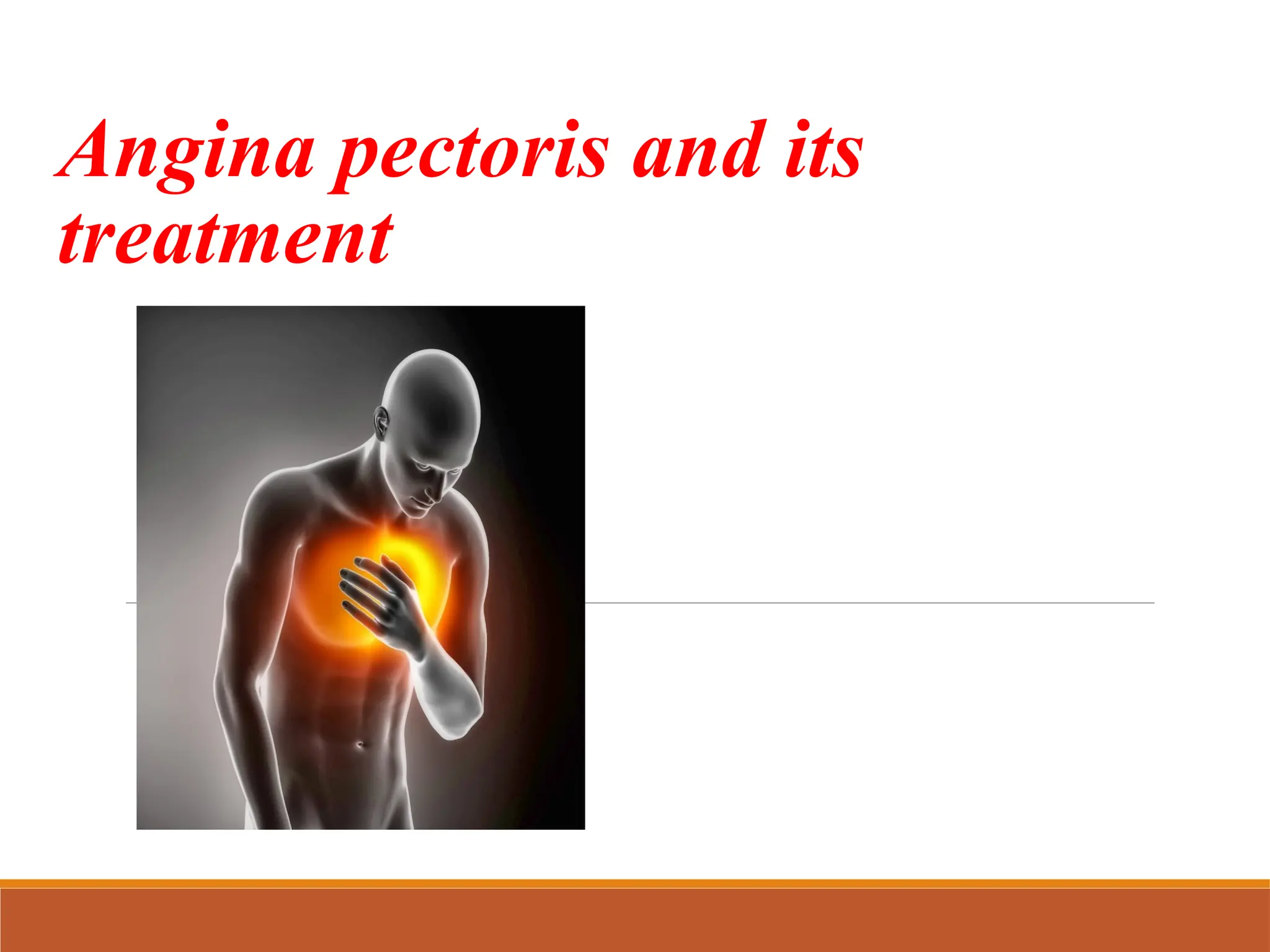
Angina pectoris is a Syndrome characterized by sudden severe pressing chest pain or heaviness radiating to the neck, jaw, back and arms. It is often associated with tachypnea and nausea.
Definition
Angina pectoris isa Syndrome characterized by sudden severe
pressing chest pain or heaviness radiating to the neck, jaw, back
and arms. It is often associated with tachypnea and nausea.
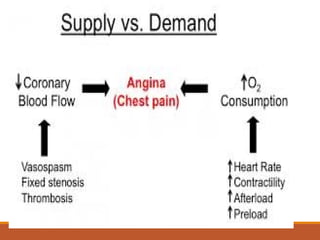
Angina is the result of myocardial ischemia caused by an imbalance between
myocardial blood supply and oxygen demand.
It is a common presenting symptom (typically, chest pain) among patients
with coronary artery disease.
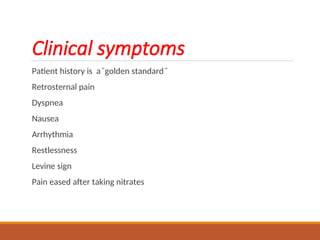
Type of chest pain: pressure or discomfort
3.
Classification of angina
1.Exertional angina, Stable, Atherosclerotic,Classic,
Due to obstruction of coronaries by atheroma.
2. Variant, Vasospastic angina
due to Spasm of coronaries.
3- Unstable angina.
Due to spasm and partial obstruction of coronaries.
4.
Angina can be:
Stable
Unstable caused by unstable
plaque, occurs at rest, unpredictable,
pain can increase for no obvious
reason
Prinzmetal’s occurs without
provocation, usually at rest, as a
result of coronary artery spasm
5.
Stable angina pectoris
Provokedby physical exertion, especially in cold weather, after meals and
commonly aggravated by anger or excitement
The pain fades quickly with rest
In some patients pain occurs predictably at a certain level of exertion
6.
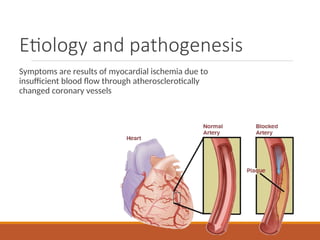
Etiology and pathogenesis
Symptomsare results of myocardial ischemia due to
insufficient blood flow through atherosclerotically
changed coronary vessels
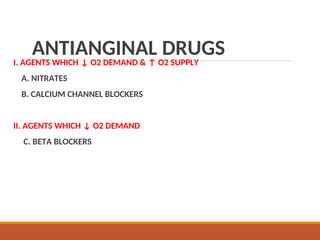
ANTIANGINAL DRUGS
I. AGENTSWHICH ↓ O2 DEMAND & ↑ O2 SUPPLY
A. NITRATES
B. CALCIUM CHANNEL BLOCKERS
II. AGENTS WHICH ↓ O2 DEMAND
C. BETA BLOCKERS
12.
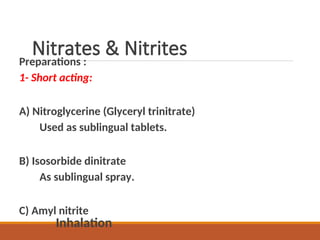
Nitrates & Nitrites
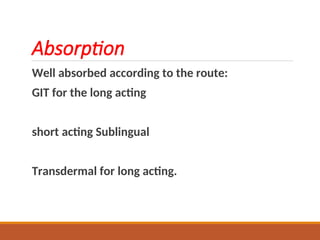
Preparations:
1- Short acting:
A) Nitroglycerine (Glyceryl trinitrate)
Used as sublingual tablets.
B) Isosorbide dinitrate
As sublingual spray.
C) Amyl nitrite
Inhalation
13.
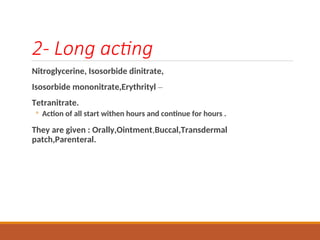
2- Long acting
Nitroglycerine,Isosorbide dinitrate,
Isosorbide mononitrate,Erythrityl –
Tetranitrate.
◦ Action of all start withen hours and continue for hours .
They are given : Orally,Ointment,Buccal,Transdermal
patch,Parenteral.
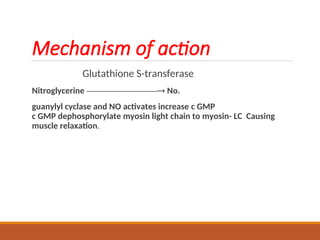
Mechanism of action
GlutathioneS-transferase
Nitroglycerine ———————— No.
guanylyl cyclase and NO activates increase c GMP
c GMP dephosphorylate myosin light chain to myosin- LC Causing
muscle relaxation.
16.
Pharmacological actions
Nitrates relaxall types of smooth muscles vascular
or non vascular .
Relax both arteries and veins but more effective on
veins.
NO released stimulate guanylyl cyclase
17.
1- Angina ofeffort
A) Decrease venous return
B) Decrease ABP
Both A&B decrease myocardial oxygen requirement.
Adverse effects
Orthostatic hypotension
Throbbingheadache
Tachycardia
Facial or cutaneous flushing
Tolerance (Tachyphylaxis)
Salt and water retention
Carcinogenicity
Methaemoglobinemia only with nitrities
Calcium channel blockers
1-They block calcium entry in myocardium causing ;
◦A) decrease myocardium contractility &
myocardium oxygen requirement.
B) decrease heart rate causing decrease in myocardium oxygen
requirement.
2-Block calcium entry in vascular smooth muscles (arterioles) causing
a)decrease in peripheral resistance( after load)------ decrease in
oxygen requirement.
◦b)Relief of coronary spasm.
23.
β- blocking drugs
Theyare not vasodilators
They are used in treatment of angina :
They decrease both heart rate & myocardial contractility that
decrease in myocardial oxygen requirement at rest & in exercise so
improve exercise tolerance.
24.
Potassium channel openers
(Nicorandil)
◦ Activation of potassium channels.
Nitric oxide release.
Arterio & venodilators.
Used as prophylactic therapy .
May cause : Headache,flushing,dizziness.
25.
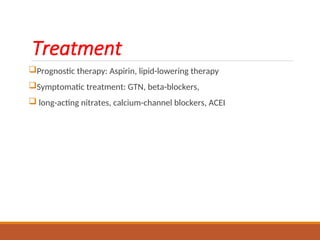
Drug treatment ofangina
1- Acute attack :
Short acting nitrates or nitritis.
2- Prophylactic therapy ;
Long –acting nitrates.
Calcium channel blockers.
β- adrenoceptors blockers.
Potassium channel openers.







![PERI-PROSTHETIC FRACTURE NAIL-PLATE CONSTRUCT [NPC].pptx](https://cdn.slidesharecdn.com/ss_thumbnails/drarunkumardrmohamedashrafperiprostheticfrasturenail-plateconstructnpc-260209164459-7e9d15a1-thumbnail.jpg?width=640&height=640&fit=bounds)


![CTEV [ clubfoot] DR ARUN LAL ,DR MOHAMED ASHRAF travancore medical college k...](https://cdn.slidesharecdn.com/ss_thumbnails/ctevclubfootdrarunlaldrmohamedashraftravancoremedicalcollegekollamkeralaindia-260208063247-18fc466c-thumbnail.jpg?width=640&height=640&fit=bounds)
