

ANDREW
JACKSON
B Y : I S A B E L L A W H E E L E R
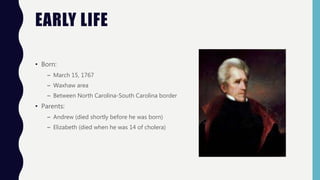
EARLY LIFE
• Born:
– March 15, 1767
– Waxhaw area
– Between North Carolina-South Carolina border
• Parents:
– Andrew (died shortly before he was born)
– Elizabeth (died when he was 14 of cholera)
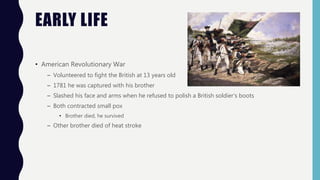
EARLY LIFE
• American Revolutionary War
– Volunteered to fight the British at 13 years old
– 1781 he was captured with his brother
– Slashed his face and arms when he refused to polish a British soldier’s boots
– Both contracted small pox
• Brother died, he survived
– Other brother died of heat stroke
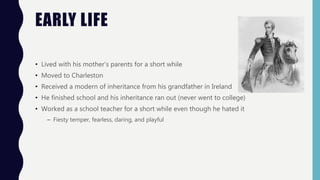
EARLY LIFE
• Lived with his mother’s parents for a short while
• Moved to Charleston
• Received a modern of inheritance from his grandfather in Ireland
• He finished school and his inheritance ran out (never went to college)
• Worked as a school teacher for a short while even though he hated it
– Fiesty temper, fearless, daring, and playful
EARLY ADULTHOOD
• Became an attorney at 17
• 3 years later he got his license to practice
• To supplement his income he worked in small stores
• Gained a reputation as charismatic, wild, and ambitious
– Dance, entertain, gamble at taverns
• His friend appointed him the district’s prosecuting attorney
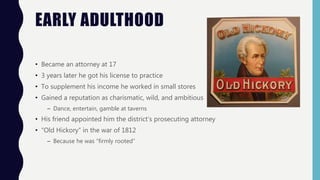
• “Old Hickory” in the war of 1812
– Because he was “firmly rooted”
FAMILY
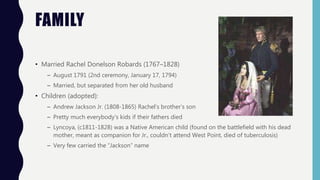
• Married Rachel Donelson Robards (1767–1828)
– August 1791 (2nd ceremony, January 17, 1794)
– Married, but separated from her old husband
• Children (adopted):
– Andrew Jackson Jr. (1808-1865) Rachel’s brother’s son
– Pretty much everybody’s kids if their fathers died
– Lyncoya, (c1811-1828) was a Native American child (found on the battlefield with his dead
mother, meant as companion for Jr., couldn’t attend West Point, died of tuberculosis)
– Very few carried the “Jackson” name
PRESIDENCY
• Served from March 4, 1829 – March 4, 1837
• He was the 7th President
• VP: John C. Calhoun
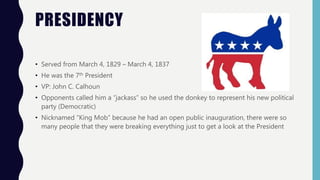
• Opponents called him a “jackass” so he used the donkey to represent his new political
party (Democratic)
• Nicknamed “King Mob” because he had an open public inauguration, there were so
many people that they were breaking everything just to get a look at the President
WORK AS PRESIDENT
• First president to assume command with his power to veto
• Wanted to abolish the electoral college
– Nicknamed “People’s President”
• Implemented rotation in office, which became known as the spoils system
– Replaced 10% of the government officers, it was a high % compared to his predecessors
• Andrew Jackson is the only president in American history to pay off the national debt
and leave office with the country in the black
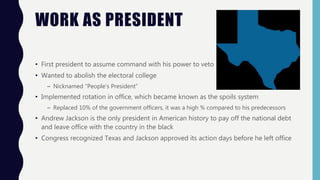
• Congress recognized Texas and Jackson approved its action days before he left office
MOST FAMOUS ACTION
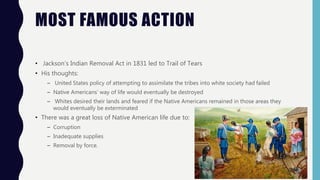
• Jackson’s Indian Removal Act in 1831 led to Trail of Tears
• His thoughts:
– United States policy of attempting to assimilate the tribes into white society had failed
– Native Americans’ way of life would eventually be destroyed
– Whites desired their lands and feared if the Native Americans remained in those areas they
would eventually be exterminated
• There was a great loss of Native American life due to:
– Corruption
– Inadequate supplies
– Removal by force.
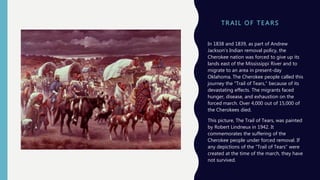
T R A I L OF T E A RS
In 1838 and 1839, as part of Andrew
Jackson's Indian removal policy, the
Cherokee nation was forced to give up its
lands east of the Mississippi River and to
migrate to an area in present-day
Oklahoma. The Cherokee people called this
journey the "Trail of Tears," because of its
devastating effects. The migrants faced
hunger, disease, and exhaustion on the
forced march. Over 4,000 out of 15,000 of
the Cherokees died.
This picture, The Trail of Tears, was painted
by Robert Lindneux in 1942. It
commemorates the suffering of the
Cherokee people under forced removal. If
any depictions of the "Trail of Tears" were
created at the time of the march, they have
not survived.
DUELING
CONTEMPORARIES DESCRIBED JACKSON,
WHO HAD ALREADY SERVED IN
TENNESSEE’S SENATE AND WAS
PRACTICING LAW AT THE TIME OF THE
DUEL, AS ARGUMENTATIVE, PHYSICALLY
VIOLENT AND FOND OF DUELING TO
SOLVE CONFLICTS. ESTIMATES OF THE
NUMBER OF DUELS IN WHICH JACKSON
PARTICIPATED RANGED FROM FIVE TO
100.
D UE L WI T H D I C K I NSON
Rival horse breeders
Southern plantation owners with a long-standing
hatred of each other
Accused Jackson of reneging on a horse bet, called
Rachel Jackson a bigamist
After the statement published in the National
Review in which Dickinson called Jackson a worthless
scoundrel and, a coward, Jackson challenged
Dickinson to a duel
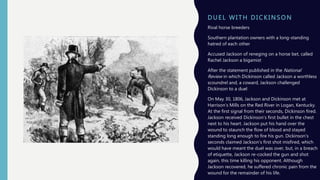
On May 30, 1806, Jackson and Dickinson met at
Harrison’s Mills on the Red River in Logan, Kentucky.
At the first signal from their seconds, Dickinson fired.
Jackson received Dickinson’s first bullet in the chest
next to his heart. Jackson put his hand over the
wound to staunch the flow of blood and stayed
standing long enough to fire his gun. Dickinson’s
seconds claimed Jackson’s first shot misfired, which
would have meant the duel was over, but, in a breach
of etiquette, Jackson re-cocked the gun and shot
again, this time killing his opponent. Although
Jackson recovered, he suffered chronic pain from the
wound for the remainder of his life.
F AI L ED AS S AS SI NAT ION
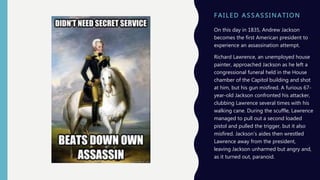
On this day in 1835, Andrew Jackson
becomes the first American president to
experience an assassination attempt.
Richard Lawrence, an unemployed house
painter, approached Jackson as he left a
congressional funeral held in the House
chamber of the Capitol building and shot
at him, but his gun misfired. A furious 67-
year-old Jackson confronted his attacker,
clubbing Lawrence several times with his
walking cane. During the scuffle, Lawrence
managed to pull out a second loaded
pistol and pulled the trigger, but it also
misfired. Jackson’s aides then wrestled
Lawrence away from the president,
leaving Jackson unharmed but angry and,
as it turned out, paranoid.
SOURCES:
• http://millercenter.org/president/jackson
• http://thehermitage.com/learn/andrew-jackson/president/presidency/
• http://www.biography.com/people/andrew-jackson-9350991#personal-life
• http://www.history.com/this-day-in-history/andrew-jackson-kills-charles-dickinson-in-
duel
• http://www.history.com/this-day-in-history/andrew-jackson-narrowly-escapes-
assassination

Andrew Jackson

  • 1.
    ANDREW JACKSON B Y :I S A B E L L A W H E E L E R
  • 2.
    EARLY LIFE • Born: –March 15, 1767 – Waxhaw area – Between North Carolina-South Carolina border • Parents: – Andrew (died shortly before he was born) – Elizabeth (died when he was 14 of cholera)
  • 3.
    EARLY LIFE • AmericanRevolutionary War – Volunteered to fight the British at 13 years old – 1781 he was captured with his brother – Slashed his face and arms when he refused to polish a British soldier’s boots – Both contracted small pox • Brother died, he survived – Other brother died of heat stroke
  • 4.
    EARLY LIFE • Livedwith his mother’s parents for a short while • Moved to Charleston • Received a modern of inheritance from his grandfather in Ireland • He finished school and his inheritance ran out (never went to college) • Worked as a school teacher for a short while even though he hated it – Fiesty temper, fearless, daring, and playful
  • 5.
    EARLY ADULTHOOD • Becamean attorney at 17 • 3 years later he got his license to practice • To supplement his income he worked in small stores • Gained a reputation as charismatic, wild, and ambitious – Dance, entertain, gamble at taverns • His friend appointed him the district’s prosecuting attorney • “Old Hickory” in the war of 1812 – Because he was “firmly rooted”
  • 6.
    FAMILY • Married RachelDonelson Robards (1767–1828) – August 1791 (2nd ceremony, January 17, 1794) – Married, but separated from her old husband • Children (adopted): – Andrew Jackson Jr. (1808-1865) Rachel’s brother’s son – Pretty much everybody’s kids if their fathers died – Lyncoya, (c1811-1828) was a Native American child (found on the battlefield with his dead mother, meant as companion for Jr., couldn’t attend West Point, died of tuberculosis) – Very few carried the “Jackson” name
  • 7.
    PRESIDENCY • Served fromMarch 4, 1829 – March 4, 1837 • He was the 7th President • VP: John C. Calhoun • Opponents called him a “jackass” so he used the donkey to represent his new political party (Democratic) • Nicknamed “King Mob” because he had an open public inauguration, there were so many people that they were breaking everything just to get a look at the President
  • 8.
    WORK AS PRESIDENT •First president to assume command with his power to veto • Wanted to abolish the electoral college – Nicknamed “People’s President” • Implemented rotation in office, which became known as the spoils system – Replaced 10% of the government officers, it was a high % compared to his predecessors • Andrew Jackson is the only president in American history to pay off the national debt and leave office with the country in the black • Congress recognized Texas and Jackson approved its action days before he left office
  • 9.
    MOST FAMOUS ACTION •Jackson’s Indian Removal Act in 1831 led to Trail of Tears • His thoughts: – United States policy of attempting to assimilate the tribes into white society had failed – Native Americans’ way of life would eventually be destroyed – Whites desired their lands and feared if the Native Americans remained in those areas they would eventually be exterminated • There was a great loss of Native American life due to: – Corruption – Inadequate supplies – Removal by force.
  • 10.
    T R AI L OF T E A RS In 1838 and 1839, as part of Andrew Jackson's Indian removal policy, the Cherokee nation was forced to give up its lands east of the Mississippi River and to migrate to an area in present-day Oklahoma. The Cherokee people called this journey the "Trail of Tears," because of its devastating effects. The migrants faced hunger, disease, and exhaustion on the forced march. Over 4,000 out of 15,000 of the Cherokees died. This picture, The Trail of Tears, was painted by Robert Lindneux in 1942. It commemorates the suffering of the Cherokee people under forced removal. If any depictions of the "Trail of Tears" were created at the time of the march, they have not survived.
  • 11.
    DUELING CONTEMPORARIES DESCRIBED JACKSON, WHOHAD ALREADY SERVED IN TENNESSEE’S SENATE AND WAS PRACTICING LAW AT THE TIME OF THE DUEL, AS ARGUMENTATIVE, PHYSICALLY VIOLENT AND FOND OF DUELING TO SOLVE CONFLICTS. ESTIMATES OF THE NUMBER OF DUELS IN WHICH JACKSON PARTICIPATED RANGED FROM FIVE TO 100.
  • 12.
    D UE LWI T H D I C K I NSON Rival horse breeders Southern plantation owners with a long-standing hatred of each other Accused Jackson of reneging on a horse bet, called Rachel Jackson a bigamist After the statement published in the National Review in which Dickinson called Jackson a worthless scoundrel and, a coward, Jackson challenged Dickinson to a duel On May 30, 1806, Jackson and Dickinson met at Harrison’s Mills on the Red River in Logan, Kentucky. At the first signal from their seconds, Dickinson fired. Jackson received Dickinson’s first bullet in the chest next to his heart. Jackson put his hand over the wound to staunch the flow of blood and stayed standing long enough to fire his gun. Dickinson’s seconds claimed Jackson’s first shot misfired, which would have meant the duel was over, but, in a breach of etiquette, Jackson re-cocked the gun and shot again, this time killing his opponent. Although Jackson recovered, he suffered chronic pain from the wound for the remainder of his life.
  • 13.
    F AI LED AS S AS SI NAT ION On this day in 1835, Andrew Jackson becomes the first American president to experience an assassination attempt. Richard Lawrence, an unemployed house painter, approached Jackson as he left a congressional funeral held in the House chamber of the Capitol building and shot at him, but his gun misfired. A furious 67- year-old Jackson confronted his attacker, clubbing Lawrence several times with his walking cane. During the scuffle, Lawrence managed to pull out a second loaded pistol and pulled the trigger, but it also misfired. Jackson’s aides then wrestled Lawrence away from the president, leaving Jackson unharmed but angry and, as it turned out, paranoid.
  • 14.
    SOURCES: • http://millercenter.org/president/jackson • http://thehermitage.com/learn/andrew-jackson/president/presidency/ •http://www.biography.com/people/andrew-jackson-9350991#personal-life • http://www.history.com/this-day-in-history/andrew-jackson-kills-charles-dickinson-in- duel • http://www.history.com/this-day-in-history/andrew-jackson-narrowly-escapes- assassination