Honors World History

KOREA
ESSENTIAL QUESTION


How did the relationship between Korea
and China develop between 108 B.C.E.
and 1392C.E.?
GEOGRAPHY OF KOREA


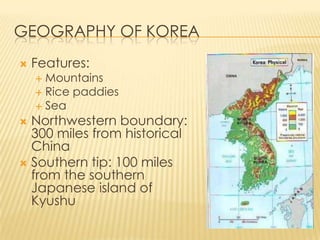
Features:

Mountains
 Rice paddies
 Sea


Northwestern boundary:
300 miles from historical
China
 Southern tip: 100 miles
from the southern
Japanese island of
Kyushu

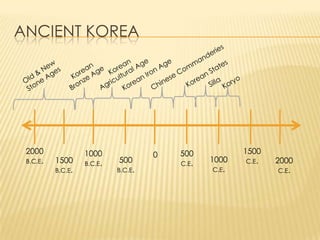
ANCIENT KOREA

2000
B.C.E.

1500
B.C.E.

1000
B.C.E.

500
B.C.E.

0

500
C.E.

1000
C.E.

1500
C.E.

2000
C.E.
BRONZE, AGRARIAN, AND IRON
REVOLUTIONS OF KOREA
Population lived in small villages along
coasts and rivers
 Animists


 Worshiped

forces of nature

 Shamans
 Spoke



to the dead

Buried leaders in enormous tomb mounds
CHINESE COMMANDERIES
108 B.C.E. – 313 C.E.
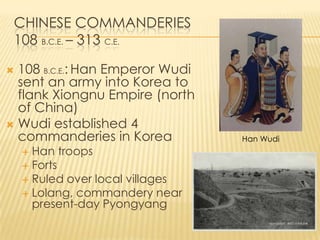
108 B.C.E.: Han Emperor Wudi
sent an army into Korea to
flank Xiongnu Empire (north
of China)
 Wudi established 4
commanderies in Korea


Han troops
 Forts
 Ruled over local villages
 Lolang, commandery near
present-day Pyongyang


Han Wudi
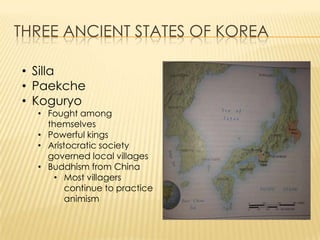
THREE ANCIENT STATES OF KOREA
• Silla
• Paekche
• Koguryo

• Fought among
themselves
• Powerful kings
• Aristocratic society
governed local villages
• Buddhism from China
• Most villagers
continue to practice
animism
SILLA
Strong
 Chinese helped them to unify Korea for 8
years (660-668)
 Silla sent gifts (tributes) to the Chinese court


Chinese protected Korea’s northern boundary
from Chinese nomad invasions
 Adopted Chinese writing
 Silla incorporated part of the Chinese
government model
 Confucian national academy to train officials
 Annual embassies to Tang court

KORYO (918-1392)
After the fall of the Tang
dynasty, Korean’s northern border was
subject to Chinese nomadic invaders
 Silla court faced coups and rebellions
 918, a warlord general founded the
Koryo dynasty

KORYO (918-1392)





Koryo becomes English
“Korea”
Created earliest surviving
records of Korean history.
Buddhist temples and
monasteries are built




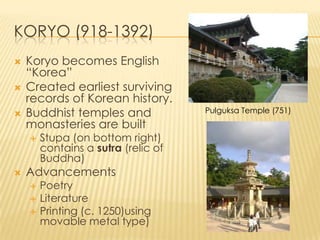
Stupa (on bottom right)
contains a sutra (relic of
Buddha)

Advancements




Poetry
Literature
Printing (c. 1250)using
movable metal type)

Pulguksa Temple (751)
KORYO (918-1392)


More “Chinese” than
Silla State
 Government

offices and
laws in Chinese style
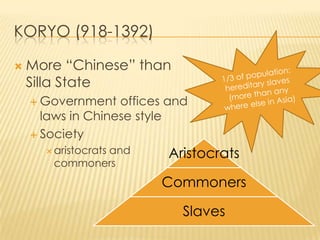
 Society
 aristocrats

and
commoners

Aristocrats
Commoners
Slaves
KORYO (918-1392)


Economy
 Underdeveloped
 Barter;



no money

Mongols
 Wars

weakened the dynasty
 Mongol invasions of Japan were launched
from Korean ports


1400s: development of Korean alphabet
ANSWER THESE QUESTIONS:




How is early Korean history shaped by its
geography?

How was Buddhism introduced to Korea
and Japan?

Ancient Korea

  • 1.
  • 2.
    ESSENTIAL QUESTION  How didthe relationship between Korea and China develop between 108 B.C.E. and 1392C.E.?
  • 3.
    GEOGRAPHY OF KOREA  Features: Mountains Rice paddies  Sea  Northwestern boundary: 300 miles from historical China  Southern tip: 100 miles from the southern Japanese island of Kyushu 
  • 4.
  • 5.
    BRONZE, AGRARIAN, ANDIRON REVOLUTIONS OF KOREA Population lived in small villages along coasts and rivers  Animists   Worshiped forces of nature  Shamans  Spoke  to the dead Buried leaders in enormous tomb mounds
  • 6.
    CHINESE COMMANDERIES 108 B.C.E.– 313 C.E. 108 B.C.E.: Han Emperor Wudi sent an army into Korea to flank Xiongnu Empire (north of China)  Wudi established 4 commanderies in Korea  Han troops  Forts  Ruled over local villages  Lolang, commandery near present-day Pyongyang  Han Wudi
  • 7.
    THREE ANCIENT STATESOF KOREA • Silla • Paekche • Koguryo • Fought among themselves • Powerful kings • Aristocratic society governed local villages • Buddhism from China • Most villagers continue to practice animism
  • 8.
    SILLA Strong  Chinese helpedthem to unify Korea for 8 years (660-668)  Silla sent gifts (tributes) to the Chinese court  Chinese protected Korea’s northern boundary from Chinese nomad invasions  Adopted Chinese writing  Silla incorporated part of the Chinese government model  Confucian national academy to train officials  Annual embassies to Tang court 
  • 9.
    KORYO (918-1392) After thefall of the Tang dynasty, Korean’s northern border was subject to Chinese nomadic invaders  Silla court faced coups and rebellions  918, a warlord general founded the Koryo dynasty 
  • 10.
    KORYO (918-1392)    Koryo becomesEnglish “Korea” Created earliest surviving records of Korean history. Buddhist temples and monasteries are built   Stupa (on bottom right) contains a sutra (relic of Buddha) Advancements    Poetry Literature Printing (c. 1250)using movable metal type) Pulguksa Temple (751)
  • 11.
    KORYO (918-1392)  More “Chinese”than Silla State  Government offices and laws in Chinese style  Society  aristocrats and commoners Aristocrats Commoners Slaves
  • 12.
    KORYO (918-1392)  Economy  Underdeveloped Barter;  no money Mongols  Wars weakened the dynasty  Mongol invasions of Japan were launched from Korean ports  1400s: development of Korean alphabet
  • 13.
    ANSWER THESE QUESTIONS:   Howis early Korean history shaped by its geography? How was Buddhism introduced to Korea and Japan?