The Corella & Bertram F. Bonner Foundation
A Student’s Guide to
Discussing Wellness
Prepared by Hunter Malone and Eric J. Hearst
Defining Wellness in the Bonner Program
The term wellness, as used in the Bonner Network, encompasses three components:
• Well-being: Refers to characteristics of positive mental health that are measured by purpose in life,
supportive social relationships, feelings of efficacy, and optimism about the future (Checkoway, 2011).
• Thriving: Refers to well-being in multiple areas - physical, emotional, social, and psychological. It involves
wisdom, appreciation of wonder, and being able to bring purpose and compassion into your life
(Huffington as cited in Hayes, 2015).
• Resilience: The process of adapting well in the face of adversity, trauma, tragedy, threats or significant
sources of stress — such as family and relationship problems, serious health problems or workplace and
financial stressors (American Psychological Association, 2017).
What Wellness Is & Is Not…
• Having an absence of mental health needs. (I.e.
depression or anxiety.)
• Having it “all together, all the time.”
• Never having bad days.
• Having to have a lot of friends or a plan for
anything and everything.
• The same for everyone.
• Having a positive mental health state.
• Being self aware of your mental and physical
needs and actively working to meet those needs.
• Being aware that with every day, come new
challenges and opportunities to overcome.
• Having or believing in a purpose in life, supportive
social relationships, feelings of efficacy, and
optimism about the future.
• Unique for everyone.
Wellness Is… Wellness Is Not…
Statistics
2009 Statistics*
• 13% of students surveyed reported having symptoms of anxiety and more than 18% reported experiencing symptoms of depression
• Nearly 15% had received a diagnosis of depression sometime early in their lives
• 25% reported having problems with their studies as a result of sleep problems
• 33% acknowledged stress-related problems
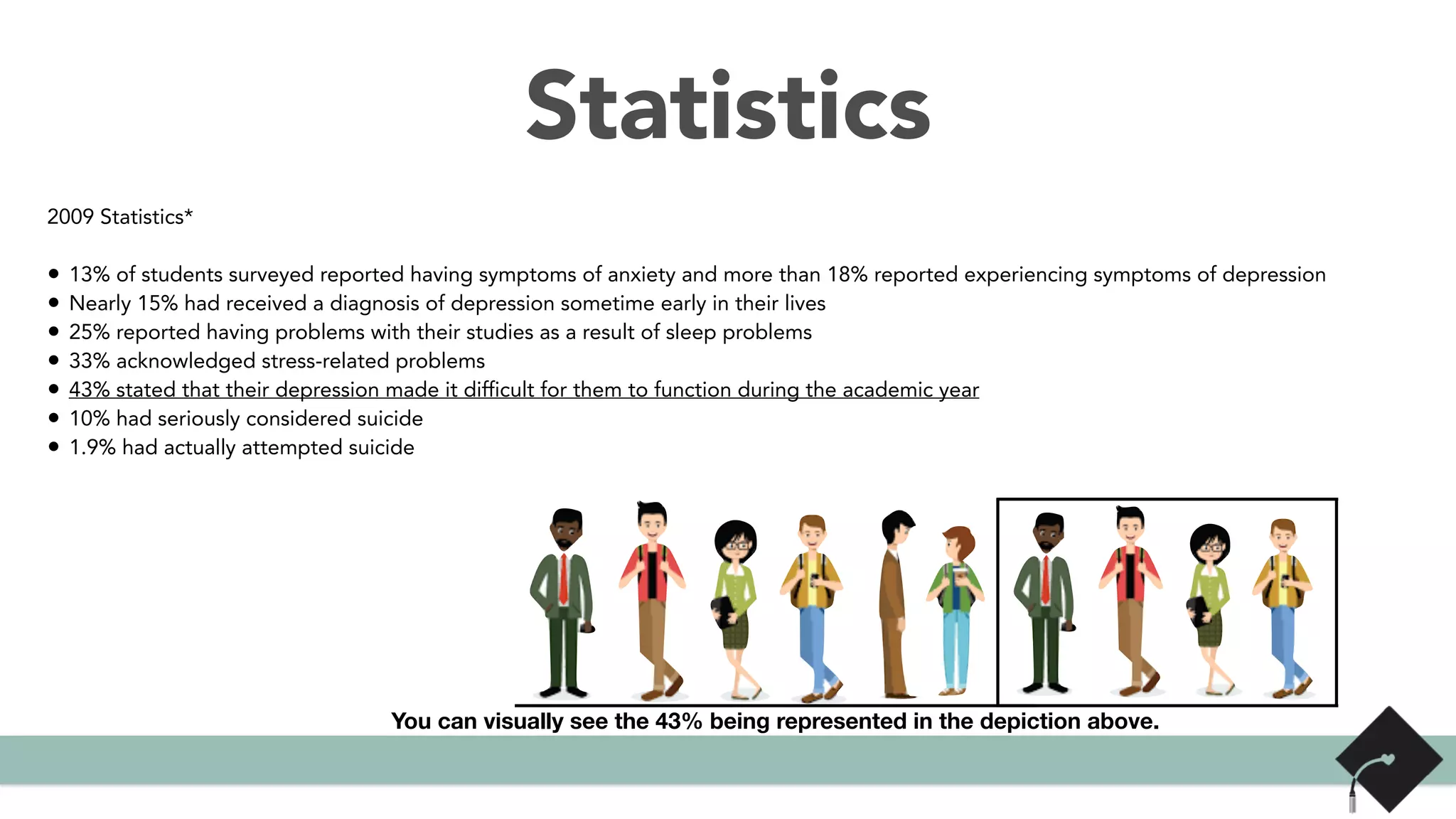
• 43% stated that their depression made it difficult for them to function during the academic year
• 10% had seriously considered suicide
• 1.9% had actually attempted suicide
You can visually see the 43% being represented in the depiction above.
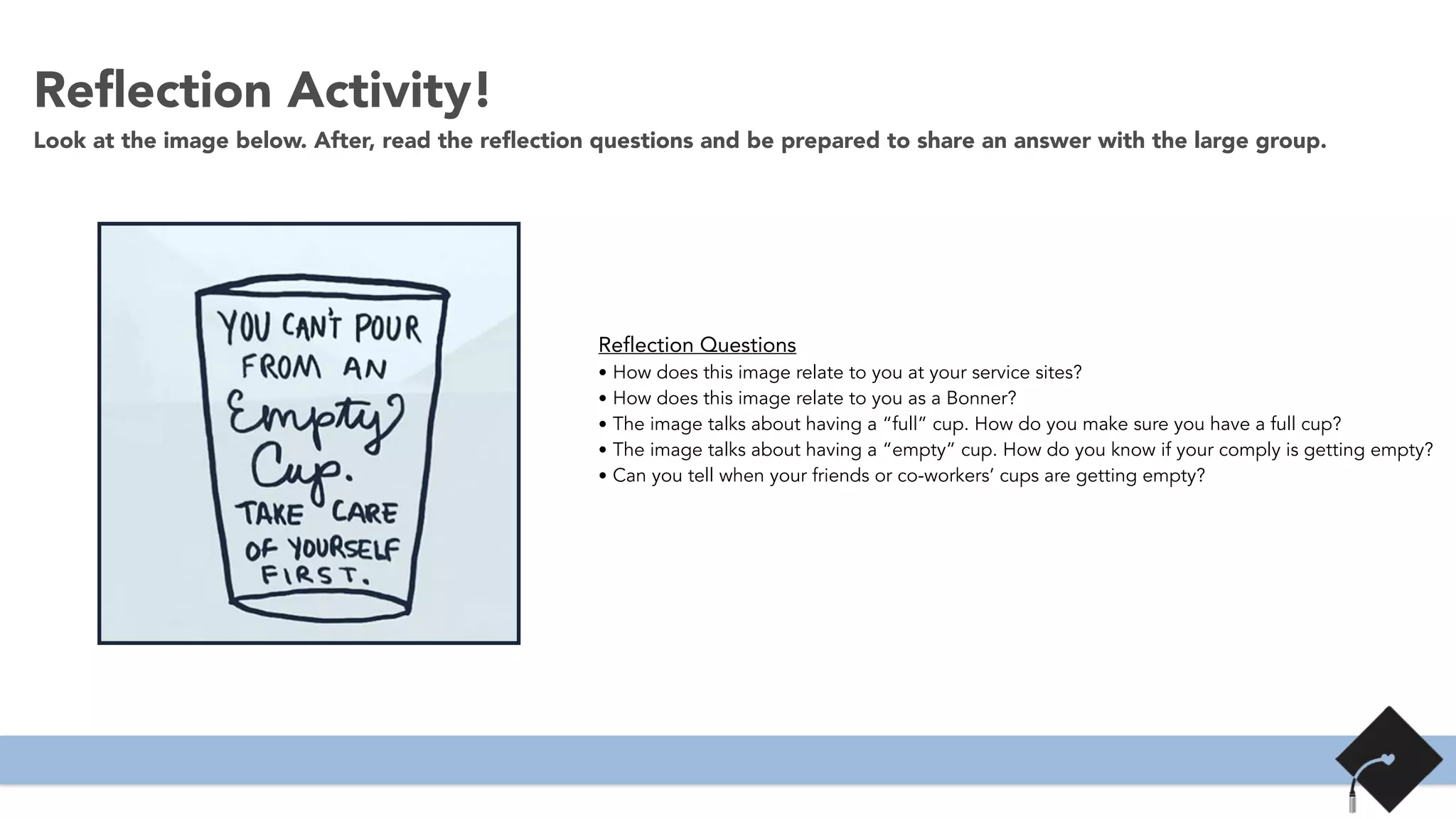
Reflection Activity!
Look at the image below. After, read the reflection questions and be prepared to share an answer with the large group.
Reflection Questions
• How does this image relate to you at your service sites?
• How does this image relate to you as a Bonner?
• The image talks about having a “full” cup. How do you make sure you have a full cup?
• The image talks about having a “empty” cup. How do you know if your comply is getting empty?
• Can you tell when your friends or co-workers’ cups are getting empty?
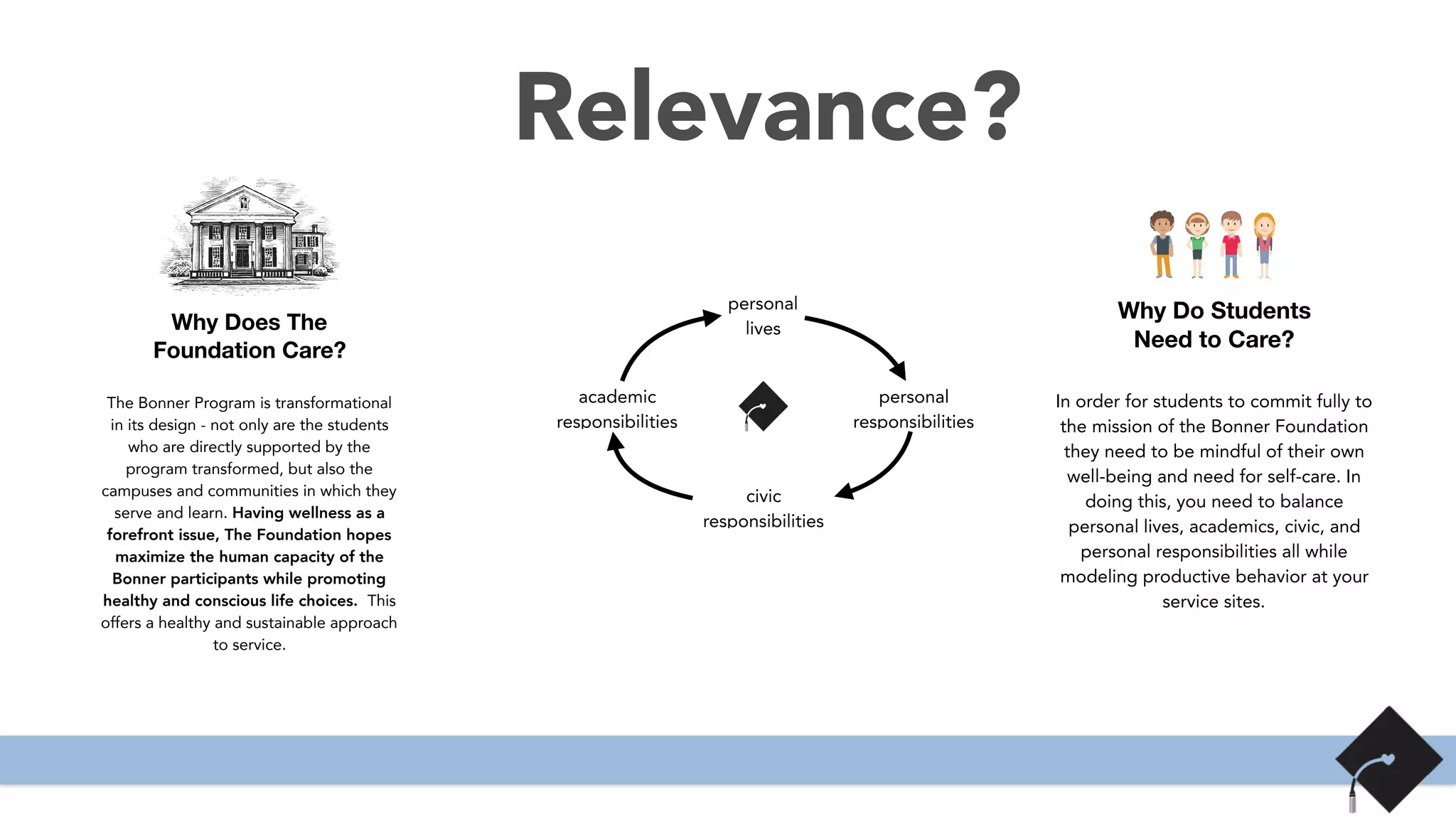
Relevance?
Why Does The
Foundation Care?
In order for students to commit fully to
the mission of the Bonner Foundation
they need to be mindful of their own
well-being and need for self-care. In
doing this, you need to balance
personal lives, academics, civic, and
personal responsibilities all while
modeling productive behavior at your
service sites.
The Bonner Program is transformational
in its design - not only are the students
who are directly supported by the
program transformed, but also the
campuses and communities in which they
serve and learn. Having wellness as a
forefront issue, The Foundation hopes
maximize the human capacity of the
Bonner participants while promoting
healthy and conscious life choices. This
offers a healthy and sustainable approach
to service.
Why Do Students
Need to Care?
personal
responsibilities
civic
responsibilities
academic
responsibilities
personal
lives
Think about these reflections questions as we begin to
wrap up this discussion on wellness.
Challenges
• Do you feel like bettering or maintaining your wellness is hard? If so,
why?
• Is there any stigma behind trying to maintain or better your wellness?
• Name three challenges that hinder someone from bettering or
maintaining their wellness?
• Does your campus address any of these challenges?
• Does your Bonner Program address any of these issues?
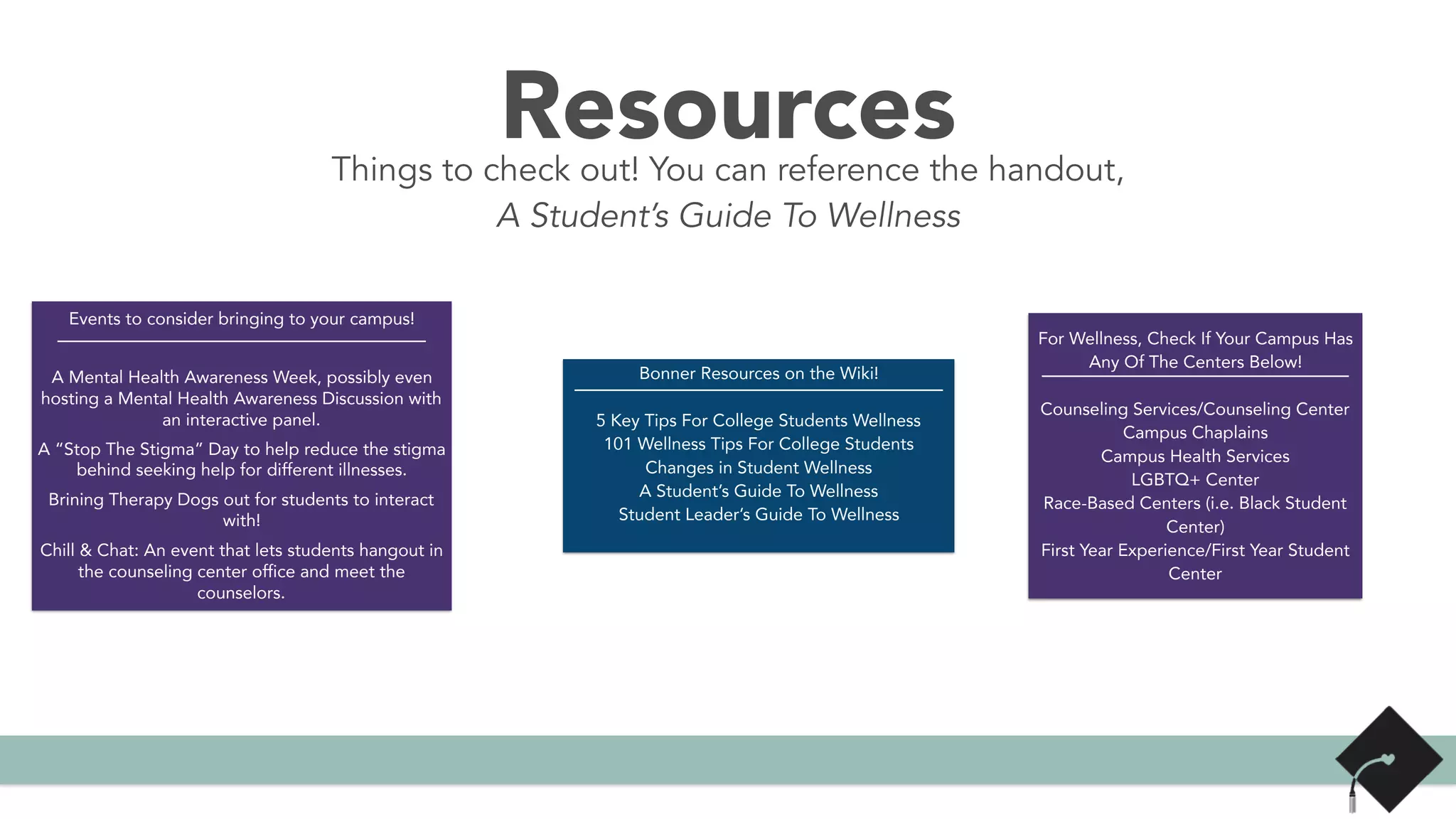
ResourcesThings to check out! You can reference the handout,
A Student’s Guide To Wellness
Events to consider bringing to your campus!
A Mental Health Awareness Week, possibly even
hosting a Mental Health Awareness Discussion with
an interactive panel.
A “Stop The Stigma” Day to help reduce the stigma
behind seeking help for different illnesses.
Brining Therapy Dogs out for students to interact
with!
Chill & Chat: An event that lets students hangout in
the counseling center office and meet the
counselors.
For Wellness, Check If Your Campus Has
Any Of The Centers Below!
Counseling Services/Counseling Center
Campus Chaplains
Campus Health Services
LGBTQ+ Center
Race-Based Centers (i.e. Black Student
Center)
First Year Experience/First Year Student
Center
Bonner Resources on the Wiki!
5 Key Tips For College Students Wellness
101 Wellness Tips For College Students
Changes in Student Wellness
A Student’s Guide To Wellness
Student Leader’s Guide To Wellness

An Introduction and Discussion of Wellness

  • 1.
    The Corella &Bertram F. Bonner Foundation A Student’s Guide to Discussing Wellness Prepared by Hunter Malone and Eric J. Hearst
  • 2.
    Defining Wellness inthe Bonner Program The term wellness, as used in the Bonner Network, encompasses three components: • Well-being: Refers to characteristics of positive mental health that are measured by purpose in life, supportive social relationships, feelings of efficacy, and optimism about the future (Checkoway, 2011). • Thriving: Refers to well-being in multiple areas - physical, emotional, social, and psychological. It involves wisdom, appreciation of wonder, and being able to bring purpose and compassion into your life (Huffington as cited in Hayes, 2015). • Resilience: The process of adapting well in the face of adversity, trauma, tragedy, threats or significant sources of stress — such as family and relationship problems, serious health problems or workplace and financial stressors (American Psychological Association, 2017).
  • 3.
    What Wellness Is& Is Not… • Having an absence of mental health needs. (I.e. depression or anxiety.) • Having it “all together, all the time.” • Never having bad days. • Having to have a lot of friends or a plan for anything and everything. • The same for everyone. • Having a positive mental health state. • Being self aware of your mental and physical needs and actively working to meet those needs. • Being aware that with every day, come new challenges and opportunities to overcome. • Having or believing in a purpose in life, supportive social relationships, feelings of efficacy, and optimism about the future. • Unique for everyone. Wellness Is… Wellness Is Not…
  • 4.
    Statistics 2009 Statistics* • 13%of students surveyed reported having symptoms of anxiety and more than 18% reported experiencing symptoms of depression • Nearly 15% had received a diagnosis of depression sometime early in their lives • 25% reported having problems with their studies as a result of sleep problems • 33% acknowledged stress-related problems • 43% stated that their depression made it difficult for them to function during the academic year • 10% had seriously considered suicide • 1.9% had actually attempted suicide You can visually see the 43% being represented in the depiction above.
  • 5.
    Reflection Activity! Look atthe image below. After, read the reflection questions and be prepared to share an answer with the large group. Reflection Questions • How does this image relate to you at your service sites? • How does this image relate to you as a Bonner? • The image talks about having a “full” cup. How do you make sure you have a full cup? • The image talks about having a “empty” cup. How do you know if your comply is getting empty? • Can you tell when your friends or co-workers’ cups are getting empty?
  • 6.
    Relevance? Why Does The FoundationCare? In order for students to commit fully to the mission of the Bonner Foundation they need to be mindful of their own well-being and need for self-care. In doing this, you need to balance personal lives, academics, civic, and personal responsibilities all while modeling productive behavior at your service sites. The Bonner Program is transformational in its design - not only are the students who are directly supported by the program transformed, but also the campuses and communities in which they serve and learn. Having wellness as a forefront issue, The Foundation hopes maximize the human capacity of the Bonner participants while promoting healthy and conscious life choices. This offers a healthy and sustainable approach to service. Why Do Students Need to Care? personal responsibilities civic responsibilities academic responsibilities personal lives
  • 7.
    Think about thesereflections questions as we begin to wrap up this discussion on wellness. Challenges • Do you feel like bettering or maintaining your wellness is hard? If so, why? • Is there any stigma behind trying to maintain or better your wellness? • Name three challenges that hinder someone from bettering or maintaining their wellness? • Does your campus address any of these challenges? • Does your Bonner Program address any of these issues?
  • 8.
    ResourcesThings to checkout! You can reference the handout, A Student’s Guide To Wellness Events to consider bringing to your campus! A Mental Health Awareness Week, possibly even hosting a Mental Health Awareness Discussion with an interactive panel. A “Stop The Stigma” Day to help reduce the stigma behind seeking help for different illnesses. Brining Therapy Dogs out for students to interact with! Chill & Chat: An event that lets students hangout in the counseling center office and meet the counselors. For Wellness, Check If Your Campus Has Any Of The Centers Below! Counseling Services/Counseling Center Campus Chaplains Campus Health Services LGBTQ+ Center Race-Based Centers (i.e. Black Student Center) First Year Experience/First Year Student Center Bonner Resources on the Wiki! 5 Key Tips For College Students Wellness 101 Wellness Tips For College Students Changes in Student Wellness A Student’s Guide To Wellness Student Leader’s Guide To Wellness