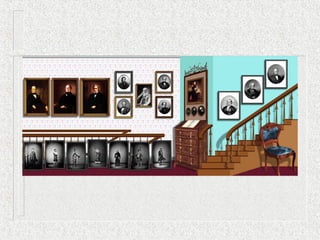
In the beginning…
competing technologies [cf. VHS vs Beta]
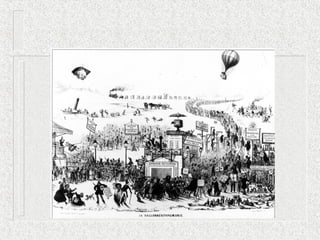
early public fascinations with photography
everyone could now have their own personal visual
history
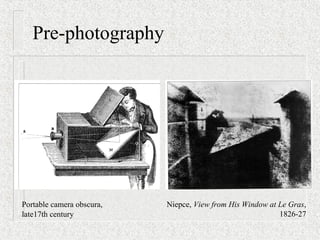
Pre-photography
Niepce, View from His Window at Le Gras,
1826-27
Portable camera obscura,
late17th century
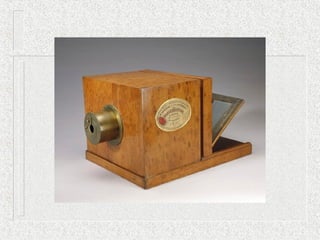
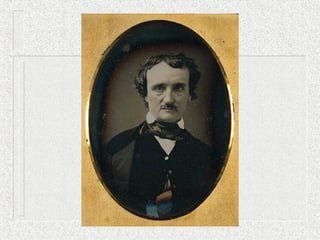
The daguerreotype [1837-39]
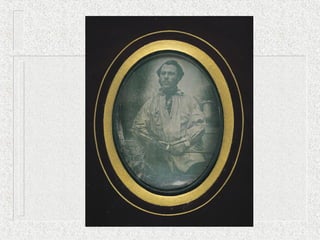
both one-of-a-kind precious object and
ephemeral image
capable of incredible detail
long exposure times: one minute minimum
the death of portrait miniaturists
now everyone could have their own
personal visual history
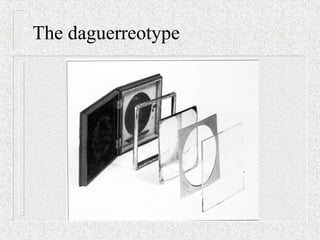
The daguerreotype
Competing photographic systems:
the English calotype [1841]
a paper-based negative/positive system
second on the scene
– the role of nationalism: France vs England
– the restrictive patent system taken out by Henry
Fox Talbot stifling its growth outside of
England
high volume printing establishments
spreading the photographic message
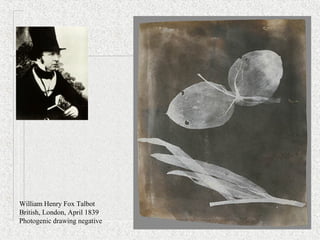
William Henry Fox Talbot
British, London, April 1839
Photogenic drawing negative
"[T]he plates of this work
have been obtained by the
mere action of Light upon
sensitive paper. They have
been formed or depicted by
optical and chemical means
alone, and without the aid of
any one acquainted with the
art of drawing."
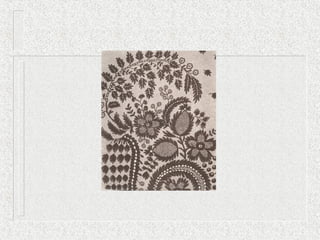
William Henry Fox Talbot
British,
Wiltshire, England,
November 4, 1839
Photogenic drawing
negative
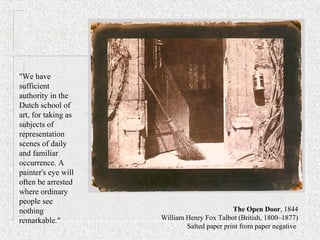
"We have
sufficient
authority in the
Dutch school of
art, for taking as
subjects of
representation
scenes of daily
and familiar
occurrence. A
painter's eye will
often be arrested
where ordinary
people see
nothing
remarkable."
The Open Door, 1844
William Henry Fox Talbot (British, 1800–1877)
Salted paper print from paper negative
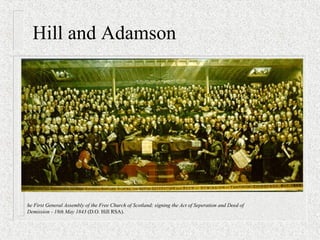
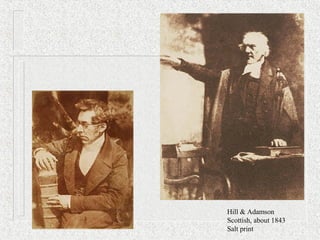
Hill and Adamson
he First General Assembly of the Free Church of Scotland; signing the Act of Seperation and Deed of
Demission - 18th May 1843 (D.O. Hill RSA).
Hill & Adamson
Scottish, about 1843
Salt print
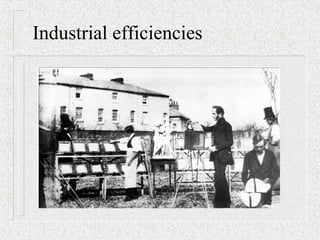
Industrial efficiencies
The daguerreotype in America
[1839]
no formal art training necessary
– apprenticeship
Nathaniel Hawthorne’s Holgrave in The House of
Seven Gables
– his seventh profession, no more lasting than the first six
– money, not art, technique not aesthetics: “earn his
bread by some other equally digressive means”
The daguerreotype in America
[continued]
the photographic ordeal
– one advertisement:
“Photography in all styles
without pain”
– somber, stern, and
unsmiling sitters
the excellence of the
American Process:
Yankee ingenuity and
industrial skill at work
– infatuation with
machinery:
electroplating, power
buffing
John Plumbe, Jr and the United States
Photographic Institute [1841]
the first franchise
operation: 14 galleries
nationwide
credit going to the
studio rather than the
individual
photographer
the chronicling of
ordinary faces in
relatively ordinary
activities
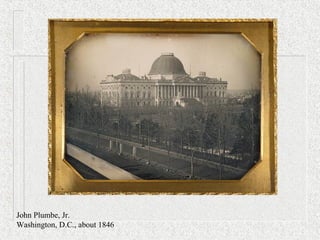
John Plumbe, Jr.
Washington, D.C., about 1846
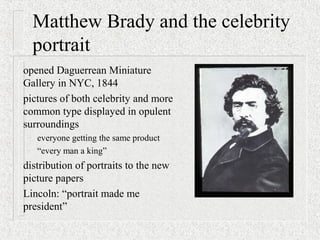
Matthew Brady and the celebrity
portrait
opened Daguerrean Miniature
Gallery in NYC, 1844
pictures of both celebrity and more
common type displayed in opulent
surroundings
– everyone getting the same product
– “every man a king”
distribution of portraits to the new
picture papers
Lincoln: “portrait made me
president”
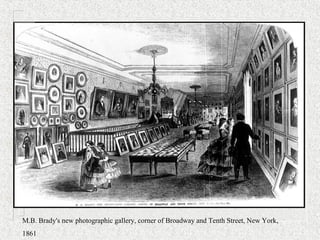
M.B. Brady's new photographic gallery, corner of Broadway and Tenth Street, New York,
1861
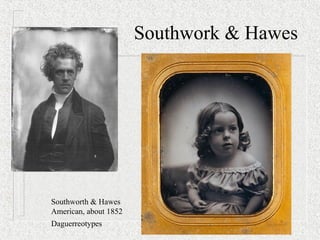
Southwork & Hawes
Southworth & Hawes
American, about 1852
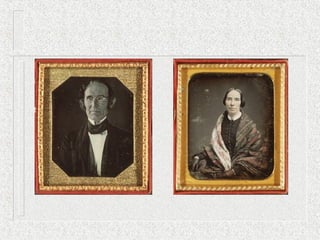
Daguerreotypes
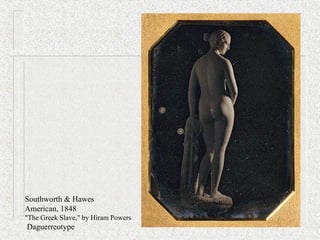
Southworth & Hawes
American, 1848
"The Greek Slave," by Hiram Powers
Daguerreotype
Photographic representation becoming
seen as the normal appearance of things
photographic
rendering
– detail
– geometric perspective
scientific application
the travel picture
incorporation into
western expeditions
John Whipple, The Moon [1852]
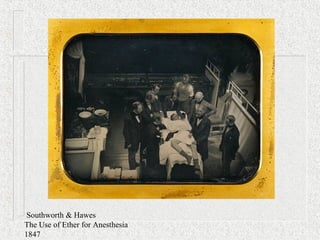
Southworth & Hawes
The Use of Ether for Anesthesia
1847
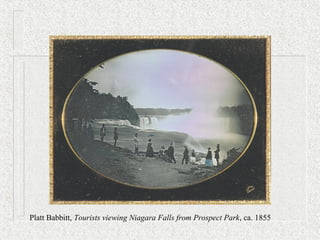
Platt Babbitt, Tourists viewing Niagara Falls from Prospect Park, ca. 1855
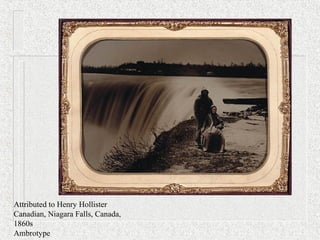
Attributed to Henry Hollister
Canadian, Niagara Falls, Canada,
1860s
Ambrotype
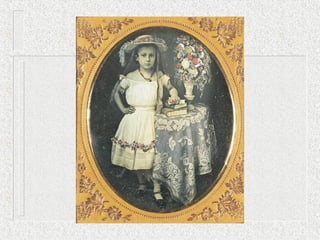
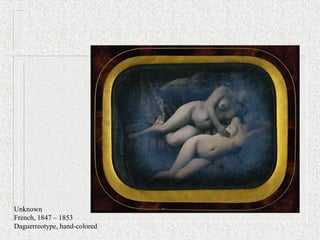
Unknown
French, 1847 – 1853
Daguerreotype, hand-colored
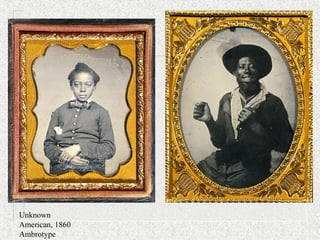
Unknown
American, 1860
Ambrotype
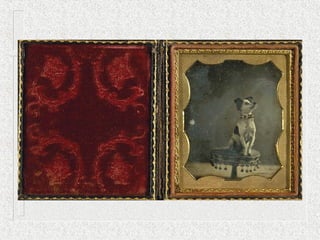
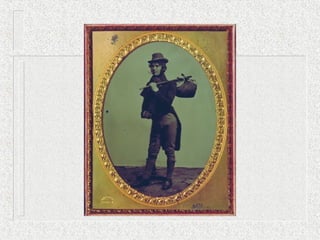
“Picture factories:” portraits for
four bits
assembly-line production with task
specialization
– complete process from start to finish in under
15 minutes
sloppy
trading in erotic art
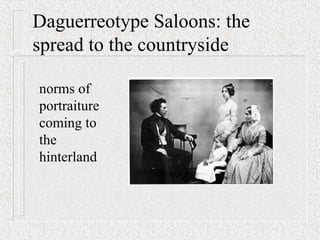
Daguerreotype Saloons: the
spread to the countryside
norms of
portraiture
coming to
the
hinterland
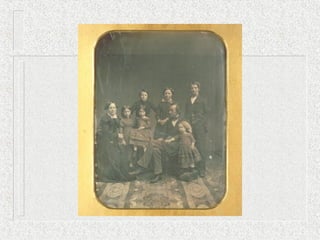
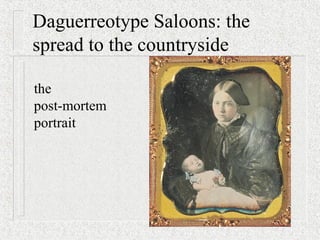
Daguerreotype Saloons: the
spread to the countryside
the
post-mortem
portrait
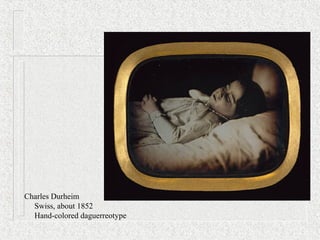
Charles Durheim
Swiss, about 1852
Hand-colored daguerreotype
the decline of the daguerreotype
[1855]
ferrotype: the first “instant”
process
– less than a minute total
– itinerant street photographers
faster, easier, cheaper collodian
process blending the advantages of
both the daguerreotype and the
calotype
– allowing multiple prints from the
same negative
Ams 312 Lecture 2 090922

Ams 312 Lecture 2 090922

  • 1.
    In the beginning… competingtechnologies [cf. VHS vs Beta] early public fascinations with photography everyone could now have their own personal visual history
  • 2.
    Pre-photography Niepce, View fromHis Window at Le Gras, 1826-27 Portable camera obscura, late17th century
  • 3.
    The daguerreotype [1837-39] bothone-of-a-kind precious object and ephemeral image capable of incredible detail long exposure times: one minute minimum the death of portrait miniaturists now everyone could have their own personal visual history
  • 6.
  • 10.
    Competing photographic systems: theEnglish calotype [1841] a paper-based negative/positive system second on the scene – the role of nationalism: France vs England – the restrictive patent system taken out by Henry Fox Talbot stifling its growth outside of England high volume printing establishments spreading the photographic message
  • 12.
    William Henry FoxTalbot British, London, April 1839 Photogenic drawing negative
  • 14.
    "[T]he plates ofthis work have been obtained by the mere action of Light upon sensitive paper. They have been formed or depicted by optical and chemical means alone, and without the aid of any one acquainted with the art of drawing." William Henry Fox Talbot British, Wiltshire, England, November 4, 1839 Photogenic drawing negative
  • 15.
    "We have sufficient authority inthe Dutch school of art, for taking as subjects of representation scenes of daily and familiar occurrence. A painter's eye will often be arrested where ordinary people see nothing remarkable." The Open Door, 1844 William Henry Fox Talbot (British, 1800–1877) Salted paper print from paper negative
  • 16.
    Hill and Adamson heFirst General Assembly of the Free Church of Scotland; signing the Act of Seperation and Deed of Demission - 18th May 1843 (D.O. Hill RSA).
  • 17.
    Hill & Adamson Scottish,about 1843 Salt print
  • 19.
  • 20.
    The daguerreotype inAmerica [1839] no formal art training necessary – apprenticeship Nathaniel Hawthorne’s Holgrave in The House of Seven Gables – his seventh profession, no more lasting than the first six – money, not art, technique not aesthetics: “earn his bread by some other equally digressive means”
  • 21.
    The daguerreotype inAmerica [continued] the photographic ordeal – one advertisement: “Photography in all styles without pain” – somber, stern, and unsmiling sitters the excellence of the American Process: Yankee ingenuity and industrial skill at work – infatuation with machinery: electroplating, power buffing
  • 24.
    John Plumbe, Jrand the United States Photographic Institute [1841] the first franchise operation: 14 galleries nationwide credit going to the studio rather than the individual photographer the chronicling of ordinary faces in relatively ordinary activities
  • 25.
  • 26.
    Matthew Brady andthe celebrity portrait opened Daguerrean Miniature Gallery in NYC, 1844 pictures of both celebrity and more common type displayed in opulent surroundings – everyone getting the same product – “every man a king” distribution of portraits to the new picture papers Lincoln: “portrait made me president”
  • 27.
    M.B. Brady's newphotographic gallery, corner of Broadway and Tenth Street, New York, 1861
  • 29.
    Southwork & Hawes Southworth& Hawes American, about 1852 Daguerreotypes
  • 30.
    Southworth & Hawes American,1848 "The Greek Slave," by Hiram Powers Daguerreotype
  • 31.
    Photographic representation becoming seenas the normal appearance of things photographic rendering – detail – geometric perspective scientific application the travel picture incorporation into western expeditions John Whipple, The Moon [1852]
  • 32.
    Southworth & Hawes TheUse of Ether for Anesthesia 1847
  • 33.
    Platt Babbitt, Touristsviewing Niagara Falls from Prospect Park, ca. 1855
  • 34.
    Attributed to HenryHollister Canadian, Niagara Falls, Canada, 1860s Ambrotype
  • 37.
    Unknown French, 1847 –1853 Daguerreotype, hand-colored
  • 40.
  • 42.
    “Picture factories:” portraitsfor four bits assembly-line production with task specialization – complete process from start to finish in under 15 minutes sloppy trading in erotic art
  • 43.
    Daguerreotype Saloons: the spreadto the countryside norms of portraiture coming to the hinterland
  • 45.
    Daguerreotype Saloons: the spreadto the countryside the post-mortem portrait
  • 46.
    Charles Durheim Swiss, about1852 Hand-colored daguerreotype
  • 47.
    the decline ofthe daguerreotype [1855] ferrotype: the first “instant” process – less than a minute total – itinerant street photographers faster, easier, cheaper collodian process blending the advantages of both the daguerreotype and the calotype – allowing multiple prints from the same negative