The causes and impact of the American entry to the war
For three years, the Americans remained neutral – public opinion was blatantly
against involvement in World War I
Americans were divided in their loyalties (ex. British-Americans, Irish-Americans
and German-Americans)
President Woodrow Wilson did not want foreign problems to disrupt his Presidency
(1916- “He kept us out of war!” re-election slogan)
Americans still liked the idea of being ISOLATIONISTS (keeping out of the war)
Read Source A
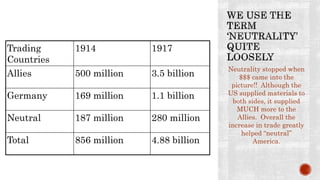
Neutrality stopped when
$$$ came into the
picture!! Although the
US supplied materials to
both sides, it supplied
MUCH more to the
Allies. Overall the
increase in trade greatly
helped “neutral”
America.
Trading
Countries
1914 1917
Allies 500 million 3.5 billion
Germany 169 million 1.1 billion
Neutral 187 million 280 million
Total 856 million 4.88 billion
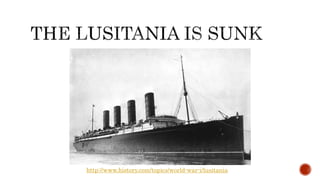
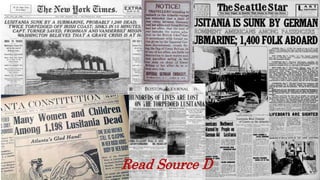
The sinking of the ‘Lusitania’
The submarine campaign
The Zimmerman telegram
http://www.history.com/topics/world-war-i/lusitania
Read Source D
Read Source E for the ’real’ story
(Note: Source E is taken from “The People’s History of
the United States”, a renowned revisionist ‘anti-history’
of the United States)
The Germans held back on the submarine attacks for awhile but on January 9,
1917 announced a new campaign of unrestricted submarine warfare
Germany had a fleet of 46 large submarines capable of operating in deep water and
23 U-boats that could operate at a coastal level
German naval intelligence believed that unrestricted submarine warfare would
result in the loss of 600,000 tons of shipping per month – double the tonnage that
‘cruiser’ warfare accounted for
Coupled with the internationally bad harvest of 1916, there was a belief in Berlin
that Britain could be starved into defeat within 5 months
The military believed that America would not enter the war while politicians were
less sure.
By Spring 1917, the campaign of unrestricted submarine warfare was biting – in
February 1917, 470,000 tons of ships had been sunk. By April it had risen to
837,000 tons.
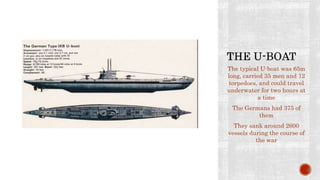
The typical U-boat was 65m
long, carried 35 men and 12
torpedoes, and could travel
underwater for two hours at
a time
The Germans had 375 of
them
They sank around 2600
vessels during the course of
the war
President Wilson was shocked – he had already threatened to break diplomatic
relations with Germany if the German sank any more unarmed passenger ships, so
he was stuck
He evicted the German Ambassador from the USA and recalled the US Ambassador
from Germany
On 3 February, he announced that he would take no further action unless the
Germans committed ‘overt acts’ towards the USA by actually sinking American
ships
. . . Then the Germans sank NINE American ships and one more was lost to a
German mine –
- Including the Housatonic, which was sunk only hours after the US cut off
diplomatic relations with Germany
WHY were the Germans baiting the Americans?
They weren’t
The Germans were fighting a war of attrition against the British
The British were relying on American ships to keep their supply lines going
The German attacks were not meant to provoke the Americans – they knew they would, but it was a
gamble they were willing to take
To reduce their risk, they needed a backup plan
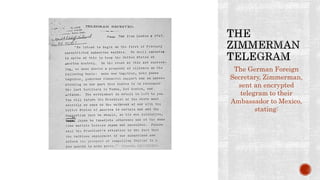
The German Foreign
Secretary, Zimmerman,
sent an encrypted
telegram to their
Ambassador to Mexico,
stating:
The Germans knew their U-Boat campaign would probably bring the USA into the
war
They hoped they could beat the British before US troops arrived
By making an alliance with Mexico, they hoped the USA would be distracted and
have to dedicate troops to their own southern border, slowing their movement to
Europe
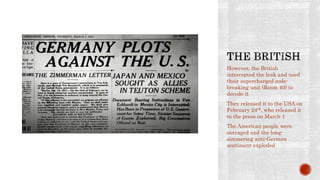
However, the British
intercepted the leak and used
their supercharged code-
breaking unit (Room 40) to
decode it
They released it to the USA on
February 24th, who released it
to the press on March 1
The American people were
outraged and the long-
simmering anti-German
sentiment exploded
Joint Resolution declaring that a state of war exists
between the Imperial German government and the
government and the people of the United States and
making provision to prosecute the same:
Whereas the Imperial German government has committed
repeated acts of war against the government and the
people of the United States of America, therefore be it
resolved by the Senate and the House of Representatives
of the United States of America in Congress assembled,
that the state of war between the United States and the
Imperial German government which has thus been thrust
upon the United States is hereby formally declared… and
that the President is hereby authorised and directed to
employ the entire naval and military forces of the United
States and the resources of the government to carry on
war against the Imperial German government, and to
bring the conflict to a successful termination all of the
resources of the country are hereby pledged by the
Congress of the United States.
Signed,
Champ Clark (Speaker of the House of Representatives)
Thomas Marshall (Vice-President of the United States)
Woodrow Wilson (President of the United States)
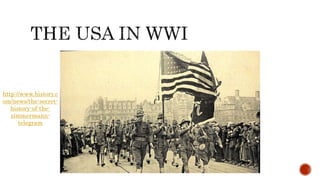
http://www.history.c
om/news/the-secret-
history-of-the-
zimmermann-
telegram
The USA had a small army but they drafted about 4 million men into service and by
mid-1918 had moved about 2 million soldiers into France
They were led by General Pershing, who committed all US ships to moving troops
instead of supplies to increase the speed of mobilistion
Pershing also refused to let American troops fight alongside British and French
troops, insisting that his forces acted independently
Fun fact: The USA gave citizenship status to Puerto Ricans just so they could be
drafted to fight in WWI – sorry, Puerto Rico, for 1917 and 2017
The USA had a small army but they drafted about 4 million men into service and by
mid-1918 had moved about 2 million soldiers into France
Another fun fact: Pershing was totally fine with allowing African-American troops
to leave the American forces and fight with the French – the Harlem Hellfighters
earned French medals for their bravery
Sent troops at a rate of 10 000 per day to a total of about 2
million
The Germans could not match this – even the reinforcements
from the Eastern Front numbered only about 900 000
This was a major foil for the German Spring Offensive, which
was intended to use their troops from the Eastern Front to
attack the Allies before the US could mobilise
However, the Americans favoured using space on ships for
troops rather than supplies which meant they relied
upon/drained British and French supplies
Boosted Allied morale and damaged German morale at a critical moment where
war-weariness was at a peak
Pershing wrote this in his journal of his arrival in Paris:
Dense masses of people lined the boulevards and filled the squares. It was said that
never before in the history of Paris had there been such an outpouring of people.
Men, women, and children absolutely packed every foot of space, even to the
windows and housetops. Cheers and tears were mingled together and shouts of
enthusiasm fairly rent the air. Women climbed into our automobiles screaming,
"Vive l'Amérique," and threw flowers until we were literally buried. Everybody
waved flags and banners.
Won key victories at Cantigny, Chateau-Thierry and
Belleau Wood
Helped the Allied troops to turn back the Spring
Offensive
Played key roles in the final Allied offensive, the
Hundred Days Offensive
Pershing maintained the Allied focus on offensive
warfare which was a flawed tactic and contributed to
the 320 000 US casualties suffered
The impact of the US entry was significant
psychologically, but not very significant in terms
of supplies, troops or victories

American entry to the war

  • 1.
    The causes andimpact of the American entry to the war
  • 2.
    For three years,the Americans remained neutral – public opinion was blatantly against involvement in World War I Americans were divided in their loyalties (ex. British-Americans, Irish-Americans and German-Americans) President Woodrow Wilson did not want foreign problems to disrupt his Presidency (1916- “He kept us out of war!” re-election slogan) Americans still liked the idea of being ISOLATIONISTS (keeping out of the war) Read Source A
  • 3.
    Neutrality stopped when $$$came into the picture!! Although the US supplied materials to both sides, it supplied MUCH more to the Allies. Overall the increase in trade greatly helped “neutral” America. Trading Countries 1914 1917 Allies 500 million 3.5 billion Germany 169 million 1.1 billion Neutral 187 million 280 million Total 856 million 4.88 billion
  • 4.
    The sinking ofthe ‘Lusitania’ The submarine campaign The Zimmerman telegram
  • 5.
  • 6.
  • 7.
    Read Source Efor the ’real’ story (Note: Source E is taken from “The People’s History of the United States”, a renowned revisionist ‘anti-history’ of the United States)
  • 8.
    The Germans heldback on the submarine attacks for awhile but on January 9, 1917 announced a new campaign of unrestricted submarine warfare Germany had a fleet of 46 large submarines capable of operating in deep water and 23 U-boats that could operate at a coastal level German naval intelligence believed that unrestricted submarine warfare would result in the loss of 600,000 tons of shipping per month – double the tonnage that ‘cruiser’ warfare accounted for Coupled with the internationally bad harvest of 1916, there was a belief in Berlin that Britain could be starved into defeat within 5 months The military believed that America would not enter the war while politicians were less sure. By Spring 1917, the campaign of unrestricted submarine warfare was biting – in February 1917, 470,000 tons of ships had been sunk. By April it had risen to 837,000 tons.
  • 9.
    The typical U-boatwas 65m long, carried 35 men and 12 torpedoes, and could travel underwater for two hours at a time The Germans had 375 of them They sank around 2600 vessels during the course of the war
  • 10.
    President Wilson wasshocked – he had already threatened to break diplomatic relations with Germany if the German sank any more unarmed passenger ships, so he was stuck He evicted the German Ambassador from the USA and recalled the US Ambassador from Germany On 3 February, he announced that he would take no further action unless the Germans committed ‘overt acts’ towards the USA by actually sinking American ships . . . Then the Germans sank NINE American ships and one more was lost to a German mine – - Including the Housatonic, which was sunk only hours after the US cut off diplomatic relations with Germany
  • 11.
    WHY were theGermans baiting the Americans? They weren’t The Germans were fighting a war of attrition against the British The British were relying on American ships to keep their supply lines going The German attacks were not meant to provoke the Americans – they knew they would, but it was a gamble they were willing to take To reduce their risk, they needed a backup plan
  • 12.
    The German Foreign Secretary,Zimmerman, sent an encrypted telegram to their Ambassador to Mexico, stating:
  • 13.
    The Germans knewtheir U-Boat campaign would probably bring the USA into the war They hoped they could beat the British before US troops arrived By making an alliance with Mexico, they hoped the USA would be distracted and have to dedicate troops to their own southern border, slowing their movement to Europe
  • 14.
    However, the British interceptedthe leak and used their supercharged code- breaking unit (Room 40) to decode it They released it to the USA on February 24th, who released it to the press on March 1 The American people were outraged and the long- simmering anti-German sentiment exploded
  • 15.
    Joint Resolution declaringthat a state of war exists between the Imperial German government and the government and the people of the United States and making provision to prosecute the same: Whereas the Imperial German government has committed repeated acts of war against the government and the people of the United States of America, therefore be it resolved by the Senate and the House of Representatives of the United States of America in Congress assembled, that the state of war between the United States and the Imperial German government which has thus been thrust upon the United States is hereby formally declared… and that the President is hereby authorised and directed to employ the entire naval and military forces of the United States and the resources of the government to carry on war against the Imperial German government, and to bring the conflict to a successful termination all of the resources of the country are hereby pledged by the Congress of the United States. Signed, Champ Clark (Speaker of the House of Representatives) Thomas Marshall (Vice-President of the United States) Woodrow Wilson (President of the United States)
  • 16.
  • 17.
    The USA hada small army but they drafted about 4 million men into service and by mid-1918 had moved about 2 million soldiers into France They were led by General Pershing, who committed all US ships to moving troops instead of supplies to increase the speed of mobilistion Pershing also refused to let American troops fight alongside British and French troops, insisting that his forces acted independently Fun fact: The USA gave citizenship status to Puerto Ricans just so they could be drafted to fight in WWI – sorry, Puerto Rico, for 1917 and 2017 The USA had a small army but they drafted about 4 million men into service and by mid-1918 had moved about 2 million soldiers into France Another fun fact: Pershing was totally fine with allowing African-American troops to leave the American forces and fight with the French – the Harlem Hellfighters earned French medals for their bravery
  • 18.
    Sent troops ata rate of 10 000 per day to a total of about 2 million The Germans could not match this – even the reinforcements from the Eastern Front numbered only about 900 000 This was a major foil for the German Spring Offensive, which was intended to use their troops from the Eastern Front to attack the Allies before the US could mobilise However, the Americans favoured using space on ships for troops rather than supplies which meant they relied upon/drained British and French supplies
  • 19.
    Boosted Allied moraleand damaged German morale at a critical moment where war-weariness was at a peak Pershing wrote this in his journal of his arrival in Paris: Dense masses of people lined the boulevards and filled the squares. It was said that never before in the history of Paris had there been such an outpouring of people. Men, women, and children absolutely packed every foot of space, even to the windows and housetops. Cheers and tears were mingled together and shouts of enthusiasm fairly rent the air. Women climbed into our automobiles screaming, "Vive l'Amérique," and threw flowers until we were literally buried. Everybody waved flags and banners.
  • 20.
    Won key victoriesat Cantigny, Chateau-Thierry and Belleau Wood Helped the Allied troops to turn back the Spring Offensive Played key roles in the final Allied offensive, the Hundred Days Offensive Pershing maintained the Allied focus on offensive warfare which was a flawed tactic and contributed to the 320 000 US casualties suffered
  • 21.
    The impact ofthe US entry was significant psychologically, but not very significant in terms of supplies, troops or victories