1. To explainthe importance of copper.
2. To enamurate sources
3. To enamurate the use of copper
4. To discuss the deficiency symptoms
5. To enlist the RDA
6. To describe absorption and excretion
OBJECTIVES
3.
Introduction
1. Copper ismineral
2. Found in bones , muscles, respiratory
pigments , brain,heart and kidney tissue
3. Required for proper use of iron by body
4. Helps in production of connective tissue,
blood vessels, phospholipid and melanin
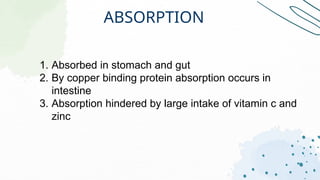
ABSORPTION
1. Absorbed instomach and gut
2. By copper binding protein absorption occurs in
intestine
3. Absorption hindered by large intake of vitamin c and
zinc
6.
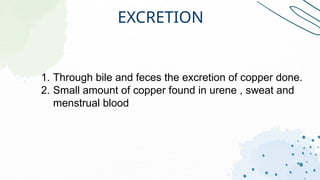
EXCRETION
1. Through bileand feces the excretion of copper done.
2. Small amount of copper found in urene , sweat and
menstrual blood
7.
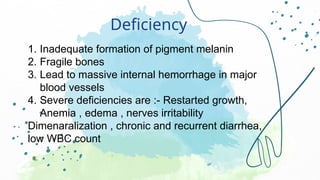
Deficiency
1. Inadequate formationof pigment melanin
2. Fragile bones
3. Lead to massive internal hemorrhage in major
blood vessels
4. Severe deficiencies are :- Restarted growth,
Anemia , edema , nerves irritability
Dimenaralization , chronic and recurrent diarrhea,
low WBC count
8.
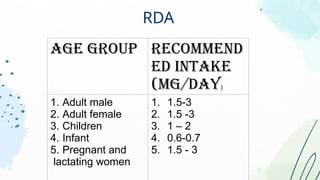
RDA
AGE GROUP RECOMMEND
EDINTAKE
(mg/day)
1. Adult male
2. Adult female
3. Children
4. Infant
5. Pregnant and
lactating women
1. 1.5-3
2. 1.5 -3
3. 1 – 2
4. 0.6-0.7
5. 1.5 - 3
9.
Copper is atrace mineral essential for enzyme
activity, iron metabolism, and formation of
connective tissue, blood vessels, and melanin. It
is absorbed in the stomach and intestine, and
mainly excreted through bile
Summary
10.
1. Monica sharma, textbook of Nutrition and
dietetics for Bsc nursing students, 3rd
edition,
2022, published by CBS distributor and
publisher.
Reference



![Hypothalamus short ppt by Dr. Neha [PT].pptx](https://cdn.slidesharecdn.com/ss_thumbnails/hypothalamusbydr-260124145759-b9f94a93-thumbnail.jpg?width=640&height=640&fit=bounds)


