Datamining and Business 
Analytics 
BIKRAM GHOSH 
MOORE SCHOOL OF BUSINESS
An Exciting time for BA folks… 
— “Companies are increasingly turning to analytics to 
gain a competitive edge. As they do, they must 
resolve unique demands on their information 
technology, their structure, their processes, and their 
culture. Most critical, however, is the 
challenge posed by analytical talent, the 
people at all levels who help turn data into 
better decisions and better business results.” 
÷ Accenture, Counting on Analytical Talent (emphasis added)
Why is BA experiencing such rapid growth? 
— Data has become extremely inexpensive to capture and store 
— However, turning that data into managerial insights is not easy 
¡ In fact, it is a skill that is in huge demand 
— Exciting shift in business: less decision making based on HIPPO, 
more data-driven (LinkedIn, Google, etc.) 
— Key player in this shift: the “data-savvy manager” (McKinsey) 
— IBM executive: “Business Analytics is our number one recruiting 
need…across the entire corporation…for the coming several years” 
— Similar initiatives at Deloitte, Accenture, Ernst & Young
Datamining 
— Finding hidden patterns in data 
— Usually it starts with a target problem – increase sales, 
reduce churn, increase profitability, reduce marketing 
costs, increase cross-selling, customer segmentation etc.. 
— Then you variables that have appreciable affect on the 
target variable 
— You build a model to predict the future
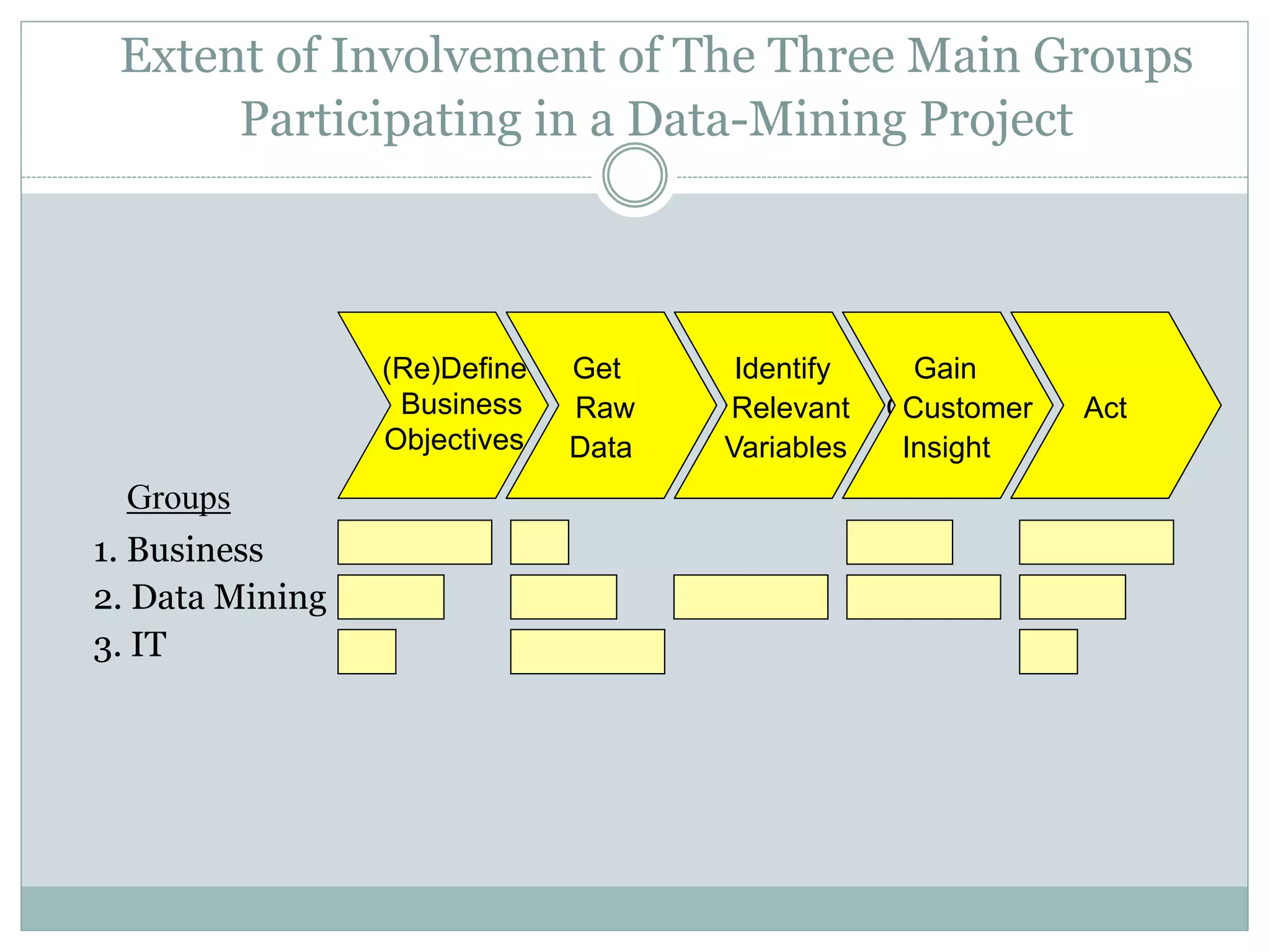
Extent of Involvement of The Three Main Groups 
Participating in a Data-Mining Project 
Get 
Raw 
Data 
Identify 
Relevant 
Variables 
Gain 
Customer 
Insight 
Act 
Objectives 
Raw 
Identify 
Relevant 
Variables 
Customer 
Insight 
(Re)Define 
Business 
Groups 
1. Business 
2. Data Mining 
3. IT
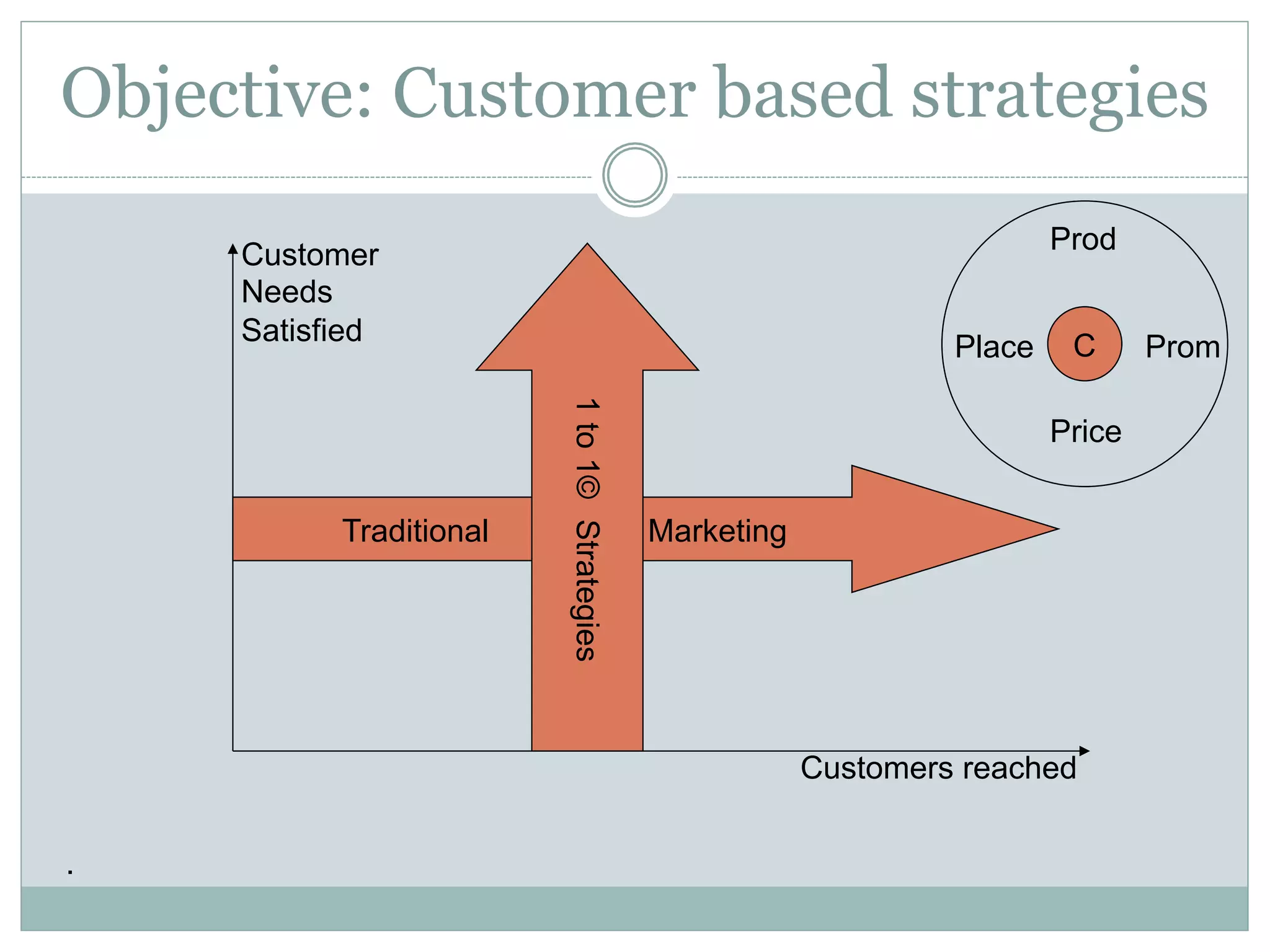
Objective: Customer based strategies 
Prod 
C 
Customers reached 
Customer 
Needs 
Satisfied 
1 to 1© Strategies 
Traditional Marketing 
. 
Place Prom 
Price
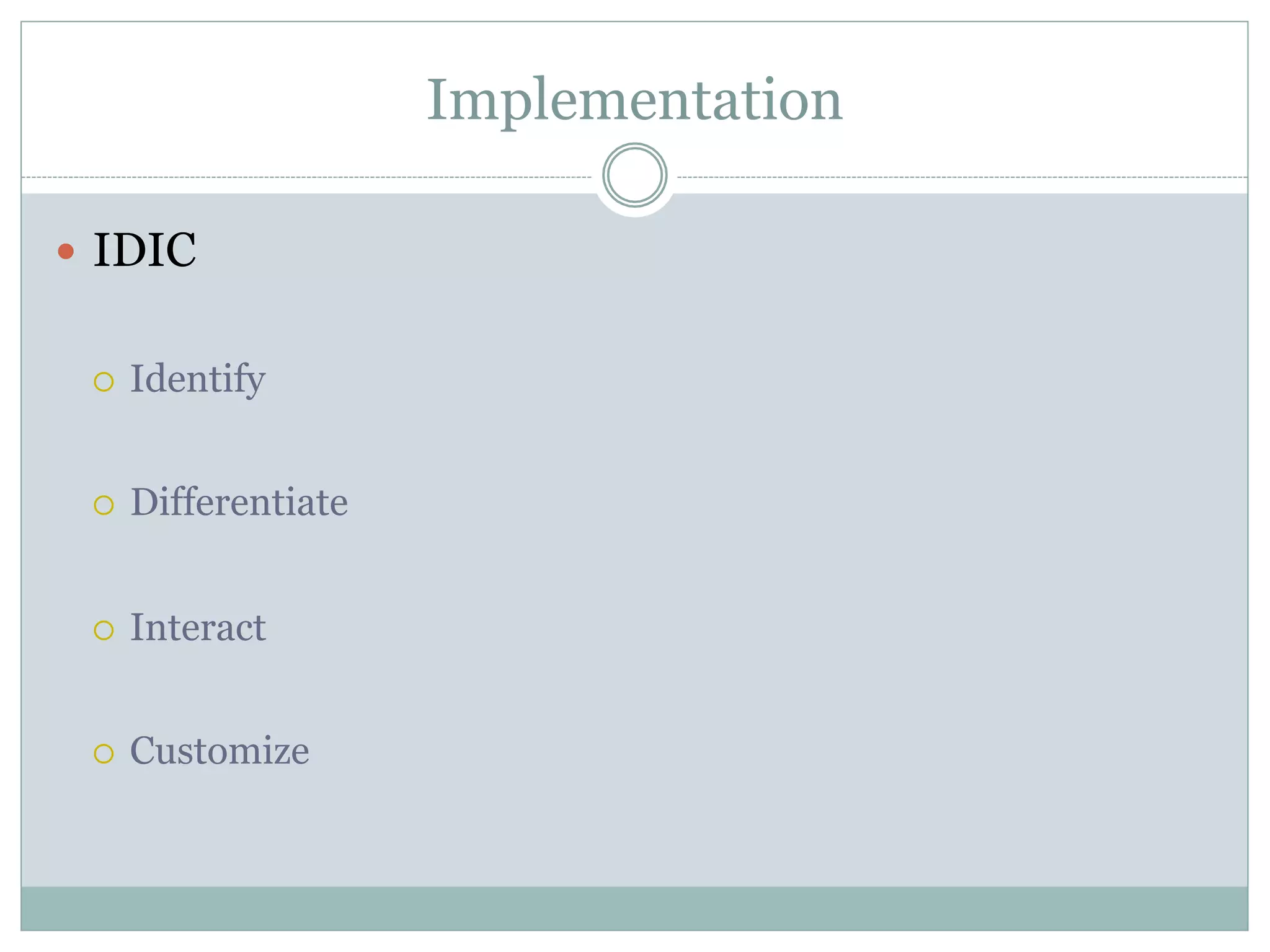
Implementation 
— IDIC 
¡ Identify 
¡ Differentiate 
¡ Interact 
¡ Customize
Success stories 
— Capital one 
• The moment a customer calls them they know they 
behavioral traits of the customer, try to predict the likely 
reason to call, routes the call accordingly, at the same time 
tries to see what other products the customer may potentially 
buy. 
• Test and learn strategies 
• Their stock price looks like an internet start up
Moore school – CMS study 
— Ingersoll Rand 
• consumption modeling 
• Model for part sales – find out the opportunity segment
• American Airlines 
• Fidelity 
• Dell 
• Caterpillar 
• McDonald’s 
• MSB
Commonly used methods and softwares 
— Methods depends on the type of target you have. 
o Regressions, decision tree algorithms, machine learning 
techniques, artificial neural networks…. 
— SAS, IBM – SPSS, ERP systems such as SAP- BI.
Where are we heading? 
— Social CRM and Datamining 
— Global CRM and Datamining 
— Use of Datamining in B-to-B.

Datamining and Business Analytics

  • 1.
    Datamining and Business Analytics BIKRAM GHOSH MOORE SCHOOL OF BUSINESS
  • 2.
    An Exciting timefor BA folks… — “Companies are increasingly turning to analytics to gain a competitive edge. As they do, they must resolve unique demands on their information technology, their structure, their processes, and their culture. Most critical, however, is the challenge posed by analytical talent, the people at all levels who help turn data into better decisions and better business results.” ÷ Accenture, Counting on Analytical Talent (emphasis added)
  • 3.
    Why is BAexperiencing such rapid growth? — Data has become extremely inexpensive to capture and store — However, turning that data into managerial insights is not easy ¡ In fact, it is a skill that is in huge demand — Exciting shift in business: less decision making based on HIPPO, more data-driven (LinkedIn, Google, etc.) — Key player in this shift: the “data-savvy manager” (McKinsey) — IBM executive: “Business Analytics is our number one recruiting need…across the entire corporation…for the coming several years” — Similar initiatives at Deloitte, Accenture, Ernst & Young
  • 4.
    Datamining — Findinghidden patterns in data — Usually it starts with a target problem – increase sales, reduce churn, increase profitability, reduce marketing costs, increase cross-selling, customer segmentation etc.. — Then you variables that have appreciable affect on the target variable — You build a model to predict the future
  • 5.
    Extent of Involvementof The Three Main Groups Participating in a Data-Mining Project Get Raw Data Identify Relevant Variables Gain Customer Insight Act Objectives Raw Identify Relevant Variables Customer Insight (Re)Define Business Groups 1. Business 2. Data Mining 3. IT
  • 6.
    Objective: Customer basedstrategies Prod C Customers reached Customer Needs Satisfied 1 to 1© Strategies Traditional Marketing . Place Prom Price
  • 7.
    Implementation — IDIC ¡ Identify ¡ Differentiate ¡ Interact ¡ Customize
  • 8.
    Success stories —Capital one • The moment a customer calls them they know they behavioral traits of the customer, try to predict the likely reason to call, routes the call accordingly, at the same time tries to see what other products the customer may potentially buy. • Test and learn strategies • Their stock price looks like an internet start up
  • 9.
    Moore school –CMS study — Ingersoll Rand • consumption modeling • Model for part sales – find out the opportunity segment
  • 10.
    • American Airlines • Fidelity • Dell • Caterpillar • McDonald’s • MSB
  • 11.
    Commonly used methodsand softwares — Methods depends on the type of target you have. o Regressions, decision tree algorithms, machine learning techniques, artificial neural networks…. — SAS, IBM – SPSS, ERP systems such as SAP- BI.
  • 12.
    Where are weheading? — Social CRM and Datamining — Global CRM and Datamining — Use of Datamining in B-to-B.