Altmetrics and visibility 
Jukka Englund 
Terkko 
Meilahti Campus Library 
Helsinki University Library
Agenda 
• Impact 
–Filters 
• Altmetrics players 
–Library services 
»New metrics keep coming 
• A better picture
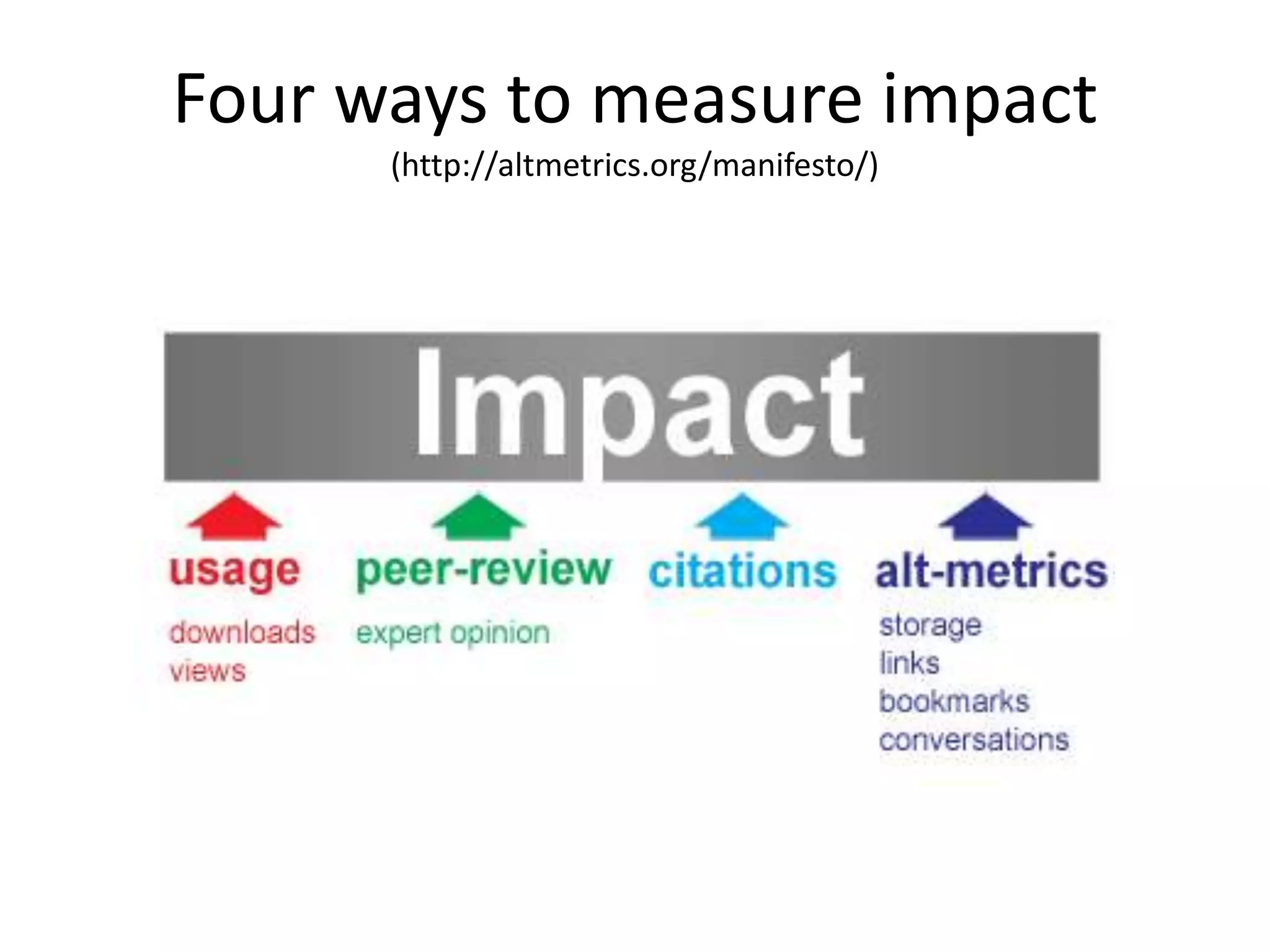
Four ways to measure impact 
(http://altmetrics.org/manifesto/)
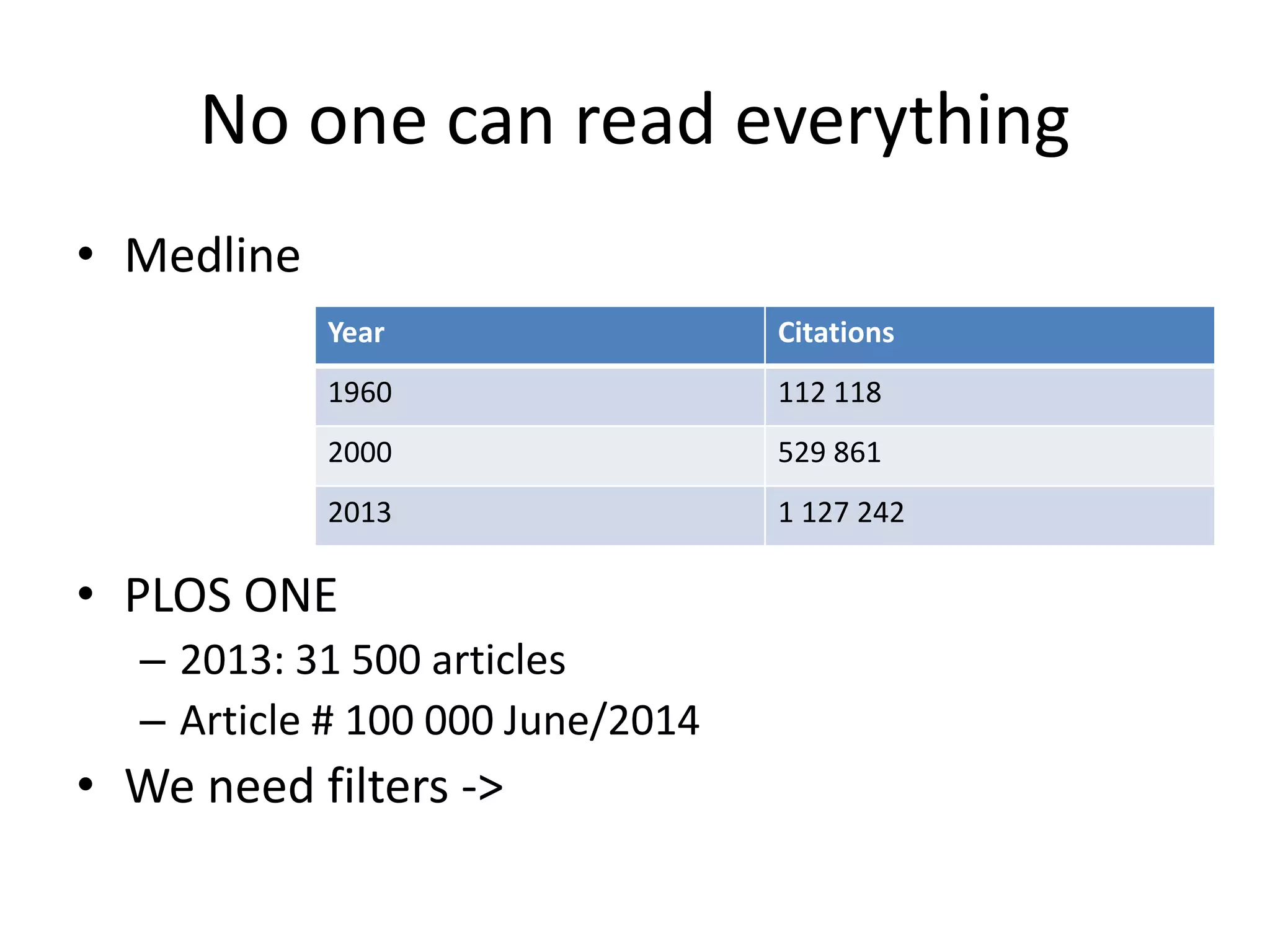
No one can read everything 
• Medline 
Year Citations 
1960 112 118 
2000 529 861 
2013 1 127 242 
• PLOS ONE 
– 2013: 31 500 articles 
– Article # 100 000 June/2014 
• We need filters ->
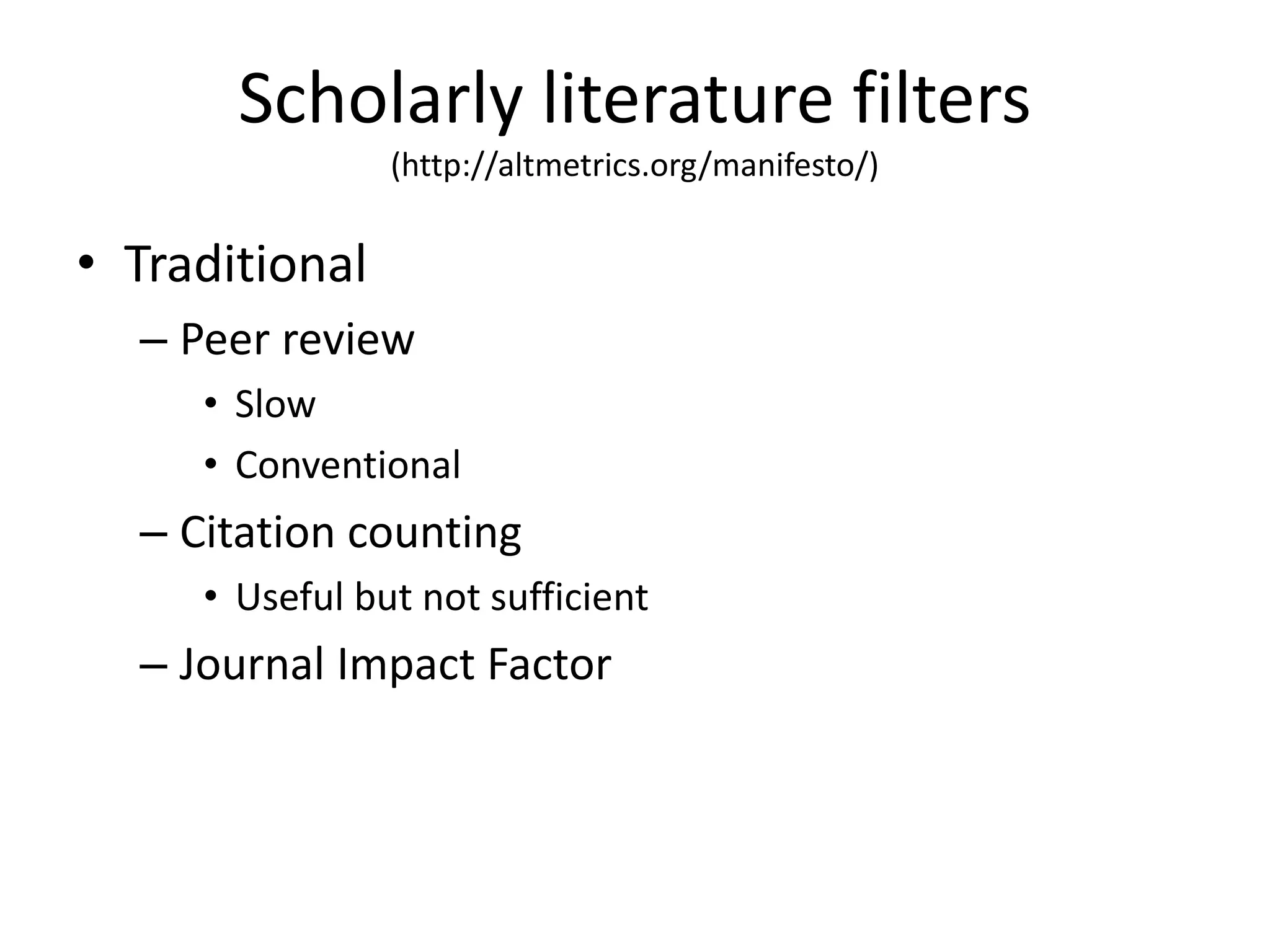
Scholarly literature filters 
(http://altmetrics.org/manifesto/) 
• Traditional 
– Peer review 
• Slow 
• Conventional 
– Citation counting 
• Useful but not sufficient 
– Journal Impact Factor
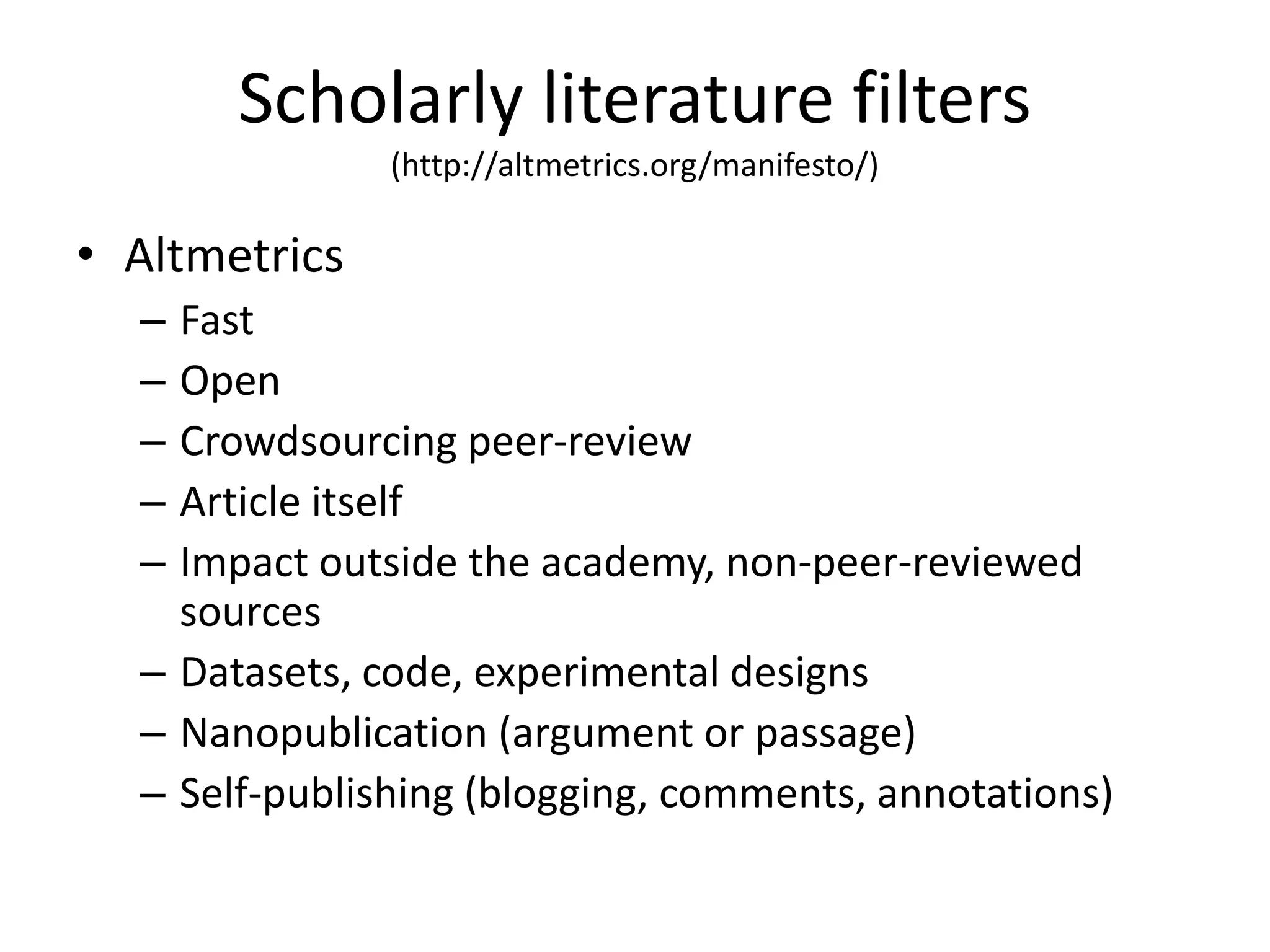
Scholarly literature filters 
(http://altmetrics.org/manifesto/) 
• Altmetrics 
– Fast 
– Open 
– Crowdsourcing peer-review 
– Article itself 
– Impact outside the academy, non-peer-reviewed 
sources 
– Datasets, code, experimental designs 
– Nanopublication (argument or passage) 
– Self-publishing (blogging, comments, annotations)
Source: Ian Mulvany [Head of Technology at eLife Sciences Publications Ltd] http://bit.ly/1tUtY48
Players
Data sources: Altmetric.com 
[http://bit.ly/1ESfaf4] 
• Policy documents 
– WHO, NIH 
• Mainstream media 
– Manually curated list of RSS feeds from news websites 
• Social media data 
– Twitter, Facebook, Google+, Pinterest, Sina Weibo, 
blogs, Reviews on F1000, YouTube… 
• Online reference manager and publisher 
download count data 
– Mendeley, CiteULike
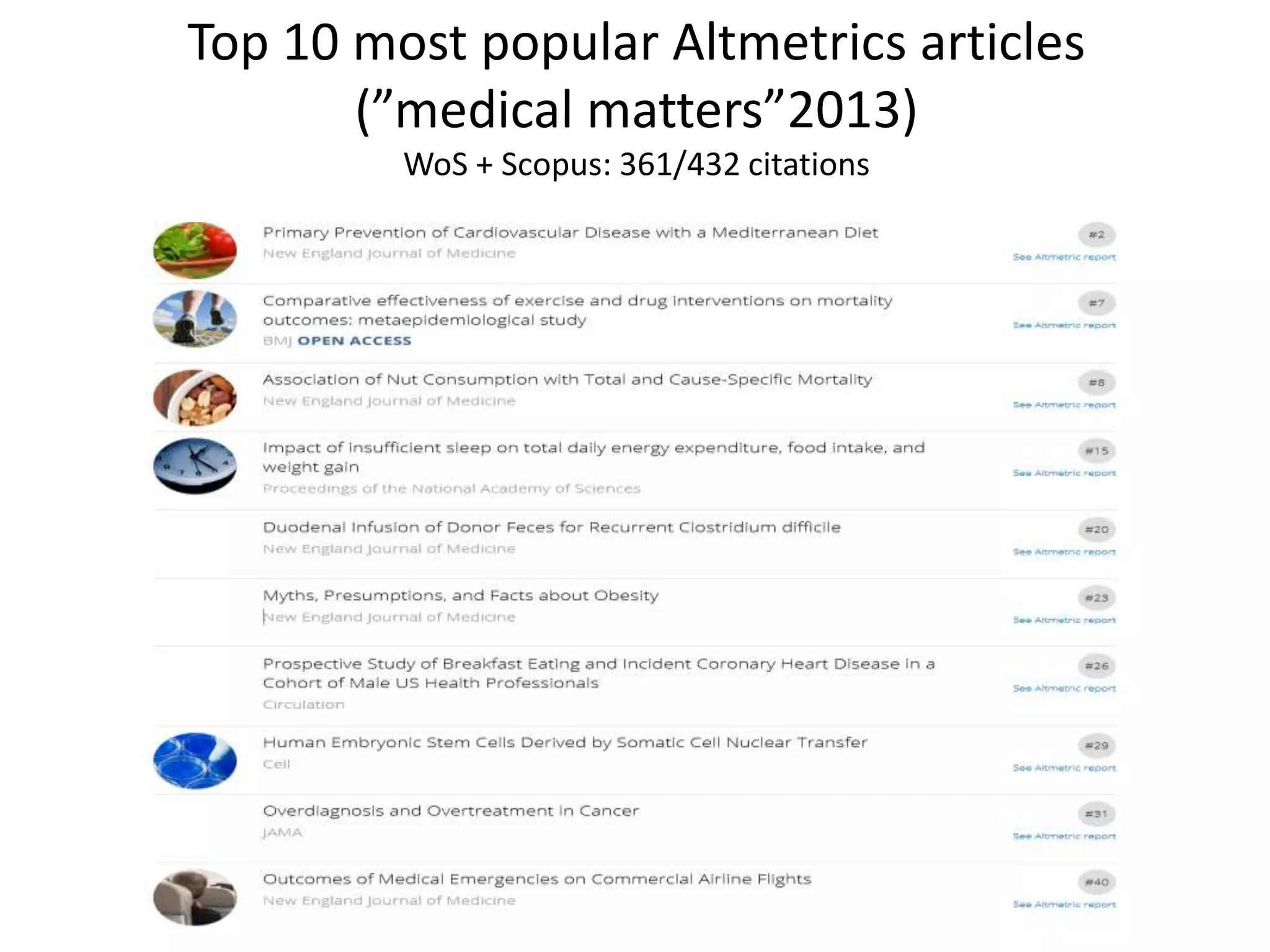
Top 10 most popular Altmetrics articles 
(”medical matters”2013) 
WoS + Scopus: 361/432 citations
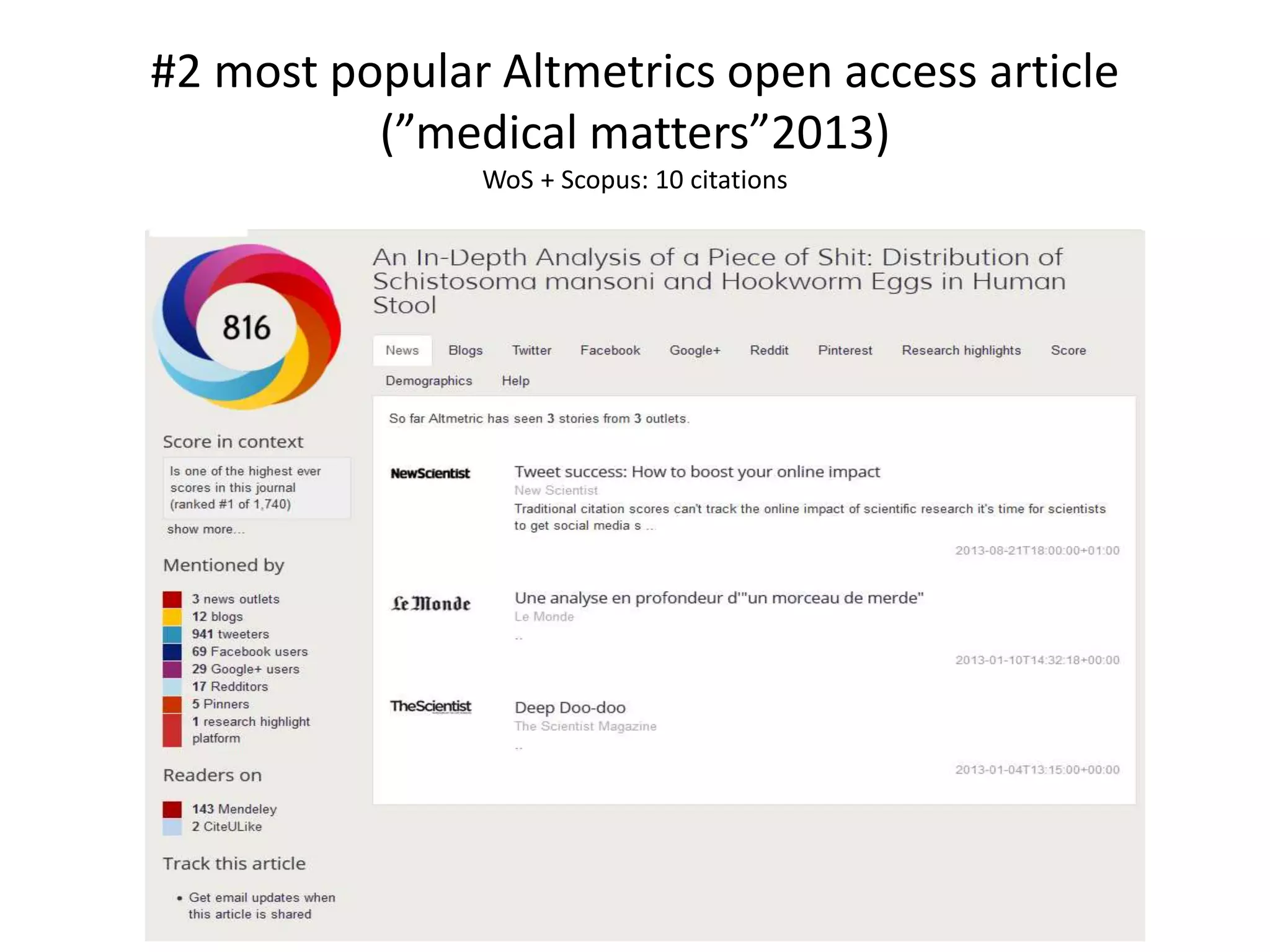
#2 most popular Altmetrics open access article 
(”medical matters”2013) 
WoS + Scopus: 10 citations
Researcher vs. social media expert 
• Librarian as a go-between agent 
– Metrics and publications are our business 
– From passive repository of collections to proactive 
visibility services 
– What the library could do…
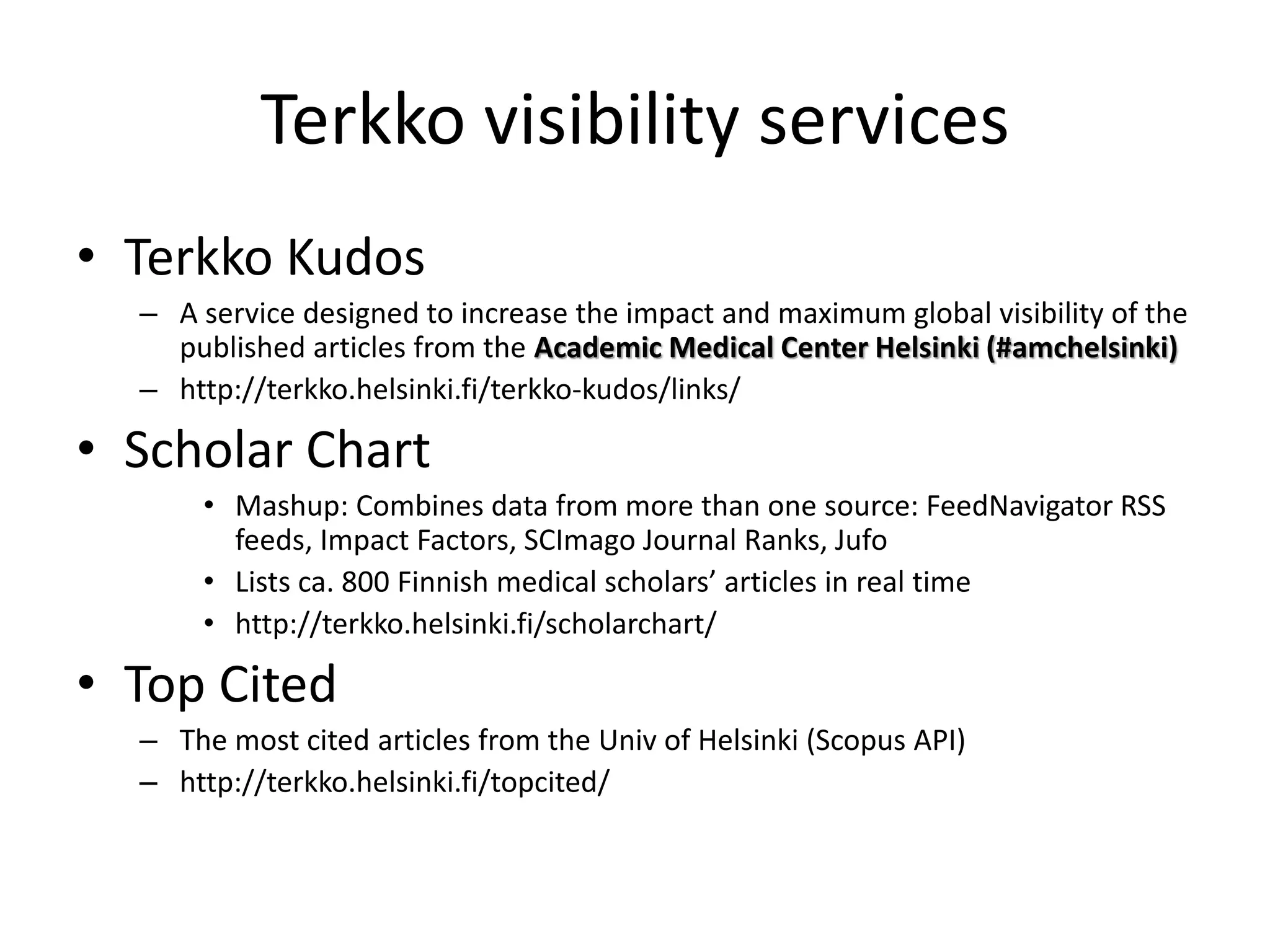
Terkko visibility services 
• Terkko Kudos 
– A service designed to increase the impact and maximum global visibility of the 
published articles from the Academic Medical Center Helsinki (#amchelsinki) 
– http://terkko.helsinki.fi/terkko-kudos/links/ 
• Scholar Chart 
• Mashup: Combines data from more than one source: FeedNavigator RSS 
feeds, Impact Factors, SCImago Journal Ranks, Jufo 
• Lists ca. 800 Finnish medical scholars’ articles in real time 
• http://terkko.helsinki.fi/scholarchart/ 
• Top Cited 
– The most cited articles from the Univ of Helsinki (Scopus API) 
– http://terkko.helsinki.fi/topcited/
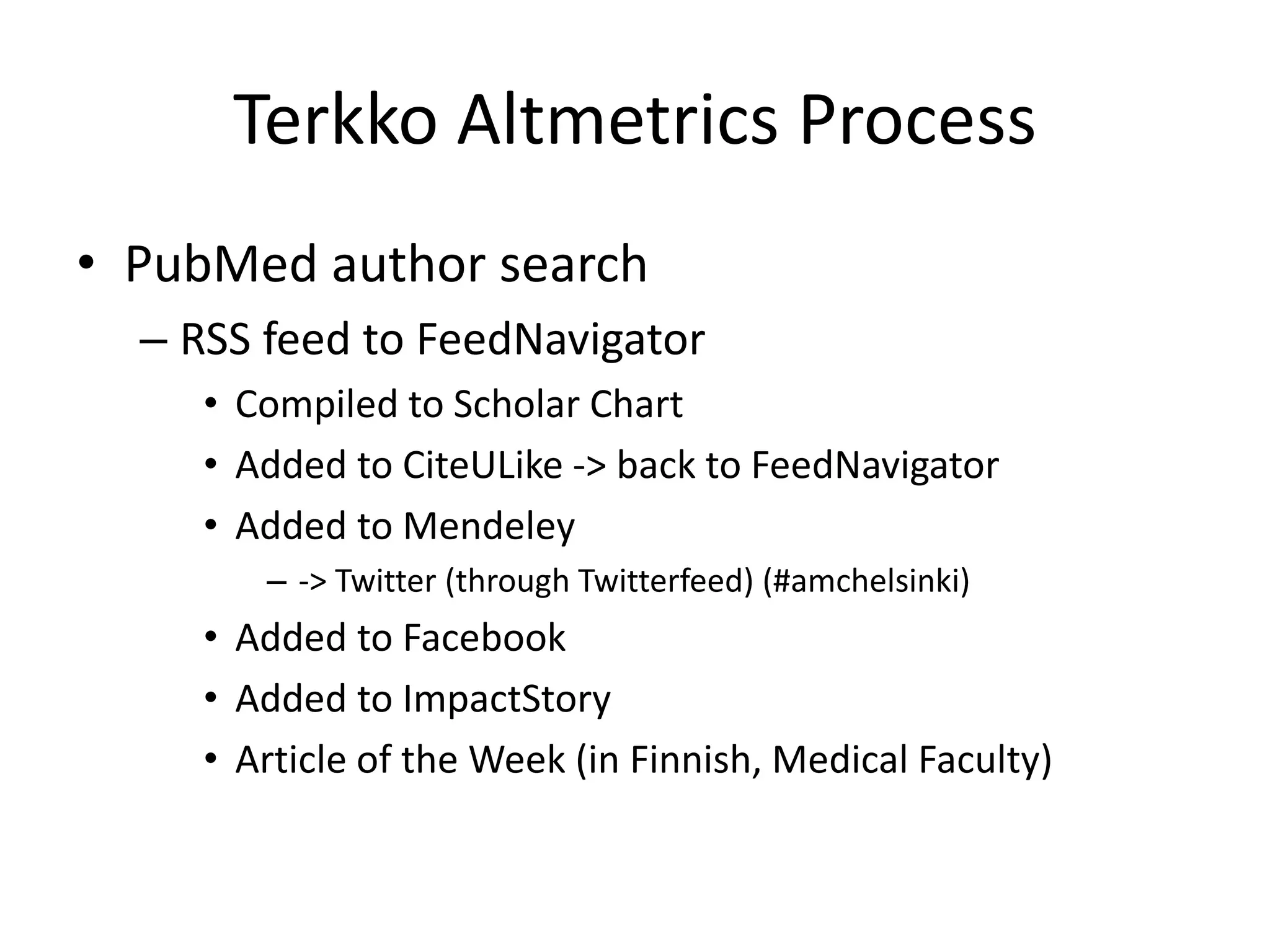
Terkko Altmetrics Process 
• PubMed author search 
– RSS feed to FeedNavigator 
• Compiled to Scholar Chart 
• Added to CiteULike -> back to FeedNavigator 
• Added to Mendeley 
– -> Twitter (through Twitterfeed) (#amchelsinki) 
• Added to Facebook 
• Added to ImpactStory 
• Article of the Week (in Finnish, Medical Faculty)
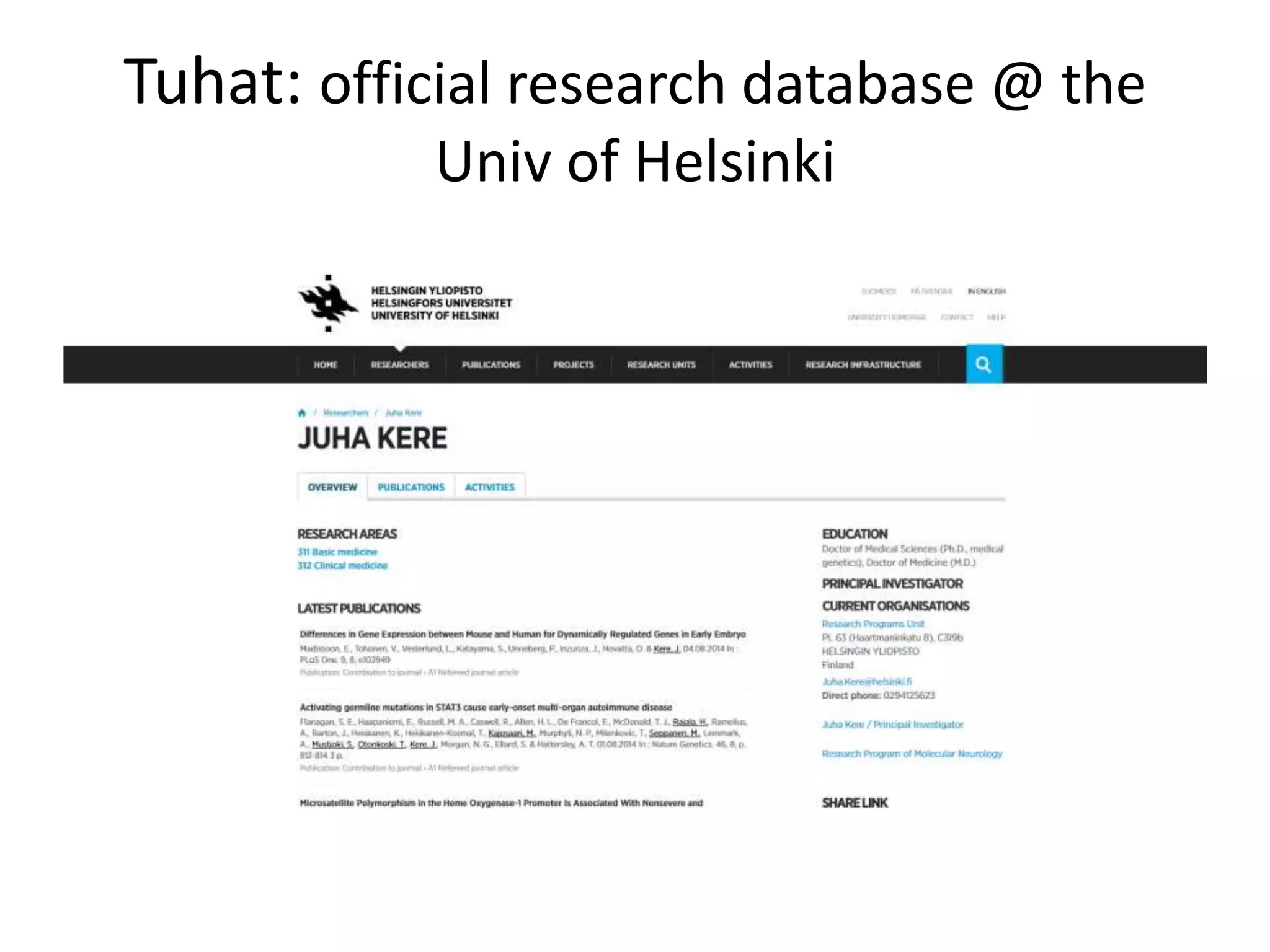
Tuhat: official research database @ the 
Univ of Helsinki
Terkko Navigator profile page 
[data source: Scholar Chart]
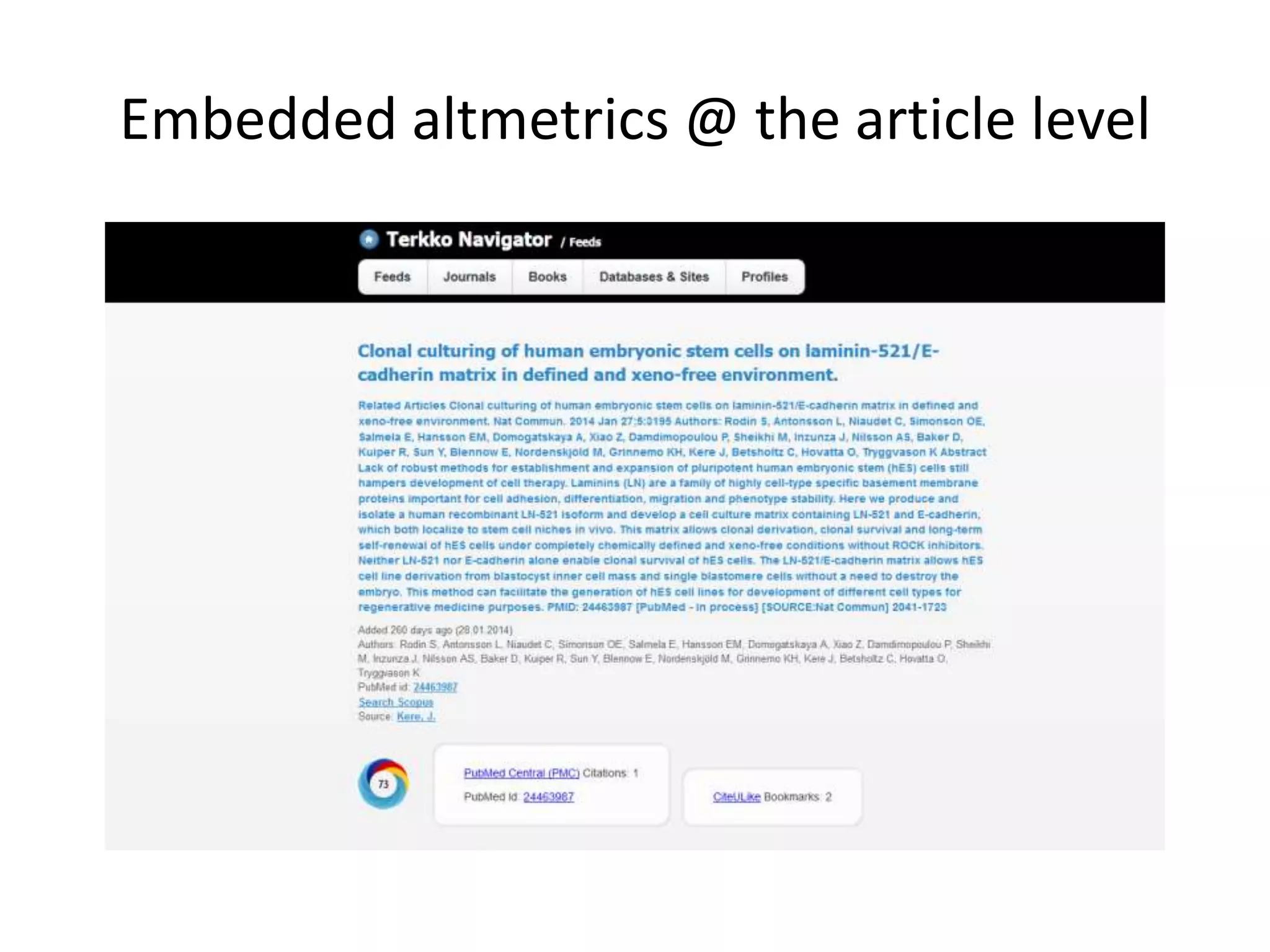
Embedded altmetrics @ the article level
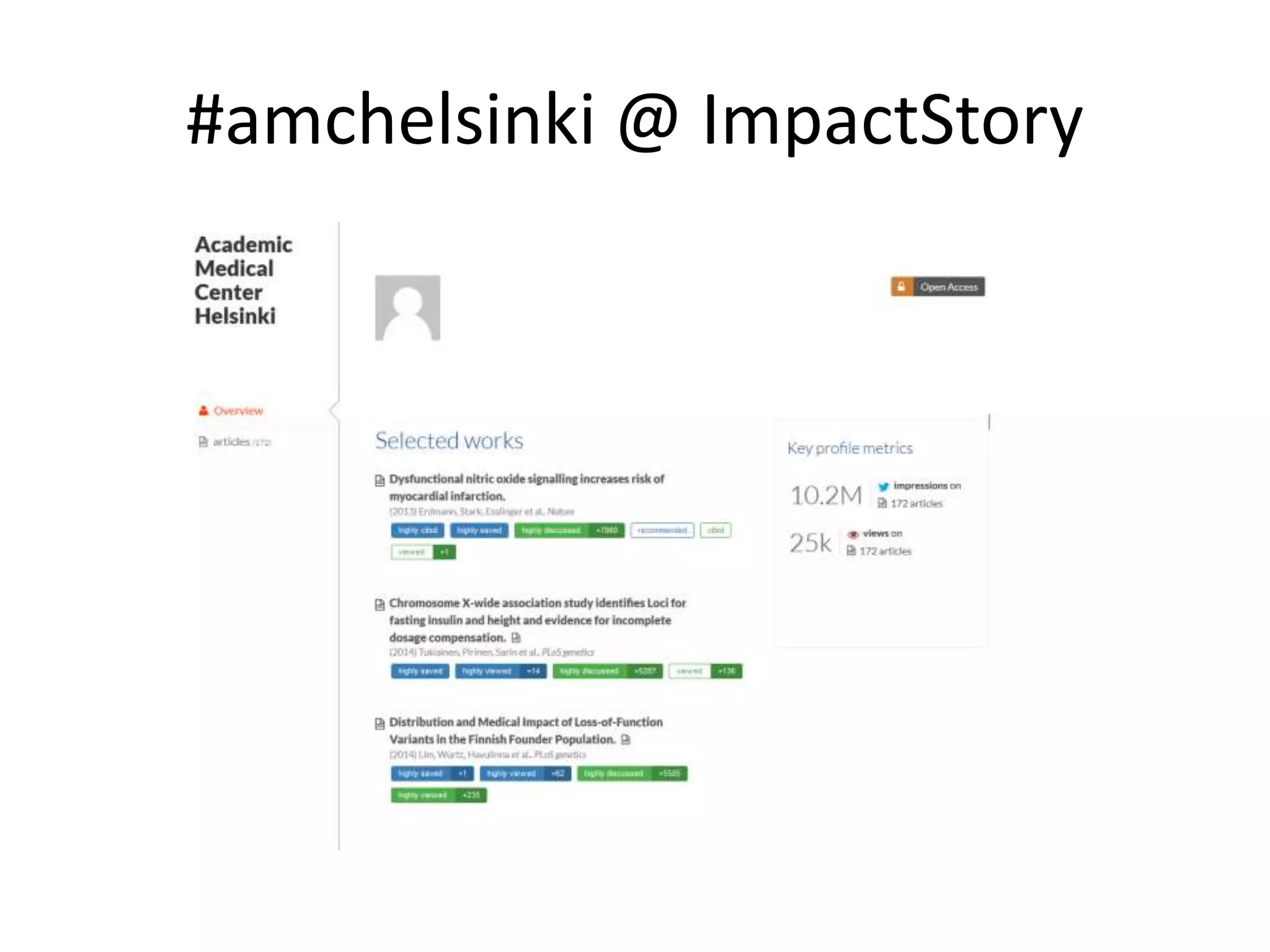
#amchelsinki @ ImpactStory
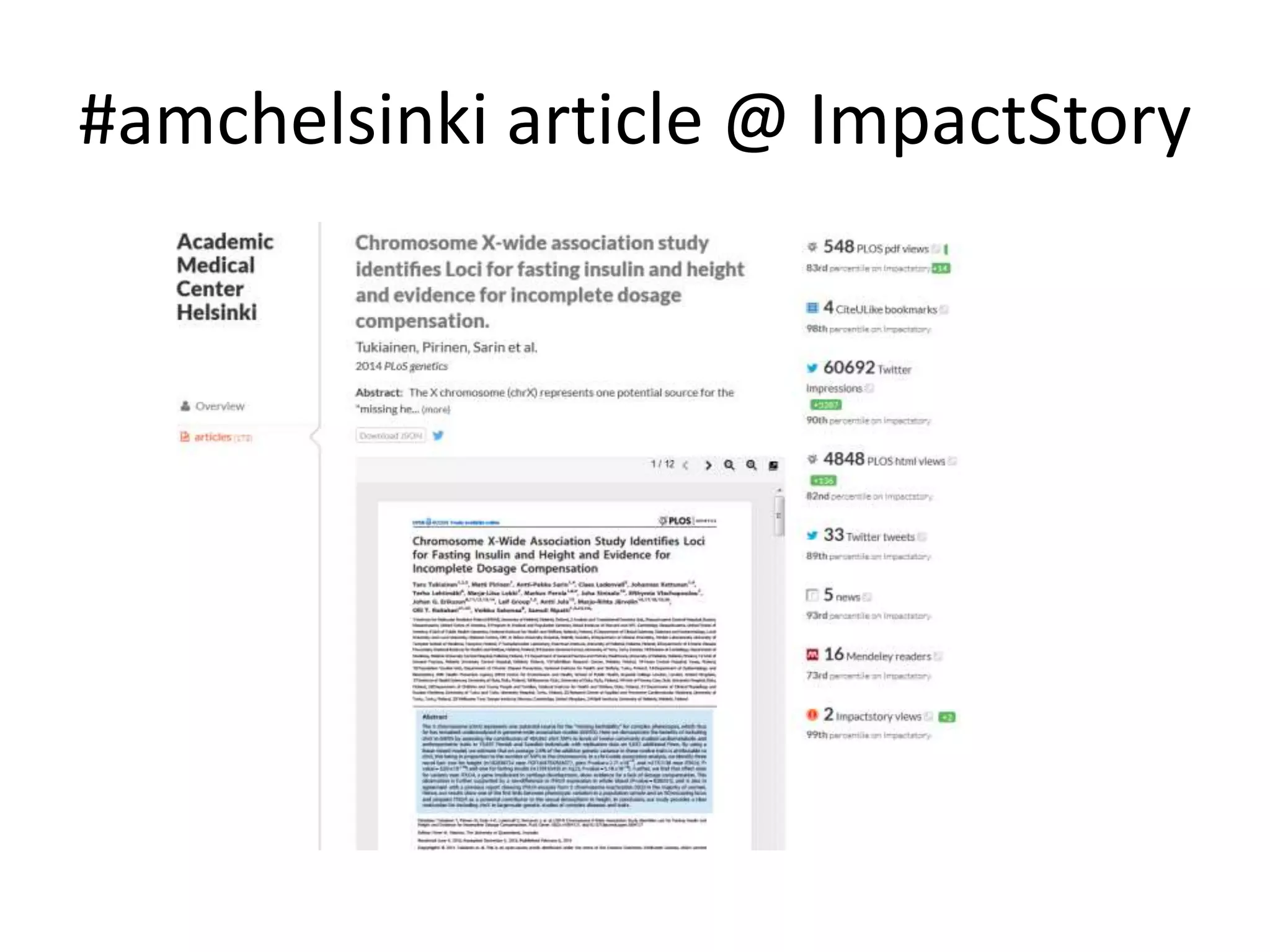
#amchelsinki article @ ImpactStory
Metrics 
• Altmetrics 
– Captures: bookmarks, saves, favorites 
– Mentions: blogs, news stories, Wikipedia 
– Social media 
• Twitter, Facebook, Google+ 
• Article-level metrics 
– Usage 
• Bibliometrics 
– Citations
The metrics ’keep a-comin’… 
• K-index (Kardashian Index) 
• “If Kim Kardashian commented on the value of the ENCODE project, 
her tweet would get more retweets and favorites than the rest of the 
scientific community combined.” 
• “On Twitter, … the ‘top tweet’ on any given subject will not necessarily 
come from an expert, it will come from the most followed person.” 
• “If your K-index gets above 5, then it’s time to get off Twitter and 
write those papers.” 
• I propose the ‘Kardashian Index’, a measure of discrepancy 
between a scientist’s social media profile and publication 
record based on the direct comparison of numbers of 
citations and Twitter followers. (Neil Hall, doi:10.1186/s13059-014-0424-0) 
• It was with tongue in cheek, but…
The top 50 science stars of Twitter
The metrics ’keep a-comin’… 
• …and then Science 
opened the stars of 
Twitter data…! 
• E-index (Engagement 
Index) 
– By Andrew Maynard 
(University of Michigan 
Risk Science Center) 
– ”a measure I admittedly 
just made up!” 
– H-index/number of tweets
What altmetrics actually measure? 
• The point of altmetrics isn’t to measure quality. 
It’s to better understand impact: both the 
quantity of impact and the diverse types of 
impact. 
• And when we supplement traditional measures 
of impact like citations with newer, altmetrics-based 
measures like post-publication peer review 
counts, scholarly bookmarks, etc we have a 
better picture of the full extent of impact. Not 
the only picture. But a better picture. 
• [Stacy Konkiel et al: http://blog.impactstory.org/beall-altmetrics/]
Thank you! 
[doi: 10.1083/jcb.200711140]

Altmetrics and visibility

  • 1.
    Altmetrics and visibility Jukka Englund Terkko Meilahti Campus Library Helsinki University Library
  • 2.
    Agenda • Impact –Filters • Altmetrics players –Library services »New metrics keep coming • A better picture
  • 3.
    Four ways tomeasure impact (http://altmetrics.org/manifesto/)
  • 4.
    No one canread everything • Medline Year Citations 1960 112 118 2000 529 861 2013 1 127 242 • PLOS ONE – 2013: 31 500 articles – Article # 100 000 June/2014 • We need filters ->
  • 5.
    Scholarly literature filters (http://altmetrics.org/manifesto/) • Traditional – Peer review • Slow • Conventional – Citation counting • Useful but not sufficient – Journal Impact Factor
  • 6.
    Scholarly literature filters (http://altmetrics.org/manifesto/) • Altmetrics – Fast – Open – Crowdsourcing peer-review – Article itself – Impact outside the academy, non-peer-reviewed sources – Datasets, code, experimental designs – Nanopublication (argument or passage) – Self-publishing (blogging, comments, annotations)
  • 7.
    Source: Ian Mulvany[Head of Technology at eLife Sciences Publications Ltd] http://bit.ly/1tUtY48
  • 8.
  • 9.
    Data sources: Altmetric.com [http://bit.ly/1ESfaf4] • Policy documents – WHO, NIH • Mainstream media – Manually curated list of RSS feeds from news websites • Social media data – Twitter, Facebook, Google+, Pinterest, Sina Weibo, blogs, Reviews on F1000, YouTube… • Online reference manager and publisher download count data – Mendeley, CiteULike
  • 10.
    Top 10 mostpopular Altmetrics articles (”medical matters”2013) WoS + Scopus: 361/432 citations
  • 11.
    #2 most popularAltmetrics open access article (”medical matters”2013) WoS + Scopus: 10 citations
  • 12.
    Researcher vs. socialmedia expert • Librarian as a go-between agent – Metrics and publications are our business – From passive repository of collections to proactive visibility services – What the library could do…
  • 13.
    Terkko visibility services • Terkko Kudos – A service designed to increase the impact and maximum global visibility of the published articles from the Academic Medical Center Helsinki (#amchelsinki) – http://terkko.helsinki.fi/terkko-kudos/links/ • Scholar Chart • Mashup: Combines data from more than one source: FeedNavigator RSS feeds, Impact Factors, SCImago Journal Ranks, Jufo • Lists ca. 800 Finnish medical scholars’ articles in real time • http://terkko.helsinki.fi/scholarchart/ • Top Cited – The most cited articles from the Univ of Helsinki (Scopus API) – http://terkko.helsinki.fi/topcited/
  • 14.
    Terkko Altmetrics Process • PubMed author search – RSS feed to FeedNavigator • Compiled to Scholar Chart • Added to CiteULike -> back to FeedNavigator • Added to Mendeley – -> Twitter (through Twitterfeed) (#amchelsinki) • Added to Facebook • Added to ImpactStory • Article of the Week (in Finnish, Medical Faculty)
  • 15.
    Tuhat: official researchdatabase @ the Univ of Helsinki
  • 16.
    Terkko Navigator profilepage [data source: Scholar Chart]
  • 17.
    Embedded altmetrics @the article level
  • 18.
  • 19.
  • 20.
    Metrics • Altmetrics – Captures: bookmarks, saves, favorites – Mentions: blogs, news stories, Wikipedia – Social media • Twitter, Facebook, Google+ • Article-level metrics – Usage • Bibliometrics – Citations
  • 21.
    The metrics ’keepa-comin’… • K-index (Kardashian Index) • “If Kim Kardashian commented on the value of the ENCODE project, her tweet would get more retweets and favorites than the rest of the scientific community combined.” • “On Twitter, … the ‘top tweet’ on any given subject will not necessarily come from an expert, it will come from the most followed person.” • “If your K-index gets above 5, then it’s time to get off Twitter and write those papers.” • I propose the ‘Kardashian Index’, a measure of discrepancy between a scientist’s social media profile and publication record based on the direct comparison of numbers of citations and Twitter followers. (Neil Hall, doi:10.1186/s13059-014-0424-0) • It was with tongue in cheek, but…
  • 22.
    The top 50science stars of Twitter
  • 23.
    The metrics ’keepa-comin’… • …and then Science opened the stars of Twitter data…! • E-index (Engagement Index) – By Andrew Maynard (University of Michigan Risk Science Center) – ”a measure I admittedly just made up!” – H-index/number of tweets
  • 24.
    What altmetrics actuallymeasure? • The point of altmetrics isn’t to measure quality. It’s to better understand impact: both the quantity of impact and the diverse types of impact. • And when we supplement traditional measures of impact like citations with newer, altmetrics-based measures like post-publication peer review counts, scholarly bookmarks, etc we have a better picture of the full extent of impact. Not the only picture. But a better picture. • [Stacy Konkiel et al: http://blog.impactstory.org/beall-altmetrics/]
  • 25.
    Thank you! [doi:10.1083/jcb.200711140]