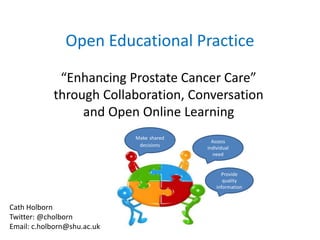
Open Educational Practice
“Enhancing Prostate Cancer Care”
through Collaboration, Conversation
and Open Online Learning
Assess
individual
need
Provide
quality
information
Make shared
decisions
Cath Holborn
Twitter: @cholborn
Email: c.holborn@shu.ac.uk
What did we do?
• An open, online course
• ‘Enhancing Prostate Cancer Care’
• Designed and delivered by SHU
• Open to healthcare professionals, patients,
carers and others interested in the topic
• Developed in partnership with pebblePAD and
Prostate Cancer UK
Aim of Presentation
• Course design
• Course delivery
• Course evaluation
• Key conclusions
Course Planning
• The topic / focus needed to be meaningful and of
value (PCUK quality checklist)
• Not just about delivering an open access course
• SHU advisory group established to support
process and ensure quality
• Course delivery team established (individuals from
SHU, pebblePAD and PCUK)
• Other external partners / services engaged
• Roles and responsibilities established, and
timelines set
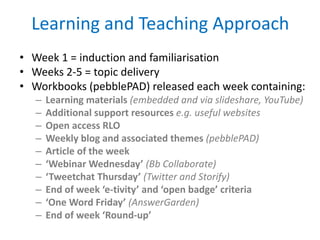
Learning and Teaching Approach
• Week 1 = induction and familiarisation
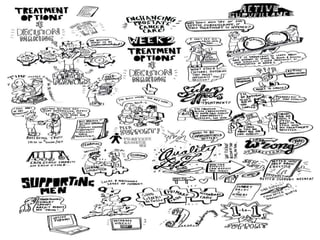
• Weeks 2-5 = topic delivery
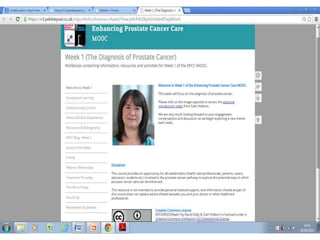
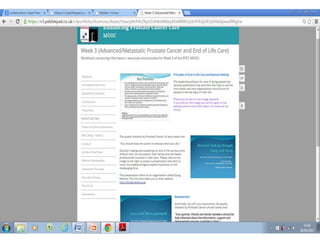
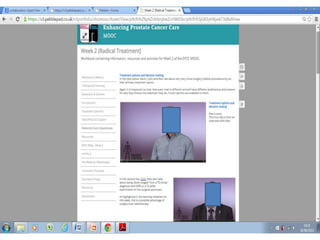
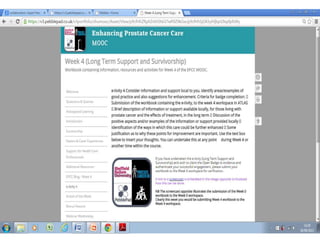
• Workbooks (pebblePAD) released each week containing:
– Learning materials (embedded and via slideshare, YouTube)
– Additional support resources e.g. useful websites
– Open access RLO
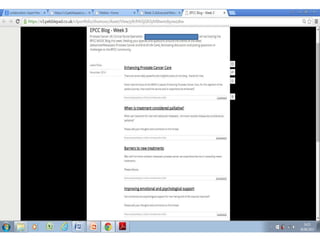
– Weekly blog and associated themes (pebblePAD)
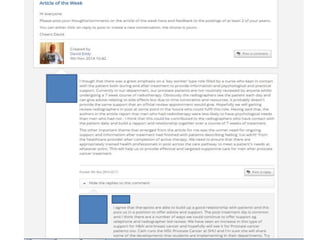
– Article of the week
– ‘Webinar Wednesday’ (Bb Collaborate)
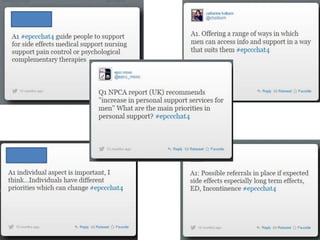
– ‘Tweetchat Thursday’ (Twitter and Storify)
– End of week ‘e-tivity’ and ‘open badge’ criteria
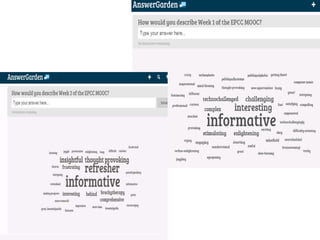
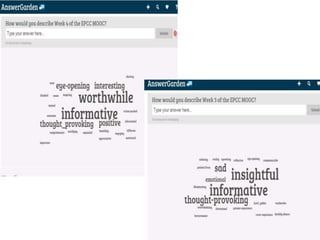
– ‘One Word Friday’ (AnswerGarden)
– End of week ‘Round-up’
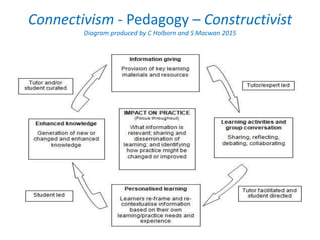
Connectivism - Pedagogy – Constructivist
Diagram produced by C Holborn and S Macwan 2015
INFORMATION GIVING
CREATIVE COMMONS LICENSE 4.0 APPLIED TO ALL LEARNING MATERIALS DEVELOPED
Our pedagogy
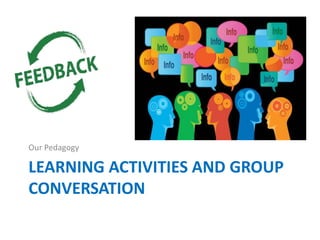
LEARNING ACTIVITIES AND GROUP
CONVERSATION
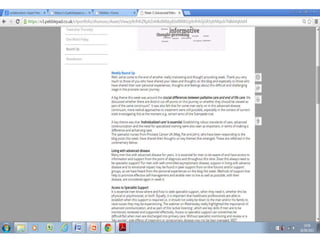
Our Pedagogy
PERSONALISED LEARNING
(IN ADDITION TO PREVIOUS EXAMPLES…)
Our Pedagogy
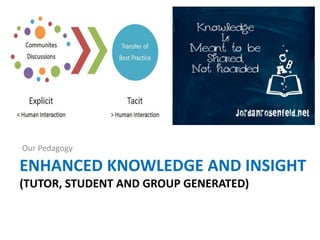
ENHANCED KNOWLEDGE AND INSIGHT
(TUTOR, STUDENT AND GROUP GENERATED)
Our Pedagogy
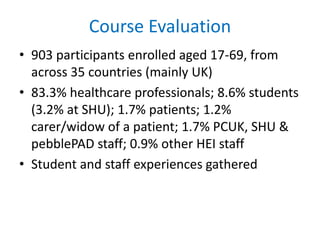
Course Evaluation
• 903 participants enrolled aged 17-69, from
across 35 countries (mainly UK)
• 83.3% healthcare professionals; 8.6% students
(3.2% at SHU); 1.7% patients; 1.2%
carer/widow of a patient; 1.7% PCUK, SHU &
pebblePAD staff; 0.9% other HEI staff
• Student and staff experiences gathered
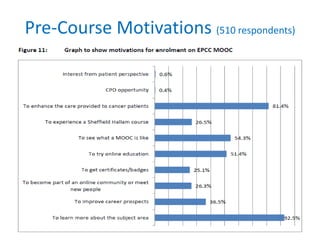
Pre-Course Motivations (510 respondents)
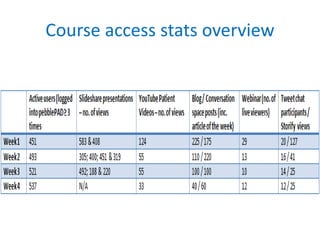
Course access stats overview
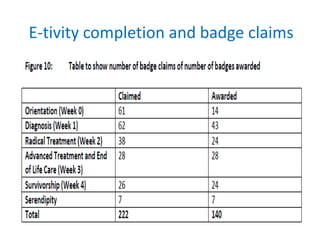
E-tivity completion and badge claims
Feedback during course delivery
• Weekly blog included a feedback thread and a
questions & queries thread
• Changes and improvements could be made in
time for the following week (if needed)
• One word Friday also provided a useful insight
into the participant experience
Post-Course
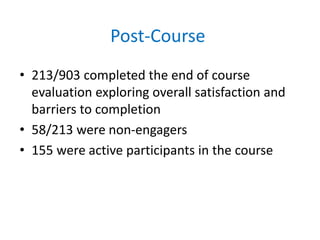
• 213/903 completed the end of course
evaluation exploring overall satisfaction and
barriers to completion
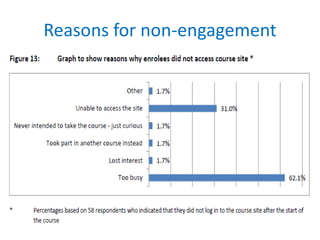
• 58/213 were non-engagers
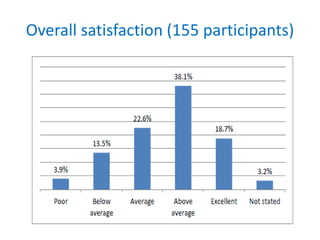
• 155 were active participants in the course
Reasons for non-engagement
Overall satisfaction (155 participants)
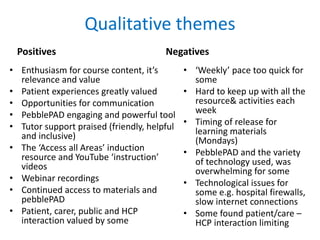
Qualitative themes
Positives
• Enthusiasm for course content, it’s
relevance and value
• Patient experiences greatly valued
• Opportunities for communication
• PebblePAD engaging and powerful tool
• Tutor support praised (friendly, helpful
and inclusive)
• The ‘Access all Areas’ induction
resource and YouTube ‘instruction’
videos
• Webinar recordings
• Continued access to materials and
pebblePAD
• Patient, carer, public and HCP
interaction valued by some
Negatives
• ‘Weekly’ pace too quick for
some
• Hard to keep up with all the
resource& activities each
week
• Timing of release for
learning materials
(Mondays)
• PebblePAD and the variety
of technology used, was
overwhelming for some
• Technological issues for
some e.g. hospital firewalls,
slow internet connections
• Some found patient/care –
HCP interaction limiting
Costs
• Low in comparison to other MOOCs investigated
• Helped by:
– Platform hosting, technical support and
registration provided by pebblePAD
– Experience and expertise of SHU staff (with
technology & topic)
– Experts time given freely i.e. webinar speakers,
PCUK nurses for the blog
– Free access to the journals (JRP and JMIRS)
– Free services from the end of week ‘artist’
– A focus on ‘the conversation’ rather than lots of
glossy content
Recognition of Learning
• 6 participants have since submitted a Recognition of
Prior Learning (RPL) claim to SHU
• 15C at level 7 have been awarded in lieu of our ‘Prostate
Cancer’ MSc module
• Claimants had to submit evidence of completing all
badges for weeks 1-4 and submit a 2500 word essay
that addresses similar learning outcomes
• 2 are existing MSc students, 4 will now join one of our
MSc courses
• In addition, we have also had new ‘module’ applications
from individuals who had completed the MOOC and
now want to try further ‘formal’ online (DL) study
Concluding Remarks
• A very positive experience overall (for all involved)
• Collaboration with external organisations a worthwhile
benefit
• A great staff development opportunity
• Good for marketing our expertise and providing a ‘taster’ of
online/DL study
• Quality and relevance of learning resources and the
‘conversational’ aspect to course delivery was valued
• Engagement with synchronous communication could be
improved
• Initial induction and tutor support (at start and ongoing) is
vital
• Use of open badges and links to ongoing CPD a strong feature
• Investment required for future projects may differ depending
on support, resource and expertise available
With thanks to…
• pebblePAD
• Sheffield Hallam University
• Prostate Cancer UK
• Patients as Educators Volunteers (PCUK)
• PCUK specialist nurses
• Expert webinar presenters
• SHU course delivery staff
• David Eddy (co course lead and project lead)
• Matthew Wheeler (pebblePAD)
• Sarah Smith (SHU student and MOOC artist)
• Sue Beckingham (SHU )
• Ian Glover (SHU)
• Graham Holden (SHU)
• Helen Parkin (SHU) – production of the evaluation report

ALT conference presentation Sept 2015

  • 1.
    Open Educational Practice “EnhancingProstate Cancer Care” through Collaboration, Conversation and Open Online Learning Assess individual need Provide quality information Make shared decisions Cath Holborn Twitter: @cholborn Email: c.holborn@shu.ac.uk
  • 2.
    What did wedo? • An open, online course • ‘Enhancing Prostate Cancer Care’ • Designed and delivered by SHU • Open to healthcare professionals, patients, carers and others interested in the topic • Developed in partnership with pebblePAD and Prostate Cancer UK
  • 3.
    Aim of Presentation •Course design • Course delivery • Course evaluation • Key conclusions
  • 4.
    Course Planning • Thetopic / focus needed to be meaningful and of value (PCUK quality checklist) • Not just about delivering an open access course • SHU advisory group established to support process and ensure quality • Course delivery team established (individuals from SHU, pebblePAD and PCUK) • Other external partners / services engaged • Roles and responsibilities established, and timelines set
  • 5.
    Learning and TeachingApproach • Week 1 = induction and familiarisation • Weeks 2-5 = topic delivery • Workbooks (pebblePAD) released each week containing: – Learning materials (embedded and via slideshare, YouTube) – Additional support resources e.g. useful websites – Open access RLO – Weekly blog and associated themes (pebblePAD) – Article of the week – ‘Webinar Wednesday’ (Bb Collaborate) – ‘Tweetchat Thursday’ (Twitter and Storify) – End of week ‘e-tivity’ and ‘open badge’ criteria – ‘One Word Friday’ (AnswerGarden) – End of week ‘Round-up’
  • 6.
    Connectivism - Pedagogy– Constructivist Diagram produced by C Holborn and S Macwan 2015
  • 7.
    INFORMATION GIVING CREATIVE COMMONSLICENSE 4.0 APPLIED TO ALL LEARNING MATERIALS DEVELOPED Our pedagogy
  • 11.
    LEARNING ACTIVITIES ANDGROUP CONVERSATION Our Pedagogy
  • 15.
    PERSONALISED LEARNING (IN ADDITIONTO PREVIOUS EXAMPLES…) Our Pedagogy
  • 17.
    ENHANCED KNOWLEDGE ANDINSIGHT (TUTOR, STUDENT AND GROUP GENERATED) Our Pedagogy
  • 20.
    Course Evaluation • 903participants enrolled aged 17-69, from across 35 countries (mainly UK) • 83.3% healthcare professionals; 8.6% students (3.2% at SHU); 1.7% patients; 1.2% carer/widow of a patient; 1.7% PCUK, SHU & pebblePAD staff; 0.9% other HEI staff • Student and staff experiences gathered
  • 21.
  • 22.
  • 23.
  • 24.
    Feedback during coursedelivery • Weekly blog included a feedback thread and a questions & queries thread • Changes and improvements could be made in time for the following week (if needed) • One word Friday also provided a useful insight into the participant experience
  • 27.
    Post-Course • 213/903 completedthe end of course evaluation exploring overall satisfaction and barriers to completion • 58/213 were non-engagers • 155 were active participants in the course
  • 28.
  • 29.
  • 32.
    Qualitative themes Positives • Enthusiasmfor course content, it’s relevance and value • Patient experiences greatly valued • Opportunities for communication • PebblePAD engaging and powerful tool • Tutor support praised (friendly, helpful and inclusive) • The ‘Access all Areas’ induction resource and YouTube ‘instruction’ videos • Webinar recordings • Continued access to materials and pebblePAD • Patient, carer, public and HCP interaction valued by some Negatives • ‘Weekly’ pace too quick for some • Hard to keep up with all the resource& activities each week • Timing of release for learning materials (Mondays) • PebblePAD and the variety of technology used, was overwhelming for some • Technological issues for some e.g. hospital firewalls, slow internet connections • Some found patient/care – HCP interaction limiting
  • 33.
    Costs • Low incomparison to other MOOCs investigated • Helped by: – Platform hosting, technical support and registration provided by pebblePAD – Experience and expertise of SHU staff (with technology & topic) – Experts time given freely i.e. webinar speakers, PCUK nurses for the blog – Free access to the journals (JRP and JMIRS) – Free services from the end of week ‘artist’ – A focus on ‘the conversation’ rather than lots of glossy content
  • 34.
    Recognition of Learning •6 participants have since submitted a Recognition of Prior Learning (RPL) claim to SHU • 15C at level 7 have been awarded in lieu of our ‘Prostate Cancer’ MSc module • Claimants had to submit evidence of completing all badges for weeks 1-4 and submit a 2500 word essay that addresses similar learning outcomes • 2 are existing MSc students, 4 will now join one of our MSc courses • In addition, we have also had new ‘module’ applications from individuals who had completed the MOOC and now want to try further ‘formal’ online (DL) study
  • 35.
    Concluding Remarks • Avery positive experience overall (for all involved) • Collaboration with external organisations a worthwhile benefit • A great staff development opportunity • Good for marketing our expertise and providing a ‘taster’ of online/DL study • Quality and relevance of learning resources and the ‘conversational’ aspect to course delivery was valued • Engagement with synchronous communication could be improved • Initial induction and tutor support (at start and ongoing) is vital • Use of open badges and links to ongoing CPD a strong feature • Investment required for future projects may differ depending on support, resource and expertise available
  • 36.
    With thanks to… •pebblePAD • Sheffield Hallam University • Prostate Cancer UK • Patients as Educators Volunteers (PCUK) • PCUK specialist nurses • Expert webinar presenters • SHU course delivery staff • David Eddy (co course lead and project lead) • Matthew Wheeler (pebblePAD) • Sarah Smith (SHU student and MOOC artist) • Sue Beckingham (SHU ) • Ian Glover (SHU) • Graham Holden (SHU) • Helen Parkin (SHU) – production of the evaluation report