Alligators and Crocodiles
By Joshua .W. and Nicholas .W.
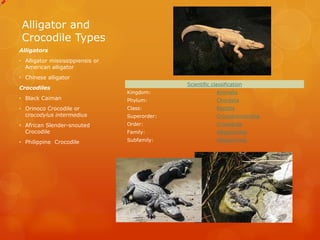
Alligator and
 Crocodile Types
Alligators
• Alligator mississippiensis or
  American alligator
• Chinese alligator
                                                Scientific classification
Crocodiles
                                  Kingdom:                   Animalia
• Black Caiman                    Phylum:                    Chordata
• Orinoco Crocodile or            Class:                     Reptilia
  crocodylus intermedius          Superorder:                Crocodylomorpha
• African Slender-snouted         Order:                     Crocodylia
  Crocodile                       Family:                    Alligatoridae

• Philippine Crocodile            Subfamily:                 Alligatorinae
Alligators
Chinese Alligator                American Alligator
                                  The American alligator
 The Chinese alligator or         (Alligator mississippiensis),
  Alligator (simplified            sometimes referred to
  Chinese: 扬子鳄;                    colloquially as a gator, is a
  traditional Chinese: 揚子鱷,        reptile endemic only to the
  (yáng zǐ è) Alligator            Southeastern United States. It
  sinensis) is one of two          is one of the two living species
                                   of alligator, in the genus
  known living species of          Alligator, within the family
  Alligator, a genus in the        Alligatoridae. It is larger than
  family Alligatoridae. The        the other extant alligator
  Chinese alligator is native      species, the Chinese alligator.
  only to China. It is smaller    The American alligator
  than the other alligator         inhabits wetlands that
  species, the American            frequently overlap with
  alligator, growing to an         human-populated areas.
  average of 1.5 m (5 ft).
Chinese Alligator
There are a few differences.
One obvious difference is that
the Chinese alligator is quite
small. Usually only attaining a
length of 5 feet (1.5 m),
these alligators are known to
grow to 7 feet (2.1 m). Unlike
the American alligator, the
Chinese alligator is fully
armored; even the belly is
armored, which is a feature of
only a few crocodilians. They
weigh up to 100 pounds
(45 kg). Chinese alligators
grow slowly, being only 2 ft
(60 cm) long after 2 years of
age.
American Alligator
They could survive only in
captivity. Like all albino
animals, they are very
vulnerable to the sun and
predators.American Alligators
can remain underwater for
several hours if not actively
swimming or hunting (then it
is only about 20 minutes);
they do this by rerouting
blood to reduce circulation to
the lungs, and thus the need
for oxygen.
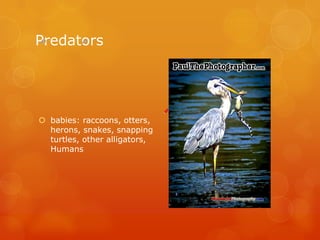
Predators


 babies: raccoons, otters,
  herons, snakes, snapping
  turtles, other alligators,
  Humans
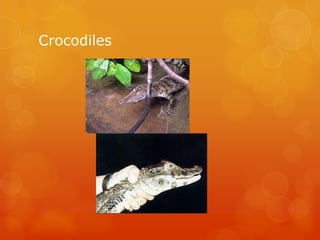
Crocodiles
Black Caiman
It is the largest predator in
the Amazon basin and
possibly the largest member
of the family Alligatoridae.
Most adult black caimans are
3 to 4.26 metres (9.8–14 ft)
in lengths, with old males
rarely growing larger than 5
metres (16 ft). In some areas
(such as the Araguaia River)
this species is consistently
reported at 4 to 5 metres
(13–16 ft) in length, much
larger than the alligator
(which rarely even reaches 4
meters). Several unconfirmed
sources report that the black
caiman can grow to 6 metres
(20 ft) or more.
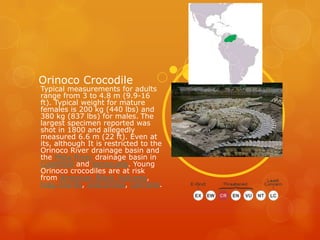
Orinoco Crocodile
Typical measurements for adults
range from 3 to 4.8 m (9.9-16
ft). Typical weight for mature
females is 200 kg (440 lbs) and
380 kg (837 lbs) for males. The
largest specimen reported was
shot in 1800 and allegedly
measured 6.6 m (22 ft). Even at
its, although It is restricted to the
Orinoco River drainage basin and
the Meta River drainage basin in
Colombia and Venezuela. Young
Orinoco crocodiles are at risk
from American Black Vultures,
tegu lizards, anacondas, caimans.
African Slender-
snouted Crocodile
These crocodiles are not
endangered.
 African Slender-snouted
Crocodile begin to breed in
the rainy season. The female
constructs a mound nest
consisting mainly of plant
matter, which is sited usually
on river banks. The eggs have
a long incubation period,
sometimes up to 110 days.
Philippine crocodile
The Philippine crocodile is
only found on the islands of
the Philippines. This species
of crocodile is one of the most
severely threatened species
around. There are roughly
250 left in the wild as of
September 2011 according to
an article with National
Geographic.
The Philippine crocodile has
been extirpated in Samar,
Jolo, Negros Island, Masbate,
and Busuanga. There are still
surviving population in the
Northern Sierra Madre
National Park, San Mariano,
Isabela, Dalupiri island in the
Babuyan Islands, and Abra
(province) in Luzon and
Ligawasan Marsh in
Mindanao.]
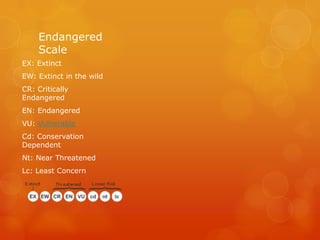
Endangered
    Scale
EX: Extinct
EW: Extinct in the wild
CR: Critically
Endangered
EN: Endangered
VU: Vulnerable
Cd: Conservation
Dependent
Nt: Near Threatened
Lc: Least Concern
And that is all we have for now!


        Any questions?

Alligators

  • 1.
    Alligators and Crocodiles ByJoshua .W. and Nicholas .W.
  • 2.
    Alligator and CrocodileTypes Alligators • Alligator mississippiensis or American alligator • Chinese alligator Scientific classification Crocodiles Kingdom: Animalia • Black Caiman Phylum: Chordata • Orinoco Crocodile or Class: Reptilia crocodylus intermedius Superorder: Crocodylomorpha • African Slender-snouted Order: Crocodylia Crocodile Family: Alligatoridae • Philippine Crocodile Subfamily: Alligatorinae
  • 3.
  • 4.
    Chinese Alligator American Alligator  The American alligator  The Chinese alligator or (Alligator mississippiensis), Alligator (simplified sometimes referred to Chinese: 扬子鳄; colloquially as a gator, is a traditional Chinese: 揚子鱷, reptile endemic only to the (yáng zǐ è) Alligator Southeastern United States. It sinensis) is one of two is one of the two living species of alligator, in the genus known living species of Alligator, within the family Alligator, a genus in the Alligatoridae. It is larger than family Alligatoridae. The the other extant alligator Chinese alligator is native species, the Chinese alligator. only to China. It is smaller  The American alligator than the other alligator inhabits wetlands that species, the American frequently overlap with alligator, growing to an human-populated areas. average of 1.5 m (5 ft).
  • 5.
    Chinese Alligator There area few differences. One obvious difference is that the Chinese alligator is quite small. Usually only attaining a length of 5 feet (1.5 m), these alligators are known to grow to 7 feet (2.1 m). Unlike the American alligator, the Chinese alligator is fully armored; even the belly is armored, which is a feature of only a few crocodilians. They weigh up to 100 pounds (45 kg). Chinese alligators grow slowly, being only 2 ft (60 cm) long after 2 years of age.
  • 6.
    American Alligator They couldsurvive only in captivity. Like all albino animals, they are very vulnerable to the sun and predators.American Alligators can remain underwater for several hours if not actively swimming or hunting (then it is only about 20 minutes); they do this by rerouting blood to reduce circulation to the lungs, and thus the need for oxygen.
  • 8.
    Predators  babies: raccoons,otters, herons, snakes, snapping turtles, other alligators, Humans
  • 9.
  • 10.
    Black Caiman It isthe largest predator in the Amazon basin and possibly the largest member of the family Alligatoridae. Most adult black caimans are 3 to 4.26 metres (9.8–14 ft) in lengths, with old males rarely growing larger than 5 metres (16 ft). In some areas (such as the Araguaia River) this species is consistently reported at 4 to 5 metres (13–16 ft) in length, much larger than the alligator (which rarely even reaches 4 meters). Several unconfirmed sources report that the black caiman can grow to 6 metres (20 ft) or more.
  • 11.
    Orinoco Crocodile Typical measurementsfor adults range from 3 to 4.8 m (9.9-16 ft). Typical weight for mature females is 200 kg (440 lbs) and 380 kg (837 lbs) for males. The largest specimen reported was shot in 1800 and allegedly measured 6.6 m (22 ft). Even at its, although It is restricted to the Orinoco River drainage basin and the Meta River drainage basin in Colombia and Venezuela. Young Orinoco crocodiles are at risk from American Black Vultures, tegu lizards, anacondas, caimans.
  • 12.
    African Slender- snouted Crocodile Thesecrocodiles are not endangered. African Slender-snouted Crocodile begin to breed in the rainy season. The female constructs a mound nest consisting mainly of plant matter, which is sited usually on river banks. The eggs have a long incubation period, sometimes up to 110 days.
  • 13.
    Philippine crocodile The Philippinecrocodile is only found on the islands of the Philippines. This species of crocodile is one of the most severely threatened species around. There are roughly 250 left in the wild as of September 2011 according to an article with National Geographic. The Philippine crocodile has been extirpated in Samar, Jolo, Negros Island, Masbate, and Busuanga. There are still surviving population in the Northern Sierra Madre National Park, San Mariano, Isabela, Dalupiri island in the Babuyan Islands, and Abra (province) in Luzon and Ligawasan Marsh in Mindanao.]
  • 14.
    Endangered Scale EX: Extinct EW: Extinct in the wild CR: Critically Endangered EN: Endangered VU: Vulnerable Cd: Conservation Dependent Nt: Near Threatened Lc: Least Concern
  • 15.
    And that isall we have for now! Any questions?

Editor's Notes

  • #11 To note: The caiman picture is a baby.