
Allergic Reaction
Faiza Waseem
Body Immune reaction due to
re-sensitization by an antigen
Sensitization : Allergen-------Enter into body-----Produce
antibodies--No reaction
Re-sensitization : Allergen----Enter into body for
second time---Antigen antibody reaction
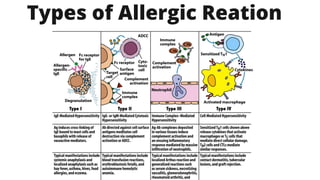
Types of Allergic Reation
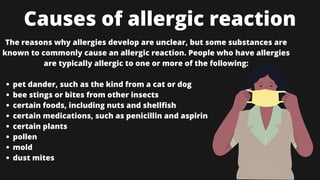
Causes of allergic reaction
pet dander, such as the kind from a cat or dog
bee stings or bites from other insects
certain foods, including nuts and shellfish
certain medications, such as penicillin and aspirin
certain plants
pollen
mold
dust mites
The reasons why allergies develop are unclear, but some substances are
known to commonly cause an allergic reaction. People who have allergies
are typically allergic to one or more of the following:
symptoms of an allergic
reaction
hives, or itchy red spots on the skin
rash
itching
allergic rhinitis, which may lead to symptoms such
as nasal congestion or sneezing
scratchy throat
watery or itchy eyes
Mild reaction
Symptoms of a mild allergic reaction can include:
symptoms of an allergic
reaction
abdominal cramping or pain
diarrhea
nausea or vomiting
pain or tightness in the chest
difficulty swallowing
difficulty breathing
wheezing
fear or anxiety
heart palpitations
flushing of the face
swelling of the face, eyes, or tongue
dizziness or vertigo
weakness and unconsciousness
Severe reaction
Severe allergic reactions (usually to foods, insect stings, and medications) can
cause the following symptoms:
symptoms of an allergic
reaction
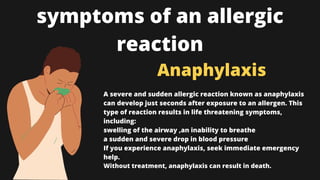
A severe and sudden allergic reaction known as anaphylaxis
can develop just seconds after exposure to an allergen. This
type of reaction results in life threatening symptoms,
including:
swelling of the airway ,an inability to breathe
a sudden and severe drop in blood pressure
If you experience anaphylaxis, seek immediate emergency
help.
Without treatment, anaphylaxis can result in death.
Anaphylaxis
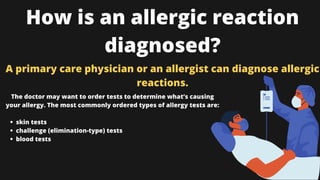
How is an allergic reaction
diagnosed?
A primary care physician or an allergist can diagnose allergic
reactions.
skin tests
challenge (elimination-type) tests
blood tests
The doctor may want to order tests to determine what’s causing
your allergy. The most commonly ordered types of allergy tests are:
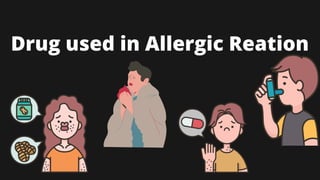
Drug used in Allergic Reation
Role OF Histamine Receptors
Corticosteroid
Allergic Reaction .pdf

Allergic Reaction .pdf

  • 1.
  • 2.
    Body Immune reactiondue to re-sensitization by an antigen Sensitization : Allergen-------Enter into body-----Produce antibodies--No reaction Re-sensitization : Allergen----Enter into body for second time---Antigen antibody reaction
  • 3.
  • 4.
  • 5.
    Causes of allergicreaction pet dander, such as the kind from a cat or dog bee stings or bites from other insects certain foods, including nuts and shellfish certain medications, such as penicillin and aspirin certain plants pollen mold dust mites The reasons why allergies develop are unclear, but some substances are known to commonly cause an allergic reaction. People who have allergies are typically allergic to one or more of the following:
  • 6.
    symptoms of anallergic reaction hives, or itchy red spots on the skin rash itching allergic rhinitis, which may lead to symptoms such as nasal congestion or sneezing scratchy throat watery or itchy eyes Mild reaction Symptoms of a mild allergic reaction can include:
  • 7.
    symptoms of anallergic reaction abdominal cramping or pain diarrhea nausea or vomiting pain or tightness in the chest difficulty swallowing difficulty breathing wheezing fear or anxiety heart palpitations flushing of the face swelling of the face, eyes, or tongue dizziness or vertigo weakness and unconsciousness Severe reaction Severe allergic reactions (usually to foods, insect stings, and medications) can cause the following symptoms:
  • 8.
    symptoms of anallergic reaction A severe and sudden allergic reaction known as anaphylaxis can develop just seconds after exposure to an allergen. This type of reaction results in life threatening symptoms, including: swelling of the airway ,an inability to breathe a sudden and severe drop in blood pressure If you experience anaphylaxis, seek immediate emergency help. Without treatment, anaphylaxis can result in death. Anaphylaxis
  • 10.
    How is anallergic reaction diagnosed? A primary care physician or an allergist can diagnose allergic reactions. skin tests challenge (elimination-type) tests blood tests The doctor may want to order tests to determine what’s causing your allergy. The most commonly ordered types of allergy tests are:
  • 11.
    Drug used inAllergic Reation
  • 12.
  • 15.