GROUP MEMBERS:
1 ) T O K T A S S Y N O L Z H A S
2 ) Z H A R K Y N U L Y Y E D I L
3 ) S A T T A R O V S A T Z H A N
4 ) A L P Y S S O V M A D I
ALKYNES
BOND
 Hydrocarbons that
contain the carbon-
carbon triple bond
–C (triple)C- are called
alkynes.
 Each triple bond
contains one sigma (σ)
and two pi (π) bonds.
 Because of the π bonds in
their structure alkynes
are unsaturated
hydrocarbons.
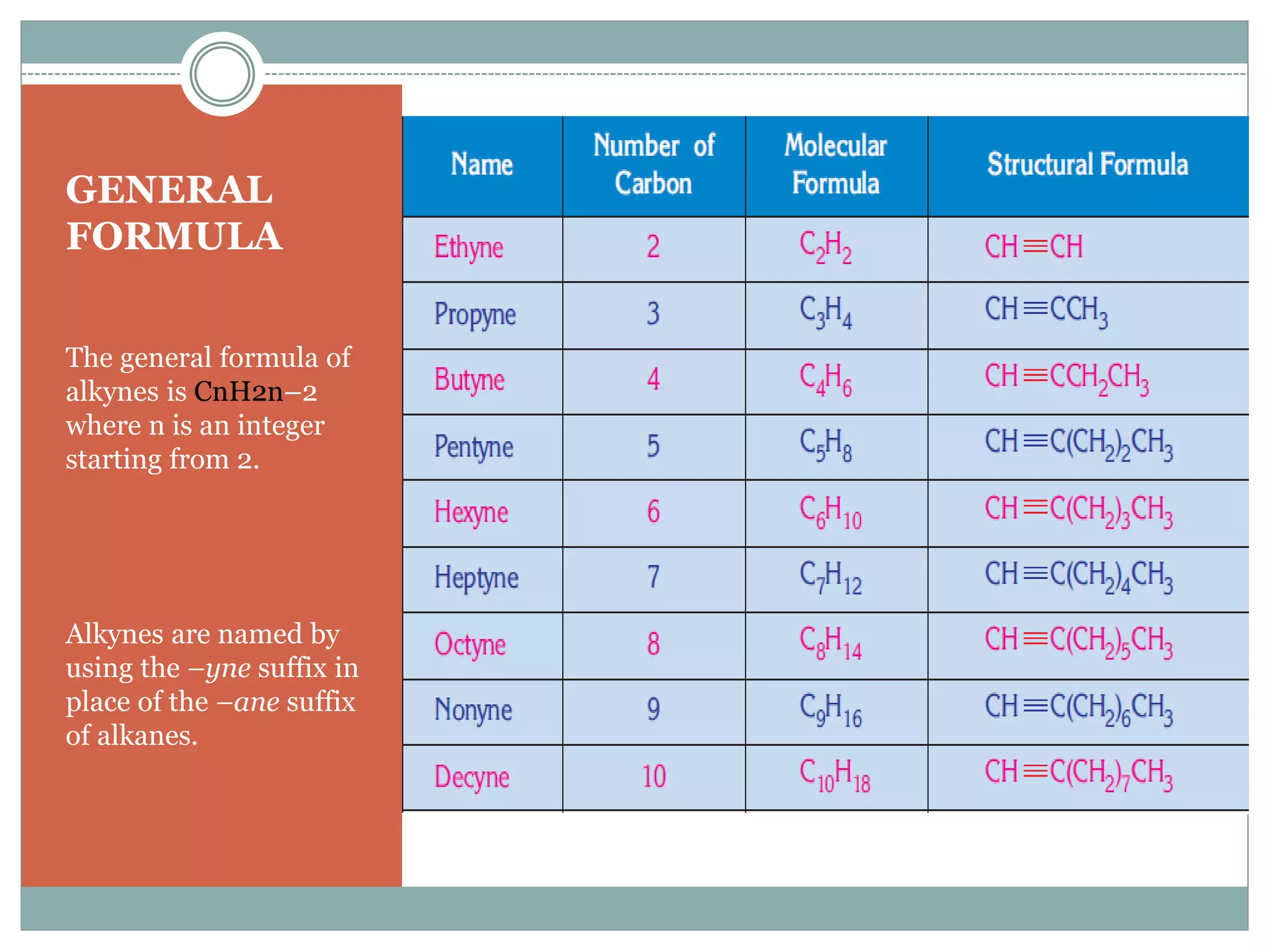
GENERAL
FORMULA
The general formula of
alkynes is CnH2n–2
where n is an integer
starting from 2.
Alkynes are named by
using the –yne suffix in
place of the –ane suffix
of alkanes.
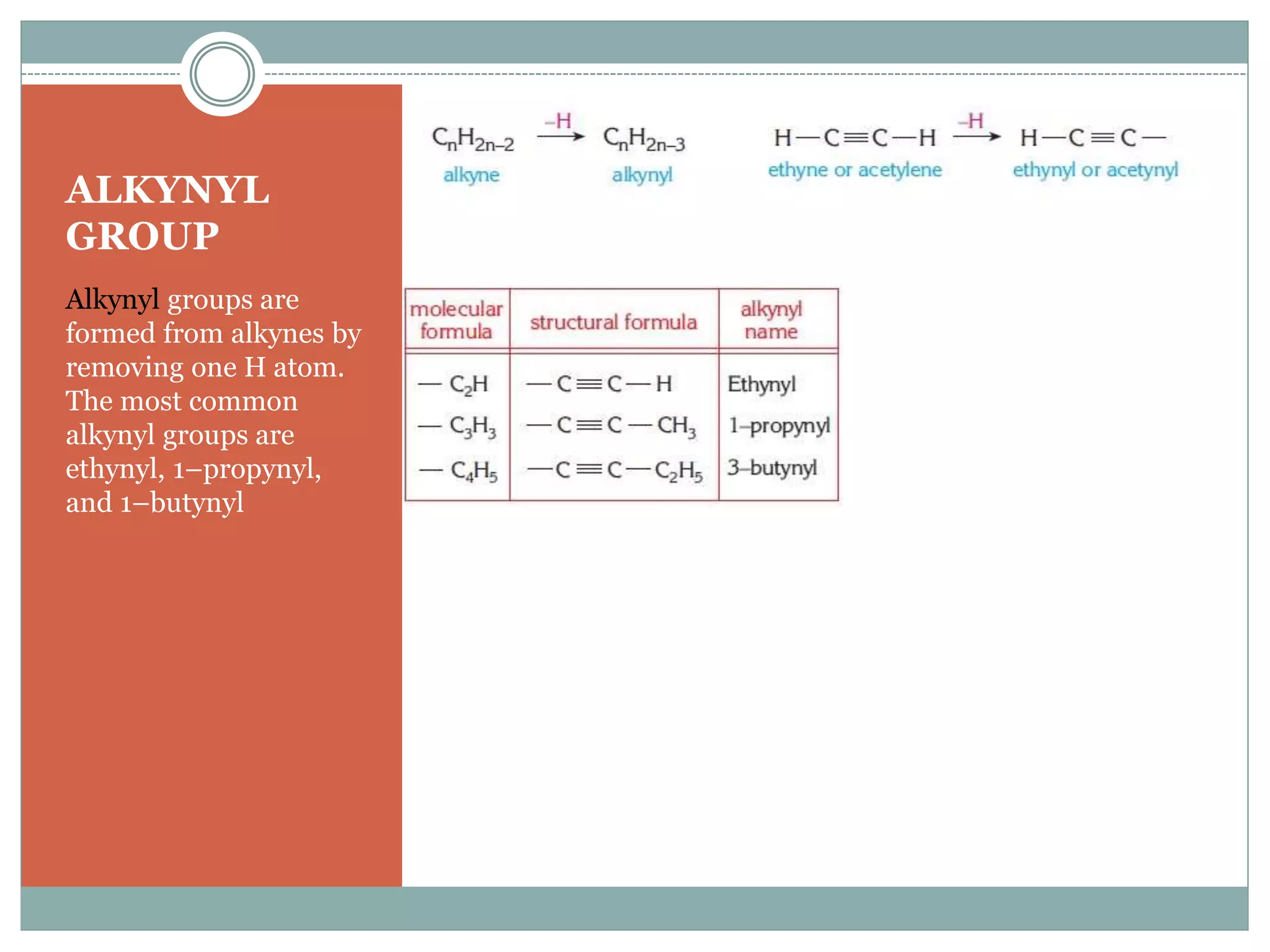
ALKYNYL
GROUP
Alkynyl groups are
formed from alkynes by
removing one H atom.
The most common
alkynyl groups are
ethynyl, 1–propynyl,
and 1–butynyl
NOMENCLATURE
The naming of
alkynes is similar to
that of other
hydrocarbons.
Alkynes may contain
more than one triple
bond. An alkyne with
two triple bonds is
called an alkadiyne.
Alkenynes
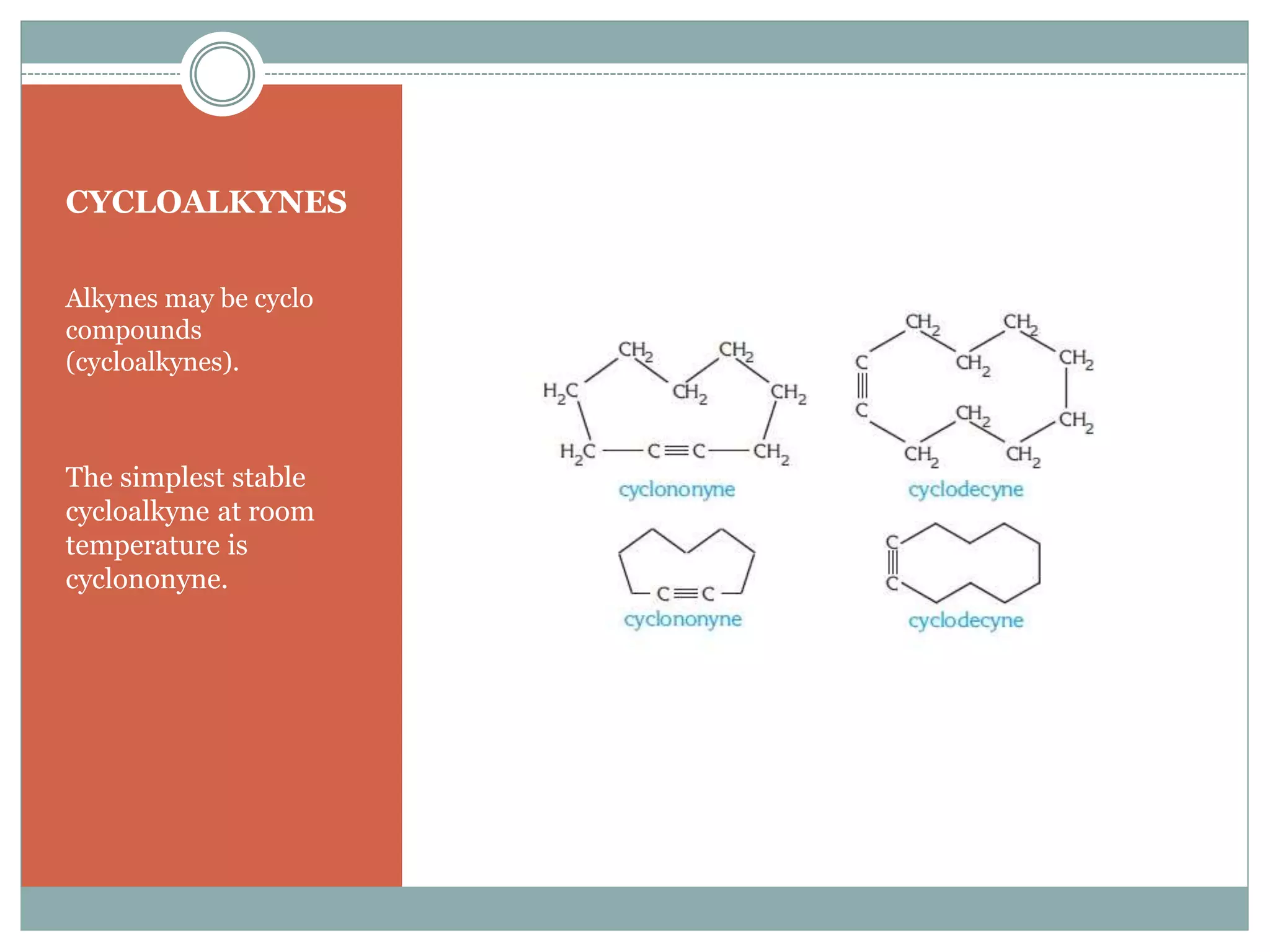
CYCLOALKYNES
Alkynes may be cyclo
compounds
(cycloalkynes).
The simplest stable
cycloalkyne at room
temperature is
cyclononyne.
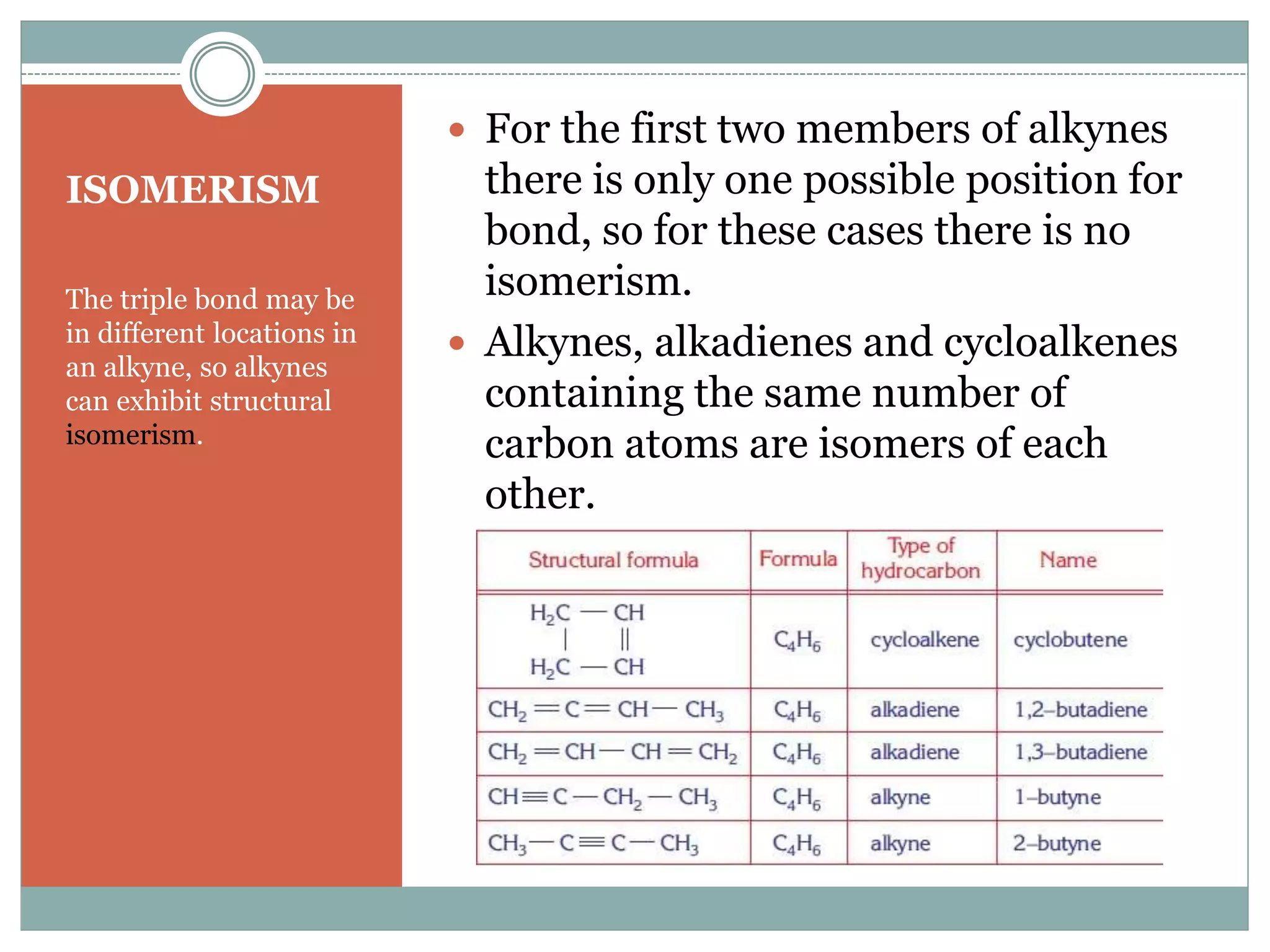
ISOMERISM
The triple bond may be
in different locations in
an alkyne, so alkynes
can exhibit structural
isomerism.
 For the first two members of alkynes
there is only one possible position for
bond, so for these cases there is no
isomerism.
 Alkynes, alkadienes and cycloalkenes
containing the same number of
carbon atoms are isomers of each
other.
PHYSICAL
PROPERTIES
Similar to alkanes,
alkenes.
1)Insoluble in water.
BUT
2)Soluble in organic
solvents
3)Density less than
water
CHEMICAL
PROPERTIES
Alkynes are
unsaturated
compounds and their
chemical properties are
similar to alkenes.
Alkynes undergo
combustion reactions
and addition reactions,
as alkenes do.
In addition, alkynes
undergo substitution
reactions with metals.
COMBUSTION REACTIONS
ADDITION REACTIONS
 Addition reactions occur by breaking the π
bonds of the triple bond. Hydrogen,
halogens, hydrogen halides and water may
give addition reactions with alkynes.
ADDITION OF
HYDROGEN
Two hydrogen
molecules are added to
one triple bond using a
nickel, platinum or
palladium catalyst.
Alkenes are the
intermediate products.
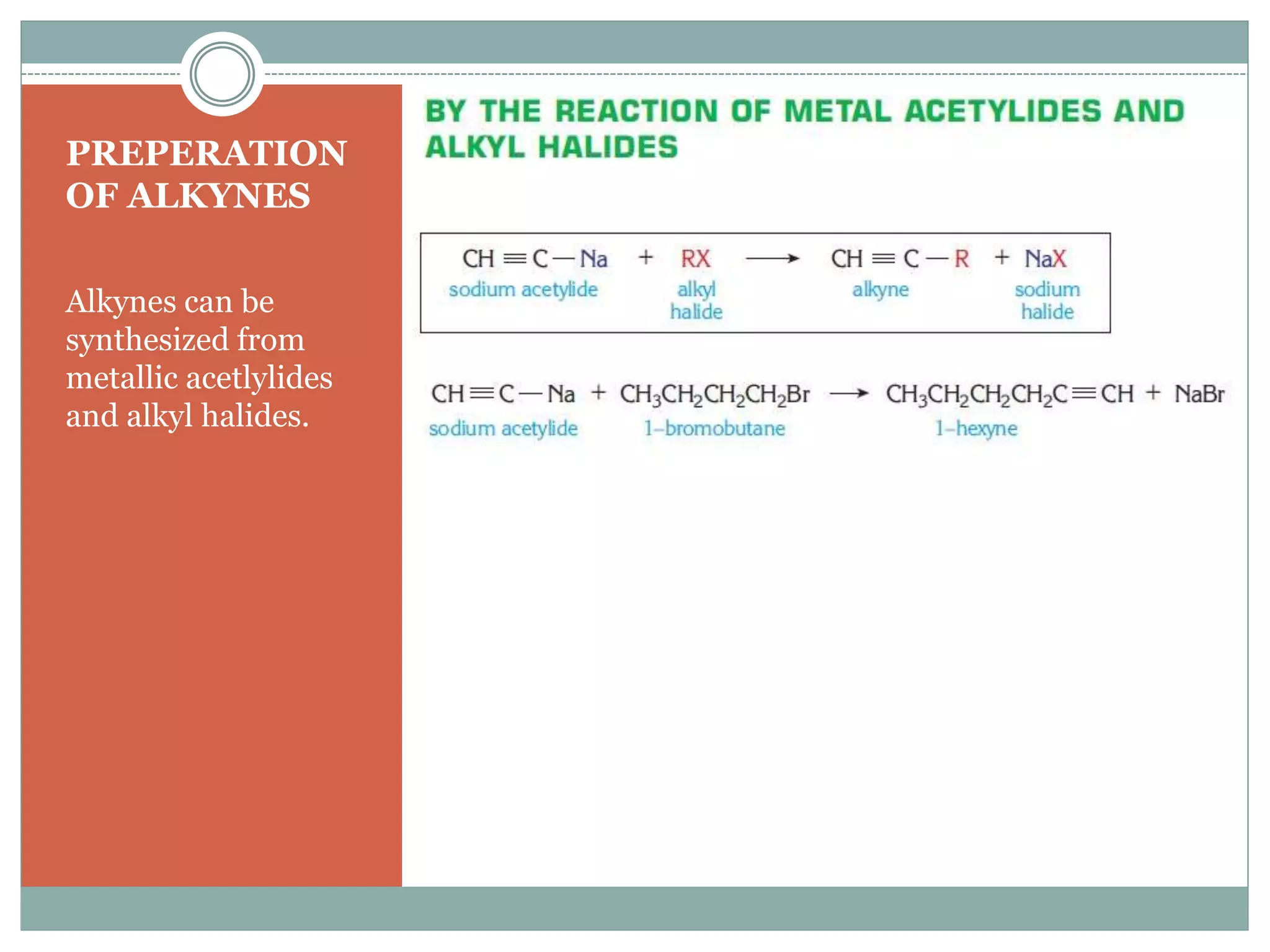
PREPERATION
OF ALKYNES
Alkynes can be
synthesized from
metallic acetlylides
and alkyl halides.
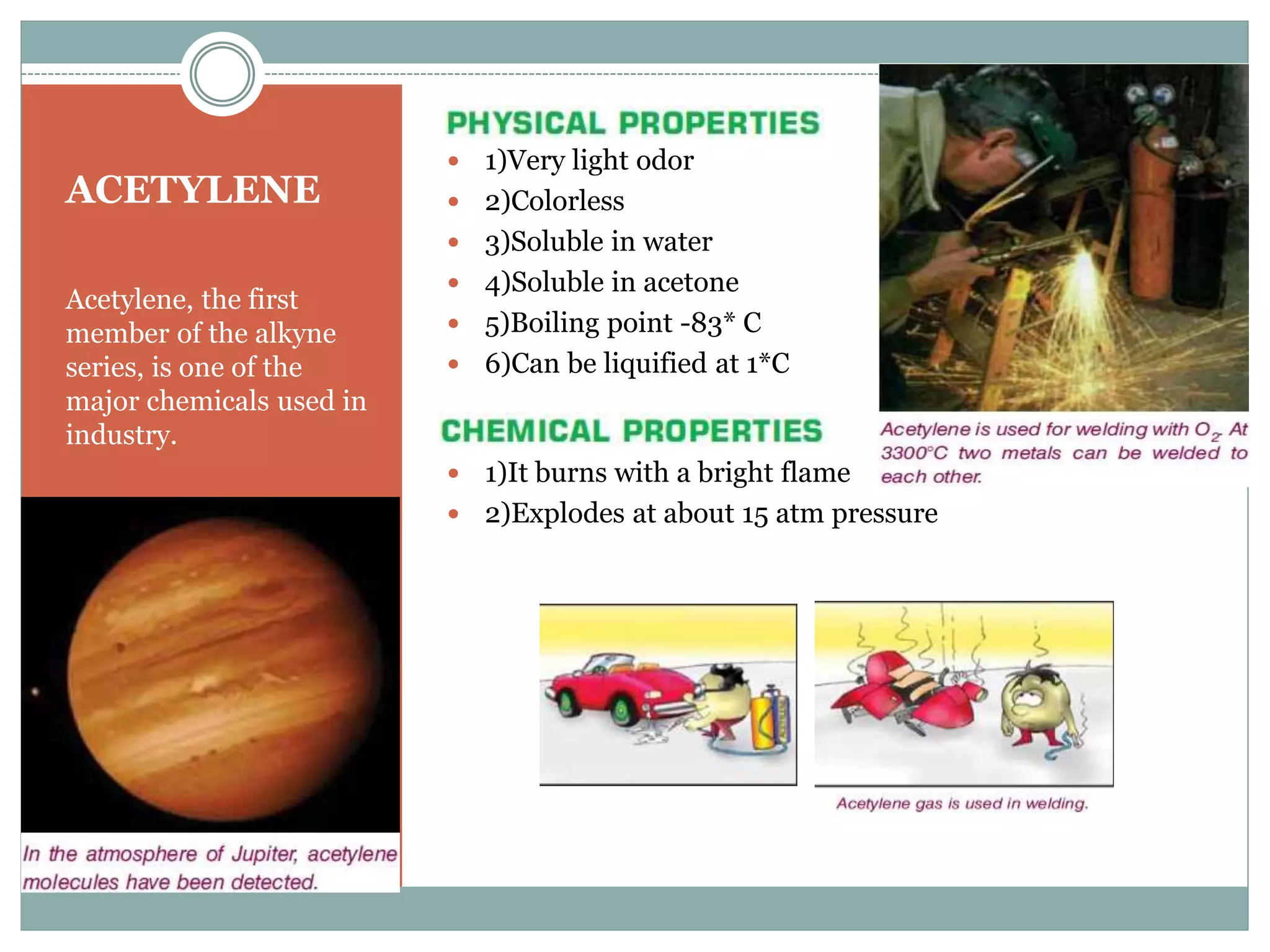
ACETYLENE
Acetylene, the first
member of the alkyne
series, is one of the
major chemicals used in
industry.
 1)Very light odor
 2)Colorless
 3)Soluble in water
 4)Soluble in acetone
 5)Boiling point -83* C
 6)Can be liquified at 1*C
 1)It burns with a bright flame
 2)Explodes at about 15 atm pressure
USES OF ALKYNES
 Histrionicotoxin
 toxic alkyne present in South American frogs
 used to make poison-tipped arrows
 Ichthyothereol
 highly toxic alkyne found in the leaves of a Brazilian herb
 used to kill fish
 Calicheamicin and Esperamicin
 extremely toxic to cells
 breaks double strand of DNA
 researchers are trying to use it to develop a cancer fighting drug
 Capillin
 natural plant fungicide
THANK YOU FOR ATTENTION!!!

Alkynes.pptx

  • 1.
    GROUP MEMBERS: 1 )T O K T A S S Y N O L Z H A S 2 ) Z H A R K Y N U L Y Y E D I L 3 ) S A T T A R O V S A T Z H A N 4 ) A L P Y S S O V M A D I ALKYNES
  • 2.
    BOND  Hydrocarbons that containthe carbon- carbon triple bond –C (triple)C- are called alkynes.  Each triple bond contains one sigma (σ) and two pi (π) bonds.  Because of the π bonds in their structure alkynes are unsaturated hydrocarbons.
  • 3.
    GENERAL FORMULA The general formulaof alkynes is CnH2n–2 where n is an integer starting from 2. Alkynes are named by using the –yne suffix in place of the –ane suffix of alkanes.
  • 4.
    ALKYNYL GROUP Alkynyl groups are formedfrom alkynes by removing one H atom. The most common alkynyl groups are ethynyl, 1–propynyl, and 1–butynyl
  • 5.
    NOMENCLATURE The naming of alkynesis similar to that of other hydrocarbons. Alkynes may contain more than one triple bond. An alkyne with two triple bonds is called an alkadiyne. Alkenynes
  • 6.
    CYCLOALKYNES Alkynes may becyclo compounds (cycloalkynes). The simplest stable cycloalkyne at room temperature is cyclononyne.
  • 7.
    ISOMERISM The triple bondmay be in different locations in an alkyne, so alkynes can exhibit structural isomerism.  For the first two members of alkynes there is only one possible position for bond, so for these cases there is no isomerism.  Alkynes, alkadienes and cycloalkenes containing the same number of carbon atoms are isomers of each other.
  • 8.
    PHYSICAL PROPERTIES Similar to alkanes, alkenes. 1)Insolublein water. BUT 2)Soluble in organic solvents 3)Density less than water
  • 9.
    CHEMICAL PROPERTIES Alkynes are unsaturated compounds andtheir chemical properties are similar to alkenes. Alkynes undergo combustion reactions and addition reactions, as alkenes do. In addition, alkynes undergo substitution reactions with metals.
  • 10.
  • 11.
    ADDITION REACTIONS  Additionreactions occur by breaking the π bonds of the triple bond. Hydrogen, halogens, hydrogen halides and water may give addition reactions with alkynes.
  • 12.
    ADDITION OF HYDROGEN Two hydrogen moleculesare added to one triple bond using a nickel, platinum or palladium catalyst. Alkenes are the intermediate products.
  • 13.
    PREPERATION OF ALKYNES Alkynes canbe synthesized from metallic acetlylides and alkyl halides.
  • 14.
    ACETYLENE Acetylene, the first memberof the alkyne series, is one of the major chemicals used in industry.  1)Very light odor  2)Colorless  3)Soluble in water  4)Soluble in acetone  5)Boiling point -83* C  6)Can be liquified at 1*C  1)It burns with a bright flame  2)Explodes at about 15 atm pressure
  • 15.
    USES OF ALKYNES Histrionicotoxin  toxic alkyne present in South American frogs  used to make poison-tipped arrows  Ichthyothereol  highly toxic alkyne found in the leaves of a Brazilian herb  used to kill fish  Calicheamicin and Esperamicin  extremely toxic to cells  breaks double strand of DNA  researchers are trying to use it to develop a cancer fighting drug  Capillin  natural plant fungicide
  • 16.
    THANK YOU FORATTENTION!!!