By: Alex Hill
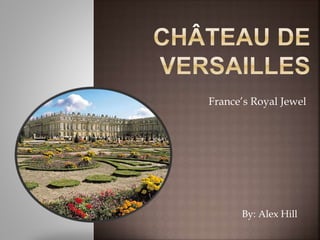
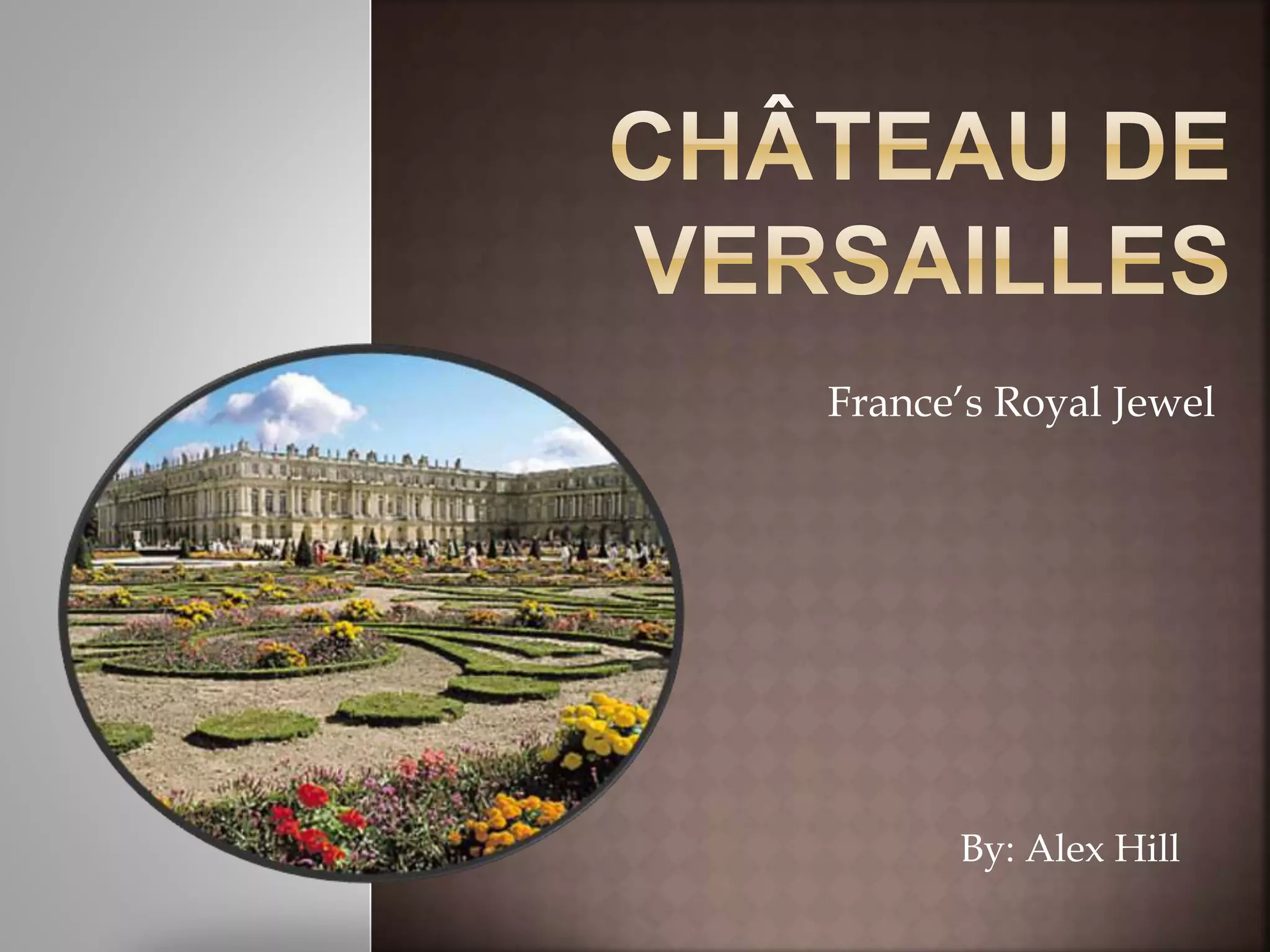
France’s Royal Jewel
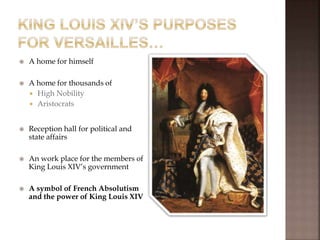
 A home for himself
 A home for thousands of
 High Nobility
 Aristocrats
 Reception hall for political and
state affairs
 An work place for the members of
King Louis XIV’s government
 A symbol of French Absolutism
and the power of King Louis XIV
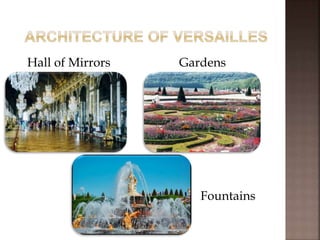
Hall of Mirrors Gardens
Fountains
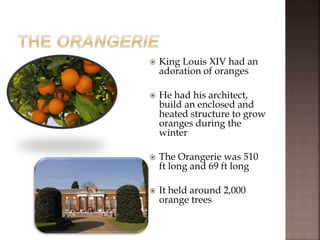
 King Louis XIV had an
adoration of oranges
 He had his architect,
build an enclosed and
heated structure to grow
oranges during the
winter
 The Orangerie was 510
ft long and 69 ft long
 It held around 2,000
orange trees
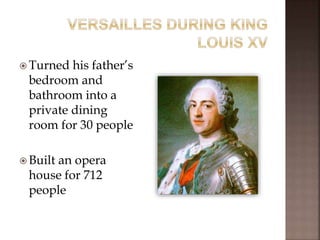
 Turned his father’s
bedroom and
bathroom into a
private dining
room for 30 people
 Built an opera
house for 712
people
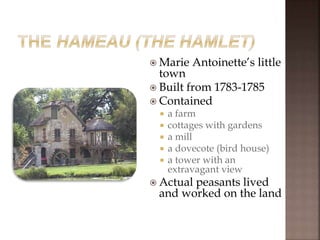
 Marie Antoinette’s little
town
 Built from 1783-1785
 Contained
 a farm
 cottages with gardens
 a mill
 a dovecote (bird house)
 a tower with an
extravagant view
 Actual peasants lived
and worked on the land
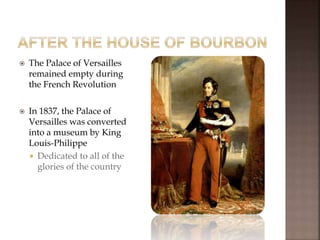
 The Palace of Versailles
remained empty during
the French Revolution
 In 1837, the Palace of
Versailles was converted
into a museum by King
Louis-Philippe
 Dedicated to all of the
glories of the country
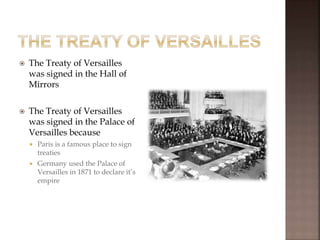
 The Treaty of Versailles
was signed in the Hall of
Mirrors
 The Treaty of Versailles
was signed in the Palace of
Versailles because
 Paris is a famous place to sign
treaties
 Germany used the Palace of
Versailles in 1871 to declare it’s
empire
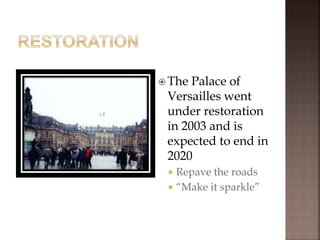
 The Palace of
Versailles went
under restoration
in 2003 and is
expected to end in
2020
 Repave the roads
 “Make it sparkle”
 Jackson J. Spielvogel, Western Civilization, Volume II: Since 1500, Seventh Edition (Thomson Higher Education,
2009), 455
 Linda Tagliaferro, Palace of Versilles, France’s Royal Jewel (Bearport Publishing Company, Inc. 2005), 22-25
 James Barter, The Palace of Versailles (Lucent Books, Inc 1999), 60
 “The Building,” Last Modified October 28, 1988, http://splendors-
versailles.org/TeachersGuide/Building/index.html
 “United States Holocaust Memorial Museum,” Last Modified April 1, 2010,
http://www.ushmm.org/wlc/en/article.php?ModuleId=10005425

Alex_Hill_History102_Versailles

  • 1.
  • 2.
     A homefor himself  A home for thousands of  High Nobility  Aristocrats  Reception hall for political and state affairs  An work place for the members of King Louis XIV’s government  A symbol of French Absolutism and the power of King Louis XIV
  • 3.
    Hall of MirrorsGardens Fountains
  • 4.
     King LouisXIV had an adoration of oranges  He had his architect, build an enclosed and heated structure to grow oranges during the winter  The Orangerie was 510 ft long and 69 ft long  It held around 2,000 orange trees
  • 5.
     Turned hisfather’s bedroom and bathroom into a private dining room for 30 people  Built an opera house for 712 people
  • 6.
     Marie Antoinette’slittle town  Built from 1783-1785  Contained  a farm  cottages with gardens  a mill  a dovecote (bird house)  a tower with an extravagant view  Actual peasants lived and worked on the land
  • 7.
     The Palaceof Versailles remained empty during the French Revolution  In 1837, the Palace of Versailles was converted into a museum by King Louis-Philippe  Dedicated to all of the glories of the country
  • 8.
     The Treatyof Versailles was signed in the Hall of Mirrors  The Treaty of Versailles was signed in the Palace of Versailles because  Paris is a famous place to sign treaties  Germany used the Palace of Versailles in 1871 to declare it’s empire
  • 9.
     The Palaceof Versailles went under restoration in 2003 and is expected to end in 2020  Repave the roads  “Make it sparkle”
  • 10.
     Jackson J.Spielvogel, Western Civilization, Volume II: Since 1500, Seventh Edition (Thomson Higher Education, 2009), 455  Linda Tagliaferro, Palace of Versilles, France’s Royal Jewel (Bearport Publishing Company, Inc. 2005), 22-25  James Barter, The Palace of Versailles (Lucent Books, Inc 1999), 60  “The Building,” Last Modified October 28, 1988, http://splendors- versailles.org/TeachersGuide/Building/index.html  “United States Holocaust Memorial Museum,” Last Modified April 1, 2010, http://www.ushmm.org/wlc/en/article.php?ModuleId=10005425