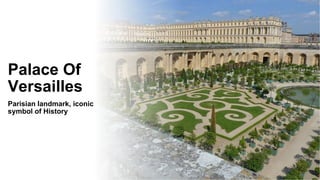
Palace Of
Versailles
Parisian landmark, iconic
symbol of History
Introduction
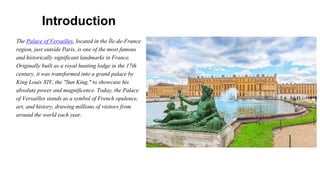
The Palace of Versailles, located in the Île-de-France
region, just outside Paris, is one of the most famous
and historically significant landmarks in France.
Originally built as a royal hunting lodge in the 17th
century, it was transformed into a grand palace by
King Louis XIV, the "Sun King," to showcase his
absolute power and magnificence. Today, the Palace
of Versailles stands as a symbol of French opulence,
art, and history, drawing millions of visitors from
around the world each year.
Awe-Inspiring Architecture
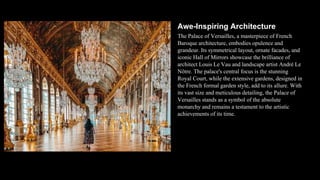
The Palace of Versailles, a masterpiece of French
Baroque architecture, embodies opulence and
grandeur. Its symmetrical layout, ornate facades, and
iconic Hall of Mirrors showcase the brilliance of
architect Louis Le Vau and landscape artist André Le
Nôtre. The palace's central focus is the stunning
Royal Court, while the extensive gardens, designed in
the French formal garden style, add to its allure. With
its vast size and meticulous detailing, the Palace of
Versailles stands as a symbol of the absolute
monarchy and remains a testament to the artistic
achievements of its time.
Historical
Significance
The Palace of Versailles, located near Paris,
France, is an iconic symbol of absolute monarchy
and opulence. Constructed in the 17th century, it
served as the royal residence of Louis XIV, the Sun
King, and subsequent French kings. The palace's
grandeur, luxurious gardens, and artistic interiors
reflect the extravagance and power of the French
monarchy. It played a crucial role in shaping
European history, hosting significant events like the
signing of the Treaty of Versailles in 1919. Today,
the Palace of Versailles stands as a UNESCO
World Heritage site, attracting millions of visitors
who marvel at its historical significance and
architectural splendor.
Gardens Of Palace Of
Versailles
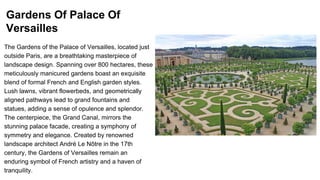
The Gardens of the Palace of Versailles, located just
outside Paris, are a breathtaking masterpiece of
landscape design. Spanning over 800 hectares, these
meticulously manicured gardens boast an exquisite
blend of formal French and English garden styles.
Lush lawns, vibrant flowerbeds, and geometrically
aligned pathways lead to grand fountains and
statues, adding a sense of opulence and splendor.
The centerpiece, the Grand Canal, mirrors the
stunning palace facade, creating a symphony of
symmetry and elegance. Created by renowned
landscape architect André Le Nôtre in the 17th
century, the Gardens of Versailles remain an
enduring symbol of French artistry and a haven of
tranquility.
Conclusion
The Palace of Versailles, an epitome of opulence and
grandeur, stands as a living testament to France's rich
history and artistic legacy. Its exquisite architecture,
meticulously landscaped gardens, and ornate interiors are a
tribute to the power and influence of the French monarchy.
As a symbol of absolute monarchy, the palace's splendor
and scale leave visitors in awe. Stepping into its halls is like
traversing through time, immersing oneself in the courtly
life of kings and queens. The Palace of Versailles remains a
captivating destination, inviting travelers from around the
world to relish the majesty and magnificence of its bygone
era.

Palace Of Versailles.pptx

  • 1.
  • 2.
    Introduction The Palace ofVersailles, located in the Île-de-France region, just outside Paris, is one of the most famous and historically significant landmarks in France. Originally built as a royal hunting lodge in the 17th century, it was transformed into a grand palace by King Louis XIV, the "Sun King," to showcase his absolute power and magnificence. Today, the Palace of Versailles stands as a symbol of French opulence, art, and history, drawing millions of visitors from around the world each year.
  • 3.
    Awe-Inspiring Architecture The Palaceof Versailles, a masterpiece of French Baroque architecture, embodies opulence and grandeur. Its symmetrical layout, ornate facades, and iconic Hall of Mirrors showcase the brilliance of architect Louis Le Vau and landscape artist André Le Nôtre. The palace's central focus is the stunning Royal Court, while the extensive gardens, designed in the French formal garden style, add to its allure. With its vast size and meticulous detailing, the Palace of Versailles stands as a symbol of the absolute monarchy and remains a testament to the artistic achievements of its time.
  • 4.
    Historical Significance The Palace ofVersailles, located near Paris, France, is an iconic symbol of absolute monarchy and opulence. Constructed in the 17th century, it served as the royal residence of Louis XIV, the Sun King, and subsequent French kings. The palace's grandeur, luxurious gardens, and artistic interiors reflect the extravagance and power of the French monarchy. It played a crucial role in shaping European history, hosting significant events like the signing of the Treaty of Versailles in 1919. Today, the Palace of Versailles stands as a UNESCO World Heritage site, attracting millions of visitors who marvel at its historical significance and architectural splendor.
  • 5.
    Gardens Of PalaceOf Versailles The Gardens of the Palace of Versailles, located just outside Paris, are a breathtaking masterpiece of landscape design. Spanning over 800 hectares, these meticulously manicured gardens boast an exquisite blend of formal French and English garden styles. Lush lawns, vibrant flowerbeds, and geometrically aligned pathways lead to grand fountains and statues, adding a sense of opulence and splendor. The centerpiece, the Grand Canal, mirrors the stunning palace facade, creating a symphony of symmetry and elegance. Created by renowned landscape architect André Le Nôtre in the 17th century, the Gardens of Versailles remain an enduring symbol of French artistry and a haven of tranquility.
  • 6.
    Conclusion The Palace ofVersailles, an epitome of opulence and grandeur, stands as a living testament to France's rich history and artistic legacy. Its exquisite architecture, meticulously landscaped gardens, and ornate interiors are a tribute to the power and influence of the French monarchy. As a symbol of absolute monarchy, the palace's splendor and scale leave visitors in awe. Stepping into its halls is like traversing through time, immersing oneself in the courtly life of kings and queens. The Palace of Versailles remains a captivating destination, inviting travelers from around the world to relish the majesty and magnificence of its bygone era.